

Aluminum filler metal is not interchangeable. The wrong diameter can make a small repair frustrating, while the wrong process can leave you trying to use a TIG rod in a MIG welder or a brazing rod where a fused weld is required. The Best aluminum for welding depends first on the equipment and joint in front of you.
This group covers ER4043 MIG wire, ER4043 TIG rods, flux-cored low-temperature rods, and 5052 practice coupons. The products are not substitutes for one another, so the ranking favors the clearest fit, useful dimensions, and the most dependable information about how each item is meant to be used.
ARCCAPTAIN ER4043 TIG Rods are the strongest all-purpose pick, with YESWELDER Aluminum TIG Rod close behind for welders who want the same common ER4043 alloy in a larger pack.
Comparison table
| # | Product | Award | Process | Size or quantity | Best for |
|---|---|---|---|---|---|
| 1 | ARCCAPTAIN ER4043 TIG Rods | Best overall | TIG | 3/32 inch x 16 inch, 5 lb | General aluminum TIG work |
| 2 | YESWELDER Aluminum TIG Rod | Best for broad alloy coverage | TIG | 3/32 inch x 16 inch, 5 lb | TIG users handling mixed alloys |
| 3 | ARCCAPTAIN ER4043 MIG Wire | Best MIG spool | MIG | 0.035 inch, 1 lb | Aluminum MIG welding |
| 4 | YESWELDER ER4043 MIG Wire | Best spool construction | MIG | 0.035 inch, 1 lb | MIG users wanting a sturdy spool |
| 5 | SONNLER ER4043 TIG Filler | Best medium pack | TIG | 3/32 inch x 16 inch, 1.8 lb | Repairs and regular practice |
| 6 | Cupstart E4043 Stick Rods | Best stick option | Stick | 1/8 inch x 14 inch, 0.33 lb | Small stick-welding repairs |
| 7 | Ouwinway Aluminum Brazing Rods | Best torch brazing rods | Oxygen-propane or oxygen-acetylene brazing | 1/16 inch x 13 inch, 50 rods | Torch-based aluminum repair |
| 8 | Guangfan Flux-Cored Rods | Best flux-cored pack | Low-temperature brazing | 50 pieces | Small aluminum projects |
| 9 | AZB Easy-Melt Aluminum Rods | Best easy-melt option | Flux-cored brazing | 50 pieces | Aluminum and white-metal surfacing |
| 10 | Biscuits 5052 Practice Coupons | Best practice material | MIG, TIG, stick, arc, gas, and brazing | 2 x 4 x 0.125 inches, 24 pieces | Learning and process practice |
1. ARCCAPTAIN ER4043 TIG Rods: Best Overall

Pros
- Common ER4043 alloy with 5 percent silicon
- 3/32-inch diameter suits general TIG filler work
- Long 16-inch rods are easy to feed by hand
- 5-pound pack supports repeated fabrication
Cons
- TIG use requires shielding gas
- Larger pack is more material than occasional repair work needs
- ER4043 is not the right filler for every aluminum joint
Best for: welders who want a conventional ER4043 TIG filler for regular aluminum work.
The ARCCAPTAIN ER4043 TIG Rods are the least complicated recommendation in this group. ER4043 is a familiar aluminum-silicon filler, and the 3/32-inch diameter is a practical middle ground for general TIG work. It is substantial enough for controlled filling without being as cumbersome as a larger rod, yet it does not feel like a specialty consumable intended for only one narrow repair.
The 5 percent silicon composition matters because the silicon improves melt fluidity. In practice, that makes the filler easier to work into a controlled puddle and helps produce a smooth bead when the base metal is clean and the torch setup is correct. ARCCAPTAIN lists these rods for aluminum alloy workpieces and castings, with applications extending across rail, chemical, and food-related equipment. Those application claims do not make the rod universal, but they do describe a broad intended range.
Each rod is 16 inches long, or 406.4 millimeters, and the pack weighs 5 pounds. That combination makes sense for a shop that welds often. The long rods give the operator useful hand-feeding room, while the larger pack avoids constantly replenishing filler during a project. The product is intended for use with argon, helium, or a mixture, so it belongs with a properly configured TIG setup rather than a bare torch or generic arc welder.
Compared with the YESWELDER Aluminum TIG Rod, this pick has essentially the same important 3/32-inch by 16-inch and 5-pound format, so the decision comes down to the particular listing and the features described. It beats SONNLER ER4043 TIG Filler when a larger shop pack is useful. SONNLER is the more sensible choice for someone who wants less filler on hand, while Cupstart E4043 Stick Rods are aimed at a different process entirely.
The limitation is the alloy choice itself. ER4043 is widely useful, but it is not a universal answer for every base alloy, service condition, or heat-treatment requirement. A welder who needs a different filler chemistry should not choose this simply because the rod feeds smoothly. For general aluminum TIG repairs and fabrication with a known-compatible alloy, this is the one we would keep in the shop.
2. YESWELDER Aluminum TIG Rod: Best for Broad Alloy Coverage

Pros
- ER4043 contains 5 percent silicon
- Intended for several aluminum and casting alloys
- 3/32-inch by 16-inch TIG format
- 5-pound quantity suits frequent use
Cons
- Requires shielding gas
- No narrower diameter is listed for delicate work
- Broad compatibility still requires checking the base alloy
Best for: TIG welders who work across several common aluminum grades and castings.
YESWELDER's Aluminum TIG Rod is a familiar general-purpose filler with a useful specification rather than a strange niche format. The product uses ER4043, also referred to as AlSi5, and the added silicon is intended to improve fluidity. That is the characteristic a TIG user notices first: the filler should melt into the puddle without fighting the torch hand every time the rod touches the joint.
The listed compatibility includes 3003, 3004, 5052, 6061, and 6063 aluminum, along with casting alloys 43, 355, 356, and 214. Those are meaningful details because aluminum filler selection depends on the base material, not simply the word aluminum on the package. The product also describes ER4043 as less sensitive to weld cracking and capable of producing brighter welds. Those claims are tied to the alloy's composition, but bead appearance still depends heavily on cleaning, heat control, joint preparation, and shielding.
The physical format is 3/32 inch in diameter and 16 inches long, with a 5-pound package. For general TIG work, 3/32 inch is easier to control than a much heavier filler while still offering enough material for more substantial joints. Sixteen-inch rods are long enough for comfortable hand feeding, particularly when a joint requires a steady series of additions rather than one short dab.
This is very close to ARCCAPTAIN ER4043 TIG Rods, which takes the top spot because its product description is more direct about the rod dimensions and use in a general welding workflow. The YESWELDER version is still a strong alternative, especially for someone who already uses the brand's equipment or wants a clearly described alloy range. It is a better fit than ARCCAPTAIN ER4043 MIG Wire if the work is being done with a TIG torch, but the MIG spool wins when continuous wire feeding is the priority.
The main weakness is that the broad alloy list can tempt beginners into skipping compatibility checks. The rod does not turn every aluminum joint into a suitable ER4043 application. It also needs shielding gas, usually argon or a helium mixture as listed by the manufacturer. Choose it when you want a substantial supply of conventional TIG filler and have confirmed the base material.
3. ARCCAPTAIN ER4043 MIG Wire: Best MIG Spool

Pros
- Designed for the MIG process
- 0.035-inch diameter is clearly specified
- ER4043 contains 5 percent silicon
- One-pound spool is manageable for occasional work
Cons
- Requires an aluminum-capable MIG setup
- Thin wire is not a substitute for TIG filler rod
- Gray color after anodizing may not suit every finished repair
Best for: MIG welders who need ER4043 wire in a common 0.035-inch diameter.
The ARCCAPTAIN ER4043 MIG Wire is the clearest choice for a welder who specifically wants a spool rather than straight filler rods. It uses ER4043 with 5 percent silicon, formulated for the MIG process, and the 0.035-inch diameter is a common, easy-to-identify format. That distinction prevents one of the most basic mistakes in this category: treating TIG rod, stick electrodes, and MIG wire as interchangeable because they share an alloy designation.
The silicon content is intended to improve fluidity and produce a stable arc with a clean bead appearance. ARCCAPTAIN gives a melting range of 1, 065 to 1, 170 degrees Fahrenheit and a density of 0.097 pounds per cubic inch. Those numbers describe the material, but the more practical point is that the wire's behavior still depends on the feeder, liner, drive-roll setup, shielding, and the cleanliness of the aluminum. A good spool cannot compensate for a steel-oriented MIG configuration.
The wire weighs 1 pound and measures 0.035 inch. A one-pound spool is easier to manage for a smaller shop than a large production supply, while the diameter gives the welder a precise starting point when setting up the machine. ARCCAPTAIN lists compatibility with 3003, 3004, 5052, 6061, and 6063, as well as several casting alloys. It also notes a gray post-anodizing color, which is useful information for anyone planning a visible finished surface.
Compared with YESWELDER ER4043 MIG Wire, this spool has the same stated diameter, alloy family, and weight. YESWELDER gets the nod for spool construction because its listing specifically describes an ABS plastic spool. ARCCAPTAIN is the better pick when the process description and thermal details are more useful to your setup decisions. Both are more appropriate than ARCCAPTAIN ER4043 TIG Rods for a machine that feeds wire continuously.
The real drawback is process dependence. Aluminum MIG welding usually requires equipment configured for soft wire, and this product does not remove the need for the right liner, drive system, contact tip, and shielding. Skip it if you are TIG welding or if your machine is only set up for steel wire. For an aluminum-ready MIG welder, it is a straightforward spool with enough information to make an informed setup.
4. YESWELDER ER4043 MIG Wire: Best Spool Construction

Pros
- ER4043 MIG wire with 5 percent silicon
- 0.035-inch diameter and 1-pound format
- ABS plastic spool is described as durable
- Lists compatibility with common aluminum alloys
Cons
- Intended for MIG, not TIG
- Aluminum wire needs a suitable feeder setup
- The listing does not identify a different diameter option here
Best for: MIG users who want a clearly specified spool with a sturdy plastic reel.
YESWELDER's ER4043 MIG Wire is a close rival to the ARCCAPTAIN spool, but its standout detail is the spool itself. The listing identifies a new ABS plastic spool designed to withstand transport and use in the welding machine. That matters with soft aluminum wire because an awkward or damaged spool can add friction and feeding problems before the arc even starts.
The wire is 0.035 inch in diameter and comes in a 1-pound quantity. It is a practical format for a MIG machine that has already been configured for aluminum. The ER4043 alloy contains 5 percent silicon, and YESWELDER describes the silicon as improving fluidity, wetting, crack resistance, and bead cleanliness. Those are useful traits for general aluminum fabrication, though they still require clean base metal and correct machine settings.
YESWELDER lists this wire for 3003, 3004, 5052, 6061, and 6063 aluminum, plus casting alloys 43, 355, 356, and 214. The stated melting range is 1, 065 to 1, 170 degrees Fahrenheit, and the listing gives a density of 0.097 pounds per cubic inch. It also notes a consistent gray finish after anodizing. These details help a fabricator decide whether the filler belongs in a particular job instead of relying on a vague “all aluminum” claim.
The choice between this and ARCCAPTAIN ER4043 MIG Wire is narrow. ARCCAPTAIN provides similarly useful alloy and thermal information, while YESWELDER adds the explicit ABS spool description. The ARCCAPTAIN ER4043 TIG Rods are more versatile for hand-fed TIG work, but they cannot simply be loaded into a MIG feeder. If your main concern is getting a soft-wire spool into a machine without an uncertain reel construction, YESWELDER has the more relevant advantage.
The weakness is not in the alloy description but in the setup it assumes. A soft 0.035-inch aluminum wire can punish an unsuitable liner or drive-roll arrangement, and no spool can fix that. This is a good fit for a welder who already understands aluminum MIG feeding and wants a plainly specified ER4043 spool.
5. SONNLER ER4043 TIG Filler: Best Medium Pack

Pros
- ER4043 filler with 5 percent silicon
- 3/32-inch by 16-inch format
- Lists several aluminum and casting alloys
- Stable arc and minimal spatter are stated features
Cons
- Smaller pack than the two 5-pound TIG options
- Requires shielding gas
- Product information mentions several diameters, while the displayed size is 3/32 inch
Best for: welders who want a standard TIG rod format without committing to the largest pack.
SONNLER's ER4043 TIG Filler occupies a useful middle position. It is a conventional aluminum-silicon rod for TIG work, but the listed package weighs 1.8 pounds rather than 5 pounds. That makes it easier to match to a home shop, repair bench, or training routine where a full heavy supply would sit unused for a long time.
The filler contains 5 percent silicon, which SONNLER says improves melt-pool fluidity. The listing also calls out a stable arc, minimal spatter, and lower sensitivity to weld cracking. These traits are consistent with why ER4043 is commonly selected for general aluminum work, but they are not a replacement for preparation. Aluminum oxide, contamination, poor shielding, and excessive heat can overwhelm the benefits of a fluid filler.
The displayed size is 3/32 inch, and the rods are 16 inches long. That is the same useful hand-fed format found on the two larger TIG packs above. The feature data also references 1/8-inch, 3/32-inch, and 1/16-inch diameters, but the product information identifies the selected size as 3/32 inch. That is the dimension to verify before ordering if your joint requires a different filler thickness.
SONNLER lists 3003, 3004, 5052, 6061, and 6063, along with casting alloys 43, 355, 356, and 214. In that respect, it resembles YESWELDER Aluminum TIG Rod and ARCCAPTAIN ER4043 TIG Rods. The difference is the pack size. The larger products make more sense for repeated fabrication, while SONNLER is easier to justify when your aluminum work comes in occasional repairs or practice sessions.
The limitation is that the listing leaves some ambiguity around the available diameter information, so careful buyers should confirm the selected option. It also needs argon, helium, or a mixture as shielding gas. Choose it when 3/32-inch TIG filler is what your work calls for and a moderate supply is more sensible than a large shop pack.
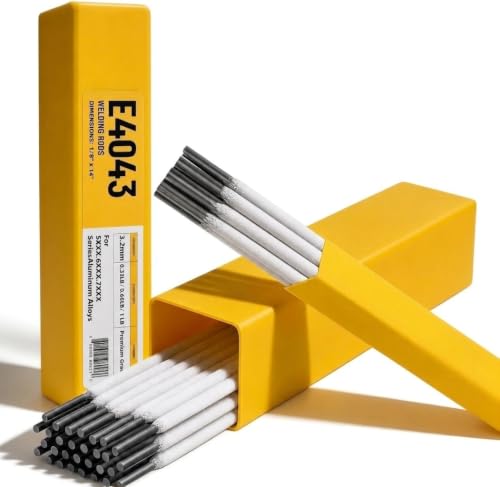
6. Cupstart E4043 Stick Rods: Best Stick Option
Pros
- E4043 aluminum-silicon composition
- 1/8-inch diameter and 14-inch length
- Lists use with several common alloys
- Moisture-resistant box is described
Cons
- Small 0.33-pound package
- Stick welding aluminum demands appropriate equipment and technique
- Not suitable as MIG wire or ordinary TIG filler
Best for: welders specifically using aluminum stick electrodes for small repairs.
Cupstart's E4043 rods are the odd one out among the conventional welding consumables here because they are stick electrodes rather than TIG rods or MIG wire. That makes them relevant only if your machine and technique are set up for aluminum stick welding. For that narrow use, the 1/8-inch diameter and 14-inch length provide a familiar electrode shape that is easy to handle.
The E4043 aluminum-silicon blend is intended to provide a stable arc, controlled puddle, and smooth welds. Cupstart says the rods are suitable for 1100, 3003, 4043, 5052, and 6061, and mentions automotive parts, marine fittings, frames, enclosures, and general projects. Those application references suggest breadth, but the base-metal and joint requirements still need to be checked before treating the rod as a structural solution.
Each electrode is 1/8 inch in diameter and 14 inches long. The thicker format can be useful when the work calls for a more substantial stick, though it is not the first choice for delicate thin material. The package weighs only 0.33 pound and is described as moisture resistant. That smaller quantity is convenient for a specific repair, but it limits how long the product will support repeated practice or fabrication.
This product is fundamentally different from SONNLER ER4043 TIG Filler. Both use an ER4043 family alloy, but one is an electrode designed for stick operation and the other is bare filler for a TIG torch. ARCCAPTAIN ER4043 MIG Wire is also not a substitute. The Cupstart rods make sense only when the welding machine, polarity, and aluminum-stick technique are already understood.
The main weakness is the specialized process. Beginners may see E4043 and assume the rod can be used anywhere ER4043 appears, which is not true. Skip it if your project calls for TIG or MIG, or if you are still choosing a first aluminum process. It is a focused option for someone who already owns the right stick equipment and wants a small supply of aluminum electrodes.
7. Ouwinway Aluminum Brazing Rods: Best Torch Brazing Rods

Pros
- 1/16-inch by 13-inch rods
- Pack contains 50 rods
- Flux-cored design needs no separate flux
- Intended for oxygen-propane or oxygen-acetylene brazing
Cons
- Brazing is not the same as fusion welding
- Requires a suitable oxygen-fuel torch
- Cleaning and heat control remain essential
Best for: aluminum repair using an oxygen-propane or oxygen-acetylene flame.
Ouwinway's rods are for torch brazing, not for loading into a TIG torch or MIG feeder. That distinction is the first thing to understand. The product is designed to be heated with an oxygen-propane or oxygen-acetylene flame, allowing the filler to flow into a prepared repair area without the base metal being treated like a conventional fusion weld.
The rods measure 1/16 inch in diameter and 13 inches long, and the package contains 50 pieces. The narrow diameter gives the operator a relatively small amount of filler to control around a repair, while the 13-inch length provides enough hand room for flame work. Ouwinway specifies a brazing temperature range of 716 to 752 degrees Fahrenheit, or 380 to 400 degrees Celsius.
The flux-cored construction is important because the product says no separate flux is required. That simplifies the materials list, but it does not eliminate surface preparation. The instructions specifically call for cleaning the welding area and heating the area to be brazed. Aluminum oxide and contamination remain major obstacles, and an easy-melt rod cannot make a dirty joint reliable.
Compared with Guangfan Flux-Cored Rods and AZB Easy-Melt Aluminum Rods, this product provides the most specific torch guidance in the listing. Its temperature range is also lower than the 600 to 650 degrees Celsius stated for Guangfan. The trade-off is that torch brazing is a different kind of repair from the TIG and MIG work supported by ARCCAPTAIN ER4043 MIG Wire and ARCCAPTAIN ER4043 TIG Rods.
The limitation is process capability. A brazed joint should not automatically be treated as equivalent to a fusion-welded joint, particularly where the repair has demanding structural or service requirements. Choose these rods for suitable aluminum repair tasks when you have the correct oxygen-fuel torch and want a compact, flux-cored filler format.
8. Guangfan Flux-Cored Rods: Best Flux-Cored Pack

Pros
- 50-piece package
- Flux-cored design needs no separate flux powder
- Intended for aluminum and aluminum-magnesium alloy
- States a 600 to 650 degree Celsius operating range
Cons
- Intended for low-temperature brazing rather than conventional TIG or MIG
- Limited information about individual rod dimensions
- Not a universal replacement for welding filler
Best for: small aluminum brazing jobs where a flux-cored rod is convenient.
Guangfan's 50-piece set is aimed at users who want a simple aluminum repair consumable without handling a separate flux powder. The rods are described as flux cored and intended only for aluminum, aluminum alloy, and aluminum-magnesium alloy. That narrower purpose is helpful because it makes clear that these are not general-purpose soldering sticks or ordinary TIG filler.
The stated operating temperature ranges from 600 to 650 degrees Celsius, with 600 degrees Celsius also identified as the melting point in the product details. That is a very different heat range and process context from the 716 to 752 degrees Fahrenheit range listed for Ouwinway Aluminum Brazing Rods. The figures should not be casually compared as though the products were identical, especially since the methods and torch conditions can differ.
The package contains 50 pieces, and the rods are intended for filling or joining small aluminum projects. Guangfan also mentions aluminum bus and guide-rod work in electrolytic aluminum plants, electric power, and chemistry applications. Those references describe intended use, not a guarantee that every repair will have the necessary strength or conductivity. Joint preparation and heat control remain central.
This set is easier to distinguish from the conventional products because there is no need to compare it with YESWELDER ER4043 MIG Wire on the same process terms. The MIG wire requires a wire feeder and shielding setup, while Guangfan is a low-temperature flux-cored brazing product. AZB Easy-Melt Aluminum Rods is the closest alternative in this list, with a similar 50-piece format and broad white-metal application language.
The weakness is the lack of a clearly stated rod diameter in the supplied information. That makes it harder to predict how quickly each piece will feed into a repair or how fine the heat control will feel. Buy it when the 50-piece flux-cored format and stated low-temperature aluminum use match your torch work, not as a shortcut around selecting the proper welding process.
9. AZB Easy-Melt Aluminum Rods: Best Easy-Melt Option

Pros
- 50-piece package
- Flux core eliminates separate solder powder
- Intended for aluminum, aluminum alloy, and aluminum-magnesium alloy
- Described as having low melting point and corrosion resistance
Cons
- No rod diameter or length is provided
- Not conventional ER4043 TIG or MIG filler
- Broad performance claims need to be matched to the repair
Best for: users trying low-temperature flux-cored rods on small aluminum or white-metal projects.
AZB's Easy-Melt Aluminum Rods target the same practical problem as Guangfan: making a small aluminum joining or surfacing job possible without a separate flux powder. The product describes the rods as flux cored, low temperature, nontoxic, odorless, and durable. The most useful of those details is the flux-core design, because it tells the buyer how the rods are meant to be used.
The product is described for aluminum, aluminum alloy, aluminum-magnesium alloy, and other white metals. It also claims a low melting point, good weldability, corrosion resistance, and high thermal and electrical conductivity. Those are attractive properties, but the listing does not provide a numerical melting point or a chemical composition. That makes this product less predictable than an ER4043 rod with a stated alloy percentage.
The package contains 50 pieces. That gives a beginner or occasional repair user many short opportunities to learn heat control, although the supplied information does not state the length or diameter of each rod. That missing dimension matters more than it might seem. A thin rod can be useful for small areas, while a thicker piece behaves very differently under a torch.
AZB is closest to Guangfan Flux-Cored Rods, which also comes in a 50-piece format and avoids separate flux. Guangfan provides a 600 to 650 degree Celsius operating range, so it is the better-documented choice when temperature information is important. Ouwinway Aluminum Brazing Rods gives even more detail about rod dimensions and oxygen-fuel use. AZB's advantage is its simple description for general low-temperature aluminum and white-metal work.
The real weakness is the sparse specification sheet. There is no listed diameter, length, melting temperature, or alloy chemistry in the supplied details. Do not choose it for a job that requires a documented filler specification. It can suit experimentation and small repairs where the process is forgiving, but experienced welders should use a better-defined consumable when joint performance matters.
10. Biscuits 5052 Practice Coupons: Best Practice Material

Pros
- 5052 aluminum material
- 24 individual coupons
- Each piece is 2 x 4 x 0.125 inches
- Supports MIG, TIG, stick, arc, gas, and brazing practice
Cons
- Not a filler metal
- 1/8-inch thickness may not represent every project
- Intended for training rather than a finished repair
Best for: beginners and experienced welders who need consistent aluminum pieces for practice.
Biscuits' 5052 Practice Coupons are not aluminum filler, but they belong in this roundup because filler selection is much easier to understand after practicing on consistent base metal. Each coupon is 5052 aluminum and measures 2 by 4 inches with a thickness of 0.125 inch. The pack contains 24 pieces, enough for repeated beads, joint experiments, and setup changes without cutting fresh stock every time.
The stated thickness is one of the most useful details. At 1/8 inch, these coupons give a welder enough material to work on heat control without being an especially massive plate. They can be used for MIG, TIG, stick, arc, gas, and brazing practice according to the product description. That broad process list makes them useful for comparing how the same base material responds to different equipment and consumables.
They also provide a controlled way to evaluate the products higher in this list. A TIG user can practice with ARCCAPTAIN ER4043 TIG Rods or SONNLER ER4043 TIG Filler. A MIG user can work with YESWELDER ER4043 MIG Wire or the ARCCAPTAIN spool. A torch user can compare the behavior of Ouwinway Aluminum Brazing Rods without sacrificing a larger sheet on the first attempt.
The coupons are also a useful reminder that base alloy matters. These are 5052 pieces, so the resulting practice experience does not automatically predict how 3003, 6061, or a casting alloy will behave. If you are learning how to prepare aluminum, a clean work area and reliable heat control for small metal repairs will help, but that related guide concerns soldering equipment rather than welding filler and should not be treated as a substitute for welding instruction.
The key weakness is that coupons do not solve the consumable-selection problem by themselves. They are practice stock, not a repair material or a documented filler. Still, for someone learning aluminum TIG, MIG, stick, or brazing, they may be the most useful item here because they turn setup changes into repeatable practice instead of guesswork.
How to choose best aluminum for welding
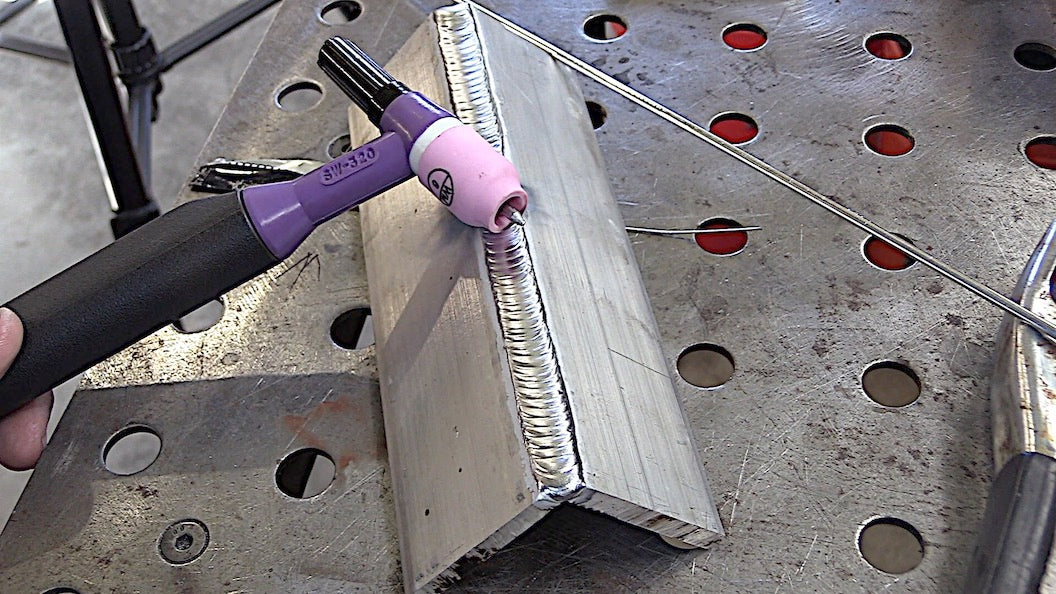
Start with the process, then match the alloy, diameter, and base metal. A TIG rod, MIG spool, stick electrode, brazing rod, and practice coupon may all involve aluminum, but they serve different jobs.
Welding process
TIG filler rods are straight pieces fed by hand into a shielded puddle. MIG wire is supplied on a spool and must work with the feeder, liner, drive rolls, contact tip, and shielding system. Stick electrodes are a separate consumable again, while flux-cored brazing rods are heated with a torch.
Choose the item whose process matches your equipment. ARCCAPTAIN ER4043 TIG Rods, YESWELDER Aluminum TIG Rod, and SONNLER ER4043 TIG Filler belong with TIG. ARCCAPTAIN ER4043 MIG Wire and YESWELDER ER4043 MIG Wire belong with an aluminum-capable MIG setup. The Guangfan, AZB, and Ouwinway products are torch-oriented brazing options.
If you are still deciding between joining methods, how torch heat changes small metal repairs can help frame the equipment question, though cutting and welding are different operations.
Filler alloy
ER4043 contains 5 percent silicon, also described as AlSi5. The silicon improves fluidity and wetting and is commonly used for general aluminum work. Several products in this roundup list compatibility with 3003, 3004, 5052, 6061, and 6063, plus casting alloys.
That list is a starting point, not permission to use one filler everywhere. Check the base alloy, service requirements, heat treatment, appearance, and joint design before selecting ER4043. The flux-cored brazing products provide less chemical detail, so they are harder to evaluate for applications that need a documented filler composition.
The process on the package matters first. ER4043 tells you about the alloy, not whether the product belongs in a TIG torch, MIG feeder, or brazing setup.
Diameter and length
Diameter controls how quickly filler enters the puddle and how much heat is needed to melt it. The 3/32-inch TIG rods from ARCCAPTAIN, YESWELDER, and SONNLER are a useful general format. Cupstart's 1/8-inch stick electrode is thicker and belongs to a different process. Ouwinway's 1/16-inch by 13-inch brazing rods are much smaller.
Length affects hand-feeding comfort rather than alloy performance. The 16-inch TIG rods offer more room for controlled feeding, while the 14-inch Cupstart electrodes and 13-inch Ouwinway rods suit their respective processes. Do not assume a longer rod is automatically easier if the diameter or process is wrong.
Pack size
Pack size should follow how often you weld and how much filler a project consumes. The 5-pound TIG packs from ARCCAPTAIN and YESWELDER make sense for repeated work. SONNLER's 1.8-pound pack is easier to match to moderate use, and Cupstart's 0.33-pound package is aimed at a much smaller stick-welding need.
The 1-pound MIG spools are similarly easy to identify and manage. The 50-piece brazing sets provide many individual attempts, while the 24 practice coupons let you repeat a setup without changing the base material every time. Quantity does not tell you whether a filler is technically suitable, but it does affect how practical the product is for your workflow.
Base-metal preparation
Aluminum oxide and contamination can ruin the result even when the filler is correct. Clean the joint, remove surface contamination, and use the preparation method appropriate to the process. Brazing products in this list specifically say to clean the area before applying heat.
Practice coupons can help isolate preparation and technique problems. A consistent 5052 coupon lets you change one variable at a time, such as torch movement, filler addition, or heat input. If a bead changes every time because the base stock is different, it becomes harder to tell whether the consumable or the technique caused the problem.
Frequently asked questions
Is ER4043 suitable for all aluminum welding?
No. ER4043 is a common general-purpose aluminum-silicon filler, but the correct choice depends on the base alloy, joint requirements, service conditions, and process. The products in this roundup list several compatible alloys, but those lists should be checked against the material being repaired.
Can TIG rods be used in a MIG welder?
Straight TIG rods are not loaded into a MIG feeder. MIG machines use wire supplied from a spool, such as the 0.035-inch ARCCAPTAIN and YESWELDER products in this list. The machine also needs an aluminum-compatible feeding arrangement and shielding setup.
Are aluminum brazing rods the same as welding rods?
No. Brazing rods are heated until the filler flows into the joint, while fusion welding melts the base metal and filler in a welding process. The Guangfan, AZB, and Ouwinway products are intended for low-temperature or torch brazing and should not be treated as conventional ER4043 TIG or MIG filler.
What shielding gas do aluminum TIG rods need?
The TIG products list 100 percent argon, helium, or a mixture as typical shielding options. The correct choice depends on the equipment, material thickness, current, and application. Shielding gas flow and torch technique also affect the finished weld.
What does 3/32 inch mean for a TIG filler rod?
It is the rod diameter, approximately 2.4 millimeters. A 3/32-inch rod is a middle-size filler that can suit general work, but the correct diameter depends on the joint, heat input, and amount of filler needed.
Are 5052 practice coupons useful for beginners?
Yes. The Biscuits coupons provide 24 consistent pieces of 5052 aluminum measuring 2 by 4 inches and 0.125 inch thick. They let a beginner practice cleaning, torch movement, filler addition, and heat control without changing the base material for every attempt.
The bottom line
The Best aluminum for welding depends on the process, but ARCCAPTAIN ER4043 TIG Rods are the strongest all-purpose pick in this group. Their 3/32-inch by 16-inch format, 5-pound pack, and clearly described ER4043 composition suit regular TIG work. YESWELDER Aluminum TIG Rod is a close alternative for welders who want the same general format and a broad stated alloy range.
For MIG, choose ARCCAPTAIN ER4043 MIG Wire or YESWELDER ER4043 MIG Wire, not a straight TIG rod. For torch repair, Ouwinway Aluminum Brazing Rods provide the clearest dimensions and process guidance. If you are learning, add Biscuits 5052 Practice Coupons so your consumable tests happen on consistent stock.
If you are undecided, match the product to your machine first, then confirm the filler alloy against the aluminum you need to join.
As an Amazon Associate we earn from qualifying purchases.