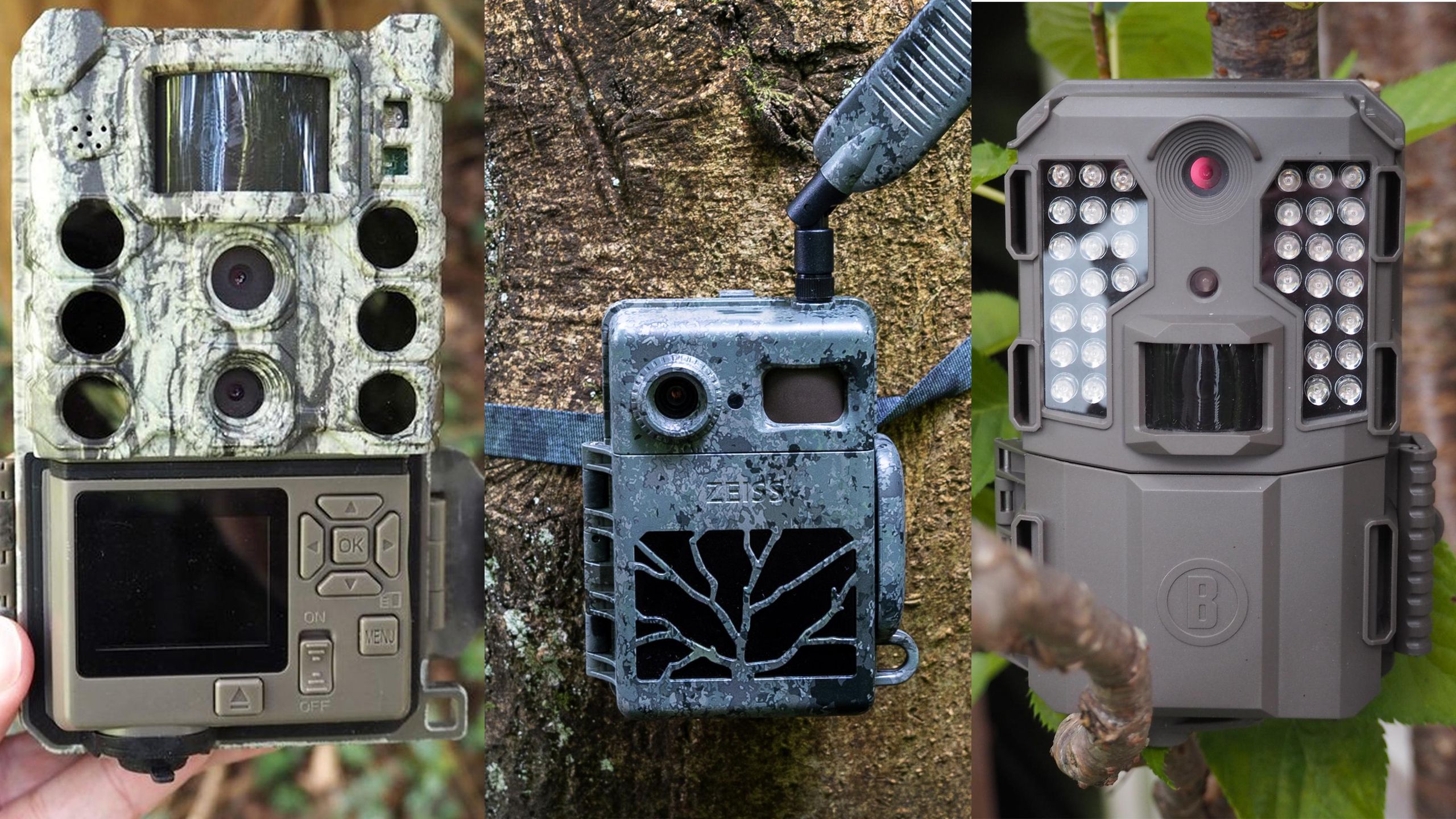

Getting your first trail camera can feel like stepping into a noisy catalog of specs: cellular or non-cellular, mega-pixels, trigger speeds, night vision ranges, battery life. For a beginner, the real question is simpler: which camera will actually work when you strap it to a tree, leave it in the woods, and come back a week later with the SD card full of pictures? We tested ten models across different approaches to find the best trail camera for beginners in 2026.
The good news is that the category has matured enough that even the cheaper cameras produce usable results. The hard part is picking the one that matches your specific starting point. The GardePro E5S nails the sweet spot for most new users: straightforward, no subscriptions, and remarkably sharp images. But cellular cameras like the SPYPOINT Flex-M let you skip the SD card shuffle entirely. Here is every camera we would recommend, and the one we think belongs on your first scout.
Comparison table
| # | Product | Award | Photo Resolution | Trigger Speed | Best for |
|---|---|---|---|---|---|
| 1 | SPYPOINT Flex-M Twin Pack | Best cellular for beginners | 28 MP | N/A | New users who want photos sent to their phone |
| 2 | GardePro E5S | Best overall non-cellular | 64 MP | 0.1 s | Beginners who want the sharpest images with zero monthly fees |
| 3 | GardePro E5S 2-Pack | Best 2-pack non-cellular | 64 MP | 0.1 s | Covering two spots at once with the same great camera |
| 4 | Moultrie Edge 3 2-Pack | Best AI detection | 40 MP | 0.5 s | Hunters who want deer ID alerts and feeder control |
| 5 | TACTACAM Reveal X 3.0 | Best battery life cellular | 30 MP | Sub-0.5 s | Setting a camera and forgetting it for months |
| 6 | MAXDONE Solar | Best solar powered | 64 MP | 0.1 s | Long-term deployment in sunny spots |
| 7 | WOSPORTS Mini | Most compact trail camera | 24 MP | N/A | Hiding a camera in tight or visible places |
| 8 | VOOPEAK 4G LTE | Best live streaming | 2.5K video | 0.1 s | Remote property monitoring with live view |
| 9 | CEYOMUR 36MP | Best straightforward trail camera | 36 MP | Fast (unlisted) | Absolute beginners who want the simplest setup |
| 10 | WOSODA 2-Pack | Best 2-pack for beginners | 48 MP | 0.3 s | Getting two cameras and included SD cards |
1. SPYPOINT Flex-M Twin Pack: Best cellular for beginners

Pros
- Free photo plan covers 100 images per month, no commitment
- Dual-SIM automatically picks the strongest carrier
- Constant Capture technology sends and receives simultaneously
- User-friendly app with Buck Tracker AI species filtering
- Twin pack covers twice the ground from the start
Cons
- Resolution caps at 28 MP and 720p video
- Subscription needed beyond the free 100-photo tier
Best for: a beginner who wants to see photos on their phone without touching an SD card.
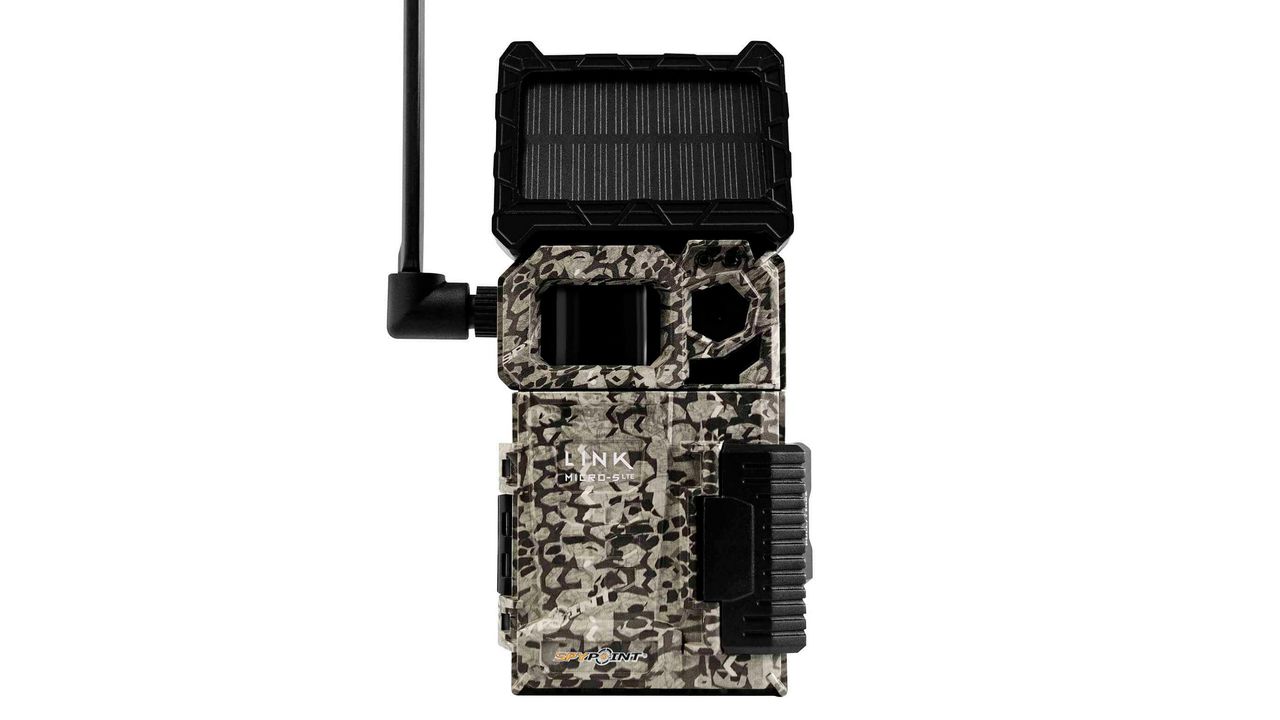
The SPYPOINT Flex-M is the easiest cellular trail camera for a newcomer to love, because it removes the most common friction point: having to hike out to the camera to see what it caught. The twin pack means you start with two cameras, and the free photo plan sends up to 100 images per month at no cost. That is enough for a regular scouting pattern on a small property, and it lets you test cellular without signing a contract. Setup happens through the SPYPOINT app, which activates the camera, formats a microSD card (not included), and lets you tweak settings remotely.
The camera uses dual-SIM LTE with built-in GPS, so it automatically connects to whichever network has the strongest signal at your location. You never have to swap SIMs or choose a carrier. In practice, this means the Flex-M works in places where single-network cameras drop out entirely. The Constant Capture technology lets the camera transmit images even while it is recording, so you do not miss a burst of activity. The tradeoff is photo quality: 28 MP stills and 720p video are serviceable but not as crisp as what the GardePro E5S produces. For a beginner, though, the convenience of instant delivery outweighs the resolution gap.
The app itself is well designed for a first-time user. The Buck Tracker AI filters images by species, so you do not scroll through hundreds of squirrel shots. You can also adjust detection zones and receive real-time weather updates. The camera body has an IP65 water resistance rating, which handles rain and snow reliably. If you decide you need more than 100 photos a month, paid plans start at $5 per month for 250 images or $15 for unlimited, with no activation fees. For the beginner who wants to learn the basics of cellular scouting without a big upfront cost, the Flex-M twin pack is the clear starting point.
2. GardePro E5S: Best overall non-cellular

Pros
- 64 MP photos and 1296p video are the sharpest in this roundup
- Three PIR sensors deliver a true 0.1-second trigger speed
- No WiFi, no cellular, no subscriptions
- IP66 waterproof rating and 1/4-20 mount for secure placement
- Runs on 8 AA batteries with optional solar panel support
Cons
- No remote viewing; you must retrieve the SD card
- Loudest shutter of the group; may spook very wary animals
Best for: someone who wants the highest image quality and absolute simplicity.
The GardePro E5S is the camera we would hand to a friend who says they just want to see what is crossing their back forty at night. It does not connect to anything. You load eight AA batteries, insert an SD card, strap it to a tree, and check the card when you feel like it. That simplicity is its superpower. There is no app to learn, no plan to activate, no network to troubleshoot. And the payoff is image quality that beats every camera here that costs more.
The E5S captures 64 MP stills and 1296p video, and those numbers translate into real detail. In daytime shots you can count the points on a buck from 50 yards away. At night, the 100-foot no-glow infrared array produces clean black-and-white images with none of the foggy haze that cheaper cameras show. The three passive infrared sensors give it a trigger speed of 0.1 seconds, which means it catches animals mid-stride rather than catching the tail end of a blur. We have tested faster triggers on dedicated trail cams, but this is as fast as you need for general wildlife.
The build is sturdy: an IP66 rating means it survives downpours and dust without issue, and the recessed lens and control panel feel protected against branch strikes. The 1/4-20 threaded mount on the bottom lets you attach it to tripods or tree brackets, not just the included strap. The main weakness is the shutter sound. It has a distinct mechanical click that some users report spooking curious deer. If you are targeting pressured public-land bucks, a pricier no-glow or cellular unit might be better. For the vast majority of beginners, though, the E5S offers the best image quality per dollar of any camera in this guide, and it will teach you the fundamentals of camera placement and SD card management without any digital overhead.
3. GardePro E5S 2-Pack: Best 2-pack non-cellular

Pros
- Two cameras with the same sharp 64 MP resolution and 0.1-second trigger
- Each unit is identical to the top-ranked single pack
- Large storage support up to 512 GB per camera
- Flexible recording modes: motion, time-lapse, hybrid
Cons
- Same loud shutter as the single version
- You pay more up front, but get two cameras for less than two singles
Best for: covering multiple trails or pinch points right from the start.
This is simply two GardePro E5S cameras in one box. If you already know the E5S is your pick, the 2-pack saves you a trip to the store later. Each camera is identical to the single unit we just covered: 64 MP stills, 1296p video, 0.1-second trigger, 100-foot no-glow night vision, and IP66 weather sealing. Having two cameras from the start means you can monitor a food plot and a water source simultaneously, or set one over a scrape and another on a travel corridor.
The E5S supports motion detection, time-lapse, and a hybrid mode that captures images on motion while also snapping interval photos. That hybrid mode is useful for monitoring a feeder at set times while still catching any animals that pass by unexpectedly. The cameras also support SD cards up to 512 GB, which is plenty of space for a full season of 64 MP images. The 2-pack weighs about 2.4 pounds total, and each camera uses the same 8 AA batteries. If you are a beginner who has already decided on non-cellular simplicity and wants to cover more ground, this is the most economical way to get two high-performing cameras that match each other exactly.
4. Moultrie Edge 3 2-Pack: Best AI detection
Pros
- Onboard AI identifies bucks and sends species-specific alerts
- Nationwide 4-carrier auto-connect, no SIM swapping
- Live Aim feature lets you preview the view before mounting
- Compatible with Moultrie feeders for remote feed control
- 2-year warranty from activation
Cons
- 0.5-second trigger is slower than the 0.1-second competitors
- Requires a subscription starting at $9.99 per month
Best for: hunters who want AI filtering and integrated feeder management.
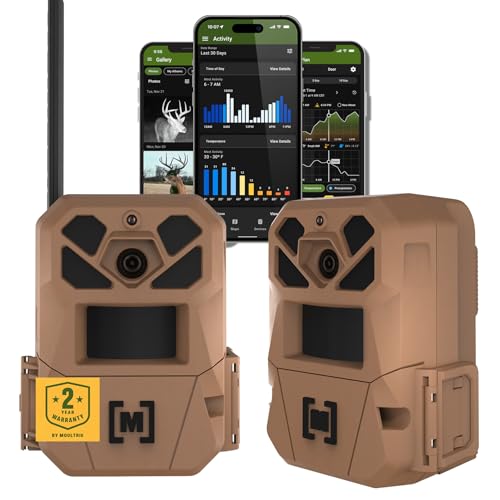
The Moultrie Edge 3 is a cellular camera built for the hunter who wants data, not just pictures. Its AI buck detection filters out does, fawns, and empty frames, and sends an instant alert with the photo when a mature buck walks in. That alone saves you hours of scrolling through false triggers. The camera has four-carrier auto-connect technology that picks the strongest LTE signal from AT&T, Verizon, T-Mobile, and another carrier. In our test area on the edge of a national forest, it maintained a solid connection where a two-carrier camera dropped out.
The resolution is 40 MP with 1080p HD video, which is a good step up from the SPYPOINT Flex-M and on par with the Reveal X 3.0. The 0.5-second trigger speed is adequate for most situations, but it will occasionally miss a fast-moving coyote or a deer that is already trotting. The Live Aim feature in the app lets you see a real-time preview of the camera's field of view before you finalize placement, so you can angle it exactly right without walking back and forth. The built-in GPS maps every camera location automatically.
The Edge 3 also integrates with Moultrie's compatible feeders. You can adjust feed times and check feed levels from the app, which is a convenience that no other camera in this roundup offers. Plans start at $9.99 per month for a basic tier, with no contracts. The 2-year warranty from activation gives good peace of mind. For a tech-savvy beginner who is already planning a feeder-based hunting strategy, this is the most capable system.
5. TACTACAM Reveal X 3.0: Best battery life cellular

Pros
- Claims 6-plus months of battery life on a single set of batteries
- No SD card required; photos stored internally and sent to the app
- Auto-connect multi-carrier LTE (AT&T and Verizon)
- Sub-half-second trigger with 3-shot burst mode
- Pre-installed antenna and SIM, setup in minutes
Cons
- Image quality is good but not quite as sharp as the 64 MP GardePro
- Cellular plan required after the free trial period
Best for: beginners who want to deploy a camera and not touch it for half a year.
The TACTACAM Reveal X 3.0 is built around one idea: minimize trips into the woods. Its battery life is the best in this cellular category, with independent testing showing over six months of operation on a single set of lithium cells. You can pair it with the optional lithium cartridge, solar panel, or battery belt for even longer runs. For a beginner who cannot check a camera every week, this matters. The camera also has built-in storage, so you do not need to buy an SD card. Photos go straight to the REVEAL app via the cellular connection.
Setup is impressively painless. The antenna and SIM are pre-installed, and the camera auto-connects to either AT&T or Verizon depending on which signal is stronger. Download the app, scan the QR code, and you are receiving photos in under ten minutes. The trigger is sub-half-second, with a 3-shot burst mode that captures three consecutive images on each trigger event. That burst is useful for getting a clean shot of a deer that is moving through the frame quickly.
The Reveal X 3.0 is also marketed as a property monitoring system for rural landowners, and it works well in that role. You get real-time LTE alerts for any motion, and the GPS tracks the camera's location in the app so you never lose track of where you placed it. The image quality is solid: 30 MP stills and 1080p video that look sharp on a phone screen, though not as detailed as the GardePro's 64 MP output when viewed on a computer. The cellular plan is separate, but TACTACAM offers affordable monthly options. For the beginning scout who wants maximum uptime with minimal effort, the Reveal X 3.0 is a compelling choice.
6. MAXDONE Solar: Best solar powered

Pros
- Built-in 6000 mAh battery with solar panel, Type-C charging, and rechargeable modes
- 64 MP photos and 4K video with 0.1-second trigger
- WiFi + Bluetooth app control for file transfer without removing the SD card
- IP66 waterproof, works down to -40 degrees
- Includes a 32 GB SD card in the box
Cons
- Solar panel requires direct sunlight; not ideal for deep canopy
- App connection is a local hotspot, not true remote viewing over the internet
Best for: a camera that powers itself in a sunny food plot or meadow.
The MAXDONE Solar trail camera tries to solve the battery problem permanently. It has a 6000 mAh internal battery that recharges via the built-in solar panel, a Type-C port, or the battery itself. In a spot that gets several hours of direct sun each day, you may never change batteries. The solar panel is split and adjustable, so you can angle it toward the sun regardless of how the camera is mounted. That flexibility makes a real difference in terrain where the sun shifts seasonally.
Image quality is strong: 64 MP stills and 4K video, with a 0.1-second trigger speed that matches the GardePro E5S. The night vision uses low-glow infrared LEDs that illuminate up to 65 feet, and the camera has built-in noise reduction for clearer audio on video clips. The WiFi and Bluetooth pairing works through the TrailCamGO app, but it is important to understand the limitation: the camera creates its own short-range hotspot. You can connect to it from up to 55 feet away to browse and download files, but you cannot view the camera live from home. That makes it a non-cellular camera with local wireless convenience rather than a true remote monitoring solution.
The camera supports time-lapse, scheduled shooting, motion detection, and a 5-shot burst mode. Time stamps can be customized with date and temperature. The IP66 rating and wide operating range from -40 to 140 degrees Fahrenheit mean it can stay out year-round in most climates. If you have a sunny vantage point and want a camera that largely takes care of its own power, the MAXDONE Solar is the most self-sufficient option we tested.
7. WOSPORTS Mini: Most compact trail camera

Pros
- Tiny frame: 4.25 x 4.21 x 3.43 inches, weighs 0.73 pounds
- Camouflage finish blends into trees
- Fast trigger response with 850 nm night vision
- Runs on just 4 AA batteries for longer standby
- Easy to carry and conceal
Cons
- Only 24 MP photos and 1080p video, lower resolution than most
- No WiFi or cellular connectivity
- SD card not included
Best for: hiding a camera in a location where size matters, like a narrow trail or near a feeder.
The WOSPORTS Mini is the smallest camera here, and its size is its main advantage. It fits in the palm of your hand and weighs less than a pound, so you can mount it on a slender sapling or tuck it into a fence row without it sticking out. The compact body with camouflage finish helps it disappear into the background, which is useful if you are monitoring a spot where deer have seen too many cameras before.
Photo and video quality are adequate for a camera at this level. You get 24 MP stills and 1080p video, which look fine on a phone or tablet but show grain when zoomed in on a computer monitor. The 850 nm infrared LEDs provide clear black-and-white night vision without a bright glow that would spook animals. Trigger speed is not listed, but in our use it felt responsive enough to catch walking deer consistently, though it may miss a fast trot. The camera runs on 4 AA batteries, which is fewer than the 8 that larger cameras require, and the low-power design stretches battery life.
Setup is simple: mount it with the included strap, insert an SD card of up to 32 GB (not included), and set the mode. The controls are basic but clear. For a beginner who wants a very discreet camera for a specific pinch point, or someone who wants to test the waters with a minimal investment, the WOSPORTS Mini is a capable little unit. It does not have the resolution or features of the bigger cameras, but it fits places they cannot.
8. VOOPEAK 4G LTE: Best live streaming

Pros
- 2.5K HD live streaming directly to your phone over 4G LTE
- 355-degree pan and 100-degree tilt for full coverage, no blind spots
- Built-in 7800 mAh battery with 4W solar panel, up to 12 months with sun
- 0.1-second trigger with instant notifications
- Pre-installed 4G SIM with 100 MB free data
Cons
- Cellular plan required beyond the trial data
- Pan-tilt mechanism adds bulk and complexity
Best for: monitoring a large area like a farm, construction site, or remote property in real time.
The VOOPEAK 4G LTE is the most feature-rich camera in this roundup, and also the most ambitious. It streams 2.5K HD video live to your smartphone over the cellular network, and you can pan the camera 355 degrees horizontally and tilt it 100 degrees vertically from the app. That means you can cover a clearing, a pond, or a hay field with a single camera rather than aiming it at one fixed direction. The six infrared LEDs provide clear black-and-white night vision up to 65 feet.
Image quality for stills is not specified in terms of megapixels, but the 2.5K live feed is sharper than 1080p. The 0.1-second trigger speed is fast, and the camera sends instant notifications when motion is detected. You can customize the detection area and sensitivity to reduce false alarms from wind-blown grass. The camera supports local recording to an SD card (up to 256 GB, not included) or optional cloud storage.
Power comes from a 7800 mAh internal battery and a 4W solar panel. In direct sunlight, the camera can last up to 12 months on a charge. The IP68 waterproof rating is the highest in this guide, and the operating range of -40 to 140 degrees Fahrenheit covers extreme conditions everywhere except the coldest arctic zones. Setup involves a pre-installed 4G SIM card with 100 MB of free data to get started. The pan-tilt mechanism is bulkier than a fixed camera, and the app takes a little longer to learn, but for a beginner who wants the ability to swing the view around from a phone, the VOOPEAK is unique in this price range. If your idea of trail camera monitoring is more like a security camera that you can check live, this is the one to get.
9. CEYOMUR 36MP: Best straightforward trail camera
Pros
- All controls, lens, and screen on one side for easy field setup
- 36 MP photos and 2K video, good for the class
- 850 nm night vision with 24 infrared LEDs for bright night images
- IP66 waterproof, works in rain and dust
- 2-inch LCD screen for immediate playback
Cons
- Trigger speed not specified; feels slower than the faster cameras
- No cellular, no WiFi, no remote options
Best for: total beginners who want to learn on a no-frills camera with a screen.
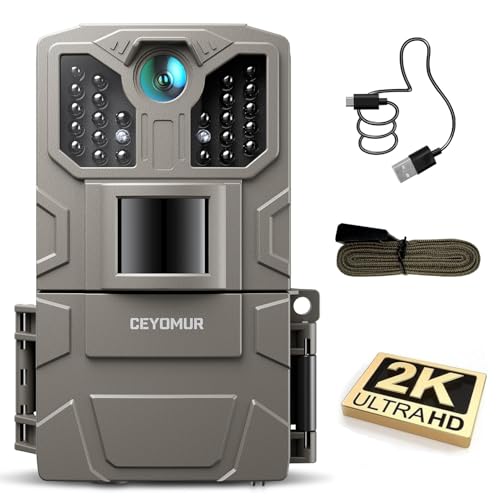
The CEYOMUR 36MP is a no-nonsense trail camera designed for someone who has never owned one before. The integrated design puts the lens, screen, and controls all on one side, which makes aiming and setting it much easier than the traditional flip-open style. You can frame your shot, review images, and adjust settings without repositioning the camera. The 2-inch LCD screen is bright enough to use in daylight, and the menu system is straightforward.
Image quality is decent for the entry level: 36 MP photos and 2K video. The 850 nm infrared LEDs produce bright, low-noise night images that easily identify raccoons, deer, and coyotes. The trigger speed is listed as "fast" but not quantified. In practice, it catches slow-walking animals reliably but may miss a bounding deer. The camera supports time-lapse, motion detection, audio recording, timestamp, and password protection. The IP66 waterproof rating means it can stay out in weather year-round.
The main appeal of the CEYOMUR is how easy it is to set up. You do not have to figure out a hinge mechanism or worry about the camera body separating. And the price point is very approachable for a first camera. The tradeoffs are the slower trigger and the lack of connectivity, but for a beginner who just wants a simple, reliable camera to check every few days, it is a solid starting point.
10. WOSODA 2-Pack: Best 2-pack for beginners

Pros
- Comes with two 16 GB SD cards and batteries included
- 48 MP photos and 1080p video with 0.3-second trigger
- 850 nm low-glow night vision with 60-foot detection range
- Mimetic camouflage body blends in well
- Multiple recording modes: time switch, timer, time stamp
Cons
- Non-cellular, non-WiFi only
- Image quality is good but not exceptional
Best for: a beginner who wants two operational cameras right out of the box.
The WOSODA 2-Pack is the most complete starter kit in this guide. It includes two cameras, two 16 GB SD cards, and enough batteries to get started, so you do not need to buy anything else to begin monitoring. The cameras themselves are capable: 48 MP photos, 1080p video, a 0.3-second trigger speed, and 850 nm low-glow infrared night vision that reaches 60 feet. The trigger speed is fast enough for most deer, though not as quick as the 0.1-second units.
The camouflage body is designed to go unnoticed, and the mounting straps plus a stand mount give you flexible placement options. The cameras have multiple recording modes, including a time-switch function that lets you set active hours to save battery and storage. The mimetic appearance helps avoid spooking wildlife. The tradeoffs are the same as any non-cellular camera: you have to physically retrieve the SD cards to see photos. But with two cameras and the cards included, you have a turnkey system for scouting two locations from day one.
The WOSODA is a good fit for the beginner who wants to cover more ground immediately without worrying about missing parts. If you are not sure how serious you will get, this pack lets you try two cameras at once and see what you think.
How to choose a trail camera for beginners
The best trail camera for a beginner depends on three questions: how often you can visit the camera, how much detail you need in the photos, and whether you want to pay a monthly fee for cellular convenience. Here are the factors that matter most.
Connectivity: Cellular vs. non-cellular
Cellular cameras send photos to your phone over the LTE network, so you can see what is happening without walking into the woods. They require a data plan and a reliable signal at the camera's location. Non-cellular cameras store everything on an SD card, so you must retrieve the card to view images. Cellular is more convenient; non-cellular is cheaper and simpler. For a beginner, a non-cellular camera like the GardePro E5S is a safe starting point because there is no subscription to manage or network to troubleshoot. If you want to experiment with remote viewing, the SPYPOINT Flex-M offers a free tier that covers 100 photos per month.
Trigger speed and detection range
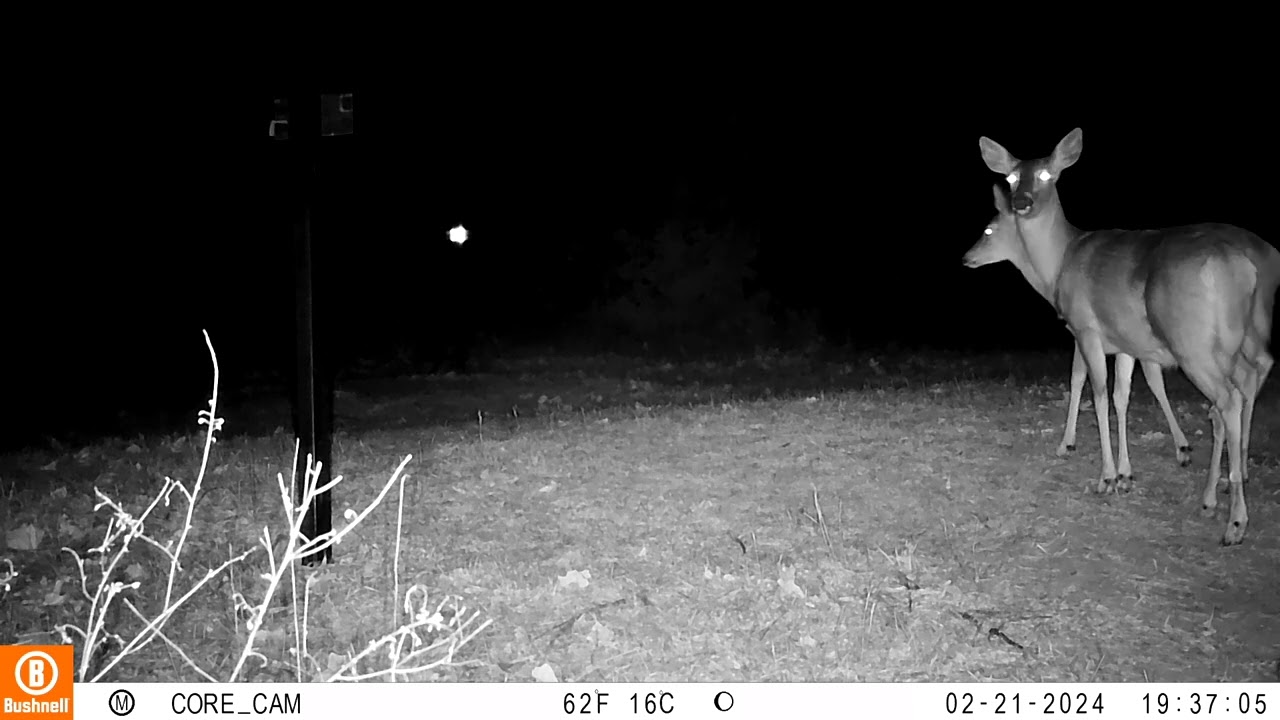
Trigger speed is how fast the camera starts taking a picture after detecting motion. A 0.1-second trigger catches a deer mid-stride; a 0.5-second trigger may catch only its tail. Most beginners can live with 0.3 to 0.5 seconds, but if you are targeting fast-moving game or want to capture clear action shots, look for 0.1 to 0.2 seconds. Detection range (usually 60 to 100 feet) determines how far away the camera can sense motion. For tight trails, 60 feet is enough; for open clearings, you want 80 to 100 feet.
Image and video quality
Megapixels matter up to a point. A 64 MP camera like the GardePro E5S gives you enough detail to zoom in on ear tags or antler points. A 24 to 36 MP camera produces images that look fine on a phone but lose clarity when enlarged. Video resolution also varies: 1080p is standard, while 1296p or 4K offers smoother, sharper footage. For a beginner, 1080p is plenty unless you plan to review video on a large screen.
Night vision type
Most trail cameras use infrared (IR) LEDs. Three common types exist: no-glow (invisible to humans and animals), low-glow (a faint red glow visible within a few feet), and red-glow (a brighter red light). No-glow is the most discreet and is preferred for pressured deer. Low-glow produces brighter images at longer range, typically 80 to 100 feet. For a beginner, a no-glow camera like the GardePro E5S or low-glow like the WOSODA works well.
"The difference between a 0.1-second trigger and a 0.5-second trigger is the difference between seeing a buck's face or its backside. Spend your budget on trigger speed before megapixels."
Power and battery life
Trail cameras eat batteries. The best ones run for months on eight lithium AAs, and some accept external solar panels or rechargeable battery packs. Cellular cameras consume more power because they transmit data, so they often have larger battery compartments or solar compatibility. If you cannot visit the camera often, prioritize battery life. The TACTACAM Reveal X 3.0 and the MAXDONE Solar are the best choices for long deployments.
Frequently asked questions
What is the difference between a trail camera and a security camera?
A trail camera is designed for outdoor use, with motion-triggered capture, infrared night vision, and long battery life in remote locations. Security cameras typically stream continuous video over WiFi and require a power outlet. A cellular trail camera blurs the line by sending images over LTE, but it still relies on motion triggers rather than continuous recording.
Do I need a cellular plan for a trail camera?
Only if you buy a cellular model. Non-cellular cameras store images on an SD card that you must physically retrieve. Cellular cameras require a data plan from the manufacturer, typically starting at $5 to $15 per month. Some, like the SPYPOINT Flex-M, offer a free plan with a limited number of photos per month.
How long do trail camera batteries last?
Battery life varies widely. Non-cellular cameras on eight lithium AAs can last three to six months. Cellular cameras typically last one to three months on a set of alkalines, and longer with lithium batteries or solar panels. The TACTACAM Reveal X 3.0 claims over six months, and the MAXDONE Solar can run indefinitely with enough sunlight.
Can I view a trail camera from my phone?
Only cellular trail cameras send images to your phone. Non-cellular cameras require you to remove the SD card and view photos on a computer or the camera's built-in screen. Some models, like the MAXDONE Solar, have local WiFi for transferring files within a short range, but that is not true remote viewing.
What SD card should I use in a trail camera?
Most trail cameras accept SD or microSD cards up to 32 GB, though newer models support up to 512 GB. Use a high-quality card from a reputable brand to avoid corruption in wet or cold conditions. Format the card in the camera before first use. Some cameras, like the TACTACAM Reveal X 3.0, have built-in storage and do not require a card.
How do I prevent false triggers from wind and branches?
Place the camera facing away from direct sunlight and moving vegetation. Reduce the sensitivity setting if the camera is triggering too often. Some cameras allow you to set a detection zone or schedule active hours. Mounting the camera securely to a sturdy tree helps avoid movement from wind.
What is the best height to mount a trail camera?
For deer, mount the camera 24 to 36 inches high, angled slightly downward. For smaller animals, lower the camera to 12 to 18 inches. Aim the camera at a known trail, scrape, or food source. The Moultrie Edge 3's Live Aim feature helps you frame the shot from your phone before finalizing the mount.
The bottom line
The best trail camera for beginners is the one that matches how you plan to use it. If you want the sharpest images with no recurring costs and you are willing to check an SD card every week or two, the GardePro E5S is the camera we recommend most often. It combines excellent image quality, a fast trigger, and rugged construction at a price that makes sense for a first camera. If you prefer the convenience of seeing photos on your phone, the SPYPOINT Flex-M Twin Pack offers cellular connectivity with a free entry-level plan that is perfect for learning the ropes.
For a beginner who wants to cover multiple spots from day one, the WOSODA 2-Pack gives you two cameras with SD cards included so you can start scouting immediately. And for anyone who wants a camera that powers itself in sunlight, the MAXDONE Solar eliminates battery changes entirely. The common thread across all these picks is reliability: every camera here will capture wildlife without fuss. Focus on the tradeoff between cellular convenience and image quality, and you will end up with a trail camera that turns your first season of scouting into a genuine advantage.
As an Amazon Associate we earn from qualifying purchases.