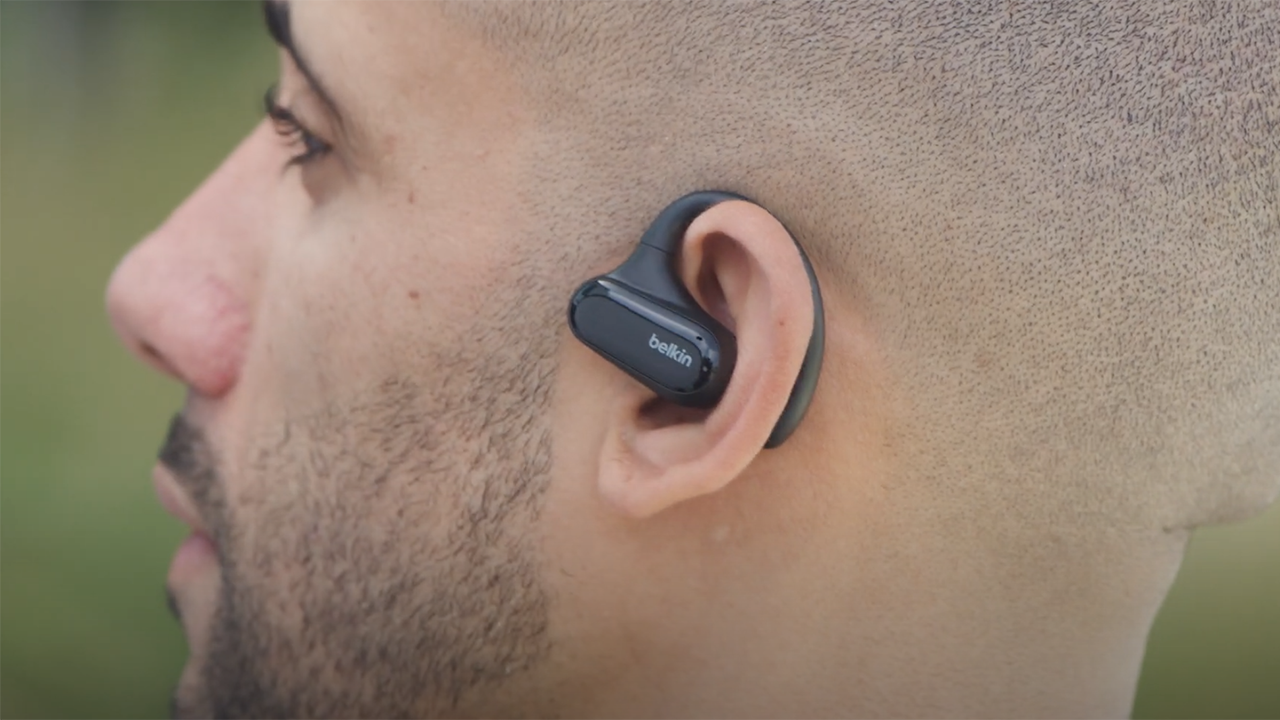

Open ear buds solve a very specific problem: you want music, podcasts, or calls without plugging your ears shut. The challenge is finding a pair that stays put, sounds full enough outdoors, and does not turn every conversation into a struggle.
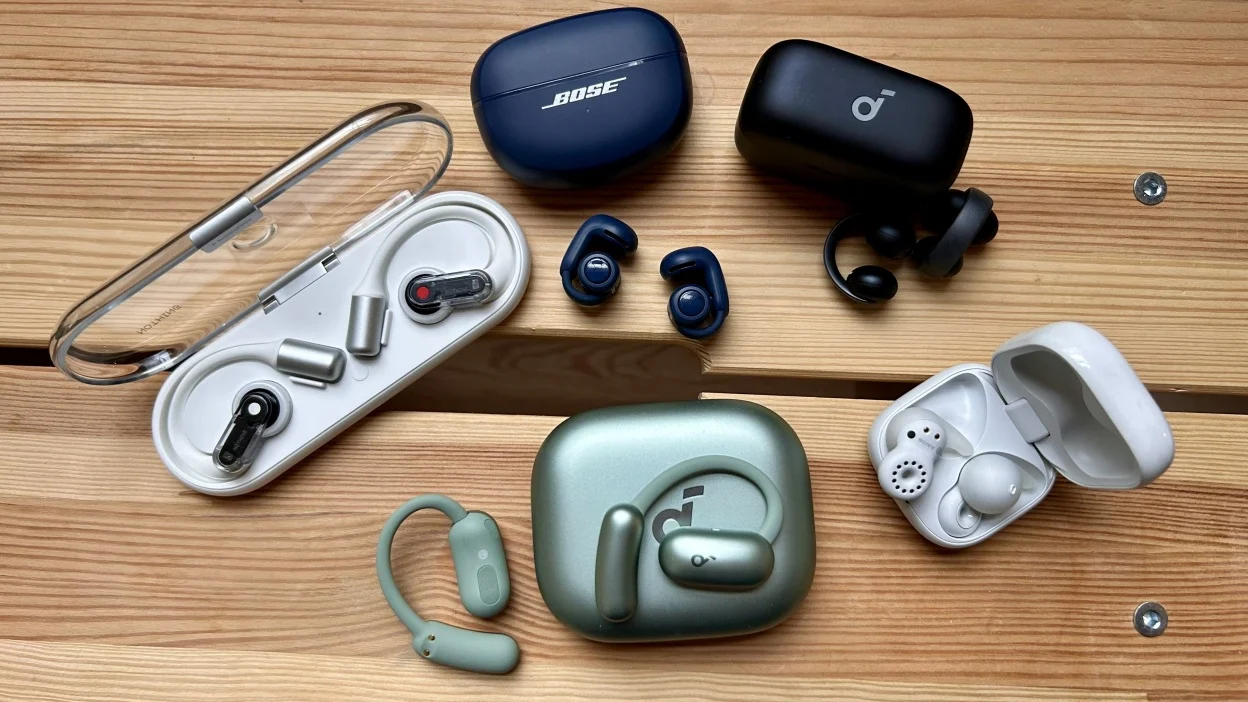
The Best Open Ear Buds in this group range from lightweight clip-on designs to sport headphones with a neckband and bone conduction technology. Open designs cannot isolate you from traffic or gym noise like sealed earbuds can, so fit, call quality, battery life, and usable bass matter more than a spec sheet suggests.
Our top pick is the SHOKZ OpenRun Pro 2, with the Soundcore V20i, SHOKZ OpenFit 2, and several capable workout-focused alternatives close behind.
| # | Product | Award | Driver | Battery | Water resistance | Best for |
|---|---|---|---|---|---|---|
| 1 | SHOKZ OpenRun Pro 2 | Best for runners | Dual drivers | 12 hours | Not stated | Running and cycling |
| 2 | Soundcore V20i | Best overall | 16mm | Not stated | Not stated | Everyday listening |
| 3 | SHOKZ OpenFit 2 | Best premium earbuds | DualBoost composite drivers | 11 hours, 48 with case | IP55 | Calls and commuting |
| 4 | TOZO OpenEarRing | Best for glasses wearers | Not stated | 10 hours, 40 with case | IPX5 | Long wear |
| 5 | Soundcore V30i | Best app controls | 14.2mm | 12 hours, 36 with case | IP55 | Customizable listening |
| 6 | Soundcore C50i | Best clip-on fit | 12mm | 8 hours, 28 with case | IP55 | Gym sessions |
| 7 | Raycon Essential Open Earbuds | Best lightweight design | Not stated | 36 hours | Sweat and water resistant | Daily movement |
| 8 | TRAUSI 80H Open Earbuds Black | Best battery life | Not stated | 80 hours | IPX7 | Frequent travelers |
| 9 | OHAYO T10 | Best large-driver sound | 15mm | 10 hours, 40 with case | IPX6 | Outdoor workouts |
| 10 | TRAUSI 80H Open Earbuds White | Best white option | Not stated | 80 hours | IPX7 | Outdoor training |
1. SHOKZ OpenRun Pro 2: Best for runners

Pros
- Keeps the ears open to traffic and conversations
- Dual-driver design adds more depth than typical bone conduction
- Secure memory-wire frame stays stable during movement
- Wind-resistant microphones support clearer calls
- App includes dedicated EQ modes
Cons
- Neckband design is less discreet than separate earbuds
- Open sound still cannot compete with sealed earbuds in loud places
- No battery case for topping up between sessions
Best for: runners and cyclists who need a stable, highly aware fit.
The SHOKZ OpenRun Pro 2 is the pair we would choose for road running. Its unibody frame sits behind the head, with ergonomic ear hooks and a Ni-Ti alloy memory wire holding the transducers in place. That construction is less fiddly than trying to position two independent hooks, and it avoids the loose, shifting sensation that can make open earbuds distracting during a run.
This model uses dual drivers, combining bone conduction technology for clear highs with air conduction for deeper bass. That combination gives it a more rounded presentation than a conventional bone conduction design, especially with speech, drums, and bass lines. It still sounds open and light compared with sealed in-ear earbuds, but its dedicated Classic Mode and Volume Boost Mode let you adjust the presentation for quieter roads or noisier surroundings.
The 12-hour battery is enough for long training blocks, and there is no charging case to carry or misplace. The tradeoff is that you need to recharge the headphones themselves. The dual wind-resistant microphones and AI noise reduction are designed to filter background noise, including wind up to 15 miles per hour, which makes the OpenRun Pro 2 more suitable for calls outside than many basic hook-style models.
Compared with the SHOKZ OpenFit 2, this is the better sports tool because the frame feels more purposeful and the ears remain completely unobstructed. The OpenFit 2 is more natural for office use and general commuting, while the Soundcore V20i offers a more conventional earbud experience with adjustable positions. Skip the OpenRun Pro 2 if you want pocketable earbuds or strong isolation. Choose it if stability, awareness, and outdoor calls matter most.
2. Soundcore V20i: Best overall

Pros
- Large 16mm drivers give open audio useful bass weight
- Four adjustable positions help refine the fit
- Four microphones and AI enhancement support calls
- Non-intrusive design suits long listening sessions
- Customizable lights add a distinctive touch
Cons
- Battery and water-resistance details are not specified in the supplied information
- Bass and detail still depend heavily on ear placement
- The light feature will not appeal to everyone
Best for: someone who wants flexible everyday earbuds with an adjustable fit.
The Soundcore V20i gets the fundamentals right without asking you to commit to a neckband. Each earbud can rotate through four positions, so you can move the speaker closer to the ear canal or ease pressure away from sensitive spots. That adjustability is more useful than a fixed hook when different people share the same household, and it gives the V20i a broader fit range than the Soundcore V30i.
Sound comes from 16mm drivers with titanium-coated domes and Soundcore’s BassUp processing. A large driver does not guarantee deep bass in an open design, because sound escapes around the ear, but the V20i has the hardware and processing to give kick drums and lower notes more presence. Spoken audio should also benefit from the open presentation, since you are not balancing a plugged-ear sensation against the voice.
Four microphones and an AI algorithm handle calls. That is a stronger call setup on paper than the simpler open earbuds in this list, though outdoor performance will still depend on wind and traffic. The earbuds also include customizable tune-synced lights. They are a cosmetic feature rather than a listening advantage, but they make the V20i less anonymous than plain black sport hooks.
The V20i is a better all-purpose choice than the TRAUSI 80H Open Earbuds Black when you care more about fit adjustment and a known audio platform than maximum case endurance. The SHOKZ OpenFit 2 sounds like the more polished premium alternative, while the V20i is easier to recommend for mixed use around the house, office, and neighborhood. Avoid it if you need a clearly stated water rating or the longest possible battery cycle. For everyone else, the four-position fit makes this the most adaptable pick.
3. SHOKZ OpenFit 2: Best premium earbuds

Pros
- DualBoost drivers and OpenBass 2.0 target fuller sound
- Ni-Ti alloy ear hooks contour to the ear
- Physical buttons are easier to operate while moving
- Supports switching between two paired devices
- App adds EQ and control customization
Cons
- IP55 protection is less substantial than IPX7
- 9.4 gram earhooks are not the lightest design here
- Bass remains less isolated than with sealed earbuds
Best for: listeners who want open awareness without giving up refined controls and calls.
The SHOKZ OpenFit 2 feels like a deliberate attempt to make open earbuds work beyond the running track. The earhooks use a Ni-Ti alloy that contours to the wearer, and the 9.4 gram weight per earbud is light enough for long sessions without making the hardware feel flimsy. The fit is secure, but it remains a hook around the ear rather than a pressure seal inside it.
Its DualBoost composite drivers work with the OpenBass 2.0 algorithm to separate mids and highs from the low end. That matters with podcasts and video calls, where voices need to remain intelligible, but it also gives music more shape than the thin sound common to basic open-air designs. DirectPitch 2.0 is intended to keep sound private, though an open earbud will never isolate in the same way as a sealed model.
The OpenFit 2 offers up to 11 hours on one charge and 48 hours with its case. A 10-minute charge can add 2 hours of listening, which is useful when a workout starts before the earbuds are fully charged. Physical multifunction buttons control volume, track changes, and calls without requiring a swipe across a small touch surface. The ability to switch between two paired devices is particularly helpful for moving from a phone to a laptop.
The Soundcore V20i has more fit-position flexibility, and the SHOKZ OpenRun Pro 2 is better for runners who want a behind-the-head frame. The OpenFit 2 sits between them, with the more polished controls and a stronger everyday audio focus. Its real weakness is that IP55 is intended for dust and water resistance, not submersion, so swimmers and people who expect heavy water exposure should look elsewhere. It suits commuters, remote workers, and listeners who want open audio to feel less utilitarian.
4. TOZO OpenEarRing: Best for glasses wearers

Pros
- Each earbud weighs 5.1 grams
- Clip-on shape is designed to work with glasses
- 32 EQ modes are available in the TOZO app
- Digital case display shows charging status
- Bluetooth 5.4 supports a stable connection
Cons
- IPX5 protects against water jets but not immersion
- Clip fit may not suit every ear shape
- Sound customization cannot eliminate open-ear bass limitations
Best for: glasses wearers and listeners who prioritize low ear pressure.
The TOZO OpenEarRing uses a clip-on design that rests around the ear instead of pressing an ear tip into the canal. At 5.1 grams per earbud, it is among the lightest specific weights provided in this group. That makes a practical difference for all-day wear, particularly when glasses frames already occupy the space behind your ears.
The company says the shape was designed with glasses wearers in mind, and the skin-friendly silicone should help prevent the hard plastic feeling that can become irritating after several hours. Fit is still personal. A clip that feels invisible to one person may press in the wrong place for another, so the OpenEarRing makes more sense for shoppers who actively want a lightweight clip rather than a traditional earhook.
Battery life reaches 10 hours for the earbuds and 40 hours with the charging case. The case has a digital display and uses Type-C charging, so checking remaining power does not require opening an app. Bluetooth 5.4 supports a claimed 15-meter connection, and the earbuds offer one-step pairing after removal from the case.
The TOZO app is the standout feature. It provides 32 EQ modes, giving you more ways to tune vocals, jazz, classical music, or bass-heavy tracks than the Raycon Essential Open Earbuds. The Soundcore V30i has a more established app control system and a 14.2mm driver, but the OpenEarRing is the better fit-focused choice. Its IPX5 rating handles sweat and rain, not immersion, so choose the TRAUSI 80H Open Earbuds Black for more aggressive water exposure.
5. Soundcore V30i: Best app controls

Pros
- 14.2mm bio-material diaphragm emphasizes bass
- Soft flexible hooks support stable exercise use
- Soundcore app offers EQ and custom touch controls
- Four microphones use AI call enhancement
- Quick charge adds 3 hours in 10 minutes
Cons
- Battery case total is lower than the TRAUSI models
- IP55 is not suitable for submersion
- Fixed hooks offer less fit adjustment than the V20i
Best for: listeners who want to tune controls and sound from an app.
The Soundcore V30i is the practical app-driven alternative to the V20i. Its soft, flexible earhooks are intended to stay stable during exercise without forcing the earbud into the canal. The design feels more purpose-built for movement than a loose open speaker, while still leaving the ear available for announcements and nearby conversations.
The 14.2mm bio-material diaphragm is aimed at increasing bass output. That is important in this category because open earbuds lose some low-frequency impact by design. The V30i should sound more balanced with music than a very small clip-on, although it will not create the sealed, pressurized bass of in-ear headphones.
The battery lasts up to 12 hours on a single charge and 36 hours with the case. A 10-minute charge adds up to 3 hours of listening, which is a useful emergency boost before a commute or workout. IP55 protection covers dust and water resistance, and Soundcore says its SweatGuard coating and chamber design help protect the battery and chipset.
Four microphones and AI enhancement support calls, while the Soundcore app lets you adjust touch controls, select EQ presets, or create a personal profile. That flexibility is the reason to choose the V30i over the Soundcore C50i, which has a lighter clip and smaller 12mm drivers but fewer listed customization features. The Soundcore V20i beats it on physical fit adjustment. Pick the V30i when app controls, quick charging, and a secure exercise hook matter more than maximum case battery.
6. Soundcore C50i: Best clip-on fit

Pros
- FlexiClip uses memory titanium for a conforming fit
- 12mm drivers target punchy bass
- Bluetooth 6.0 is listed for a stable connection
- AI call processing helps with outdoor conversations
- IP55 protection handles sweat and rain
Cons
- Single-charge battery is 8 hours
- Total battery reaches 28 hours, less than several rivals
- Clip design is less adjustable than the V20i
Best for: gym users who want a small, stable clip-on design.
The Soundcore C50i takes a different approach from the V30i. Rather than using a broad hook, it uses a FlexiClip with memory titanium that adapts to the ear. The clip-on fit is compact and stays outside the canal, making it a sensible choice for gym sessions where you want to hear the room and do not want earbuds sliding loose between sets.
Sound comes from 12mm drivers, with a listed maximum output of 86dB. The driver size is smaller than the V20i’s 16mm units and the V30i’s 14.2mm diaphragm, but the C50i is not trying to be the largest-sounding model here. Its appeal is a firm, lightweight fit with enough bass to keep exercise playlists energetic.
Battery life is 8 hours per charge and 28 hours with the case. That is sufficient for several workouts, but it gives the C50i less breathing room than the 36-hour Soundcore V30i or 48-hour SHOKZ OpenFit 2. IP55 protection is suited to sweat and rain, and Bluetooth 6.0 is listed for the wireless connection.
The C50i makes more sense than the TOZO OpenEarRing if you want a sportier clip and a more compact Soundcore design. The TOZO offers lighter stated earbuds and far more EQ modes, while the C50i has the clearer driver and connection claims. Skip it if you often forget to charge accessories. Choose it if a stable clip matters more than all-day battery endurance, particularly for gym and running sessions.
7. Raycon Essential Open Earbuds: Best lightweight design

Pros
- Lightweight ear-hugging design avoids canal pressure
- Hook can be adjusted behind the ear
- Sweat and water resistance suits active use
- Case is designed for pocket portability
- 36-hour battery supports several days of listening
Cons
- Driver details are not specified
- Water-resistance level is not specified
- Fewer audio and control details are supplied than on Soundcore models
Best for: people who want simple open earbuds for daily movement.
The Raycon Essential Open Earbuds are built around lightness and simplicity. The ear-hugging shape rests outside the canal, and the comfort hook sits behind the ear. That makes them a natural fit for walking, commuting, and casual workouts where a bulky sport headset would be unnecessary.
Raycon emphasizes awareness, so you can hear surrounding traffic, conversation, or announcements while listening. That is the central advantage of open audio, although it also means the earbuds will not block the treadmill, street, or office around you. Listeners who need a quiet background should consider sealed earbuds instead, while those who want a less intrusive fit will appreciate the open presentation.
The stated battery life is 36 hours, with a pocket-sized charging case. The supplied information describes the earbuds as sweat-resistant and water-resistant, but does not provide a formal IP rating. That is an important distinction from the Soundcore V30i, whose IP55 rating and SweatGuard protection are more clearly defined.
Compared with the TOZO OpenEarRing, the Raycon gives you less detail about driver hardware, EQ options, and connection features. It answers a different need: uncomplicated earbuds that are easy to wear during everyday activity. Skip them if you need precise water protection or extensive sound customization. They are a good fit for someone who wants to put on open earbuds and get on with the day.
8. TRAUSI 80H Open Earbuds Black: Best battery life

Pros
- Up to 80 hours with the charging case
- Bluetooth 5.4 supports one-step pairing
- IPX7 rating provides strong water protection
- Earhook design supports running and cycling
- Touch controls cover calls, music, and assistants
Cons
- Driver size is not specified
- Open design cannot isolate loud surroundings
- Very long total battery life does not mean 80 hours per charge
Best for: travelers and workout users who dislike frequent charging.
The TRAUSI 80H Open Earbuds Black are defined by their charging case. The earbuds and case together provide up to 80 hours of playtime, making this the obvious pick for someone who rotates through workouts, travel, and work calls without wanting to recharge every few days. The individual listening time is not stated separately in the supplied information, so treat 80 hours as the combined case figure.
The ergonomic earhooks rest outside the ear canal and are intended to stay in place while running or cycling. Touch controls handle music, calls, volume, and voice assistants, which keeps the phone in a pocket during movement. The open format also lets you hear traffic and people nearby, though it gives up the isolation that would help in a loud airplane cabin or busy gym.
Bluetooth 5.4 supports one-step pairing and a stable wireless connection. The earbuds also claim deep bass, crisp treble, and a wide soundstage, but no driver size is provided. That means the battery and water protection are easier to judge from the supplied details than the underlying sound hardware.
An IPX7 rating gives the black TRAUSI a clearer water-resistance advantage over the Raycon Essential Open Earbuds and the IPX5-rated TOZO OpenEarRing. The SHOKZ OpenRun Pro 2 is a better choice for serious runners who prefer its behind-the-head frame and wind-focused microphones. Choose the TRAUSI if charging convenience and a secure hook matter most. Skip it if you want documented driver specifications or a discreet office look.
9. OHAYO T10: Best large-driver sound

Pros
- Dual drivers per earbud include 15mm dynamic drivers
- Earhooks are designed for cycling and running
- IPX6 protection handles sweat, rain, and splashes
- Smart charging display shows battery status
- Bluetooth 5.4 supports the connection
Cons
- 40-hour total battery is lower than the TRAUSI models
- Claims about sound quality are not backed by more detailed measurements
- Touch control details are less extensive than physical buttons
Best for: outdoor exercisers who want large-driver open audio.
The OHAYO T10 makes a conspicuous attempt to solve the thin-sounding problem that often follows open earbuds. Each earbud uses a quad-speaker arrangement with dual drivers, including a 15mm large-diaphragm dynamic driver and a dedicated amplifier chip. The main driver is aligned with the ear canal, which should help direct more of the sound toward the listener instead of losing it into the room.
The earbuds weigh 8 grams each and use ergonomic earhooks. That puts them close to the weight of the SHOKZ OpenFit 2, though the shapes are different. The hook is designed for movement, and the open presentation keeps awareness high during cycling, running, and outdoor workouts. It is a more athletic fit than the TOZO OpenEarRing, which focuses more directly on low pressure and glasses compatibility.
Battery life reaches 10 hours for the earbuds and 40 hours with the charging case. A smart digital display shows the case status, which is useful when the earbuds are stored in a gym bag. Bluetooth 5.4 is listed for the connection, while touch controls handle music and calls. The IPX6 rating protects against powerful water jets and splashes, but it is not the same as an immersion rating.
The T10 is the more interesting sound-focused alternative to the TRAUSI 80H Open Earbuds White, whose main advantage is endurance. The Soundcore V20i has a larger stated 16mm driver and adjustable positions, while the OHAYO counters with dual drivers per earbud and a more sport-specific hook. Skip it if you want extensive app tuning or a compact case. It suits listeners who want open earbuds to sound substantial during outdoor exercise.
10. TRAUSI 80H Open Earbuds White: Best white option

Pros
- Up to 80 hours with the charging case
- IPX7 water protection
- Bluetooth 5.4 connection
- Touch controls support calls and music
- Earhook design keeps the earbuds outside the canal
Cons
- Driver size is not specified
- White finish may show dirt from outdoor use
- The supplied features do not distinguish its sound from the black version
Best for: shoppers who want the same long-running design in white.
The TRAUSI 80H Open Earbuds White have the same core design and feature claims as the black version, with a white finish as the distinguishing detail in this group. The earhooks keep the speakers outside the canal, so you can maintain awareness while running, cycling, or working out. That makes the pair more suitable for outdoor movement than sealed earbuds that reduce environmental sound.
The total battery claim is up to 80 hours with the charging case. It is the longest stated endurance in this roundup, but it refers to the earbuds and case together rather than one uninterrupted listening session. Bluetooth 5.4 supports pairing and wireless stability, while touch controls handle common commands without requiring a phone.
The earbuds are rated IPX7, giving them a stronger stated water-resistance level than the IPX5 TOZO and IPX6 OHAYO models. That is useful for heavy sweat and unexpected rain, but water protection does not solve the sound limitations of an open design. Bass and detail will still vary with the distance between the speaker and your ear.
The white model does not have a listed performance difference from the TRAUSI 80H Open Earbuds Black, so choose between them by finish and availability rather than expecting a different listening experience. The Soundcore C50i is a better fit-focused alternative with memory titanium in its clip, and the SHOKZ OpenRun Pro 2 is more specialized for serious running. Pick this version if you want maximum case endurance and prefer a lighter-looking finish.
How to choose best open ear buds
The right open ear buds should match the way you move, the amount of outside noise you need to hear, and how much control you want over sound and calls.
Fit and stability
Open earbuds stay outside the ear canal, so their shape has to keep the speaker aimed toward the ear without creating pressure. Earhooks, clip-on frames, and behind-the-head bands all solve that problem differently. Hooks are useful for running, clips can feel lighter, and the OpenRun Pro 2 frame is especially stable for repetitive movement.
A good fit should remain steady when you turn your head, climb stairs, or swing your arms. If you wear glasses, check how the hook or clip shares space with the frame. The TOZO OpenEarRing is specifically designed with glasses wearers in mind, while the Soundcore V20i offers four adjustable positions.
The best open design is the one that keeps its speaker aimed at your ear after the workout starts.
Sound hardware
Driver size and driver arrangement matter because open earbuds do not seal the ear canal. The Soundcore V20i uses 16mm drivers, the OHAYO T10 uses dual drivers with 15mm dynamic drivers, and the Soundcore C50i uses 12mm drivers. Those numbers do not guarantee sound quality, but larger or multiple drivers can give manufacturers more room to shape bass and vocal clarity.
Bone conduction models use a different path for sound. The SHOKZ OpenRun Pro 2 combines bone conduction and air conduction, which helps it keep the ear completely open while adding more low-end presence than older bone conduction designs. If music quality is your first concern, look for a model with explicit driver information and adjustable EQ rather than relying on the open-ear label alone.
Listeners who want a broader comparison with conventional designs can also consider how much bass open designs give up for awareness. That tradeoff is central to choosing an open model.
Battery and charging
Pay attention to both single-charge battery life and case total. The SHOKZ OpenRun Pro 2 lists 12 hours without a charging case, while the Soundcore V30i lists 12 hours per charge and 36 hours with its case. The TRAUSI models advertise 80 hours with the case, but the supplied details do not state the earbuds' individual listening time.
Quick charging can matter more than a large total figure if you often forget to recharge. The Soundcore V30i adds 3 hours after a 10-minute charge, and the SHOKZ OpenFit 2 adds 2 hours after the same charging period. A case display, as found on the TOZO and OHAYO models, makes it easier to see remaining power before leaving home.
Water resistance
Workout earbuds need protection against sweat and rain, but the ratings are not interchangeable. IPX5 handles water jets, IPX6 handles more powerful jets, and IPX7 indicates protection against temporary immersion under the rating's test conditions. The Soundcore C50i and V30i list IP55, which also includes dust protection.
Do not treat water resistance as permission to swim with any of these products. A clear rating is still preferable to a general claim such as sweat-resistant or water-resistant. The Raycon Essential Open Earbuds make that general claim but do not provide a formal IP rating in the supplied information.
Calls and controls
Open earbuds are often used while walking, commuting, and working, so microphone performance and controls deserve as much attention as music. The Soundcore V20i and V30i use four microphones with AI enhancement, while the SHOKZ OpenRun Pro 2 uses dual wind-resistant microphones and AI noise reduction.
Physical buttons are easier to identify through gloves or during a run, while touch controls can be quicker but may register accidental taps. The SHOKZ OpenFit 2 includes physical multifunction buttons and can switch between two paired devices. If calls are central to your routine, the difference between open and sealed call setups is useful to understand before choosing a design.
Frequently asked questions
Are open ear buds safer for running?
Open ear buds let you hear traffic, people, and other surroundings because they do not seal the ear canal. That can be useful for running and cycling, but they do not make outdoor exercise automatically safe. Stay aware of your environment and keep playback at a level that does not mask important sounds.
Do open ear buds have good bass?
They can, but bass is usually less forceful than with sealed in-ear earbuds because air escapes around the speaker. The Soundcore V20i uses 16mm drivers, the OHAYO T10 uses dual drivers with 15mm dynamic drivers, and the SHOKZ OpenRun Pro 2 combines air and bone conduction to improve low-end depth. Fit and speaker position have a major effect on the result.
Can you wear open ear buds with glasses?
Yes, but the fit depends on how the hook or clip shares space with your frames. The TOZO OpenEarRing is specifically designed for glasses wearers and uses 5.1 gram earbuds. Clip and hook designs should be positioned so they do not press the frame into the side of your head.
Are open ear buds good for phone calls?
They can be, especially when the earbuds use multiple microphones and noise processing. The Soundcore V20i and V30i list four microphones with AI enhancement, while the SHOKZ OpenRun Pro 2 lists dual wind-resistant microphones and AI noise reduction. Background noise can still affect calls because the listener's environment remains open.
Which open ear buds are best for heavy rain?
Look for a clearly stated water-resistance rating. The TRAUSI 80H models list IPX7, the OHAYO T10 lists IPX6, and the TOZO OpenEarRing lists IPX5. These ratings describe controlled water exposure, so none should be treated as swimming headphones unless the manufacturer explicitly says so.
Do open ear buds work with glasses and helmets?
Glasses compatibility is often manageable, but helmets can create more pressure around earhooks and behind-the-head frames. A small clip may work better than a bulky hook, while the SHOKZ OpenRun Pro 2 can be easier to position under some helmets because its frame sits behind the head. Check the physical fit before using any model for long rides.
The bottom line
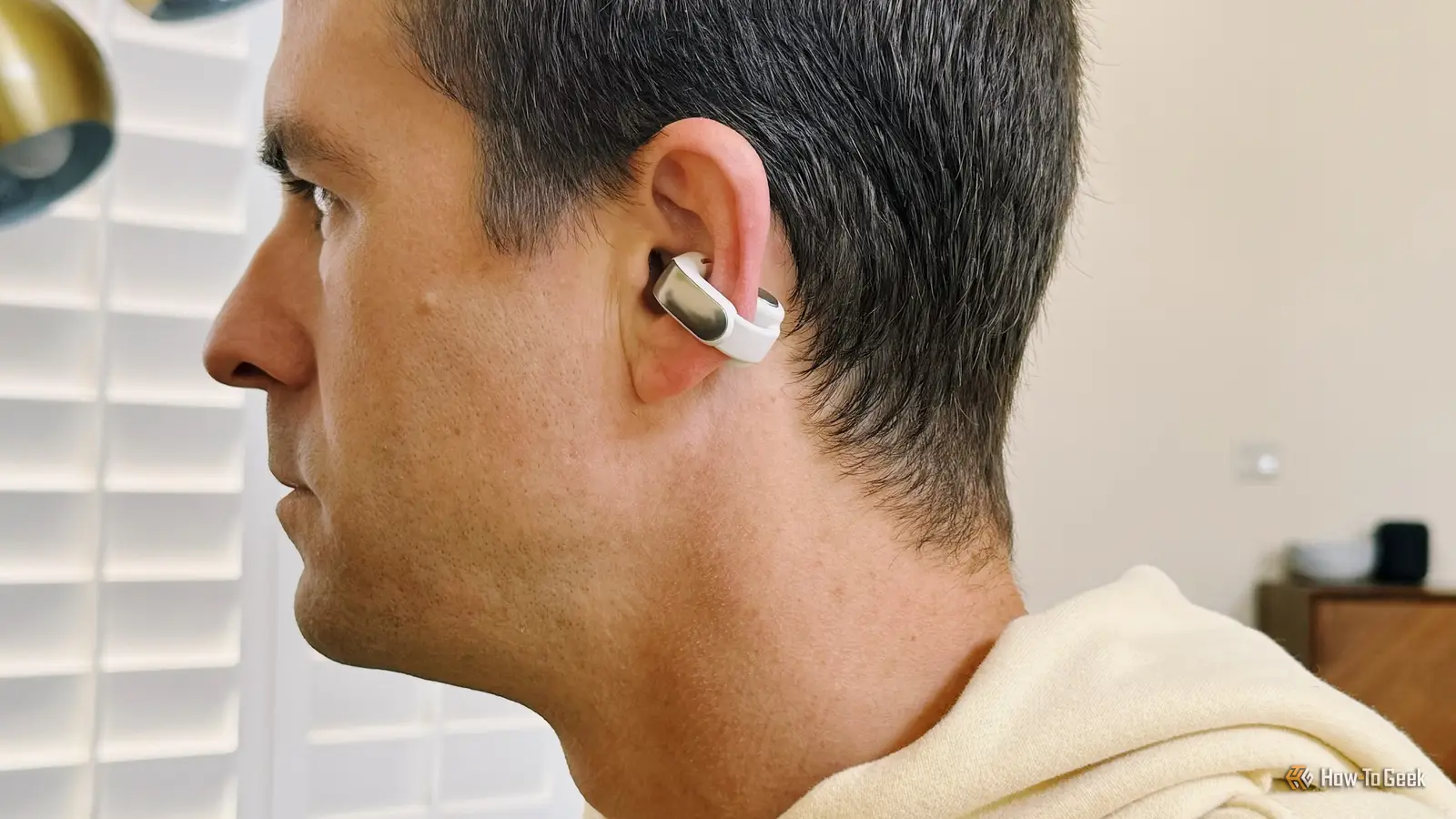
The Best Open Ear Buds here are the SHOKZ OpenRun Pro 2 for running and the Soundcore V20i for general use. The SHOKZ has the most secure sport-focused frame, open awareness, dual-driver sound, and wind-oriented call features. The Soundcore is more flexible for everyday wear because its four adjustable positions let you refine the fit.
The SHOKZ OpenFit 2 is the polished alternative for calls, app controls, and switching between devices, while the TOZO OpenEarRing is the lighter choice for glasses wearers. For maximum case endurance, the TRAUSI 80H models are the clear specialists, and the Soundcore C50i is a sensible pick when a compact clip matters more than battery length.
If you are undecided, choose the SHOKZ OpenRun Pro 2 for outdoor training or the Soundcore V20i for everything else.
As an Amazon Associate we earn from qualifying purchases.