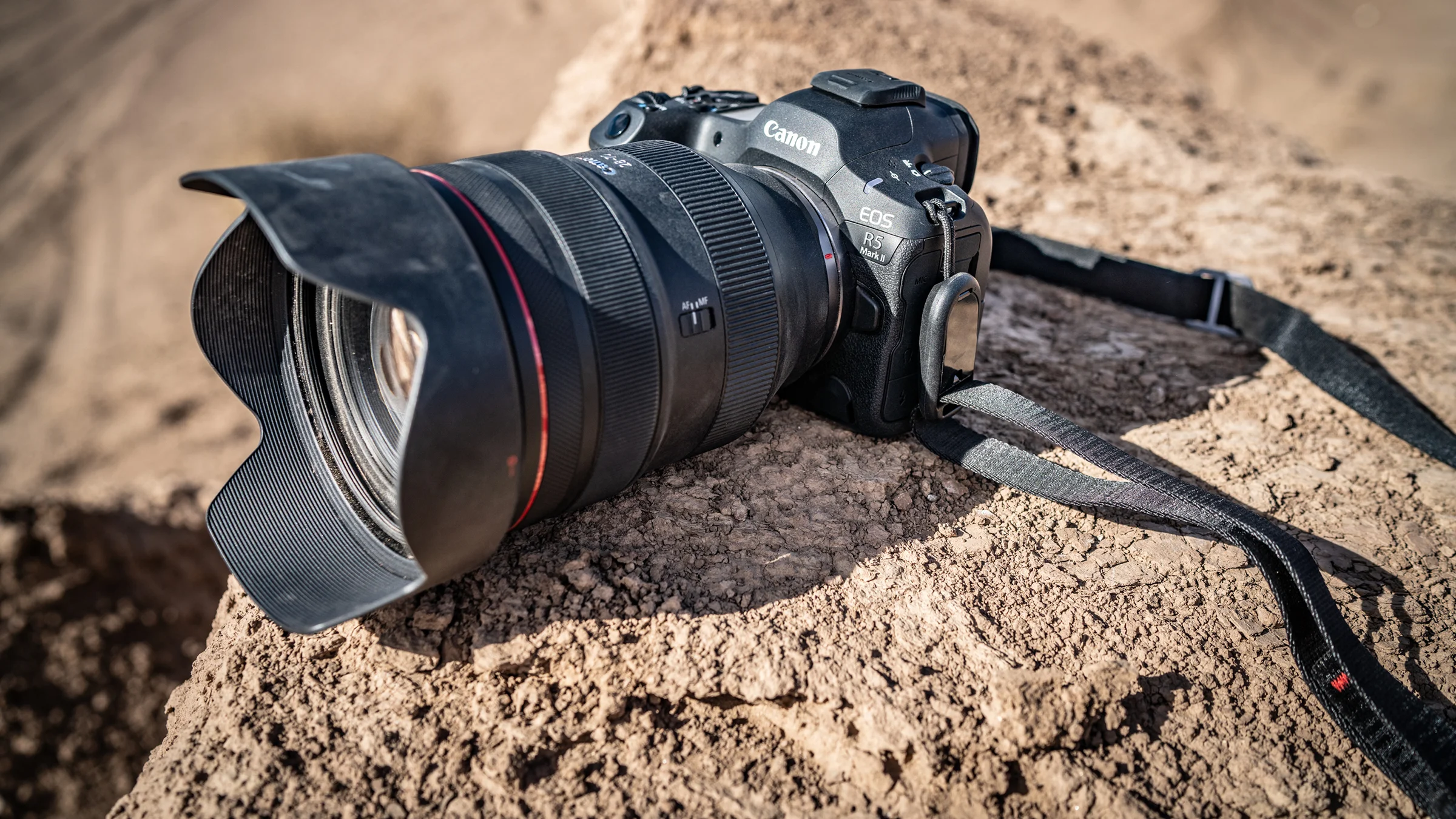

The hunt for a digital camera can feel endless. Between DSLRs with interchangeable lenses and compact point-and-shoots that promise 8K video and 88-megapixel stills, the specs blur together fast. What matters is how a camera actually behaves when you are framing a sunset, chasing a toddler, or trying to look natural in a selfie. We spent time with ten of the most popular digital cameras for photography right now, from Canon’s long-running Rebel T7 series to a surprising batch of affordable pocket cameras that claim to do it all. The Canon EOS Rebel T7 (with the double zoom kit) is the one we would buy for most people, but it is not the only pick worth your attention.
Here is the full breakdown of the best digital cameras for photography in 2026, ranked by real-world usefulness.
Comparison table
| # | Product | Award | Sensor Resolution | Zoom | Best for |
|---|---|---|---|---|---|
| 1 | Canon EOS Rebel T7 Double Zoom Kit | Best overall DSLR | 24.1MP APS-C | Two lenses: 18-55mm + 75-300mm | Beginners who want to grow |
| 2 | Canon EOS Rebel T7 Body with 18-55mm | Best entry-level DSLR | 24.1MP APS-C | 18-55mm kit lens | New photographers on a tighter budget |
| 3 | Canon EOS Rebel T7 Bundle (18-55mm) | Best bundled DSLR kit | 24.1MP APS-C | 18-55mm lens | First-time DSLR buyers who want extras |
| 4 | KODAK PIXPRO FZ45 Black | Best simple compact | 16MP | 4x optical | Casual family snapshots |
| 5 | KODAK PIXPRO FZ45 White | Best compact in white | 16MP | 4x optical | Style-conscious shooters |
| 6 | AUREAPIX 8K 96MP Camera | Best budget vlogging camera | 96MP (interpolated) | 20x digital | YouTube beginners and teens |
| 7 | Tecglem 8K 88MP Dual-Lens Camera | Best touchscreen vlogging camera | 88MP (interpolated) | 16x digital | Selfie and vlog creators |
| 8 | Duluvulu 4K 48MP Camera | Best for teens and kids | 48MP (interpolated) | 16x digital | Young beginners |
| 9 | Toberto 8K 88MP WiFi Touchscreen | Best value bundle | 88MP (interpolated) | 16x digital | Travelers who want everything included |
| 10 | DUOCH 8K 96MP Dual Screen Camera | Best dual-screen vlogging camera | 96MP (interpolated) | 16x digital | TikTok and YouTube creators |
1. Canon EOS Rebel T7 Double Zoom Kit: Best overall DSLR

Pros
- Dual lens kit covers wide-angle to telephoto
- 24.1-megapixel APS-C sensor captures real detail
- Optical viewfinder for all-day battery life
- Wi-Fi and NFC for easy photo transfer
Cons
- Only 9 autofocus points, dated by modern standards
- No 4K video, just Full HD
Best for: someone who wants a real DSLR system with room to grow.
The Canon Rebel T7 in its double zoom configuration is the most sensible camera for photography beginners on this list. The 24.1-megapixel APS-C sensor is the same size found in many enthusiast cameras, which means you get proper control over depth of field and noticeably better low-light performance than any compact camera here. The included EF-S 18-55mm f/3.5-5.6 IS II lens handles daily walkaround shooting, and the EF 75-300mm lens brings distant subjects close enough for wildlife and sports. That second lens alone would cost over $150 new, making this kit a genuine value proposition for anyone who is still deciding how far down the rabbit hole they want to go.
The shooting experience is classic DSLR: you look through an optical viewfinder that shows you exactly what the lens sees with zero lag, and the camera sips power so frugally that a single charge lasts for around 500 shots. The 9-point autofocus system feels basic compared to the phase-detection arrays on modern mirrorless cameras, but it is reliable in good light and works fine for stationary or slow-moving subjects. If you are considering other options for learning the craft, our guide to what you give up moving from DSLR to mirrorless explains the trade-offs in detail.
What holds the T7 back is age. It launched in 2019, and its DIGIC 4+ processor cannot record 4K video. The 3-inch LCD has a modest 920k-dot resolution and is not touch-sensitive. For pure photography, none of that matters much, but if you plan to shoot a lot of video, one of the 8K compact options below might suit you better. The Rebel T7 is still the pick for anyone who wants to learn the craft on a proper system with a huge lens library. If you are looking specifically for a model in the family, our best canon camera for photography roundup has more detail on Canon’s current lineup.
2. Canon EOS Rebel T7 Body with 18-55mm: Best entry-level DSLR

Pros
- Same sensor and image quality as the double zoom kit
- Lighter and smaller than most mirrorless alternatives
- Built-in Wi-Fi and NFC
Cons
- Only one lens in the box, limited reach for wildlife/portraits
- No 4K video and no articulating screen
Best for: budget-conscious learners who will add lenses later.
This is the same Canon Rebel T7 body in a simpler kit: the camera plus the EF-S 18-55mm f/3.5-5.6 IS II lens and a shoulder strap. Everything we said about the sensor, the viewfinder, the battery life, and the autofocus applies here. The single-lens kit costs less than the double zoom version, and that matters if your photography budget is tight. The 18-55mm range is versatile enough for landscapes, group portraits, and street photography. You just will not be pulling in distant birds or compressing a background for classic headshots.
The real advantage of buying this version over a compact camera is the upgrade path. You can add a 50mm f/1.8 STM lens for less than $125 and instantly get the portrait look that no point-and-shoot can match. You can swap to a 10-18mm ultra-wide for interiors or real estate. The EF and EF-S lens ecosystem is enormous and affordable on the used market. If you think you might catch the photography bug, this is the cheapest way into a system that can grow with you for years.
Where the Rebel T7 stumbles is modern convenience. The 3-inch screen is fixed, so you cannot flip it around for selfies or tilt it for low-angle shots. The optical viewfinder is great in bright sun, but it covers only about 95 percent of the frame, so you need to recompose slightly for critical compositions. Still, for someone who wants a serious tool for learning the basics of exposure and composition, this camera is hard to beat.
3. Canon EOS Rebel T7 Bundle (18-55mm): Best bundled DSLR kit
Pros
- Same capable 24.1MP sensor and optical viewfinder
- Bundle includes bag, 64GB card, extra battery charger
- Lightweight body at about 3.8 pounds with the kit
Cons
- No telephoto lens, limited to 18-55mm
- Bundle accessories are basic quality
Best for: first-time DSLR buyers who want everything in one box.
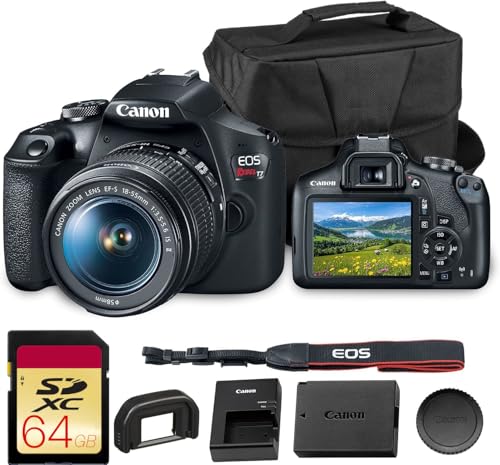
This third Rebel T7 variant comes from a third-party seller (iPro Photo) and bundles the standard 18-55mm kit with a shoulder bag, a 64GB SD card, a spare battery and charger, a body cap, and an eyecup. The core hardware is identical to the previous two entries: the same 24.1-megapixel APS-C sensor, the same DIGIC 4+ processor, the same 9-point AF, and the same 3-inch LCD. The bundle saves you the hassle of buying a memory card and a bag separately, and the extra battery means you can shoot all day without thinking about charging.
If you are just starting out and do not yet know whether you want a second lens, this bundle gives you everything you need to start shooting immediately. The 64GB card holds roughly 4, 000 JPEGs or 1, 500 RAW files, more than enough for a weekend trip. The bag is a basic padded case, but it will protect the camera from bumps in a closet or a car trunk.
The weakness is the same as the single-lens kit: no telephoto reach. You can buy the EF 75-300mm lens later, but the bundle price already includes some margin for the accessories. Compare the total cost with the double zoom kit above and decide whether you prefer the second lens or the bag and card. For someone who wants to document family life and travel without carrying a lot of gear, the bundle is the cleaner out-of-box experience.
4. KODAK PIXPRO FZ45 Black: Best simple compact

Pros
- Genuine 16MP CMOS sensor, not interpolated
- 4x optical zoom (27-108mm equivalent)
- Runs on AA batteries, easy to replace anywhere
Cons
- Small 2.7-inch LCD with low resolution
- No image stabilization beyond digital
Best for: casual family snapshots and beginners who want instant simplicity.
The Kodak Pixpro FZ45 feels like a camera from a decade ago, and for many people that is exactly its appeal. It has a 16-megapixel CMOS sensor (no upscaled claims of 88 or 96 megapixels) and a 4x optical zoom lens, which means the zoom is real optical magnification, not digital crop. The 27mm wide-angle end is decent for group shots, and the 108mm telephoto gives you a modest reach for portraits. The camera records Full HD 1080p video, enough for basic clips.
What makes the FZ45 stand out is the battery system: it uses two AA alkaline batteries. You can buy them at any gas station, hotel gift shop, or convenience store around the world. That is a legit advantage for travel photographers who worry about proprietary lithium packs dying in the middle of a trip. The camera also accepts SD, SDHC, and SDXC cards up to 512GB, so storage is not a concern.
The compromises are real. The 2.7-inch LCD has a low resolution, making it hard to judge sharpness in bright sunlight. There is no optical viewfinder. The build is all plastic, and the autofocus is slow by modern standards. But for a grandparent wanting a simple camera for the beach, or a kid getting their first non-phone camera, the Pixpro FZ45 works exactly as advertised.
5. KODAK PIXPRO FZ45 White: Best compact in white

Pros
- Identical hardware to the black model
- White finish stands out and is harder to lose
- Same AA battery convenience
Cons
- Same small low-res screen
- Same slow autofocus
Best for: someone who wants the same capable compact in a lighter, more fun color.
The white version of the Kodak Pixpro FZ45 is mechanically identical to the black one. Same 16-megapixel CMOS, same 4x optical zoom, same Full HD video, same reliance on AA batteries. The only difference is the color of the polycarbonate shell. The white body is more visible if you set the camera down on a park bench or a beach towel, and some people simply prefer the retro look of a white compact camera.
Our verdict for the black model applies here exactly: it is a no-fuss point-and-shoot for people who do not want to read a manual. The 2.7-inch screen is small but usable for framing. The 4x optical zoom gives you real flexibility compared to a phone’s digital zoom. If you are putting together a travel kit for a child or an older relative who dislikes complex gadgets, the white FZ45 makes a thoughtful and practical gift.
6. AUREAPIX 8K 96MP Camera: Best budget vlogging camera

Pros
- 3.5-inch 180-degree flip screen for selfies
- WiFi transfer via Viipulse app
- Includes two batteries and an SD card
Cons
- 96MP and 8K are interpolated, not native
- Digital zoom only, no optical zoom
Best for: teens and YouTube beginners who want a cheap dedicated camera.
The AUREAPIX camera aims squarely at the young creator market. Its headline features are an 8K video mode and a 96-megapixel photo resolution, but as with most cameras in this price range, those numbers are achieved through software interpolation, not a native sensor that size. The actual sensor is a modest CMOS unit that produces usable 1080p video and decent 12-16 megapixel stills when you set the camera to its real resolution. That caveat aside, the hardware is well thought out for its intended audience.
The 3.5-inch LCD flips 180 degrees, so you can frame yourself for vlogs or TikTok videos. The built-in WiFi connects to the Viipulse app for quick transfers, and the included 64GB SD card and two batteries mean no immediate need to buy extras. The 20x digital zoom is honestly not very useful past about 4x because image quality degrades quickly, but the anti-shake and HDR modes help beginners get usable shots in average lighting.
The biggest competition for this camera is the similar Tecglem and Duoch models below. The AUREAPIX stands out for its larger screen and the 60 creative filters built in. It is not a camera for serious photography, but it is a fine tool for a 13-year-old learning to make content. If you want a step up in image quality for a similar price, the Duluvulu 4K camera below trades resolution for slightly more trustworthy specs.
7. Tecglem 8K 88MP Dual-Lens Camera: Best touchscreen vlogging camera

Pros
- Front and rear dual lenses for selfie mode switching
- 3.2-inch IPS touchscreen
- 6-axis stabilization helps reduce shake
Cons
- Interpolated 88MP and 8K specs
- Touchscreen interface can lag
Best for: vloggers who want a front-facing lens and touch controls.
Tecglem’s offering is nearly identical to the AUREAPIX in concept but adds a few twists. The most useful is the dual-lens system: a front-facing lens for selfie shooting and a rear main lens, letting you switch without flipping a screen. The 3.2-inch IPS touchscreen is responsive enough for tap-to-focus and swipe-through menus. The 6-axis stabilization is a marketing label for what is really electronic stabilization, but it genuinely reduces the jitter in handheld walking shots.
The camera claims 8K video and 88-megapixel photos, and as with the other compact cameras on this list, those are marketing numbers, not native resolution. Set the camera to its lower, real resolutions and you get solid footage for social media. The included 32GB SD card and two batteries are generous at this price point. The hot shoe mount on top lets you attach an external microphone or LED light, which is rare in this category and genuinely useful for improving audio or filling shadows.
What you give up compared to a Canon Rebel T7 is image quality in dim light and the ability to swap lenses. The Tecglem is a fixed-lens camera with digital zoom only. For bright, outdoor selfies and close-up vlogs, it does the job. For low-light concerts or indoor sports, not so much.
8. Duluvulu 4K 48MP Camera: Best for teens and kids

Pros
- 4K video at a realistic resolution
- Autofocus that actually works in good light
- Built-in flash and fill light for close-ups
Cons
- 48MP photos are interpolated
- Small 3-inch flip screen
Best for: younger beginners who want a dedicated camera, not a phone.
The Duluvulu 4K camera is refreshingly honest compared to some of the 8K competitors. It advertises 4K video (which it can produce at a usable quality) and 48-megapixel stills via interpolation, but the real sensor output is closer to 12-16 megapixels. The autofocus system is basic contrast detection, but it locks onto faces reliably in good light. The camera also includes smile and face detection, beauty mode, and a date stamp, all features that appeal to younger users.
At roughly the same size as a deck of cards, this camera is genuinely pocketable. The 180-degree flip screen helps teens frame selfies and group shots. The 16x digital zoom is limited in quality, but the camera includes anti-shake and slow-motion modes that are fun to experiment with. Two batteries and a 32GB SD card are included, so it is ready to use out of the box.
The Duluvulu is not going to produce gallery-quality prints. The sensor is small, and noise creeps in above ISO 800. But for a teenager who wants to document their life without draining their phone’s battery, it is a thoughtful and affordable first camera. If the recipient is more serious about learning, the Canon Rebel T7 single-lens kit is a better long-term investment.
9. Toberto 8K 88MP WiFi Touchscreen: Best value bundle

Pros
- Comes with 64GB card, HDMI cable, charger, bag, and more
- 3.2-inch touchscreen is responsive
- Hot shoe for external mic or light
Cons
- Interpolated 88MP and 8K specs
- Autofocus hunts in low light
Best for: travelers who want a comprehensive kit in one purchase.
The Toberto 8K camera package is the most complete bundle in this roundup. Along with the camera, you get two batteries, a 64GB TF card, a USB cable, an HDMI cable, a charger, a lens hood, a lens cap, a camera bag, a cleaning cloth, and a strap. For someone who wants everything ready to go for a vacation, that is genuinely convenient.
The camera itself is similar to the Tecglem and AUREAPIX models: an 8K/88MP interpolated sensor, 16x digital zoom, WiFi transfer, and a touchscreen. The 3.2-inch HD touchscreen is bright and responsive. The built-in flash helps in dim indoor situations, and the hot shoe lets you attach a better microphone if the onboard one is not cutting it. The HDMI output allows you to play back footage on a TV.
The image quality is what you expect at this price point: fine for social media and bright outdoor scenes, but noisy indoors and soft at the telephoto end of the digital zoom. The autofocus can struggle in dim light, hunting back and forth before locking. If you are buying this for a child or as a casual travel companion, the sheer number of accessories makes it a solid choice. For anyone serious about image quality, the Canon DSLRs are a different league entirely.
10. DUOCH 8K 96MP Dual Screen Camera: Best dual-screen vlogging camera

Pros
- Front-facing screen for selfie framing
- 60 creative filters and beauty modes
- Comes with 32GB card and two batteries
Cons
- 8K and 96MP are interpolated specs
- Build is mostly plastic, feels light
Best for: TikTok and YouTube creators who want to see themselves while recording.
The Duoch camera emphasizes the selfie-friendly dual-screen design: one main screen on the back and a smaller front-facing screen that shows exactly what the lens sees. That front screen is the key advantage over flip-screen cameras because you can still see yourself when the camera is mounted on a tripod or selfie stick, without flipping the main screen outward.
The specs follow the same pattern as the other compact cameras here: claimed 8K video and 96-megapixel photos, delivered via interpolation from a much smaller sensor. In practice, the camera produces decent 1080p footage and photos that look fine on a phone screen. The 60 filters, beauty effects, and slow-motion modes give young creators a lot of options to play with without needing editing software.
The Duoch is the plasticky-est of the cameras in this roundup, and the controls are a bit fiddly. But for less than $60, it is the cheapest vlogging camera here with a dedicated front screen. If you are buying a first camera for a preteen who wants to start a YouTube channel and you do not want to invest heavily until they prove they will stick with it, the Duoch is the lowest-risk entry point.
How to choose a digital camera for photography
Buying a camera means deciding how much control you want and how much gear you are willing to carry. The camera that makes you excited to shoot every day is the right one.
Sensor size and megapixels
The sensor is the heart of any camera. A larger sensor captures more light, which means better images in dim conditions and more control over blurry backgrounds. The Canon Rebel T7 uses an APS-C sensor, which is roughly 15 times larger than the sensors in the compact 8K cameras. That size difference explains why the Canon images look cleaner and more detailed despite having fewer megapixels. Do not fall for interpolated megapixel claims; a true 16-megapixel sensor like the one in the Kodak FZ45 will produce better pictures than a 96-megapixel compact that simply enlarges each pixel electronically.
A camera that claims 96 megapixels for $60 is selling you software, not hardware.
Optical vs. digital zoom
Optical zoom uses glass elements to magnify the scene without losing resolution. Digital zoom crops into the image and enlarges the pixels, making everything softer. The Canon DSLRs and the Kodak FZ45 have real optical zoom (by changing lenses or a built-in zoom mechanism). Every 8K compact camera here uses only digital zoom, so the image quality drops noticeably past 2x or 3x. If you plan to photograph distant wildlife or sports, a camera with optical zoom is non-negotiable.
Autofocus
Affordable cameras typically use contrast-detection autofocus, which works by looking for edges of contrast. It is slow and can hunt in low light. The Canon Rebel T7 uses a 9-point phase-detection system in the optical viewfinder, which is faster and more reliable. The compact cameras rely on contrast detection, and while some have improved face detection, none of them can track a moving subject reliably. For portraits and still life, they work fine. For kids or pets, you will miss shots.
Frequently asked questions
Should I buy a DSLR or a compact point-and-shoot?
If you want the best image quality and the ability to change lenses, get a DSLR like the Canon Rebel T7. If you want something pocketable for casual snaps and do not mind a smaller sensor, a compact like the Kodak FZ45 is simpler. For sheer image quality, there is no contest: a DSLR wins every time.
How many megapixels do I actually need?
For sharing on social media, 12 megapixels is plenty. For printing 8x10-inch photos, 16 megapixels is fine. For large gallery prints or heavy cropping, 24 megapixels is helpful. The interpolated megapixel counts on budget cameras (88, 96) do not add real detail; they just make larger files.
Can these compact 8K cameras replace a phone?
For most people, no. A recent smartphone takes better photos in most conditions because of computational photography: HDR stacking, night mode, and portrait algorithms. A dedicated camera can be more fun to use and forces you to learn composition, but it will not outshoot an iPhone or Pixel in everyday situations. The one advantage is the zoom range, especially if you get a DSLR with a telephoto lens.
Are the 8K cameras really 8K?
Not in the way a Sony or Canon cinema camera is. The 8K label on these budget cameras means the internal processing can upscale video to 8K resolution, but the native sensor resolution is much lower. The recorded footage is typically 1080p or 4K upscaled, and the resulting sharpness is far below true 8K. If you need real 8K, you are looking at cameras costing $2, 000 or more.
Which camera is best for travel photography?
For light travel, the Kodak FZ45 is small and runs on AA batteries. For image quality, the Canon Rebel T7 with the 18-55mm lens is a better choice, and the double zoom kit adds reach for landscapes and architecture. Our guide to what makes a great travel camera covers more details on portability versus capability.
Can I use a compact 8K camera as a webcam?
Yes, most of these cameras support USB webcam mode. The Aureapix, Tecglem, and Duoch models all advertise this feature. The Canon Rebel T7 can also be used as a webcam with Canon’s EOS Utility software, but it requires a USB connection and the software running on your computer.
Which camera should I buy for a child?
The Duluvulu 4K camera is the best option for a younger child because it is cheap, simple, and includes features like smile detection and beauty filters. The Kodak FZ45 is a better choice for a slightly older child who wants a real camera experience with optical zoom and AA batteries.
The bottom line
The best digital cameras for photography in 2026 are the three Canon Rebel T7 kits if you want real DSLR capabilities, and the Kodak Pixpro FZ45 if you want a dead-simple compact. The Canon EOS Rebel T7 Double Zoom Kit is our top pick because it gives you two lenses from the start, a proven 24.1-megapixel sensor, and access to the entire EF lens system. You can spend years learning on that camera and never feel limited by the hardware.
The compact 8K and 4K cameras from Aureapix, Tecglem, Duluvulu, Toberto, and Duoch are fine for what they are: cheap, fun tools for kids and teens to experiment with. They are not substitutes for a real camera if you care about image quality. If your budget is under $150 and you want something that is not your phone, any of those will do, but we would take the optical zoom and honest 16-megapixel sensor of the Kodak FZ45 over interpolated 8K claims any day.
Undecided? Buy the Canon Rebel T7 with the 18-55mm lens. It will take better photos than anything else on this list, and you can add lenses as you grow. That is the one we would keep.
As an Amazon Associate we earn from qualifying purchases.