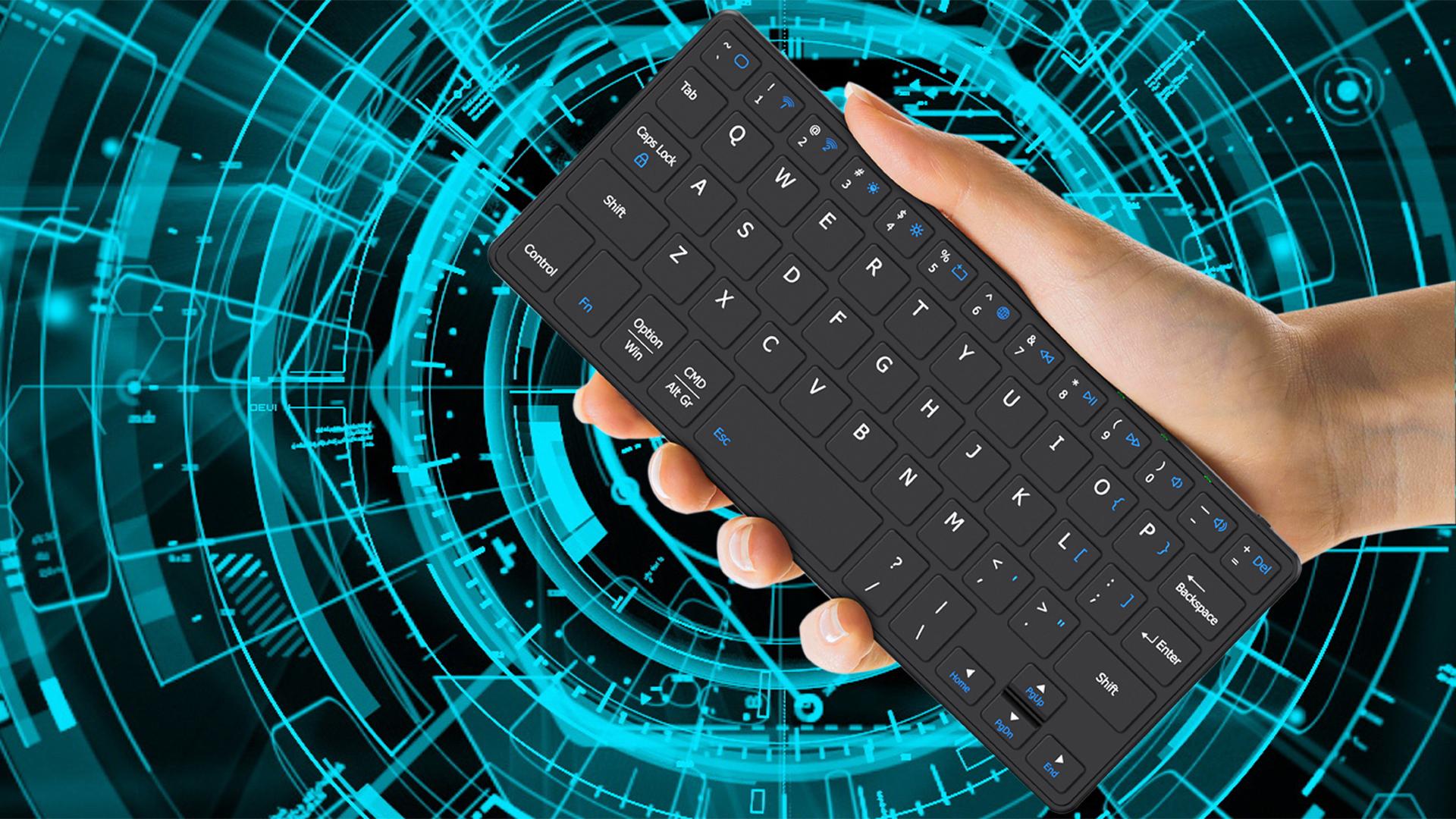

A portable keyboard has to solve a frustrating compromise: small enough to carry, but not so cramped that every email becomes a hunt for the right key. Folding designs add another question, since a keyboard that packs neatly can feel less stable once it is open.
We compared ten options spanning full-size foldable models, compact Bluetooth boards, keyboard and mouse kits, and one genuinely portable piano. The Best portable keyboards range from pocket-friendly iPad companions to serious desktop-style layouts.
For most people, the ProtoArc XK01 is the single best pick, but the Logitech MX Keys Mini is better for illuminated typing, while the Rhymo Folding Piano belongs to musicians rather than office workers.
Comparison table
| # | Product | Award | Layout | Connection | Best for |
|---|---|---|---|---|---|
| 1 | ProtoArc XK01 | Best overall | 105 keys, number pad | Bluetooth, 3 devices | Full-size travel typing |
| 2 | Logitech Pebble Keys 2 | Best compact everyday keyboard | Compact, round keys | Bluetooth, 3 devices | Laptop-style typing |
| 3 | ProtoArc XK04 | Best pocket foldable | Compact mobile layout | Bluetooth, 3 devices | Phones and tablets |
| 4 | Logitech MX Keys Mini | Best backlit keyboard | Compact minimalist layout | Bluetooth, 3 devices | Nighttime and office work |
| 5 | Ghajz Foldable Combo | Best connected combo | Full-size, number pad | Bluetooth, USB receiver | Keyboard, mouse, and stand |
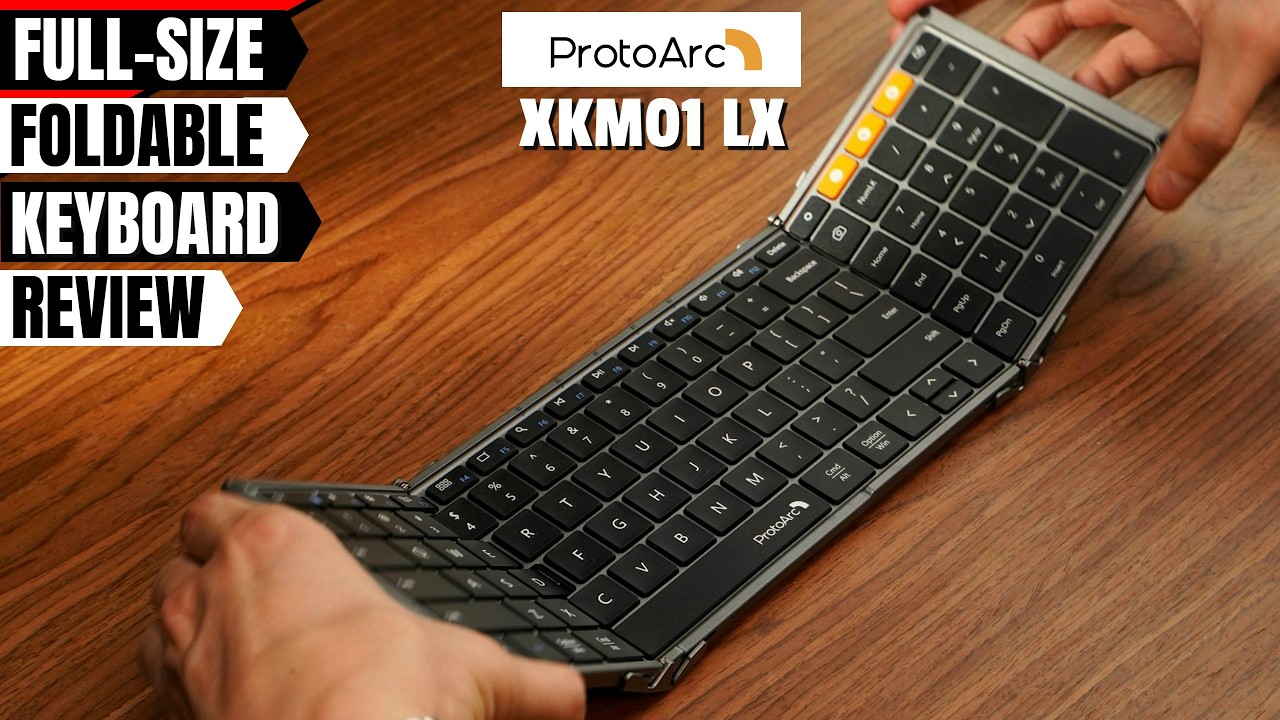
| 6 | ProtoArc XKM01 | Best quiet combo | 105 keys, number pad | Bluetooth, 2.4G | Full desktop setup on the move |
| 7 | OMOTON iPad Keyboard | Best ultra-slim iPad pick | 78 keys | Bluetooth | iPad and iPhone typing |
| 8 | TECKNET Foldable Keyboard | Best foldable number pad | 99 keys, number pad | Bluetooth, 2.4G | Travel spreadsheets |
| 9 | TECKNET Mini Combo | Best USB receiver combo | Mini layout | 2.4G USB | USB-A laptops and PCs |
| 10 | Rhymo Folding Piano | Best portable piano | 88 semi-weighted keys | Bluetooth, USB MIDI | Piano practice and lessons |
1. ProtoArc XK01: Best Overall

Pros
- Full 105-key layout with a number pad
- Folds to a compact travel shape
- Connects to three devices
- Quiet scissor-switch typing
- Long standby time
Cons
- No backlighting
- Full-size layout still takes room when open
- No mouse or carrying case included
Best for: travelers who need a genuine desktop-style keyboard without giving up Bluetooth convenience.
The ProtoArc XK01 is the keyboard we'd put in a travel bag when the work itself matters more than having the smallest possible loadout. Its three-panel design opens into a familiar desktop layout, including 105 keys, a function row, navigation keys, and a dedicated number pad. That makes it much more practical for spreadsheets, data entry, and long documents than the smaller boards in this roundup.
It folds to 8.46 by 4.68 by 0.78 inches, according to the product features, and the internal aluminum hinges are rated for more than 10, 000 folds. The important detail is not just the folded size. The no-clip design means there is less fuss between taking it out and starting work. Open, it is 16.53 inches wide, so it needs a real table rather than an airplane tray. Its 0.65-inch keycaps and low-profile scissor switches aim for a controlled, quieter feel instead of the hollow sound common to inexpensive travel boards.
Bluetooth 5.1 lets it pair with up to three devices, and a single button handles switching. That is useful when a laptop, tablet, and phone all share the same temporary workstation. USB-C charging and a claimed standby time of up to 150 days also reduce the usual travel-keyboard worry. The 12 shortcut keys cover media and common functions, with an Fn plus Escape command for the F1 through F12 row.
The Logitech Pebble Keys 2 is easier to carry and feels more naturally compact, while the TECKNET Foldable Keyboard offers a similar travel concept with a 99-key layout. The XK01 beats both when a full number pad and 105-key arrangement are non-negotiable. Its weakness is equally clear: there is no backlight, and its open width makes it less useful in cramped spaces. Skip it if you mainly type on a phone or want a keyboard that can sit comfortably on a tiny café table.
For remote workers, frequent travelers, and anyone who still wants desktop-like navigation away from a desk, the XK01 is the most complete computer keyboard here. Readers comparing connection styles can also see what changes when you move from wired to wireless typing before choosing a travel setup.
2. Logitech Pebble Keys 2: Best Compact Everyday Keyboard

Pros
- Slim, compact shape
- Familiar laptop-like typing
- Three-device switching
- Quiet scooped round keys
- Long battery life
Cons
- No folding mechanism
- No number pad
- Uses replaceable batteries
Best for: people who want a small Bluetooth keyboard that can move between a laptop, tablet, and phone.
The Logitech Pebble Keys 2 takes a different approach from the folding models. It does not collapse, but its slim 10.98 by 4.88-inch footprint is already easy to slide into a bag. That makes it a calmer choice for someone who moves between rooms or works from different desks, rather than someone who needs a keyboard to shrink dramatically for a long journey.
Its scooped, round keys give it a distinct feel without abandoning the familiar spacing of a laptop keyboard. Logitech includes shortcut access for search, screen capture, and the emoji menu, and the 10 function keys can be personalized through the Logi Options Plus app. Those controls are more useful for daily computer work than a generic row of media buttons, especially if the keyboard is part of a recurring multi-device workflow.
Bluetooth pairing covers up to three devices across Windows, macOS, iPadOS, and ChromeOS, with one-click Easy-Switch buttons. The battery is rated for up to three years, with auto-sleep helping preserve power, and batteries are included. The keyboard measures 0.63 inches high and weighs about 0.91 pounds, so it remains portable without feeling like a fragile sheet of plastic. Logitech also says at least 49 percent of its plastic parts use certified post-consumer recycled plastic.
The ProtoArc XK04 is the better answer for a truly tiny mobile kit, while the Logitech MX Keys Mini is more substantial and adds illumination. The Pebble Keys 2 sits between them: easier to carry than the MX model and more comfortable for regular typing than a highly compressed phone keyboard. Its main limitation is the lack of a number pad and folding hinges. It also relies on replaceable batteries rather than USB-C recharging, which may matter to people trying to keep every accessory on one charging system.
Choose it for a compact home-office rotation, tablet typing, or a shared keyboard that needs to jump between several devices. It is one of the strongest options for readers who value simple portability more than maximum folding efficiency.
3. ProtoArc XK04: Best Pocket Foldable

Pros
- Very compact two-fold design
- Built for phones and tablets
- Three-device Bluetooth switching
- Integrated PU leather cover
- USB-C rechargeable
Cons
- Compact layout is not ideal for every typist
- No number pad
- Product dimensions are presented inconsistently
Best for: phone and tablet users who need physical keys in the smallest practical package.
The ProtoArc XK04 is for the person who normally types on a touchscreen but wants real keys for messages, notes, and short documents. Its two-fold design and integrated PU leather cover make it feel more like a protected travel accessory than a shrunken desktop keyboard. The product features describe it as weighing 7.8 ounces and unfolding to 10.76 by 4.07 inches, a shape suited to a phone or tablet rather than a full laptop workstation.
The 0.55-inch keycaps keep the board slim enough for airplane trays, small café tables, and other surfaces where a full keyboard would be awkward. That compactness comes with a trade-off. It is optimized for mobile devices, so someone used to a full-size board will need to adjust to the tighter arrangement. There is no number pad, and it is not the right tool for regular spreadsheet entry.
Bluetooth 5.1 supports up to three devices, with dedicated switching keys and a claimed range of 33 feet. The board charges over USB-C, enters auto-sleep mode, and advertises standby of up to 150 days. Those features make sense for an accessory that may spend weeks in a bag between trips. The protective PU leather cover also helps shield it from scratches without requiring a separate case.
The OMOTON iPad Keyboard is thinner and lighter as a simple slab, but it does not fold and is specifically centered on Apple devices. The Logitech Pebble Keys 2 gives a more conventional typing experience, though it occupies more room and does not fold. The XK04 wins when storage space is the deciding factor. Its weakness is that portability has been prioritized over generous key spacing, so touch typists should consider the larger options first.
For an iPad, iPhone, or Android tablet user who wants a keyboard that disappears into a small bag, the XK04 is the cleanest fit. It is also a useful choice for readers weighing the features that matter in a Bluetooth typing setup before buying.
4. Logitech MX Keys Mini: Best Backlit Keyboard

Pros
- Excellent compact minimalist layout
- Backlighting adjusts to changing light
- Three-device Bluetooth support
- USB-C rechargeable
- Dedicated dictation and mic controls
Cons
- Heavier than the smallest travel boards
- Backlighting reduces battery life
- Does not fold
Best for: professionals who want a refined compact keyboard for dim rooms and multi-computer work.
The Logitech MX Keys Mini is the most desk-like typing experience among the compact, non-folding models here. It is still portable, but its 1.5-pound weight and 11.65 by 5.19-inch dimensions give it a more planted presence than the Pebble Keys 2 or OMOTON. That extra heft is useful if you dislike a keyboard sliding around during long writing sessions.
The defining feature is smart illumination. The keys light when your hands approach and adjust as room lighting changes, which is genuinely helpful for late-night work or a dim hotel room. Logitech shapes the keys for fingertip contact and adds dedicated controls for voice dictation, microphone mute, and emoji access. These are small touches, but they make the board feel designed for modern laptop workflows rather than simply reduced in size.
Bluetooth Low Energy supports up to three devices and works across nearly any common operating system. USB-C charging provides up to 10 days with backlighting active, or up to five months with the lights turned off. That gap matters. The MX Keys Mini is at its most useful when illuminated, but users who leave the backlight running will need to charge it far more often than they would a Pebble Keys 2.
The Logitech Pebble Keys 2 is lighter and simpler to pack, while the ProtoArc XK01 gives you a number pad and full-size layout. The MX Keys Mini wins for typing quality, lighting, and polished multi-device control, but it is not the smallest travel board. People who want a foldable keyboard should also look at the ProtoArc models instead. Skip this one if illumination is not important and your main goal is minimum bag space.
It is the right choice for a mobile professional who works in changing light and moves between several computers. Anyone setting up a small office should also consider how much layout and shortcut access matter for office typing before settling on a compact model.
5. Ghajz Foldable Combo: Best Connected Combo

Pros
- Full-size folding keyboard
- Bluetooth and USB connection options
- Includes mouse and folding stand
- Integrated hinge lock
- Numeric keypad and function row
Cons
- Heavier kit than a keyboard alone
- Lock requires careful handling
- No backlight
Best for: travelers who need a full keyboard, mouse, and device stand in one kit.
The Ghajz Foldable Combo is less about carrying the smallest keyboard and more about carrying an entire temporary workstation. The case holds the folding keyboard, mouse, stand, manual, and charging cable, while the included stand supports a phone or iPad. That is a practical advantage when a hotel room or airport lounge offers no useful desk accessories.
The keyboard opens to 13.4 by 4.5 inches and includes a numeric keypad, function controls, and a standard-size layout. Its folded case measures 12 by 5.5 by 1.5 inches and weighs approximately 20 ounces according to the product features. The integrated hinge lock is intended to stabilize the folding sections, including when the keyboard is used on a lap. Ghajz warns not to engage the lock while opening or folding, so this is a feature that rewards deliberate handling rather than rushed setup.
Connection flexibility is the main reason to choose it. The set supports two Bluetooth connections, a USB-A receiver, and a USB-C connection through the included converter, with switching between three devices. The keyboard and mouse are rechargeable over USB-C, and the keyboard claims 150 to 200 days of standby. The mouse offers 800, 1200, and 1600 DPI settings, enough adjustment for ordinary document work and navigation.
The ProtoArc XKM01 is a more refined alternative for a similar full-size keyboard and mouse concept, while the Ghajz offers more connection paths and a stand in its travel kit. Its weaknesses are the added bulk and the hinge-lock warning. The claimed 90 percent noise reduction is a manufacturer statement, not a guarantee that it will be silent in every room, so noise-sensitive users should keep expectations realistic.
Pick the Ghajz when a mouse and stand are as important as the keyboard itself. It makes the most sense for people who want to unpack one case and have nearly everything needed for mobile work.
6. ProtoArc XKM01: Best Quiet Combo

Pros
- Full 105-key layout
- Mouse and hard case included
- Three-device switching
- Quiet scissor keys and mouse
- Foldable tablet stand
Cons
- No backlight
- Kit weighs about 2.2 pounds
- Flat typing angle may not suit everyone
Best for: mobile workers who need a complete, quiet desktop arrangement.
The ProtoArc XKM01 is the combo to choose when a travel keyboard should replace more than just a laptop's built-in keys. It includes a full-size 105-key folding board, a mouse, a hard carrying case, and a stand for tablets from 4 to 11 inches. The case measures 12 by 5.55 by 1.6 inches, giving the kit a clear travel footprint without requiring separate pouches for each piece.
The keyboard keeps dedicated function and number pads, so it is better suited to spreadsheets, coding, and data entry than the compact Logitech boards. Its flat typing surface has no tilt, which helps it fold simply but may not satisfy users who prefer a raised rear edge. The aluminum hinges are rated for more than 10, 000 folds, and the no-clip mechanism allows quick deployment.
It connects to up to three devices through 2.4G wireless and two Bluetooth connections, with one-button switching across Windows, macOS, ChromeOS, iPadOS, and Android. Both keyboard and mouse charge with the included Type-C cable. ProtoArc claims up to 150 days of keyboard standby and 200 days for the mouse. The mouse has 1000, 1600, and 2400 DPI settings, while 25dB micro-switches are designed to keep clicking subdued in shared spaces.
The Ghajz Foldable Combo offers a broader connection mix and a hinge lock, while the XKM01 has the clearer 105-key layout and a more established full-kit design. The XKM01's real limitation is the lack of backlighting, particularly for dim hotel rooms. It is also too much equipment for someone who only wants to add a few notes to a phone.
Choose it for a full mobile workstation, especially when quiet operation and a tablet stand matter. It is a stronger fit than the ProtoArc XK01 for someone who also needs a mouse, though the single keyboard remains easier to pack.
7. OMOTON iPad Keyboard: Best Ultra-Slim iPad Pick

Pros
- Extremely thin and light
- 78-key QWERTY layout
- iPad and iPhone shortcut keys
- Long battery life
- Compact footprint
Cons
- Two AAA batteries are not included
- Function keys are not fully compatible with other systems
- Does not fold
Best for: Apple tablet and phone owners who want a simple, lightweight typing surface.
The OMOTON iPad Keyboard is almost the opposite of the ProtoArc XK01. It is a simple, thin Bluetooth board designed around iPad and iPhone use, not a portable desktop replacement. At 0.2 inches thick, 11.2 inches long, 4.7 inches wide, and about 0.35 pounds, it is the easiest computer keyboard here to forget is in your bag.
Its 78-key QWERTY layout gives tablet users a real typing surface while preserving a small footprint. The product includes 12 dedicated multimedia hotkeys for volume, brightness, music, and other iOS controls. That focus is useful if the keyboard will stay paired with an iPad, but the manufacturer notes that the function keys are not fully compatible with other systems.
Power comes from two AAA batteries, which are not included. OMOTON claims up to 400 hours of battery life, with auto-sleep after 10 minutes of inactivity. That is a long operating window for occasional travel typing, although it lacks the convenience of USB-C charging found on the ProtoArc and TECKNET foldable models. The ABS construction and stable Bluetooth connection are aimed at daily notes, schoolwork, and basic office tasks.
The ProtoArc XK04 is more protective and more versatile because it folds, supports up to three devices, and has a USB-C battery. The OMOTON is thinner and lighter, and it makes fewer promises because it is a straightforward iOS accessory. Its weakness is platform focus. People using Windows laptops, Android tablets, or mixed devices should choose a more flexible keyboard.
For an iPad owner who wants the lightest uncomplicated typing companion, the OMOTON is the sensible pick. It works best when portability means low weight rather than a folding mechanism.
8. TECKNET Foldable Keyboard: Best Foldable Number Pad

Pros
- 99-key full-size-style layout
- Dedicated numeric keypad
- Folds to a small travel shape
- Three-device connectivity
- Includes a device stand
Cons
- No mouse included
- No backlight
- F1 through F12 controls require an Fn shortcut
Best for: travelers who need spreadsheet-friendly keys in a smaller folding format.
The TECKNET Foldable Keyboard targets a useful middle ground. It folds to 7.26 by 4.52 by 0.9 inches, yet opens into a 99-key layout with a numeric keypad. That makes it more practical for numbers and office documents than the compact Pebble Keys 2, while its folded shape remains much easier to store than the full-width ProtoArc XK01.
TECKNET says the aluminum alloy hinge is designed for more than 100, 000 folds, a notably high durability claim. The included device stand adds usefulness for tablet work, and the keyboard's scissor-switch keys are intended to reduce typing noise in libraries, offices, and shared rooms. The product also states that it can connect to three devices using dual Bluetooth 6.0 chips and a 2.4G USB receiver.
The board recharges over USB-C and uses auto-sleep to extend standby to a claimed 275 days. Twelve multimedia shortcuts handle functions such as volume, device switching, and home navigation. F1 through F12 functions are accessed with Fn plus Escape, a small adjustment for users accustomed to a permanently exposed function row.
The ProtoArc XK01 feels closer to a conventional desktop keyboard because it has 105 keys and more generous full-size proportions. The TECKNET is easier to pack, while the TECKNET Mini Combo is lighter in concept but sacrifices Bluetooth and the number pad. The Foldable Keyboard's biggest weakness is that it is keyboard-only, so anyone needing a complete pointing setup must carry a separate mouse.
Choose this one for travel spreadsheets, administrative work, or any situation where numbers matter but a full desktop board is too large. It is a strong example of how the Best portable keyboards do not all need to be ultra-small to be genuinely useful.
9. TECKNET Mini Combo: Best USB Receiver Combo

Pros
- Keyboard and mouse in one compact kit
- Quiet scissor-switch keys
- Shared USB receiver
- Adjustable mouse sensitivity
- Receiver stores inside the mouse
Cons
- No Bluetooth
- Requires four AAA batteries
- Mini keyboard is not full-size
Best for: Windows and PC users with a USB-A port who want a compact keyboard and mouse together.
The TECKNET Mini Combo is a conventional wireless set made portable by its reduced size rather than by folding. The keyboard measures 11.22 by 4.72 inches, is 0.79 inches high, and weighs about 0.79 pounds. It fits a laptop bag or backpack without the extra hinges and folding sections found on most other travel options here.
Its scissor-switch keys are shaped for fingertip contact, and both the keyboard and mouse are designed for quiet use. A single nano receiver handles the 2.4GHz connection, with a claimed range of up to 49 feet. The receiver stores in the mouse battery compartment when not in use, a small but useful detail that prevents it from disappearing into a side pocket.
The mouse offers adjustable sensitivity up to 1600 DPI, while 12 multimedia hotkeys provide controls for volume, music, email, and browsing. The combo needs four AAA batteries in total, two for each device, and enters sleep mode during inactivity. TECKNET lists compatibility with Windows versions and Android smart TVs, but the product specifically warns that it does not support Bluetooth. It also asks buyers to confirm their device has a USB-A port.
The Ghajz Foldable Combo and ProtoArc XKM01 are better for tablet-heavy, multi-device workflows because they support Bluetooth and include folding stands. The Mini Combo is simpler and lighter to manage on a Windows laptop or desktop. Its limits are firm, though: no Bluetooth, no rechargeable battery, and no full-size layout. Mac users should also expect reduced multimedia-key compatibility.
Pick it when plug-and-play USB-A reliability matters more than modern wireless flexibility. It is a practical travel set for a Windows laptop, office PC, or compact dorm workstation.
10. Rhymo Folding Piano: Best Portable Piano

Pros
- 88 full-size semi-weighted keys
- Folds in half
- Bluetooth and USB MIDI
- Built-in 30W stereo speaker
- Includes sustain pedal and carry bag
Cons
- Much larger and heavier than computer keyboards
- Not intended for office typing
- Piano features are unrelated to computer keyboard shortcuts
Best for: beginners and musicians who need a foldable piano for practice, lessons, or travel.
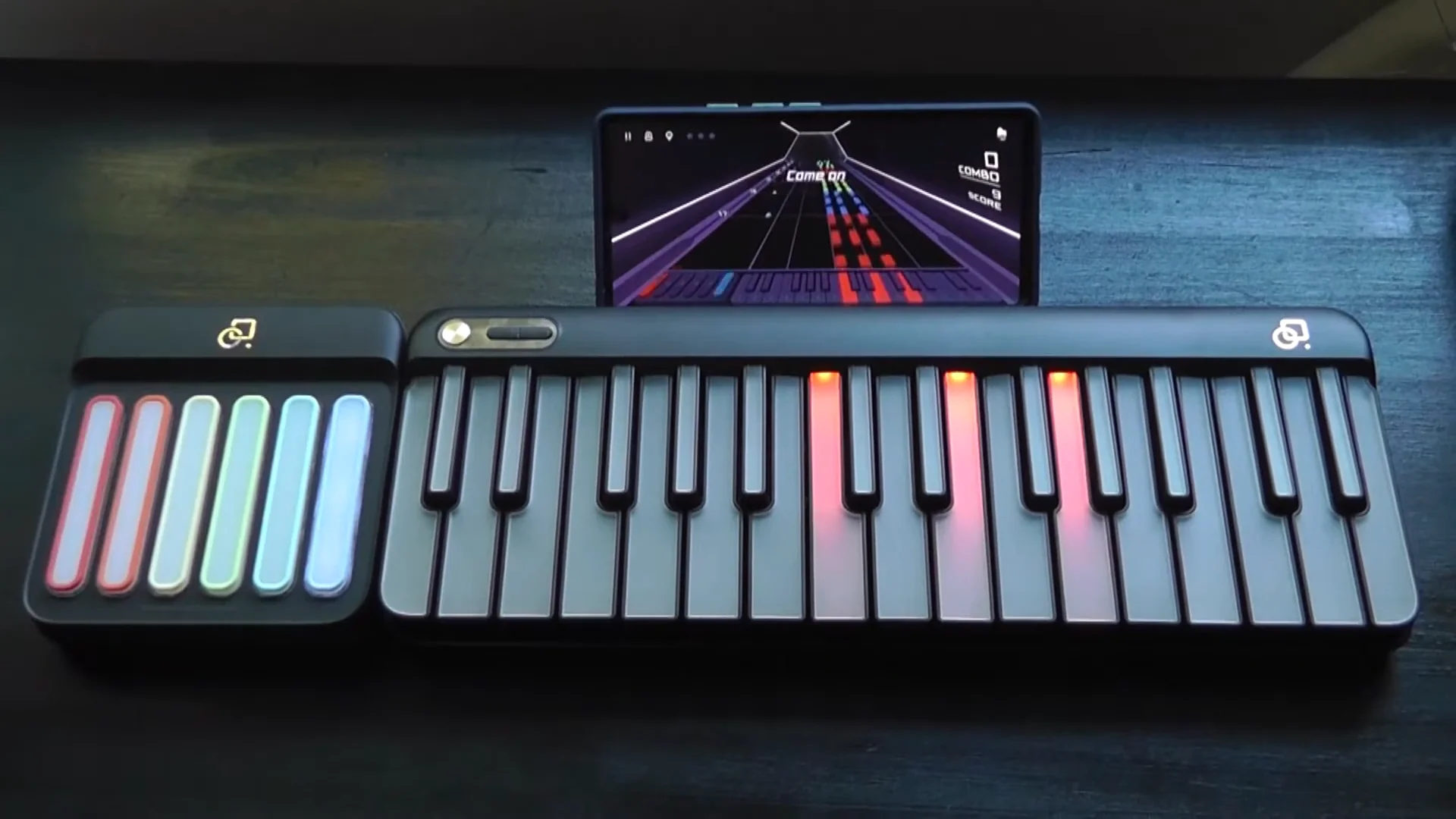
The Rhymo Folding Piano is the outlier in this roundup, but it earns its place because “portable keyboard” can mean a musical keyboard rather than a computer accessory. This is a full 88-key instrument with semi-weighted keys, touch-sensitive response, a sustain pedal, and a carry bag. It is not a substitute for the ProtoArc or Logitech models, and shoppers should decide which kind of keyboard they need before clicking through.
The piano folds 180 degrees to half its size. Rhymo lists the folded dimensions as 24.7 by 9.6 by 5.9 inches and the weight as 11 pounds. That is portable in the musical-instrument sense, but it is far too large for an ordinary laptop bag. The semi-weighted action provides some resistance for finger development, while touch sensitivity allows playing force to affect volume and tone.
Built-in capabilities include 132 timbres, 128 rhythms, and 80 demo songs. A 30W stereo surround speaker provides onboard sound, and Bluetooth supports connections to piano-learning apps such as Perfect Piano and Popular Piano. USB MIDI connects the instrument to computers, iPads, and other smart devices for editing and composition. A rechargeable battery is rated for up to 10 hours of cordless play, with wired operation available as well.
The ProtoArc XK01 is the obvious choice for spreadsheets and office documents, while the Rhymo is the only product here that can support piano practice. Its weakness is not a missing computer feature. It is the sheer size and weight that come with 88 full-size keys, speakers, and an instrument action. Readers focused on musical instruments may want to compare the qualities that matter in a piano practice keyboard rather than judge this model by computer-keyboard standards.
Choose the Rhymo only if you want a portable piano. For everyone else, its musical layout and physical size make it the wrong tool, despite its folding design.
How to choose best portable keyboards
The right portable keyboard depends on where you will use it, how much layout you need, and whether portability means folding smaller or simply weighing less.
Layout and key spacing
A full-size layout is useful for spreadsheets, coding, data entry, and anyone who relies on a number pad. The ProtoArc XK01 has 105 keys, while the TECKNET Foldable Keyboard has 99 and the compact models remove or compress more controls. Smaller layouts save space, but they can increase adjustment time and make navigation keys less convenient.
For phone messages and occasional notes, a compact 78-key or mobile-focused board may be enough. For daily typing, look for laptop-like spacing and key shapes that reduce accidental presses. A musical keyboard is a separate category entirely, since its key count and response are designed for playing rather than computer commands.
Folded size and open footprint
A folding keyboard only saves space when it is closed. Check both the packed dimensions and the width when open. The XK04 is designed for tight mobile workspaces, while the XK01 opens to a much wider full-size arrangement.
A broad keyboard may be comfortable on a hotel desk but awkward on an airplane tray. A compact slab such as the OMOTON is easier to place anywhere, though it cannot shrink further in a bag. Think about the smallest surface you actually use, not just the storage dimensions.
Connection options
Bluetooth is the most flexible choice for phones, tablets, and laptops without a full-size USB port. Three-device pairing is useful when you regularly switch between a work computer, tablet, and phone. USB receiver models can provide simple plug-and-play operation, but they require a compatible port.
The TECKNET Mini Combo is limited to 2.4GHz USB, while the foldable ProtoArc and Logitech models support Bluetooth. Some hybrid models add a receiver and converter, which helps when a device has only USB-C ports. Confirm operating-system support for shortcut keys, since connection may work even when every special key does not.
The most portable keyboard is the one that fits the smallest surface where you actually type, not the one with the smallest folded number.
Power and charging
Rechargeable keyboards reduce the need to carry spare batteries and are especially convenient when a laptop charger already includes USB-C. The ProtoArc and TECKNET foldable models use USB-C charging, while the Logitech Pebble Keys 2 uses replaceable batteries and the OMOTON needs two AAA batteries.
Battery claims usually describe standby or light use rather than continuous typing. Backlighting can shorten runtime substantially, as shown by the MX Keys Mini's difference between illuminated and unlit operation. For infrequent travel, long standby is helpful. For daily use, a clear charging method may matter more.
Stability, hinges, and included accessories
A folding keyboard needs hinges that hold the sections together without making setup irritating. Look for a locking mechanism or a design that stays flat without clips. The Ghajz includes a hinge lock, while the ProtoArc XK01 and XKM01 emphasize quick deployment without locking clips.
A carrying case, mouse, or device stand can change how useful the keyboard is outside the home. The combo models offer more complete workstations but take up more room. If you already carry a mouse and tablet stand, a keyboard-only model may be easier to manage.
Backlighting and quiet operation
Backlighting helps in dim rooms, but it adds power demands and is not common on foldable designs. The MX Keys Mini is the clear choice for illuminated keys. Most other computer keyboards here focus on low-profile or scissor switches instead.
Quiet keys are useful in libraries, shared offices, and hotel rooms. Manufacturer noise-reduction claims should be treated as directional rather than universal, since sound also depends on the surface beneath the keyboard and how heavily you type.
Frequently asked questions
Are foldable keyboards comfortable for long typing sessions?
Some are, especially models that open to a full-size or near-full-size layout. The ProtoArc XK01 and XKM01 give you 105 keys, while smaller designs trade spacing for portability. If you type for hours every day, a compact non-folding model such as the Logitech MX Keys Mini may feel more consistent.
Which portable keyboard is best for an iPad?
The OMOTON iPad Keyboard is the lightest iOS-focused option, with dedicated iPad and iPhone shortcuts. The ProtoArc XK04 is more flexible because it folds, charges over USB-C, and can connect to three devices. Choose the OMOTON for minimum weight and the XK04 for broader travel use.
Do these keyboards work with multiple devices?
Several do. The ProtoArc XK01, ProtoArc XK04, Logitech Pebble Keys 2, Logitech MX Keys Mini, Ghajz Foldable Combo, ProtoArc XKM01, and TECKNET Foldable Keyboard can connect to multiple devices according to their product features. The TECKNET Mini Combo uses a single USB receiver and does not support Bluetooth.
Is a number pad important on a portable keyboard?
It matters if you regularly enter figures, manage spreadsheets, or use navigation commands. The XK01 and XKM01 provide 105-key layouts, while the Ghajz and TECKNET foldable models also include numeric keypads. A number pad adds width, so it is unnecessary for short notes and ordinary tablet typing.
Are portable keyboard batteries rechargeable?
Some are and some are not. The ProtoArc, MX Keys Mini, Ghajz, XKM01, and TECKNET foldable keyboard use rechargeable power, while the Pebble Keys 2 and OMOTON use replaceable batteries. The TECKNET Mini Combo also requires AAA batteries for both the keyboard and mouse.
Can a portable computer keyboard replace a piano keyboard?
No. Computer keyboards use letter and control layouts, while piano keyboards use musical notes and playing response. The Rhymo Folding Piano has 88 semi-weighted, touch-sensitive keys, making it suitable for music practice but not for typing documents.
Do portable keyboards include a mouse?
Only some of these do. The Ghajz Foldable Combo, ProtoArc XKM01, and TECKNET Mini Combo include a mouse. The other computer-keyboard picks are keyboard-only, so you would need to bring a separate pointing device for a complete workstation.
The bottom line
The Best portable keyboards start with the ProtoArc XK01 for most computer users. Its 105-key layout, number pad, three-device Bluetooth switching, quiet scissor keys, and folding design cover more work situations than any other computer keyboard here. The Logitech MX Keys Mini is the better choice for backlit typing and a polished compact desk setup, while the ProtoArc XK04 makes more sense when every inch of bag space matters.
For a keyboard and mouse together, choose the ProtoArc XKM01 for its full layout and quiet operation, or the Ghajz Foldable Combo if its connection options and included stand fit your workflow. The Rhymo Folding Piano is the specialist pick for musicians, not an alternative to a typing keyboard.
If you are undecided, choose the XK01 for full-size work, the XK04 for the smallest mobile setup, and the MX Keys Mini for illuminated everyday typing.
As an Amazon Associate we earn from qualifying purchases.