

A detector that works beautifully in mild soil can become noisy and frustrating the moment you move into black sand, hot rocks, or ground packed with iron. The right choice depends less on a long feature list than on the kind of targets you chase and how much control you want over mineralization, discrimination, and audio.
Our Best best fisher metal detector picks range from the ultra-high-frequency Gold Bug 2 to the general-purpose F22, the utility-focused M-66, and the specialized Gemini-3. The Fisher Gold Bug 2 Combo is the strongest choice for serious gold prospecting, while the other nine cover easier entry points and more specialized work.
Comparison table
| # | Product | Award | Frequency or coil | Weight | Best for |
|---|---|---|---|---|---|
| 1 | Fisher Gold Bug 2 Combo | Best overall | 71 kHz; 6-inch and 10-inch coils | 2.9 lb | Small gold in mineralized soil |
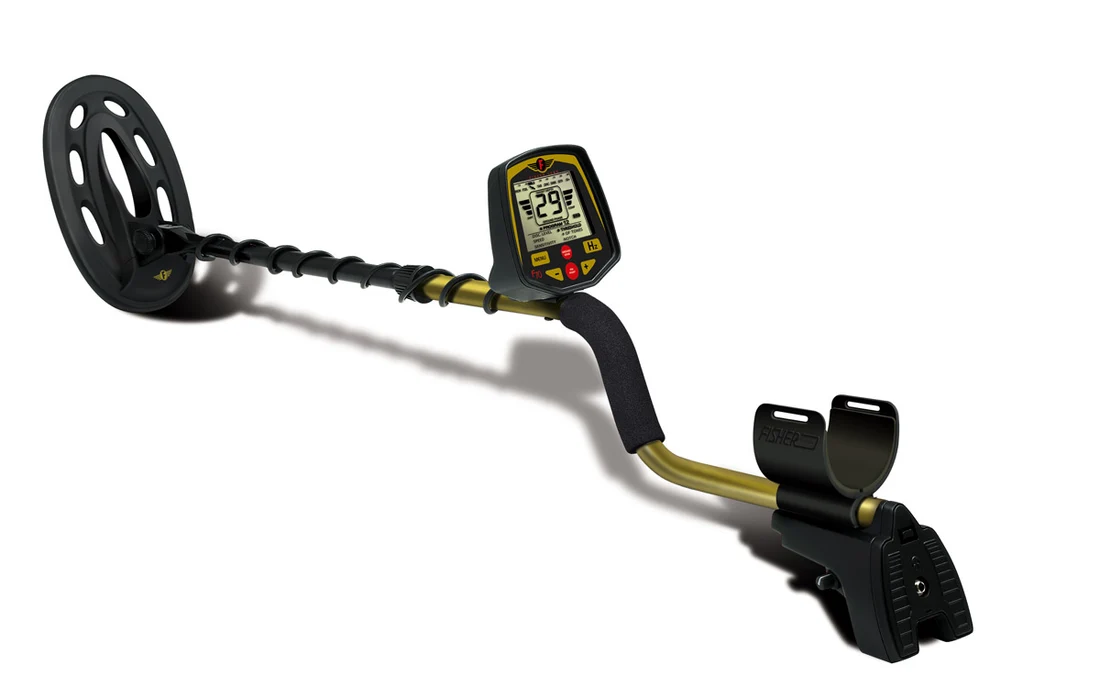
| 2 | Fisher F44 | Best general-purpose display | Weatherproof design; LCD | 3.59 lb | General treasure hunting |
| 3 | Fisher F22 9-Inch | Best beginner detector | 9-inch weatherproof coil | Approx. 2 lb | Coins, jewelry, and artifacts |
| 4 | Fisher Gold Bug Pro | Best ground balancing | 19 kHz | 2.5 lb | Prospecting with live soil feedback |
| 5 | Fisher F22 11-Inch | Best wider-coil F22 | 11-inch weatherproof coil | See review | Covering more ground |
| 6 | Fisher Gold Bug | Best simple gold detector | LCD; two search modes | 2.5 lb | Straightforward nugget prospecting |
| 7 | Fisher Gold Bug 2 10.5 | Best Gold Bug 2 reach | 71 kHz; 10-inch elliptical coil | 2.9 lb | Broad goldfield searches |
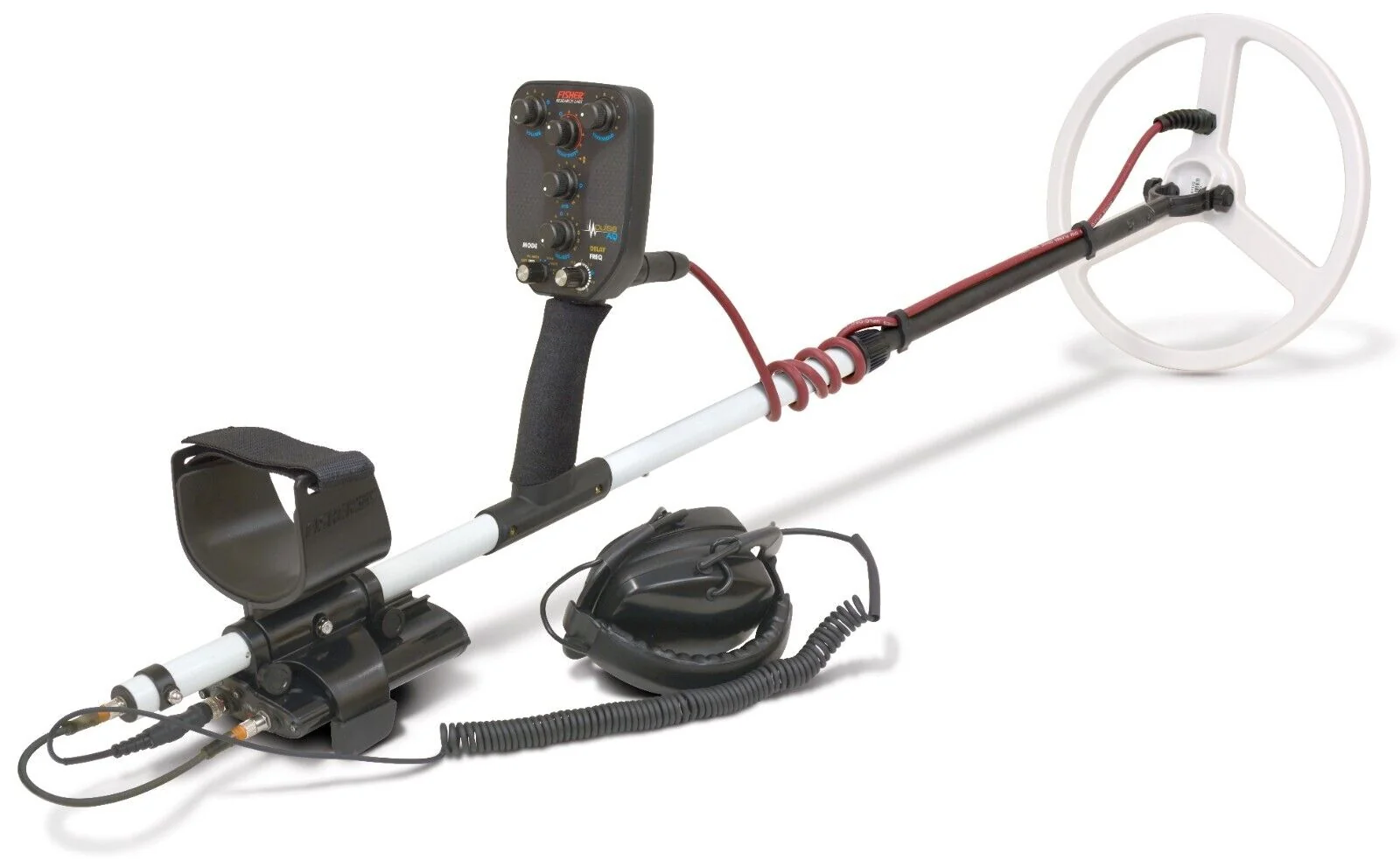
| 8 | Fisher Gemini-3 | Best two-box locator | 4 search and trace modes | 7.5 lb | Deep, larger targets |
| 9 | Fisher M-66 | Best utility locator | 4.5 kHz; 8-inch double-D coil | 14.5 lb | Valves, boxes, and covers |
| 10 | Fisher F19 | Best iron separation | 11-inch DD coil | 2.5 lb | Relic hunting in iron-rich ground |
1. Fisher Gold Bug 2 Combo: Best Overall

Pros
- Exceptionally high 71 kHz operating frequency
- Includes both 6-inch and 10-inch elliptical coils
- Manual 16-turn ground balance
- Only 2.9 pounds
- Hip-mountable control housing
Cons
- Manual tuning asks more from the operator
- Gold-focused design is less convenient for casual coin hunting
- No numerical target-ID display is listed
Best for: serious prospectors searching for small gold in difficult mineralized soil.
The Fisher Gold Bug 2 Combo is the detector in this group that makes the clearest case for specialization. Its 71 kHz operating frequency is aimed at sensitivity to small gold nuggets, and the detector is built around the difficult conditions where ordinary all-purpose models can become unsettled. It is not the model we'd hand to someone who wants to switch on a detector and search a local park immediately. For prospecting, though, that focused design is exactly the point.
The bundle includes a 6-inch elliptical coil and a 10-inch elliptical coil. The smaller coil should be easier to maneuver through tight spaces and uneven ground, while the larger coil covers more ground during open-area searches. Both coils are described as waterproof and use 100% ESI shielding, which is intended to reduce interference. That combination is more useful than simply having two sizes in the box because prospectors can trade coverage for precision as the terrain changes.
Ground handling is the feature that separates this model from the simpler F22 detectors. A manual 16-turn ground balance control and a three-position mineralization switch let the operator adjust for high, normal, or low mineralization. There is also an iron discrimination mode and an audio boost mode for faint signals. The latter is designed to raise the sound of small or deep targets without making larger shallow targets proportionally louder, a useful distinction when the signal is barely audible.
Compared with the Gold Bug Pro, the Gold Bug 2 is more specialized and operates at a much higher frequency, but the Pro offers computerized ground balancing and a live ground-condition readout. The Gold Bug is easier to understand because it adds an LCD and two search modes. The Gold Bug 2 counters with a remarkably light 2.9-pound body, a cushioned armrest, a foam grip, and a hip-mountable control housing. Its weakness is the learning curve. Skip it if you mainly want target categories and simple visual feedback. Choose it if tiny gold and mineralized soil are the reason you are shopping.
2. Fisher F44: Best General-Purpose Display

Pros
- Large, easy-to-read LCD
- Weatherproof construction
- Adjustable discrimination and sensitivity
- Target depth indicators
- Audio feedback for target evaluation
Cons
- Heavier than the F22 9-Inch
- Not as specialized for tiny gold as the Gold Bug models
- Battery operation requires carrying spare batteries
Best for: beginners and experienced hobbyists who want readable target information in a general-purpose detector.
The Fisher F44 is the most approachable all-purpose option here when a clear screen matters. Its large LCD is easier to read at a glance than a tiny, information-dense interface, and the controls are built around the decisions most park, yard, and field hunters actually make: sensitivity, discrimination, target depth, and audio response.
Its weatherproof design gives it a practical advantage for outdoor use, although weatherproof should not be treated as permission to submerge the entire detector. The detector is battery powered, so it does not tie you to an outlet and can be taken to a remote search area. At 3.59 pounds, it is still manageable, but the F22 9-Inch is the lighter-feeling choice for long casual sessions.
The F44 is also more flexible than its simple appearance suggests. Adjustable discrimination helps reduce unwanted ferrous targets, while the depth indicator gives a rough sense of how far down a target may be. Sensitivity controls matter when the ground becomes noisy: turning sensitivity down can produce a cleaner search, even if maximum sensitivity sounds attractive on paper. The F44's audio feedback gives the user another signal to interpret instead of relying only on the screen.
The Fisher F19 goes further for hunters who spend time separating iron targets, with FeTone audio and V-Break discrimination. The Gold Bug Pro is the better tool for prospecting in mineralized ground. The F44's weakness is that it occupies the middle ground without a gold-focused frequency or the F19's more specialized iron controls. That is not a flaw for a family detector or a general treasure hunter. It is a reason to choose another model if you already know your search environment is unusually mineralized or packed with iron.
3. Fisher F22 9-Inch: Best Beginner Detector

Pros
- Weatherproof design for outdoor searching
- Simple turn-on-and-go controls
- 0 to 99 numeric target identification
- Four-tone audio identification
- Approximately 2 pounds
Cons
- Less ground-control flexibility than the prospecting models
- Nine-inch coil covers less area than the 11-inch F22 version
- Intended detection depth is described as up to nine inches
Best for: a first detector for coins, jewelry, artifacts, and shallow-water searching.
The Fisher F22 9-Inch is the easiest recommendation for someone who has never used a detector. Its controls are described as turn-on-and-go, and that matters more than advanced terminology when a new user is trying to understand the difference between a promising signal and a piece of scrap metal. The weatherproof construction also removes some worry when the forecast changes during an outdoor search.
The 9-inch weatherproof coil is a sensible middle size for general hunting. It is not so large that it becomes awkward around rocks, roots, and tight spaces, and it does not force a beginner to sweep an oversized coil with perfect consistency. Fisher describes it for jewelry, coins, and artifacts on land and in shallow water, with targets on the surface or buried up to nine inches deep.
The useful information is not limited to a beep. The F22 provides target categories, a 0 to 99 numeric Target-ID, and a four-tone Audio-ID system. Discrimination and notch controls let the operator reject some unwanted materials, while pinpoint mode helps narrow the digging location. Sensitivity can be adjusted as conditions change. These controls provide a gentle path toward more deliberate detecting without making the first session feel like operating a laboratory instrument.
The F22 11-Inch uses the same general-purpose approach but is the more attractive option when coverage matters more than compact handling. The F44 has a larger display and a broader feature presentation, while the Gold Bug is much more tailored to nugget prospecting. The F22 9-Inch's weakness is its limited suitability for highly mineralized goldfields. For someone choosing a first detector for ordinary land, parks, and shallow-water searches, it is the model that creates the fewest barriers.
4. Fisher Gold Bug Pro: Best Ground Balancing

Pros
- 19 kHz operating frequency
- Computerized real-time ground balancing
- Continuous ground-condition readout
- Variable breakpoint tone discrimination
- 2.5-pound design
Cons
- More specialized than the F22 models
- Requires learning how tone and ground readouts interact
- Gold prospecting focus is not ideal for every casual hunter
Best for: prospectors who want live ground information and fine control without carrying a heavy detector.
The Fisher Gold Bug Pro is the most balanced prospecting detector in this roundup. It does not chase the extreme 71 kHz frequency of the Gold Bug 2. Instead, its 19 kHz operating frequency is paired with controls that help the operator understand and compensate for changing soil. That makes it a more versatile prospecting instrument for someone who wants genuine adjustment rather than a single highly specialized strength.
Its computerized Ground Grab system performs real-time ground balancing, and the detector provides a continuous ground-condition readout with mineralization information. This is the kind of feedback that can prevent a promising search area from turning into a stream of false signals. The threshold and gain are independently adjustable, so the user can tune the detector to the soil and the target size instead of treating sensitivity as a single switch.
V-Break tone discrimination is the Pro's other major distinction. Its variable breakpoint lets the operator set how tones divide different targets, giving more control than a fixed tone arrangement. The result is a detector that rewards listening and adjustment. At 2.5 pounds, it is also easy to carry for extended sessions, and its simple interface keeps the control panel from becoming intimidating.
The Gold Bug 2 Combo is the stronger pick for extremely small gold and includes two coils, but it asks the user to manage a 16-turn manual ground balance and mineralization switch. The Gold Bug adds a large LCD, 0 to 99 target identification, and two search modes, making it easier to read. The Gold Bug Pro's weakness is that its advantages are wasted if you only want a casual weekend detector. If that describes your use, the F22 9-Inch is less demanding. If changing ground conditions are central to the search, the Pro is the more thoughtful tool.
5. Fisher F22 11-Inch: Best Wider-Coil F22

Pros
- Larger 11-inch weatherproof coil
- Weatherproof detector design
- 0 to 99 Target-ID
- Four-tone Audio-ID
- Discrimination, notch, and pinpoint controls
Cons
- Larger coil can be less nimble in tight areas
- Product information lists a 4-pound weight
- Shares the F22 platform's limited mineralized-soil controls
Best for: general-purpose hunters who want to sweep more ground with an F22 platform.
The Fisher F22 11-Inch is the practical alternative to the 9-inch version, not a completely different detector. Its defining change is the 11-inch weatherproof coil, which gives the search head a wider footprint for open ground. That can make a large field less tedious to cover, provided the user can maintain a steady, level sweep.
It retains the F22's core approach. Fisher describes it as an all-purpose detector for jewelry, coins, and artifacts on land and in shallow water. The detector supports discrimination, sensitivity, notch, and pinpoint functions, so a beginner can start with basic settings and gradually learn how to filter targets. The 0 to 99 numeric Target-ID and four-tone Audio-ID provide both visual and audible clues.
The coil size is the reason to pick this version, but it is also the main handling trade-off. A larger coil can be more cumbersome around roots, rocks, fence lines, and other cluttered areas. The product information lists the detector at 4 pounds, which is notably more than the approximately 2-pound description attached to the 9-inch model. That difference should matter to anyone planning long sessions or frequent searches over uneven ground.
The F22 9-Inch is the better fit for tight spaces and easier carrying, while the F44 gives you a larger display and a more general-purpose feature set. Neither F22 version is the right answer for a dedicated gold prospector working heavily mineralized soil. The 11-Inch model makes sense for someone who already likes the F22 controls and wants more sweeping coverage, but it is not automatically the better choice for every user.
6. Fisher Gold Bug: Best Simple Gold Detector

Pros
- Two search modes
- Large LCD with 0 to 99 Target-ID
- Continuous ground phase and computerized ground grab
- No-motion pinpoint mode
- 2.5-pound weight
Cons
- Less specialized for tiny gold than the Gold Bug 2
- Two modes provide less flexibility than more advanced controls
- Gold prospecting focus limits its general-purpose appeal
Best for: prospectors who want a light detector with a screen and straightforward operating modes.
The Fisher Gold Bug occupies a useful middle position between a basic detector and the more involved Gold Bug Pro. It is built for gold nugget prospecting, but it gives the operator a large LCD rather than asking them to work from audio alone. The screen provides 0 to 99 numeric target identification, a depth readout, and a large-target alert, all of which make it easier to decide where to dig.
Its two search modes are All-Metal and Discriminate. All-Metal is the mode for hearing everything in the ground, while Discriminate can filter some unwanted metals. That is a simple arrangement, but simplicity is useful when the main goal is to spend time searching rather than constantly adjusting a complicated set of filters. The no-motion pinpoint function is another practical feature for narrowing the target location before digging.
Ground handling is stronger than the uncomplicated control layout suggests. The Gold Bug has continuous ground phase and computerized ground grab, plus adjustable threshold and gain. Its two-tone VCO audio changes with target depth and size, providing an audible sense of what is beneath the coil. The 2.5-pound weight also makes this a comfortable choice for longer prospecting sessions.
The Gold Bug Pro is the more capable pick when real-time ground-condition information and variable breakpoint discrimination matter. The Gold Bug 2 Combo is more sensitive to very small gold at 71 kHz and adds coil flexibility. The Gold Bug's weakness is that it does not offer either model's most specialized advantage. That is also its appeal. Choose it if you want a screen, ground balance, and a light body without committing to the most demanding prospecting controls.
7. Fisher Gold Bug 2 10.5: Best Gold Bug 2 Reach

Pros
- 71 kHz frequency for small gold sensitivity
- 10.5-inch waterproof search coil
- 16-turn manual ground balance
- Three-position mineralization switch
- 2.9-pound body with hip-mountable housing
Cons
- Less coil flexibility than the combo version
- Manual ground adjustment takes practice
- Specialized gold detector rather than a general treasure machine
Best for: gold prospectors who want the Gold Bug 2 platform with a larger single coil for broader searches.
The Fisher Gold Bug 2 10.5 is the focused version of the Gold Bug 2 concept. It uses the same 71 kHz frequency and is intended to locate small gold nuggets in mineralized soils, but it arrives with a single 10.5-inch waterproof search coil. That makes the choice simpler for a prospector who already knows that broad coverage is more important than switching to a smaller coil.
The coil is described as elliptical, waterproof, and shielded with 100% ESI shielding to reduce interference. A coil of this size can cover open ground more efficiently than a smaller search head, though it is not as convenient in tight spaces. The high frequency remains the headline feature. It is designed for sensitivity to small and deep gold, not for giving the user a broad set of everyday coin-hunting conveniences.
Manual control is central to the detector. The 16-turn ground balance lets the operator make fine adjustments, and the three-position mineralization switch addresses high, normal, or low mineralization. Iron discrimination can help filter ferrous trash and hot rocks, while audio boost raises faint signals without simply making large shallow targets louder. These controls reward patience and careful listening.
The Gold Bug 2 Combo is the better buy for someone who needs both precision and coverage because its bundle includes a 6-inch and a 10-inch elliptical coil. The Gold Bug Pro offers easier computerized balancing and a live ground readout. The 10.5 model's weakness is its lack of that extra coil and its manual learning curve. Pick it when you want a dedicated gold machine with a broad coil and do not need the general-purpose flexibility of the F22 line.
8. Fisher Gemini-3: Best Two-Box Locator

Pros
- V.C.O. audio response for pinpointing
- Inductive search and conductive trace modes
- Wide and narrow scan modes
- 60-cycle noise reduction
- Battery test meters
Cons
- Much heavier than the handheld prospecting detectors
- Uses 16 AA batteries
- Specialized two-box design is not ideal for coins and small jewelry
Best for: users searching for larger or deeper targets with a two-box detector.
The Fisher Gemini-3 is not a normal park detector with a larger coil. It is a two-box instrument built around inductive search and trace work, so its appeal is tied to larger or deeper targets rather than the small coins and jewelry that suit the F22. That distinction should be settled before looking at its feature list.
V.C.O. audio response is designed to help pinpoint a target by changing the character of the audio as the operator closes in. The Gemini-3 provides inductive search and conductive trace modes, with wide and narrow scan options. Those modes give the user a way to change the search pattern based on the target and the ground, rather than relying on a single sweep style.
Noise can undermine a two-box search, so the 60-cycle noise reduction circuitry is a meaningful inclusion. The detector uses 16 AA batteries, split between the transmitter and receiver, and has battery test meters to monitor their condition. The stated weight is 7.5 pounds, making it substantially more demanding to carry than the 2.5-pound Gold Bug or F19.
The M-66 is the more appropriate choice for locating buried valves, boxes, and covers through concrete and asphalt. The Gold Bug 2 is far more sensitive to small gold. The Gemini-3's weakness is its narrow use case and its weight. It belongs on a shortlist only when the search calls for two-box detection, deeper larger-target work, or trace modes. For ordinary treasure hunting, the F44 or F22 is easier to live with.
9. Fisher M-66: Best Utility Locator

Pros
- Locates valves, boxes, and covers
- Adjustable length from 28 to 48 inches
- Works through concrete and asphalt
- Waterproof search loop
- Ground rejection controls
Cons
- Listed at 14.5 pounds
- Not designed for ordinary coin and jewelry hunting
- Much less portable than the general-purpose detectors
Best for: utility and damage-prevention work where buried metal must be found through hard surfaces.
The Fisher M-66 is the clearest example of why the phrase metal detector can hide very different jobs. This is a valve and box locator for professional fieldwork, not a recreational treasure detector. Its all-metal design is intended to locate buried valves, boxes, and covers, including through concrete and asphalt.
The shaft adjusts from 28 to 48 inches, which allows the operator to set a workable length rather than stooping or reaching through an entire job. The detector has tuning and ground rejection controls to compensate for mineralized ground and reduce false signals. Those controls matter when a reliable locate is more important than sorting a long list of target categories.
The 8-inch double-D search coil operates at 4.5 kHz and is described as providing depth and pinpoint accuracy. The waterproof search loop supports wet conditions, while the stated operating temperature range runs from -4 degrees Fahrenheit to 158 degrees Fahrenheit. Those details point to a tool intended for demanding outdoor and construction environments. The product information lists a 14.5-pound weight, so the M-66 is not a casual carry.
The Gemini-3 is the closest alternative in this roundup for specialized deeper detection, but its two-box design serves a different purpose. The F22 9-Inch is the better general detector for coins, jewelry, and artifacts. The M-66's weakness is obvious if you are shopping for recreation: it is heavy, specialized, and lacks the target-ID-centered experience of the hobby detectors. For utility locating and damage prevention, those are acceptable trade-offs. For everything else, choose a different Fisher.
10. Fisher F19: Best Iron Separation

Pros
- FeTone adjustable iron audio
- V-Break tone discrimination
- 11-inch DD waterproof search coil
- Ground Grab with manual override
- Backlit display
Cons
- More specialized than the F22 for beginners
- Iron filtering requires time to learn
- Not the high-frequency choice for tiny gold
Best for: relic hunters who need to separate desirable targets from iron trash.
The Fisher F19 is built for the unpleasant reality of relic hunting: promising ground can be full of nails, iron fragments, and other targets that make a detector talk constantly. Its FeTone adjustable iron audio lets the user reduce the prominence of iron sounds, while V-Break tone discrimination provides another way to distinguish target responses.
The 11-inch DD waterproof search coil is a useful match for open-area searching. It gives the F19 a broad sweep while retaining the DD configuration associated with handling difficult ground. The detector also has a notch window and adjustable notch width, so users can filter a selected range rather than applying a blunt all-or-nothing rejection.
Ground Grab automatically adjusts to surrounding soil, and a manual override allows further tuning in salt or mineralized ground. The continuous ground-condition readout makes those changes easier to monitor. The backlit display is a small but practical advantage for early morning, late afternoon, or shaded searches when an unlit screen becomes difficult to read.
The F44 is friendlier for a first-time general hunter, and the Gold Bug Pro is the better specialist for gold prospecting with real-time ground balancing. The F19's weakness is that its strengths depend on learning how to interpret iron audio and tone breaks. If you are willing to do that, it is the most persuasive option here for iron-heavy relic sites. If you want simple target categories and minimal setup, choose the F22 9-Inch instead.
How to choose best fisher metal detector
Start with the targets and ground you actually intend to search. Fisher's lineup here includes everyday detectors, dedicated prospecting models, relic-focused equipment, and professional utility locators, so the right capability matters more than a universal feature checklist.
Search frequency
Frequency affects the kind of response a detector is designed to emphasize. The Gold Bug 2 operates at 71 kHz for sensitivity to small gold, while the Gold Bug Pro operates at 19 kHz and combines its frequency with extensive ground controls. The M-66 uses 4.5 kHz for utility locating.
A high-frequency gold detector is not automatically the right tool for coins, relics, or valves. Match the frequency and detector design to the target size and material you expect to encounter.
Coil size and shape
A smaller coil is easier to control around rocks, roots, and clutter. The Gold Bug 2 Combo's 6-inch elliptical coil is the precision option, while its 10-inch coil and the Gold Bug 2 10.5's coil cover more ground. The F22 models use 9-inch and 11-inch coils for different handling and coverage priorities.
Larger coils can make open fields faster to search, but they are not always easier to swing in tight terrain. Coil shape, waterproof construction, and shielding also matter when the search area is wet or electrically noisy.
The best coil is the one you can keep level and controlled for the entire search, not the largest coil in the catalog.
Ground balance
Mineralized soil can create unstable signals and mask small targets. The Gold Bug 2 uses a manual 16-turn ground balance and a three-position mineralization switch. The Gold Bug Pro and Gold Bug use computerized ground grab systems, while the F19 adds Ground Grab with manual override.
A detector with live ground information is useful when soil changes across a site. Manual controls can be more precise, but they require practice. If you are new to prospecting, computerized balancing is a gentler starting point.
Target identification and audio
A screen can show target categories, numeric identification, and depth information. The F22 provides a 0 to 99 Target-ID and four-tone Audio-ID, while the Gold Bug adds a large LCD, depth readout, and two-tone VCO audio. The F19 leans harder on adjustable iron audio and V-Break tones.
Audio is especially important in mineralized or iron-heavy ground because a single target number does not tell the whole story. Choose a visual system if you want quick confirmation. Choose richer tone controls if you are prepared to learn the detector's language.
For a less specialized starting point, how to compare entry-level detectors for ordinary ground can help clarify which controls are genuinely useful before you move into gold prospecting equipment.
Weather resistance and working environment
Weatherproof coils and weatherproof detector designs make outdoor searches less stressful, but they do not make every component submersible. The F22 and F44 are intended for general outdoor use, while the Gold Bug 2 coils and the M-66 search loop are described as waterproof.
The working surface matters just as much. The M-66 is designed to locate metal through concrete and asphalt, while the Gemini-3 is built around two-box search and trace modes. Neither is a sensible substitute for a general-purpose detector.
Frequently asked questions
Which Fisher detector is best for small gold?
The Gold Bug 2 models are the most specialized options here for small gold because they operate at 71 kHz and include manual mineralization adjustments. The Combo version is more flexible because it includes 6-inch and 10-inch elliptical coils. The 10.5 model is the simpler choice if you specifically want a larger single coil.
Is the Fisher F22 suitable for beginners?
Yes. The F22 9-Inch is designed around simple controls, with discrimination, sensitivity, notch, and pinpoint functions. Its 0 to 99 Target-ID and four-tone audio system provide useful feedback without requiring advanced prospecting knowledge.
What is the difference between the two F22 models?
The main listed difference is the coil size. The F22 9-Inch uses a 9-inch weatherproof coil, while the other version uses an 11-inch weatherproof coil. The 9-inch model should be easier to maneuver in tight areas, while the 11-inch model is aimed at covering more open ground.
Can these detectors be used in wet conditions?
Several products have weatherproof or waterproof components. The F22 and F44 are described as weatherproof, and the Gold Bug 2 coils and M-66 search loop are described as waterproof. Check the manufacturer's operating limits before placing any control housing or detector body in water.
Which Fisher detector is best for iron-heavy relic sites?
The F19 is the strongest fit because it has FeTone adjustable iron audio, V-Break tone discrimination, and an adjustable notch window. These controls are designed to help separate useful targets from iron trash. It takes more practice than the straightforward F22.
Is the M-66 a general-purpose treasure detector?
No. The M-66 is a valve and box locator intended for utility locating and damage prevention. Its all-metal design, adjustable shaft, and ability to work through concrete and asphalt serve a very different purpose from coin, jewelry, and relic detectors.
Does a larger coil always detect more?
A larger coil can cover more ground, but it may be harder to control in cluttered terrain and can make target separation more difficult. The detector's operating frequency, ground balance, coil design, and soil conditions all affect real-world performance. A smaller coil can be the more useful choice around rocks, roots, and dense iron.

The bottom line
The Fisher Gold Bug 2 Combo is the top choice in this Best best fisher metal detector roundup for dedicated gold prospecting. Its 71 kHz frequency, two included coils, manual ground balance, mineralization switch, and 2.9-pound body give serious prospectors the most focused set of capabilities here. The Fisher Gold Bug Pro is the better alternative when computerized ground balancing and continuous ground-condition feedback matter more than extreme frequency.
For general treasure hunting, the Fisher F22 9-Inch is the easiest recommendation, while the Fisher F44 is a stronger choice when a large readable display and broader adjustment options are priorities. The F19, Gemini-3, and M-66 are better treated as specialists for iron separation, two-box work, and utility locating.
If you are undecided, choose the F22 9-Inch for general searches, the Gold Bug 2 Combo for small gold, and the M-66 only when your work involves buried utility hardware.
As an Amazon Associate we earn from qualifying purchases.