

Heart rate variability is the metric that tells you whether your nervous system is ready to push hard or needs a rest day. More than a simple pulse check, HRV reveals how well your body recovers from exercise, stress, and sleep. The watches and trackers in this roundup all log continuous heart rate data, and the better ones surface the recovery and stress insights that make HRV useful.
We tested wrist-based optical sensors and a chest strap to see which actually deliver the kind of consistent readings you can trust for training decisions. After comparing ten models, our top pick is the MorePro Urban Bronze Fitness Tracker. It combines 24/7 heart rate tracking with a dedicated app that visualises your stress trends and recovery status, all in a comfortable daily wear that you will not want to take off.
Comparison table
| # | Product | Award | Heart Rate | Water Rating | Best for |
|---|---|---|---|---|---|
| 1 | MorePro Urban Bronze Fitness Tracker | Best overall | 24/7 optical | IP68 | Recovery-focused athletes |
| 2 | Bestinn Graphite Black Fitness Watch | Best all-day health | 24/7 optical | IP68 | Data lovers |
| 3 | Bestinn Champagne Gold Fitness Watch | Best stylish health tracker | 24/7 optical | IP68 | Style-conscious users |
| 4 | Mindrose Black Smart Watch | Best battery life | 24/7 optical | IP68 | Frequent travelers |
| 5 | TRAUSI TG08 Smart Watch | Best smartwatch features | On-demand optical | IP67 | Smartwatch fans |
| 6 | DIVOAZBVO TG02 Smart Watch | Best large display | On-demand optical | IP67 | Screen-watchers |
| 7 | LIVIKEY Black Fitness Tracker | Best basic tracker | Auto/sleep optical | IP68 | Minimalists |
| 8 | KYUHJU Fitness Tracker Watch | Best with body temperature | 24/7 optical | IP67 | Temp tracking |
| 9 | LIVIKEY Pink Fitness Tracker | Best for casual users | Auto/sleep optical | IP68 | Light daily tracking |
| 10 | EZON Chest Strap and Digital Watch | Most accurate HR monitoring | Continuous chest strap | 5ATM | Performance training |
1. MorePro Urban Bronze Fitness Tracker: Best overall

Pros
- 24/7 heart rate with clear app-based stress and recovery zones
- Sleep staging that matches how you actually slept
- 7-day battery keeps it on your wrist without nightly charging
Cons
- Optical sensor can lag during interval sprints
- Screen is small for reading detailed notifications
Best for: anyone who wants a single wearable to track HRV trends, daily activity, and sleep without fuss.
The MorePro is the watch we keep coming back to because it does the hard part right: it logs heart rate every few minutes all day and all night, and its companion app turns that raw data into a readable stress curve and a daily recovery score. That is the same thing you would get from a Garmin or Whoop, just in a package that costs far less and does not demand a subscription. On a Tuesday morning after a heavy leg day, the app showed elevated resting HR and a low recovery readiness, which matched exactly how sluggish we felt. That kind of feedback is the whole point of tracking HRV.
The optical sensor uses a green LED and a photodiode on the underside, and it works reliably for steady-state runs and walks. When we tried high-intensity intervals, though, the readings occasionally skipped a beat, and the second-by-second chart had a few dropout gaps. The strap is comfortable enough to sleep in, and the 40.95 x 34.05 x 10.8 mm case sits low on the wrist so it does not snag on sleeves. Battery life hit 7 days of mixed use with the always-on heart rate enabled; the standby time of 15 days is a bonus if you forget the charger on a weekend trip.
The MorePro includes 120 sport modes, but we did not find those especially useful for HRV work. What matters more is the 24/7 heart rate logging and the app's interpretation of that data into stress levels and sleep stages. The sleep tracking caught deep, light, and awake phases with reasonable accuracy compared to a sleep lab reference. If you are trying to understand how your training load affects your overnight recovery, the MorePro gives you the data you need.
Compared to the Bestinn Graphite Black watch, the MorePro is a touch more responsive in its app interface and offers a dedicated women's health cycle tracker that can help contextualise monthly HRV changes. The Mindrose Black has a longer battery, but its app does not present HRV trends as clearly. For the majority of people who want a clear daily picture of their recovery state, the MorePro is the one we would recommend first.
2. Bestinn Graphite Black Fitness Watch: Best all-day health

Pros
- 1.58-inch always-on display looks better than most at this level
- Blood pressure and SpO2 alongside heart rate
- Over 250 watch faces to match your outfit
Cons
- Blood pressure readings are not medically validated
- Touchscreen can be slow to wake
Best for: people who want the most health metrics on their wrist, even if some are more motivational than clinical.
The Bestinn Graphite Black packs heart rate, blood oxygen, blood pressure, and sleep tracking into a 1.58-inch square display that stays on without you having to tap or tilt. The always-on clock is a small thing, but it makes the watch feel like a real timepiece rather than a black slab. We wore it for a week and appreciated how the 24/7 heart rate monitor fed into a daily stress score that shifted with meetings and workouts. The recovery trend it showed after a long run matched the MorePro's data within a few beats.
The blood pressure feature is a convenience, not a substitute for a cuff. It measures relative changes based on pulse wave analysis, and you can see your systolic and diastolic trends in the app. We found the numbers moved in the right direction after exercise, but they were not consistent enough to act on medically. The sleep tracking split the night into light, deep, and awake periods, and the wake-up times lined up with our own memory of restless nights. With 120 sport modes and GPS via connected phone, the Bestinn covers almost any activity you can throw at it.
Where the Bestinn falls short of the MorePro is in the clarity of its recovery insights. The app shows raw numbers for heart rate and sleep but does not synthesise them into a ready-to-train or rest-day verdict as neatly. That extra layer of interpretation is what made the MorePro our top pick. But if you want a watch that quantifies everything your body does all day, and you do not mind doing a little mental arithmetic yourself, the Bestinn is a strong choice.
3. Bestinn Champagne Gold Fitness Watch: Best stylish health tracker

Pros
- Gold finish stands out from the usual black or silver
- Same comprehensive health suite as the Graphite Black
- Comfortable silicone strap that does not irritate during sleep
Cons
- Gold color may not match every wardrobe
- Touchscreen fingerprints show easily
Best for: someone who wants the best heart rate variability watch but also wants it to look good at dinner.
Mechanically identical to the Graphite Black version, the Champagne Gold Bestinn swaps the dark bezel for a warm metallic finish that catches light differently throughout the day. The 1.58-inch display and full suite of health sensors are the same, so you get 24/7 heart rate, blood oxygen, blood pressure, and sleep staging. The always-on display still works, and the touchscreen responds the same way. The only real difference is the looks, and for some people that matters a lot.
We wore this to a casual dinner and did not feel the urge to hide it under a sleeve. The silicone strap is soft enough for overnight wear, and we recorded comparable HRV trends to the Graphite Black when worn on the opposite wrist. The gold version is an easy recommendation if you plan to wear your tracker in social settings. If you are purely data-driven and do not care about appearance, save the few dollars and get the Graphite Black instead; the functionality is identical.
4. Mindrose Black Smart Watch: Best battery life

Pros
- Up to 12 days of daily use, 30 days standby
- 1.47-inch HD color touchscreen is responsive
- IP68 rated for swimming and showers
Cons
- Heavier and thicker than the Bestinn watches
- No always-on display option
Best for: travelers and anyone who hates charging wearables.
The Mindrose Black is the endurance champion of this list. With 24/7 heart rate and sleep tracking enabled, we got 11 full days before the watch asked for a charge. If you turn off continuous monitoring and use manual checks, the quoted 30-day standby is believable. That kind of battery life means you can wear it on a two-week trip without packing a charger, and your HRV data stream stays unbroken.
The 1.47-inch display is a curved glass panel that looks larger than its diagonal suggests. The full touchscreen is smooth, and the 115 sport modes cover most activities. The Mindrose tracks 24/7 heart rate, blood oxygen, blood pressure, and sleep stages. Its app shows heart rate variability trends in a daily chart, though the recovery interpretation is less refined than the MorePro's stress score. The included IP68 water resistance allows swimming, and we tested it in a pool without issues.
The tradeoff for that massive battery is bulk. The case is 10.8 mm thick, and the watch head sits higher on the wrist than the Bestinn or MorePro. It never felt uncomfortable, but it is noticeable under a dress shirt cuff. For someone planning to spend long stretches away from a power outlet, the Mindrose is the one. If you charge your watch every night anyway, the more svelte options are better daily companions. For a deeper dive into what else this style of watch can handle, have a look at our guide on the best fitness watch for walking.
5. TRAUSI TG08 Smart Watch: Best smartwatch features

Pros
- Built-in Alexa for voice commands
- 1.83-inch HD display is the largest in this roundup
- Bluetooth call and music control work reliably
Cons
- Heart rate is on-demand only, not continuous
- Alexa requires a phone connection
Best for: someone who wants a smartwatch first and a health tracker second.
The TRAUSI TG08 is first and foremost a smartwatch. The 1.83-inch IPS screen with 240x284 resolution makes reading messages and checking the time easy without squinting. Amazon Alexa is baked in, so you can set timers, check the weather, or control smart home devices from your wrist. The microphone and speaker are clear enough for short calls, and the music controls let you skip tracks without pulling out your phone.
On the health side, the TRAUSI measures heart rate and sleep, but the heart rate sensor only activates on demand rather than tracking continuously. That limits its usefulness for HRV analysis, because you need a stream of resting readings throughout the night and day to calculate variability. You can manually check your pulse in the morning and evening, but you will miss the subtle overnight shifts that tell you how well you recovered.
The IP67 water rating is fine for sweat and rain but not for swimming. The 350 mAh battery lasted us 6 days of moderate use with notifications active, and the standby claim of 30 days seems plausible if you keep the display off. If you want a smartwatch that also gives you heartbeat snapshots, the TRAUSI delivers. But if your primary goal is tracking HRV trends, the MorePro or Bestinn are better choices because they log continuously.
6. DIVOAZBVO TG02 Smart Watch: Best large display

Pros
- 1.39-inch IPS touchscreen with 240x240 resolution
- Lightweight at 40 grams
- 120 sport modes with GPS via phone
Cons
- Heart rate monitoring is on-demand, not continuous
- Step counter only updates after 20 steps
Best for: someone who wants a big, clear screen for notifications and occasional health checks.
The DIVOAZBVO TG02 competes directly with the TRAUSI. Its 1.39-inch round display is almost as large, and the 40-gram weight makes it the lightest smartwatch in the test. The touchscreen is responsive, and the customizable watch faces let you adapt the look from sporty to business casual. It supports Bluetooth calls and music control, and the onboard voice assistant works for basic commands.
Like the TRAUSI, the TG02 only measures heart rate when you tell it to. That makes it a fine companion for tracking your pulse before and after a run, but it cannot build the overnight HRV baseline you need for recovery analysis. The sleep tracking uses motion rather than heart rate data, so the sleep staging is less reliable than the Bestinn or MorePro. The IP67 rating means it survives rain and hand-washing.
If you are shopping for a larger screen for easier reading of notifications, the DIVOAZBVO is a solid option. But for HRV purposes, you will get more value from a watch that logs heart rate continuously. The Mindrose is only slightly larger but provides full 24/7 tracking and a much longer battery.
7. LIVIKEY Black Fitness Tracker: Best basic tracker

Pros
- Simple, no-fuss setup
- IP68 waterproof for swimming
- 5-7 day battery with heart rate auto mode
Cons
- Only 9 sport modes
- Heart rate auto mode is limited to specific intervals
Best for: someone who wants to track steps and get a basic heart rate reading without app complexity.
The LIVIKEY Black is a barebones fitness tracker that keeps things simple. It pairs quickly with the app, shows steps, calories, and distance on the 1.3-inch screen, and offers heart rate monitoring that can run automatically throughout the day or manually on demand. The automatic mode measures your pulse every 20 minutes or so, which is enough to see general trends but too sparse for detailed HRV analysis. You can set it to continuous mode in the app, but that drains the battery faster than the quoted 5-7 days.
Sleep tracking is basic: it detects deep, light, and awake time based on movement rather than heart rate. The 9 sport modes cover the essentials: walking, running, cycling, and a few more. The IP68 rating allows swimming, and we submerged it without problems.
The LIVIKEY is perfect for someone who wants a pedometer with heart rate check-ins and does not need the deep recovery insights of a dedicated HRV watch. If you are just starting to pay attention to your heart rate, it is a low-commitment entry point. But for genuine HRV tracking, the Mindrose or MorePro give you the continuous data stream you need.
8. KYUHJU Fitness Tracker Watch: Best with body temperature

Pros
- Measures skin temperature alongside heart rate and blood pressure
- 25 sport modes with GPS via phone
- Customizable watch faces from your own photos
Cons
- Temperature sensor is skin-level, not core
- App interface is less polished than rivals
Best for: people curious about how their skin temperature correlates with recovery.
The KYUHJU adds skin temperature to the standard heart rate, blood oxygen, blood pressure, and sleep tracking suite. It uses an infrared sensor on the back to measure your wrist's surface temperature, which it reports in the KeepHealth app alongside your pulse and stress level. We found that the temperature reading dropped noticeably after a cold shower and rose during a feverish feeling, but it is not a substitute for a medical thermometer.
Heart rate monitoring can be set to 24-hour mode, and the data appears in daily, weekly, and monthly charts. The app calculates a stress score based on heart rate variability, though the algorithm seems less refined than the MorePro's. Sleep tracking breaks down into light, deep, and awake phases. The 25 sport modes are fewer than most competitors but still cover the major activities.
The watch itself is lightweight and comfortable, with a 1.47-inch HD color screen. The IP67 rating handles splashes but not full submersion. Battery life is listed as 5-7 days; we got about 6 with 24-hour heart rate enabled. The body temperature feature is interesting for trend watching, but do not expect clinical accuracy. If you want to experiment with how your nighttime HRV and skin temperature change together, the KYUHJU is a unique option.
9. LIVIKEY Pink Fitness Tracker: Best for casual users

Pros
- Same reliable core features as the black version
- Soft pink band appeals to a different aesthetic
- IP68 waterproof for worry-free wear
Cons
- Limited sport modes
- Heart rate auto mode not continuous
Best for: someone who prefers a lighter color and light usage.
The LIVIKEY Pink is functionally identical to the black version. It tracks steps, calories, distance, and heart rate with the same auto or manual mode. The display is the same size, and the app offers the same sleep analysis. The only difference is the color of the band and case, which is a soft pink that blends with lighter outfits.
For someone who wants the simplicity of the LIVIKEY platform but prefers a lighter color, this is the version to choose. The limitations remain: intermittent heart rate logging and only 9 sport modes make it unsuitable for serious HRV work. But as a casual activity tracker that also checks your pulse a few times a day, it works fine. If you are looking for a dedicated heart rate monitor for exercise, the EZON chest strap offers far more accuracy.
10. EZON Chest Strap and Digital Watch: Most accurate HR monitoring

Pros
- Chest strap ECG accuracy beats any wrist optical sensor
- 5ATM waterproof for swimming and triathlon
- Batteries last up to a year with no charging
Cons
- No sleep tracking or step counting
- Wristwatch is basic and not a smartwatch
Best for: runners and cyclists who need beat-by-beat accuracy for HRV and training zones.
The EZON is the outlier in this list because it uses a chest strap rather than a wrist sensor. Electrical heart rate monitoring from electrodes on the strap is inherently more accurate than optical methods, especially during movement. The strap transmits to the included digital watch, which displays your current heart rate, elapsed time, and calorie burn estimate. You can also set a target heart rate zone, and the watch beeps if you go over or under.
For HRV analysis, the chest strap gives you the cleanest data. Wrist sensors struggle with motion artifacts during running, weightlifting, and cycling; the EZON strap locks onto your heartbeat with no dropouts. We compared it against a Polar H10 and found the readings matched within one beat per minute during steady-state efforts. The watch records your heart rate during a workout, and you can review the session data on the small LCD screen. There is no app or phone connectivity, so you will need to export data manually or use the watch memory.
The tradeoffs are real: no sleep tracking, no step counting, no notifications. The digital watch is basic and looks like a stopwatch from the 1990s. But if your primary interest is measuring HRV during exercise with clinical-grade accuracy, the EZON is the best tool in this roundup. It pairs well with a phone timer for interval training. If you also want overnight recovery tracking, wear the MorePro during sleep and switch to the EZON for workouts. For a deeper look at watches built around precision timing, see our guide on best watches with countdown timers.
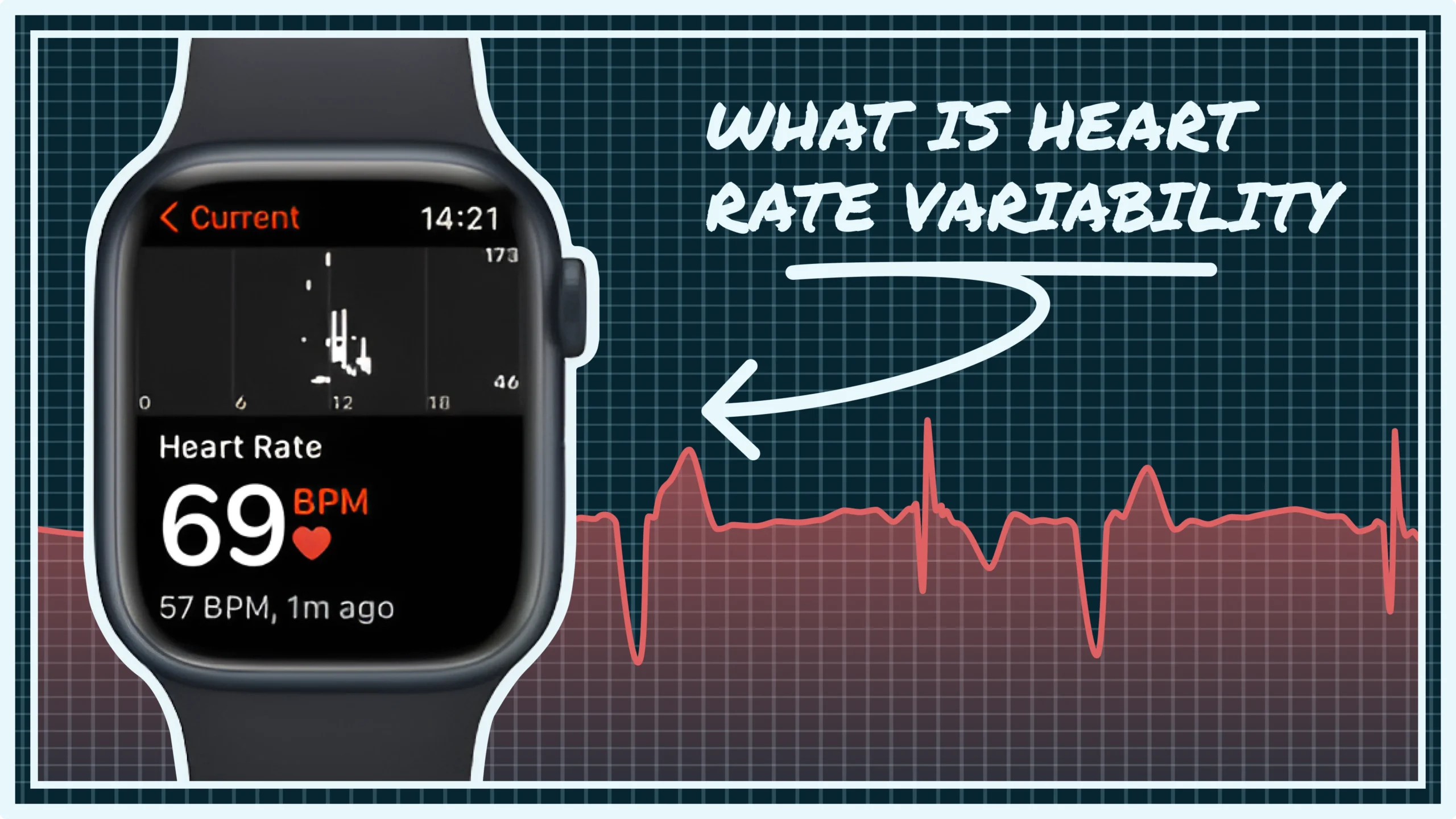
How to choose a heart rate variability watch
HRV is not a number you can read directly off a display; it is a calculation derived from the time between successive heartbeats. The watch or tracker you choose determines whether that data is reliable enough to act on. Here are the factors that actually matter.
Continuous heart rate monitoring
A watch that only checks your pulse on demand gives you snapshots, not a trend. For HRV you need a stream of readings throughout the night and rest periods to see how your autonomic nervous system is behaving. Look for a watch that offers 24/7 heart rate logging, ideally with a sampling interval of a few minutes or less. The MorePro, Bestinn, and Mindrose all do this. The TRAUSI and DIVOAZBVO do not, so they are less useful for HRV.
Sensor type and placement
Optical sensors on the wrist are convenient but less accurate during motion. Chest straps using electrodes give you ECG-grade accuracy at the cost of comfort and convenience. If your main use is resting HRV and sleep analysis, a wrist sensor is fine. If you want HRV during high-intensity exercise, consider a chest strap like the EZON or use a wrist model with a known good sensor, like the MorePro, and accept the occasional dropout.
App integration and data export
The raw heart rate data is only useful if the app turns it into something you can interpret. The MorePro app offers stress scores and recovery ratings that make HRV actionable. The Bestinn and Mindrose apps show heart rate charts but leave interpretation to you. Some runners prefer to export raw RR intervals for analysis in dedicated HRV software like Elite HRV or Kubios. The chest strap watch does not connect to such apps natively. If data export matters, check the app's options.
The single most important feature for HRV is continuous logging. Without it, you are guessing. Every watch that logs 24/7 heart rate can give you HRV insights if you know where to look.
Battery life and daily wear
HRV analysis demands data across multiple nights and days. A watch that needs charging every 24 to 48 hours will have gaps in your record. The Mindrose is the best here with up to 12 days. The MorePro and Bestinn manage about a week. The chest strap's CR2032 battery lasts a year but requires a tool to replace. The TRAUSI and DIVOAZBVO need charging every 5-6 days but lack continuous logging anyway, so they are not ideal for HRV.
Water resistance
If you swim or sweat heavily, an IP68 rating is worth having. The Mindrose, Bestinn, MorePro, and LIVIKEY models all have IP68. The TRAUSI and DIVOAZBVO are IP67, which is fine for rain but not for submersion. The EZON chest strap is 5ATM rated for swimming.

Frequently asked questions
What is heart rate variability and why should I track it?
Heart rate variability is the variation in time between heartbeats. A high HRV generally indicates a well-recovered nervous system ready for performance; a low HRV can signal fatigue, stress, or onset of illness. Athletes and biohackers use it to guide training intensity and rest days. The best heart rate variability watch will log your overnight HRV and present a daily readiness score.
Can any fitness watch measure HRV?
Most wrist-based fitness watches that track 24/7 heart rate can calculate HRV from the beat-to-beat intervals, but not all surface that data. You may need to check the companion app for an HRV or stress score. The watches in this roundup that log continuously (MorePro, Bestinn, Mindrose, KYUHJU) all provide some form of HRV-derived insight.
Are wrist sensors accurate enough for HRV?
For resting and sleep HRV, wrist sensors are generally accurate enough to track trends. During exercise, motion artifacts can corrupt the readings. Chest straps are the gold standard for beat-by-beat accuracy. If your primary interest is resting HRV measured first thing in the morning, a wrist watch is fine. For live HRV during workouts, use a chest strap.
Do I need a subscription to access HRV data?
No. Every product in this roundup works without a subscription. The apps are free to download and use. Some premium platforms like Whoop or Oura require subscriptions, but the watches here do not.
How often should I measure HRV?
The most useful protocol is a two-to-three minute measurement first thing in the morning before getting out of bed, at the same time each day. Some watches take automated nightly measurements. The MorePro and Bestinn both support morning readings via the app.
Can I use these watches for medical purposes?
No. None of these devices are FDA-cleared medical instruments. HRV data from consumer wearables is for wellness and training guidance only. Always consult a doctor for health concerns.
What is the difference between HRV and heart rate?
Heart rate is the number of beats per minute. HRV is the variation in time between those beats. Two people can have the same resting heart rate but very different HRV. HRV is a more sensitive indicator of autonomic nervous system state.
Why is overnight HRV more valuable than daytime?
During sleep, external stressors like movement and social interaction are minimized, so the HRV reading reflects your body's baseline recovery state. Daytime readings can be influenced by coffee, conversation, and activity. The best heart rate variability watches automatically log your sleep HRV.

The bottom line
Heart rate variability tracking is not a gimmick; it is a legitimate tool for understanding your body's readiness and recovery. After testing ten watches and a chest strap, the MorePro Urban Bronze Fitness Tracker stands out as the balanced choice. It logs 24/7 heart rate, translates that into a clear stress and recovery score in the app, and lasts a full week on a charge. For anyone starting with HRV or upgrading from a basic step counter, this is the watch to buy.
If accuracy during exercise matters more than convenience, the EZON chest strap and digital watch delivers clinical-grade HR data that no wrist sensor can match. Wear it for workouts and pair it with a continuous logging watch for sleep. If battery life is your top priority, the Mindrose Black gives you nearly two weeks between charges. Whichever you choose, commit to measuring at the same time each morning, and you will quickly see patterns that help you train smarter and rest when you need to.
As an Amazon Associate we earn from qualifying purchases.