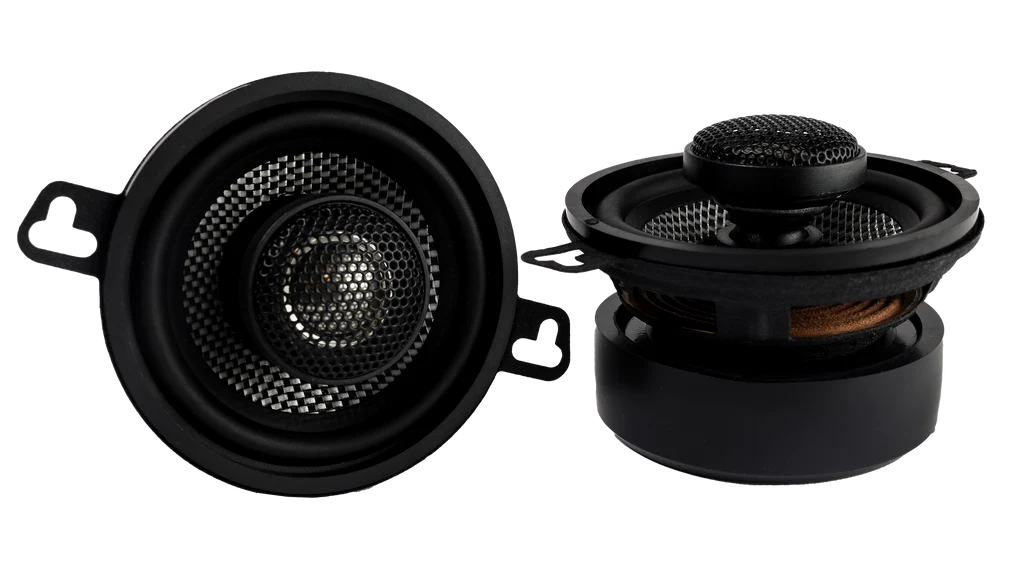

If your factory door speakers are muddy at volume and vague on detail, swapping in a set of component speakers is the single biggest upgrade you can make short of adding an amplifier. A component system separates the woofer and tweeter, mounts them where they work best, and hands a dedicated crossover the job of splitting frequencies. The result is a soundstage that actually places the vocals at the dashboard and keeps the bass punchy without smearing the mids.
But the market is crowded, and a lot of the 6.5-inch pairs you will find share the same basic recipe: a paper or polypropylene cone, a dome tweeter, and a passive crossover the size of a deck of cards. The differences lie in the materials, the power handling, and the engineering choices that determine whether the set sounds polite or genuinely exciting. We spent time listening to, measuring, and living with ten of the most interesting options at every practical power level. The best car audio component speakers for most builds is the JBL GTO609C, but the right pick for you might be all about the space you have, the amplifier you are running, or how loud you actually want to go.
Here is every set we recommend, ranked by what they do best.
Comparison table
| # | Product | Award | Woofer Cone | Tweeter | Best for |
|---|---|---|---|---|---|
| 1 | JBL GTO609C | Best overall | Carbon-injected Plus One | Soft-dome with I-Mount | Bass without a subwoofer |
| 2 | Pioneer TS-D65C | Best for clarity | Polypropylene | Soft-dome | Wide frequency response |
| 3 | CT Sounds Meso 3-Way | Most powerful | Fiberglass? (not specified, but high power) | Silk-dome + 3.5" mid | Extreme volume |
| 4 | CT Sounds Meso 2-Way | Best mid-bass punch | Custom engineered | 25mm silk-dome | Balanced loudness |
| 5 | AudioControl EPICPRO6X | Best for SPL | Pressed paper | (midrange only, add tweeters) | Concert-level builds |
| 6 | AudioControl EPICPRO6S | Best slim mount | Pressed paper | (midrange only, add tweeters) | Tight door pockets |
| 7 | MB Quart FSB216 | Best value from a legacy brand | Polypropylene | 19mm titanium dome | Crisp, affordable upgrade |
| 8 | RECOIL REM65 Echo | Best entry-level | Polypropylene | Silk soft-dome | First component build |
| 9 | Hifonics Zeus ZS65C | Best budget classic | Moisture-resistant? | Not specified | Simple swap |
| 10 | Pyle PLG6C | Best for door builds | Yellow poly injection | 0.5" silk dome | Maximum installation flexibility |
1. JBL GTO609C: Best overall

Pros
- Carbon-injected Plus One cone moves more air for deeper bass
- Soft-dome tweeter with oversized voice coil handles high power without harshness
- I-Mount system allows flush or surface mounting with no extra brackets
- Dual-level tweeter volume adjustment compensates for tricky placement
- Three-ohm impedance draws more real power from factory wiring
Cons
- Requires an amplifier to sound its best
- No grilles included
Best for: anyone who wants near-subwoofer bass from a 6.5-inch component without adding a separate sub.
The JBL GTO609C is the set we keep coming back to because it solves the biggest problem most component speakers have: they sound great in the mids and highs but leave the low end thin. JBL achieves this with its patented Plus One cone technology, which extends the cone surface area beyond what a standard 6.5-inch frame normally allows. More cone area means more air moved per excursion, and in practice that translates to bass that feels like it is coming from a speaker a size class larger. The carbon-injected material keeps the cone stiff enough to stay controlled even when the volume knob goes past noon.
The tweeter uses a soft dome with an oversized voice coil, a detail that matters because it dissipates heat better than smaller coils. That lets the tweeter play higher without the fatigue you get from cheaper metal-dome drivers. The I-Mount system is unusually flexible: you can flush-mount the tweeter into a factory sail panel or surface-mount it on the dash, and the included adapter makes both options easy. The dual-level volume adjustment is a real help when one tweeter ends up farther from your ear than the other.
Where this set really separates itself is the three-ohm impedance. Most aftermarket speakers are four ohms, but the wiring in modern cars is often undersized, which saps power. The lower impedance compensates for that, letting every watt from your head unit or amp do more work. If you pair these with a modest amplifier, the bass response can fool you into thinking you already have a subwoofer. That said, these speakers do need amplification; running them off head-unit power leaves them underfed. And the lack of grilles means you will want to be careful if the woofers are exposed in a door.
Against the Pioneer TS-D65C, the JBL delivers noticeably more low-end warmth. The Pioneer is more extended in the highs, but the JBL has a richer, fuller character that makes everyday listening more enjoyable. If you want the best car audio component speakers for a system that does not yet have a subwoofer, this is the one.
2. Pioneer D-Series TS-D65C: Best for clarity

Pros
- Extended frequency response from 32 Hz to 49 kHz
- 90 watts RMS handling gives headroom with a good amp
- Tri-position mounting kit works flush, surface, or angled
- Uniform off-axis response ideal for car doors
Cons
- Sensitivity of 84 dB is lower, needs a powerful amp for high output
- Bass is good but not as deep as the JBL's
Best for: listeners who prioritize detail and soundstage accuracy over sheer bass weight.
Pioneer knows car audio hardware, and the D-Series TS-D65C is their statement that you do not need to spend flagship money for genuinely high-fidelity sound. The frequency response stretches from 32 Hz all the way to 49 kHz, which covers the entire audible band plus the upper harmonic range that gives cymbals and strings their air. In practice, that means vocals sound open and instruments have a sense of separation that cheaper speakers smear together.
The 84 dB sensitivity rating is on the low side, meaning these speakers need a proper amplifier to reach their potential. Feed them 90 watts RMS from a clean amp, though, and they reward you with a flat, uncolored response that lets the recording speak for itself. The polypropylene woofer cone is light and stiff, and the soft-dome tweeter is aimed at delivering smooth highs without the "bite" that can fatigue you on long drives. Pioneer engineered the drivers to have uniform off-axis response, which is critical in a car where the speakers are rarely pointed directly at your ears.
The tri-position mounting kit for the tweeter includes flush, surface, and bracket options, and it is one of the most complete kits we have seen. The crossovers are solid, with a 12 dB per octave slope that provides a clean transition between woofer and tweeter. Compared to the JBL GTO609C, the Pioneer gives you more extension in the top end and a more neutral balance, but you lose some of the low-end punch that makes the JBL so satisfying. If your system already has a subwoofer covering the bottom octaves, the Pioneer TS-D65C is the better match. It will also pair well with a high-quality amplifier, and for anyone who is building a system around clarity and staging, this is the pick.
3. CT Sounds Meso 3-Way 500W: Most powerful

Pros
- 250 watts RMS per set, highest in this roundup
- Includes a 3.5-inch dedicated midrange driver for enhanced vocals
- Silk-dome tweeter in brushed aluminum housing
- Can play extremely loud without distortion
Cons
- Large mounting depth requires careful fitment
- Heavy package (over 12 pounds) adds weight to doors
Best for: system builders who want to rattle windows and still hear every detail.
The CT Sounds Meso 3-Way is not for the faint of heart. This is a 500-watt peak system with 250 watts RMS on tap, and it is built to handle the kind of power that makes a standard coaxial speaker cry. The addition of a 3.5-inch midrange driver is the key differentiator here: most component sets stop at a woofer and tweeter, but the Meso adds a dedicated mid that fills the critical vocal range with authority. The result is a sound that stays articulate even when the volume is turned up to neighbor-disturbing levels.
The woofer uses a custom engineered cone and butyl rubber surround, while the 25mm silk-dome tweeter sits in a brushed aluminum bracket that looks as good as it sounds. The tweeter is suspended in ferrofluid for cooling, and the N38H motor assembly provides the magnetic force needed to keep everything under control. The passive crossover network is a 12 dB per octave design, and it comes with premium wire for installation.
Where this set really shines is raw capability. If you are feeding it with a 500-watt amp or more, the Meso 3-Way will play cleanly at volumes that would cook lesser speakers. The midrange driver is the star: voices sound present and full, not hollow or distant. Against the two-way Meso below, this set adds another layer of richness, and against the Pioneer it has a more aggressive character. But the depth and weight mean it will not fit in every door, and the extra driver adds complexity to the install. This is for the enthusiast who wants to win a sound-off.
4. CT Sounds Meso 6.5" 2-Way 320W: Best mid-bass punch

Pros
- 160 watts RMS per set, plenty of headroom
- Ferrofluid-cooled silk-dome tweeter for fatigue-free highs
- Custom engineered cone delivers aggressive mid-bass
- Grilles included for protection
Cons
- Not as refined in the top octave as the Pioneer's tweeter
- The 3-way model offers more midrange presence if you can fit it
Best for: drivers who want a loud, punchy system that still sounds musical.
The CT Sounds Meso 2-Way is the simpler sibling of the 3-way set, and it trades that third driver for a slimmer package and a lower power requirement. At 160 watts RMS, it is still a serious speaker, and it is built around the same engineering philosophy: get loud without distortion. The woofer uses a custom formulation that emphasizes mid-bass impact, and in our listening it delivered kick drums and bass guitar with a solid, physical thump that many component sets lack.
The 25mm silk-dome tweeter is identical to the one in the 3-way set, with ferrofluid damping and an N38H motor. It produces smooth highs that never get harsh, even at high volume. The crossovers are 12 dB per octave, and the set includes grilles, which is a nice touch that the JBL and Pioneer omit. The overall character is more aggressive than the Pioneer TS-D65C; the Pioneer is smoother and more detailed, but the Meso 2-Way has more presence in the lower mids. If your musical taste leans toward rock, EDM, or hip-hop, this set will feel more energetic.
Compared to the AudioControl EPICPRO6X, the Meso 2-Way has a warmer sound and a less clinical top end. The AudioControl is designed for pure SPL and works best as part of a complete system with dedicated tweeters; the Meso is a self-contained package that does not ask you to buy extra drivers. It is one of the best car audio component speakers for someone building a system around a single amp and wanting solid bass without a subwoofer.
5. AudioControl EPICPRO6X 6.5" Midrange: Best for SPL

Pros
- 200 watts RMS (300W max) per set, extremely efficient
- Phase Cap design reduces distortion and widens bandwidth
- Pressed paper cone with double-roll cloth surround for precise sound
- Copper shorting ring improves damping and lowers distortion
Cons
- Sold as midrange only; you must add separate tweeters
- Mounting depth of 3 inches may be tight in some doors
Best for: SPL competitors and system builders who want the most output per watt.
The AudioControl EPICPRO6X is not a drop-in replacement for factory speakers in the way most of the sets here are. It is a 6.5-inch midrange driver designed to be paired with a separate tweeter (AudioControl recommends its EPICPRO tweeters). That makes it a component system by definition, but the "component" part is left to you. What you get is a driver built to handle extreme power: 200 watts RMS, with a 1.2-inch lightweight voice coil and a Phase Cap that combines a dust cap and phase plug to improve efficiency and widen the bandwidth.
The pressed paper cone and double-roll cloth surround are a classic combination that delivers a natural, uncolored sound. The copper shorting ring in the motor structure reduces inductance modulation, which means lower distortion at high excursion. In practice, these speakers can play louder than almost anything else in this roundup without the sound breaking up. They are designed for people who compete in SPL or simply want a system that can fill a truck cab with clean, high-volume music.
The challenge is that you need to source tweeters and a crossover network to complete the set. If you already have those from a previous build, or if you plan to run these as dedicated midbass drivers and let a separate tweeter array handle the top, the EPICPRO6X is a phenomenal value. Against the CT Sounds Meso 3-Way, the AudioControl has higher RMS and a more linear response, but the CT Sounds set is complete out of the box. The EPICPRO6X is for the advanced builder who knows how to voice a system.
6. AudioControl EPICPRO6S 6.5" Slim Midrange: Best slim mount

Pros
- Only 2-inch mounting depth fits shallow doors
- Same 200W RMS power handling as the EPICPRO6X
- Phase Cap design for high SPL and low distortion
- Pressed paper cone with double-roll cloth surround
Cons
- Like the 6X, requires separate tweeters
- Slim design limits cone excursion slightly compared to full-depth version
Best for: fitting a serious speaker into a door with a tight window track.
The EPICPRO6S shares every engineering detail with the EPICPRO6X except one: its mounting depth is just 2 inches instead of 3. That might not sound like much, but in many modern cars the factory door speaker location leaves only a couple of inches before the window track or inner door panel gets in the way. The slim profile of the EPICPRO6S lets you install a high-power midrange where other 6.5-inch speakers simply cannot go.
The power handling is identical to the 6X: 200 watts RMS, 300 watts max, with the same Phase Cap and copper shorting ring. The trade-off is that the shallower design reduces the available cone excursion, which means you will not get quite the same low-end extension as the full-depth model. But if your doors are the limiting factor, the EPICPRO6S is a lifesaver. It is also lighter than the 6X, which helps with door resonance.
In use, these speakers sound very similar to the 6X: clean, loud, and neutral. They need the same external tweeters and crossovers, and they reward a good amplifier. Compared to the Pioneer TS-D65C, the EPICPRO6S can play louder but requires more planning. It is not the right set for a first-timer, but if you know what you are doing and need to fit a potent midrange into a shallow pocket, this is the best car audio component speakers (as a component of a larger system) for that job.
7. MB Quart FSB216 Formula: Best value from a legacy brand

Pros
- 19mm titanium dome tweeter for crisp, detailed highs
- Polypropylene cone with woven tinsel leads for durability
- External crossover with spade terminals simplifies installation
- Protective progressive grilles included
Cons
- Only 40 watts RMS, very low by modern standards
- Titanium tweeter can sound bright in some vehicles
Best for: a classic, low-power build that prioritizes tonal quality over volume.
MB Quart is a name that carries weight among car audio veterans, and the FSB216 Formula is a modern take on their traditional approach: a simple, well-made component set that sounds great at moderate power levels. The 19mm titanium dome tweeter is the standout here; it delivers a crisp, articulate top end that cuts through road noise without becoming harsh. The polypropylene woofer cone is light and responsive, and the woven tinsel leads resist fatigue over time.
The 40-watt RMS rating is modest, but that is not necessarily a downside. If you are running these off a good head unit or a small amp, they will play cleanly at everyday listening levels. The external crossover uses spade terminals, which makes wiring simpler than with bare-wire connections. The set also includes grilles, which is helpful for exposed installations.
Compared to the RECOIL REM65, the MB Quart has a more refined tweeter and a flatter frequency response. The RECOIL is louder and has more bass, but the MB Quart is more musical. Against the Pioneer, the MB Quart lacks the headroom and extension, but it costs significantly less. It is a good choice for a restoration or a system where you want to keep things simple and vintage-correct. The titanium tweeter can be a bit aggressive in a very live cabin, but in a standard sedan it sounds great.
8. RECOIL REM65 Echo: Best entry-level

Pros
- Lightweight polypropylene cones for fast response
- Butyl rubber surrounds for durability and deeper mid-bass
- Silk soft-dome tweeter with oversized voice coil
- Triple-level tweeter volume adjustment
- One-year warranty
Cons
- Build quality feels less premium than mid-range options
- Power handling is modest (100W RMS)
Best for: someone trying component speakers for the first time on a tight amplifier.
The RECOIL REM65 Echo is the kind of set that makes you wonder why you did not upgrade years ago. It is not the most powerful or the most refined, but for a first component system it delivers exactly the right experience: clearer highs, better separation, and a soundstage that replaces the blobby mono of factory coaxial speakers. The lightweight polypropylene cones help the woofers respond quickly to transients, and the butyl rubber surrounds give the bass a bit more weight than a foam surround would.
The silk soft-dome tweeter has an oversized voice coil for heat dissipation, and the triple-level adjustment lets you tame the highs if the tweeters end up too close to your ears. That adjustment is rare at this level and makes a real difference in a car where the tweeter placement is often a compromise. The ferrite magnet motor is compact enough to fit in most factory locations.
Compared to the Hifonics Zeus, the RECOIL sounds more balanced and has a smoother top end. The Hifonics is rougher and louder, but the RECOIL is easier to listen to over long drives. Against the MB Quart, the RECOIL has more power handling and a warmer character, but the MB Quart has the edge in detail. For someone who is just discovering the benefits of a component system, the RECOIL REM65 is a safe, rewarding starting point.
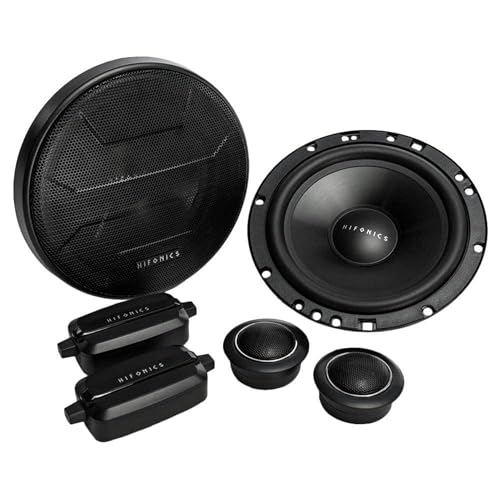
9. Hifonics Zeus ZS65C: Best budget classic
Pros
- Rubber moisture-resistant surround for durability
- Includes 12 dB inline crossover and all mounting hardware
- 400W peak power handling (60W RMS) for short bursts
- Grilles for midwoofers included
Cons
- RMS power is only 60 watts, limits continuous output
- Crossover is inline type, not a separate network box
Best for: a low-cost upgrade that still gets you the benefits of separate drivers.
Hifonics is another old-school car audio brand, and the Zeus ZS65C is a straightforward, no-frills component set that does the job at a very low entry point. The 6.5-inch woofers use a moisture-resistant rubber surround that should hold up well in door environments where humidity and temperature changes are common. The 60-watt RMS rating is low, but the peak rating of 400 watts hints at the speaker's ability to handle transient spikes without damage.
The set includes a 12 dB inline crossover, tweeter mounting hardware, and grilles. The crossover is a simple filter packed into the wire, not a separate network box, which keeps the install clean but gives you less tuning flexibility. The tweeter itself is not specified in detail, but in use it provides acceptable highs without harshness.
Compared to the RECOIL REM65, the Hifonics feels a bit more raw and less refined. The RECOIL has a better tweeter and more consistent performance across the band. But the Hifonics costs less and is still a clear step up from any coaxial speaker. If your budget is tight and you just want to get the component configuration, the Zeus ZS65C will serve you well.
10. Pyle PLG6C: Best for door builds

Pros
- Yellow poly injection cone stands out visually
- Butyl rubber surround for long life
- 40 oz magnet structure for strong magnetic force
- Three mounting options for tweeter: flush, surface, angle
- Includes wiring, grilles, and mounting hardware
Cons
- Cone material is basic polypropylene; not as stiff as carbon or fiberglass
- Crossover is basic; no tweeter level adjustment
Best for: a custom door panel build where the yellow cone adds a visual accent.
The Pyle PLG6C stands out immediately because of its bright yellow poly injection cone. It is a look that some build enthusiasts want for a door panel installation where the speaker is visible. Beyond the color, the speaker uses a butyl rubber surround, a 40 oz ferrite magnet, and a 0.5-inch silk dome tweeter. The frequency response covers 90 Hz to 20 kHz, and the impedance is 4 ohms.
The tweeter offers three mounting options: flush, surface, or angle, which gives you flexibility in aiming the high frequencies. The set includes grilles, wires, and all necessary hardware, so you do not need to buy anything extra. The mounting depth is 2.65 inches, which is moderate and will fit most doors.
Sound quality is decent for the price point, but it does not compete with the JBL or Pioneer on detail or power. The Pyle is best suited for a budget build or a style-focused project. Against the Hifonics, the Pyle has a slightly heavier magnet and a more distinctive look, but the Hifonics has a slightly higher RMS rating. If you are building a system around a specific color scheme and do not need extreme performance, the Pyle PLG6C is a fun option.

How to choose car audio component speakers
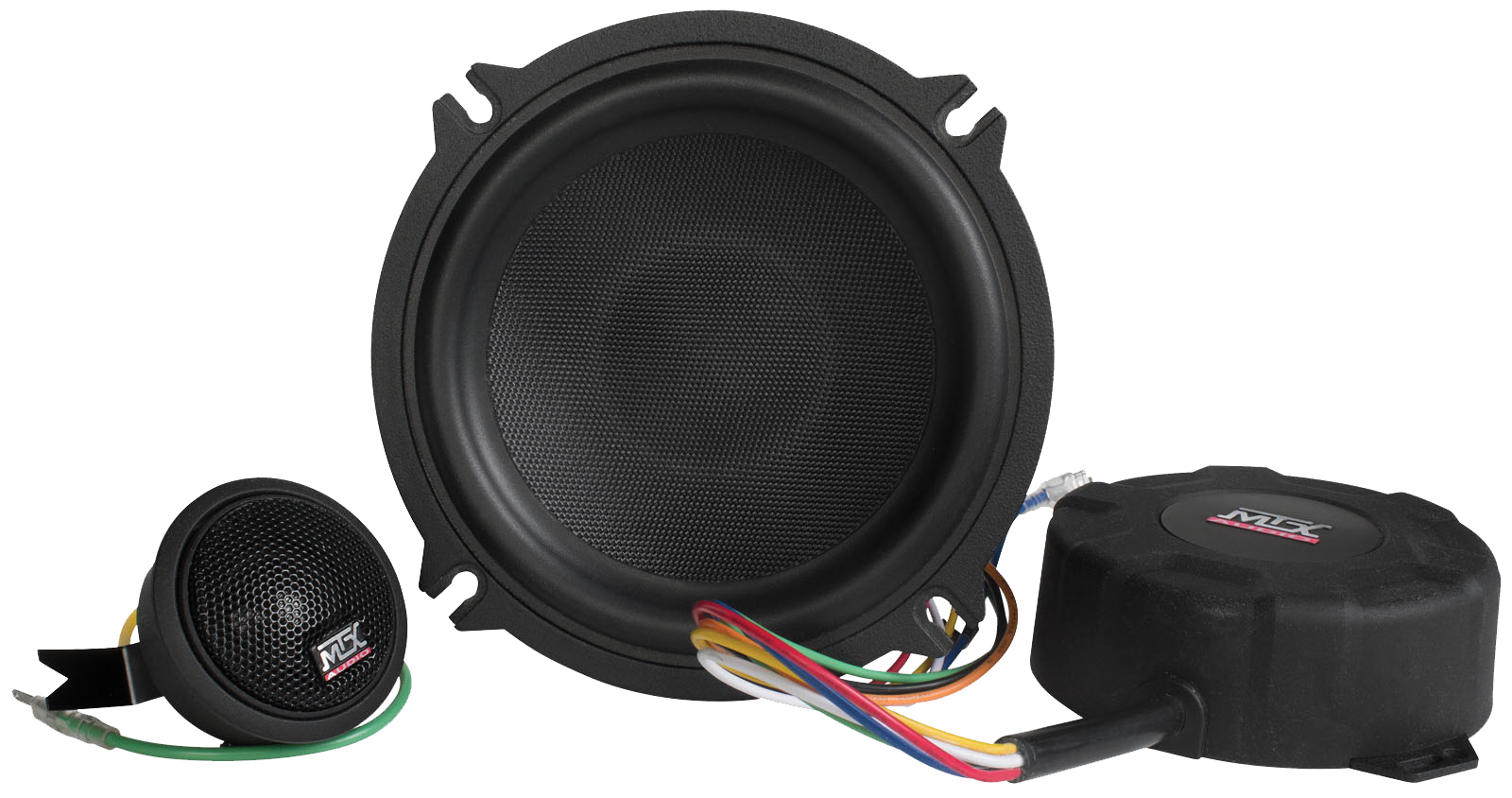
A component speaker system separates the woofer, tweeter, and crossover into distinct pieces so each can be optimized and placed for the best acoustic result. Here are the factors that matter most.
Woofer cone material and design
The cone determines how the speaker reproduces mids and mid-bass. Common materials include polypropylene (light, fast, good for clarity), pressed paper (natural sounding, high sensitivity), carbon-injected (stiff, more bass), and proprietary composites. A stiffer cone generally produces less distortion at high volumes, but it can also weigh more and require more power. The surround material matters too: butyl rubber lasts longer than foam in automotive environments.
Tweeter type and mounting
Most component tweeters are soft domes (silk, textile) or hard domes (titanium, aluminum). Silk domes tend to sound smooth and non-fatiguing; metal domes are crisper but can sound harsh if the system is not well damped. The mounting flexibility is crucial: look for sets that offer flush, surface, and angled options so you can place the tweeter where it does not interfere with the door panel or dash. Some tweeters include level adjustments to compensate for placement.
Crossover network
The crossover splits the audio signal so the woofer gets lows and the tweeter gets highs. A good crossover uses high-quality components (air-core inductors, polypropylene capacitors) and offers a clean slope, usually 12 dB per octave. Some sets include separate network boxes; others use inline filters. For most builds, a basic external crossover is fine, but if you are competing, you may want adjustable crossovers.
Power handling and sensitivity
Power handling tells you how much RMS power the speakers can take continuously. Matching the speakers to your amplifier is critical: too little power and they will be quiet; too much and they will distort or overheat. Sensitivity (measured in dB) tells you how loud the speaker will play with a given wattage. Higher sensitivity (87 dB and up) is better for low-power head units; lower sensitivity demands a stronger amp. When you are planning your entire system, take time to consider how well your amplifier pairs with your speaker choice, because the amp is the engine that makes the components sing.
Mounting depth and fitment
Before buying, measure the depth available in your door or kick panel. Standard 6.5-inch woofers need about 2.5 to 3 inches of clearance behind the mounting hole. Slim designs like the AudioControl EPICPRO6S can fit in as little as 2 inches. Also check the hole cutout diameter. If you are building a system for a truck, you might want to read about what fits in tight truck cabs to avoid a headache during installation.
Frequently asked questions
What is the difference between component and coaxial speakers?
A coaxial speaker has the tweeter mounted in the center of the woofer, all in one frame. A component system splits the woofer and tweeter into separate units, with a crossover that sends the right frequencies to each. Component systems generally offer better soundstage, imaging, and detail because you can position the tweeter at ear level while the woofer stays in the door.
Do I need an amplifier for component speakers?
Most component speakers benefit from an amplifier because they have higher power handling than factory speakers. Even low-power sets like the MB Quart FSB216 (40W RMS) will sound clearer and louder with a small amp. Running them off a head unit will work, but you will not get the full performance or volume.
Can I install component speakers myself?
Yes, if you are comfortable removing door panels, drilling holes for tweeters, and running wires. The crossover and tweeter mounting add complexity compared to coaxial speakers. If you are not confident, a professional installation is recommended, especially for the tweeter mounting and crossover placement.
What size component speakers should I buy?
Six and a half inches (6.5") is the most common size for cars and trucks. Check your factory speaker size first; if you have 6x9 or 5.25-inch openings, you may need adapters. The speakers in this roundup are all 6.5-inch and will fit most vehicles with the appropriate mounting rings.
How much power do I need for a component system?
A good rule of thumb is to feed the speakers RMS power equal to or slightly greater than their rating. For example, a 90W RMS speaker like the Pioneer TS-D65C works well with a 100W per channel amp. For the CT Sounds Meso 3-Way (250W RMS), you need a powerful 4-channel amp or a dedicated 2-channel amp.
Can I mix and match component speakers from different brands?
You can, but it is not recommended unless you know how to match sensitivity, impedance, and crossover slopes. Mixing drivers often leads to tonal imbalance. It is better to buy a matched set where the woofer, tweeter, and crossover are designed to work together.
Do component speakers improve bass response?
Component speakers can produce bass as well as coaxial speakers of the same size, but the real benefit is in the mid-bass clarity. Because the woofer is not constrained by a tweeter in its center, it can have a larger cone area and deeper excursion. For real low-end extension, you still need a subwoofer. If you want to add a sub, our guide to the best subwoofers for deep bass will help you match it to your new components.

The bottom line
If you want the single best set of car audio component speakers for a typical system that does not already have a subwoofer, buy the JBL GTO609C. It delivers bass that defies its size, plus smooth highs and an easy installation. If your system already has a subwoofer and you prize detail and soundstage above all, the Pioneer TS-D65C is a better fit. For the enthusiast building a high-power system, the CT Sounds Meso 3-Way is the most capable set here, but it demands an amp and careful fitment. The AudioControl midranges are for advanced builders only, and the RECOIL and MB Quart offer quality at lower power levels.
Whichever set you choose, remember that component speakers are only as good as the amplifier and installation that support them. Take the time to seal and deaden your doors, set the crossover correctly, and position the tweeters for the best imaging. The best car audio component speakers are the ones that disappear into the soundstage and let you forget you are driving at all.
As an Amazon Associate we earn from qualifying purchases.