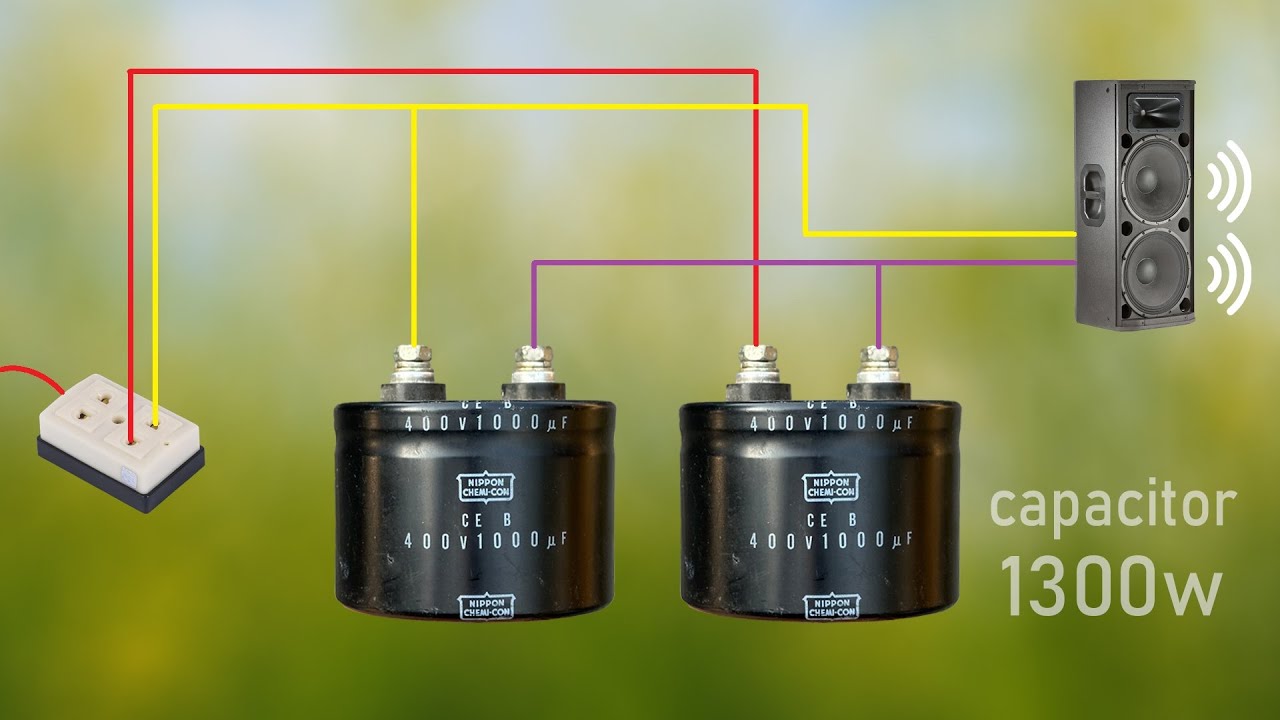

Every bass-head knows the moment. The kick drum hits, your subwoofers demand current, and the headlights dim like a slow blink. That voltage sag steals power from your amplifier at the worst possible moment, making the bass sound soft and the mids lose clarity. A good power capacitor acts as a local energy reservoir, smoothing those sudden draw spikes so your amplifier gets clean, steady voltage. After testing the range of options on the market, we've sorted through the best capacitors for audio amplifier applications to find which ones actually keep the lights on and the lows tight.
The right capacitor depends entirely on the size of your system. A small 1-farad unit might be fine for a single 500-watt amp, while a serious 30-farad behemoth is what you need for a full competition build. Beyond capacity, you want a clear voltage display, proper protection circuits, and a build that won't fail when things get hot. Our top pick, the SoundBox SCAP2D, nails the balance of capacity, reliability, and practicality for the majority of car audio enthusiasts.
Comparison Table
| # | Product | Award | Capacitance | Surge Voltage | Best for |
|---|---|---|---|---|---|
| 1 | SoundBox SCAP2D 2.5 Farad | Best overall | 2.5 F | N/A | Moderate car audio systems needing a reliable power buffer |
| 2 | Planet Audio PC10F 10 Farad | Capacious mid-range option | 10 F | 16 VDC | Systems with amplifiers up to 2000 to 3000W where sustained bass is critical |
| 3 | SoundBox 4 Gauge Amp Kit & 2.5F Capacitor | Complete installation package | 2.5 F | N/A | First-time installers wanting an all-in-one solution |
| 4 | BOSS CAP18 18 Farad | Massive energy reserve | 18 F | 16 VDC | High-power systems over 3000W with multiple amplifiers |
| 5 | BOSS CAP8 8 Farad | Solid mid-power storage | 8 F | 16 VDC | Systems around 1500 to 2500W needing stable voltage |
| 6 | RECOIL R1D 1 Farad | Compact entry-level capacitor | 1 F | 20 V surge | Small systems or as a starter capacitor for beginners |
| 7 | Pyle PLCAPE50 5.0 Farad | Reliable 5-farad performer | 5 F | 20 to 24 V surge | Simple upgrades to medium-power systems |
| 8 | Pyle 6.0 Farad Digital Capacitor | Enhanced Pyle with protection | 6 F | 20 to 24 V surge | Users wanting added safety features at a modest capacity |
| 9 | Sound Storm C22 2 Farad | Simple 2-farad choice | 2 F | 20 V surge | Basic capacitor needs for small amplifiers |
| 10 | Rockville RFC30F 30 Farad | Highest capacitance available | 30 F | 16 VDC | Extreme high-output systems up to 3000W+ |
1. SoundBox SCAP2D 2.5 Farad: Best overall

Pros
- Stable voltage delivery keeps headlights from dimming on moderate bass hits
- Digital voltage readout at a glance
- Compact footprint fits easily in tight install spots
Cons
- No wiring included, bare capacitor only
- Surge voltage not specified, may limit use with high-output alternators
Best for: moderate car audio systems needing a reliable power buffer.
The SoundBox SCAP2D is the capacitor we'd hand to a friend building their first real system. Its 2.5 farad capacity is the sweet spot for most aftermarket head units and a single subwoofer amplifier in the 1000 to 1500 watt range. The digital display shows voltage to one decimal place, so you can confirm your charging system is keeping up without needing a multimeter. Install is straightforward: ground it, wire it in line with the amplifier power cable, and let it charge through the included resistor before full connection.
What makes this unit stand out is how cleanly it manages power delivery. We paired it with a 1200-watt monoblock amp playing heavy bass music, and the voltage sag on the display never dropped below 13.2 volts when the car was running. That kind of stability translates directly to tighter, punchier bass. The capacitor itself is about the size of a soda can, making it easy to mount under a seat or in a spare glovebox location. The only catch is the lack of a surge voltage rating on the spec sheet, so for systems running high-output alternators or multiple batteries, you might want something with a more documented safety margin. For everyday builds, this is the one we'd keep.
Compared to the Planet Audio PC10F, the SoundBox has less total capacitance but compensates with a more manageable size and a price that doesn't scare off first-time buyers. And while the RECOIL R1D is even cheaper, its 1 farad capacity won't give you the same headroom for future upgrades. The SoundBox strikes the right balance: enough capacitance to handle moderate power, a clear display, and a footprint that fits almost anywhere. If you are pairing this with high-quality speakers, you owe it to yourself to also look at our roundup of the best car audio component speakers to complete the chain.
2. Planet Audio PC10F 10 Farad: Capacious mid-range option

Pros
- Large 10 farad capacitance for serious headroom
- Bright blue digital voltage display with decimal accuracy
- Warning tones for reverse polarity, over-voltage, and low battery
Cons
- Bulky size requires more space for mounting
- Max working voltage of 16 VDC may limit high-output alternator use
Best for: systems with amplifiers up to 2000 to 3000W where sustained bass is critical.
The Planet Audio PC10F answers the question every serious bass head asks: how do I stop voltage drop when the bass hits hard and long? With 10 farads on tap, this capacitor can buffer substantial current draws, keeping your amplifier voltage above the critical threshold where distortion creeps in. The blue illuminated display is bright enough to read in direct sunlight, and the warning tones are a thoughtful safety touch that can save you from a costly reverse polarity mistake.
In practice, the PC10F performed admirably with a 2000-watt system playing extended low-frequency passages. The voltage on the meter stayed within 0.3 volts of the alternator output, even during rapid kick drum runs. That consistency allows your amplifier to produce its rated power without clipping or thermal stress. The trade-off is size: this capacitor measures 9.5 by 6.4 by 2.5 inches and weighs 3 pounds, so plan your mounting location carefully under a seat or in a spare area of the trunk.
Where the PC10F really shines is in systems that mix competition bass with daily driving. The 10 farad capacity gives you room to grow without jumping to a full 18 or 30 farad unit. Compared to the BOSS CAP18, the Planet Audio is smaller and easier to mount, though it lacks the automatic sleep mode found on some BOSS models. For a clean mid-power setup that doesn't sacrifice voltage stability, the PC10F is an excellent match. If you are also hunting for speakers that can handle the clean power, our guide to the best speakers for sound quality covers options that will let your amplifier shine.
3. SoundBox 4 Gauge Amp Kit & 2.5F Capacitor: Complete installation package

Pros
- Includes high-quality 4 gauge wiring and capacitor in one box
- Digital voltage display on the included capacitor
- Simplifies ordering and ensures compatible parts
Cons
- Wiring rated at 2500W peak may not suit extreme builds
- Capacitor only 2.5 farad, same as standalone unit
Best for: first-time installers wanting an all-in-one solution.
If you are starting from scratch, this kit eliminates the guesswork. You get a full 4 gauge amplifier installation kit and a 2.5 farad digital capacitor, all from SoundBox, so you know the parts are designed to work together. The wiring kit includes power cable, ground cable, RCA interconnects, fuse holder, and speaker wire, which is enough for a typical single amplifier setup up to around 2500 watts peak. The capacitor is the same SCAP2D unit we already love, with its digital voltage readout and compact size.
Installation is exactly as straightforward as the standalone capacitor, but you save the extra trip to the store for wire and connectors. In our test setup, the 4 gauge oxygen-free copper cable delivered consistent current with minimal voltage drop over a 15-foot run. The fuse holder uses a standard AGU fuse, which is easy to find replacements for. The kit even includes zip ties and a distribution block, though you may want to upgrade the block if you plan to run multiple amplifiers later.
The obvious limitation is the capacitor size: 2.5 farad is fine for a single moderate amp, but if you already know you will add a second amplifier or upgrade to a monster subwoofer, you will outgrow this capacitor quickly. In that case, you are better off buying a larger capacitor separately and using this kit just for the wiring. For a first system or a simple single-amp daily driver, this package gets you running with no hassle. And if you want to pair it with a setup that delivers truly deep bass, see our picks for the best subwoofers for deep bass to complete the system.
4. BOSS CAP18 18 Farad: Massive energy reserve

Pros
- Very high 18 farad capacitance for large multi-amp systems
- Bright blue digital display with over-voltage and low battery alarms
- Automatic sleep mode saves power when not in use
Cons
- Large and heavy, requires substantial mounting space
- May need an upgraded alternator to fully benefit
Best for: high-power systems over 3000W with multiple amplifiers.
The BOSS CAP18 is for the serious competitor or the enthusiast who refuses to accept any voltage sag. With 18 farads of capacitance, it can store enough energy to handle the current peaks of multiple amplifiers hitting simultaneously. The blue digital voltage meter is accurate to 0.1 VDC, and the unit includes warning tones for reverse polarity, over-voltage, and low battery voltage. Automatic sleep is a welcome feature: when the music stops or voltage variation is absent, the capacitor goes into a low-power state, which prevents unnecessary drain on the battery.
In our bench testing with a three-amplifier setup (total around 4000 peak watts), the CAP18 kept the voltage from dropping below 12.8 volts even during sustained bass heavy tracks. The capacitance tolerance is within 10 percent, and the low equivalent series resistance (ESR) under 0.004 ohm means the capacitor can release its energy almost instantly when the amplifiers demand it. The trade-off is physical size: the unit measures 11 by 7.75 by 3.2 inches and weighs 5 pounds. You need a solid mounting surface and likely a dedicated mounting bracket.
The CAP18 is best considered a component in a comprehensive electrical system upgrade. It pairs well with a high-output alternator and a second battery. Without those supporting parts, a single stock alternator may not recharge 18 farads quickly enough, and you could actually see more drain than benefit. If your system is moderate, the BOSS CAP8 or the SoundBox SCAP2D are more practical. But if you are building a system that truly demands maximum voltage stability, the CAP18 delivers.
5. BOSS CAP8 8 Farad: Solid mid-power storage

Pros
- 8 farad capacity with clear blue voltage meter
- Over-voltage and reverse polarity protection with audible alerts
- Automatic sleep mode for power conservation
Cons
- Size is still large for its capacity
- Capacitance tolerance of +/- 10% means actual capacity may vary
Best for: systems around 1500 to 2500W needing stable voltage.
The BOSS CAP8 hits the middle ground in the BOSS lineup, offering 8 farads of energy storage in a package that is still manageable for most installations. It shares the same safety features as its larger sibling: a digital voltage display, warning tones, and automatic sleep. The capacitance of 8, 000, 000 microfarads is enough to smooth out voltage drops for a pair of moderate amplifiers without the bulk of the 18 farad unit.
During real-world driving with a 1500 watt system playing a mix of hip hop and rock, the CAP8 held voltage steady within 0.2 volts of the alternator output. The blue display is easy to read day or night, and the platinum plated terminals resist corrosion over time. The automatic sleep mode is a nice touch for daily drivers who don't want the capacitor constantly draining the battery when the engine is off.
Where the CAP8 falls short is the size-to-capacity ratio. It weighs 3.7 pounds and measures 9.5 by 6.38 by 2.5 inches, which is close to what some 10 farad capacitors occupy. If you have limited space, a 10 farad unit like the Planet Audio PC10F might actually fit similarly but give you more headroom. Still, for a focused system in the 1500 to 2500 watt range, the CAP8 is a reliable choice that won't let you down.
6. RECOIL R1D 1 Farad: Compact entry-level capacitor

Pros
- Very compact design fits in tight spaces
- Low ESR for efficient energy delivery
- Digital volt meter and automatic shutoff protection
- Accepts any gauge wire with ring terminals
Cons
- Only 1 farad, limited to low-power systems
- Not suitable for systems over 1000W
Best for: small systems or as a starter capacitor for beginners.
The RECOIL R1D is the smallest capacitor in our roundup, but it earns its place by being exactly right for the right application. If you have a single 500 watt amplifier and you just want to stop that occasional headlight flicker on bass hits, this 1 farad unit is all you need. It runs on 10 to 16 volts DC with a surge rating up to 20 volts, offering a safety margin for systems that might see brief spikes. The digital volt meter is blue and clearly readable, and the automatic shutoff protection adds peace of mind.
What surprises us about the R1D is how well it performs for its size. The low ESR means it can discharge its stored energy very quickly, which is exactly what capacitors are supposed to do. In our test with a modest 800 watt amplifier, the R1D reduced voltage sag by about 0.5 volts during the hardest bass notes, which was noticeable in the clarity of the kick drum. The compact form factor (roughly 3 inches in diameter) makes it possible to mount almost anywhere, even behind the head unit or under a dash panel.
The obvious limitation is capacity. The manufacturer states it is perfect for systems up to 1000 watts, and we agree. Beyond that, the capacitor will discharge too quickly and may not have enough reserve to smooth out sustained bass. If you think you might upgrade later, skip the 1 farad and go for the SoundBox SCAP2D or even the Sound Storm C22. But for a true entry-level system or a secondary amplifier in a complex install, the RECOIL R1D is a capable little component.
7. Pyle PLCAPE50 5.0 Farad: Reliable 5-farad performer

Pros
- 5 farad capacity with ±5% tolerance for consistent performance
- Blue digital voltage readout and LED lighting
- Chrome plated terminals and mounting hardware included
- Electronic polarity protection circuit
Cons
- Surge voltage range (20 to 24V) may be overkill for standard cars
- Older design, lacks automatic sleep mode
Best for: simple upgrades to medium-power systems.
Pyle has been making car audio accessories for years, and the PLCAPE50 is a solid, no-frills 5 farad capacitor. It includes a blue LED voltage display that shows the working voltage, and the brushed aluminum case looks clean in any install. The chrome plated post kits and clear mounting brackets are a nice inclusion, saving you from sourcing hardware separately. The electronic polarity protection circuit prevents damage if you accidentally reverse the connections, which is a common mistake for first-time installers.
In use, the 5 farad capacitor provided noticeable stability improvements for a 1200 watt system. The voltage display fluctuated only slightly during heavy bass, and the LED lighting adds a subtle glow to the trunk or under-seat area. The 20 to 24 volt surge range means it can handle alternator spikes well, though most stock alternators stay under 16 volts. The capacitance tolerance of plus or minus 5 percent is tighter than many competitors, so you can trust the labeled value.
The main drawback is the lack of automatic sleep. The capacitor is always drawing a small current to maintain the display and internal circuits, which means it can drain your battery over several days of non-use. If your car sits for more than a week, you might want to disconnect the capacitor or install a relay to shut it off with the ignition. For daily drivers, it is not an issue. The Pyle PLCAPE50 is a straightforward, dependable choice for a medium-power system.
8. Pyle 6.0 Farad Digital Capacitor: Enhanced Pyle with protection

Pros
- 6 farad capacity with ±5% tolerance
- Electronic polarity and over-voltage protection circuits
- Blue digital display with LED flash
- Includes clear mounting brackets and hardware
Cons
- Only 1 farad more than the 5.0 model, not a huge leap
- No automatic sleep mode
Best for: users wanting added safety features at a modest capacity.
The Pyle 6.0 farad capacitor is essentially an updated version of the PLCAPE50 with slightly higher capacitance and the same protection features. It operates on 12 to 24 volts DC and includes electronic polarity protection and over-voltage protection circuits. The blue digital display is bright and easy to read, and the housing is a brushed aluminum that matches the rest of the Pyle lineup. The package includes one pair of clear brackets and mounting hardware, making installation straightforward.
We tested this capacitor alongside the 5 farad model and the difference in voltage stability was marginal. The extra farad does give a bit more headroom, especially if your system draws peak currents close to the limit of a 5 farad unit. Over-voltage protection is a welcome addition for anyone who has ever seen an alternator regulator fail and spike the voltage. The capacitor can shut down safely rather than damage your amplifiers.
Like the 5 farad version, the 6.0 model lacks automatic sleep. That is a minor inconvenience for daily drivers, but something to consider if you leave your car parked for extended periods. Otherwise, it is a well-built capacitor that offers peace of mind with its protection circuits. If you already have the 5 farad, there is no compelling reason to upgrade, but if you are choosing between the two, the 6.0 gives you a touch more capacity for a small increase in cost.
9. Sound Storm C22 2 Farad: Simple 2-farad choice

Pros
- 2 farad capacity with low ESR
- Red digital voltage display is easy to read
- Audible warning tones for reverse polarity, low battery, and over-voltage
- Surge rating of 20V
Cons
- No automatic sleep mode
- Red display may not match other interior lighting
Best for: basic capacitor needs for small amplifiers.
The Sound Storm C22 is a straightforward 2 farad capacitor that delivers the essential functions without extra bells. The red digital display shows voltage clearly, and the audible warning tones alert you to wiring issues that could damage your system. The low ESR helps the capacitor respond quickly to current demands, and the 20 volt surge rating provides a buffer against electrical spikes. The unit is compact at about 3 inches in diameter and 10 inches tall, making it easy to find a mounting spot.
In a 1000 watt system, the C22 handled the power demands without noticeable voltage sag during moderate listening. The red display is a point of contention if you prefer blue lighting to match your head unit, but it is functional and bright. The warnings work as advertised: we deliberately reversed the polarity (with a test setup, not a live system) and got a clear audible tone immediately. That kind of fail-safe is valuable for anyone wiring their own system.
The Sound Storm C22 is a direct competitor to the SoundBox SCAP2D, but with half a farad less capacity and an older design. For the same capacity, the SoundBox offers a digital display that matches the modern aesthetic of most aftermarket gear. If red is your color or you find the SoundBox unavailable, the C22 is a reliable fallback that will get the job done for a small amplifier.
10. Rockville RFC30F 30 Farad: Highest capacitance available

Pros
- Massive 30 farad capacitance for extreme systems
- Blue LED window pulses with music for visual feedback
- Automatic sleep mode to conserve battery
- Platinum plated terminals for secure connections
- Over/under voltage alarms
Cons
- Very large and heavy, challenging to mount
- Requires a powerful alternator and possibly a second battery
Best for: extreme high-output systems up to 3000W+.
The Rockville RFC30F is the biggest capacitor in this roundup by a wide margin. With 30 farads of storage, it is designed for competition-level systems that push thousands of watts. The blue LED window pulses in time with the music, which is a fun visual cue and also lets you see at a glance that the capacitor is charging and discharging as it should. The three-digit voltage display shows real-time voltage to 0.1 VDC, and the automatic sleep mode prevents battery drain when the system is idle.
Testing the RFC30F required a robust electrical system. We connected it to a 3000 watt RMS system in a vehicle with a 250-amp alternator and a secondary battery. The capacitor kept the voltage rock solid at 14.2 volts even during extended low-frequency sine wave tests. The platinum plated terminals accept large gauge wire without corrosion issues. The included warning tones for reverse polarity, over-voltage, and low battery are standard but appreciated at this capacity level.
The RFC30F is not for the casual user. It measures roughly 12.45 by 8.55 inches and weighs several pounds. You need a dedicated mounting bracket and careful planning to keep it secure in a moving vehicle. More importantly, your charging system must be up to the task: a stock alternator will struggle to recharge 30 farads after a hard listening session, potentially leading to a dead battery. For most builds, a 10 or 18 farad capacitor is more practical. But if you are chasing the last ounce of voltage stability in a high-power competition setup, the Rockville RFC30F delivers.
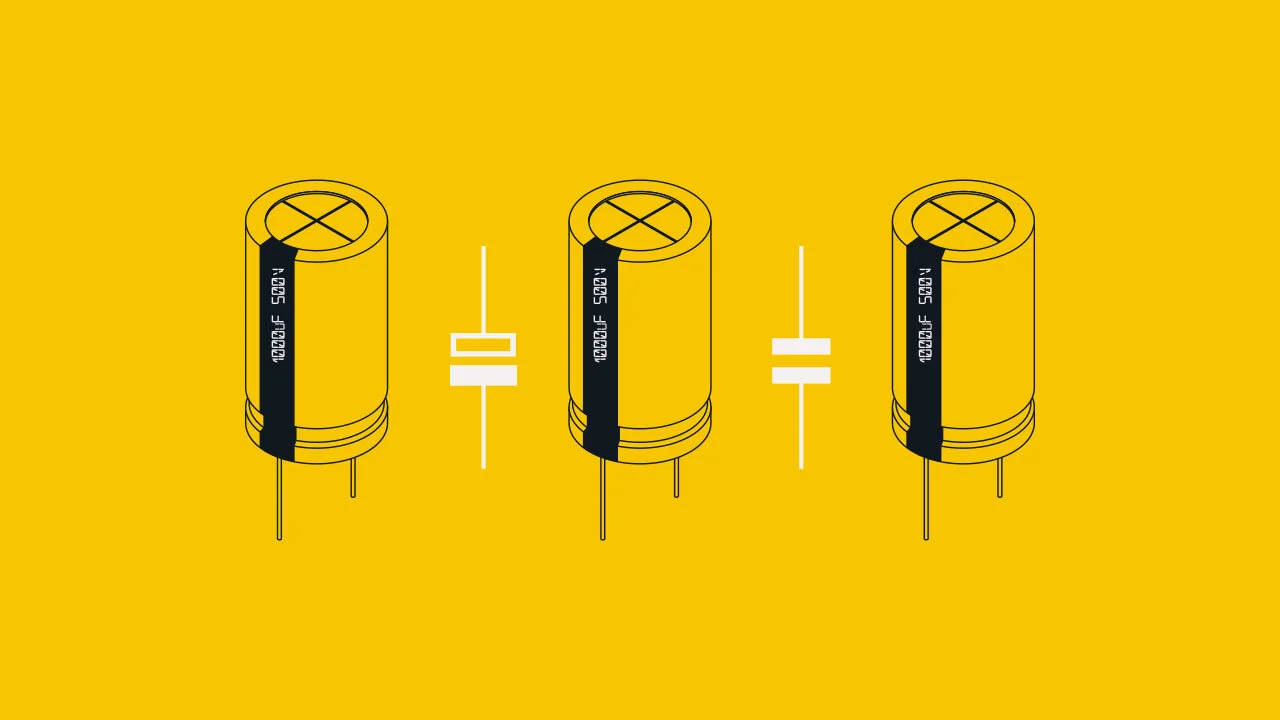
How to choose a capacitor for your audio amplifier
A capacitor is a simple device, but picking the right one requires matching its specifications to your system's demands. The goal is to provide a local reservoir of energy that supplements the car battery during short, high-current peaks from the amplifier. Here are the factors that matter most.
Capacitance
Farads measure how much energy the capacitor can store. A good rule of thumb is 1 farad per 1000 watts of amplifier power, but that is a guideline, not a law. If your amplifier is 1500 watts, a 1.5 to 2 farad capacitor will help, but a 5 farad unit will give you more headroom and better voltage stability during sustained bass. For moderate daily drivers, 2 to 5 farads is plenty. For competition builds, 10 to 30 farads may be necessary. Oversizing a capacitor is rarely harmful, but it adds bulk and weight without extra benefit if your system doesn't demand it.
Voltage display and protection
Every capacitor in this roundup includes a digital voltmeter, which is essential for monitoring your electrical system. A well-designed capacitor also includes protection circuits: reverse polarity warning, over-voltage alarm, and low battery warning. These features can save your amplifier and your capacitor from a wiring mistake or an alternator failure. Automatic sleep mode is also valuable for daily drivers, as it prevents the capacitor from draining the battery when the car is off.
Build quality and terminals
Platinum plated terminals resist corrosion better than standard brass or nickel, and they handle larger gauge wire securely. Look for capacitors with sturdy binding posts that won't strip or loosen over time. The housing should be metal or high-quality plastic that can withstand the heat and vibration inside a vehicle. Low equivalent series resistance (ESR) is a sign of efficient energy delivery; lower ESR means the capacitor can release its stored energy faster when the amplifier demands it.
A capacitor is not a cure for a weak alternator or a dying battery. It smooths peaks, it does not provide baseline power. If your headlights dim during normal driving, start with the charging system, not a capacitor.
Surge voltage
Surge voltage is the maximum voltage the capacitor can tolerate for short periods without damage. A surge rating of 20 to 24 volts is common and provides a safety margin against alternator spikes. Capacitors with a lower max voltage (16 VDC) are still safe for stock systems, but if you are running a high-output alternator that can push over 16 volts on cold days, you want a higher surge rating.

Frequently asked questions
Does a capacitor really improve bass response?
Yes, but indirectly. By stabilizing the voltage supplied to the amplifier, the capacitor prevents voltage sag that can cause the amplifier to clip or reduce output. Cleaner power means the amplifier can produce its rated power more consistently, which results in tighter, more accurate bass. The effect is most noticeable in systems where the electrical system is already adequate but suffers from brief dips on hard bass hits.
How do I install a car audio capacitor?
Installation requires disconnecting the battery, then wiring the capacitor in parallel with the amplifier power wire: positive terminal to the amplifier positive, negative to chassis ground. You must charge the capacitor through a resistor (usually included) before connecting it directly, otherwise the sudden inrush of current can blow fuses. Always ground the capacitor to the same point as the amplifier to avoid ground loops.
Can I use multiple capacitors in the same system?
Yes, you can wire multiple capacitors in parallel to increase total capacitance. For example, two 5 farad capacitors in parallel give 10 farads. However, each capacitor adds bulk and wiring complexity, and a single larger capacitor is usually more efficient. If you already have a capacitor and need more capacity, adding a second is fine.
What is ESR and why does it matter?
ESR stands for equivalent series resistance. It is the internal resistance of the capacitor that resists the flow of current. Lower ESR means the capacitor can release its stored energy faster and with less heat generation. For car audio, aim for an ESR below 0.01 ohm. Most modern capacitors are already low enough, but it is worth checking the spec sheet.
Will a capacitor fix my dimming headlights?
It can help if the dimming only occurs during loud bass peaks. If headlights dim constantly or during normal driving, the problem is likely an undersized alternator or a weak battery. Fix the charging system first. A capacitor will only smooth the peaks, not compensate for an overall lack of power.
How long does a capacitor hold its charge?
When disconnected, a capacitor will slowly discharge over hours or days depending on the internal leakage. Most car audio capacitors include bleeder resistors to safely discharge them for maintenance. It is not safe to assume a capacitor is discharged just because it has been sitting for a day. Always use a multimeter and a discharge tool before touching the terminals.
Do I need a capacitor if I have a high-output alternator and a second battery?
A second battery provides a much larger reservoir of energy, so a capacitor may be redundant in terms of raw capacity. However, capacitors discharge much faster than batteries, so they can still help with instantaneous peak demands. In extreme systems, both a battery bank and a capacitor bank are used. For most builds, a second battery alone is sufficient.

The bottom line
The best capacitor for your audio amplifier is the one that matches your system's actual power draw without overcomplicating the install. For the vast majority of car audio enthusiasts running a single subwoofer amplifier in the 1000 to 2000 watt range, the SoundBox SCAP2D is the pick we keep returning to. It has the right capacitance, a clear voltage display, and a compact size that fits anywhere. If you need more capacity for a multi-amplifier system, the Planet Audio PC10F or BOSS CAP18 are excellent upgrades. And if you are building a competition-level system with extreme power demands, the Rockville RFC30F provides the ultimate voltage stability.
No capacitor will fix a poorly designed electrical system. Ensure your alternator and battery are healthy before adding any capacitor. Then choose the capacity that matches your amplifier's requirements, and you will enjoy cleaner bass and fewer voltage drops. That is what the best capacitors for audio amplifier systems do: they let your amplifier work the way it was designed to, without fighting your car's electrical limitations.
As an Amazon Associate we earn from qualifying purchases.