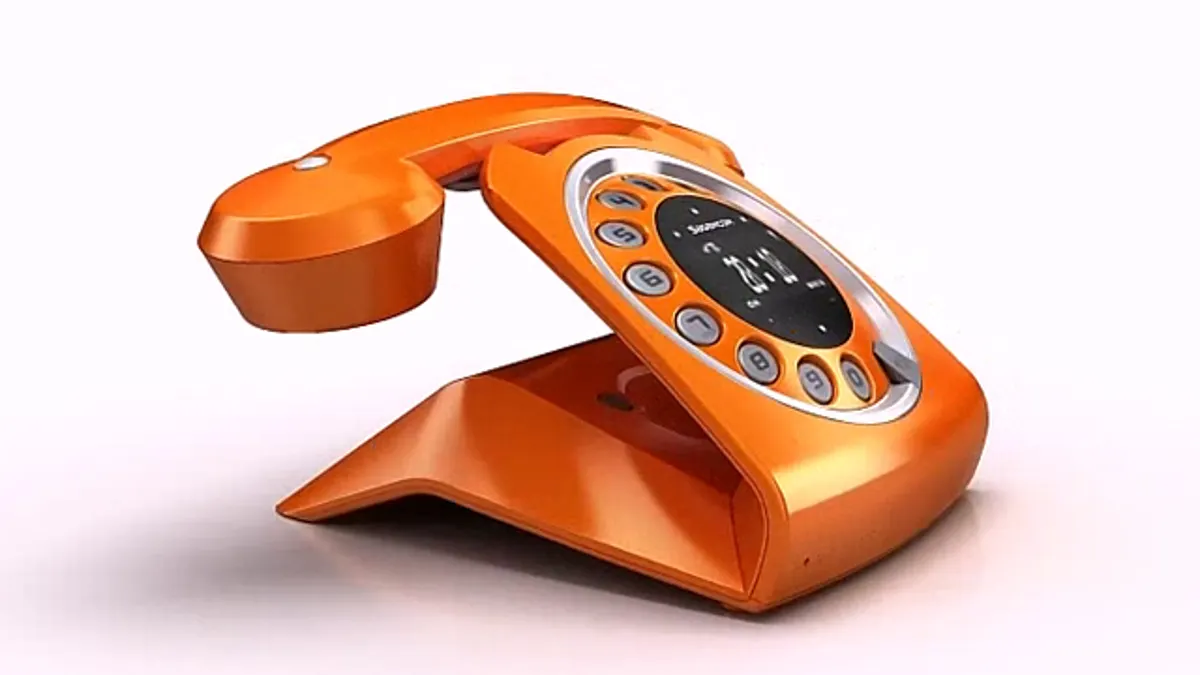

A landline phone can become frustrating when the buttons are cramped, caller information is hard to read, or an incoming call is easy to miss. The right model should make the basic act of answering and dialing feel uncomplicated, while adding useful help for hearing, memory, visibility, or emergency power situations.
Our Best landline phones for seniors include simple corded designs, multi-handset cordless systems, and a hybrid that keeps working from its corded base during an outage. The Panasonic KX-TGD832M is the best all-around pick, while the rest cover specific needs such as picture dialing, extra volume, long range, and a large display.
Comparison of the Best Landline Phones for Seniors
| # | Product | Award | Handsets | Display or controls | Answering system | Best for |
|---|---|---|---|---|---|---|
| 1 | Panasonic KX-TGD832M | Best overall | 2 cordless | High-contrast display, illuminated keypad | Yes, with two-way recording | Call blocking and flexible room-to-room use |
| 2 | AT&T BL102-2 | Best for range | 2 cordless | 2-inch display, lighted keypad | Yes, up to 22 minutes | Large text and long-range cordless calling |
| 3 | AT&T CD4930 | Best corded display | 1 corded | Extra-large tilting backlit display | Yes, up to 25 minutes | Clear viewing at a desk or counter |
| 4 | AT&T Trimline 213 | Best outage-ready basic phone | 1 corded | Extra-large lighted keypad | No | Simple calling without an AC adapter |
| 5 | AT&T CL4940 | Best answering system | 1 corded | Large tilt display | Yes, up to 25 minutes | Straightforward corded message handling |
| 6 | Sacumea Picture Dial Phone | Best for picture dialing | 1 corded | 9 photo memory keys | No | Memory loss and one-touch calling |
| 7 | Panasonic KX-TGU432B | Best accessibility features | 2 cordless | 2.1-inch display, big buttons | Not listed | Volume boost, flashlight, and favorites access |
| 8 | AT&T CL84118 | Best hybrid setup | Corded base and 1 cordless handset | 3.5-inch base, 2-inch handset | Yes, up to 22 minutes | Outage resilience with cordless convenience |
1. Panasonic KX-TGD832M: Best Overall

Pros
- Two cordless handsets for different rooms
- Automated robocall blocking and a large block list
- Illuminated keypad with large characters
- One-touch speed dial and wall-mountable design
Cons
- No separate base display is listed
- Some advanced call-screening features may take setup time
- Two-way recording announces itself to callers
Best for: households wanting two easy-to-place handsets and strong call screening.
The Panasonic KX-TGD832M is the phone we would choose for a household that needs more than oversized buttons. It gives you two cordless handsets, so one can stay near a favorite chair and another can live in a bedroom or kitchen. The illuminated keypad is practical after dark, and the high-contrast display keeps the essential caller information easier to find than it would be on a small, dim screen.
Call blocking is the reason this Panasonic stands apart from simpler corded phones here. Automated Call Block can pre-block robocalls, while the telemarketing feature asks announced callers to identify themselves before the phone rings through. A dedicated button can block as many as 1, 000 more numbers. That is a useful arrangement for someone who should not have to navigate a complicated menu every time an unwanted caller gets through.
Panasonic also includes a one-ring scam alert. When you try to return a suspicious one-ring call, the phone shows a confirmation screen first. The system can record telephone conversations, and its announcement that recording has started may discourage suspicious callers. That feature will not suit every family, especially when recording is unnecessary, but it is a distinctive layer of call awareness.
The weakness is that this is still a feature-rich cordless phone rather than a deliberately stripped-back senior phone. Someone who wants only a single corded handset and giant picture buttons should look at the Sacumea Picture Dial Phone instead. The AT&T BL102-2 has a more explicit 2-inch screen and caller name announcement, but the Panasonic counters with more aggressive call-blocking options and a two-handset arrangement.
Choose the KX-TGD832M if keeping calls manageable matters as much as making the keys readable. It is the most balanced choice for a senior who can use standard phone menus but wants fewer interruptions and convenient access around the home.
2. AT&T BL102-2: Best for Range

Pros
- Long-range cordless design with noise-filtering technology
- 2-inch screen with large, high-contrast text
- Caller ID Announce and Audio Assist
- Answering machine records up to 22 minutes
Cons
- More settings than a basic corded phone
- Range depends on the home and obstructions
- No corded base for line-powered calling during an outage
Best for: people who need to carry a handset through a larger home.
The AT&T BL102-2 makes the most sense when the phone cannot stay beside the main chair. Its two handsets and long-range antenna design are intended for movement around the house, while noise-filtering technology is meant to preserve clarity as the handset gets farther from its base. The published features do not guarantee a particular result in every building, but the design is clearly aimed at range rather than just convenience.
The 2-inch screen is a meaningful advantage for callers who struggle with small caller ID text. The keypad is enlarged and illuminated, making it easier to dial in low light. Caller ID Announce reads the caller's name aloud, so the user does not always need to look down at the screen before deciding whether to answer. Audio Assist can temporarily make speech easier to hear, and the full-duplex handset speakerphone allows both sides to speak without taking turns.
Its answering system records up to 22 minutes of incoming messages, outgoing announcements, and memos. A voice guide helps with setup, which matters because an answering machine is only useful if the owner can understand how to retrieve and delete messages. The handset intercom is another practical touch for a house with two users or for calling between rooms.
The AT&T BL102-2 is less reassuring during a power outage than the AT&T CL84118, whose corded base is designed for line-powered calls. It also has more controls to learn than the AT&T Trimline 213. Against the Panasonic KX-TGD832M, the AT&T has the clearer stated display size and caller name announcement, while Panasonic offers a more elaborate call-blocking package.
A cordless phone should be chosen with the home's layout in mind. Readers also comparing mobile alternatives may find that how a simpler phone supports everyday senior communication helps clarify whether cordless range or cellular mobility matters more. For a large home with good cordless reception, the BL102-2 is the strongest fit.
3. AT&T CD4930: Best Corded Display

Pros
- Extra-large tilting backlit display
- Big, high-contrast buttons
- 25-minute digital answering system
- Audio Assist and visual flashing ringer
Cons
- Corded handset limits placement
- Heavier and larger than a compact basic phone
- No cordless handset for room-to-room use
Best for: a desk, kitchen counter, or table where readable caller information is the priority.
The AT&T CD4930 is the easiest phone in this group to recommend to someone who wants a substantial base unit and does not need to carry the conversation around the house. Its oversized display tilts backward, letting the user adjust the viewing angle rather than leaning over the phone. That is a small design choice, but it can reduce glare and make caller information easier to see from a seated position.
The backlit screen shows caller ID names and numbers, the time and date, and call-waiting information. The buttons are large and high contrast, so the phone feels intentionally designed for visual accessibility instead of merely adding a larger label to a conventional keypad. The hands-free speakerphone also makes it useful for longer conversations, note-taking, or sharing a call with another person in the room.
The built-in digital answering system records up to 25 minutes of incoming calls, announcements, and memos. Messages can be played, saved, deleted, skipped, or repeated from the handset or base. Audio Assist provides a temporary volume and clarity boost, while the extra-loud ringer and flashing visual indicator give the user both an audible and visual signal that a call is arriving.
The trade-off is physical rather than technical. This is a corded phone, so it belongs where the line connection is convenient. It does not offer the room-to-room freedom of the Panasonic KX-TGD832M or AT&T BL102-2. The AT&T CL4940 is a close alternative with a large tilt display and a 25-minute answering system, but the CD4930 has the stronger stated focus on an extra-large backlit screen, big buttons, Audio Assist, and a visual ringer.
For a senior who spends most calls at one reliable location, the CD4930 is a calm, readable choice. It is also a good option when the family wants a conventional telephone with useful accessibility features without introducing several cordless handsets.
4. AT&T Trimline 213: Best Outage-Ready Basic Phone

Pros
- Does not need AC power, batteries, or an adapter
- Extra-large buttons and lighted keypad
- Visual ringer flashes when a call arrives
- Ten-number speed dial and wall mounting
Cons
- No caller ID or answering machine
- One corded handset only
- Trimline layout is less spacious than a large desktop phone
Best for: a simple backup phone or a wall-mounted everyday line.
The AT&T Trimline 213 is refreshingly direct. It plugs into a telephone line and runs from line power, so it does not need an AC outlet, batteries, or a separate power adapter. That makes it particularly useful as a backup during an outage, provided the telephone service itself remains available. There is no cordless pairing and no wireless charging dock to troubleshoot.
The oversized keypad has high-contrast lettering and is fully lighted. A visual ringer flashes for incoming calls even when the audible ringer is turned off, which is helpful in a noisy room or for someone who does not reliably hear the ringer. Receiver and ringer volume controls, plus a mute button, cover the core call controls without burying them in a screen menu.
Ten-number speed dial gives frequently called contacts their own keys. The phone can also mount on a standard wall bracket, keeping the handset accessible while clearing a counter or table. Its 8.5-inch width is not tiny, but the classic Trimline shape still takes up less visual space than the larger desktop phones with displays and answering systems.
The omissions are the point, but they are still limitations. There is no caller ID, voicemail display, call recording, or answering machine. The Panasonic KX-TGD832M and AT&T BL102-2 are much better for screening unwanted calls, while the AT&T CD4930 is the obvious upgrade for someone who wants large controls plus a readable display.
Pick the Trimline 213 when reliability and simplicity matter more than information on the screen. It is a particularly sensible choice beside a more capable primary phone, especially in a home where a power outage plan needs one phone that remains uncomplicated.
5. AT&T CL4940: Best Answering System

Pros
- Digital answering system with up to 25 minutes of recording
- Large backlit tilt display
- 50-name and number caller ID log
- Speakerphone and wall-mountable design
Cons
- Caller ID and answering functions require four AA batteries
- Basic calling is corded
- No visual flashing ringer is listed
Best for: users who want a traditional corded phone with message storage and caller history.
The AT&T CL4940 is a straightforward corded phone that concentrates on the features many homes actually use: a visible caller ID screen, a built-in answering machine, and a speakerphone. The large tilt display can be adjusted for a better angle and shows caller names, numbers, call history, and menu options. That makes it a more informative choice than the Trimline 213 without becoming a cordless system.
Its digital answering machine stores up to 25 minutes of messages, announcements, and memos. Playback and remote access are built in, so the phone does not require a separate answering unit. A 50-name and number call log provides a useful record of recent callers and makes call screening less dependent on remembering who called.
The CL4940 can still make basic calls when household power is unavailable because the corded connection is line-powered. There is an important distinction, though. The caller ID and answering system require four AA batteries, and those batteries are not included. A household choosing this model for outage readiness should understand that its more advanced functions are separate from basic line-powered calling.
Compared with the AT&T CD4930, the CL4940 has a similar large tilting display and a 25-minute answering system, but the CD4930 more clearly adds big buttons, Audio Assist, and a flashing ringer. The CL4940 is a better fit when message handling and caller history are the center of the decision. It is less suitable for someone who needs an amplified conversation or a highly visible incoming-call alert.
This is the sensible middle ground for a senior who wants a familiar desktop phone with useful information on the base. It does not try to solve every accessibility issue, but it handles everyday calling and messages cleanly.
6. Sacumea Picture Dial Phone: Best for Picture Dialing

Pros
- Nine photo memory keys for one-touch calling
- Ringer volume above 110 dB and earpiece volume above 90 dB
- Hands-free calling and flashing LED alert
- Requires no batteries or external power
Cons
- No caller ID, voicemail, or message recording
- Stores contacts through a setup process
- Requires a traditional RJ11 telephone line
Best for: seniors who benefit from recognizing a person by photo instead of remembering a number.
The Sacumea Picture Dial Phone solves a different problem from the Panasonic and AT&T systems. Its nine photo memory keys let a user press a picture of a family member or caregiver instead of finding a name in a directory or entering a number. That makes it particularly relevant for memory loss, poor vision, or cognitive impairment, where a conventional keypad can create a barrier before a call even begins.
The phone is also designed around strong alerts. The listed ringer volume exceeds 110 dB, and earpiece volume exceeds 90 dB, with three independent volume settings. Those figures describe a very loud phone, not a subtle one, so the layout and the user's hearing needs should be considered before choosing it. A flashing LED call alert provides a visual signal, and hands-free calling helps someone who has limited mobility or difficulty holding a handset.
Programming a contact takes four steps and about 20 seconds according to the product information. Once the photos are in place, the day-to-day action is intentionally simple. The phone also includes redial and flashback functions for correcting a dialed number or returning to the previous number.
The limitations are significant and clearly stated. It does not support caller ID, voicemail, or message recording, and it cannot connect directly to the internet. It requires an RJ11 telephone line, and the stored photo contacts can be lost if the telephone line is disconnected. The AT&T CD4930 is much more capable for caller information and messages, while the Sacumea is easier for a user who should not have to interpret a screen.
This is not the universal choice, but it may be the right one when a caregiver's first concern is making familiar contacts immediately recognizable. Families considering broader communication options can also compare the kinds of simpler mobile devices that reduce dialing steps before deciding that a fixed picture-dial phone is the better fit.
7. Panasonic KX-TGU432B: Best Accessibility Features

Pros
- 2.1-inch display and large buttons
- Volume Boost amplifies sound by up to 12 dB
- Flashing Favorites key for three contacts
- Built-in flashlight and advanced call blocking
Cons
- No answering system is listed
- Cordless use depends on charged handsets
- The feature set is broader than a basic phone needs
Best for: users who need more visible controls, louder conversations, and quick access to a few contacts.
The Panasonic KX-TGU432B is the most deliberately accessibility-focused cordless model in this group. Its 2.1-inch display and big buttons give the handset a less cramped feel, while the flashing Favorites key can notify the user about incoming or missed calls. Up to three contacts can be registered to that key, which is more approachable than searching through a full directory when the same few people are called repeatedly.
Volume Boost can amplify sound by up to 12 dB. That does not replace a hearing aid or guarantee that every voice will be equally clear, but it gives the user a direct way to make a difficult conversation more audible. A built-in flashlight is an unusual bonus for a phone. It can help during a nighttime trip to the bathroom or when the user needs to find the handset or see the way during an emergency.
Panasonic also includes automated call blocking, telemarketing call blocking, and a one-touch block button capable of handling up to 1, 000 numbers. Those protections are similar in spirit to the KX-TGD832M. The newer KX-TGU432B instead puts more emphasis on the physical experience of using the handset, with a large screen, quick favorites access, and volume control at the center.
The product information does not list an answering machine, so callers need another way to leave messages. It is also cordless, which means the handsets depend on their charging setup, unlike the AT&T Trimline 213. The Sacumea offers stronger one-touch simplicity for memory impairment, but the Panasonic is more flexible for someone who can use a regular cordless menu and needs better hearing and visibility support.
Choose the KX-TGU432B when the phone will be carried through the home and the user needs more than large type alone. Its flashlight and flashing Favorites key are practical details that can matter more in daily life than another menu feature.
8. AT&T CL84118: Best Hybrid Setup

Pros
- Corded base remains usable during a power outage
- Cordless handset adds room-to-room flexibility
- 3.5-inch base display and 2-inch handset display
- Caller ID Announce, call blocking, and answering system
Cons
- Largest and heaviest system in this roundup
- Only one cordless handset is listed
- Advanced features need more setup than a basic corded phone
Best for: homes that want cordless convenience without giving up a line-powered base.
The AT&T CL84118 is the most reassuring design for a household that wants both everyday flexibility and a dependable corded fallback. Its base is corded and line-powered, while the included handset can be used away from the base. That means the user can answer from a nearby room in normal conditions, yet still has a direct corded option when the electricity or Wi-Fi goes down.
The base display measures 3.5 inches, and the cordless handset display measures 2 inches. Both use high-contrast text, and the system has large buttons and lighted keypads. The different screen sizes make sense: the base is meant to be read from a fixed position, while the handset needs to stay compact enough to carry. The system is rated for clear sound through walls and floors up to 1, 000 feet, though actual coverage depends on the home's construction.
The answering machine records up to 22 minutes and includes voice-guided setup plus remote access from the handset. Caller ID Announce speaks the caller's name aloud, while Smart Call Blocker can stop robocalls before they ring and store up to 1, 000 blocked entries. Full-duplex speakerphone, intercom, hearing aid compatibility, and support for landline, cable, and VoIP services including Ooma and Vonage broaden its usefulness.
This is not the phone for someone who wants the fewest controls. The unit weighs about 2.6 pounds and is larger than the other entries, and the system has only one cordless handset listed. The AT&T BL102-2 is a simpler choice when long-range cordless use is the main concern. The CL84118 earns its place by combining that convenience with the corded base, rather than choosing one side of the design.
For a household that is planning around outages, hearing support, and different places to take a call, this hybrid approach is compelling. It is the most complete setup here, provided someone is available to handle the initial configuration.
How to choose best landline phones for seniors
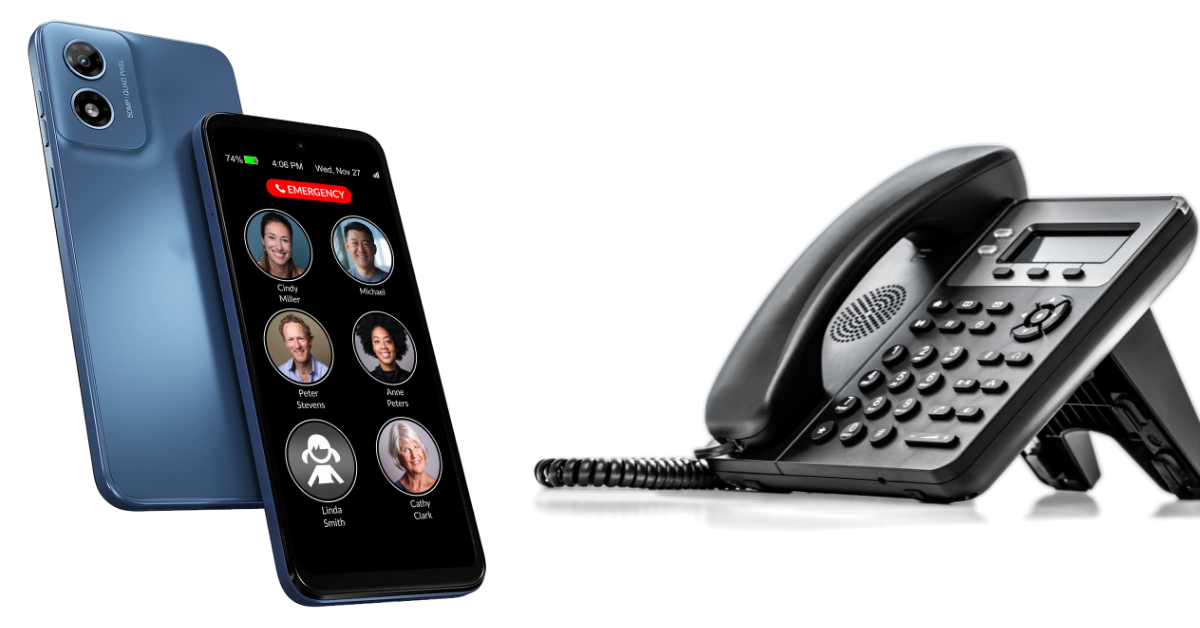
The right landline phone depends less on the number of features than on the specific barrier it needs to remove. Start with the controls the user can comfortably see and press, then consider sound, power, placement, and call management.
Display and keypad
Large, high-contrast buttons reduce mistakes when dialing, while a backlit or illuminated keypad helps in low light. A display is useful for caller ID and call history, but display size varies considerably. The AT&T CD4930 has an extra-large tilting display, the AT&T CL84118 has a 3.5-inch base display, and the cordless AT&T BL102-2 uses a 2-inch screen.
A large display is most helpful when it can be tilted toward the user and remains readable from the usual seating position. For someone who rarely checks caller ID, the simpler AT&T Trimline 213 may be easier to operate.
Hearing and call alerts
Look for receiver volume control, Audio Assist, Volume Boost, speakerphone access, and a visual ringer. The Panasonic KX-TGU432B can amplify sound by up to 12 dB, while the Sacumea lists an earpiece volume above 90 dB and a ringer above 110 dB. Those are powerful options, but very loud alerts are not automatically comfortable for every user.
A flashing light is valuable when the phone may be missed because of background noise or hearing loss. The AT&T CD4930 and Sacumea Picture Dial Phone both provide visual call alerts, while the Panasonic KX-TGU432B uses a flashing Favorites key for incoming and missed calls.
The most useful accessibility feature is the one the user can recognize and operate without help.
Corded and cordless placement
Cordless handsets are convenient when the user moves between rooms. Two-handset systems such as the Panasonic KX-TGD832M and AT&T BL102-2 reduce the need to walk across the house to answer. A corded model makes more sense when the phone stays beside a chair, on a desk, or on a wall.
Consider where the phone will live before choosing the handset type. A wall-mounted AT&T Trimline 213 keeps the main connection accessible, while a cordless Panasonic can follow the user. The AT&T CL84118 offers both approaches through its corded base and cordless handset.
Power outage operation
A corded phone that draws power from the telephone line can continue basic calling during an electrical outage, assuming the phone service remains active. The AT&T Trimline 213 is the simplest example because it needs no AC power, batteries, or adapter. The AT&T CL84118 adds a cordless handset while retaining a line-powered corded base.
Cordless phones normally need powered bases and charged handsets. Some corded phones keep basic calling available but need batteries for caller ID or answering functions. The AT&T CL4940 specifically requires four AA batteries for those advanced features.
Call blocking and messages
Call blocking is important when unwanted calls cause confusion or interruption. The Panasonic KX-TGD832M, Panasonic KX-TGU432B, AT&T BL102-2, and AT&T CL84118 can block large numbers of entries, with the Panasonic and AT&T cordless systems listing capacity up to 1, 000 numbers.
An answering machine is useful only if the user can retrieve messages comfortably. The AT&T CD4930 and CL4940 record up to 25 minutes, while the AT&T BL102-2 and CL84118 record up to 22 minutes. The Sacumea Picture Dial Phone and AT&T Trimline 213 skip message storage entirely, which can be an advantage when simplicity is more important than screening calls.
Frequently asked questions
Do cordless landline phones work during a power outage?
Most cordless phones need electricity for their base and charging system, so they may not work during an outage. A corded, line-powered phone can usually make basic calls if the telephone service remains active. The AT&T CL84118 is a hybrid option because its corded base is designed for outage operation.
Which phone is easiest for memory loss?
The Sacumea Picture Dial Phone is the clearest fit because it has nine photo memory keys for one-touch calling. A caregiver can assign familiar pictures to contacts, reducing the need to remember names or numbers. It does not include caller ID, voicemail, or message recording.
What is the best option for hearing loss?
The right choice depends on whether louder speech, a visible alert, or both are needed. The Panasonic KX-TGU432B offers Volume Boost up to 12 dB, the AT&T CD4930 includes Audio Assist and a flashing ringer, and the Sacumea provides very loud listed ringer and earpiece levels.
Are landline phones compatible with VoIP?
Compatibility depends on the specific system and the VoIP provider. The AT&T CL84118 states that it works with landline, cable, and VoIP services including Ooma and Vonage. The Sacumea Picture Dial Phone requires an RJ11 telephone line and does not connect directly to the internet.
Can a senior phone block robocalls?
Several models here can. The Panasonic KX-TGD832M and KX-TGU432B include automated call blocking, telemarketing call blocking, and large block lists. The AT&T BL102-2 and CL84118 also automatically block robocalls and let the user add numbers manually.
Is a corded phone safer than a cordless phone?
Neither style is automatically safer for every user. A corded phone avoids handset charging and can provide basic calling during an electrical outage, while a cordless phone can reduce the need to walk to a fixed location. The safest choice is the one that stays within reach and has controls the user understands.
The bottom line
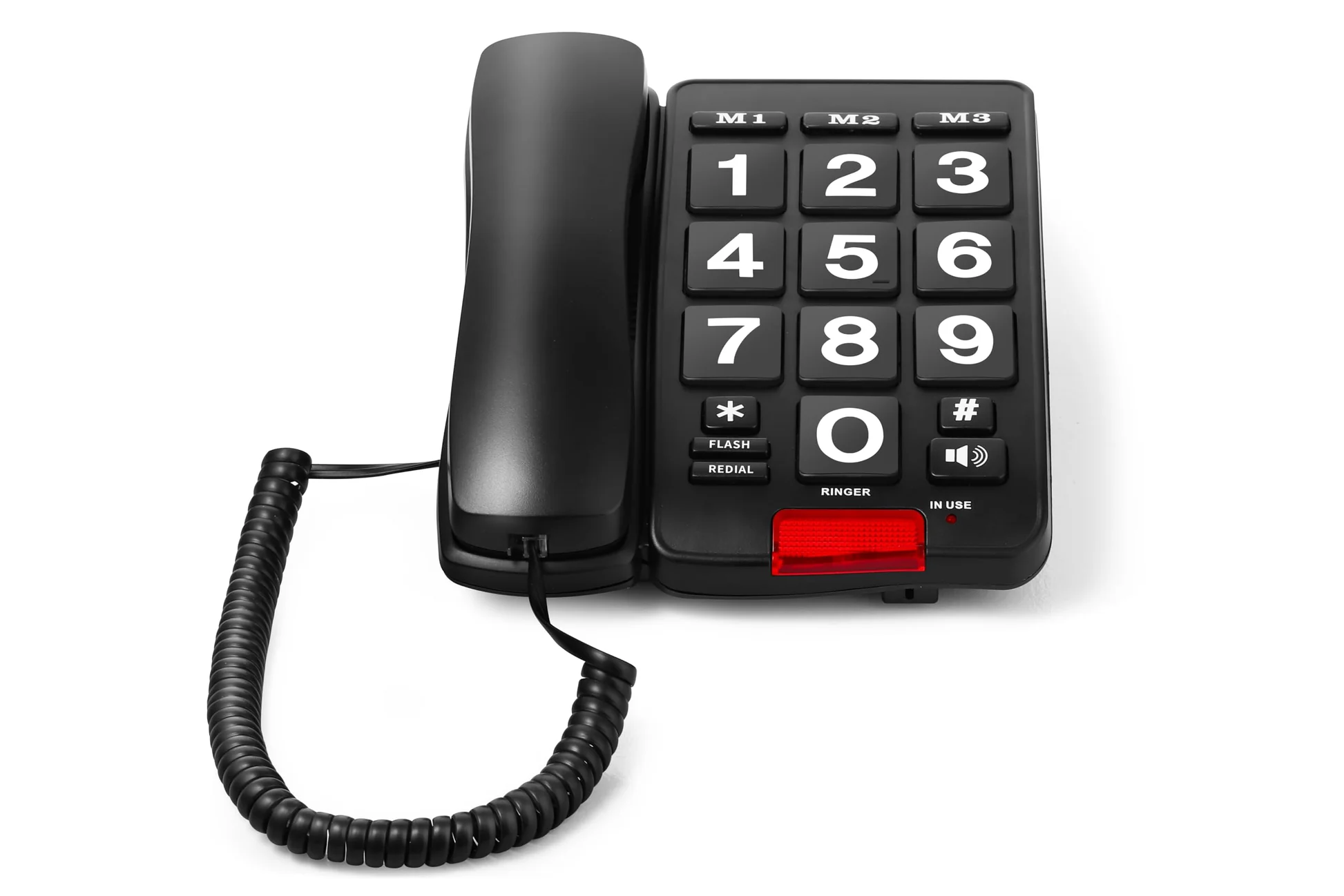
The Panasonic KX-TGD832M is our top choice among the Best landline phones for seniors because it combines two cordless handsets, illuminated controls, speed dial, and unusually strong call blocking. It is the most balanced option for a household that wants convenience without giving up practical protection from nuisance calls.
Choose the AT&T CD4930 when a large readable corded display and answering machine matter more than cordless movement. Choose the Sacumea Picture Dial Phone for a senior who benefits from photos and one-touch calling, or the AT&T CL84118 when outage operation and cordless convenience need to coexist.
If you are undecided, choose the model that removes the user's biggest daily obstacle first: visibility, hearing, memory, room-to-room access, or power loss.
As an Amazon Associate we earn from qualifying purchases.