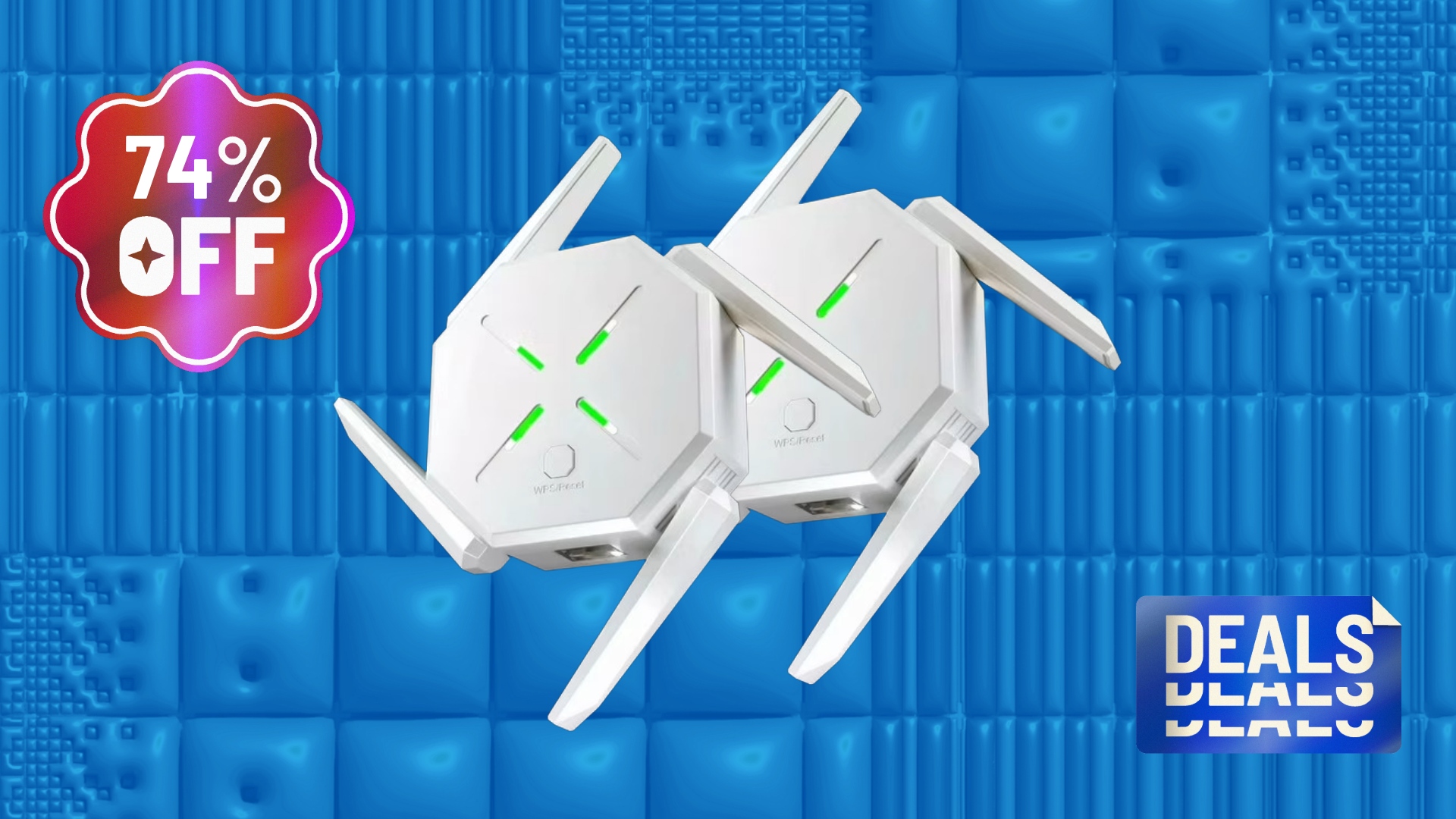

A weak signal in one bedroom, garage, or upstairs office can make a fast internet plan feel unreliable. The trouble is that a range extender only helps when it receives a usable connection from the router, so headline coverage claims are not the whole story.
Our Best wifi extenders signal booster picks range from compact dual-band units for a single dead zone to Wi-Fi 6 models with gigabit Ethernet and support for crowded homes. TP-Link RE715X is the one we'd buy first for most larger homes, while the rest cover simpler, smaller, or more specialized setups.
Comparison table
| # | Product | Award | Wireless capability | Coverage claim | Device capacity | Wired connection | Best for |
|---|---|---|---|---|---|---|---|
| 1 | TP-Link RE715X | Best overall | Wi-Fi 6, AX3000 | Up to 2, 400 sq. ft. | Up to 64 devices | Gigabit Ethernet | Busy homes and newer devices |
| 2 | TP-Link RE550 | Best Wi-Fi 5 extender | AC1900 dual band | Up to 2, 100 sq. ft. | Up to 32 devices | Gigabit Ethernet | Strong coverage without Wi-Fi 6 |
| 3 | TP-Link RE315 | Best compact TP-Link | AC1200 dual band | Up to 1, 500 sq. ft. | Up to 32 devices | Ethernet | One or two dead zones |
| 4 | NETGEAR EX5000 | Best compact design | AC1200 dual band | Up to 1, 000 sq. ft. | Up to 15 devices | Not specified | Small apartments |
| 5 | Gorzhesua 1200Mbps Extender | Best device capacity | Dual band | Up to 3, 600 sq. ft. | Up to 80 devices | 100Mbps Ethernet | Large device collections |
| 6 | Nonser AX1800 Extender | Best Wi-Fi 6 alternative | AX1800 dual band | Up to 19, 999 sq. ft. | Up to 135 devices | Gigabit Ethernet | Wi-Fi 6 devices and many clients |
| 7 | Nonser 1200Mbps Extender | Best flexible modes | 1200Mbps dual band | Up to 15, 999 sq. ft. | Not specified | Ethernet | Repeater and access point use |
| 8 | Eboous Long Range Extender | Best operating-mode range | Dual band | Up to 15, 000 sq. ft. | 65+ devices | Ethernet | Homes needing multiple modes |
| 9 | RAGOAT Long Range Extender | Best for broad compatibility | Dual band | Up to 12, 880 sq. ft. | Up to 105 devices | Two Ethernet ports | Mixed wired and wireless devices |
| 10 | Aodcaopul 9800 Sq Ft Extender | Best simple 2.4GHz reach | 2.4GHz up to 300Mbps | Up to 9, 789 sq. ft. | More than 40 devices | Ethernet | Basic coverage expansion |
1. TP-Link RE715X: Best Overall

Pros
- Wi-Fi 6 support suits newer phones and laptops
- Gigabit Ethernet and access point mode
- Beamforming and two high-gain directional antennas
- EasyMesh compatibility
- Supports up to 64 devices
Cons
- Larger than compact wall-plug designs
- Not compatible with TP-Link Deco mesh systems
- Extenders do not increase the original internet speed
Best for: busy homes that need stronger coverage for newer Wi-Fi 6 devices.
The TP-Link RE715X is the most complete extender here. It feels less like a stopgap for one weak corner and more like a useful network component for a home with several demanding devices. Its Wi-Fi 6 support, directional antennas, EasyMesh compatibility, and gigabit Ethernet port give it more ways to fit into an existing setup than most of the alternatives.
Its AX3000 rating combines up to 2, 404Mbps on the 5GHz band with up to 574Mbps on 2.4GHz. Those are theoretical wireless link rates, not a promise that your internet connection will reach them, but the split makes sense. The 5GHz band is suited to nearby streaming and downloads, while 2.4GHz travels more readily through obstacles. The two high-gain directional antennas and Beamforming are aimed at improving the signal's reach and reliability rather than magically raising the speed supplied by your internet provider.
The gigabit Ethernet port is a meaningful advantage. Put the RE715X near a television, desktop, or game console and it can provide a wired connection, or use the port in access point mode with an Ethernet run from the router. The Tether app includes setup guidance and a signal indicator, and Smart Adaptive Roaming can help compatible EasyMesh arrangements move devices toward the stronger connection. If you are still deciding whether the router is the weak link, the features that matter in a home router are worth checking before adding an extender.
Compared with the TP-Link RE550, the RE715X is the better fit for Wi-Fi 6 phones, laptops, and a busier household. The RE550 remains a sensible Wi-Fi 5 option, but it has lower wireless capacity and fewer supported devices. The RE715X's weakness is physical: at 6.3 inches high and weighing 0.84 pounds, it is not the discreet little plug-in unit to choose when outlet space is tight. Skip it if you have a small apartment and only need to push a basic connection into one room. For everyone else, this is the pick we'd keep.
2. TP-Link RE550: Best Wi-Fi 5 Extender

Pros
- Strong AC1900 dual-band capability
- Three adjustable external antennas
- Gigabit Ethernet and access point mode
- EasyMesh compatible
- Supports up to 32 devices
Cons
- Uses Wi-Fi 5 rather than Wi-Fi 6
- Larger than the compact options
- Extender throughput depends on the router link
Best for: homes with a Wi-Fi 5 router that need broader coverage and wired flexibility.
The TP-Link RE550 is the straightforward choice when the existing router is still a Wi-Fi 5 model and the goal is to extend it without changing the whole network. Its three adjustable external antennas give it a more substantial physical presence than the RE315, but that extra hardware is useful when you are trying to reach a distant bedroom, upper floor, or detached work area.
This is an AC1900 dual-band extender, with up to 1, 300Mbps on 5GHz and up to 600Mbps on 2.4GHz. In practical terms, the faster 5GHz band is the better place for devices close to the extender, while the lower-frequency band is more forgiving around walls and floors. TP-Link lists coverage up to 2, 100 square feet and support for up to 32 devices. Treat the coverage figure as a placement guide, not a guarantee, because the original router signal and the building itself still set the limit.
The gigabit Ethernet port broadens its role. You can connect a wired device or use access point mode to create Wi-Fi from a wired connection. The Tether app handles setup, firmware management, and location guidance, while Smart Adaptive Roaming and EasyMesh compatibility can help in a compatible TP-Link arrangement. That last point needs care: it is not compatible with Deco mesh systems, so Deco owners should not assume all TP-Link networking products join the same mesh.
The TP-Link RE715X is the better long-term match for newer Wi-Fi 6 clients and up to 64 devices, but the RE550 is easier to justify when the rest of the network is Wi-Fi 5. Its main weakness is that extender performance can be 50 percent or less of the current speed according to the product information. Choose it for coverage and connection reliability, not as a way to upgrade the internet plan. It is the right pick for a medium or large home that wants a mature, flexible Wi-Fi 5 extender.
3. TP-Link RE315: Best Compact TP-Link

Pros
- Small 0.38-pound design
- Dual-band AC1200 wireless
- EasyMesh compatibility
- Tether app and intelligent signal indicator
- Ethernet port for a wired device
Cons
- Ethernet is not gigabit
- Smaller coverage claim than the TP-Link RE550
- Not compatible with Deco mesh systems
Best for: a single dead zone in a small or medium home.
The TP-Link RE315 is the extender to buy when you want to solve a defined problem without adding a large device to the wall. At 4.89 inches high, 3.5 inches long, 2.05 inches wide, and 0.38125 pounds, it is considerably easier to place than the full-size TP-Link models. Its two adjustable external antennas can be aimed toward the weak area, which is more useful than a huge coverage number when the problem is one back bedroom or an upstairs landing.
AC1200 dual-band wireless combines up to 867Mbps on 5GHz with up to 300Mbps on 2.4GHz. That division gives compatible devices a faster short-range lane while preserving a longer-range option for older equipment and areas separated by walls. TP-Link lists support for up to 32 devices and coverage up to 1, 500 square feet. The product information also makes an important distinction: the extender is designed to improve coverage, not directly increase speed.
The Ethernet port can provide a wired connection for a nearby device, although the data does not specify a gigabit rating. That makes it less attractive than the RE550 or RE715X for a desktop or media device where wired throughput is central. Setup is handled through the Tether app, and the intelligent signal indicator helps find a location that is close enough to the router to receive a useful signal. Adaptive Path Selection and automatic connection to the strongest signal are useful touches for ordinary roaming around the home.
The NETGEAR EX5000 is even more compact, but it supports only 15 devices and covers a smaller stated area. The RE315 is the stronger all-round small-home choice, particularly if the router supports EasyMesh. Its limitation is scale. Large homes, crowded networks, and owners who need a fast wired connection should move up to the RE550 or RE715X. Everyone else gets a tidy extender with sensible controls and enough capacity for everyday phones, tablets, and smart-home devices.
4. NETGEAR EX5000: Best Compact Design

Pros
- Compact wall-plug design
- Dual-band AC1200 wireless
- WPS setup
- Works with wireless routers, gateways, and cable modems
- NETGEAR WiFi Analyzer app helps with placement
Cons
- Coverage is limited to up to 1, 000 square feet
- Supports up to 15 devices
- Ethernet connectivity is not specified
Best for: apartments and small homes where outlet space matters.
The NETGEAR EX5000 is refreshingly clear about its role. This is a compact wall-plug extender for a modest coverage gap, not a heavy-duty device for a sprawling house or a busy smart home. Its 2.85-inch height and width, 2.55-inch length, and 0.34-pound weight make it easy to fit beside furniture or in an outlet that would be awkward for the larger TP-Link units.
It uses dual-band AC1200 wireless, with performance listed up to 1, 200Mbps. The two bands let it serve nearby modern devices on 5GHz while retaining 2.4GHz compatibility for older or more distant devices. NETGEAR specifies coverage up to 1, 000 square feet and support for up to 15 devices, which is enough for a small apartment with a restrained number of active clients but less headroom than the RE315's 32-device capacity.
Setup is deliberately simple. Press the WPS button to connect it to the router, then use the NETGEAR WiFi Analyzer app to help find a suitable position. That placement step matters more than the extender's label. Put it in the dead zone and it has little useful signal to repeat. Put it halfway between the router and the weak room, where the router's connection is still healthy, and it has a much better chance of improving reliability.
The TP-Link RE315 is the better choice when you need more device capacity or EasyMesh compatibility. The EX5000 wins on compactness and simplicity, but its small coverage and 15-device limit are real boundaries. Skip it for a large family home, multiple cameras, or a network that needs a wired Ethernet endpoint. For a bedroom at the far end of a small apartment, its restrained design is exactly the point.
5. Gorzhesua 1200Mbps Extender: Best Device Capacity

Pros
- Supports up to 80 devices
- Four high-gain antennas
- Repeater and access point modes
- WPA and WPA2 security protocols
- Listed coverage up to 3, 600 square feet
Cons
- Ethernet port is limited to 100Mbps
- Coverage claims need realistic placement
- Less established app ecosystem than TP-Link and NETGEAR
Best for: homes with many connected devices and a compatible wired location.
The Gorzhesua 1200Mbps Extender stands out for capacity rather than brand polish. Its stated support for up to 80 devices is well above the 15-device limit of the NETGEAR EX5000 and the 32-device limits of the TP-Link RE315 and RE550. That makes it interesting for a home filled with cameras, smart speakers, streaming sticks, phones, and other connected equipment.
The dual-band design lists up to 867Mbps on 5GHz and 300Mbps on 2.4GHz, while four high-gain antennas are intended to reduce data loss through walls and floors. The product claims coverage up to 3, 600 square feet. Those figures describe the extender's intended capability, not a guaranteed usable speed at the edge of a property. For a reliable result, the device still needs to sit where the router's signal is strong enough to repeat.
There are two useful operating choices. Repeater mode expands an existing wireless network, while access point mode turns a wired connection into a dual-band hotspot. The built-in Ethernet port is rated at 100Mbps, so it is suitable for basic wired access but cannot match the gigabit ports on the TP-Link RE550, TP-Link RE715X, or Nonser AX1800 Extender. WPS setup is designed to be quick, and the product supports WPA and WPA2-PSK security protocols.
The large device count is its strongest reason to choose it, but the TP-Link RE715X is a more convincing option for Wi-Fi 6 devices and a more structured mesh setup. The Gorzhesua model is also less compelling for a high-speed wired desktop because of that 100Mbps Ethernet port. Choose it when wireless client capacity matters more than the newest wireless standard, and place it carefully rather than trusting the largest number on the box.
6. Nonser AX1800 Extender: Best Wi-Fi 6 Alternative

Pros
- Wi-Fi 6 AX1800 capability
- Supports up to 135 devices
- Gigabit Ethernet port
- Repeater setup without requiring an app
- Supports several wireless security protocols
Cons
- Coverage claim is unusually broad
- Product information gives conflicting Ethernet speed wording
- Setup uses a browser or phone rather than a specified app
Best for: a large, device-heavy home with Wi-Fi 6 clients.
The Nonser AX1800 Extender is built around capacity. It claims support for more than 135 devices, which is the highest stated device figure in this group, and pairs that with Wi-Fi 6 wireless. That combination makes it more interesting for a home with many phones, televisions, smart speakers, cameras, and streaming devices than a basic AC1200 repeater.
Its stated wireless rates are up to 1, 200Mbps and 600Mbps across the two bands. The product describes the unit as 200 percent faster than traditional Wi-Fi 5 repeaters, but the useful takeaway is simpler: Wi-Fi 6 is designed to handle newer clients and crowded networks more efficiently than older Wi-Fi 5 equipment. Four antennas are intended to broaden coverage, with a listed maximum of up to 19, 999 square feet. That unusually large figure should be treated cautiously, especially through several walls or across outdoor areas.
A gigabit Ethernet port makes the extender more versatile for a wired television, computer, or console. The listing contains conflicting wording about whether the connection is 20 times or 15 times faster than standard Ethernet, so the safe conclusion is that it includes a gigabit Ethernet port, not that either marketing multiplier is guaranteed. Setup can be completed in about three minutes through a smartphone or PC browser, and the product says no app is required.
The TP-Link RE715X remains the more reassuring Wi-Fi 6 pick because its coverage, device capacity, antenna design, and app workflow are described more consistently. The Nonser model is worth considering when the 135-device claim directly matches your household, but it is not the right answer for someone who wants a compact, conservative extender with clear ecosystem support. It suits technically confident buyers who are comfortable judging placement and configuring the device without a dedicated app.
7. Nonser 1200Mbps Extender: Best Flexible Modes

Pros
- Dual-band 1200Mbps wireless
- Repeater, access point, and Ethernet functions
- Four antennas
- WPA and WPA2 security protocols
- Broad router compatibility is claimed
Cons
- Coverage claim is very large for this class
- Device capacity is not specified
- No Wi-Fi 6 support is listed
Best for: users who may switch between wireless repeater and wired access point modes.
The Nonser 1200Mbps Extender is less about a refined ecosystem and more about flexibility. It can operate as a Wi-Fi repeater, an access point, or a wired network device through its Ethernet port. That makes it a useful candidate when you have an Ethernet run available in the weak area or when you want to change the setup later without replacing the hardware.
The dual-band design is rated at 1200Mbps, with the product positioned for streaming, gaming, downloads, and multiple devices. Four antennas are intended to support the listed coverage of up to 15, 999 square feet. As with the other unusually high coverage figures in this roundup, the number should not be read as a guarantee across a large property. A wired access point arrangement can be more dependable than wireless repeating when the extender is far from the router.
The product supports WPA and WPA2 security protocols and is described as broadly compatible with routers and devices. The Ethernet port also allows a wired device to connect at the extended location. The listing does not specify a device capacity, so this is not the model to choose when you need a clearly stated limit for a large collection of smart-home products.
The Gorzhesua 1200Mbps Extender gives a concrete 80-device figure and a 100Mbps Ethernet specification, while the Nonser model offers more emphasis on operating modes. The Nonser AX1800 Extender is the better match for Wi-Fi 6 clients and a crowded home. Choose this one when repeater versus access point flexibility is the deciding factor, and skip it if you want an app-led setup or a clearly documented device limit.
8. Eboous Long Range Extender: Best Operating-Mode Range

Pros
- Five operating modes
- Four plus four high-power antennas
- Supports 65 or more devices
- WPS setup
- WEP, WPA, and WPA2 encryption support
Cons
- The 15, 000-square-foot claim is difficult to generalize
- No wireless speed figures are specified
- No device dimensions are provided
Best for: users who need repeater, bridge, access point, mesh, and router modes.
The Eboous Long Range Extender is the most mode-focused product in the list. It offers repeater, bridge, access point, mesh, and router modes, so it can adapt to more network layouts than a unit designed only to repeat a wireless signal. That versatility is useful for someone who already knows how the home network is wired and wants more than a one-button dead-zone fix.
The product lists four plus four high-power omnidirectional antennas and claims coverage up to 15, 000 square feet. It also says the unit can handle 65 or more devices. Those figures make it look suited to a large property and a busy home, but the listing does not provide a wireless speed rating, band-specific rates, or dimensions. That missing information makes it harder to compare directly with the TP-Link models, whose 5GHz and 2.4GHz capabilities are clearly stated.
Setup is intended to be simple through WPS. The security information lists WEP, WPA, and WPA2 encryption, and the Ethernet port adds a wired connection option. The product describes a bionic chip and four high-gain antennas as supporting faster connections for streaming and gaming, but without a stated wireless throughput figure, buyers should focus on its operating modes rather than assume it outperforms a named Wi-Fi 6 model.
The Nonser 1200Mbps Extender is a better fit when you want a clearly stated dual-band speed and three defined operating modes. The Eboous model is more appealing when bridge, mesh, or router operation is important. Its real weakness is documentation: shoppers who need a precise wireless capability or a well-defined physical footprint should choose the TP-Link RE715X or TP-Link RE550 instead.
9. RAGOAT Long Range Extender: Best for Broad Compatibility

Pros
- Supports up to 105 devices
- Dual-band wireless
- Two Ethernet ports are listed
- Repeater and access point modes
- Signal indicator helps with placement
Cons
- Coverage claim is much larger than typical indoor layouts
- Ethernet speed is not specified
- Wireless band figures are presented inconsistently
Best for: homes needing several wired endpoints and a high stated device capacity.
The RAGOAT Long Range Extender takes a practical approach to a large network. Its product information lists support for up to 105 devices and three modes: access point, repeater, and a two-Ethernet-port configuration. That combination gives it a clear use case for a home with wired televisions, desktops, cameras, or other devices that need to sit near the extender.
It uses dual-band wireless and four high-gain antennas. The listing gives up to 300Mbps on 2.4GHz and describes the 5GHz band as reaching 867 to 1, 200Mbps. It also claims coverage up to 12, 880 square feet. Since the 5GHz figure is not presented as one fixed rate and no Ethernet speed is specified, this model is harder to assess on raw capability than the TP-Link RE715X or RE550.
The setup process uses the WPS button, followed by a password entry, and a signal indicator helps locate the repeater. That indicator is valuable because the right placement is the difference between repeating a healthy connection and amplifying a poor one. The product also mentions an embedded security module and dual-band processing, with security intended for home, business, and travel use.
The Gorzhesua 1200Mbps Extender offers a clearer wireless rate and an 80-device capacity, while the RAGOAT model claims room for 105 devices and emphasizes two Ethernet ports. The RAGOAT is the better fit when those wired connections matter. Skip it if you want Wi-Fi 6, a gigabit port explicitly identified in the specifications, or a polished app ecosystem. For a mixed wired and wireless setup, its unusual port count is the reason to consider it.
10. Aodcaopul 9800 Sq Ft Extender: Best Simple 2.4GHz Reach

Pros
- Simple plug-and-play setup
- 2.4GHz coverage up to 300Mbps
- Ethernet port
- Supports more than 40 devices
- WEP, WPA, and WPA2 security
Cons
- No 5GHz speed is specified
- Not a Wi-Fi 6 extender
- Coverage claim is difficult to verify in a typical home
Best for: basic 2.4GHz coverage expansion for older or distant devices.
The Aodcaopul 9800 Sq Ft Extender is the simplest product in this group. Its listing focuses on plug-and-play operation, coverage up to 9, 789 square feet, and compatibility with more than 40 devices. That makes it a candidate for a basic dead zone where the main requirement is getting a stable signal to a phone, smart speaker, camera, or similar device rather than maximizing throughput.
The product specifically lists up to 300Mbps on the 2.4GHz band. It does not provide a 5GHz speed figure, so it is not possible to compare its dual-band capability with the TP-Link RE315, RE550, or RE715X on equal terms. The lower-frequency band is useful through walls and over distance, but the absence of a stated 5GHz rate is a meaningful limitation for newer phones, laptops, and high-bandwidth streaming.
An Ethernet port provides a way to connect a wired device, and the product supports WEP, WPA, and WPA2 security protocols. Setup is described as taking only several seconds, which may appeal to someone who does not want an app or a multi-step configuration process. The product claims coverage through bedrooms, floors, garages, basements, and gardens, but those environments can vary substantially in construction and distance.
The NETGEAR EX5000 is a better-documented compact option with dual-band AC1200 capability, while the TP-Link RE315 gives a clearer 5GHz specification and EasyMesh compatibility. Aodcaopul makes sense only when straightforward 2.4GHz reach is the priority. Skip it for gaming, demanding streaming, or a newer Wi-Fi 6 network where the missing 5GHz information becomes too important.
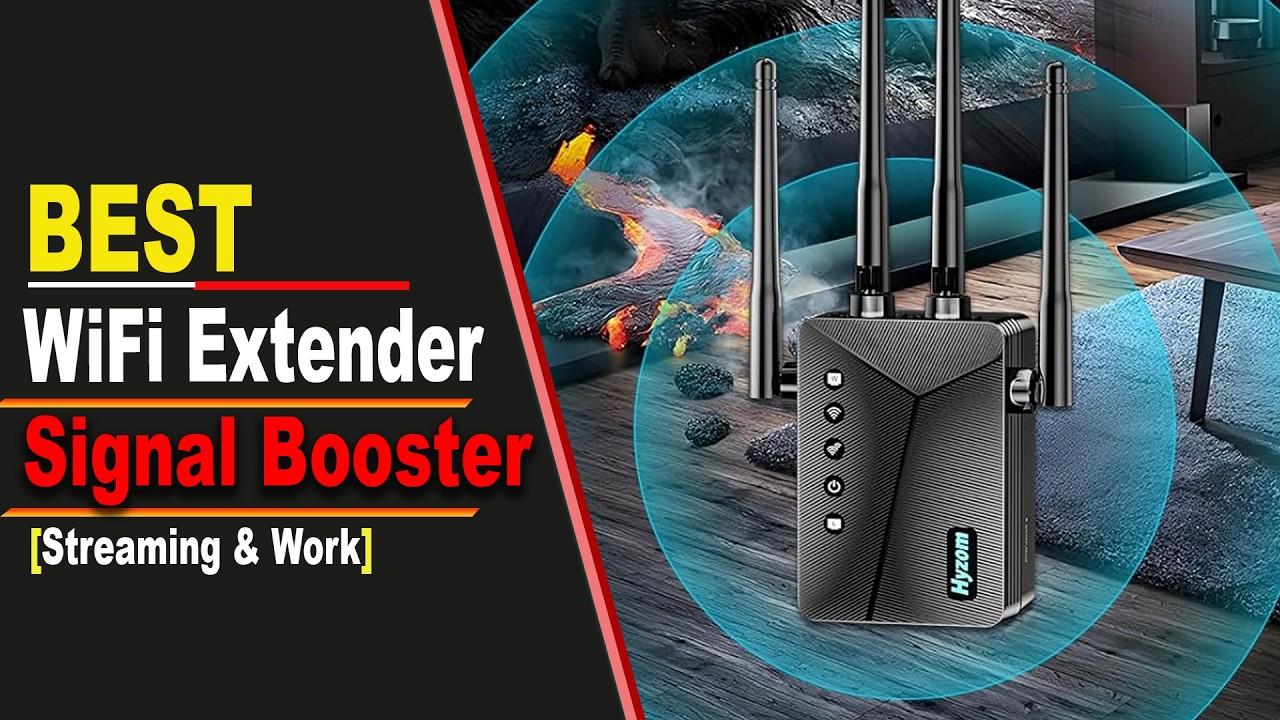
How to choose best wifi extenders signal booster
The right extender is determined less by the biggest coverage number than by the quality of the connection it receives, the wireless bands it supports, and the devices it must serve.
Wireless standard and band speeds
Wi-Fi 5 AC extenders such as the TP-Link RE315 and RE550 can work well with older routers and ordinary household devices. Wi-Fi 6 models such as the TP-Link RE715X and Nonser AX1800 Extender are better suited to newer phones, laptops, and crowded networks. Dual-band operation is generally more useful than a 2.4GHz-only design because 5GHz can provide higher link rates nearby, while 2.4GHz handles distance and obstacles more readily.
Do not treat a number such as AC1900, AX3000, or 1200Mbps as guaranteed internet speed. It describes wireless link capability under particular conditions. An extender improves coverage, but it cannot raise the speed arriving from the internet provider.
Placement and usable coverage
Place the extender where the router still has a strong signal, not at the farthest point where the connection has already failed. A signal indicator or analyzer app can help. The TP-Link Tether app and NETGEAR WiFi Analyzer app provide more guidance than a generic WPS-only setup.
Large coverage claims are difficult to compare because walls, floors, interference, and router location change the result. A smaller extender positioned correctly can outperform a supposedly long-range model placed in a weak-signal corner.
The best location is usually the last good spot before the dead zone, not the dead zone itself.
Device capacity
Count active devices, not just the number of gadgets in the house. Streaming televisions, cameras, smart speakers, phones, tablets, and laptops all compete for airtime when they are active. The NETGEAR EX5000 lists up to 15 devices, the TP-Link RE315 and RE550 list up to 32, and the TP-Link RE715X lists up to 64. Several lesser-known models claim capacities from 80 to more than 135 devices, but those figures should be viewed alongside their less detailed wireless specifications.
If the network is busy, Wi-Fi 6 and a strong connection back to the router matter as much as the device count. An extender with a high capacity claim is not automatically faster under load.
Ethernet and access point modes
An Ethernet port is useful for a desktop, television, game console, or access point. Gigabit Ethernet on the TP-Link RE550, TP-Link RE715X, and Nonser AX1800 Extender is more suitable for demanding wired devices than the Gorzhesua model's 100Mbps port. Some models also support access point mode, which can be the better choice when you can run Ethernet from the router to the weak area.
Check the product details carefully. The RAGOAT model lists two Ethernet ports, while several others list one. The Eboous, Nonser, and RAGOAT models also emphasize multiple operating modes, which may matter more than their broad coverage claims.
Mesh compatibility and setup
EasyMesh compatibility can make roaming more coherent when the main router supports it. The TP-Link RE315, RE550, and RE715X support EasyMesh, but the listings specifically say they are not compatible with TP-Link Deco mesh systems. Compatibility is therefore not just about matching the brand.
App-based setup is useful when you need location advice, firmware management, or network controls. WPS is faster for a basic connection, but it does not replace careful placement. If roaming between rooms is the main goal, how a repeater differs from a whole-home setup can help you decide whether an extender is the right type of product.

Frequently asked questions
Do Wi-Fi extenders increase internet speed?
No. A range extender is designed to improve coverage, not increase the speed supplied by your internet provider. It can improve real-world performance in a weak area by making the connection more reliable, but the repeated wireless link can also reduce throughput.
Should a Wi-Fi extender use 2.4GHz or 5GHz?
A dual-band extender gives you both options. 5GHz is generally better for higher link rates at shorter distances, while 2.4GHz usually travels farther through walls. The best choice depends on the distance, obstacles, and capabilities of the device being connected.
Where should I place a signal booster?
Place it between the router and the dead zone, where it can still receive a useful signal from the router. Do not place it inside the dead zone unless the device has a wired backhaul or access point connection. Use the signal indicator in a TP-Link or NETGEAR setup app when available.
Are Wi-Fi 6 extenders compatible with older routers?
They can connect to many older Wi-Fi routers and devices, but the network will not gain every Wi-Fi 6 benefit unless compatible Wi-Fi 6 equipment is part of the connection. The TP-Link RE715X is listed as compatible with almost all Wi-Fi-enabled devices and routers, while also supporting newer AX phones and laptops.
Is a mesh system better than a range extender?
A mesh system is often the cleaner solution when you need consistent roaming across several rooms and are willing to replace or build around the main router. An extender is simpler when one or two areas have weak coverage. EasyMesh-compatible extenders can offer a middle ground with compatible routers.
Can I connect a television or game console by Ethernet?
Yes, if the extender has an Ethernet port and the device is close enough for a cable. The port's speed matters: the TP-Link RE550 and RE715X list gigabit Ethernet, while the Gorzhesua model lists a 100Mbps port. Wired connection quality still depends on the wireless link between the extender and router unless the extender is used as an access point.
Do all routers work with these extenders?
Most of the listed models claim broad compatibility with wireless routers, gateways, or cable modems, but mesh compatibility is more specific. The TP-Link models support EasyMesh while explicitly excluding Deco mesh systems. Check the extender's supported security and wireless standards before buying for an older or specialized router.

The bottom line
The Best wifi extenders signal booster choice for most homes is TP-Link RE715X. Its Wi-Fi 6 support, gigabit Ethernet, up to 64-device capacity, directional antennas, access point mode, and EasyMesh compatibility give it the broadest useful feature set. TP-Link RE550 is the better fit for a Wi-Fi 5 network, while TP-Link RE315 is the sensible compact option for one defined dead zone.
The NETGEAR EX5000 suits small apartments, and the Gorzhesua 1200Mbps Extender is worth considering when its 80-device capacity matters more than gigabit Ethernet. The Nonser, Eboous, RAGOAT, and Aodcaopul models offer specific combinations of modes, ports, or stated coverage, but their less consistent specifications make careful placement and realistic expectations especially important.
If you are undecided, choose the TP-Link RE715X for a busy or newer network, and the TP-Link RE315 for a small, straightforward coverage problem.
As an Amazon Associate we earn from qualifying purchases.