
A modem can be technically compatible with your cable provider and still be the wrong purchase. The biggest traps are buying a modem without noticing it needs a separate router, choosing a single-gigabit Ethernet port for a multi-gig plan, or confusing cable service with fiber. This guide to the best docsis 3 1 modem options separates those choices clearly.
The ten products here range from compact standalone modems to all-in-one Wi-Fi 6 gateways. Some support plans up to 2.5 Gbps, while others are designed around 1 Gbps service. The right pick depends on your ISP, internet plan, need for phone service, and whether you already own a router.
Our top pick is the NETGEAR CAX30, while the rest of the list covers the best straightforward modems, multi-gig upgrades, renewed alternatives, and modem-router combinations.
Comparison table
| # | Product | Award | Type | Maximum stated plan | Ethernet | Best for |
|---|---|---|---|---|---|---|
| 1 | NETGEAR CAX30 | Best overall | Modem and Wi-Fi 6 router | 2.7 Gbps wireless speed | 4 x 1 Gigabit | Replacing both modem and router |
| 2 | Hitron CODA Renewed | Best simple modem | Standalone modem | Up to 1 Gbps | 1 x 1 Gigabit | Basic cable service |
| 3 | ARRIS SB8200-RB | Best dual-port pick | Standalone modem | Up to 1 Gbps | 2 x 1 Gigabit | Wired flexibility |
| 4 | Hitron CODA56 2.5G | Best multi-gig modem | Standalone modem | Up to 2.5 Gbps | 1 x 2.5 Gigabit | Fast cable plans |
| 5 | ARRIS SB8200 | Best established design | Standalone modem | Up to 2 Gbps | 2 x 1 Gigabit | A familiar modem platform |
| 6 | Hitron CODA56 Black | Best 2.5G alternative | Standalone modem | Up to 2.5 Gbps | 1 x 2.5 Gigabit | Multi-gig service with a separate router |
| 7 | NETGEAR CM1000 Renewed | Best compact gigabit modem | Standalone modem | Up to 1 Gbps | 1 x 1 Gigabit | Xfinity or Cox households |
| 8 | Hitron CODA | Best no-frills Hitron | Standalone modem | Up to 1 Gbps | 1 x 1 Gigabit | Cable-only internet |
| 9 | ARRIS G34 | Best Wi-Fi 6 alternative | Modem and Wi-Fi 6 router | Up to 2.5 Gbps | 4 x 1 Gigabit | Whole-home wired and wireless networks |
| 10 | NETGEAR CM1000 | Best broad-provider option | Standalone modem | Up to 1 Gbps | 1 x 1 Gigabit | Major cable providers |
1. NETGEAR CAX30: Best Overall

Pros
- Combines the modem and Wi-Fi router
- Wi-Fi 6 with AX2700 wireless performance
- Four Gigabit Ethernet ports
- USB 3.0 port and port aggregation support
- Coverage stated for up to 2, 000 square feet
Cons
- Not compatible with fiber, DSL, or bundled voice service
- Wired ports are limited to Gigabit speeds
- NETGEAR Armor includes a 30-day trial rather than a permanently included service
Best for: households that want one device to replace a separate cable modem and Wi-Fi router.
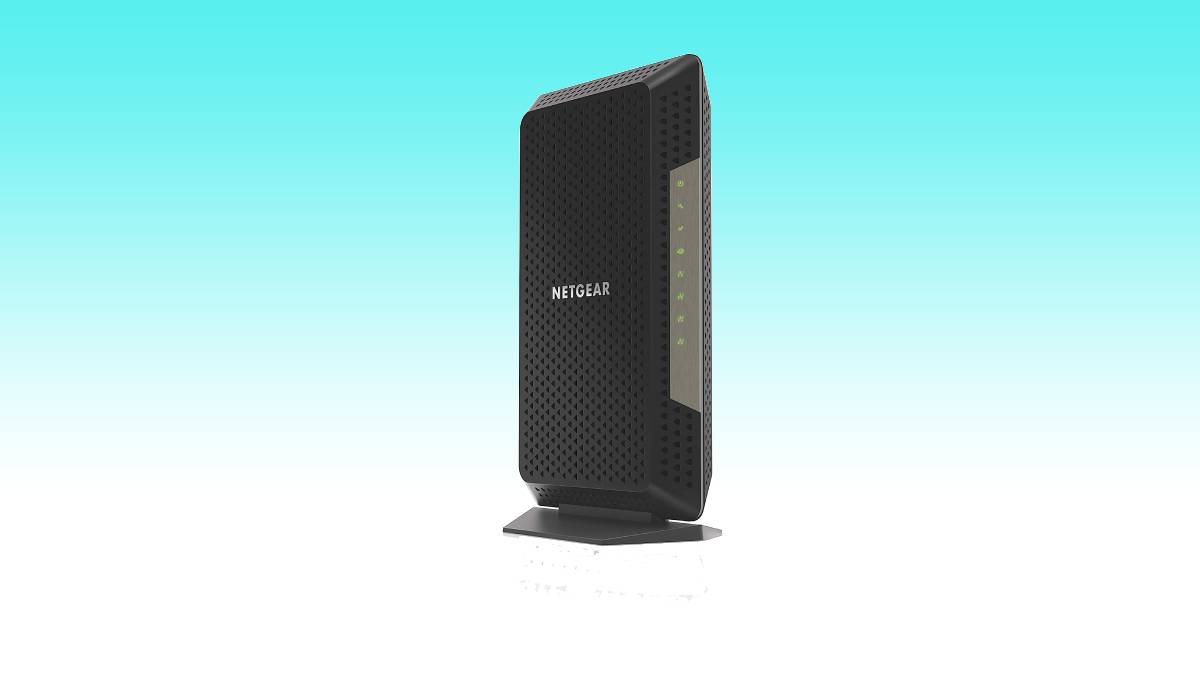
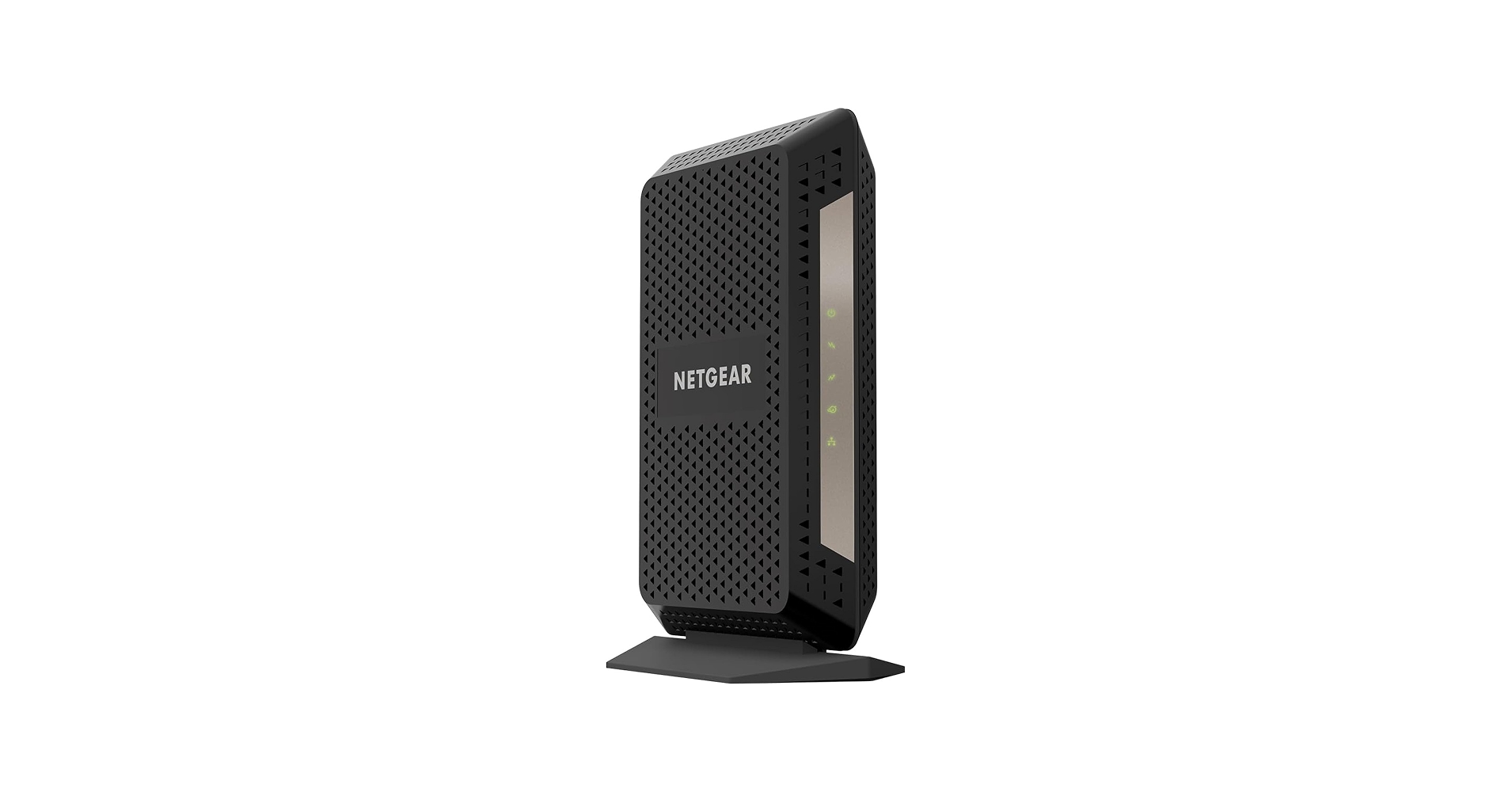
The NETGEAR CAX30 is the easiest recommendation for someone who does not want to assemble a modem and router separately. It is a DOCSIS 3.1 cable modem combined with a dual-band Wi-Fi 6 router, so the box handles the coax connection, routing, and wireless network. That makes it a cleaner fit for a living room shelf or a home office where two networking boxes would be awkward.
Its AX2700 Wi-Fi 6 rating is aimed at homes with many active devices, and NETGEAR states coverage for up to 2, 000 square feet and 25 concurrent devices. Those figures are useful as a rough planning guide, not a guarantee through thick walls or multiple floors. Wi-Fi performance depends heavily on placement, interference, and the client devices connected to it. Still, the CAX30 has more wireless capability built in than any of the standalone modems below because it is designed to run the entire local network.
The wired side is well equipped for ordinary gigabit service. Four 1 Gigabit Ethernet ports give you room for a desktop, game console, television, and another wired device without immediately adding a switch. Port aggregation is supported, and the USB 3.0 port can connect compatible storage or other USB devices. The modem uses DOCSIS 3.1 and 32x8 channel bonding, while the advertised AX2700 figure describes the wireless side rather than a single wired internet connection.
Compared with the ARRIS G34, the CAX30 is the more straightforward choice for a household that wants a compact gateway with four Ethernet ports and a familiar app-based setup. The G34 has a higher AX3000 wireless classification and supports cable plans up to 2.5 Gbps, but its Ethernet ports remain Gigabit, so neither gateway is a perfect match for distributing a full multi-gig connection over wired links. The CAX30 also cannot serve Verizon, AT&T, CenturyLink, DSL, satellite, or bundled voice customers. Anyone who already owns a capable router should skip it and choose a standalone modem instead.
This is the one we'd keep for a typical cable household that wants fewer boxes and a guided setup. The Nighthawk app is intended for managing the Wi-Fi network, and the built-in security tools are a useful part of the package, though Armor is presented with a limited trial. If your service is cable, your plan is within its stated capability, and you want the best docsis 3 1 modem with routing included, the CAX30 is the most complete option here.
2. Hitron CODA Renewed: Best Simple Modem

Pros
- DOCSIS 3.1 with backward compatibility for DOCSIS 3.0
- Supports cable plans up to 1 Gbps
- Two downstream and two upstream OFDM channels
- Compact 1.8-pound design
- Works with a separate router or mesh system
Cons
- One Gigabit Ethernet port
- No built-in Wi-Fi
- Does not support voice service, fiber, DSL, or satellite
Best for: cable customers who already have a router and need a basic DOCSIS 3.1 modem.
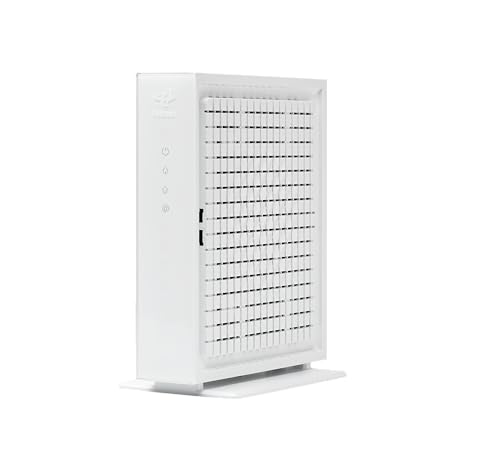
The Hitron CODA Renewed is a small, uncomplicated modem for a straightforward network. Connect the coax cable, power it on, attach Ethernet to a router, and activate it with the cable provider. It does not try to be a wireless gateway, which is exactly what some buyers want when they already have a mesh system or a router they prefer.
Hitron states support for cable plans up to 1 Gbps and compatibility with Xfinity, Spectrum, Cox, CableOne Sparklight, Cogeco Breezeline, Zito Media, and several other cable providers. Provider approval still needs to be checked before purchase, especially if your service includes a special equipment requirement. The modem is not compatible with AT&T, Verizon, CenturyLink, DSL, fiber, fixed wireless, satellite, or bundled voice service.
The internal DOCSIS 3.1 design uses two downstream and two upstream OFDM channels. That matters because OFDM is one of the features that separates DOCSIS 3.1 from older cable modem standards, helping the modem handle modern cable networks. It also works with DOCSIS 3.0 networks, which makes it less restrictive if your local infrastructure has not fully moved to the newer standard. The single Ethernet port is rated at 1 Gigabit, matching the modem's stated plan limit.
At 6.73 by 6.73 by 2.03 inches and 1.8 pounds, the CODA is easy to place beside a router. It is not as flexible as the ARRIS SB8200-RB, which provides two Gigabit Ethernet ports, and it lacks the 2.5 Gigabit connection found on the Hitron CODA56 2.5G. The trade-off is a simpler, smaller setup for customers who do not need multi-gig service or a second wired port.
The renewed condition is the main reason to inspect the listing details carefully before ordering. It is not a reason to dismiss the model, but buyers who want a new unit may prefer the standard Hitron CODA later in this list. Choose this version if your plan tops out at 1 Gbps, your router is already in place, and you want a compact modem that keeps the network architecture simple.
3. ARRIS SB8200-RB: Best Dual-Port Pick

Pros
- Two 1 Gigabit Ethernet ports
- DOCSIS 3.1 and DOCSIS 3.0 channel support
- Approved for Xfinity, Cox, and Spectrum
- Compact, light chassis
- Familiar standalone modem layout
Cons
- No Wi-Fi
- No cable voice support
- Renewed unit with a 1 Gbps stated plan limit
Best for: buyers who want a standalone modem with more wired flexibility than a single-port design.
The ARRIS SB8200-RB is a practical choice when the modem will sit at the front of a more deliberate home network. It has no wireless features and no phone support, so it does not compete with the CAX30 or G34 as an all-in-one gateway. Its job is to bring cable service into the home and hand it off to a router.
ARRIS lists compatibility with Cox, Spectrum, Xfinity, and other US cable providers, with approval for plans up to 1 Gbps. The modem supports 32 downstream and eight upstream DOCSIS 3.0 bonded channels, along with two downstream and two upstream OFDM DOCSIS 3.1 channels. That combination gives it backward compatibility while retaining the newer standard's capability on a compatible network.
Two 1 Gigabit Ethernet ports are the standout feature. They provide more flexibility than the one-port Hitron CODA models and the NETGEAR CM1000 models, although the additional port does not automatically mean that one device can receive more than a Gigabit. The network configuration and ISP support matter. Anyone hoping to connect multiple devices directly should also remember that a router or network switch may still be needed, depending on the provider and setup.
The SB8200-RB measures 5.25 by 5.13 by 1.75 inches and weighs 1 pound. That is easy to accommodate, and the simple design avoids the extra wireless hardware found in gateway products. The weakness is its renewed status and its stated ceiling of 1 Gbps, which makes the Hitron CODA56 2.5G a better fit for a cable plan above Gigabit. It also cannot replace a provider's voice-capable gateway when phone service is part of the package.
Choose the SB8200-RB when two Ethernet ports matter more than wireless features. It is a sensible bridge between basic single-port modems and more ambitious multi-gig hardware, especially for someone who already owns a router and wants a familiar ARRIS platform.
4. Hitron CODA56 2.5G: Best Multi-Gig Modem
Pros
- Supports cable plans up to 2.5 Gbps
- 2.5 Gigabit Ethernet port
- DOCSIS 3.1 with 32x8 channel bonding
- Backward compatible with DOCSIS 3.0
- Compact standalone design
Cons
- One Ethernet port
- No Wi-Fi or voice support
- Requires a separate router with a 2.5 Gigabit port for full capability
Best for: cable subscribers upgrading to multi-gig service who already own or plan to buy a suitable router.
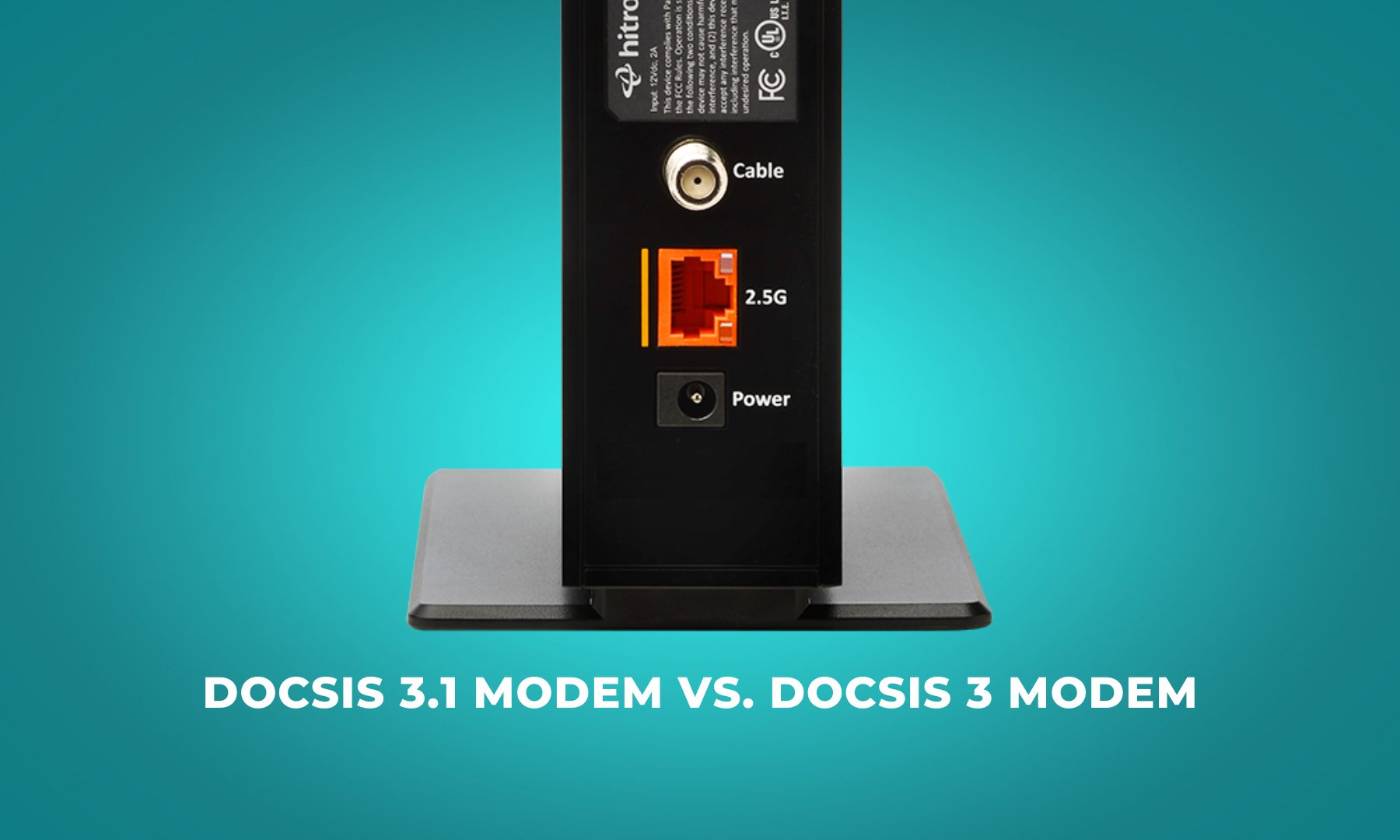
The Hitron CODA56 2.5G is the clearest hardware upgrade in this group. Its 2.5 Gigabit Ethernet port removes the single-gigabit bottleneck found on most of the older standalone modems here. That matters only when the cable plan, router, and client devices can all use more than 1 Gbps, but for that specific situation, the difference is substantial.
Hitron states support for plans up to 2.5 Gbps and lists Xfinity, Spectrum, and Cox compatibility. The company describes support for Xfinity service up to 2 Gbps, Spectrum at 1 Gbps, and Cox at 2 Gbps, so the modem's maximum does not mean every provider or plan will use it at that speed. Check the exact plan and approved-device list before activation.
This is still a modem only. It has one Ethernet port, no wireless radio, and no voice capability. A separate Wi-Fi router is required, and that router needs a 2.5 Gigabit port if you want the modem's multi-gig connection to reach the local network without being reduced to Gigabit. For households choosing a new router, the equipment needed to build a complete home network can be more important than the modem's DOCSIS label alone.
The CODA56 uses DOCSIS 3.1 with 32x8 channel bonding and works with DOCSIS 3.0 networks. Its 6.73 by 6.73 by 2.03-inch body is easy to place, and the listed weight is about 1.02 pounds. Compared with the ARRIS SB8200, it gives up the second Ethernet port but gains a much faster primary connection. Compared with the Hitron CODA Renewed, it is a better long-term match for a plan above 1 Gbps.
The limitation is simple: buying this modem alone does not create Wi-Fi. It also is not suitable for fiber, DSL, satellite, fixed wireless, or voice service. If those conditions fit your setup, the CODA56 2.5G is the strongest standalone option in this roundup and the best docsis 3 1 modem choice for a genuinely multi-gig cable connection.
5. ARRIS SB8200: Best Established Design

Pros
- Two 1 Gigabit Ethernet ports
- Compact footprint with status LEDs
- DOCSIS 3.1 and DOCSIS 3.0 support
- Approved for Cox, Xfinity, and Spectrum
- Supports plans stated up to 2 Gbps
Cons
- No Wi-Fi
- No voice service
- Cannot use fiber, DSL, or satellite connections
Best for: cable customers who want a compact ARRIS modem with two wired ports and multi-gig headroom.
The ARRIS SB8200 remains appealing because it does not overcomplicate the network. It is a dedicated cable modem with a compact housing, discrete LEDs for power, upstream, downstream, and online status, and two Ethernet ports. You add your own router or mesh system, which keeps the wireless decision separate from the modem purchase.
The listing states support for cable plans up to 2 Gbps, although its two Ethernet ports are each rated at 1 Gigabit. That distinction matters. The modem may be suitable for a multi-gig service tier, but a single wired connection will not automatically run beyond the port's stated speed. A compatible network design and provider configuration are needed to make practical use of the higher plan capability.
ARRIS identifies Cox, Xfinity, and Spectrum as tested and qualified providers, while also noting that customers should confirm support for the exact model. The modem is not compatible with fiber, DSL, or satellite service. It uses DOCSIS 3.1 and remains compatible with DOCSIS 3.0 networks, giving it a useful combination of newer network support and broad cable-system familiarity.
The SB8200 is physically similar to the renewed ARRIS SB8200-RB, but this listing presents the standard model and states a higher plan capability. The Hitron CODA56 2.5G is still the better hardware match for someone who specifically needs one 2.5 Gigabit Ethernet connection. The SB8200 is more appealing when two 1 Gigabit ports and a compact footprint matter more than a single faster port.
Its weakness is not hidden: there is no wireless network inside, and the two ports do not turn it into a router. Buyers who want one box should choose the NETGEAR CAX30 or ARRIS G34 instead. For everyone else, the SB8200 is a clean, well-defined modem choice that works particularly well as the wired foundation of a separate home network.
6. Hitron CODA56 Black: Best 2.5G Alternative

Pros
- Supports cable plans up to 2.5 Gbps
- 2.5 Gigabit Ethernet port
- DOCSIS 3.1 with backward DOCSIS 3.0 support
- Includes low-latency positioning for gaming and streaming
- Requires a separate router, keeping network choices open
Cons
- No Wi-Fi
- One Ethernet port
- Not compatible with fiber, DSL, satellite, or fixed wireless
Best for: multi-gig cable users who want a standalone modem and already understand the router requirements.
The Hitron CODA56 Black is another version of the CODA56 concept, aimed at the same buyer who needs more than a Gigabit Ethernet handoff. It supports cable plans up to 2.5 Gbps and places a 2.5 Gigabit Ethernet port between the coax connection and your router. That gives a newer router a chance to use the extra capacity without immediately hitting a Gigabit ceiling.
The setup requirements deserve more attention than the finish. This is not a Wi-Fi gateway, and one Ethernet cable is the only network connection from the modem. Hitron says a separate router with a 2.5 Gigabit port is needed for full speeds. Without that router, only one device can connect by Ethernet, and there is no wireless network for phones, televisions, or smart-home equipment.
Compatibility is limited to cable service. The listing names Xfinity, Spectrum, and Cox, while specifically excluding Verizon FiOS, AT&T Fiber, CenturyLink DSL, satellite, fixed wireless, and other non-DOCSIS connections. The modem uses DOCSIS 3.1 and is backward compatible with DOCSIS 3.0, which helps if the local cable network has not completely moved to the newer standard.
Compared with the other Hitron CODA56 2.5G, this listing describes a black unit and provides a different physical layout, measuring 8.13 by 7 by 1.77 inches. The key network capability remains the same in the supplied specifications. Compared with the Hitron CODA, the CODA56 Black is the more sensible choice for a plan above 1 Gbps, but it is unnecessary for a basic cable tier that never approaches that limit.
Hitron also positions this modem for gaming, streaming, and video calls through DOCSIS 3.1's latency characteristics. That does not remove congestion elsewhere in the network, and the router still controls much of the home's wireless behavior. Choose the CODA56 Black when you want a separate network stack, need a 2.5 Gigabit handoff, and are comfortable selecting the router yourself.
7. NETGEAR CM1000 Renewed: Best Compact Gigabit Modem

Pros
- DOCSIS 3.1 support
- One Gigabit Ethernet port
- Compatible with Spectrum, Cox, and Xfinity
- Works with a separate Wi-Fi router
- Straightforward standalone setup
Cons
- Renewed unit
- Xfinity support is stated up to 800 Mbps
- No Wi-Fi or voice support
Best for: households with a separate router and a cable plan at or below the modem's stated Gigabit range.
The NETGEAR CM1000 Renewed is a conventional standalone modem for a conventional cable setup. It has one coax input, one Gigabit Ethernet connection, and no wireless hardware. That makes the installation easy to understand, though it also means the buyer must already have a router or add one separately.
NETGEAR lists compatibility with major cable providers and specifically identifies Spectrum and Cox for plans up to 1 Gbps. Xfinity support is listed up to 800 Mbps for this version, which is an important detail for customers whose service tier is near the top of that range. Provider approval can change, so the exact modem model should be checked against the current ISP list before activation.
The modem uses DOCSIS 3.1 and a 32x8 channel description, while the Ethernet port is rated at 1 Gigabit. That is a sensible pairing for ordinary gigabit cable service. It is not the right fit for a 2.5 Gbps plan, and it will not replace a Wi-Fi router. If the home already has a good mesh system, the CM1000 can simply act as the wired internet handoff.
Its listed dimensions are 10.24 by 7.24 by 4.53 inches, making it less compact than the small Hitron units despite its simple feature set. The Hitron CODA Renewed offers a smaller footprint and two OFDM channel pairs, while the ARRIS SB8200 gives you two Ethernet ports. The CM1000's appeal is its uncomplicated NETGEAR design and clear fit for customers whose service stays within its stated limits.
This is a renewed unit, so it deserves a closer look from buyers who care about condition and included accessories. It also cannot support bundled voice service and does not work with Verizon, AT&T, CenturyLink, DSL, satellite, or other excluded services. Choose it when you want a basic modem from NETGEAR, already own a router, and have confirmed that your provider and plan match its limits.
8. Hitron CODA: Best No-Frills Hitron

Pros
- Supports cable plans up to 1 Gbps
- DOCSIS 3.1 with DOCSIS 3.0 compatibility
- Compact 1.02-pound design
- Certified for Xfinity, Spectrum, and Cox
- Simple setup with a separate router
Cons
- No Wi-Fi
- One Ethernet port
- No voice support and no fiber or DSL compatibility
Best for: cable-only households that want a basic modem for a separate Wi-Fi router.
The Hitron CODA is the plainest product in the roundup, and that is its point. It does not include Wi-Fi, telephone hardware, or extra Ethernet ports. The modem connects to the coax line and passes the connection through one Ethernet port to a router. For a simple cable setup, fewer features can mean fewer settings to manage.
Hitron states support for cable service up to 1 Gbps and identifies Xfinity, Spectrum, and Cox as certified providers. The listing is unusually direct about connection type: this modem requires coaxial cable internet and will not work with fiber, DSL, satellite, or 5G home internet. Even customers with a familiar provider name should verify the actual delivery method at their address.
The CODA uses DOCSIS 3.1 and is compatible with DOCSIS 3.0 networks. Its one Ethernet port is the practical limit for the local handoff, and Hitron says a separate Wi-Fi router is required to connect more than one device or create a wireless network. A router with a 2.5 Gigabit port is mentioned in the setup guidance, but the modem's stated plan capability remains up to 1 Gbps.
At 6.73 by 6.73 by 2.03 inches and about 1.02 pounds, it is easy to position near a router. The Hitron CODA Renewed has a similar basic shape and also supports up to 1 Gbps, while the Hitron CODA56 2.5G is the clear upgrade for multi-gig cable plans. The standard CODA makes more sense when the service tier does not require a faster Ethernet connection.
The limitation is the same one that affects every standalone modem here: it is not a complete home network. Buyers who expect Wi-Fi straight from the box should choose the CAX30 or G34. For a separate-router setup, the Hitron CODA keeps the job focused and is a good fit for anyone who wants a plain DOCSIS 3.1 connection without extra networking features.
9. ARRIS G34: Best Wi-Fi 6 Alternative

Pros
- Combines cable modem and Wi-Fi 6 router
- AX3000 dual-band wireless
- Supports cable plans up to 2.5 Gbps
- Four Gigabit Ethernet ports
- Simple status LEDs and compact gateway design
Cons
- Ethernet ports are limited to 1 Gigabit
- No fiber, DSL, or satellite support
- Does not suit customers who already own a separate router
Best for: cable households that want an all-in-one gateway with strong wireless capacity and four wired ports.
The ARRIS G34 combines the two jobs that the standalone modems leave separate. It is a DOCSIS 3.1 cable modem and a dual-band Wi-Fi 6 router in one chassis. That makes it a direct competitor to the NETGEAR CAX30, especially for households that want to replace a rented gateway without building a separate modem and router system.
ARRIS states support for cable plans up to 2.5 Gbps and describes the wireless side as AX3000, with up to 3 Gbps of wireless performance. Those numbers describe different parts of the device and should not be read as a promise that one phone or laptop will receive either maximum. Client hardware, distance, congestion, and the internet plan remain the limiting factors.
Four 1 Gigabit Ethernet ports provide connections for wired devices such as a desktop, console, or streaming player. That is useful for a busy home, but it also creates a clear ceiling for a single wired device. The Hitron CODA56 2.5G has a faster Ethernet port, but it needs a separate router. The G34 gives up that faster wired handoff in exchange for having Wi-Fi built in.
The G34 measures 10 by 8 by 3 inches and weighs 2 pounds. Its status indicators cover power, upstream, downstream, and online state, which makes basic troubleshooting easier than on a device with no visible connection feedback. ARRIS says setup involves connecting the cable, powering on, activating with the provider, and joining or customizing the default Wi-Fi network.
The G34 still works only with cable service and is not compatible with fiber, DSL, or satellite. It is also a poor choice for someone who already owns a high-end mesh system, since the modem-router combination may duplicate equipment and wireless functions. For households starting from scratch, though, the G34 is a capable alternative to the CAX30, and its AX3000 wireless rating gives it a slight edge on paper. Readers comparing gateways should also consider how a combined modem and router changes a home network before choosing between an all-in-one box and separate components.
10. NETGEAR CM1000: Best Broad-Provider Option

Pros
- Supports cable plans up to 1 Gbps
- DOCSIS 3.1 standard
- Compatible with major cable providers
- One Gigabit Ethernet port
- Easy connection to a separate Wi-Fi router
Cons
- No Wi-Fi
- No voice service
- Not compatible with fiber, DSL, or satellite
Best for: cable customers who want a straightforward NETGEAR modem for a separate router.
The NETGEAR CM1000 is the standard standalone modem for a home that already has its wireless side figured out. It supports DOCSIS 3.1 cable service up to 1 Gbps and connects to a separate Wi-Fi router through one Gigabit Ethernet port. There are no wireless settings inside the modem and no second device competing for space or power.
NETGEAR lists compatibility with Xfinity, Spectrum, Cox, and other major cable providers. The supplied details specify Xfinity up to 950 Mbps and Spectrum and Cox up to 1 Gbps. Those provider-specific limits are more useful than the broad “gigabit” label, particularly for an Xfinity customer choosing a plan close to the modem's ceiling.
The one Gigabit Ethernet port is enough for the stated service range but makes the CM1000 a poor match for a future multi-gig upgrade. The Hitron CODA56 2.5G is better equipped for that path, while the ARRIS SB8200 gives more than one Gigabit port. The CM1000 instead focuses on a familiar, simple arrangement: coax into the modem, Ethernet into the router, and Wi-Fi handled elsewhere.
The modem is listed at 8.8 by 5.4 by 5.9 inches and weighs 0.84 pounds. It is not a gateway, so it cannot provide wireless coverage by itself, and NETGEAR states that it is made for use in the United States. It also does not work with Verizon, AT&T, CenturyLink, DSL, DirecTV, DISH, or bundled voice service.
The CM1000 makes sense when the provider list and plan limit line up cleanly. It is less attractive for someone shopping for multi-gig service or trying to reduce the number of boxes in the home. If you have a separate router and want a no-nonsense modem from NETGEAR, this remains a sensible final option in the roundup.
How to choose best docsis 3 1 modem
The best docsis 3 1 modem is not simply the one with the largest number in its title. Start with the service type and ISP approval, then match the modem's Ethernet port and plan ceiling to the network you intend to build.
Cable compatibility
DOCSIS modems are designed for cable internet delivered over coaxial cable. They do not work with fiber, DSL, satellite, or fixed wireless service. A provider name alone is not enough because some companies offer more than one type of connection.
Check the exact model against the provider's approved equipment list before ordering. Also check whether the plan includes voice service. Most standalone models in this roundup do not support telephone service.
The first question is not how fast the modem is. It is whether your internet reaches the home through coaxial cable.
Plan speed and Ethernet
A modem can support a fast cable plan while its Ethernet port limits the connection handed to your router. The Hitron CODA56 models use a 2.5 Gigabit port and make sense for cable plans above 1 Gbps. The SB8200 models and gateway products use Gigabit Ethernet ports, so their multi-gig claims need to be read alongside the wired-port specifications.
For a plan up to 1 Gbps, a Gigabit Ethernet port is the natural match. For a higher plan, look for both a compatible modem and a router with a matching 2.5 Gigabit or faster WAN port.
Modem-only or gateway
A standalone modem requires a separate Wi-Fi router or mesh system. The Hitron CODA, Hitron CODA56, ARRIS SB8200, and NETGEAR CM1000 products all follow this design. It gives you more control over the wireless network and makes it easier to replace one component at a time.
The NETGEAR CAX30 and ARRIS G34 combine the modem and router. They reduce cable clutter and simplify setup, but they are less flexible if you already own a good router. A gateway also means replacing one box can affect both the internet connection and the home Wi-Fi network.
Ethernet ports
One Ethernet port is enough when the modem connects directly to a router. Two ports can be useful in specialized setups, but they do not automatically increase the speed available to one computer. Four ports on a gateway make it easier to connect wired devices without adding a switch.
Look at the port speed as well as the count. Four Gigabit ports are convenient, but one 2.5 Gigabit port is more important for a multi-gig handoff.
Wireless coverage and standards
Standalone modems have no wireless coverage, so the router determines how well phones, laptops, televisions, and smart-home devices connect. The CAX30 uses Wi-Fi 6 with an AX2700 classification, while the G34 uses dual-band Wi-Fi 6 with AX3000 labeling.
Wireless ratings are not the same as guaranteed internet speed or room coverage. Placement, wall construction, neighboring networks, and client support all matter. If you need more control over coverage, a separate mesh system may be preferable to a gateway.
Frequently asked questions
Does a DOCSIS 3.1 modem work with every internet provider?
No. DOCSIS 3.1 refers to the cable networking standard, not universal provider compatibility. Each provider maintains its own approved-device list, and the modem must also match the actual service type and plan.
Can these modems work with fiber internet?
No. The products in this roundup are cable modems. They are not compatible with fiber, DSL, satellite, or fixed wireless services.
Do standalone cable modems include Wi-Fi?
No. The Hitron CODA models, ARRIS SB8200 models, and NETGEAR CM1000 models are modem-only products. They need a separate Wi-Fi router or mesh system.
Which models support internet plans above 1 Gbps?
The Hitron CODA56 2.5G and Hitron CODA56 Black support plans stated up to 2.5 Gbps. The ARRIS SB8200 listing states support up to 2 Gbps, while the ARRIS G34 lists up to 2.5 Gbps. The available Ethernet port and your router must also support the higher connection speed.
Can a cable modem support phone service?
Most products here cannot. The listed Hitron CODA, Hitron CODA56, ARRIS SB8200, and NETGEAR CM1000 models are data-only products. If your internet plan includes a cable phone service, confirm that the modem specifically supports voice before buying.
Is a modem-router combo better than separate devices?
A combo is simpler and uses less shelf space. Separate devices are easier to upgrade independently and can provide more flexibility when choosing Wi-Fi coverage or wired network features. The right arrangement depends on whether you already own a router and how much control you want over the home network.
Does DOCSIS 3.1 improve gaming by itself?
DOCSIS 3.1 can improve how a compatible cable network handles capacity and latency, but it cannot fix every gaming problem. Wi-Fi interference, router congestion, server distance, and the cable provider's local network can all affect gameplay. A wired connection and a well-placed router may matter just as much.
The bottom line
The NETGEAR CAX30 is the best docsis 3 1 modem for most cable households that want one box handling both the modem and Wi-Fi network. Its Wi-Fi 6 hardware, four Gigabit ports, USB 3.0 port, and app-based setup make it more complete than the standalone choices. The Hitron CODA56 2.5G is the better specialist pick for a multi-gig cable plan and a buyer who already has, or is ready to choose, a 2.5 Gigabit router.
The ARRIS SB8200 and ARRIS SB8200-RB are strong standalone alternatives for customers who prefer separate networking equipment, while the Hitron CODA and NETGEAR CM1000 models suit simpler 1 Gbps cable connections. Before choosing the best docsis 3 1 modem, confirm your connection type, ISP approval, voice requirements, and the Ethernet speed of the router you plan to use.
If you are undecided, choose the CAX30 for an all-in-one setup, or choose the CODA56 2.5G only when your plan and router can genuinely use its faster Ethernet connection.
As an Amazon Associate we earn from qualifying purchases.