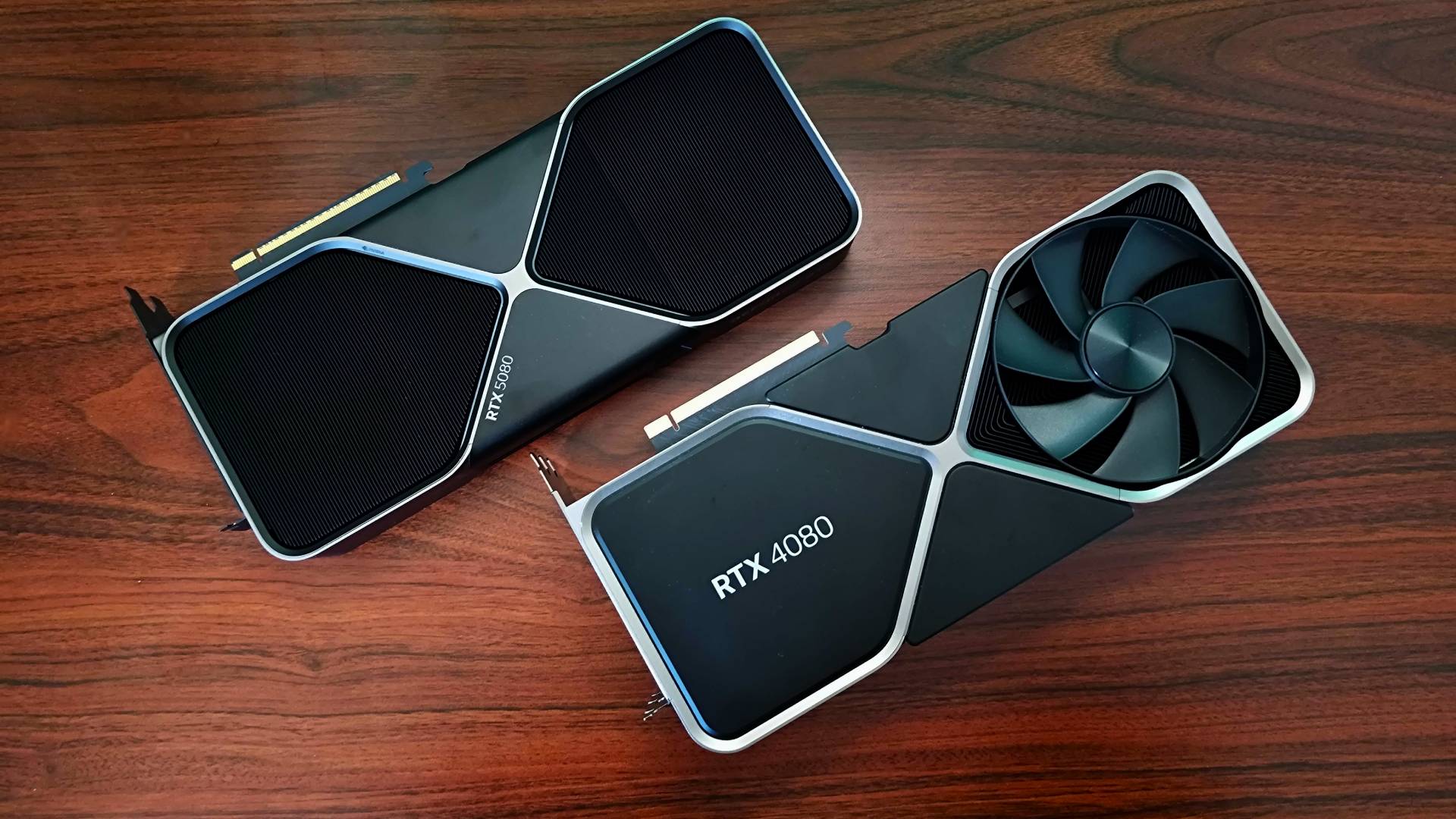

Choosing a graphics card is rarely just about the GPU name. Case clearance, memory type, cooling, power connections, and the monitor you already own can all decide whether an upgrade feels effortless or turns into a compatibility project. This Best video card for gaming roundup separates modern performance cards from older upgrade options and the capture cards that appear in searches for the same phrase.
The GIGABYTE Radeon RX 9070 XT Gaming OC is our top pick for most gaming builds. The list also includes NVIDIA RTX 5080 and RTX 5070 Ti options, a compact GT 1030, two RX 580 cards, a newer RX 9060 XT, and two external capture devices for streaming setups.
Comparison table
| # | Product | Award | GPU and memory | Cooling or format | Best for |
|---|---|---|---|---|---|
| 1 | GIGABYTE Radeon RX 9070 XT | Best overall | Radeon RX 9070 XT, 16GB GDDR6 | WINDFORCE, Hawk Fan | High-end gaming builds |
| 2 | GIGABYTE GeForce RTX 5070 Ti | Best balanced NVIDIA pick | RTX 5070 Ti, 16GB GDDR7, 256-bit | WINDFORCE | Modern NVIDIA gaming |
| 3 | GIGABYTE GeForce RTX 5080 | Best for demanding games | RTX 5080, 16GB GDDR7, 256-bit | WINDFORCE | Maximum desktop performance |
| 4 | ASUS TUF Gaming RTX 5080 | Best rugged RTX 5080 | RTX 5080, 16GB GDDR7 | 3.6-slot, triple Axial-tech fans | Heavy sustained workloads |
| 5 | GIGABYTE Radeon RX 9060 XT | Best newer midrange option | RX 9060 XT, 16GB GDDR6, 128-bit | 2-slot, WINDFORCE | Newer mainstream systems |
| 6 | Kelinx AISURIX RX 580 | Best RX 580 feature set | RX 580, 8GB GDDR5, 256-bit | Dual output pair, fan stop | Older desktop upgrades |
| 7 | MOUGOL Radeon RX 580 | Best multi-display RX 580 | RX 580, 8GB GDDR5 | Dual fan | Entry-level gaming and displays |
| 8 | msi GeForce GT 1030 | Best compact upgrade | GT 1030, 4GB DDR4, 64-bit | Single fan, low profile | Small or basic desktops |
| 9 | Rybozen HDMI Capture Card | Best capture card with loop-out | 1080p capture, 4K input | USB 3.0, HDMI loop-out | Console streaming |
| 10 | VIXLW USB-C Capture Card | Best portable capture card | 1080p at 60fps, 2K at 30Hz | USB 3.0 and USB-C | Mobile recording setups |
1. GIGABYTE Radeon RX 9070 XT: Best Overall

Pros
- Modern Radeon RX 9070 XT GPU
- 16GB GDDR6 memory
- WINDFORCE cooling with Hawk Fan
- Reinforced thermal design
- RGB lighting
Cons
- 11.34-inch card needs case clearance
- 3.92-pound weight may need support
- No detailed port specification is provided
Best for: gamers building a powerful modern desktop around a Radeon GPU.
The GIGABYTE Radeon RX 9070 XT is the easiest recommendation in this group because it combines a current high-performance Radeon GPU with a substantial 16GB of GDDR6 memory. That gives demanding games room for large textures and leaves more breathing space than the older RX 580 and GT 1030 cards here.
GIGABYTE uses its WINDFORCE cooling system with a Hawk Fan and server-grade thermal conductive gel. Those features are aimed at moving heat away from the GPU during long gaming sessions rather than merely making the card look substantial. RGB lighting adds customization, though it does not change gaming performance.
Physical planning matters. The card is 11.34 inches long, 5.2 inches wide, and 2.2 inches high, with a listed weight of 3.92 pounds. Check the available space inside the case and the strength of the expansion-slot area before installing it. PCIe 5.0 support also gives it a current interface, though compatibility still depends on the rest of the system.
Compared with the GIGABYTE Radeon RX 9060 XT, this is the more ambitious choice for demanding gaming. The RTX 5070 Ti and RTX 5080 cards bring NVIDIA's Blackwell architecture and DLSS 4, so they may suit a buyer specifically building around those features. For a Radeon-focused system, the RX 9070 XT is the one we'd keep.
Its weakness is size and weight, along with the lack of detailed output information in the supplied listing. Skip it if your case is compact or if you need a clearly documented port layout before buying. For a full-size gaming desktop, it is the strongest all-around starting point in this roundup.
2. GIGABYTE GeForce RTX 5070 Ti: Best Balanced NVIDIA Pick

Pros
- GeForce RTX 5070 Ti GPU
- 16GB GDDR7 memory
- 256-bit memory interface
- PCIe 5.0 support
- WINDFORCE cooling
Cons
- 13.46-inch length requires planning
- No detailed display output list is provided
- Heavy 3.92-pound design
Best for: players who want a current NVIDIA card without moving to the RTX 5080 tier.
The GIGABYTE GeForce RTX 5070 Ti makes sense for a buyer who wants the current NVIDIA platform without choosing the largest RTX option in this list. It uses the RTX 5070 Ti GPU, 16GB of GDDR7, and a 256-bit memory interface, so the underlying specification is built for modern games rather than legacy upgrades.
Its feature set includes NVIDIA Blackwell architecture and DLSS 4. Those are the reasons to choose this card over the Radeon options, especially if your planned games and display setup benefit from NVIDIA's rendering and upscaling tools. The card also uses PCIe 5.0, keeping the interface current for a new build.
The WINDFORCE cooling system is the main board design feature listed. The dimensions are substantial at 13.46 inches long, 5.59 inches wide, and 2.76 inches high. At 3.92 pounds, it belongs in a case with adequate room and a well-supported expansion area.
The GIGABYTE GeForce RTX 5080 offers the higher GPU tier, while the GIGABYTE Radeon RX 9070 XT is the more natural alternative for someone committed to AMD. The RTX 5070 Ti occupies the middle ground between those choices, with the same 16GB memory capacity as the RTX 5080 but a different GPU class.
The missing output details are a practical limitation. This is not the card for a cramped case or a buyer who wants a small, simple installation. It is better suited to a new or carefully planned desktop where NVIDIA features, GDDR7 memory, and PCIe 5.0 are part of the brief.
3. GIGABYTE GeForce RTX 5080: Best for Demanding Games

Pros
- GeForce RTX 5080 GPU
- Blackwell architecture and DLSS 4
- 16GB GDDR7
- 256-bit memory interface
- WINDFORCE cooling
Cons
- Very large 13.46-inch body
- 4.03-pound weight
- Port details are not supplied
Best for: demanding PC gamers choosing a high-end NVIDIA platform.
The GIGABYTE GeForce RTX 5080 is aimed squarely at demanding gaming systems. Its RTX 5080 GPU, Blackwell architecture, and DLSS 4 support put it above the RTX 5070 Ti in the product hierarchy, while 16GB of GDDR7 memory and a 256-bit interface give the card a modern memory foundation.
The WINDFORCE cooling system is important on a card of this class. The listing does not provide a full thermal test or detailed fan behavior, so we would not promise a particular noise level. It does make clear that cooling is a central part of the board design, which is what a high-performance card needs during sustained loads.
This is a physically imposing component. It measures 13.46 inches long, 5.59 inches wide, and 2.76 inches high, and weighs 4.03 pounds. Measure from the rear bracket to the front of the case, and account for neighboring expansion slots before choosing it.
The ASUS TUF Gaming RTX 5080 is the alternative for a buyer who prioritizes a more reinforced, 3.6-slot construction and three Axial-tech fans. The GIGABYTE GeForce RTX 5070 Ti is the more restrained NVIDIA option. The GIGABYTE GeForce RTX 5080 is the pick when the GPU tier itself matters most.
Its main weakness is not subtle: the card takes up considerable space and carries considerable weight. It is a poor match for compact desktops and an unnecessary complication for basic 1080p systems. For a spacious performance-oriented build, it is the strongest NVIDIA choice in this list.
4. ASUS TUF Gaming RTX 5080: Best Rugged RTX 5080

Pros
- Blackwell architecture and DLSS 4
- Military-grade components
- Protective PCB coating
- Three Axial-tech fans
- Phase-change GPU thermal pad
Cons
- 3.6-slot design is exceptionally thick
- 13.7-inch length
- Five-pound weight
Best for: high-load gaming desktops where board durability and cooling hardware are priorities.
The ASUS TUF Gaming RTX 5080 takes a different approach from the GIGABYTE GeForce RTX 5080. It uses the same RTX 5080 family and lists Blackwell architecture with DLSS 4, but ASUS puts unusual emphasis on the physical construction and thermal hardware.
Its 3.6-slot design leaves room for a massive fin array and three Axial-tech fans. That should appeal to builders planning long gaming sessions or other sustained GPU workloads. The phase-change GPU thermal pad is also intended to maintain thermal performance over time, rather than relying only on traditional paste.
The durability details are unusually specific. Military-grade components are listed alongside a protective PCB coating designed to help guard against moisture, dust, and debris. These features do not make the card immune to a poor case environment, but they do give the TUF model a more fortified character than the other RTX options here.
The trade-off is the enclosure footprint. At 13.7 inches long, 5.7 inches wide, and 2.8 inches high, this card is slightly larger than the GIGABYTE GeForce RTX 5080. It weighs five pounds, so the motherboard slot and case support deserve attention.
Choose this over the GIGABYTE model when the reinforced construction and three-fan cooler are central to the build. Choose the GIGABYTE GeForce RTX 5070 Ti if the same 16GB GDDR7 capacity is enough and the RTX 5080 class is more than you need. Skip the ASUS if your case cannot accommodate a 3.6-slot card.
5. GIGABYTE Radeon RX 9060 XT: Best Newer Midrange Option

Pros
- 16GB GDDR6 memory
- PCIe 5.0 support
- DisplayPort 2.1a and HDMI 2.1b
- Two-slot design
- Performance and Silent BIOS modes
Cons
- 128-bit memory interface
- 11.06-inch length still needs case space
- Newer platform may not suit legacy systems
Best for: modern mainstream gaming PCs that need current display connectivity.
The GIGABYTE Radeon RX 9060 XT is the most interesting middle-ground card here. It brings 16GB of GDDR6, PCIe 5.0, and current display connectivity in a two-slot design, making it easier to place than the large RTX cards.
GIGABYTE lists DisplayPort 2.1a and HDMI 2.1b through the updated Radiance Display Engine. Those interfaces matter if you are pairing the card with a newer high-refresh display. The 128-bit memory interface is narrower than the 256-bit interfaces on the RTX 5070 Ti, RTX 5080, and RX 580 options, so the memory specification should be read as a complete package rather than judged by capacity alone.
Cooling combines Hawk fans, alternate spinning, composite copper heat pipes, a copper plate, server-grade thermal gel, and screen cooling. The card also offers Performance and Silent BIOS modes. That lets the owner prioritize factory performance or a quieter operating profile without changing the physical cooler.
At 11.06 inches long, 4.65 inches wide, and 1.57 inches high, it is notably easier to fit than the RTX 5080 cards. It weighs 1.85 pounds, which makes it less demanding on the expansion slot. The reinforced metal backplate adds structure, while RGB lighting provides 16.7 million customizable color options.
The GIGABYTE Radeon RX 9070 XT is the better choice for higher-end gaming, but the RX 9060 XT is more approachable for a newer mainstream system. Its weakness is the 128-bit interface and the lack of a detailed performance claim in the listing. For a fresh AMD build with current monitors, it is a sensible place to start. Readers comparing the wider GPU field can also see how memory, cooling, and display support change between graphics cards.
6. Kelinx AISURIX RX 580: Best RX 580 Feature Set

Pros
- 8GB GDDR5 memory
- 256-bit interface
- Two DisplayPort outputs and HDMI
- Fan stop at low load
- PCI Express 3.0 x16
Cons
- Older Polaris architecture
- 185W maximum power draw
- Requires an 8-pin power connector
Best for: replacing an aging desktop GPU when modern high-end hardware is not the goal.
The Kelinx AISURIX RX 580 is an older card, but its specification remains more useful than the GT 1030 for a desktop that needs a straightforward gaming upgrade. It has 8GB of GDDR5 on a 256-bit interface, two DisplayPort outputs, and HDMI.
The card uses the Polaris 20 XTX variant with 2048 stream processors and a listed 1750 MHz memory figure. It connects through PCI Express 3.0 x16 and supports DirectX 12. Those details describe a legacy platform, not a current high-end solution, but they can still suit an older system that has the right power supply and case.
Its fan system automatically stops under low load, which can keep the desktop quieter during ordinary work. Under gaming loads, the fans resume to