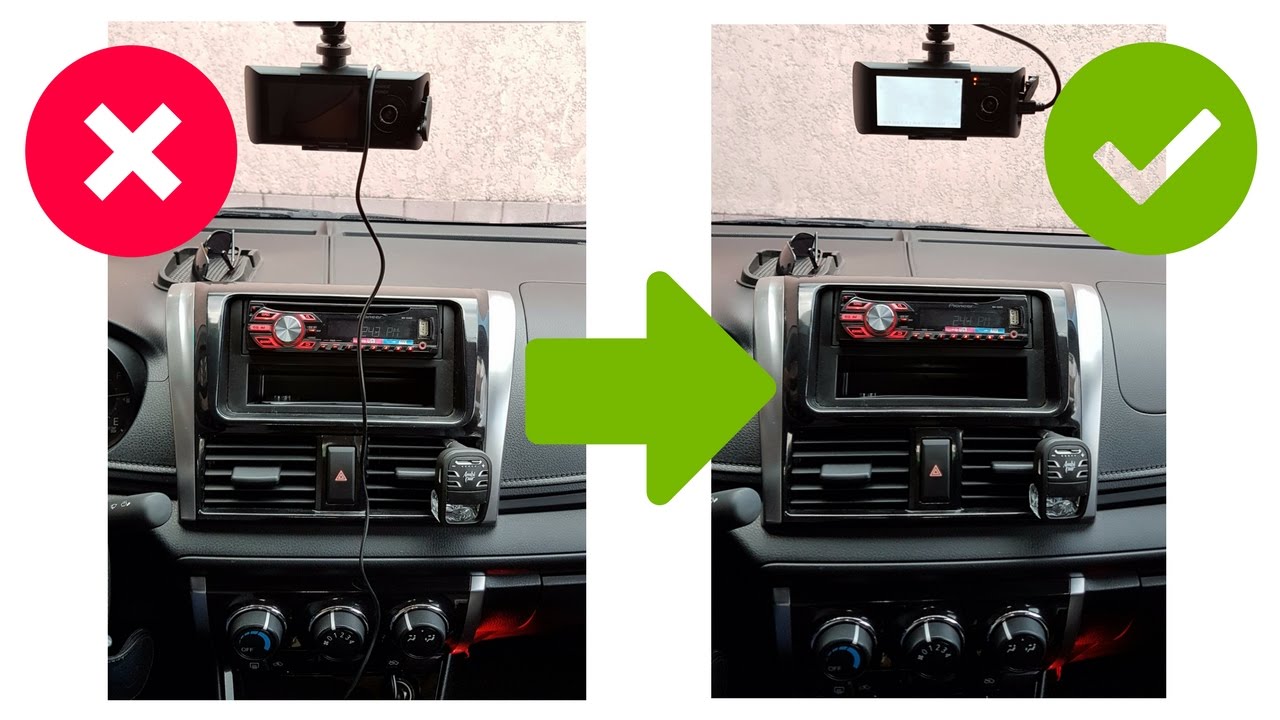

A dash cam can record useful evidence and still be annoying to live with if every clip requires pulling a memory card or reaching behind the windshield. The best dash cam without wires uses Wi-Fi and an app to move footage to your phone, although every model here still needs a power connection while it records.
The important differences are not just resolution. Camera coverage, low-light performance, parking protection, memory support, and whether a hardwire kit is included all change how useful the camera will be after installation. We ranked these eight models from simple front-facing coverage to elaborate multi-camera systems.
REDTIGER F9 is our top pick for most drivers, with sharp 4K front video, 1080P rear coverage, fast 5.8GHz Wi-Fi, GPS, and a compact design. The lineup also includes four-camera monitoring, cabin recording, small dual-camera systems, and straightforward front-only options.
Comparison table
| # | Product | Award | Resolution | Coverage | Wireless features | Best for |
|---|---|---|---|---|---|---|
| 1 | REDTIGER F9 | Best overall | 4K front, 1080P rear | 170° front | 5.8GHz Wi-Fi, GPS, app | Everyday drivers wanting balanced coverage |
| 2 | BOTSLAB G980H 4 Channel | Best coverage | 3K front, 1080P side and rear | 360° system | 5.8GHz Wi-Fi, voice control, GPS | Maximum visibility around the car |
| 3 | AVAPOW 4K | Best front-only camera | 4K front | 170° front | Wi-Fi 6, app | Discreet front recording |
| 4 | Kingslim 2K Dual | Best compact dual camera | 2K front, 1080P rear | 170° front, 150° rear | Wi-Fi, app | Small cars and simple installs |
| 5 | Kingslim O3Pro | Best cabin coverage | 2.5K front, 1080P inside and rear | 170° front, 150° inside and rear | 5GHz Wi-Fi, app | Rideshare and family vehicles |
| 6 | Meiqils Dual 1080P | Best simple setup | 1080P front and inside | 170° front | Not specified | Basic front and cabin recording |
| 7 | Kingslim 2K Dual with Card | Best ready-to-record dual camera | 2K front, 1080P rear | 170° front, 150° rear | Wi-Fi, app | Buyers who want included storage |
| 8 | BOTSLAB G300H Plus | Best voice-controlled option | 4K front, 1080P rear | 170° front, 150° rear | 5.8GHz Wi-Fi, GPS, voice control | Drivers wanting a polished dual setup |
1. REDTIGER F9: Best Overall

Pros
- Sharp 4K front recording with 1080P rear video
- Fast 5.8GHz Wi-Fi and useful phone app
- Built-in GPS with route mapping
- Compact body fits behind the mirror
- Parking collision and time-lapse modes
Cons
- MicroSD card is not included
- Hardwire kit is required for parking mode
- Rear camera is less detailed than the front
Best for: drivers who want strong front detail, rear coverage, GPS, and easy phone access in one compact system.
The REDTIGER F9 is the easiest model here to recommend because it avoids the usual compromises without becoming a complicated camera system. The front unit records in 4K while the rear camera records in 1080P, giving you the detail that matters most ahead of the car and a second view for following traffic. Its low-profile body is designed to sit behind the mirror, so it does not turn the windshield into a dashboard of screens and mounts.
The front camera combines a 170-degree lens with an F1.5 aperture and WDR processing. That wide view covers a broad section of the road, while the large aperture is intended to help retain detail in dim conditions. The rear camera is not as sharp as the front, but 1080P remains useful for documenting traffic behind you, rear impacts, and lane changes. Loop recording cycles through older unlocked clips, while the G-sensor locks footage when it detects a collision.
The wireless experience is one of the F9's strongest points. Its 5.8GHz Wi-Fi connection works with the REDTIGER app for live viewing, playback, settings, and video downloads, so you do not have to remove the camera or its card every time you need a clip. Built-in GPS records speed, time, latitude, and longitude, and the app can show a route map. Drivers who care about location evidence will get more from this than from the otherwise capable Kingslim 2K Dual.
There is one practical catch: this is not literally a cable-free camera. It needs power while driving, and its 24-hour parking modes require a hardwire kit. The MicroSD card is also not included, and the front 4K recording will consume storage quickly. Those are manageable omissions, but they matter if you want to install the camera and forget about accessories.
For most drivers, the F9 is the best dash cam without wires because its app, GPS, image quality, and dual-camera coverage work together rather than competing for attention. Choose it over the AVAPOW 4K if rear coverage matters, and choose it over the BOTSLAB G300H Plus if you prefer a simpler system with fewer extra controls.
2. BOTSLAB G980H 4 Channel: Best Coverage

Pros
- Four cameras monitor front, rear, and both sides
- 3K front recording with three 1080P views
- 3.18-inch touchscreen and voice control
- Hardwire kit and 128GB card included
- Sentry, time-lapse, and collision parking modes
Cons
- More involved installation than a dual-camera system
- Side cameras need careful positioning
- Larger main unit is less discreet
Best for: drivers who want the broadest possible view around the vehicle, including both side angles.
The BOTSLAB G980H 4 Channel is a different proposition from the rest of this list. Instead of concentrating detail into one front camera and one rear camera, it uses four cameras at once: a 170-degree front view, two 120-degree side views, and a 150-degree rear view. The result is a system designed to document what happens beside the car as well as in front of and behind it.
The front camera records in 3K, while the side and rear cameras record in 1080P. That split makes sense for the coverage pattern. The front view gets the highest resolution for signs, plates, and road details, while the additional cameras fill in blind spots and provide context around a collision. The side cameras use detachable magnetic mounts, and the setup can be used as a three-channel or dual-camera arrangement if four views are not needed all the time.
This is also the most interactive camera here. A 3.18-inch touchscreen provides a direct way to adjust settings and review a four-way split screen. Voice commands let you control the camera without reaching toward the windshield. Built-in GPS logs location, speed, and route, with the app and computer software offering route overlays. Its 5.8GHz Wi-Fi helps transfer clips without taking out the included 128GB card.
The parking features are unusually complete. The included hardwire kit supports time-lapse recording at one frame per second, a Sentry mode that records one-minute clips when motion appears within 15 feet, and collision detection that locks impact footage. The supercapacitor is specified to operate from minus 20 to 70 degrees Celsius, which is a useful design choice for a camera that may remain connected in a parked vehicle.
The trade-off is installation complexity. Four camera positions mean more routing, more decisions about placement, and more opportunity for a side camera to be blocked or poorly aimed. The G980H is also physically larger than the compact REDTIGER F9 and will appeal less to drivers who want a nearly invisible setup. It is the right pick when coverage matters more than discretion, especially for street parking, larger vehicles, or drivers who want a record of activity along the sides.
3. AVAPOW 4K: Best Front-Only Camera
Pros
- 3840 by 2160 front recording at 30 frames per second
- Wi-Fi 6 connection and app control
- Hardwire kit included for parking protection
- Compact and discreet design
- 64GB card included
Cons
- No rear or cabin camera
- Front-only coverage leaves the back of the car undocumented
- Parking monitoring depends on a wired installation
Best for: drivers who want a tiny front camera with high-resolution video and app access.
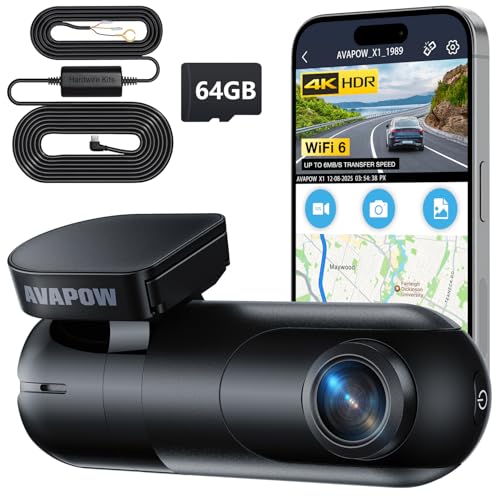
The AVAPOW 4K keeps the job simple. It is a front-facing camera with a compact body, a 170-degree lens, and genuine 3840 by 2160 recording at 30 frames per second. That makes it a sensible choice for a driver who cares most about identifying road signs, plates, and incidents ahead but does not want to route a rear camera cable through the cabin.
Its Wi-Fi 6 connection is the standout convenience feature. The camera supports phone control through an app, with stated transfer speeds up to 6MB/s and no account or personal information required. That makes checking footage less awkward than on a basic camera with only a small screen. Firmware updates are also available through the app, giving the camera a path for software maintenance.
The 170-degree front lens gives a broad view, and the camera combines WDR and HDR features for challenging light. The listing also specifies enhanced night vision, but the data does not provide an aperture or sensor size, so expectations should remain grounded. It is a high-resolution front recorder, not a replacement for a dedicated low-light imaging system.
AVAPOW includes a hardwire kit, a 64GB card, and parking modes that use time-lapse, motion detection, and collision detection. That is a more complete starting package than the REDTIGER F9, which needs a card and a separate hardwire kit. Loop recording overwrites older footage, while the G-sensor protects clips associated with an impact.
The weakness is obvious and important: there is no rear view. A rear-end incident, tailgating dispute, or event behind the vehicle will not be captured by a second camera. Choose the AVAPOW 4K over the Kingslim 2K Dual when a cleaner front-only installation and sharper forward footage matter more than full vehicle coverage. It is a practical option for commuters who want the best dash cam without wires at the windshield and are comfortable with a single viewpoint.
4. Kingslim 2K Dual: Best Compact Dual Camera
Pros
- 2K front and 1080P rear recording
- 170-degree front and 150-degree rear views
- Small 1.5-inch screen
- Wi-Fi app avoids removing the camera
- G-sensor and time-lapse parking options
Cons
- Hardwire kit is needed for continuous parking recording
- No memory card is listed with this version
- Less front detail than the 4K picks
Best for: drivers who want front and rear coverage in a small, low-distraction package.
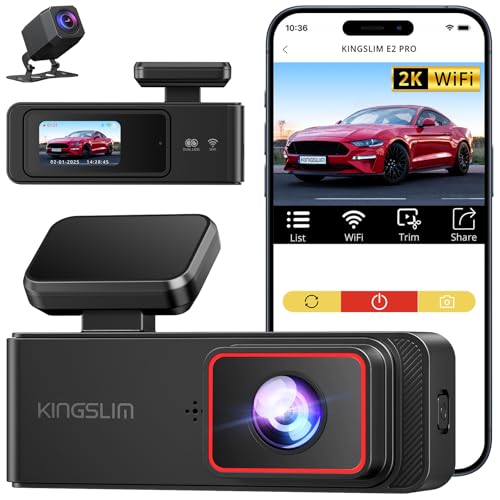
The Kingslim 2K Dual is built around discretion. Its 1.5-inch screen is large enough for a quick preview but small enough to keep the camera from dominating the windshield. The front and rear units are intended to stay out of the way, while Wi-Fi lets you review files and adjust settings from a phone instead of manipulating the camera in place.
The front camera records at 2K through a 170-degree lens, and the waterproof rear camera records at 1080P through a 150-degree lens. That resolution combination is sensible for general driving evidence. The front view gets enough extra detail to distinguish more road information than a 1080P camera, while the rear view provides useful context without requiring the complexity of a four-camera arrangement.
Parking protection comes in two forms. G-sensor monitoring can trigger recording after a bump or vibration, while time-lapse mode compresses a longer parked period into a smaller amount of footage. A hardwire kit is required for continuous 24-hour parking recording, so the feature is not available from a simple switched power connection alone. Emergency files are stored separately and protected from loop recording.
The design also avoids a lithium battery, according to the product details. That is intended to reduce concerns about battery swelling and overheating in hot weather. It uses a power connection for operation, so the absence of a battery does not make it cable-free, but it can be a reassuring design choice for a camera that spends time behind a windshield.
The REDTIGER F9 records more detailed front footage and adds GPS, while the Kingslim 2K Dual is smaller and less demanding. The Meiqils Dual 1080P is simpler, but it lacks the Kingslim's app connection and higher front resolution. Skip this model if you want a card included or need the strongest possible night detail. Pick it when the appeal of the best dash cam without wires is a tidy dual-camera system that stays mostly out of sight.
5. Kingslim O3Pro: Best Cabin Coverage

Pros
- Three-channel front, cabin, and rear recording
- 2.5K front video with 1080P interior and rear views
- F1.4 aperture and infrared cabin recording
- 5GHz Wi-Fi app control
- 64GB card included
Cons
- Hardwire kit is not included
- Three cameras create more files to manage
- Cabin coverage is unnecessary for some private vehicles
Best for: rideshare drivers, families, and anyone who needs a clear record inside the vehicle.
The Kingslim O3Pro makes the cabin a first-class recording zone. It records the road ahead, the interior, and the road behind at the same time. That is especially useful for rideshare work, passenger disputes, and vehicles where an incident inside the cabin matters as much as one outside.
The front channel records at 2.5K through a 170-degree lens. The interior and rear channels record at 1080P, with 150-degree coverage specified for those views. A 64GB MicroSD card is included, and the system supports cards up to 256GB. Loop recording manages ordinary footage, while the three-axis G-sensor locks important clips after a collision.
Night performance gets more attention here than on the smaller Kingslim dual models. The front camera has an F1.4 aperture and a six-layer glass lens, with HDR and WDR processing. Automatic infrared activates for cabin scenes in complete darkness. That combination should make the interior easier to interpret at night, although cabin lighting and window glare will still affect what the camera sees.
The wireless workflow uses 5GHz Wi-Fi and the Kingslim app. You can export videos and photos without removing the card, which is particularly useful when you need to separate an interior clip from road footage. For continuous parking monitoring, the camera supports one-frame-per-second time-lapse through a hardwire kit, but that kit is not included.
Compared with the Kingslim 2K Dual, the O3Pro gives up some simplicity in exchange for cabin coverage and stronger stated low-light hardware. The BOTSLAB G980H sees more of the vehicle's exterior, but it is a more involved four-camera system. The O3Pro is the better fit for a private-hire driver or family vehicle where what happens inside the car is part of the story.
6. Meiqils Dual 1080P: Best Simple Setup

Pros
- Records front and interior views together
- 1080P video on a straightforward dual-camera design
- 2-inch IPS screen
- G-sensor locks impact footage
- Loop recording and night vision
Cons
- No rear-facing exterior camera
- No wireless app features are specified
- Memory card is not included
Best for: drivers who want basic front and cabin recording with direct screen controls.
The Meiqils Dual 1080P is the least complicated camera in this group. It records the road ahead and the inside of the car at the same time, and its 2-inch IPS screen provides a direct way to see what the camera is doing. The installation is described as a windshield mount with power from the car's cigarette lighter socket, which suits drivers who do not want to plan a permanent installation.
Both views record at 1080P. That is enough for a basic record of traffic, incidents, and cabin activity, but it gives the Meiqils less ability to resolve small details than the 2K and 4K options above it. The front lens is 170 degrees, providing broad coverage across the road. The listing does not specify a separate rear exterior camera, so this model should not be confused with a front and rear system.
Its core recording functions are familiar and useful. Loop recording overwrites older footage when the card fills, while the G-sensor locks clips after a sudden shake or collision. Night vision is included, and the camera starts recording when the car starts. The product details do not specify Wi-Fi, an app, GPS, a hardwire kit, or a memory card, so buyers should not expect those features from the supplied information.
That lack of wireless control is the central limitation for this roundup. The best dash cam without wires should make footage easy to retrieve, and this camera appears to rely on its screen and memory card rather than phone transfers. It may still suit someone who wants a basic recorder and does not often need to share clips, but it is less convenient after an incident than the REDTIGER F9 or AVAPOW 4K.
The Meiqils Dual 1080P makes sense for a vehicle that needs simple front and cabin documentation without extra software features. Skip it if app access, rear exterior coverage, or detailed plate capture is important. For a broader look at alternatives that focus on the rear view, how a second camera helps document what happens behind your car is a useful related consideration.
7. Kingslim 2K Dual with Card: Best Ready-to-Record Dual Camera

Pros
- 2K front and 1080P rear recording
- 64GB card included
- 170-degree front and 150-degree rear coverage
- Wi-Fi app for file access and settings
- Battery-free design for hot-weather use
Cons
- Hardwire kit is required for continuous parking mode
- Small 1.5-inch display limits on-camera review
- No GPS is specified
Best for: drivers who want a compact dual camera that includes storage from the start.
The Kingslim 2K Dual with Card is closely related to the Kingslim 2K Dual, but its included 64GB card changes the setup experience. You can mount the camera, connect the front and rear units, and begin recording without sourcing storage separately. That makes it a more convenient version for drivers who want the essential parts together.
The video arrangement remains 2K in front and 1080P at the rear. The front camera's 170-degree view covers the road, while the waterproof rear camera uses a 150-degree view to document traffic behind the vehicle. The 1.5-inch screen is intended for preview rather than extended playback, with the Wi-Fi connection handling more comfortable review and downloads on a phone.
Its parking options match the other compact Kingslim dual camera. G-sensor monitoring can respond to an impact, and time-lapse mode can record a long parked period in a compressed format. A hardwire kit is needed for 24-hour recording, so the included card does not turn this into a fully self-contained parking system. Emergency clips are protected from being overwritten by normal loop recording.
The no-lithium-battery design is another stated feature. That can help avoid the swelling and heat concerns associated with some battery-powered dash cams, particularly when the camera remains in a hot cabin. It still needs a power connection for normal operation, and the listing does not specify GPS, so it cannot provide the route information available from the REDTIGER F9 or BOTSLAB models.
Between this camera and the Kingslim 2K Dual, the included card is the meaningful difference. The newer-looking Kingslim 2K Dual is otherwise a close match, while the AVAPOW 4K is a better choice for sharper front footage but gives up the rear view. Choose this model if a small, app-connected dual system with storage in the box is the priority.
8. BOTSLAB G300H Plus: Best Voice-Controlled Option

Pros
- 4K front and 1080P rear video
- STARVIS 2 sensor and wide dual-camera views
- Voice commands for hands-free control
- GPS, 5.8GHz Wi-Fi, and app access
- Hardwire kit and 64GB card included
Cons
- Voice control is not essential for every driver
- Rear resolution is lower than the front
- Hardwire installation still takes planning
Best for: drivers who want a dual camera with voice commands, GPS, and a complete parking setup.
The BOTSLAB G300H Plus is a polished dual-camera alternative to the REDTIGER F9. It records 4K ahead and 1080P behind, with a compact 2-inch screen that supports live view and quick playback without requiring a phone. The main body is designed to sit behind the rear-view mirror, keeping the screen from becoming a constant distraction.
Its front camera uses a STARVIS 2 sensor, a 170-degree lens, and an F1.5 aperture. The rear camera uses a 150-degree lens and an F2.0 aperture. Those apertures describe how much light the lenses are designed to gather, and the brighter front specification should help preserve more detail after dark. The wide rear view also gives better context than a front-only camera when an incident develops behind the car.
The G300H Plus adds voice commands such as “take photo” and “Video Start.” That can be useful when you need to save a moment without reaching for the screen, although it is a feature some drivers will rarely use. Its 5.8GHz Wi-Fi connection supports app transfers, and built-in GPS records speed, route, and location for map-based evidence.
This is one of the more complete packages in the group. A 64GB card is included, and the hardwire kit supports 24-hour parking monitoring. The G-sensor locks footage after a bump, while time-lapse mode compresses parked coverage to conserve storage. An 18-month warranty is available after activation according to the product details, which adds some reassurance for a camera intended to stay in the car.
The REDTIGER F9 remains easier to recommend as the general-purpose pick because it has a similarly useful feature set without leaning so heavily on voice control. The BOTSLAB G300H Plus is the better match for someone who wants the hardwire kit and storage included, plus a more explicit focus on night recording. It earns a place among the best dash cam without wires options for drivers who want a complete front and rear system with minimal button pressing.
How to choose the best dash cam without wires
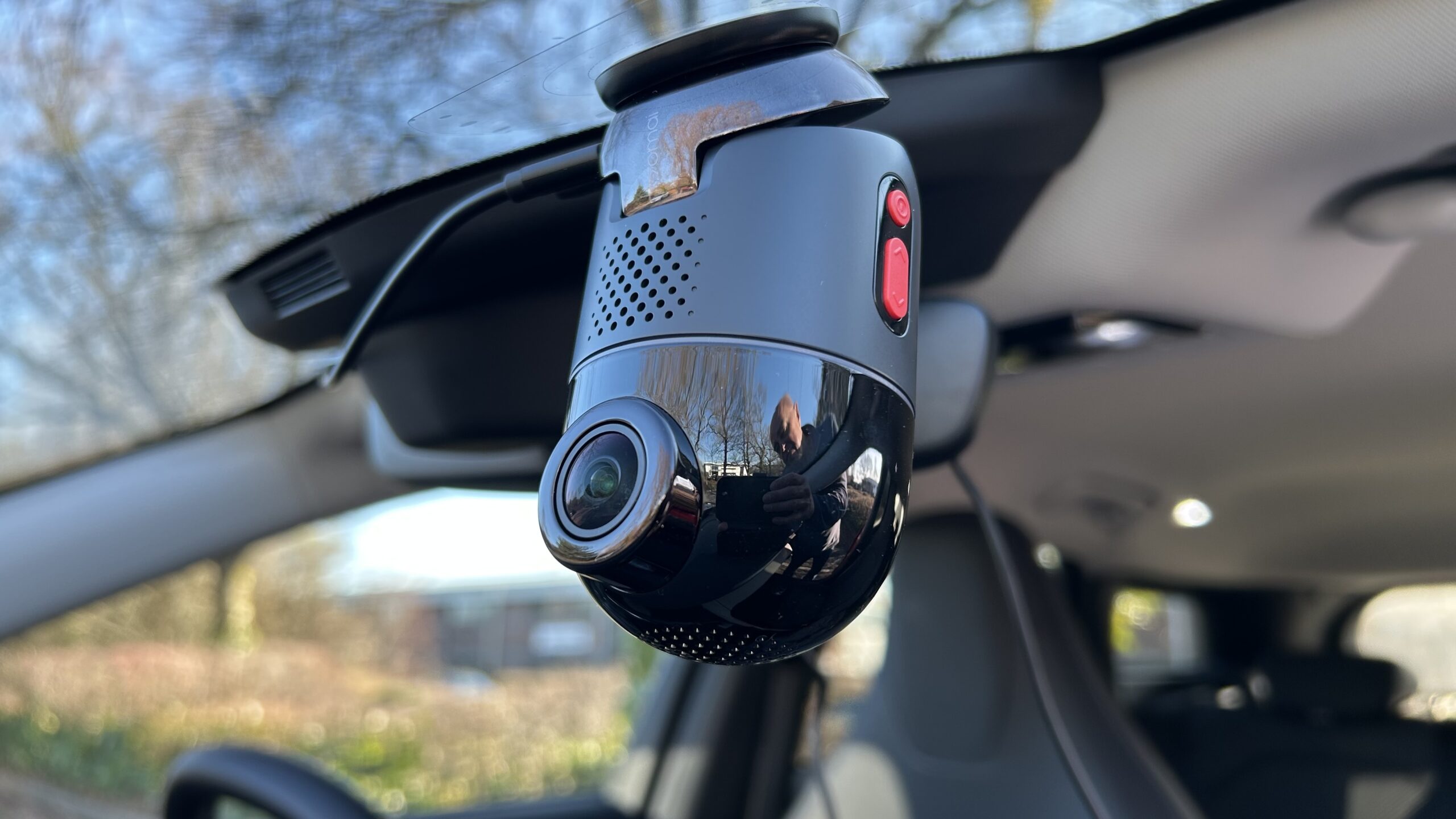
A wireless dash cam reduces the hassle of retrieving video, but the camera still needs power and careful installation. Focus on the imaging arrangement first, then check the app, parking hardware, storage, and physical design.
Front and rear coverage
A front camera records the most important view for ordinary driving, but a rear camera adds evidence for rear-end collisions, tailgating, and traffic approaching from behind. A 170-degree front lens is common in this group, while rear cameras range from 1080P recording to wide 150-degree views.
Four-channel systems extend coverage to both sides of the car, but they take more effort to position and route. Cabin cameras are more useful for rideshare drivers and family vehicles than for someone who only wants exterior road evidence.
Resolution and low-light hardware
4K front recording can preserve more road detail than 1080P, especially when a plate or sign is relatively small in the frame. It also consumes more storage, so resolution should be considered alongside the card capacity and loop-recording behavior.
Aperture, lens construction, HDR, WDR, infrared lighting, and sensor type all influence night footage. The Kingslim O3Pro specifies an F1.4 aperture and automatic infrared for cabin recording, while the BOTSLAB G300H Plus lists STARVIS 2 and an F1.5 front aperture. Those details are more informative than resolution alone.
A sharp front camera cannot document an event that happens behind the car, so coverage should come before chasing the largest resolution number.
Wi-Fi and app controls
Wi-Fi is what makes these cameras useful without repeatedly removing them from the windshield. A phone app should let you view clips, download files, change settings, and ideally update the camera.
The REDTIGER F9, BOTSLAB models, AVAPOW 4K, and Kingslim cameras specify app access. The Meiqils Dual 1080P does not specify wireless control, so it is a poorer fit for anyone who wants quick phone transfers. 5GHz Wi-Fi appears on several models, while AVAPOW specifies Wi-Fi 6.
Parking monitoring and power
Parking mode needs power after the ignition is off. A hardwire kit provides that connection and may support collision-triggered recording, motion detection, or time-lapse capture. Check whether the kit is included before planning the installation.
The BOTSLAB G980H, AVAPOW 4K, and BOTSLAB G300H Plus include hardwire kits. The REDTIGER F9 and Kingslim models require one for their continuous parking modes. G-sensor recording is useful for impacts, while time-lapse captures a longer parked period with less storage.
Storage and file protection
Loop recording overwrites older unlocked clips when the card fills. G-sensors should lock footage after a collision so an important event is not erased by normal recording. A larger card helps when using 4K or multiple channels, but it does not replace regular card maintenance.
The AVAPOW 4K includes a 64GB card, the Kingslim O3Pro includes 64GB, the BOTSLAB G980H includes 128GB, and the BOTSLAB G300H Plus includes 64GB. The REDTIGER F9 listing says a card is not included and supports up to 256GB.
Mounting and screen size
A small camera behind the mirror is less distracting and less likely to obstruct your view. The Kingslim dual models use 1.5-inch screens, the BOTSLAB G300H Plus uses a 2-inch screen, and the BOTSLAB G980H has a much larger 3.18-inch touchscreen.
A larger screen makes local playback and adjustments easier, but it also makes the camera more noticeable. If the app is good, a small screen is often enough for alignment and status checks.
Frequently asked questions
Do these dash cams work without any wires?
No. The “without wires” benefit refers to wireless phone connectivity and easier file transfers, not completely cable-free operation. Every camera needs power while recording, and rear cameras also need a cable connecting them to the main unit.
Do I need a hardwire kit for parking mode?
You need a hardwire kit for continuous parking monitoring after the car is turned off. Some models can detect a collision when connected to switched power, but that does not provide the same always-on coverage. The BOTSLAB G980H, AVAPOW 4K, and BOTSLAB G300H Plus include hardwire kits.
Is 4K better than 2K for a dash cam?
4K can show more fine detail in the forward view, which may help with signs and plates. It also creates larger files and does not guarantee clear night footage. A 2K camera with a strong lens and good HDR or WDR can be more useful than a poorly tuned 4K camera.
Which camera records inside the car?
The BOTSLAB G980H includes side cameras and a rear view, while the Kingslim O3Pro records the front, cabin, and rear. The Meiqils Dual 1080P records the front and interior. The other dual-camera models listed here focus on exterior front and rear coverage.
Do dash cams record when the car is parked?
They can, if the camera has a parking mode and receives power after the ignition is off. Available modes differ, with collision detection and time-lapse appearing across several models. Confirm the hardwire requirement before relying on parking protection.
How do I transfer dash cam footage to my phone?
Connect your phone to the camera's Wi-Fi network, open the relevant app, and browse or download clips. The REDTIGER F9 and BOTSLAB models specify 5.8GHz Wi-Fi, while AVAPOW lists Wi-Fi 6 and the Kingslim cameras use app-based Wi-Fi connections.
The bottom line
The REDTIGER F9 is the best dash cam without wires for most drivers because it combines 4K front video, 1080P rear coverage, GPS, fast Wi-Fi, and a compact body without the complexity of a four-camera system. It is the one we'd keep for ordinary commuting, road trips, and documenting incidents in front of and behind the car.
Choose the BOTSLAB G980H 4 Channel if side coverage and parking surveillance matter more than a discreet installation. For a simpler front-only camera, the AVAPOW 4K has strong resolution, Wi-Fi 6, a compact design, and an included hardwire kit.
If you are undecided, choose the REDTIGER F9 unless you specifically need cabin recording, four-way coverage, or voice control.
As an Amazon Associate we earn from qualifying purchases.