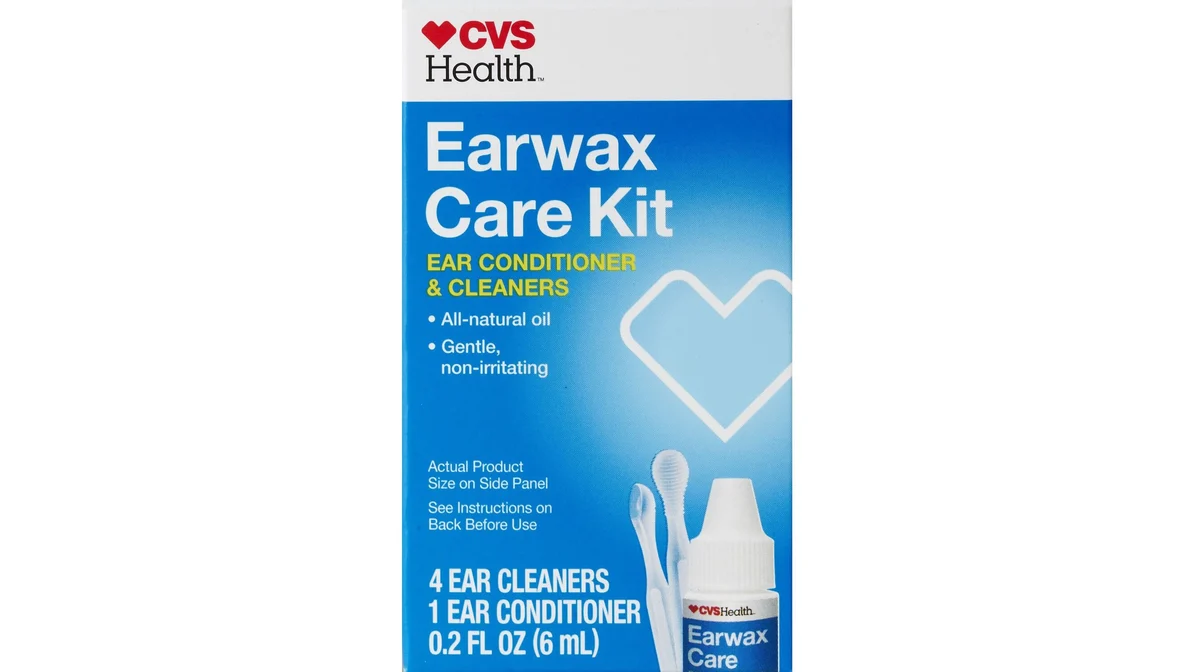

A blocked ear is distracting, uncomfortable, and surprisingly easy to make worse with a cotton swab. The right Best ear wax removal kit should soften or flush wax without encouraging you to push anything deeper into the canal.
We compared simple drops, bulb syringes, manual washers, camera tools, and electric irrigators. The key differences are not just power. Tip design, water temperature control, drainage, visibility, and how much cleanup the kit creates matter just as much.
Debrox Ear Wax Removal Kit is our top pick for its sensible combination of 6.5% carbamide peroxide drops and a soft bulb syringe. The rest of the lineup covers everything from compact drop-only care to temperature-controlled electric flushing.
Comparison table
| # | Product | Award | Method | Key feature | Best for |
|---|---|---|---|---|---|
| 1 | Debrox Ear Wax Removal Kit | Best overall | Drops and bulb syringe | 6.5% carbamide peroxide | Straightforward home care |
| 2 | WaxBGone SoftSpray Kit | Best complete irrigation kit | Manual spray irrigation | Seven-stream SoftSpray tip | Families wanting a full setup |
| 3 | KAUGIC Self-Collecting Electric Flush Kit | Best temperature control | Electric irrigation | 95°F to 102°F indicator | Users who want guided flushing |
| 4 | KAUGIC Camera Ear Cleaner | Best for visibility | Manual washer and camera | Mobile-connected camera | Seeing buildup before cleaning |
| 5 | Lebbtl Four-Mode Ear Cleaner | Best for pressure variety | Electric irrigation | Four modes and LED lights | Users who want adjustable flow |
| 6 | Debrox Earwax Removal Drops | Best drop-only option | Softening drops | Microfoaming formula | Compact, uncomplicated care |
| 7 | ENERKIDI Temperature-Controlled Kit | Best electric design | Electric irrigation | One-piece tank and IPX7 | Easier drainage and cleanup |
| 8 | Tilcare Ear Irrigation Kit | Best traditional kit | Spray bottle and syringe | 30 disposable tips | A broad manual accessory set |
| 9 | Gywwn Three-Mode Ear Cleaner | Best compact electric alternative | Electric irrigation | Three pressure modes | One-hand powered cleaning |
| 10 | LIPO Earwax Removal Kit | Best peroxide-free routine care | Drops and bulb syringe | Gluconolactone formula | Regular maintenance |
1. Debrox Ear Wax Removal Kit: Best Overall

Pros
- Combines wax-softening drops with a bulb syringe
- Uses 6.5% carbamide peroxide
- Soft rubber syringe is simple to control
- Compact kit with no charging or setup
Cons
- Intended for adults and children over 12
- No camera or adjustable electric pressure
- Requires a separate water source for flushing
Best for: someone who wants a familiar, uncomplicated earwax routine.
The Debrox Ear Wax Removal Kit gets the basics right. It does not turn ear care into a gadget project. You apply the drops, let the microfoaming action soften and loosen excess wax, then use the soft rubber bulb syringe to flush with water. That is a much more approachable process than starting with a forceful stream or a rigid tool.
The active ingredient is 6.5% carbamide peroxide. In practical terms, the drops are there to loosen wax before the rinse, which can make the flushing step less aggressive. The instructions call for 5 to 10 drops in each ear. The included 0.5 fl oz bottle is small, but that keeps the kit easy to store and avoids the bulk of an electric washer.
The bulb syringe gives you direct control over the rinse. You squeeze it yourself, so the amount of water and speed of the flush depend on your hand. That is less repeatable than the four pressure modes on the KAUGIC Self-Collecting Electric Flush Kit, but it also means fewer controls to understand and no battery to charge. Compared with the drop-only Debrox Earwax Removal Drops, this kit is more complete because it includes the post-softening rinse.
The limitation is age guidance and simplicity. Debrox lists this formula as suitable for adults and children over 12, with younger children advised to consult a doctor. There is no view through a camera, no temperature indicator, and no collection basin. Anyone with a known eardrum problem, ear tubes, ear pain, drainage, or uncertain symptoms should not treat this as a substitute for medical advice.
For ordinary wax buildup and readers who prefer a conservative, familiar process, this is the one we would keep. It is the Best ear wax removal kit here for avoiding unnecessary complexity while still including both the softening and rinsing stages.
2. WaxBGone SoftSpray Kit: Best Complete Irrigation Kit

Pros
- Seven-stream SoftSpray tip is designed for gentler coverage
- Includes basin, drops, otoscope, and spray bottle
- Comes with 10 reusable SoftSpray tips
- High-output sprayer provides more water per spray
Cons
- Manual spraying takes more coordination
- More pieces to clean and store
- Does not list an electric pressure control system
Best for: households that want a complete manual irrigation setup rather than drops alone.
The WaxBGone SoftSpray Kit feels like a more deliberate home irrigation station. Its 11 oz spray bottle, ear basin, ear drops, otoscope, and reusable tips cover the stages that simpler kits leave to improvisation. The basin is particularly useful because catching rinse water is far less awkward than trying to position a towel and a sink at the same time.
Its defining part is the SoftSpray tip. WaxBGone says the tip produces seven gentle streams and is designed to prevent over-insertion. That pattern spreads the water rather than sending one concentrated jet straight ahead. The sprayer is also described as four times higher output than a standard spray, which means more water volume per squeeze, not a promise that every ear needs more pressure.
This approach has a different personality from the Debrox Ear Wax Removal Kit. Debrox is the easier recommendation for a minimal routine, while WaxBGone makes more sense when irrigation is the main event. The included otoscope adds a way to look at the ear before and after cleaning, although a camera-based view such as the one on the KAUGIC Camera Ear Cleaner is more directly integrated with the cleaning tool.
The kit is not maintenance-free. Ten reusable tips mean the user has to rinse and store them properly, and the larger collection of components takes more shelf space. Manual spraying also requires a steady hand and a sensible starting pressure. The presence of an otoscope does not make forceful cleaning safe if there is pain, drainage, a history of ear surgery, or a possible eardrum injury.
WaxBGone is a strong fit for someone who wants the pieces of a full irrigation routine in one box. It is more capable than a bottle of drops, but its usefulness depends on taking the setup and cleaning steps seriously.
3. KAUGIC Self-Collecting Electric Flush Kit: Best Temperature Control

Pros
- Green temperature indicator signals the usable range
- Four water pressure settings
- One-piece tank dispenses and collects water
- IPX7 waterproof design
Cons
- Electric system is more involved than a bulb syringe
- Requires careful tank installation
- No camera for viewing the ear canal
Best for: users who want adjustable powered flushing with a visible temperature check.
The KAUGIC Self-Collecting Electric Flush Kit addresses two common annoyances in powered ear irrigators: guessing the pressure and guessing whether the water feels appropriately warm. Its temperature indicator is the standout feature. The product specifies a usable range of 95°F to 102°F, with a green light indicating the target and a red light preventing use when the water is too hot.
That matters because water temperature is not a cosmetic detail during ear irrigation. Water that is too cold can feel unpleasant, while water that is too hot is a safety concern. A visual indicator cannot replace sensible preparation, but it gives this kit a clearer starting point than the manual systems in the roundup.
There are four water pressure settings, allowing a user to begin gently and move up only if appropriate. The triple-jet design is intended to spread the flow. The one-piece tank combines dispensing and collecting water, so the unit handles both sides of the process rather than requiring a separate basin. Its IPX7 waterproofing also means the unit can be rinsed under a tap and is described as safe for shower use.
Against the ENERKIDI Temperature-Controlled Kit, KAUGIC offers a similar temperature-led concept, but the designs are not identical. ENERKIDI separates clean and wastewater in an integrated tank, while KAUGIC describes a seamless tank that dispenses and collects simultaneously. Neither has the visual inspection of the KAUGIC Camera Ear Cleaner, so buyers who need to see buildup should look there instead.
The trade-off is complexity. Tank alignment and the temperature light add steps before use, and anyone seeking the shortest possible routine will find the Debrox kit easier. Skip powered irrigation entirely if ear symptoms suggest an underlying problem rather than routine wax. For people who want controlled pressure and a temperature signal, though, KAUGIC is the most reassuring electric design in this group.
4. KAUGIC Camera Ear Cleaner: Best for Visibility

Pros
- Camera connects to mobile devices
- Manual washer needs no electricity
- Includes a built-in water tank for collection
- Seven-piece kit with replacement tips
Cons
- Camera setup adds another step
- Manual pressure is less consistent than electric modes
- Visual access does not remove the need for caution
Best for: people who want to inspect wax buildup before and during a manual rinse.
The KAUGIC Camera Ear Cleaner takes a different route from almost every other product here. Instead of relying only on how the ear feels, it pairs a manual washer with a high-resolution camera that connects to mobile devices. That makes it easier to distinguish between visible wax buildup and the temptation to keep cleaning simply because the ear still feels unusual.
The washer uses one-hand operation and a steady pressurized flow, according to the product details. It needs no electricity, which removes charging from the routine. A built-in water tank collects runoff, and the kit includes three replacement tips. The manufacturer also describes the system as lightweight with an ergonomic grip, useful when the other hand is occupied with a phone or positioning.
The camera is the reason to choose this over the WaxBGone SoftSpray Kit. WaxBGone includes an otoscope, but the KAUGIC camera is built into the ear-cleaning concept and lets the user monitor progress on a mobile device. On the other hand, KAUGIC Self-Collecting Electric Flush Kit has four powered pressure levels and temperature control, so it is the better fit when predictable water delivery matters more than inspection.
Camera tools can create false confidence. A clear image does not confirm that the eardrum is healthy, and the camera itself should not be pushed deeply into the canal. The manual washer also offers less repeatable force than an electric unit. Users who dislike pairing accessories with a phone may find the setup more distracting than helpful.
This is the most interesting choice for a careful observer who wants information before reaching for a rinse. It suits people comfortable with a mobile-connected tool, but it is not the right answer for unexplained pain, discharge, sudden hearing changes, or anyone who might treat the camera image as a diagnosis.
5. Lebbtl Four-Mode Ear Cleaner: Best for Pressure Variety

Pros
- Normal, Soft, Pulse, and Power modes
- Five LED lights illuminate the canal
- Includes 500 ml water bottle and basin
- Two spray patterns for different cleaning approaches
Cons
- No stated temperature sensor
- Larger water bottle needs a suitable setup
- LEDs are not a substitute for medical inspection
Best for: users who want several flow settings and a generous water supply.
The Lebbtl Four-Mode Ear Cleaner is built around adjustment. Its Normal, Soft, Pulse, and Power modes give the user more ways to start gently and change the flow. The index-finger control starts and stops the water, which is a practical detail when one hand is holding the irrigator and the other is managing position.
The kit includes a 500 ml water bottle, a basin, a cleaning cloth, and a Type-C charging cable. Its gravity ball straw is designed to move with the liquid, allowing the bottle to work from different angles. That is more flexible than an irrigator that has to remain upright, although it also means the bottle and tubing become part of the setup.
The two tip designs have distinct jobs. The five-hole tip divides water into five shower-like streams for a gentler spread, while the single-hole tip concentrates the flow. The kit includes 10 single-hole tips and five five-hole tips. Five LED lights illuminate the ear canal, but they provide lighting rather than the mobile inspection offered by the KAUGIC Camera Ear Cleaner.
Lebbtl does not list a water-temperature sensor, unlike the KAUGIC Self-Collecting Electric Flush Kit and ENERKIDI Temperature-Controlled Kit. The instructions call for water close to body temperature, so the user must handle that part. The 500 ml bottle is useful for repeated rinsing, but it also creates more equipment to fill, position, and clean than the Debrox bulb syringe.
Choose this model when pressure range and tip choice are the priority. It is a more configurable irrigator than a simple manual kit, but users who want temperature guidance or a neatly integrated waste tank should move higher in the ranking.
6. Debrox Earwax Removal Drops: Best Drop-Only Option

Pros
- Microfoaming action loosens excess wax
- Contains 6.5% carbamide peroxide
- Compact bottle is easy to store
- Simple routine with no device or charging
Cons
- Does not include a syringe
- No basin, camera, or flushing control
- Intended for adults and children over 12
Best for: someone who wants a compact wax-softening product without an irrigation device.
The Debrox Earwax Removal Drops are the simplest product in the roundup. There is one 0.5 fl oz bottle and no hardware to assemble, charge, or rinse. The formula uses microfoaming action to soften and loosen excess wax so it can drain more easily.
Like the matching kit at the top of this list, these drops contain 6.5% carbamide peroxide. The directions describe using 5 to 10 drops in each ear. That makes the bottle useful as a first step when wax feels compacted, or as a small item to keep on hand when a full irrigation system would be unnecessary.
The obvious difference from Debrox Ear Wax Removal Kit is the missing bulb syringe. You will need to rely on drainage or provide a suitable follow-up rinse separately. That makes the drops less self-contained, but it also makes them easier to pack and quicker to use. Compared with LIPO Earwax Removal Kit, Debrox uses peroxide-based microfoaming rather than a peroxide-free gluconolactone formula.
This is not a tool for digging, and it is not a solution for every blocked-ear sensation. Debrox says it is for adults and children over 12, with younger children advised to consult a doctor. Do not use a drop routine to delay care when there is pain, fluid, injury, or a history that makes irrigation inappropriate.
For readers who want the least equipment possible, this is the cleanest pick. It is a focused wax-softening aid, not a full ear-cleaning system, and that narrow purpose is exactly why some buyers will prefer it.
7. ENERKIDI Temperature-Controlled Kit: Best Electric Design

Pros
- Water temperature indicator covers 95°F to 102°F
- Separate clean and wastewater areas in one-piece tank
- Four pressure modes including Pulse
- IPX7 waterproofing and Type-C charging
- Includes 10 nozzles
Cons
- Larger hardware than drops or a bulb syringe
- Requires charging and tank preparation
- No camera for viewing buildup
Best for: users who want a powered irrigator with temperature and drainage features.
The ENERKIDI Temperature-Controlled Kit is one of the most feature-heavy devices here, but its best ideas are practical rather than decorative. The angled nozzle is designed to direct dirty water into the waste tank, reducing the need to tilt the head dramatically. That should make the process easier to contain, especially for someone cleaning without an extra pair of hands.
Its integrated tank keeps the clean and waste water areas separated. That is different from a single open reservoir because the product is designed to reduce the risk of mixing used water back into the clean supply. Four modes cover Soft, Normal, Strong, and Pulse. The first is aimed at sensitive ears, while Pulse changes the water flow into a rhythmic pattern.
Temperature control is a major safety-oriented feature. The green indicator corresponds to 95°F to 102°F, and a red light signals overheating. The kit also has a 2000mAh battery, Type-C charging, IPX7 waterproofing, and 10 nozzles. The three-hole and five-hole nozzles offer different water patterns, with the product describing the three-hole option as balanced and the five-hole option as denser.
It is closely related in concept to the KAUGIC Self-Collecting Electric Flush Kit, but ENERKIDI is the better choice for a buyer who cares about separated tank areas and an angled drainage path. The Gywwn Three-Mode Ear Cleaner is simpler in its control layout, while ENERKIDI gives up one pressure mode in exchange for its temperature and tank design.
The downside is the amount of hardware involved. There is charging, tank preparation, nozzle selection, and cleaning after use. Its waterproof rating helps with maintenance, but it does not make the device appropriate for every ear problem. Pick ENERKIDI when powered irrigation is definitely what you want and temperature feedback is a deciding factor.
8. Tilcare Ear Irrigation Kit: Best Traditional Kit

Pros
- Includes basin, spray bottle, and bulb syringe
- Four-piece curette kit
- Comes with 30 disposable tips
- Includes a microfiber towel
Cons
- Manual process requires more user control
- Curettes call for extra care near the canal
- No camera, temperature sensor, or powered modes
Best for: buyers who want a broad manual kit with supplies for cleanup and replacement tips.
The Tilcare Ear Irrigation Kit is the traditionalist's option. It includes an ear wash spray bottle, basin, bulb syringe, four-piece curette kit, microfiber towel, and 30 disposable tips. Rather than focusing on a single electronic feature, it tries to cover the practical objects that make a manual cleaning session less improvised.
The basin and towel are useful because irrigation is inherently messy. The bulb syringe provides familiar manual control, while the spray bottle gives another way to apply water. The disposable tips are a notable inclusion for households that want fresh contact points between uses. Tilcare also says the kit includes a 30-day manufacturer guarantee.
The curettes expand what the kit can do, but they are also the part that deserves the most restraint. A rigid spoon or spiral tool should not be pushed into the canal, and visibility is limited compared with the KAUGIC Camera Ear Cleaner. The safest use case is to treat the curettes as optional external tools rather than as a reason to scrape deeply.
Compared with the WaxBGone SoftSpray Kit, Tilcare offers more traditional pieces and many more disposable tips, but WaxBGone has the more specialized seven-stream SoftSpray tip and includes an otoscope. Compared with Debrox Ear Wax Removal Kit, Tilcare gives you more accessories but does not include a wax-softening drop formula.
This kit suits an organized user who prefers manual equipment and wants a basin, towel, and replacement tips ready to go. It is less suitable for anyone who tends to overuse curettes or wants the guardrails of temperature feedback and preset electric pressure.
9. Gywwn Three-Mode Ear Cleaner: Best Compact Electric Alternative

Pros
- Low, Pulse, and High pressure modes
- One-hole, three-hole, and five-hole nozzles
- Separate clean and wastewater chambers
- 2000mAh battery and Type-C charging
- IPX7 waterproof construction
Cons
- Fewer modes than several electric competitors
- No water-temperature indicator
- No camera or included softening drops
Best for: users who want a rechargeable irrigator with simple pressure controls.
The Gywwn Three-Mode Ear Cleaner keeps the powered format relatively straightforward. Its controls offer Low, Pulse, and High modes, enough to establish a gentle starting point without presenting a long list of settings. The product also describes one-hand operation, which can make positioning easier than using a separate bottle and syringe.
Nozzle choice is more varied than the control panel. The kit includes one-hole, three-hole, and five-hole nozzles. A one-hole tip concentrates flow, while the multi-hole options spread it across more streams. That gives users a meaningful way to change the feel of the rinse even though there are only three pressure modes.
The two-in-one tank separates clean water from wastewater, addressing one of the less pleasant parts of home irrigation. Its 2000mAh rechargeable battery supports up to seven hours of use according to the product details. Type-C charging and IPX7 waterproofing make maintenance easier, though the charging port still needs to be closed before exposure to water.
The ENERKIDI Temperature-Controlled Kit is a stronger choice when water temperature is a concern, and the KAUGIC Self-Collecting Electric Flush Kit provides four pressure settings. Gywwn counters with a simpler interface and three nozzle styles. It does not include drops, a basin, or a camera, so its role is narrower than the complete kits.
Choose it for the basic powered-irrigator experience without a complicated mode list. The absence of temperature feedback means the user must prepare appropriately warm water, and anyone who needs visual inspection should choose a camera-based tool instead.
10. LIPO Earwax Removal Kit: Best Peroxide-Free Routine Care

Pros
- Includes drops, bulb syringe, and ear plugs
- Peroxide-free formula
- Uses gluconolactone
- Designed for routine ear care
Cons
- No concentration or volume of active ingredient is listed
- No basin, camera, or pressure control
- Manual flushing depends on the user's technique
Best for: users who want a peroxide-free drops and syringe routine.
The LIPO Earwax Removal Kit takes the familiar drops-plus-syringe format and changes the formula. It includes ear drops, a bulb syringe, and ear plugs, making it more complete than a bottle alone. The drops are described as peroxide-free and powered by gluconolactone.
That formula is positioned for cleansing, exfoliation, and routine ear health rather than the microfoaming approach used by both Debrox products. The listing also says the kit is designed to help reduce wax buildup with regular use. Those claims do not mean it should be used to push through pain or unexplained blockage, but they do make the product distinct for people specifically avoiding peroxide.
The bulb syringe keeps the rinse manual and familiar. There are no pressure modes, temperature lights, or collection tank, so the user's technique determines how forcefully water is delivered and where runoff goes. The included plugs are another differentiator, though the listing does not provide a detailed use sequence for them.
The Debrox Ear Wax Removal Kit is the more clearly specified option because it identifies 6.5% carbamide peroxide and includes a straightforward flush step. LIPO is the better fit for someone who wants to avoid peroxide. Neither competes with KAUGIC Camera Ear Cleaner for visibility or with ENERKIDI for powered control.
This is a sensible niche pick for routine care when a peroxide-free formula is the deciding requirement. It should be skipped by anyone looking for an electric system or a way to diagnose the cause of a blocked ear.
How to choose best ear wax removal kit
The right earwax kit depends on whether you need softening drops, controlled irrigation, visual inspection, or simply a cleaner manual setup. Start with the method you will use carefully and consistently, not the feature list that looks longest.
Wax-softening formula
Drops can loosen compacted wax before any rinse. Debrox uses 6.5% carbamide peroxide and microfoaming action, while LIPO uses a peroxide-free formula with gluconolactone. A drop-only product is the least complicated choice, but it does not provide a complete rinse unless you already have a suitable method.
Pay attention to age guidance and the intended use. A formula for routine wax care is not a diagnosis for a blocked ear with pain, discharge, injury, or sudden hearing loss.
Irrigation pressure
Manual syringes give you direct control, but your hand determines the flow. Electric kits provide preset modes such as Soft, Normal, Pulse, Power, Low, or High. More settings can help you start gently, but they also make it easier to choose too much power if you treat the strongest mode as the default.
Multi-hole tips spread water into several streams. Single-hole tips concentrate it. For a cautious first attempt, a gentle multi-hole pattern and low setting make more sense than a concentrated high-pressure stream.
The useful pressure setting is the one that lets you stop comfortably, not the one with the most force.
Water temperature
Water temperature affects comfort and safety. KAUGIC and ENERKIDI provide indicators for a 95°F to 102°F range, while other kits tell the user to use water close to body temperature without providing a sensor.
A temperature light is helpful because it removes some guesswork, but it does not make an irrigator safe for a damaged eardrum or unexplained ear symptoms. If a kit lacks a sensor, prepare the water carefully and avoid using water that feels hot or unusually cold.
Drainage and cleanup
A basin, towel, or waste tank can make the difference between a manageable routine and a wet bathroom. WaxBGone and Tilcare include basins, while several electric kits use integrated tanks. ENERKIDI's design separates clean and wastewater areas, and Gywwn describes a two-chamber system.
Also consider the tips. Reusable tips need thorough cleaning and drying. Disposable tips simplify separation between users, but they create a supply that must be replaced. The best setup is the one you can keep hygienic after every use.
Visibility and physical tools
A camera can show visible wax and help you understand what you are looking at before cleaning. The KAUGIC Camera Ear Cleaner connects to mobile devices, while WaxBGone includes an otoscope. Neither should be treated as a medical diagnostic device.
Curettes require particular caution because they can scratch the canal or push wax inward. If the goal is simply to soften and rinse, a drop and irrigation kit may be safer than a kit that encourages scraping. For more context on the trade-offs between manual tools and flushing systems, how different ear-cleaning methods handle stubborn buildup can help frame the choice.
Age and health considerations
Several products mention adults and children, but an age label is not the same as medical clearance. Debrox specifically says its drops are suitable for adults and children over 12, with younger children advised to consult a doctor. Tilcare describes its manual system for adults, teens, and children, but supervision and caution still matter.
Do not irrigate an ear with a known or suspected perforated eardrum, ear tubes, significant pain, drainage, recent ear surgery, or sudden hearing change unless a clinician has advised it. If you are unsure whether wax is the problem, the signs that an ear needs professional attention are more important than choosing a stronger device.
Frequently asked questions
Are ear wax removal kits safe to use at home?
They can be appropriate for ordinary earwax buildup when used exactly as directed. Drops, bulb syringes, and irrigators all require restraint because the ear canal and eardrum are sensitive. Do not use home irrigation for pain, drainage, suspected injury, ear tubes, or a possible perforated eardrum without professional guidance.
Is a bulb syringe better than an electric irrigator?
A bulb syringe is simpler and gives the user direct control over the rinse. An electric irrigator can provide repeatable pressure settings, temperature indicators, and built-in collection features. The better method is the one you can position gently, stop easily, and clean properly afterward.
Should I use drops before flushing earwax?
Many kits pair a softening step with a rinse because loosened wax may be easier to remove. Debrox uses microfoaming 6.5% carbamide peroxide, while LIPO uses a peroxide-free gluconolactone formula. Follow the instructions for the specific product rather than combining formulas or increasing the number of drops.
Can I use an earwax removal kit on a child?
Check the product's age guidance first. Debrox lists its drops for adults and children over 12 and advises consultation for younger children, while Tilcare describes its kit for children as well as adults and teens. A child with pain, discharge, hearing changes, or a history of ear problems should be assessed by a clinician.
Do ear cameras remove wax safely?
A camera can help you see visible buildup and monitor where a tool is positioned, but it does not diagnose the ear or make deep insertion safe. Keep the camera tool near the entrance and follow its instructions. Stop if there is pain, bleeding, dizziness, or a sudden change in hearing.
How should I clean an irrigator after use?
Follow the product instructions for emptying, rinsing, and drying the tank and tips. Waterproof models such as the KAUGIC, ENERKIDI, and Gywwn units can be rinsed according to their stated waterproofing guidance, but charging ports must be protected. Reusable tips should be cleaned and dried fully before storage, and disposable tips should not be shared.
The bottom line
The Best ear wax removal kit for most people is Debrox Ear Wax Removal Kit. Its 6.5% carbamide peroxide drops soften wax, and the included bulb syringe handles the rinse without charging, pressure menus, or a complicated tank. It is the clearest choice for straightforward home care when there are no warning symptoms.
Choose WaxBGone SoftSpray Kit if you want a more complete manual irrigation setup with a basin, seven-stream tips, drops, and an otoscope. For powered flushing, KAUGIC Self-Collecting Electric Flush Kit and ENERKIDI Temperature-Controlled Kit are the strongest options because their temperature guidance and adjustable modes address the main weaknesses of basic electric washers.
If you are undecided, choose drops and a gentle manual rinse before moving to a high-powered device, and seek medical advice when the problem does not clearly look like ordinary wax.
As an Amazon Associate we earn from qualifying purchases.