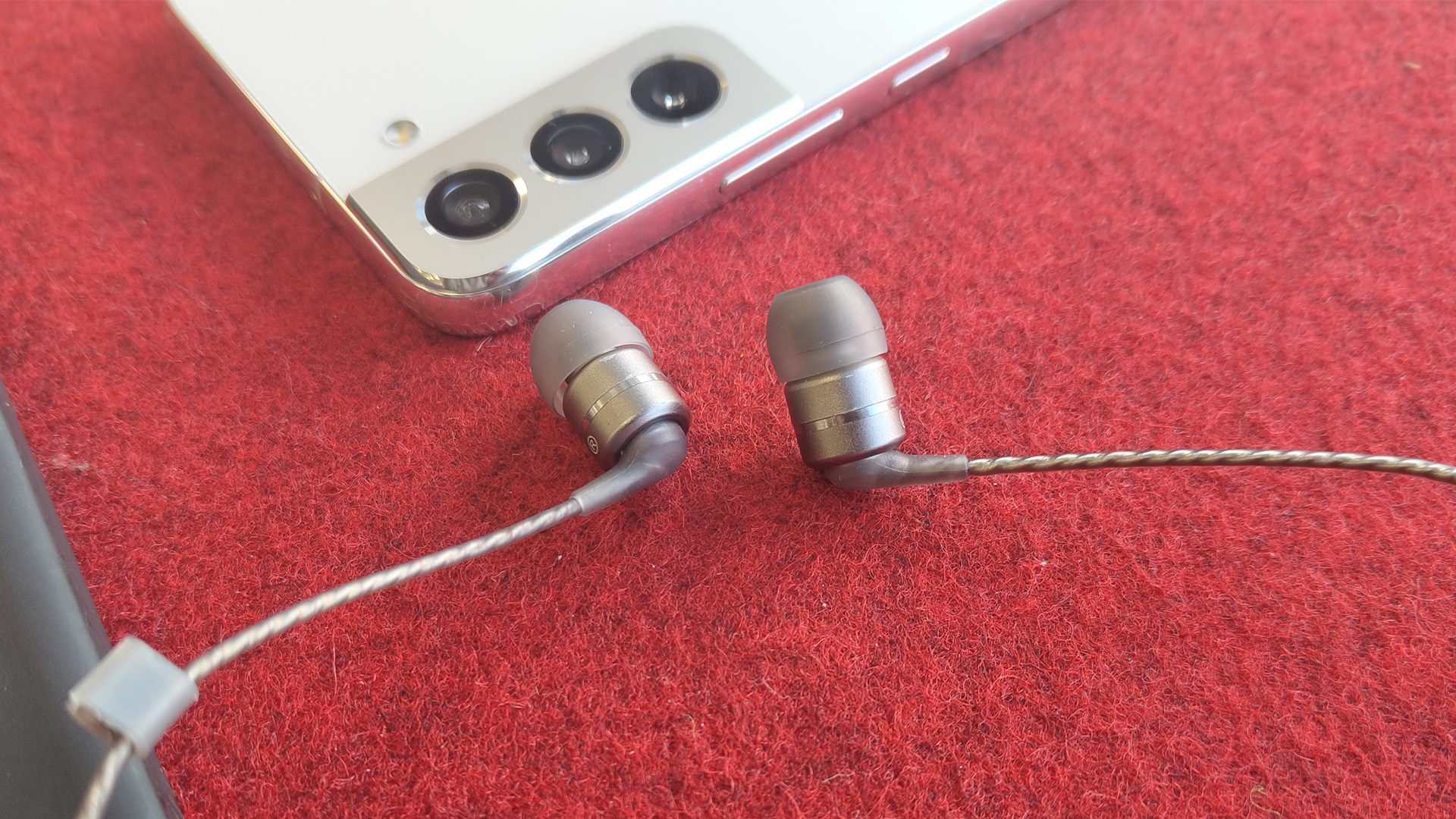

A dead battery should not interrupt a commute, workout, or phone call. The right wired earbuds start playing as soon as they are plugged in, but the small differences matter: some use a loose earbud shape, others seal the ear canal, and a few include controls or microphones that make a phone more useful.
Our Best wired earbuds picks include USB-C and 3.5mm options, compact in-ear models, several microphone-equipped choices, and one straightforward pair for listeners who want a familiar fit. The Apple EarPods USB-C are our top pick, while the rest cover different phones, comfort preferences, and listening habits.
Comparison of the Best Wired Earbuds
| # | Product | Award | Plug | Driver | Cord | Mic | Best for |
|---|---|---|---|---|---|---|---|
| 1 | Apple EarPods USB-C | Best overall | USB-C | Not specified | Built-in remote | Yes | USB-C phones and tablets |
| 2 | Sony MDR-EX15LP | Best simple in-ear fit | 3.5mm | 9mm dome | Y-type with slider | Not listed | Everyday listening |
| 3 | Apple EarPods 3.5mm | Best open-fit controls | 3.5mm | Not specified | Built-in remote | Yes | Devices with headphone jacks |
| 4 | Sony MDR-EX15AP | Best Sony value of features | 3.5mm | 9mm dome | Y-type with slider | Yes | Calls and adjustable fit |
| 5 | Sephia SP3060 | Best noise isolation | 3.5mm | 10mm neodymium | 3.8-foot Y-type | No | Commuting and study |
| 6 | Sony MDR-EX155AP | Best Sony sound range | 3.5mm | 9mm neodymium | 3.94-foot Y-type | Yes | Music and phone calls |
| 7 | Skullcandy Jib | Best for track controls | 3.5mm | Not specified | Wired | Yes | Simple mobile controls |
| 8 | Panasonic ErgoFit | Best lightweight comfort | 3.5mm | Not specified | 3.6-foot | Not listed | Exercise and casual listening |
1. Apple EarPods USB-C: Best Overall

Pros
- Comfortable geometry-based earbud shape
- USB-C connection works with compatible devices
- Built-in volume and playback controls
- Integrated microphone for calls and voice assistant use
Cons
- One-size fit cannot be adjusted
- Open earbud design does not provide the seal of in-ear tips
- USB-C plug limits compatibility with older headphone jacks
Best for: listeners using USB-C devices who want familiar controls and a built-in microphone.
The first thing to know about the Apple EarPods USB-C is that they do not use silicone tips pushed into the ear canal. Their shape follows the geometry of the ear instead, which makes them an easy first recommendation for people who dislike the pressure or plugged-up feeling of traditional in-ear headphones. That comfort advantage is personal, though. A one-size housing can sit securely for one listener and feel loose for another.
The USB-C plug is the key reason to choose this version. It works with devices that have a USB-C port, making it a direct option for newer phones, tablets, and computers that have dropped the 3.5mm jack. Before buying, check the device itself, since the connector determines compatibility. If your phone still has a headphone jack, the Apple EarPods 3.5mm are the more natural match.
Apple includes a remote in the cord. A pinch lets you adjust volume, control music and video playback, and answer or end calls. The integrated microphone is also intended for phone calls, FaceTime, and Siri, so this is more practical than a basic pair that only handles audio. The listing does not specify a driver size, so we will not pretend a particular hardware figure explains the sound. Apple says the speakers are designed to maximize output and minimize sound loss, and the open fit gives music a more outward, less sealed presentation than the Sony and Sephia models here.
That open design is also the main limitation. It does not create the passive isolation described for the Sephia SP3060, and outside sound will remain more noticeable on a busy train or beside a loud road. It can also leak some audio, so this is not the pair to choose when you need privacy in a quiet room. Listeners who need a firm seal should look at the Sony in-ear options instead.
The Apple EarPods USB-C are the one we would keep for a USB-C phone when comfort and simple call controls matter more than isolation. For a closer look at the connector question, the practical difference between USB-C and older headphone connections is the detail to settle before ordering.
2. Sony MDR-EX15LP: Best Simple In-Ear Fit

Pros
- 9mm dome-type driver units
- Hybrid silicone earbuds for a secure fit
- Neodymium magnets designed for powerful sound
- Y-type cord includes a slider to help prevent tangles
Cons
- Microphone is not listed
- Fewer fit details than the microphone-equipped Sony model
- Requires a 3.5mm headphone jack
Best for: listeners who want a compact sealed fit and uncomplicated music playback.
The Sony MDR-EX15LP is the straightforward in-ear option in this group. It has the familiar silicone-tip shape that sits inside the ear canal rather than resting at the outer ear. That can make music feel more contained than it does through the Apple EarPods, and the fit can stay steadier during ordinary walking. Sony specifically warns that the tip size and wearing position affect sound and call performance, so getting the fit right is not a minor detail.
Its 9mm dome-type driver units are a useful middle ground for a small wired earbud. The high-energy neodymium magnets are intended to produce powerful sound, while the in-ear seal helps keep more of the music where it belongs. There is no stated frequency range or other detailed acoustic specification in the supplied information, so the sensible takeaway is the physical design: a 9mm driver, silicone tips, and a sealed fit rather than a claim about a particular tonal balance.
The Y-type cord has a slider designed to prevent tangling. That is a modest feature, but it is useful when the earbuds spend time in a pocket or bag. The two-tone design is part of the product description, although the black finish is the practical distinction here. The product is wired and uses a 3.5mm connection, so it suits older phones, laptops, tablets, and other equipment with a standard headphone jack.
The biggest omission is the microphone. The supplied features do not identify one, so this is not the Sony to choose for frequent calls. The Sony MDR-EX15AP adds a microphone and includes three tip sizes, making it a better fit for listeners who switch between music and calls. The EX15LP is simpler, and that simplicity is its advantage if your priority is listening rather than controlling a phone.
Choose the Sony MDR-EX15LP when you want Sony's compact in-ear format, a 9mm driver, and a cord slider without paying for controls you may not use. It is a sensible match for a music player, laptop, or phone with a 3.5mm jack, provided you do not need hands-free calling.
3. Apple EarPods 3.5mm: Best Open-Fit Controls

Pros
- Familiar geometry-based open earbud design
- Built-in remote controls volume and playback
- Integrated microphone for calls and Siri
- Works with devices that have a 3.5mm headphone jack
Cons
- One-size housing offers no tip adjustment
- Less isolation than sealed in-ear models
- Not compatible with USB-C-only devices without the relevant connection
Best for: people who prefer Apple's open earbud shape and use a traditional headphone jack.
The Apple EarPods 3.5mm make the same basic fit argument as the USB-C model. Instead of asking a silicone tip to seal the ear canal, the molded earbud follows the ear's outer geometry. That makes them a comfortable choice for many listeners who find in-ear pressure distracting, though the one-size design cannot solve every ear shape. The best fit is the one that stays in place without constant adjustment.
The 3.5mm plug gives this pair a different audience from the USB-C EarPods. It connects directly to compatible phones, laptops, tablets, and audio devices with a headphone jack. For an iPhone or tablet without that jack, it is not the right connector by itself. The Apple EarPods USB-C cover newer USB-C hardware, while this model remains the better fit for equipment that still provides the older analog socket.
A built-in remote handles volume, music and video playback, and call answering or ending with a pinch of the cord. Apple also identifies an integrated microphone for phone calls, FaceTime, and Siri. Those controls are the reason these earbuds remain more useful than their uncomplicated appearance suggests. There is no driver size specified in the supplied product information, so the audio discussion belongs around the fit and intended use rather than an invented component specification.
The trade-off is isolation. The EarPods let more of the room into the listening experience than the Sony MDR-EX15AP or Sephia SP3060, both of which use in-ear tips. That can be helpful when you need awareness of nearby sounds, but it is a weakness on a noisy commute. The open fit may also be less secure for exercise than a properly selected silicone tip.
If you want a 3.5mm connection, a microphone, and physical controls in an earbud that does not seal the canal, the Apple EarPods 3.5mm are the cleanest answer. They are also a good choice for readers comparing the fit and controls that suit an iPhone without wireless audio, as long as the device has the necessary jack.
4. Sony MDR-EX15AP: Best Sony Feature Set

Pros
- 9mm dome drivers with neodymium magnets
- Microphone for phone calls
- Small, medium, and large silicone earbuds
- Y-type cord slider helps prevent tangles
Cons
- 3.5mm plug is not suited to USB-C-only devices
- In-ear seal may not suit listeners who dislike canal pressure
- The cord remains a potential snag point during active use
Best for: anyone who wants a traditional 3.5mm in-ear pair with calls and three fit options.
The Sony MDR-EX15AP is the more versatile sibling to the EX15LP. Both use a 9mm dome-type driver and a Y-shaped cord with a slider, but this model adds a microphone and three silicone tip sizes. Those are the details that change daily use. A correct tip size can make the earbuds more stable, improve the seal, and keep voices and music from sounding thin.
Sony pairs the 9mm drivers with high-energy neodymium magnets. The product description calls out treble, midrange, and bass response, with the in-ear construction doing much of the practical work by reducing the gap between the earbud and the ear canal. It is not a technical tuning profile, and the listing does not give a frequency response, but the hardware is more clearly specified than it is on the Apple models.
The microphone makes the EX15AP a better all-purpose companion than the Sony MDR-EX15LP. You can use it for music and then take a call without changing earbuds. The 3.5mm connector is also broadly useful with older phones, laptops, and tablets, though it will not directly solve the connection problem on newer USB-C-only devices. For those, the Apple USB-C pair is the more direct option.
A sealed in-ear design is not automatically more comfortable. Some people prefer the open fit of the Apple EarPods 3.5mm, and the Sony can feel more intrusive if the tip size is wrong. The cord also remains exposed to tangles and clothing snags, despite the slider. Listeners who want the strongest passive isolation in this roundup should consider the Sephia model, which provides six tip choices and specifically describes noise reduction.
For most people who want Sony's compact in-ear format, the Sony MDR-EX15AP strikes the best balance in the brand's lower-cost lineup here. Its microphone and S, M, and L tips make it the model to choose when calls and fit adjustment matter as much as music.
5. Sephia SP3060: Best Noise Isolation

Pros
- Six earbud tips in small, medium, and large sizes
- 10mm neodymium driver
- Passive noise reduction described up to 33dB
- Metal construction and lightweight aluminum housing
- 3.8-foot tangle-free Y-type wire
Cons
- No microphone or remote
- Sealed fit may feel intrusive to some listeners
- Uses a 3.5mm jack, with adapters needed for some newer devices
Best for: commuting, studying, and listening in places where passive isolation matters.
The Sephia SP3060 is the pick for listeners who want the earbuds to do more than simply sit in the ear. Its silicone tips form an in-ear seal, and the package includes six tips across small, medium, and large sizes. That gives you more opportunity to find a stable seal than the one-size Apple design or the two-tip Skullcandy Jib.
The supplied description says the ear tips can block out surrounding noise with up to 33dB of passive noise cancellation. That is not electronic noise cancellation, and it does not require a battery or app. It is the result of fit and physical isolation, which makes the seal especially important. On a bus or train, this design should keep more outside sound away than the open EarPods, but the trade-off is greater awareness of the earbud itself.
Audio hardware is unusually specific for this group. The SP3060 uses a 10mm neodymium earbud magnet, a stated frequency range of 20Hz to 20, 000Hz, and a metal earphone construction with lightweight aluminum housing. Sephia positions it as bass-driven while also emphasizing clarity, and says the housing helps create a more mellow, layered bass presentation. Those claims describe the intended character, not a guarantee for every recording, but they give the SP3060 a clearer identity than the generic models.
Its 3.8-foot Y-shaped cable is long enough to route through clothing or a bag, and the description calls it tangle-free. The standard 3.5mm jack keeps setup simple on compatible equipment. An adapter may be required for some iPhone, newer Samsung Galaxy, and Sony Xperia devices, and the adapter is not included. There is no microphone or remote, so the SP3060 is built for listening rather than calls.
The metal housing adds a sense of substance, but this is still a wired earbud with a cable that can catch on a zipper or desk corner. The sealed design also makes it less suitable for anyone who wants to hear the environment naturally. For a microphone-equipped in-ear alternative, the Sony MDR-EX155AP is more practical, though it offers fewer tip sizes.
Choose the Sephia SP3060 when passive isolation, a generous set of tips, and a specified 10mm driver matter more than call controls. It is the most focused choice here for studying, commuting, and other situations where the room should fade into the background.
6. Sony MDR-EX155AP: Best Sony Sound Range

Pros
- 9mm neodymium drivers
- Microphone and smartphone playback control
- Three pairs of silicone tips
- 3.94-foot Y-shaped cord with cord adjuster
- Listed 5Hz to 24, 000Hz frequency response
Cons
- Only a 3.5mm connection
- No active noise cancellation
- Longer cord can be more cumbersome for some users
Best for: listeners who want a detailed Sony specification set and hands-free phone controls.
The Sony MDR-EX155AP takes the familiar Sony formula and adds a little more documented detail. It uses 9mm neodymium drivers, silicone earbuds, an integrated microphone, and smartphone playback control. The overall design is still simple and portable, but it is more fully equipped than the EX15LP and more explicitly aimed at people who listen to music and make calls from the same device.
Sony lists a frequency response of 5Hz to 24, 000Hz and an impedance of 16 ohms. Frequency response is not a promise that every listener will hear the full range equally, but the specification does show that this model is designed around a broad stated range. The 9mm driver is also a familiar size for compact in-ear headphones. Together with the silicone seal, those features point to a more contained presentation than the open Apple EarPods.
Fit is handled with three pairs of ear tips in small, medium, and large sizes. Sony's own product note stresses that incorrect tip size or placement can affect sound and call performance. That advice applies to every sealed earbud, but it is especially useful here because the fit controls both comfort and isolation. The cord is 3.94 feet long and includes a cord adjuster, giving you some control over slack when the earbuds are connected to a phone in a pocket or bag.
Compared with the Sony MDR-EX15AP, the EX155AP has a longer listed cord and a much more detailed stated frequency response. The EX15AP remains a sensible option when its three tip sizes and straightforward feature set are enough. The Sephia SP3060 is the better choice for maximum passive isolation and a larger 10mm driver, while the EX155AP is the more balanced pick when a microphone and music controls are essential.
The main weakness is not a missing feature so much as the connector. This model is wired through a 3.5mm connection, which rules it out as a direct choice for devices that only accept USB-C. Its longer cord may also feel excessive for a desk setup, though it is useful when the source is in a pocket. There is no active noise cancellation, so the seal remains your only form of noise reduction.
The Sony MDR-EX155AP is the Sony to choose when you want the most complete set of stated audio and fit details, along with a microphone and playback control. It suits a 3.5mm phone, laptop, or music player, especially when a slightly longer cable is helpful.
7. Skullcandy Jib: Best for Track Controls

Pros
- 3.5mm AUX connection
- Two ear gel sizes
- In-line microphone for calls
- Call and track controls
- One-year USA limited warranty
Cons
- Only two stated ear gel sizes
- Driver details are not specified
- No USB-C option
Best for: listeners who want simple call, play, pause, and track controls from a 3.5mm earbud.
The Skullcandy Jib is defined by its controls. It has an in-line microphone for mobile calls and controls for playing, pausing, and skipping tracks. That makes it a useful companion for a phone with a 3.5mm jack, particularly when you want to leave the device in a pocket instead of reaching for it every time a track changes.
The earbuds use a noise-isolating fit and come with two different-sized ear gels. That is less adjustment than the three sizes supplied with the Sony MDR-EX15AP, and far less than the six tips in the Sephia SP3060, but it is still better than a fixed housing. A good gel fit helps the Jib stay in place and reduces some outside sound. The product information does not specify a driver size or frequency response, so there is no reason to rank it on a technical audio figure that is not provided.
Its 3.5mm AUX connection offers direct compatibility with devices that retain that jack. The cable avoids the battery management of wireless earbuds, and calls switch through the in-line controls according to the product description. That directness is the Jib's appeal. It is less of a sound-focused choice than the Sony MDR-EX155AP, whose 9mm neodymium drivers and stated 5Hz to 24, 000Hz range give the buyer more concrete audio information.
The two-gel fit is also the Jib's main limitation. If neither size suits your ears, isolation and stability will suffer. The cable can still tangle or catch during movement, and the lack of a USB-C connector makes the Jib a poor match for newer devices without a headphone jack. The Apple EarPods 3.5mm are a better alternative for listeners who dislike sealed tips, while the Sephia is more compelling when passive isolation is the priority.
Pick the Skullcandy Jib when track control and an in-line microphone are the deciding features. It is a simple, direct choice for a compatible phone, tablet, or laptop, and its two gel sizes give it a little more flexibility than a fixed open earbud.
8. Panasonic ErgoFit: Best Lightweight Comfort

Pros
- Three ear pad sizes: small, medium, and large
- Ergonomic ErgoFit design
- 3.6-foot cord
- Tuned for crisp highs and deep low notes
- Suitable for exercise and casual listening
Cons
- No microphone is specified in the product information
- 3.5mm jack limits use with newer USB-C-only devices
- No detailed driver specification is supplied
Best for: listeners who want an adjustable 3.5mm fit for exercise and everyday audio.
The Panasonic ErgoFit takes a comfort-first approach to the traditional in-ear earbud. Its ErgoFit design is intended to conform to the ear, and the package includes small, medium, and large ear pads. That makes it more adaptable than the one-size Apple EarPods and gives it the same basic fit advantage as the Sony EX15AP, though the housing shape and personal comfort will decide which one feels better.
Panasonic describes the sound as tonally balanced, with crisp highs, deep low notes, and lively reproduction for recorded audio. The supplied information does not state a driver size, so the meaningful hardware facts are the ear pad choices, in-ear placement, and 3.5mm connection. A proper pad fit should help keep the earbuds in place and keep some surrounding sound out, which is why the product is positioned for exercise as well as ordinary listening.
The 3.6-foot cord is long enough to run through clothing or a bag without feeling unusually short. That length sits between the Sony MDR-EX15LP's listed dimensions and the longer EX155AP cable, giving the Panasonic a practical everyday reach. It is a standard wired design, so there is no battery to charge and no setup for a compatible headphone jack.
The product title says no mic, and the supplied product features do not provide microphone or remote details. That makes the ErgoFit less suitable for calls than the Skullcandy Jib, Apple EarPods, or Sony models with clearly identified microphones. It also uses a 3.5mm jack, so USB-C-only devices need a separate solution. The Apple EarPods USB-C are the cleaner match for those devices.
The Panasonic ErgoFit is a good fit for someone who wants adjustable ear pads, a comfortable ergonomic shape, and a cable that works well for routine movement. It does not have the feature depth of the microphone-equipped Sony models, but it remains a sensible pick when comfort and uncomplicated listening come first.
How to choose best wired earbuds
The best wired earbuds are separated less by wireless-style features than by connector, fit, isolation, controls, and cable design. Start with the device you will use most, then choose the earbud shape that matches how much outside sound you want to hear.
Connector compatibility
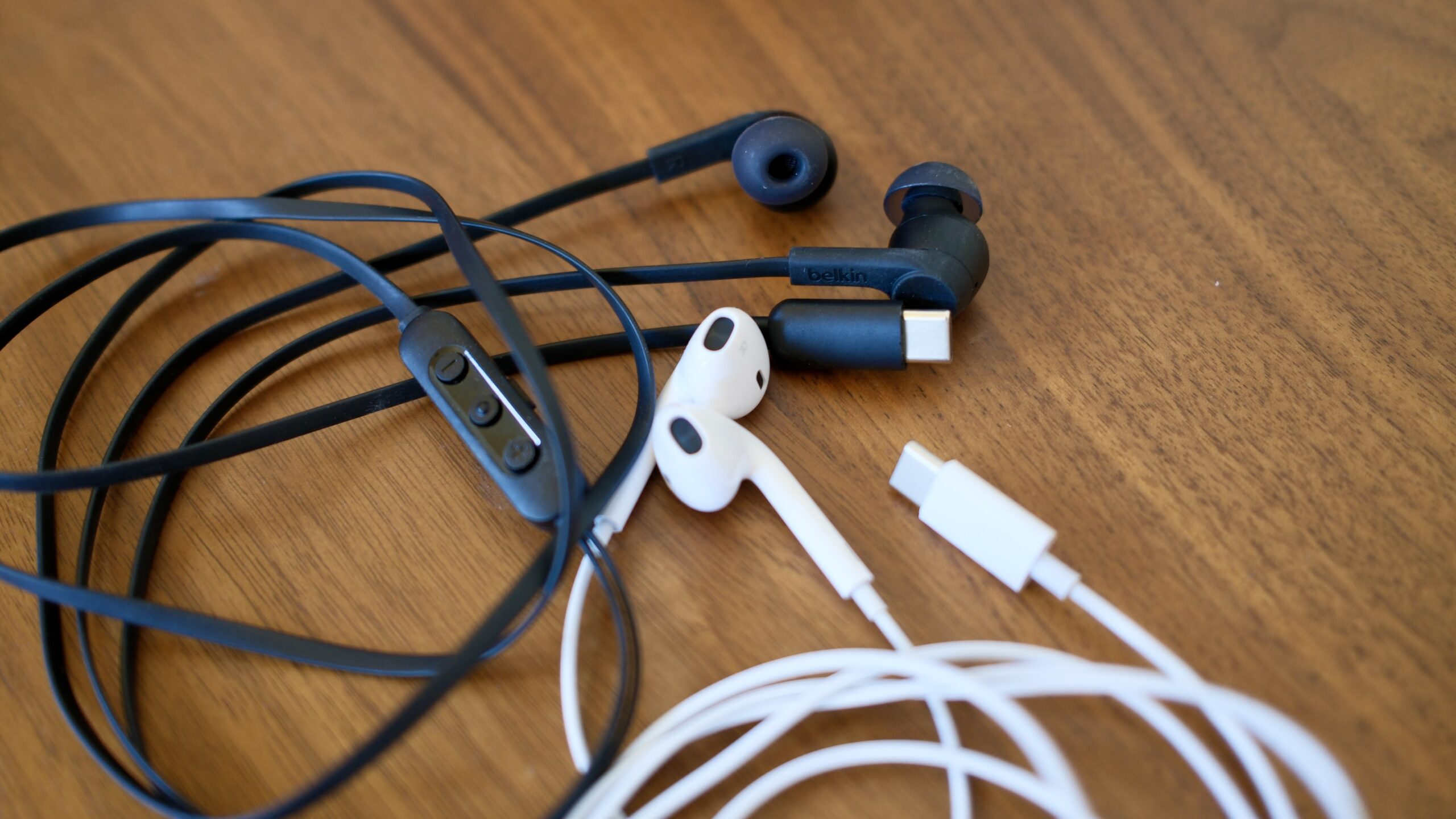
A USB-C plug is designed for devices with a USB-C port, as with the Apple EarPods USB-C. A 3.5mm plug fits compatible headphone jacks, including the Apple EarPods 3.5mm, Sony models, Sephia SP3060, Skullcandy Jib, and Panasonic ErgoFit.
Do not assume an adapter will be included. The Sephia listing specifically says an adapter may be required for some newer phones and that it is not included. If your device has only USB-C, start with a USB-C model or confirm that your chosen adapter supports audio.
Earbud fit and tip sizes
Open earbuds such as the Apple EarPods sit at the outer ear and avoid the pressure of a silicone seal. In-ear models use tips that enter the ear canal, and their comfort depends heavily on matching the tip to your ear.
The Sony MDR-EX15AP, Sony MDR-EX155AP, and Panasonic ErgoFit include small, medium, and large options. The Sephia SP3060 includes six tips across those sizes, while the Skullcandy Jib includes two gel sizes. More options do not guarantee a better fit, but they give you more ways to find a stable seal.
Passive isolation
A sealed in-ear fit can reduce surrounding sound without electronic processing or a battery. The Sephia SP3060 specifically describes passive noise reduction up to 33dB, while the Sony, Skullcandy, and Panasonic models also use in-ear designs that depend on the ear tip seal.
Open-fit Apple EarPods let in more of the environment. That can be useful when walking near traffic or listening in an office where you need awareness, but they are less suitable when you want a quiet, isolated presentation.
The best tip is the one that seals gently, stays put, and does not make your ears tired after an hour.
Microphone and controls
Choose a model with a stated microphone if you plan to take calls. Both Apple EarPods include an integrated microphone and a built-in remote, while the Sony MDR-EX15AP, Sony MDR-EX155AP, and Skullcandy Jib identify microphone functionality.
The Sephia SP3060 has no microphone or remote, and the Panasonic product information does not specify one. The Sony MDR-EX155AP includes smartphone playback control, while the Skullcandy Jib specifically calls out play, pause, and track skipping. These controls matter more than a small difference in housing design when the earbuds will be used with a phone.
Drivers and sound design
Driver size is only one part of sound, but it is still useful when the specification is available. The Sony MDR-EX15LP and MDR-EX15AP use 9mm dome-type drivers, the MDR-EX155AP uses 9mm neodymium drivers, and the Sephia SP3060 uses a 10mm neodymium driver.
The Sephia also lists a 20Hz to 20, 000Hz frequency range, while the Sony MDR-EX155AP lists 5Hz to 24, 000Hz. Do not treat those ranges as a complete description of sound quality. Fit, seal, source device, and tuning have a greater effect on what you hear than a single number.
Cord length and handling
A longer cable can reach a phone in a pocket or bag more easily, but extra slack can also catch on clothing. The Sony MDR-EX155AP lists a 3.94-foot Y-shaped cord, the Sephia SP3060 has a 3.8-foot cord, and the Panasonic ErgoFit uses a 3.6-foot cord.
Cord sliders and tangle-resistant designs help, but they do not make a wired cable disappear. If you regularly move around while listening, choose the fit first, then look for a cord length that suits where you carry the source device.
Frequently asked questions
Do wired earbuds work with USB-C phones?
They work when the earbuds use a USB-C plug and the device supports audio through its USB-C port. The Apple EarPods USB-C are the direct option in this roundup for compatible USB-C devices. A 3.5mm model needs a suitable adapter when the phone has no headphone jack.
Which wired earbuds are best for phone calls?
The Apple EarPods USB-C and Apple EarPods 3.5mm both include an integrated microphone and built-in remote. The Sony MDR-EX15AP, Sony MDR-EX155AP, and Skullcandy Jib also identify microphone functionality. The Sephia SP3060 has no microphone, and the Panasonic listing does not specify one.
Are open earbuds or in-ear earbuds more comfortable?
It depends on your ears and how much pressure you tolerate. Open earbuds such as the Apple EarPods avoid a silicone tip in the canal, while in-ear models can feel more secure and block more outside sound. Adjustable tips on the Sony, Sephia, Skullcandy, and Panasonic models make it easier to fine-tune the fit.
Which models provide passive noise isolation?
The Sephia SP3060 specifically describes passive noise reduction up to 33dB through its in-ear design and ear tips. The Sony MDR-EX15LP, Sony MDR-EX15AP, Sony MDR-EX155AP, Skullcandy Jib, and Panasonic ErgoFit also use sealed in-ear fits that can reduce outside sound. None of these features should be confused with electronic active noise cancellation.
Do all of these earbuds have a microphone?
No. The Sephia SP3060 is identified as having no microphone or remote. The Panasonic ErgoFit product information does not specify a microphone, while Apple, the two microphone-equipped Sony models, and Skullcandy identify microphone functions.
What driver sizes do these wired earbuds use?
The Sony MDR-EX15LP and MDR-EX15AP use 9mm dome-type drivers. The Sony MDR-EX155AP uses 9mm neodymium drivers, and the Sephia SP3060 uses a 10mm neodymium driver. Driver sizes are not specified for the Apple EarPods, Skullcandy Jib, or Panasonic ErgoFit in the supplied product information.
How long are the cords?
The Sephia SP3060 has a 3.8-foot cord, the Sony MDR-EX155AP has a 3.94-foot cord, and the Panasonic ErgoFit has a 3.6-foot cord. The other listings describe the cord type or controls without giving a length. A longer cord is useful when the source is in a pocket, but it can create more slack at a desk.
The bottom line
The Apple EarPods USB-C are the Best wired earbuds for people with compatible USB-C devices who want an open, comfortable shape, useful remote controls, and a microphone. The Sony MDR-EX15AP is the better choice for a 3.5mm device when you want silicone tips, a 9mm driver, three fit sizes, and hands-free calls.
Choose the Sephia SP3060 if passive isolation is your priority, or the Sony MDR-EX155AP if you want the most complete combination of microphone, controls, fit options, and stated audio specifications. The Apple EarPods 3.5mm remain the simplest open-fit option for compatible headphone jacks.
If you are undecided, choose the connector first, then choose between an open earbud and a sealed in-ear fit.
As an Amazon Associate we earn from qualifying purchases.