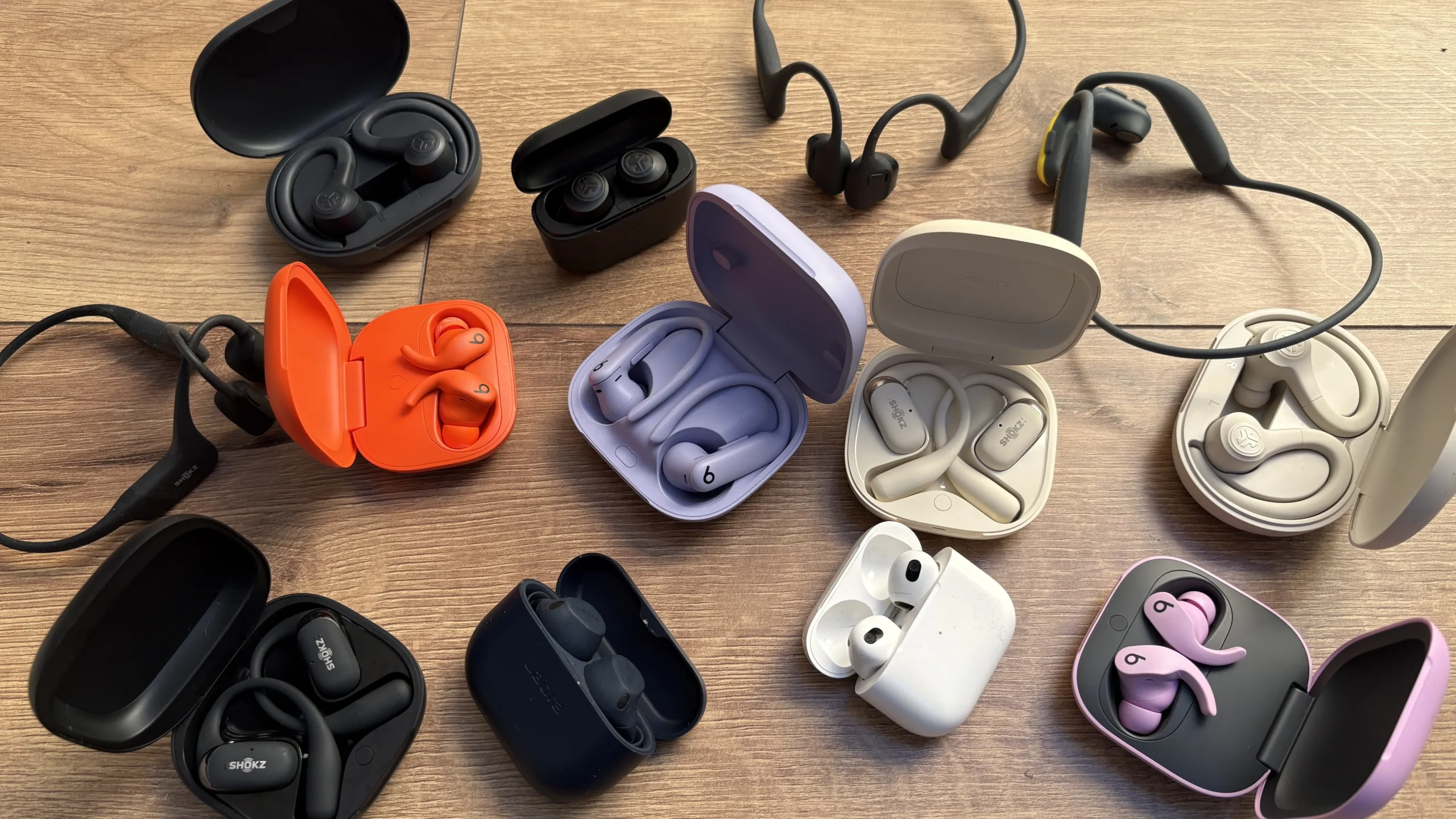

A good running earbud has to survive more than a playlist. It must stay put through foot strikes, let you hear a cyclist or car when needed, and handle sweat without making every run feel like a fit-adjustment session. The Best earbuds for running also need controls you can use without stopping.
This list includes secure over-ear-hook designs, sealed earbuds with active noise cancellation, and open-ear models that leave your surroundings audible. Some are better for road awareness, while others make more sense on a treadmill or in a noisy gym.
JBL Endurance Peak 4 is our top pick for the widest mix of security, weather protection, sound, and useful running features. The rest of the list covers open-ear comfort, long battery life, heart-rate tracking, and straightforward workout durability.
Comparison table
| # | Product | Award | Fit | Battery | Protection | Best for |
|---|---|---|---|---|---|---|
| 1 | JBL Endurance Peak 4 | Best overall | TwistLock ear hooks | Up to 48 hours total | IP68 | Runners wanting one versatile pair |
| 2 | Soundcore V20i | Best open-ear fit | Four-position adjustable open-ear design | Not specified | Not specified | Situational awareness and comfort |
| 3 | bmani Sports Earbuds | Best simple controls | Adjustable ear hooks | Up to 80 hours total | Sweat and dust resistant | Runners who prefer physical buttons |
| 4 | Beats Powerbeats Pro 2 | Best for training metrics | Secure-fit ear hooks | Up to 45 hours total | IPX4 | Athletes wanting heart-rate tracking |
| 5 | GNMN V7 | Best battery endurance | Soft ear hooks | Up to 96 hours total | IPX7 | Long training schedules |
| 6 | TRAUSI i27 | Best lightweight option | Ear hooks with three ear tip sizes | Up to 54 hours total | IPX7 | Lightweight outdoor workouts |
| 7 | GOLREX ANC Earbuds | Best physical controls | Flexible over-ear hooks | Up to 80 hours total | Not specified | Gym sessions and commuting |
| 8 | TOZO OpenEarRing | Best clip-on design | Open-ear clip-on fit | Up to 40 hours total | IPX5 | Glasses wearers and easy awareness |
| 9 | Soundcore Sport X20 | Best adjustable hook | Rotating, extendable ear hooks | Not specified | SweatGuard protection | Hard gym workouts |
| 10 | SHOKZ OpenRun Pro 2 | Best bone-conduction design | Open-ear neckband frame | Up to 12 hours | Not specified | Road runners who need awareness |
1. JBL Endurance Peak 4: Best Overall

Pros
- TwistLock design and adaptable liquid silicone hooks
- IP68 water and dust protection
- Adaptive noise cancellation and Smart Ambient modes
- Six microphones for calls
- Up to 48 hours of total playback
Cons
- ANC reduces earbud playback to up to 8 hours
- Charging cable is not included
- Sealed fit is less naturally aware than open-ear alternatives
Best for: runners who want secure, weather-ready earbuds with flexible sound modes.
The JBL Endurance Peak 4 is the pair we'd hand to a runner who does not want to choose between a locked-in fit and useful everyday features. The TwistLock design uses OvalTubes and a liquid silicone ear hook with memory wire, so the fit is built around staying stable rather than simply resting in the ear. That matters when a run includes hills, intervals, or repeated head movement.
Its IP68 rating is unusually reassuring for outdoor training. JBL says the earbuds are protected against water and dust, including sweat, rain, salt water, and sand. That does not make them a license to swim with them, but it gives the Peak 4 a stronger weather and grit story than the IPX4-rated Beats Powerbeats Pro 2 or the IPX5-rated TOZO OpenEarRing.
Sound comes from 10mm dynamic drivers with JBL Pure Bass and Spatial Sound. The more important running feature is the combination of Adaptive Noise Cancelling and Smart Ambient. Four noise-sensing microphones help manage outside sound, while the app lets you set how much of your surroundings comes through. For road running, that flexibility is more useful than a permanently sealed presentation. If you want to compare the trade-offs more broadly, how much outside sound different running designs let through is a useful question to settle before buying.
JBL also gives the Peak 4 six microphones, three per earbud, with beamforming and a windproof design for calls. Battery life reaches up to 12 hours from the earbuds and 48 hours with the case when ANC is off. With ANC on, JBL lists up to 8 hours in the earbuds plus 24 hours from the case, and a 10-minute charge adds four hours. The weakness is that this is still an in-ear sealed design, so runners who want maximum environmental awareness may prefer the Soundcore V20i or SHOKZ OpenRun Pro 2. For everyone else, the Peak 4 is the most complete package here.
2. Soundcore V20i: Best Open-Ear Fit

Pros
- Open-ear design keeps the surroundings audible
- Four adjustable fit positions
- Large 16mm drivers with BassUp
- Four microphones with AI call enhancement
- Lightweight design for extended wear
Cons
- Battery duration is not specified
- Open-ear sound is more exposed to surrounding noise
- No water-resistance rating is provided
Best for: runners who prioritize comfort and awareness over isolation.
The Soundcore V20i takes a fundamentally different approach from the JBL Endurance Peak 4. It does not seal the ear canal. Instead, the open-ear design sits outside the ear, which makes it easier to remain aware of traffic, other runners, and conversations. That is the right starting point for urban routes where isolation can become a liability.
Fit is more adjustable than the simple clip-on approach used by the TOZO OpenEarRing. The V20i offers four positions, allowing the earbud to rotate into a more stable and comfortable angle. There is no ear-hook specification in the supplied details, so its security comes from that adjustable placement rather than a band or hook wrapped around the ear.
Soundcore uses 16mm drivers with titanium-coated domes and BassUp processing. That is a large driver specification for an open-ear earbud, and it is intended to preserve bass that can otherwise feel thin when the ear canal is left open. Still, an open design cannot create the same isolation or low-end weight as the sealed GNMN V7 or Soundcore Sport X20, especially beside traffic or strong wind.
Four microphones and an AI algorithm are designed to keep calls clear. The product also has customizable music-synced lights, which are more decorative than practical during a run. The missing pieces are important: the supplied information does not state battery life or water resistance. Choose the V20i for its non-intrusive fit and situational awareness, not for a weather specification or a marathon-length battery claim.
3. bmani Sports Earbuds: Best Simple Controls

Pros
- Adjustable ear hooks designed for active movement
- Physical main and volume buttons
- Up to 8 hours from each earbud
- Up to 80 hours with the case
- LED case display shows charging information
Cons
- Only sweat and dust resistance are specified
- No active noise cancellation
- Alternating earbud use is part of the longest battery claim
Best for: runners who want a secure hook and tactile controls without touch gestures.
The bmani Sports Earbuds are refreshingly direct. They use adjustable over-ear hooks, a charging case with an LED display, and separate physical buttons for primary and volume controls. That combination makes sense for runners who dislike tapping a small touch surface with sweaty fingers or accidentally changing a track while adjusting an earbud.
Each earbud is rated for up to 8 hours of playback, while the case extends total use to up to 80 hours when the earbuds are used alternately. The display shows the remaining case power and the charging status of the earbuds, which removes some of the guesswork before heading out. The long total figure should not be confused with 80 hours of continuous listening from both earbuds at once.
The audio system uses 10mm dynamic drivers and dual microphones. The supplied features describe crisp treble, rich bass, and reduced surrounding noise for calls, but they do not list an ANC system or a formal water-resistance rating. Instead, bmani describes the construction as sweat resistant and dust resistant. That puts it behind the IP68 JBL Endurance Peak 4 and IPX7 GNMN V7 when a run could involve serious rain.
The bmani pair is a better fit for practical control than the TRAUSI i27, whose controls are touch based. It also offers more clearly described battery information than the Soundcore V20i. Its drawback is that the long-life claim depends on alternating use, and its protection details are less specific. Pick it for straightforward workout operation, especially if physical buttons matter more to you than ANC.
4. Beats Powerbeats Pro 2: Best for Training Metrics

Pros
- Built-in heart-rate monitoring
- Secure-fit ear hooks with flexible nickel titanium alloy
- ANC and Transparency modes
- Five ear tip sizes
- Wireless Qi charging case
Cons
- IPX4 protection is modest beside several competitors
- Heart-rate features are most compelling for compatible training setups
- USB-C charging cable is sold separately
Best for: athletes who want workout audio and in-ear heart-rate tracking in one device.
The Beats Powerbeats Pro 2 stands apart because it treats the earbuds as part of a training setup, not just a way to play music. Built-in sensors pulse more than 100 times per second to provide real-time heart-rate tracking without a chest strap or watch. That feature is the reason to choose it over the otherwise very capable JBL Endurance Peak 4.
The fit is designed for hard movement. A nickel titanium alloy ear hook is intended to flex comfortably while holding its shape, and Beats includes five ear tip sizes to help create a stable acoustic seal. Physical on-ear buttons and volume rockers are another strong choice for workouts because they provide a deliberate press rather than relying on touch gestures.
ANC is tuned for training environments, while Transparency mode lets outside sound back in. Adaptive EQ uses built-in microphones to adjust frequencies to the listening environment, and Apple devices also gain Personalized Spatial Audio with head tracking. Android users still get feature access through the Beats app, including heart-rate monitoring, customizable controls, and battery widgets.
Battery life reaches up to 45 hours with the charging case, and a five-minute Fast Fuel charge adds up to 1.5 hours of playback. The case supports Qi wireless charging. Its real limitation is the IPX4 sweat and water rating, which is less protective on paper than JBL's IP68, GNMN's IPX7, or TRAUSI's IPX7. It is also a relatively substantial design, so runners wanting a lighter, simpler experience should look at the SHOKZ OpenRun Pro 2.
5. GNMN V7: Best Battery Endurance

Pros
- Up to 96 hours with the charging case
- Active noise cancellation and Transparency mode
- IPX7 water protection
- 16mm drivers
- Soft ear hooks and customizable ear tips
Cons
- The 96-hour figure is a total case claim
- Strong isolation is not ideal for every road run
- Brand and model controls are less clearly differentiated than JBL's app system
Best for: runners who want long intervals between charging sessions and strong water protection.
The GNMN V7 is built around two numbers that matter to frequent runners: up to 8 hours from a full earbud charge and up to 96 hours with the case. The second figure is total playback, not a single uninterrupted run, but it still means a training bag can stay ready for a long time without constant charging. A dual LED display shows the battery levels of the case and earbuds.
This is a sealed, over-ear-hook design with customizable ear tips. The hooks are described as soft and ergonomic, while the in-ear structure adds passive isolation. GNMN also gives it IPX7 protection, which makes it one of the more convincing choices here for heavy sweat and rainy sessions. The product notes that the earbuds can be used in stereo or with one earbud at a time.
The audio system uses 16mm speaker drivers and a large chamber acoustic design. GNMN claims clear highs, rich mids, and deep bass, with the larger driver intended to keep music energetic during exercise. ANC is rated by the maker at up to 45dB, and Transparency mode can restore awareness when you need to hear what is around you. For a fuller look at how isolation affects training, the difference between noise cancellation and hear-through workout listening is the key trade-off.
Compared with the TRAUSI i27, the V7 gives you stronger stated water protection, larger drivers, and ANC, but it is not presented as a lightweight 7g-per-earbud design. Compared with the JBL Endurance Peak 4, it offers a longer total battery claim but less detailed app and call information. The V7 is the better choice for runners who care most about charge frequency and weather resistance, provided they are comfortable managing ANC on roads.
6. TRAUSI i27: Best Lightweight Option

Pros
- Each earbud weighs 7g
- Three silicone ear tip sizes
- IPX7 water protection
- Bluetooth 5.4 connection
- Up to 54 hours with the charging case
Cons
- Noise cancellation applies to the microphone, not stated ANC
- Touch controls can be less deliberate during movement
- Case battery capacity is not described beyond total playback
Best for: runners who want a light hook-style fit with clear protection details.
The TRAUSI i27 makes a sensible case for keeping the hardware light. Each earbud weighs 7g, and the soft ear hook is paired with three silicone ear tip sizes. That gives runners two ways to tune the fit: the hook handles stability while the tip controls the seal and comfort.
Its IPX7 rating is a meaningful advantage for sweat, rain, and splashes. The product notes that it is not suitable for submersion, which is the kind of boundary worth keeping in mind even with a strong water-resistance rating. Bluetooth 5.4 and dual-channel transmission are intended to improve connection stability, with a stated range of up to 15 meters without obstacles.
Playback reaches up to 6 hours on one charge and up to 54 hours with the 400mAh case. A 10-minute charge provides up to two hours of playback, while an LED percentage display shows remaining power. That is enough information to make the i27 easy to manage between runs, even though its single-charge figure is shorter than the GNMN V7 or JBL Endurance Peak 4.
The built-in microphone uses noise cancellation for calls, but the supplied details do not claim active noise cancellation for music. That makes the i27 a different proposition from the Beats Powerbeats Pro 2 and GOLREX ANC Earbuds. Its touch controls are also less reassuring than bmani's physical buttons during fast movement. Choose it when low weight, hook security, and IPX7 protection matter more than ANC.
7. GOLREX ANC Earbuds: Best Physical Controls

Pros
- Adaptive hybrid ANC and Transparency mode
- Physical buttons
- Up to 80 hours of total playback
- 13mm dynamic drivers
- Wireless and USB-C charging
Cons
- No water-resistance rating is specified
- Larger drivers and case may not suit minimalists
- Total battery figure does not indicate earbud-only duration
Best for: runners who also need tactile controls for gym sessions and commuting.
The GOLREX ANC Earbuds are a strong fit for people who move between running, gym work, and commuting. Their flexible over-ear hooks and S, M, and L ear tips offer the familiar secure fit of a sports earbud, while physical buttons make it possible to control playback and calls without worrying about accidental touches.
GOLREX describes the ANC as adaptive hybrid noise cancellation, with a processor and four-layer noise-reduction architecture that reacts to changing ambient sound. A Transparency mode lets conversations and traffic through. The stated reduction figure is up to 50dB, but that should be treated as a maker claim rather than a guarantee of the same result in every ear.
The audio hardware includes 13mm dynamic drivers and a high-bandwidth transmission path. GOLREX positions this as a way to produce deeper bass, clearer vocals, and more detail. That presentation should appeal to runners who want a forceful workout sound, although open-ear choices such as the Soundcore V20i are naturally better when environmental awareness is the priority.
The 600mAh case provides up to 80 hours of total playback, and a 10-minute charge restores up to two hours. The case supports both wireless charging and Type-C charging. The main omission is protection: the supplied product information does not specify an IP rating. That keeps it behind the JBL Endurance Peak 4, GNMN V7, and TRAUSI i27 for wet-weather confidence. It is a good pick for controlled environments where buttons and ANC matter more than a stated waterproof rating.
8. TOZO OpenEarRing: Best Clip-On Design

Pros
- Each earbud weighs 5.1g
- Open-ear clip-on design
- Designed with glasses wearers in mind
- Up to 10 hours per charge
- IPX5 water protection
Cons
- Open-ear sound has less isolation and bass impact
- IPX5 is below the protection offered by several sealed picks
- Clip-on fit may not feel as locked in as an ear hook
Best for: runners who wear glasses and want a light, non-sealing design.
The TOZO OpenEarRing is the lightest-feeling design on this list by specification, with each earbud weighing 5.1g. Its clip-on construction sits outside the ear instead of plugging the canal, which can be more comfortable for people who dislike pressure during long runs. TOZO also specifically describes the shape as suitable for glasses wearers.
Battery life reaches up to 10 hours from the earbuds, with another 30 hours from the case for up to 40 hours total. The case has a digital display and uses Type-C charging. Bluetooth 5.4 is intended to provide a stable connection at up to 15 meters, and the earbuds automatically pair when removed from the case.
TOZO's OrigX acoustic technology is designed to preserve vocals and instrumental detail in an open-ear format. The TOZO app offers 32 EQ modes, so there is more sound customization here than the simpler open-ear Soundcore V20i. A button control handles music and calls, which is preferable to a fussy gesture when running.
The IPX5 rating protects against sweat and rain, but it does not match the IPX7 GNMN V7 or TRAUSI i27, and it is well below the JBL Endurance Peak 4's IP68 rating. The clip-on design also cannot create the same bass seal as an in-ear model. If you are deciding between open-ear and more traditional designs, how comfort and awareness change with a non-sealing fit is the most useful distinction. The OpenEarRing is the better choice for lightness and glasses compatibility, not maximum impact or isolation.
9. Soundcore Sport X20: Best Adjustable Hook

Pros
- Ear hooks rotate up to 30 degrees
- Hooks extend by 4mm
- Adaptive and manually adjustable ANC
- 11mm dynamic drivers with BassUp
- SweatGuard protection for demanding workouts
Cons
- Battery duration is not specified
- Closed design is less aware of traffic
- No formal IP rating is provided
Best for: gym users and runners who need a highly adjustable hook fit.
The Soundcore Sport X20 has the most mechanically adjustable fit in this group. Its ear hooks can rotate up to 30 degrees and extend by 4mm, allowing the hook position to be tailored to different ears. That is a more meaningful adjustment system than a fixed hook, especially for people who find that ordinary sports earbuds press in the wrong place.
It is built for a sealed, focused workout sound. The 11mm dynamic drivers work with Soundcore's BassUp technology to emphasize the low end, while ANC can be adjusted manually or run adaptively. In a weight room, that combination can make music easier to follow over equipment noise. On an outdoor route, it demands more care because the sealed fit and cancellation reduce natural awareness.
Soundcore uses a cavity design and its SweatGuard technology to protect the internal components from water, sweat, and dust. The supplied details do not provide a formal IP rating, so the protection claim is less precise than the JBL, GNMN, or TRAUSI entries. Battery duration is also not stated, which makes it harder to plan around long runs than with the bmani or TOZO models.
The Sport X20 is a better gym tool than an all-purpose road-running recommendation. It beats the GOLREX ANC Earbuds on the specificity of its adjustable hook system, while the JBL Endurance Peak 4 offers a more clearly defined weather rating and a more complete battery description. Choose the X20 when fit adjustability and bass-forward ANC matter most.
10. SHOKZ OpenRun Pro 2: Best Bone-Conduction Design

Pros
- Open-ear design keeps surroundings audible
- Bone conduction and air conduction work together
- Up to 12 hours of playback
- Lightweight 0.0668-pound frame
- Wind-resistant microphones with AI noise reduction
Cons
- No water-resistance rating is specified
- Neckband frame is less compact than true wireless earbuds
- Open-ear sound cannot isolate like sealed ANC earbuds
Best for: road runners who want awareness without an earbud sitting in the ear canal.
The SHOKZ OpenRun Pro 2 is the clearest choice here for runners who refuse to block their ears. Its open-ear design leaves the ear canals unobstructed, while a lightweight frame with a nickel titanium alloy memory wire and ergonomic hooks keeps the headphones positioned around the ears. The listed weight is 0.0668 pounds, making the frame notably light on paper.
This is not conventional open-ear playback alone. SHOKZ combines bone-conduction technology for clear highs with air-conduction technology for deeper bass, creating a fuller presentation than older bone-conduction designs. The result should be more motivating for music, while the open construction still lets road noise and nearby voices remain part of the run.
The earbuds provide up to 12 hours of audio, and the SHOKZ app offers dedicated EQ modes. Classic Mode emphasizes the bone-conduction presentation, while Volume Boost Mode is intended for noisier settings. Calls use dual wind-resistant microphones and AI noise reduction, with the supplied details claiming reduction of 96.5% of background noise, including wind up to 15 miles per hour.
The main weakness is the lack of a stated water-resistance rating in the supplied information. That makes the SHOKZ less reassuring in heavy rain than the JBL Endurance Peak 4 or GNMN V7. It also uses a neckband frame, so it is not as pocketable as the TOZO OpenEarRing or Soundcore V20i. Still, for road safety and awareness, the OpenRun Pro 2 is the most purpose-built option in the group.
How to choose best earbuds for running
The right running earbuds depend on the route, your tolerance for an in-ear seal, and how much control you want during movement. These are the factors that matter most.
Fit security
Ear hooks, rotating hooks, clip-on frames, and open-ear bands each secure the earbuds differently. A sealed earbud such as the JBL Endurance Peak 4 or Beats Powerbeats Pro 2 can create a stable acoustic seal, while an adjustable hook such as the Soundcore Sport X20 gives more control over pressure and placement.
Weak fit is easy to identify: the earbuds need repeated adjustment, shift when you turn your head, or loosen as sweat builds. Look for multiple ear tip sizes when the design depends on a seal, and look for adjustable or flexible hooks when the outer ear does more of the work.
Open-ear awareness
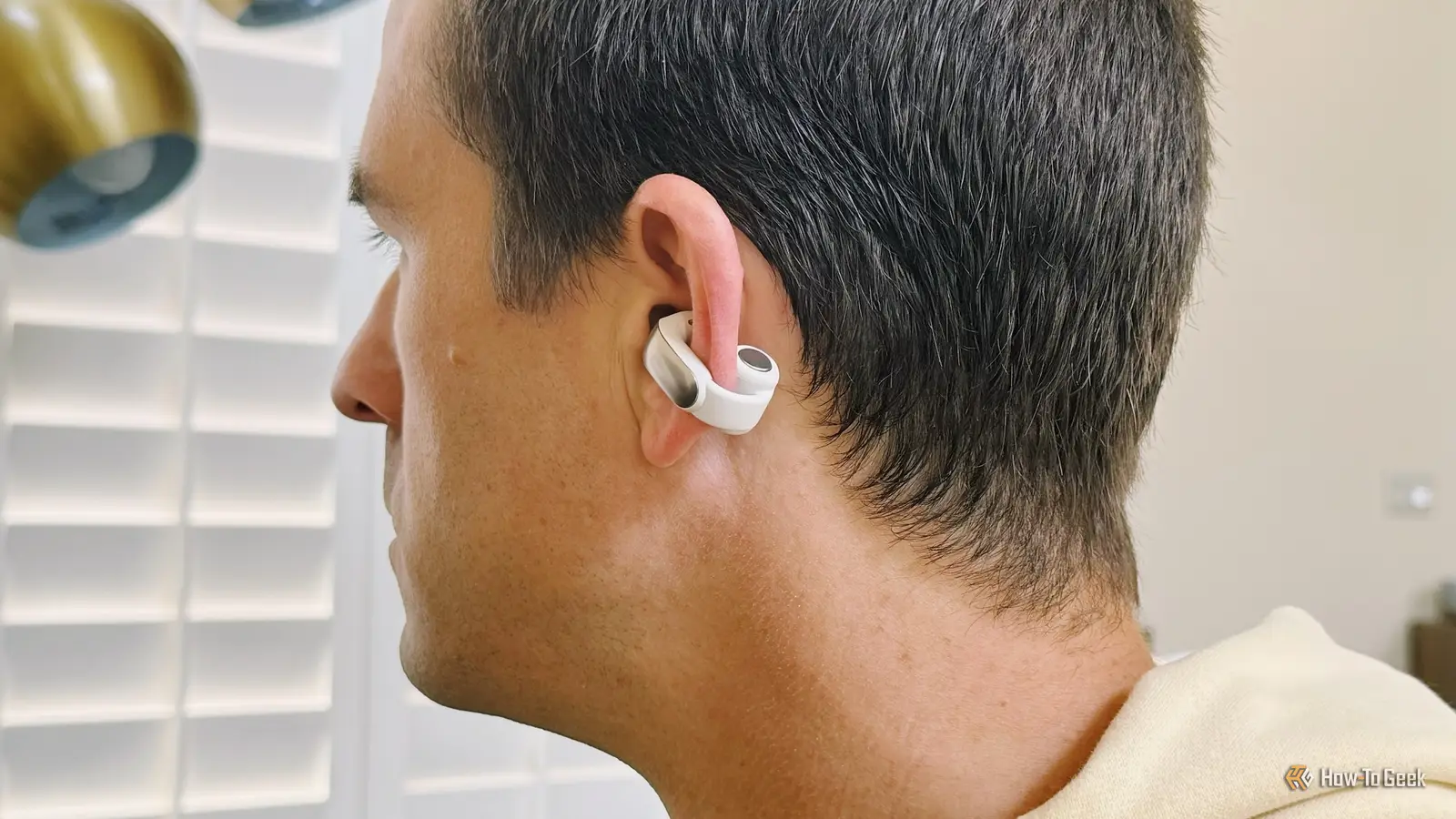
Open-ear designs such as the Soundcore V20i, TOZO OpenEarRing, and SHOKZ OpenRun Pro 2 leave the ear canal open. That helps with traffic awareness and makes conversation easier, but it also means outside noise competes with music.
For road running, hearing what is approaching can matter more than hearing every bass note.
Open-ear models are usually the safer starting point for busy streets. Sealed earbuds with Transparency mode can also work, but they require switching modes and may still feel less natural than an unobstructed ear.
Water protection
Sweat and rain are routine running hazards, so a stated rating is more useful than vague claims about an active lifestyle. IPX7 models such as GNMN V7 and TRAUSI i27 offer stronger stated water protection than IPX5 TOZO OpenEarRing, while JBL's IP68 rating adds dust protection as well.
Do not treat a rating as permission for every kind of water exposure. The TRAUSI product specifically says it is not suitable for submersion, and several products here provide no formal rating at all.
Noise cancellation
ANC can make a treadmill, gym, or indoor track much easier to enjoy. The JBL Endurance Peak 4, Beats Powerbeats Pro 2, GNMN V7, GOLREX ANC Earbuds, and Soundcore Sport X20 all include noise-control modes, though their stated systems and controls differ.
For outdoor running, Transparency mode is at least as important as ANC. A model that lets you switch quickly between isolation and awareness is more useful than one that only tries to block noise.
Battery planning
Pay attention to both earbud-only playback and total case playback. JBL lists up to 12 hours from the earbuds with ANC off, while GNMN lists up to 8 hours and TRAUSI lists up to 6 hours. The larger case figures, such as bmani's up to 80 hours and GNMN's up to 96 hours, describe repeated recharges rather than one uninterrupted listening session.
Fast charging is valuable when a run is about to start. JBL adds four hours after 10 minutes, TRAUSI adds two hours, and Beats adds 1.5 hours after five minutes.
Frequently asked questions
Should runners use open-ear or in-ear earbuds?
Open-ear models are better when hearing traffic, other runners, and conversations is a priority. In-ear models usually provide stronger bass, more consistent sound, and better isolation. The right choice depends on whether your routes are busy roads or controlled spaces such as treadmills and gyms.
Are ear hooks necessary for running?
They are not essential, but they can make a major difference for runners whose earbuds loosen during movement. The JBL Endurance Peak 4, bmani Sports Earbuds, and Beats Powerbeats Pro 2 all use hook-based designs. Open-ear frames and clip-on designs can also stay stable without placing a hook over the ear.
Is ANC safe for running outdoors?
ANC itself is not the main concern. The important issue is whether you can hear your surroundings when needed. Use Transparency mode or choose an open-ear model on roads and busy paths, and reserve stronger ANC for treadmills, gyms, and other controlled environments.
What water-resistance rating should running earbuds have?
A stated IPX5 rating can handle sweat and rain, while IPX7 provides stronger protection against water exposure. IP68, as listed for the JBL Endurance Peak 4, adds dust protection. Ratings are not interchangeable with permission to submerge every product, so follow the product's stated limits.
How much battery life is enough for a run?
For most individual runs, several hours of earbud-only playback is sufficient. The more useful question is how often you want to recharge the case. Fast charging can be more convenient than an unusually large total battery claim if you regularly leave for runs with little preparation.
Do heavier earbuds stay in place better?
Weight alone does not determine stability. The fit shape, ear tips, hook flexibility, and pressure points matter more. Lightweight designs such as the TRAUSI i27 and SHOKZ OpenRun Pro 2 can be secure, while a poorly matched hook or tip can make a heavier model feel unstable.
The bottom line
The Best earbuds for running for most people are the JBL Endurance Peak 4. Its TwistLock fit, IP68 protection, adaptive ANC, Smart Ambient mode, strong call setup, and detailed battery options make it the most balanced pick for runners who use the same earbuds in changing conditions. The real alternative is the SHOKZ OpenRun Pro 2, which is better for road runners who want their ears completely unobstructed.
Choose the Beats Powerbeats Pro 2 if heart-rate tracking and training features are central to your routine. Choose the Soundcore V20i for a lighter open-ear feel, or the GNMN V7 when long case endurance and IPX7 protection matter most.
If you are undecided, choose open-ear for busy roads and a secure sealed model with Transparency mode for gyms and quieter routes.
As an Amazon Associate we earn from qualifying purchases.