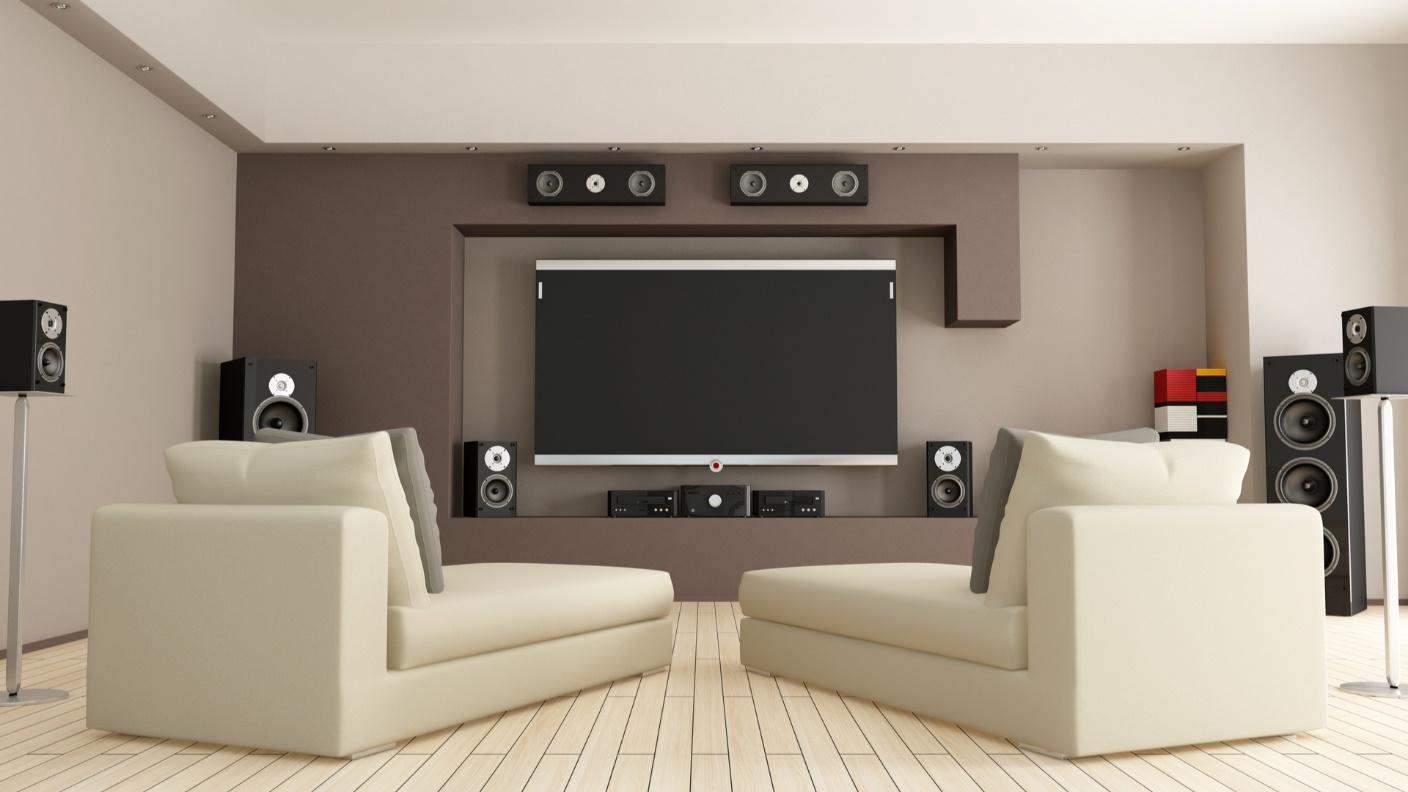

A television can have a sharp picture and still make every film feel flat when voices come from a thin built-in speaker. The right system adds a real center channel, controlled bass, and speakers that place effects around the room. Our guide to the Best home audio systems focuses on complete packages that are practical to install and meaningfully different from one another.
The ULTIMEA Aura A60 Pro is our top pick because it combines Dolby Atmos, four surround speakers, useful app controls, and a manageable layout. The rest of the list covers traditional AV receiver systems, compact wireless kits, a strong wired surround option, and simple soundbar packages.
Comparison table
| # | Product | Award | Channels | Key connections | Best for |
|---|---|---|---|---|---|
| 1 | ULTIMEA Aura A60 Pro | Best overall | 7.1ch Dolby Atmos | HDMI ARC, app control | A balanced, immersive TV setup |
| 2 | ULTIMEA 5.1.2ch Soundbar | Best Atmos soundbar | 5.1.2ch Dolby Atmos | HDMI eARC, app control | Height effects and easy control |
| 3 | Sony BRAVIA Theater System 6 | Best for dialogue | 5.1ch | Bluetooth, Bravia Connect | Sony TV owners and clear voices |
| 4 | Yamaha YHT-4950U | Best traditional setup | 5.1-channel | 4 HDMI, Bluetooth | A conventional receiver system |
| 5 | LG S40TR | Best compact wireless kit | 4.1ch | Wireless rears, Bluetooth | Smaller rooms and LG TVs |
| 6 | Yamaha YHT-4970U | Best for gaming and upgrades | 5.1-channel | 4K/120, 8K/60, HDMI eARC | Modern consoles and AV flexibility |
| 7 | Saiyin Soundbar System | Best simple 2.1 system | Soundbar and subwoofer | Optical, Bluetooth, AUX | Basic TV and PC audio |
| 8 | Hiwill-Audio N512 | Best wired surround value | 5.1.2 virtual surround | HDMI ARC, optical, USB, Bluetooth | Material-focused sound |
| 9 | Hiwill-Audio M514 | Best full Atmos package | True 5.1.4 Dolby Atmos | Dolby Atmos system | Maximum channel separation |
| 10 | Rockville HTS56 | Best feature-packed party system | 5.1-channel | Bluetooth, USB, SD, RCA, optical | Karaoke and casual entertainment |
1. ULTIMEA Aura A60 Pro: Best Overall

Pros
- Four surround speakers create a wide soundstage
- Dolby Atmos adds height to compatible content
- Wireless connection for the rear right surround speaker
- Extensive app tuning with 121 EQ presets
- Wired 5.25-inch subwoofer adds dedicated bass
Cons
- Not every rear speaker is wireless
- The system is intended for rooms from 108 to 270 square feet
- DTS support is not listed
Best for: someone who wants convincing surround sound without committing to a full AV receiver system.
The Aura A60 Pro is the easiest system here to recommend to a broad range of TV owners. It has enough physical speakers to sound genuinely spread across a room, but it avoids the receiver, speaker wire, and input-management burden that comes with the Yamaha packages. The soundbar carries three main channels, while four surround speakers help move effects away from the screen.
Its 7.1-channel layout is particularly useful for action films and games with movement across the soundstage. Dolby Atmos adds an overhead dimension when the source supports it, though the effect still depends on room shape, ceiling height, and speaker placement. ULTIMEA recommends it for a space from 108 to 270 square feet, so this is not a system we'd choose to fill a very large open-plan room.
Bass comes from a wired 5.25-inch subwoofer using BassMX technology. That arrangement keeps low-frequency effects separate from the bar, giving explosions and music more weight than a bar alone can manage. The physical layout also matters: two front surround speakers and two rear surround speakers create a fuller field than the LG S40TR, while the Sony BRAVIA Theater System 6 has a more conventional 5.1 arrangement.
The ULTIMEA app is the system's most distinctive feature. It offers 121 professionally tuned presets, six listening modes, a 10-band equalizer, and 13 steps of surround level adjustment. That gives you more control than the simple three-mode Saiyin system and more everyday flexibility than a package that expects you to live with its factory tuning.
The weakness is the mixed wiring arrangement. The rear right surround speaker pairs wirelessly with the soundbar, but the system still includes wired front and rear surround connections, so it is not a completely cable-free installation. DTS compatibility is also not listed. Choose it when you want a wide, adjustable cinema setup with a relatively approachable installation, not when you want the cleanest possible wireless room.
2. ULTIMEA 5.1.2ch Soundbar: Best Atmos Soundbar

Pros
- Up-firing drivers support Dolby Atmos height effects
- HDMI eARC handles lossless 5.1.2-channel audio
- App provides detailed sound customization
- Rear speakers create a true surround layout
- CEC can synchronize TV and soundbar controls
Cons
- Not compatible with DTS
- Requires suitable HDMI eARC equipment for its fullest output
- Physical surround speakers still need careful placement
Best for: viewers who want the most direct route to Atmos height effects and detailed audio control.
The second ULTIMEA is more focused than the Aura A60 Pro. Its 5.1.2 layout puts the emphasis on two up-firing Atmos channels, two rear surround speakers, and a subwoofer. For a room where overhead effects matter more than the broadest possible speaker count, this is a compelling alternative.
Those up-firing channels use neodymium magnets and 18-core voice coils, according to the product details. The practical point is that the system is designed to throw sound upward rather than merely simulate height through processing. The ceiling still has to cooperate, and Atmos mixes will make the difference most obvious, but the hardware gives compatible soundtracks a better foundation than a standard 5.1 bar.
HDMI eARC is another important advantage. The connection supports up to 37Mbps of bandwidth for lossless 5.1.2-channel audio, while CEC allows compatible TV and soundbar controls to work together. That makes this a better fit for a recent TV with eARC than for an older set limited to basic ARC or optical output.
The Ultimea app is unusually deep for a soundbar package. You can adjust surround levels across a 13-step range, use a 10-band graphic equalizer, choose from 121 presets, and receive over-the-air updates. That is more granular than the LG S40TR's 3-band equalizer and more expansive than the Sony BRAVIA Connect controls.
This system is not compatible with DTS, a limitation that matters if your disc player or game console regularly outputs that format. It also makes less sense if your TV cannot pass Atmos through eARC. If your source equipment is compatible, though, this is the pick for listeners who want height effects and control without stepping up to a separate receiver.
3. Sony BRAVIA Theater System 6: Best for Dialogue

Pros
- Dedicated center channel keeps dialogue anchored
- Dolby Atmos and DTS:X support
- Includes rear speakers and a separate subwoofer
- Bravia Connect app handles sound profiles and settings
- Bluetooth supports wireless music playback
Cons
- Less adjustable than the ULTIMEA systems
- The strongest TV integration is reserved for compatible Bravia TVs
- The listed system dimensions are substantial
Best for: people who want intelligible movie dialogue and already use a compatible Sony Bravia television.
Sony's BRAVIA Theater System 6 takes a restrained approach to surround sound. It uses three front-firing speakers, two rear speakers, and a separate subwoofer in a 5.1-channel arrangement. The dedicated center channel is the feature to care about first, because it places speech in the middle of the screen instead of asking a left-right bar to create a phantom center.
That design suits dialogue-heavy shows, news, and films with busy soundtracks. Dolby Atmos and DTS:X support give it access to modern object-based formats, while Multi Stereo can play the same signal through all speakers for a more room-filling presentation. It is a useful option when you want consistent coverage for casual viewing rather than highly directional effects in every scene.
The Bravia connection is the system's clearest ecosystem advantage. With a compatible Bravia TV, you can control the soundbar from the television menu and use Voice Zoom 3 for enhanced dialogue. The Bravia Connect app also provides volume, sound profiles, and advanced settings from a phone. Bluetooth takes care of music streaming from a smartphone without turning on the TV.
Compared with the ULTIMEA 5.1.2ch Soundbar, Sony gives you DTS:X support but lacks the ULTIMEA's up-firing Atmos channels and 121 EQ presets. Compared with the LG S40TR, it has a more clearly specified front speaker layout and stronger format support, though the LG's wireless rear arrangement may suit some rooms better.
Sony lists the system dimensions as 41.3 inches in length, 22.1 inches in width, and 12.5 inches in height, so plan the furniture and placement before buying. The best experience also depends on owning a compatible Bravia TV. Choose the Theater System 6 for a polished Sony setup where speech clarity matters more than deep manual tuning.
4. Yamaha YHT-4950U: Best Traditional Setup

Pros
- Separate AV receiver and five-speaker layout
- Four HDMI inputs
- YPAO room optimization
- Bluetooth for music and podcast streaming
- Flexible speaker placement, including virtual cinema front
Cons
- No wireless speaker functionality
- Requires more cable management than a soundbar kit
- The complete package is heavy and space intensive
Best for: listeners who prefer a conventional receiver and speaker arrangement over an all-in-one soundbar.
The YHT-4950U is the classic home theater choice in this group. Instead of putting most of the processing and amplification into a soundbar, Yamaha supplies an AV receiver, four speakers, a center speaker, a subwoofer, and speaker wire. That takes more work to install, but it also gives you the physical separation that makes a traditional 5.1 system sound anchored and spacious.
The receiver has four HDMI inputs, which is useful if a TV, streaming box, game console, and disc player all need a direct connection. Bluetooth covers music and podcast streaming, but the product details explicitly say there is no wireless functionality. Every speaker position therefore needs planning, cable runs, and access to the receiver.
Yamaha's YPAO room optimization is the system's practical advantage. The included setup process measures the room and adjusts the system, helping compensate for placement and room acoustics. Flexible placement options include virtual cinema front, which can help when rear speakers cannot sit behind the listening position. The published frequency response is 28Hz to 25kHz, giving the package a broad stated range without turning the listing into a performance guarantee.
This package is less modern than the YHT-4970U. The newer Yamaha adds Dolby Atmos, 4K/120, 8K/60, eARC, and gaming features such as ALLM and VRR. The YHT-4950U remains easier to justify for someone with a conventional 4K setup who wants a straightforward receiver and does not need next-generation video switching.
Its real drawback is physical complexity. The receiver is listed at 17 inches wide, 6 inches high, and 12 inches deep, while the complete package weighs 51.8 pounds. If you want minimal visible equipment, the Sony or LG is a better fit. If you want separate speakers, room correction, and multiple HDMI inputs, the Yamaha is the more satisfying foundation.
5. LG S40TR: Best Compact Wireless Kit
Pros
- Wireless rear speakers and wireless subwoofer
- Clear Voice Plus improves speech focus
- WOW Interface works with a compatible LG TV
- Smart Up-Mixer expands two-channel content
- App includes bass, treble, and mid-range controls
Cons
- Four-channel layout is less ambitious than the Atmos systems
- LG ecosystem features are most useful with an LG TV
- Equalizer control is less detailed than ULTIMEA's
Best for: smaller rooms that need surround speakers without a separate AV receiver.
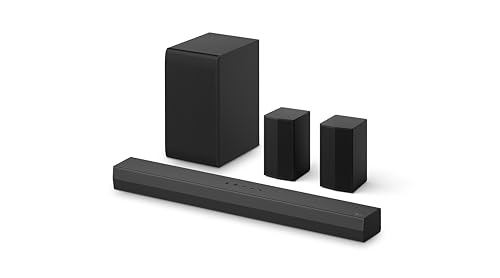
The LG S40TR is built around convenience. Its four-channel soundbar works with a wireless subwoofer and wireless rear speakers, so the room does not need speaker wire running back to a receiver. That makes it a sensible choice for an apartment, bedroom, or living room where a full Yamaha arrangement would be awkward.
LG includes Dolby Audio and DTS Digital compatibility, but this is not an Atmos system. Its strength is creating a wider, more enveloping field from ordinary television content. The Smart Up-Mixer converts two-channel audio into a multi-channel presentation, while Clear Voice Plus analyzes output to improve conversation clarity through the center speakers.
The system becomes more appealing with an LG television. WOW Orchestra can combine the sound from the TV and soundbar, and WOW Interface lets you use one remote to adjust sound settings and check connection status. The LG Soundbar app offers three-band equalizer controls for bass, treble, and mid-range, which is enough for basic shaping but not as comprehensive as the Aura A60 Pro's 10-band system.
At 28.4 inches wide and 2.5 inches high, the bar is relatively easy to place below a TV. The listed system weight is 12.9 pounds, another sign that this is a more manageable installation than a receiver-based package. The compact shape does mean the front stage and low-end authority are not as ambitious as those of the larger ULTIMEA or Hiwill-Audio systems.
The weakness is capability rather than usability. You do not get up-firing Atmos channels, a dedicated receiver, or deep sound customization. For a smaller room, those omissions may not matter. Pick the S40TR when wireless rear speakers and simple LG TV integration are more important than format support and audiophile adjustment.
6. Yamaha YHT-4970U: Best for Gaming and Upgrades

Pros
- Dolby Atmos AV receiver and five-speaker package
- Supports 4K/120 and 8K/60 video
- HDMI eARC and advanced HDR support
- ALLM and VRR support for compatible gaming setups
- Bluetooth Multipoint pairs two source devices
- Automatic room correction with included microphone
Cons
- Requires a full wired speaker installation
- More equipment and setup steps than a soundbar
- Listed package weight is 50.4 pounds
Best for: gamers and home theater owners building around modern HDMI hardware.
The YHT-4970U is the most future-facing traditional system in this roundup. It includes Yamaha's RX300A Dolby Atmos AV receiver, five speakers, a powered subwoofer, speaker wire, and a subwoofer cable. The arrangement is familiar, but the receiver is designed for newer televisions, consoles, and video sources.
Its video specifications are the headline feature. The receiver supports 4K at 120Hz and 8K at 60Hz, with HDMI switching, Dolby Vision, HDR10+, and HDMI eARC or ARC. ALLM and VRR support also make it a stronger match for a modern console than the older YHT-4950U. Those features only help when the rest of the chain supports them, but the receiver gives an upgrade path rather than forcing an immediate replacement.
For sound, the system supports Dolby Atmos and DTS Virtual:X, alongside a clear-dialogue mode and multiple listening presets. Yamaha's room correction uses an included microphone to measure the room and speaker characteristics, then adjusts performance. Bluetooth Multipoint is a welcome detail for households where two phones or source devices need to switch quickly.
The package includes two front speakers, a center speaker, two surround speakers, and a powered subwoofer. It also includes 80 feet of speaker wire, which gives more freedom during installation than the shorter cables supplied with many compact kits. That is a practical advantage, though running that wire still takes time and may require wall management.
The drawback is that this is not a casual soundbar purchase. You need room for the receiver, five speakers, and subwoofer, and the system's full 50.4-pound listed weight reflects that scale. The ULTIMEA Aura A60 Pro is simpler and offers more app-based tuning. Choose the Yamaha when HDMI performance, console compatibility, and long-term flexibility come first.
7. Saiyin Soundbar System: Best Simple 2.1 System

Pros
- Dedicated subwoofer adds bass to a compact setup
- Optical, AUX, and Bluetooth connections
- Includes optical and auxiliary cables
- Three equalizer modes
- Compatible with Fire TV remotes
Cons
- No Dolby or DTS audio format support
- No rear speakers
- Remote is not compatible with universal or TV remotes
Best for: a TV, computer, or small room that needs louder dialogue and fuller bass without surround complexity.
The Saiyin system is the simplest product here, and that is its appeal. It pairs a compact soundbar with a dedicated subwoofer, giving a TV or PC more presence without asking the owner to place rear speakers around the room. It is a 2.1-style solution rather than a true surround system.
Connection options are straightforward. You can use optical, AUX, or Bluetooth, and the package includes both an optical cable and a 3.5mm auxiliary cable. The three equalizer modes cover news, movies, and music, while a front volume progress bar and three-color input indicator make the active connection easy to identify.
The 28-degree sound dispersion angle is intended to keep the listening experience consistent for people sitting at different positions. The soundbar also has a hidden LED indicator and soft lighting, useful if bright status lights are distracting during a film. Its listed size is 17 inches with the subwoofer, making it easier to place than the receiver systems.
The important limitation is explicit format support. Saiyin says the soundbar is not compatible with Dolby or DTS audio, so a TV or streaming device may need to be set to PCM or stereo. That removes the cinematic decoding offered by every higher-ranked surround system, including the compact LG S40TR.
It also uses a dedicated remote that is not compatible with universal or TV remotes, although Fire TV remote compatibility is listed. If you want physical rear channels, Atmos, or a receiver, skip this one. For a bedroom TV, office PC, or basic living-room setup where the main goal is clearer and fuller sound, the Saiyin is refreshingly uncomplicated.
8. Hiwill-Audio N512: Best Wired Surround Value

Pros
- Solid wood cabinets and aluminum-magnesium alloy drivers
- Four surround speakers
- Two up-firing drivers widen the soundstage
- 5.25-inch down-firing subwoofer
- HDMI ARC, optical, USB, AUX, and Bluetooth 5.3
- Adjustable bass, treble, and rear surround levels
Cons
- Dolby Atmos and DTS are not supported
- Rear speakers use a hybrid wired arrangement
- Virtual surround is not the same as discrete Atmos height channels
Best for: listeners who care about cabinet materials and physical surround speakers more than format branding.
The N512 stands out because it talks about construction before software. Hiwill-Audio uses solid wood cabinets and 11 aluminum-magnesium alloy drivers, including dedicated tweeters, full-range drivers, up-firing drivers, and a 5.25-inch down-firing subwoofer. That is a different design priority from the plastic soundbar packages in this list.
The system uses four surround speakers and proprietary Discrete Spatial Expansion technology to broaden the horizontal soundstage. Two up-firing drivers add extra vertical spread, but the product explicitly does not support Dolby Atmos or DTS. This is therefore a virtual surround system with physical speakers, not a decoded 5.1.2 Atmos package like the ULTIMEA 5.1.2ch Soundbar.
Its hybrid wiring design is worth understanding. Both rear speakers connect wirelessly to the main unit, but they are linked together with a single cable. That can provide a stable connection while reducing the amount of wire returning to the soundbar. It is not as wire-free as the LG S40TR, but it may be less prone to pairing resets than a fully wireless arrangement.
The 5.25-inch down-firing subwoofer has adjustable bass from -6 to +6, and the system also allows changes to treble and rear surround level. Preset modes include Movie, Music, News, and Game. For connectivity, it supports HDMI ARC, optical, AUX, USB, and Bluetooth 5.3, making it more flexible for older TVs and local music sources than the Saiyin.
The N512 is a good fit for listeners who value physical materials and broad everyday sound more than Atmos labels. It loses to the Aura A60 Pro and ULTIMEA 5.1.2ch system for decoded object audio, but its wood cabinets and generous input selection make it an interesting alternative. If Dolby Atmos is central to your movie collection, choose another system. If stable surround and flexible playback matter more, this is the unusual pick.
9. Hiwill-Audio M514: Best Full Atmos Package

Pros
- True 5.1.4 Dolby Atmos channel layout
- Independent center speaker for dialogue
- Four dedicated up-firing height channels
- 13.5-liter subwoofer reaches a stated 25Hz
- 16 aluminum-magnesium alloy drivers
- Handcrafted wooden cabinets
Cons
- Requires more placement space than a soundbar
- Wired speaker layout is more involved
- The product listing does not detail the full input set
Best for: home theater enthusiasts who want discrete channels and dedicated height speakers.
The M514 is the most ambitious speaker package here. It is not a soundbar pretending to create a theater. The system uses a separate center speaker, four surround speakers, a dedicated subwoofer, and four up-firing height channels for a true 5.1.4 Dolby Atmos layout.
That physical separation should help dialogue stay fixed at the screen while effects travel around and above the listener. The independent center channel is especially useful for films with dense mixes. Hiwill-Audio also lists independent Hi-Fi crossovers, which divide bass, midrange, and treble duties between the appropriate drivers rather than allowing frequency overlap to blur the presentation.
The system includes 16 rose-gold aluminum-magnesium alloy drivers with copper rings and rare-earth magnets. Those are specific construction details rather than a generic power claim, and they point to a design aimed at fast response and low distortion. Four dedicated up-firing channels also give Atmos soundtracks a more direct hardware path than the N512's virtual surround approach.
Bass comes from a 13.5-liter wired subwoofer with a stated reach down to 25Hz. The separate enclosure should give low-frequency effects more authority than a small bar-mounted driver, while the wooden cabinets are intended to reduce resonance and add acoustic warmth. The tradeoff is obvious: several speakers and a wired subwoofer need room, careful positioning, and cable planning.
Compared with the Yamaha YHT-4970U, the M514 emphasizes speaker hardware and channel layout, while Yamaha offers a more capable receiver with modern video switching and gaming features. Compared with the ULTIMEA systems, the M514 is less compact but has four dedicated height channels and a separate center speaker.
This is the right choice for a listener who wants the most complete physical Atmos layout in the group and has the room to place it properly. Skip it if you want a quick soundbar installation or regularly rearrange furniture. For a fixed viewing position and compatible Atmos content, the M514 has the most theater-like architecture here.
10. Rockville HTS56: Best Feature-Packed Party System

Pros
- Five satellite speakers and an 8-inch subwoofer
- Bluetooth, USB, SD, RCA, and optical inputs
- Two microphone inputs with echo control
- Five-band equalizer
- FM radio
- Includes mounting kits and speaker cables
Cons
- LED lighting is not subtle
- No Dolby Atmos support is listed
- More suited to casual entertainment than precise cinema sound
Best for: movie nights, karaoke, and mixed-use rooms where connection variety matters.
The Rockville HTS56 is less interested in disappearing into a refined home theater. It is a 5.1-channel package with five satellite speakers, an 8-inch subwoofer, LED lighting, karaoke controls, and a wide collection of inputs. It makes the most sense for a family room, party space, or game room where music and microphones matter as much as film sound.
The connection list is unusually broad. Bluetooth handles phones, while USB, SD, RCA, and optical inputs cover local media, older devices, and TVs. The system also includes two microphone inputs with echo control, a five-band equalizer, and FM radio. None of that replaces Atmos decoding or a modern AV receiver, but it gives the Rockville more ways to be used.
Rockville lists 1000W peak power and an 8-inch subwoofer. Peak figures should not be treated as a complete description of sound quality, but the larger subwoofer points to a system designed for impact. The included cables can run up to 30 feet, and the package includes mounting kits, signal and antenna cables, and a setup manual.
The LED display and subwoofer or satellite lighting can use modes such as blink-to-beat and spectrum analyzer. That will appeal to some users and irritate others, particularly in a dark movie room. The ULTIMEA and Yamaha systems are more focused on immersive cinema presentation, while the Rockville brings more visible party hardware to the room.
Its main weakness is format and refinement. Dolby Atmos is not listed, and the product is better understood as a versatile 5.1 entertainment system than a precise modern home theater platform. Choose it for karaoke, Bluetooth playback, and flexible inputs. Choose the Sony, Yamaha, or ULTIMEA systems when accurate cinematic placement and dialogue focus are the priority.
How to choose the best home audio systems
The right system depends less on a large channel number than on your room, source devices, speaker placement, and tolerance for cables.
Channel layout
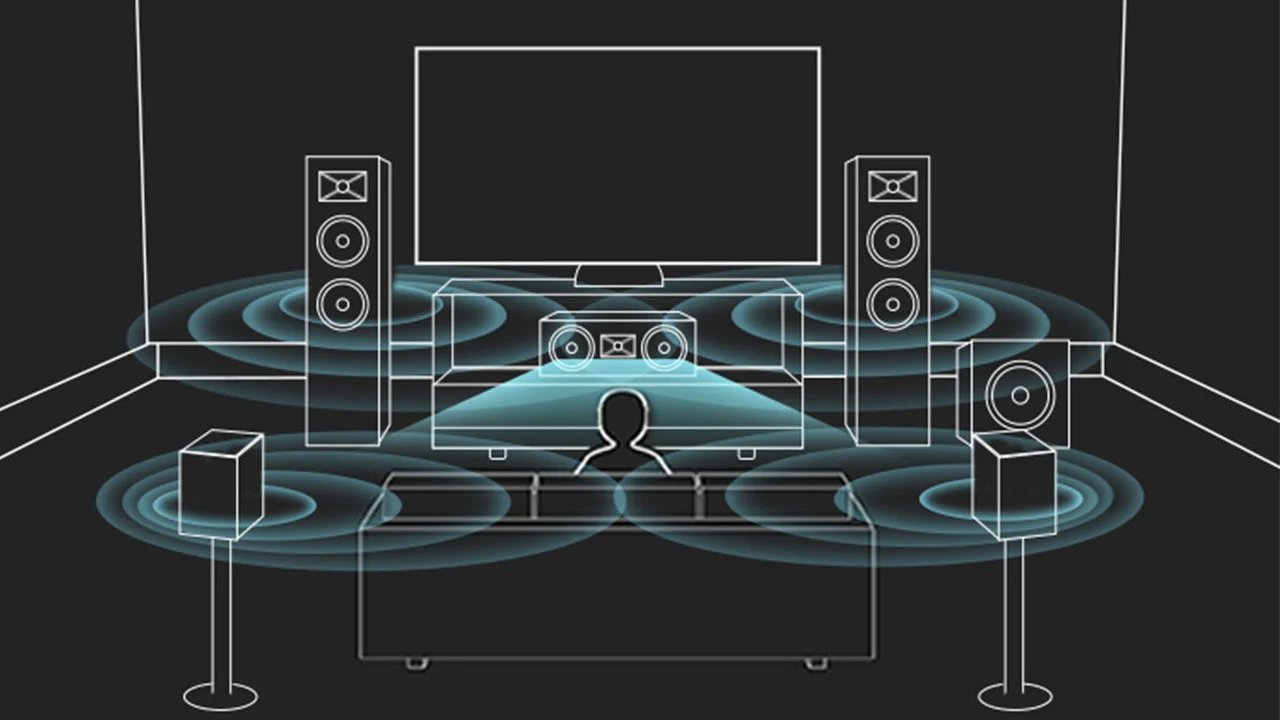
A 2.1 system such as the Saiyin combines a soundbar with a subwoofer, which improves bass but does not place effects behind you. A 5.1 system adds a center channel, front channels, rear channels, and a subwoofer. Systems with a second number, such as 5.1.2 or 5.1.4, add height channels for Atmos content.
More channels can create a larger soundstage, but only when the room allows sensible placement. A badly positioned 5.1.4 package can sound less convincing than a well-arranged 5.1 system.
Physical rear and height speakers matter only when they can be positioned where the soundtrack expects them.
Dolby Atmos and format support
Dolby Atmos uses object-based audio to place sounds around and above the listener. Up-firing drivers can reflect height effects from the ceiling, while dedicated height speakers send those channels more directly. The ULTIMEA 5.1.2ch Soundbar, Yamaha YHT-4970U, and Hiwill-Audio M514 take different approaches to Atmos.
Check the source chain as well. HDMI eARC is the most useful connection for high-bandwidth audio from a recent TV. Optical and basic ARC can still work for many systems, but they may not pass every format. DTS support also varies, and the Saiyin, ULTIMEA 5.1.2ch system, and Hiwill-Audio N512 have different limitations.
Speaker placement and wiring
Traditional AV receiver systems offer the most separation, but they also demand the most planning. The Yamaha YHT-4950U and YHT-4970U include separate speakers and speaker wire, while the LG S40TR uses wireless rear speakers and a wireless subwoofer.
Hybrid systems can split the difference. The Aura A60 Pro uses a mix of wired and wireless connections, and the N512 links its rear speakers together with a cable. Measure the distance from the TV to the seating position and decide where cables can run before choosing a layout.
Dialogue and center channels
A dedicated center channel keeps voices anchored to the screen. The Sony BRAVIA Theater System 6 and Hiwill-Audio M514 make this part of their design, while the LG S40TR uses Clear Voice Plus and the ULTIMEA systems provide voice-oriented sound modes.
If you watch dramas, news, or dialogue-heavy films, prioritize center-channel clarity over maximum bass. A system that can make speech distinct at moderate volume is more useful than one that only sounds impressive during explosions.
Connections and control
Count every source you plan to connect. HDMI inputs on the Yamaha YHT-4950U and YHT-4970U suit multiple consoles and video players. Bluetooth is useful for phones, while USB, SD, RCA, and optical make the Rockville HTS56 unusually adaptable.
App control can also change the ownership experience. ULTIMEA offers 10-band equalization and extensive presets, LG provides a 3-band equalizer, and Sony's Bravia Connect app handles settings from a phone. A simple remote may be preferable if other household members do not want another app.
For a wider look at room layouts and speaker arrangements, the tradeoffs between wired and wireless surround setups are worth considering before you commit.
Frequently asked questions
Do these systems work with any TV?
Most can connect to a TV through an available HDMI ARC, HDMI eARC, optical, or AUX connection. Compatibility depends on the ports and audio formats your television can output. The Saiyin system may require PCM or stereo output because it does not support Dolby or DTS formats.
Is a soundbar system better than an AV receiver system?
A soundbar system is easier to install and usually takes less space. An AV receiver system offers more physical separation, more inputs, and greater flexibility for future sources. Choose the format that matches your room and willingness to manage speaker cables.
Do I need Dolby Atmos?
You do not need Atmos for clear dialogue or enjoyable surround sound. Atmos is most useful when you watch compatible content and can place the system correctly, especially when the room has a suitable ceiling for up-firing drivers. A well-positioned conventional 5.1 system can still sound excellent.
Are wireless rear speakers completely cable-free?
Not always. The LG S40TR lists wireless rear speakers, while the Aura A60 Pro and Hiwill-Audio N512 use mixed arrangements. Check how each rear speaker receives power and whether the pair needs a connecting cable.
Can I use these systems for music?
Yes. Bluetooth is included on the ULTIMEA, Sony, Yamaha, LG, Saiyin, Hiwill-Audio, and Rockville systems, although the exact listening presentation differs. The Rockville HTS56 also supports USB, SD, RCA, and FM radio, while Yamaha's receiver systems are better suited to a broader home AV setup.
Which system is easiest to tune?
The ULTIMEA systems offer the deepest listed control, with app-based presets and equalizer adjustment. LG provides simpler app controls for bass, treble, and mid-range, while Yamaha uses automatic room correction through a setup microphone. The best option depends on whether you prefer manual control or guided setup.
The bottom line
The Best home audio systems list has one clear all-rounder: ULTIMEA Aura A60 Pro. It combines Dolby Atmos, four surround speakers, a dedicated subwoofer, and unusually detailed app control without requiring a full AV receiver. The ULTIMEA 5.1.2ch Soundbar is the better fit when up-firing Atmos channels and HDMI eARC matter most.
For a traditional setup, choose the Yamaha YHT-4970U if you have modern gaming and video equipment, or the Yamaha YHT-4950U if your needs are centered on conventional 4K home theater. The Sony BRAVIA Theater System 6 is the strongest dialogue-focused option, while the LG S40TR makes more sense in a smaller room with a compatible LG TV.
If you are undecided, choose the Aura A60 Pro for flexible surround sound, or the Yamaha YHT-4970U for a receiver-based system you can build around for years.
As an Amazon Associate we earn from qualifying purchases.