

A stereo system can become complicated quickly. Add a turntable, television, phone, CD player, and passive speakers, and the amplifier becomes the piece that decides how cleanly everything works together. The Best integrated amplifier should make those connections simple without forcing you to give up useful controls or convincing sound.
This list includes full-size stereo amplifiers, compact desktop models, hybrid tube designs, and stereo receivers. The Denon PMA-600NE is our top pick for most listeners, while the Yamaha A-S801 is the more ambitious choice for a serious digital and analog system.
Comparison table
| # | Product | Award | Power | Inputs | Best for |
|---|---|---|---|---|---|
| 1 | Denon PMA-600NE | Best overall | 70W at 4 ohms | Bluetooth, optical, coaxial, phono | Mixed digital and analog systems |
| 2 | Yamaha A-S301 | Best traditional amplifier | Not specified | Optical, coaxial, phono | Straightforward living-room setups |
| 3 | Yamaha A-S701 | Best for larger speakers | 100W per channel | Optical, coaxial, phono | High-output stereo listening |
| 4 | Yamaha A-S801 | Best digital upgrade | 100W per channel | USB, optical, coaxial, phono | High-resolution computer audio |
| 5 | Fosi Audio MC331 | Best compact tube design | 105W per channel at 4 ohms | Bluetooth, USB, optical, coaxial, RCA | Desktops and small bookshelf speakers |
| 6 | Sony STRDH190 | Best stereo receiver | 100W per channel at 8 ohms | Bluetooth, phono, four RCA, 3.5mm | Vinyl and radio listeners |
| 7 | Dayton Audio HTA200 | Best hybrid tube receiver | 100W RMS per channel | RCA, optical, Bluetooth, USB, phono | Vintage-style systems |
| 8 | Cambridge Audio AXA35 | Best simple analog amplifier | 35W per channel at 8 ohms | Four RCA, phono, 3.5mm | Focused two-channel setups |
| 9 | Yamaha A-S701 Silver | Best silver finish | 100W per channel | Optical, coaxial, phono | Matching silver component systems |
| 10 | Fosi Audio TB10D | Best mini amplifier | 300W per channel claimed | RCA | Small desks and bass shakers |
1. Denon PMA-600NE: Best Overall

Pros
- Bluetooth makes phone streaming easy
- Optical, coaxial, and phono inputs cover the main sources
- Divided circuitry can disengage digital circuits
- Compact full-size design
- Supports speakers at 4 ohms
Cons
- Does not include USB audio
- Bluetooth is the only wireless source connection
- Larger than the compact Fosi models
Best for: listeners building a flexible two-channel system around passive speakers, a turntable, and digital sources.
The Denon PMA-600NE is the amplifier we would put at the center of the widest range of ordinary home systems. It has the reassuring shape and control layout of a traditional stereo component, but it does not treat streaming or television audio as an afterthought. Bluetooth handles quick listening from a phone, while two optical inputs and one coaxial input give TVs, disc players, and other digital sources a direct route into the built-in DAC.
Denon specifies 70 watts at 4 ohms, and that matters because the amplifier is designed to accommodate a broad range of passive speakers rather than only easy-to-drive compact models. The Advanced High Current push-pull circuit is intended to balance output and detail. That makes the PMA-600NE a more substantial choice than the tiny Fosi Audio TB10D when the amplifier will anchor a conventional living-room system.
Its most distinctive feature is the divided circuitry. The digital circuits can be disengaged, including Bluetooth, when you want an undisturbed analog path. That is a useful touch for someone who alternates between a turntable and wireless listening, although it is not the same as having a dedicated high-end analog-only amplifier. The built-in phono input also removes the need for a separate phono preamp, provided your turntable does not require a special external setup.
The 17.1-inch length and 18-pound weight give it a proper component footprint without making it unusually difficult to place. It is less compact than the Fosi Audio MC331 and less powerful on paper than the Yamaha A-S701, but it is more balanced as a system hub than either. The weakness is connectivity: there is no USB input, and listeners with a computer as their main source may prefer the Yamaha A-S801.
Choose the Denon PMA-600NE when you want one calm, well-equipped center for vinyl, television, Bluetooth, and passive speakers. It is the Best integrated amplifier here for the listener who wants a serious conventional component without turning setup into a project.
2. Yamaha A-S301: Best Traditional Amplifier

Pros
- Optical and coaxial digital inputs
- Phono input for a turntable
- Speaker A, B, and A plus B switching
- Subwoofer output
- Traditional full-size controls
Cons
- No Bluetooth listed
- No USB input
- Larger and heavier than compact desktop amps
Best for: listeners who want a conventional Yamaha component with flexible speaker switching and essential digital inputs.
The Yamaha A-S301 is a straightforward amplifier in the best sense. It is built for somebody who already knows the sources they intend to use and wants a clean front panel, useful speaker controls, and no dependence on a companion app. The design is more traditional than the Denon PMA-600NE, and its appeal comes from getting the core stereo arrangement right.
Yamaha lists a digital coaxial input and a Toslink optical input, along with analog inputs that include phono. That gives a television or digital player a direct connection while preserving a simple path for a record player. It does not list Bluetooth or USB, so phone streaming and computer audio will require an external source. That limitation is significant beside the Denon, which handles Bluetooth internally, and the Yamaha A-S801, which adds a USB DAC.
The A-S301 supports speaker A, B, and A plus B operation, with a subwoofer output. That is useful if you want to switch between a primary pair and a second pair, or use two listening areas with compatible speaker loads. The feature set makes more sense for a component rack or living-room cabinet than a desktop. Its listed dimensions are 17.125 inches long, 15.25 inches wide, and 6 inches high, with a 19.8-pound weight.
The missing wireless and USB options are the clear trade-offs. The Sony STRDH190 is more convenient for Bluetooth listeners and adds FM radio, while the Denon offers a more modern blend of digital and wireless sources. The A-S301 counters with a focused layout and speaker switching that neither compact Fosi model matches.
This is the Yamaha to choose when your system is built around a turntable, optical source, coaxial source, and one or two pairs of passive speakers. It is a good fit for a listener who values physical controls and predictable connections more than streaming convenience.
3. Yamaha A-S701: Best for Larger Speakers

Pros
- 100 watts per channel
- Optical and coaxial digital inputs
- Phono input included
- Speaker A, B, and A plus B switching
- Auto standby feature
Cons
- No Bluetooth listed
- No USB DAC
- Large and heavy component
Best for: listeners who need more conventional amplifier output for a larger room or demanding passive speakers.
The Yamaha A-S701 is the sensible step up when the A-S301 feels too modest for the room or speakers. Its 100 watts per channel, measured from 20 Hz to 20 kHz with 0.019 percent THD, gives it substantially more headroom than the smaller Yamaha. More headroom does not automatically make music better, but it helps an amplifier stay composed when the volume rises or the speakers are less efficient.
The input selection remains familiar. There is a gold-plated digital coaxial input, a Toslink optical input, and gold-plated analog inputs including phono. The A-S701 can therefore handle a television, disc player, or turntable without requiring an external switching box. Speaker A, B, and A plus B selection allows the component to work in a multi-pair arrangement, and auto standby after eight hours helps avoid leaving it running indefinitely.
This model is physically substantial. It is 17.125 inches long, 15.25 inches wide, and 6 inches high, and its listed weight is 24.7 pounds. That mass and full-size footprint make it a poor choice for a shallow desk, but they are entirely at home in a proper audio cabinet. The Sony STRDH190 is easier to recommend for a basic receiver setup, while the A-S701 is better suited to someone who wants a dedicated amplifier with stronger output.
The A-S701 does not include USB audio or Bluetooth. That omission is its main weakness, especially beside the A-S801. If a computer is the main source, the A-S801's USB DAC makes it the more complete option. If the sources are a turntable, television, and optical or coaxial player, the A-S701 keeps the system simpler and avoids adding features you may not use.
Pick the Yamaha A-S701 for a substantial two-channel system where speaker control and amplifier headroom matter more than wireless convenience. It is especially well matched to listeners who want to build around a larger pair of passive speakers and keep the source equipment separate.
4. Yamaha A-S801: Best Digital Upgrade

Pros
- 100 watts per channel
- USB DAC supports DSD and high-resolution PCM
- Optical and coaxial inputs
- Gold-plated analog inputs including phono
- Speaker A, B, and A plus B switching
Cons
- No Bluetooth listed
- Large 26.7-pound chassis
- More capability than a simple analog setup needs
Best for: listeners using a computer or high-resolution digital library alongside a turntable and passive speakers.
The Yamaha A-S801 is the most complete full-size amplifier in this group for a digital-first listener. It keeps the A-S701's 100 watts per channel and conventional speaker switching, then adds a USB DAC that can accept DSD at 2.8 MHz and 5.6 MHz as well as PCM up to 384 kHz and 32 bit. Those figures matter mainly because they let a computer or compatible digital source connect directly without automatically needing another DAC component.
Optical and coaxial inputs remain available for a television, disc player, or other digital source. Gold-plated analog inputs include phono, so the A-S801 does not force a choice between computer audio and vinyl. Its listed frequency response is 10 Hz to 100 kHz with plus or minus 1.0 dB, a specification that suggests broad bandwidth, though the speaker and recording will still have a larger effect on what you hear.
Yamaha also lists a custom-made power transformer, 12, 000 microfarad block capacitors, and extruded aluminum heat sinks. These are internal construction details rather than features you operate, but they explain why this amplifier feels more like the center of a serious component system than an accessory for a desktop. The 17.125-inch width, 15.25-inch depth, 6-inch height, and 26.7-pound weight require a sturdy shelf with ventilation.
The omission is Bluetooth. A phone-first listener will find the Denon PMA-600NE easier, and the Fosi Audio MC331 combines Bluetooth with a much smaller chassis. The A-S801 makes a different argument: direct wired digital connections, stronger traditional component construction, and plenty of input flexibility. It is also more amplifier than many compact bookshelf speakers require.
Choose this Yamaha when your music library lives on a computer or high-resolution player, but your system still includes a turntable and full-size passive speakers. For a digital and analog setup that should remain useful as it grows, the A-S801 is the most capable Yamaha here.
5. Fosi Audio MC331: Best Compact Tube Design

Pros
- DAC, preamplifier, headphone amplifier, and power amplifier in one
- Bluetooth, USB, optical, coaxial, and RCA inputs
- Replaceable tube design
- 3.5mm headphone output
- Bass and treble controls with remote
Cons
- Turntable requires a built-in phono preamp
- Compact design is less suited to large-room systems
- Included tube type is not selectable
Best for: desktop listeners and small-room users who want tube styling, many inputs, and headphone support in one compact unit.
The Fosi Audio MC331 is the most unusual amplifier here because it tries to be an entire small system rather than only a power stage. It combines a DAC, preamplifier, amplifier, and headphone amplifier in a chassis that is roughly 5.94 inches long, 5.31 inches wide, and 1.97 inches high. The exposed tubes and vintage VU meter give it a visual presence that the black Yamaha and Denon components do not attempt.
Connectivity is unusually generous for such a small unit. The MC331 supports Bluetooth, USB, coaxial, optical, and RCA inputs, and it has a 3.5mm headphone output and pre-out. That combination lets a computer, phone, television, CD player, or other source share the same compact system. The RCA connection can work with a turntable that already has a built-in phono preamp, but the MC331 itself is not listed with a dedicated phono input.
Fosi Audio specifies maximum output of 105 watts by two at 4 ohms. That is a striking claim for a small enclosure, though maximum output figures should not be treated as a direct promise of how every speaker will perform in every room. For nearfield listening and bookshelf speakers, the practical advantage is flexibility rather than a contest with the 100-watt Yamaha amplifiers. Bass and treble controls can be changed from the remote, and the tubes are replaceable for listeners who want to experiment with the sound.
The small chassis is also the reason to be careful. It is an excellent fit for a desk or compact shelf, but the Denon PMA-600NE and Yamaha A-S701 are more natural choices for a full-size living-room system. Tube equipment also appeals to people who enjoy its character and appearance, not to someone who wants the least decorative, most maintenance-free component. Fosi notes that the tubes shipped are 5725W and 6J1, with the included tubes supplied randomly rather than selected by the buyer.
The MC331 is a strong choice for a compact setup with passive bookshelf speakers and headphones. If your system needs a phono input, larger-room authority, or a traditional rack component, look elsewhere. If you want a small amplifier that can handle a computer, phone, headphones, and several digital connections while adding tube style, this is the most engaging option in the group.
6. Sony STRDH190: Best Stereo Receiver

Pros
- Bluetooth built in
- Phono input and four stereo RCA inputs
- FM radio with 30 presets
- Speaker A and B switching
- Full-size headphone jack
Cons
- No optical or coaxial digital input listed
- Less suitable for digital TV connections
- Receiver chassis is larger than mini amplifiers
Best for: listeners who want vinyl, Bluetooth, FM radio, and conventional stereo inputs in one receiver.
The Sony STRDH190 is technically a stereo receiver, but it belongs in this comparison because it solves the same basic problem as an integrated amplifier while adding FM radio. It is an easy component to understand: connect a turntable, a few analog sources, or a phone over Bluetooth, then switch between speakers or listening zones from the front panel or remote.
Sony lists 100 watts by two at 8 ohms and a speaker impedance range of 6 to 16 ohms. It has a phono input, four stereo RCA inputs, a 3.5mm input, and a stereo RCA output. The full-size quarter-inch headphone jack is a useful inclusion for late listening. Up to four speakers can be connected, with A and B switching for separate operation or simultaneous playback.
The built-in Bluetooth is the feature that makes this receiver friendlier than the Yamaha A-S301 for casual wireless listening. FM radio with 30 station presets adds another source without requiring a separate tuner. The low-profile 5.2-inch height should fit conventional AV furniture, although the 17-inch width and 17.1-pound weight still call for a normal component shelf rather than a small desk.
The biggest compromise is the lack of an optical or coaxial digital input in the listed connections. A television will need an analog output or an external converter, while the Denon PMA-600NE and Yamaha A-S701 accept digital sources directly. The Sony is also less focused on audiophile system expansion than the A-S801. Its strength is convenience, not an unusually broad digital platform.
Choose the STRDH190 when a record player, FM radio, Bluetooth phone, and several analog devices are the heart of the system. It is a particularly sensible option for someone who wants a receiver rather than a bare amplifier, provided the main television or computer source can connect through analog audio.
7. Dayton Audio HTA200: Best Hybrid Tube Receiver

Pros
- 100 watts RMS per channel
- Tube preamplifier with Class A/B output stage
- Bluetooth, USB DAC, optical, RCA, and phono
- Motorized volume knob
- Front-panel VU meters and exposed tubes
Cons
- Unusually tall chassis
- Much lighter than the full-size Yamaha models
- Tube character is not the right fit for every system
Best for: listeners who want modern source connections with a visible tube preamp and vintage-style controls.
The Dayton Audio HTA200 brings the hybrid tube idea to a more conventional feature set. Its tube preamp is paired with a Class A/B amplifier topology, so the design aims to combine some tube warmth with the output behavior of a solid-state stage. The front-panel VU meters and exposed tubes make it a component you will notice, especially beside the understated Yamaha models.
Dayton Audio specifies 100 watts RMS per channel. That is enough on paper for a serious stereo setup, but the product's unusually shaped chassis deserves attention before you plan a shelf. It is listed as 8.5 inches high, 11 inches wide, and 6.5 inches long, with a weight of 3.6 pounds. The height is the practical issue: many standard component spaces will not have enough clearance, particularly if the tubes need open air around them.
The input selection is strong. The HTA200 includes RCA, optical, Bluetooth, USB DAC, and a phono preamp, so it can accept a turntable, phone, computer, television, or other digital source without immediately adding a separate front-end component. A motorized volume knob works with the included remote, a small but worthwhile convenience when the amplifier sits across a room.
Compared with the Fosi Audio MC331, the Dayton offers a larger, more visibly traditional tube setup and a specified 100-watt RMS output, but it takes up more vertical space. The Yamaha A-S701 is a more restrained solid-state choice, while the Dayton is for someone who specifically wants the glowing-tube presentation. The light 3.6-pound chassis also does not have the reassuring heft of the Denon or Yamaha components.
The HTA200 is best for a listener who wants the system to look and feel like part of the listening experience. Skip it if your shelf is shallow or your priority is a low-profile, neutral-looking amplifier. Pick it if phono, USB, Bluetooth, VU meters, and tube styling all belong in the same system.
8. Cambridge Audio AXA35: Best Simple Analog Amplifier

Pros
- Built-in phono stage
- Four RCA inputs
- Front-panel 3.5mm auxiliary input
- 35 watts per channel at 8 ohms
- Simple two-channel design
Cons
- No Bluetooth listed
- No optical, coaxial, or USB input listed
- Lower output than the Yamaha and Sony models
Best for: listeners building a focused analog system around a turntable and efficient passive speakers.
The Cambridge Audio AXA35 is the purist pick in this group. It does not try to be a wireless receiver, computer DAC, or multi-zone hub. Instead, it concentrates on conventional analog connections and adds a built-in phono stage, making it a natural match for a turntable-centered system.
Its output is 35 watts per channel into 8 ohms. That is substantially less than the 100-watt Yamaha A-S701 and Sony STRDH190, so speaker matching matters more here. Efficient bookshelf or floorstanding speakers in a small to medium room are the sensible partners. The AXA35 is not the model to choose if you expect to fill a large room at high listening levels.
The connection layout includes four RCA inputs, one phono input, and a front-panel 3.5mm auxiliary input. There is no listed Bluetooth, USB, optical, or coaxial input. That means a phone, computer, or television may need an external source device with analog output. The trade-off is a system with fewer digital complications and a clear focus on line-level and phono sources.
Cambridge Audio lists a frequency response of 5 Hz to 50 kHz and a signal-to-noise ratio greater than 82 dB, unweighted, referenced to 1 watt. Its listed dimensions are 3.3 inches high, 16.9 inches wide, and 13.2 inches deep, though the product information also gives larger item dimensions. Plan around the full component footprint and allow ventilation rather than relying on the shorter height alone.
The AXA35 loses to the Denon PMA-600NE for mixed-source flexibility and to the Yamaha A-S801 for computer audio. It wins for the listener who wants the amplifier to stay out of the way and let an analog source lead. If that describes your system, it is a more coherent choice than buying a feature-heavy receiver and leaving most of its inputs unused.
9. Yamaha A-S701 Silver: Best Silver Finish

Pros
- 100 watts per channel
- Optical and coaxial digital inputs
- Gold-plated analog inputs including phono
- Speaker A, B, and A plus B switching
- Auto standby after eight hours
Cons
- No Bluetooth listed
- No USB DAC
- Large 24.7-pound chassis
Best for: listeners who want the A-S701 feature set in a silver component system.
The Yamaha A-S701 Silver is functionally the same kind of amplifier as the black A-S701, but its finish makes it the natural choice for a silver-faced component rack. That distinction matters more than it may seem. Stereo systems often grow one component at a time, and a mismatched finish can make an otherwise carefully assembled system look accidental.
The core specification is 100 watts plus 100 watts from 20 Hz to 20 kHz with 0.019 percent THD. The amplifier includes gold-plated digital coaxial and Toslink optical inputs, as well as gold-plated analog inputs including phono. It also supports speaker A, B, and A plus B operation. Those connections make it well suited to a turntable and television system that may eventually add a second pair of speakers.
Like the black version, the silver A-S701 measures 17.125 inches long, 15.25 inches wide, and 6 inches high, and it weighs 24.7 pounds. This is a full component, not a small desktop amplifier. Its auto standby feature activates after eight hours, which is useful in a system that is often left ready for listening.
The lack of Bluetooth and USB is still the main limitation. The Denon PMA-600NE is more convenient for wireless phone playback, and the A-S801 is the better Yamaha for computer audio. The silver A-S701 makes sense when your sources are connected by cable and the visual match is part of the system plan.
Choose this model over the black A-S701 when the finish matters to the room or the rest of the components. Its amplifier and input capabilities remain strong for a conventional passive-speaker system, but do not select it expecting wireless streaming or a built-in computer DAC.
10. Fosi Audio TB10D: Best Mini Amplifier

Pros
- Extremely compact chassis
- Bass and treble controls
- RCA input and passive speaker output
- Built-in protection circuits
- Designed for speakers from 2 to 8 ohms
Cons
- No Bluetooth listed
- No phono, optical, coaxial, or USB input
- Single RCA source input
Best for: desktop systems, small rooms, and special-purpose passive-speaker or bass-shaker installations.
The Fosi Audio TB10D is the smallest and most specialized amplifier here. Its chassis measures 4.13 inches long, 5.59 inches wide, and 1.57 inches high, with a listed weight of 2.42 pounds. It can disappear behind a monitor or sit neatly on a desk, which is something none of the full-size Yamaha, Denon, Sony, or Cambridge models can do.
Fosi Audio describes the TB10D as using a TPA3255 Class D chip and claims 300 watts per channel, or 600 watts total. Those headline figures need context. The product is intended for passive speakers from 2 to 8 ohms, and its real appeal is the compact enclosure and simple signal path, not replacing a full-size living-room amplifier in every system. The built-in protection circuits are intended to support stable operation.
The controls are refreshingly direct. There are bass and treble knobs, a power switch, one RCA input, and passive speaker outputs. That makes it easy to add to a computer, game room, studio, or television with analog output. It can also be used with a phono preamp or as part of a bass-shaker setup. It does not include Bluetooth, USB, optical, coaxial, or phono inputs, so source flexibility is much narrower than with the Fosi Audio MC331.
The TB10D's weakness is not its size, but the system design it demands. You need a source with analog output and speakers that suit the installation. The Sony STRDH190 is much more practical for vinyl and radio, while the Denon PMA-600NE is the better choice for a mixed-source living-room system. The TB10D earns its place when the amplifier must occupy very little space.
Use it for a compact desktop arrangement, a secondary room, or a project where bass and treble controls are useful. It is not the all-purpose integrated amplifier in this roundup, but it is the cleanest answer when a full-size component would simply be too large.
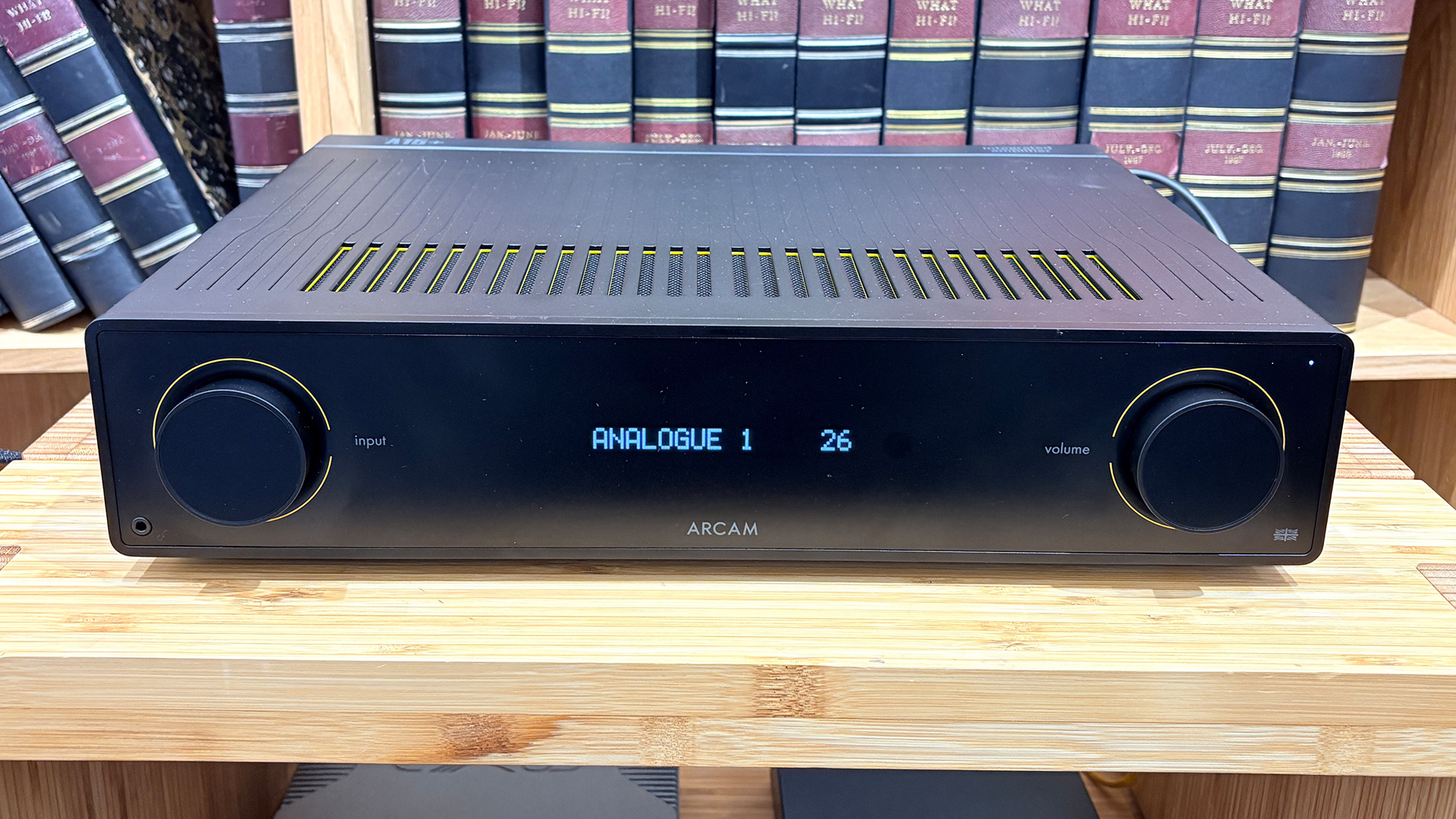
How to choose best integrated amplifier
Start with the sources, speakers, and room rather than the amplifier's marketing language. The right model is the one that supplies the connections and sustained output your system actually needs.
Speaker power and impedance
Power determines how confidently an amplifier can drive a speaker, particularly as listening levels rise or the room gets larger. The Yamaha A-S701 and A-S801 specify 100 watts per channel, while the Cambridge Audio AXA35 specifies 35 watts per channel into 8 ohms. Those figures are not directly comparable unless the measurement conditions match, but they establish the broad shape of each model.
Check the speaker's impedance range and sensitivity before choosing. The Denon PMA-600NE is specified at 70 watts at 4 ohms, the Sony STRDH190 lists support for 6 to 16 ohms, and the Fosi Audio TB10D is listed for 2 to 8 ohms. A compact amplifier can work well with suitable bookshelf speakers, but a difficult speaker in a large room calls for more headroom.
Digital inputs
Optical and coaxial inputs are useful when a television, disc player, or network source is part of the system. The Denon, Yamaha A-S301, Yamaha A-S701, Yamaha A-S801, and Dayton Audio HTA200 include digital connections. The Cambridge AXA35 and Fosi Audio TB10D do not list them, so they rely on an external device that provides analog output.
USB matters most when a computer is a primary music source. The Yamaha A-S801 supports DSD and high-resolution PCM through its USB DAC, while the Fosi Audio MC331 and Dayton HTA200 also list USB connectivity. If your computer is only an occasional source, an optical connection or separate DAC may be enough.
Phono stage
A built-in phono stage lets a turntable connect directly to the amplifier. The Denon PMA-600NE, Yamaha A-S301, Yamaha A-S701 models, Sony STRDH190, Dayton HTA200, and Cambridge AXA35 list phono inputs or phono preamps. The Fosi Audio MC331 can work with a turntable that already has a built-in phono preamp, but its listed inputs do not include a dedicated phono stage.
The distinction is important because a turntable's output is not normally the same as a standard line-level source. If the amplifier lacks a phono input, plan on a turntable with a built-in preamp or a separate phono preamp.
Wireless and source switching
Bluetooth is convenient for quick listening from a phone or tablet. The Denon PMA-600NE, Fosi Audio MC331, Sony STRDH190, and Dayton HTA200 list Bluetooth, while the Yamaha models, Cambridge AXA35, and Fosi Audio TB10D do not.
Speaker switching also changes how an amplifier fits into a home. The Yamaha A-S301, A-S701, A-S801, and Sony STRDH190 support A and B speaker operation. That is useful for a second pair, but it does not turn a two-channel amplifier into a full multiroom system.
A good amplifier should remove connection problems, not create a second equipment project.
Chassis size and placement
Full-size amplifiers need a stable shelf and ventilation. The Denon PMA-600NE is 17.1 inches long and weighs 18 pounds, while the Yamaha A-S801 is 26.7 pounds. Those models belong on proper audio furniture, not a crowded desk.
Compact choices have different compromises. The Fosi Audio MC331 is roughly 2 inches high and weighs 4.2 pounds, while the Fosi Audio TB10D is only 1.57 inches high and weighs 2.42 pounds. The Dayton HTA200 is much taller at 8.5 inches, so its tube design needs more clearance even though it is light.
For a broader look at two-channel system planning, how separate sources shape a music listening setup can help clarify whether you need a source hub or a simpler amplifier. If your system will also serve a television, consider how speakers and source components fit into one home setup before choosing the chassis.
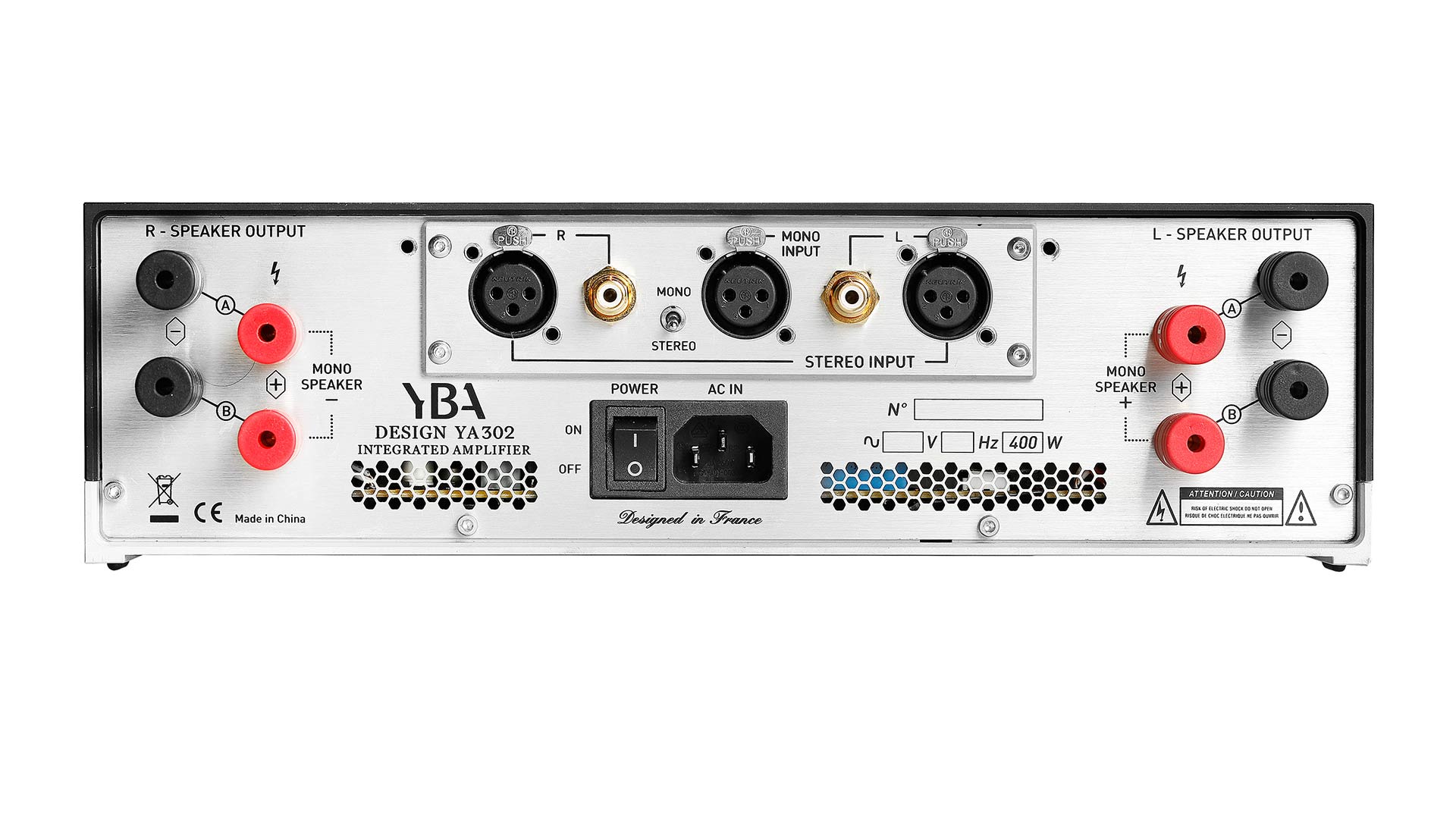
Frequently asked questions
What does an integrated amplifier do?
An integrated amplifier combines a preamplifier and power amplifier in one component. The preamplifier selects and controls the source, while the power amplifier drives passive speakers. Some models also include Bluetooth, digital inputs, a DAC, a phono stage, or a headphone output.
Can an integrated amplifier connect to a turntable?
Yes, if it has a phono input or phono stage. The Denon PMA-600NE, Yamaha A-S301, Yamaha A-S701 models, Sony STRDH190, Dayton HTA200, and Cambridge Audio AXA35 list phono connectivity. A model without a phono input needs a turntable with a built-in preamp or a separate phono preamp.
Is 100 watts per channel enough for home listening?
It can be, but the answer depends on the speaker, room, and listening level. Speaker sensitivity and impedance affect how much amplifier output is needed. The Yamaha A-S701 and A-S801 specify 100 watts per channel, while smaller amplifiers can be appropriate for efficient bookshelf speakers and nearfield listening.
Can an integrated amplifier connect to a TV?
It can connect to a TV if the amplifier and television share a compatible output and input. Optical inputs on models such as the Denon PMA-600NE and Yamaha A-S801 are convenient for televisions with optical audio output. Models with only analog inputs need the TV to provide an analog output or require an external converter.
Do integrated amplifiers support headphones?
Some do. The Fosi Audio MC331 includes a 3.5mm headphone output, and the Sony STRDH190 includes a full-size quarter-inch headphone jack. The other models in this list should not be assumed to support headphones unless the connection is specifically provided.
Is Bluetooth the same as a built-in DAC?
No. Bluetooth receives a wireless audio signal, while a DAC converts digital audio into an analog signal that the amplifier can use. A product can include both, but they are separate functions. The Fosi Audio MC331 combines Bluetooth with USB, optical, and coaxial digital inputs, while the Cambridge Audio AXA35 lists neither Bluetooth nor digital inputs.
Do tube amplifiers sound different from solid-state amplifiers?
Tube designs can add a different visual and circuit character, especially when the tubes are used in the preamp stage. The Fosi Audio MC331 and Dayton Audio HTA200 are hybrid designs that combine tubes with solid-state amplification. The choice should also account for placement, tube access, and whether you actually want that style of component.
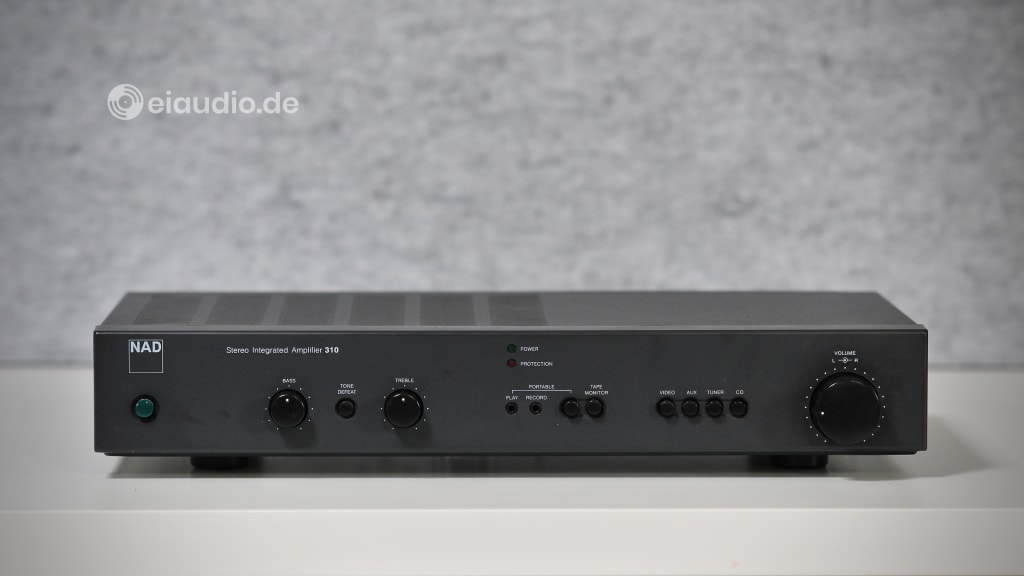
The bottom line
The Best integrated amplifier for most mixed-source systems is the Denon PMA-600NE. It combines Bluetooth, optical, coaxial, and phono connections with a conventional full-size chassis and enough output for a broad range of passive speakers. The Yamaha A-S801 is the better choice for a computer-centered system that needs USB DAC support and 100 watts per channel.
For smaller spaces, the Fosi Audio MC331 offers the most features in the least room, while the Sony STRDH190 is the better fit for vinyl, Bluetooth, and FM radio. The Yamaha A-S701 remains the straightforward high-output option for listeners who prefer traditional wired sources.
If you are undecided, choose the Denon unless your system clearly demands USB audio, a compact tube design, or FM radio.