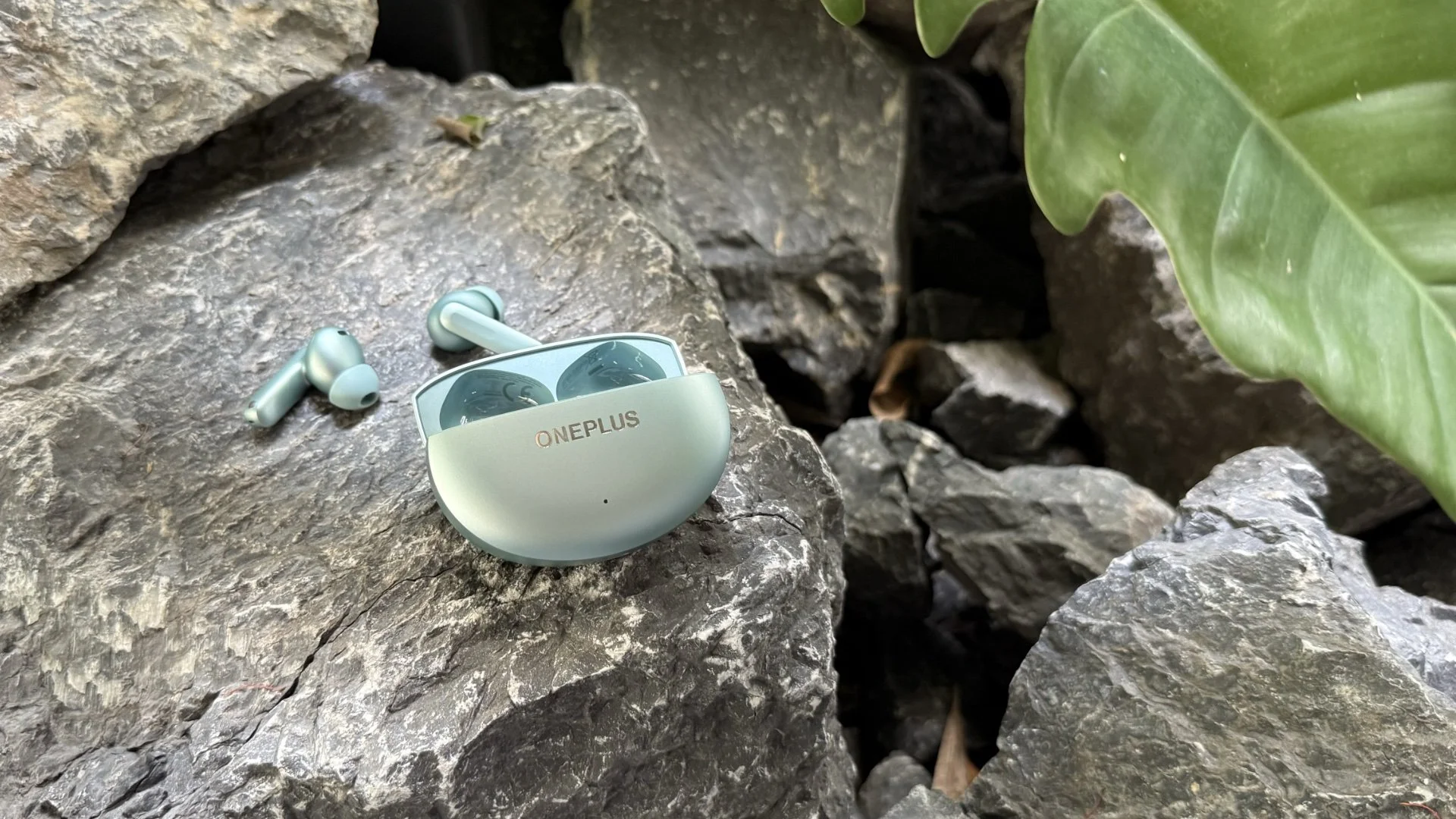

A bad pair of wireless earbuds usually fails in one of three places: the fit slips during a walk, the case dies before the workday ends, or calls become a muffled guessing game. The Best cheap wireless earbuds avoid those traps without turning into complicated gadgets.
I compared ten options across sound, battery claims, fit, call features, controls, and resistance to sweat or splashes. Some are tiny enough for sleeping, some are built for hard workouts, and one adds active noise cancellation that the rest of this group cannot match.
Soundcore P20i is our top pick for most listeners. The list also includes the best small-ear options, the strongest workout designs, the most useful charging cases, and several simple earbuds for everyday listening.
| # | Product | Award | Battery | Driver | Protection | Best for |
|---|---|---|---|---|---|---|
| 1 | Soundcore P20i | Best overall | 10 hours, 30 with case | 10mm | Not stated | Bass and app control |
| 2 | TOZO A1 | Best for small ears | 7 hours, 32 with case | Not stated | IPX5 | Small ears and sleep |
| 3 | Fhumsh A10 White | Best workout fit | 8 hours, 50 with case | 13mm | IPX7 | Running and gym sessions |
| 4 | JBL Vibe Beam | Best established audio brand | 8 hours, 32 with case | 8mm | IP54 earbuds | Bass and daily commuting |
| 5 | kurdene Wireless Earbuds | Best lightweight basic pair | Not stated | 8mm | Not stated | Simple everyday use |
| 6 | Btootos A90 | Best battery display | 6 to 8 hours, 36 with case | 14.2mm | IP7 | Calls and battery tracking |
| 7 | JLab Go Air Pop+ | Best customizable sound | 9+ hours, 35+ with case | Not stated | Not stated | App EQ and awareness mode |
| 8 | Soundcore P30i | Best noise cancellation | 10 hours, 45 with case | 10mm | Not stated | Blocking background noise |
| 9 | MOZOTER S8 | Best battery claim | 8 hours, 60 with case | 10mm | Not stated | Long trips |
| 10 | Fhumsh A10 Black | Best black workout option | 8 hours, 50 with case | 13mm | IPX7 | Sport and commuting |
1. Soundcore P20i: Best Overall

Pros
- 10mm drivers give bass-heavy music genuine weight
- Soundcore app includes 22 EQ presets
- Compact case has a useful lanyard
- Find My Earbuds can help locate a misplaced bud
- Fast charging adds two hours in 10 minutes
Cons
- No water-resistance rating is stated
- Bass-forward tuning will not suit every genre
- Active noise cancellation is not included
Best for: listeners who want strong everyday sound and useful app controls.
The Soundcore P20i is the pair we would hand to someone who wants wireless earbuds without a long setup process or a bare-bones listening experience. The first thing that separates it from the simplest models here is the control you get after pairing it with the Soundcore app. The earbuds already work on their own, but the app gives you 22 EQ presets, customizable controls, and a Find My Earbuds feature that can make a lost bud emit a sound. Those are small conveniences until one of them saves a frustrating search.
Its oversized 10mm drivers are tuned for powerful bass. That makes the P20i a natural fit for hip-hop, electronic music, pop, and action-heavy video, where a thin low end makes inexpensive earbuds sound especially disappointing. The emphasis is less ideal for listeners who prefer a restrained, neutral presentation, but the vocals should remain easier to follow than on many bass-heavy pairs. For podcasts and spoken video, the extra punch is not necessary, yet it does give everyday listening more energy.
Battery life is another reason this model leads the group. Each earbud is rated for 10 hours, while the case raises the total to 30 hours. A 10-minute charge is said to add two hours of listening, which is useful when the earbuds are nearly empty before a commute. The case is compact and includes a lanyard, so it is easier to attach to a bag or keep from disappearing in a pocket than a completely smooth case.
The P20i also uses two built-in microphones and an AI algorithm intended to improve voice pickup. That should help with ordinary calls, although it is not the same feature set as active noise cancellation or a more advanced microphone array. The bigger omission is the lack of a stated water-resistance rating. We would not choose it as a dedicated running pair when the TOZO A1, JBL Vibe Beam, and Fhumsh A10 offer explicit protection claims.
The P20i beats the kurdene Wireless Earbuds on customization and battery clarity, while the JLab Go Air Pop+ offers a stronger awareness feature. The Soundcore P30i is the better choice for noisy trains because it adds active noise cancellation, but it is more feature-heavy than many people need. Choose the P20i if you want the most balanced combination of bass, battery, software, and portability in this group.
2. TOZO A1: Best for Small Ears

Pros
- Each earbud weighs 3.7g
- Compact shape sits flush in the ear
- 32 app EQ presets offer extensive tuning
- IPX5 protection covers sweat and light splashes
- ENC microphones support clearer calls
Cons
- Seven-hour single-charge battery is shorter than the leaders
- No active noise cancellation
- Small design may not provide enough seal for larger ears
Best for: people with small ears who want discreet earbuds for daily wear or sleep.
The TOZO A1 solves a problem that many inexpensive earbuds ignore: a standard shell can feel oversized, press against the outer ear, or work loose when the listener has a smaller ear canal. Each A1 earbud weighs just 3.7g, and the compact in-ear shape is designed to sit close to the ear. That low-profile design also makes it one of the more plausible options for side sleepers, although comfort will still depend on the tip size and the shape of the individual ear.
The sound is built around TOZO's OrigX tuning, with the company describing balanced mids, clear vocals, and natural stereo presentation. The feature list also calls out punchy bass without sacrificing vocal clarity. That is a sensible direction for a pair intended for podcasts, video, work calls, and general music rather than one narrowly tuned for bass impact. The TOZO app adds 32 EQ presets, giving this model more sound-adjustment flexibility than the P20i's 22 presets.
Battery life reaches up to seven hours per charge and up to 32 hours with the case. That is enough for a workday with breaks, but it falls behind the 10-hour single-charge claim of the P20i and P30i. Bluetooth 5.3 supports automatic pairing after the initial connection, and the earbuds are designed for iOS and Android devices. Touch controls handle music, calls, and voice assistants without requiring a phone for every basic command.
The A1 has an IPX5 rating, which is appropriate for sweat and light splashes. It is not a promise of protection against every type of water exposure, so swimmers and people who regularly exercise in heavy rain should look elsewhere. ENC microphones are intended to reduce background noise around your voice, but ENC for calls should not be confused with ANC for what you hear.
Compared with the kurdene Wireless Earbuds, the TOZO A1 has a clearer small-ear identity, a more substantial app experience, and a stated IPX5 rating. The MOZOTER S8 lasts longer according to its specifications, while the JLab Go Air Pop+ has more prominent awareness features. The A1 is the one to choose when fit is the main problem and a bulky earbud is a deal breaker.
If you are also weighing traditional wired designs against small true wireless models, the trade-offs that affect comfort and cable freedom can help narrow the decision before you focus on individual features.
3. Fhumsh A10 White: Best Workout Fit

Pros
- Earhooks and three tip sizes focus on workout stability
- 13mm drivers target a full, energetic sound
- LED case shows separate battery levels
- IPX7 protection is suited to demanding workouts
- Claimed 50-hour total playback
Cons
- Earhooks add bulk compared with compact everyday buds
- Marketing claims are more extensive than the underlying detail
- No active noise cancellation is stated
Best for: runners and gym users who prioritize a secure fit and water protection.
The Fhumsh A10 White is designed around movement rather than pocketability. Reinforced earhooks are meant to keep the earbuds in place during high-intensity exercise, running, and cycling, while three sizes of gel tips let the listener adjust the seal. That shape is more involved than the TOZO A1 or JLab Go Air Pop+, but the extra structure makes sense for anyone who has repeatedly lost a loose earbud during a workout.
Fhumsh specifies 13mm drivers and describes the sound as HiFi stereo. Larger driver numbers do not automatically guarantee better sound, but they can support a fuller presentation when the tuning and seal are right. The listed latency claim is aimed at gaming and video, though the useful takeaway is that these are intended to keep audio and on-screen action closely aligned. Bluetooth 5.3 is also listed, with a claimed connection range of up to 15 meters.
The case has an LED display showing the charge levels of both earbuds and the case from 0 to 100 percent. That is more informative than a single row of indicator lights, particularly before a long session. Each charge is rated for eight hours, and the case raises total playback to 50 hours. Type-C charging is specified at about 1.5 hours for a full charge. These figures make the A10 a practical choice for someone who does not want to recharge after every few workouts.
The IPX7 rating is the most important protection feature here. It gives the A10 a stronger stated water-resistance position than the IPX5-rated TOZO A1 and the IP54-rated JBL Vibe Beam earbuds. Fhumsh also describes internal nano-coating and beamforming microphones for calls, including use in wind. Those claims may help in practice, but the A10 is still not an ANC earbud, and an earhook can be uncomfortable under a helmet or for relaxed listening in bed.
The Fhumsh A10 Black has the same listed feature set, so the choice between them is primarily color. The A10 White is a better workout tool than the Soundcore P20i because it has earhooks and IPX7 protection, but the P20i is a cleaner everyday design with a more developed app. Pick this model if stability and sweat resistance come before a low-profile silhouette.
4. JBL Vibe Beam: Best Established Audio Brand

Pros
- 8mm drivers support JBL Deep Bass Sound
- Closed ergonomic shape helps isolate outside sound
- VoiceAware lets callers hear some of their own voice
- 32-hour combined battery claim
- IP54 earbuds resist water and dust
Cons
- Charging case has only an IPX2 rating
- No active noise cancellation
- Less app-based customization than Soundcore and JLab options
Best for: listeners who want a familiar audio brand and bass-focused sound.
The JBL Vibe Beam is the most straightforward mainstream option in this selection. Its closed, stick-style design is intended to fit securely while excluding some external sound, which helps the 8mm drivers produce a more convincing bass response. It is not trying to compete with the P30i's active noise cancellation. Instead, it uses the physical seal and JBL's Deep Bass Sound tuning to make music feel more substantial.
The battery specification is easy to understand: eight hours in the earbuds and another 24 hours in the case, for up to 32 hours total. A 10-minute speed charge is said to add two hours of playback. That is not the longest claim here, but it is enough for a full day of intermittent listening and gives a useful emergency boost. The case is not described as especially compact, so the P20i and JLab Go Air Pop+ are more appealing when pocket space matters.
JBL's VoiceAware feature is a nice touch for calls. It lets users adjust how much of their own voice they hear while speaking, which can make hands-free calls feel less disconnected. The feature set does not include the extensive EQ control found in the TOZO A1 or Soundcore P20i, though, so this is better suited to people who want to connect and listen rather than continually fine-tune the presentation.
The earbuds carry an IP54 rating for water and dust resistance, while the charging case is rated IPX2. That distinction matters. The earbuds are better prepared for a dusty trail or light exposure than an unprotected model, but the case should not be treated like outdoor equipment. There is no active noise cancellation, so commuters facing engine rumble should consider the P30i instead.
The JBL Vibe Beam beats the kurdene Wireless Earbuds on brand support cues, protection information, and the more deliberate closed design. The Soundcore P20i offers more app control and a longer single-charge claim, while the Fhumsh A10 is more appropriate for intense workouts. Choose the Vibe Beam when you want recognizable JBL bass and simple operation more than a long list of smart features.
5. kurdene Wireless Earbuds: Best Lightweight Basic Pair

Pros
- 8mm drivers emphasize deep bass
- Lightweight ergonomic design is suited to exercise
- Three silicone tip sizes are included
- Bluetooth 5.3 supports automatic pairing
- Microphones and an AI algorithm target clearer calls
Cons
- Battery duration is not stated in the provided details
- No water-resistance rating is stated
- No companion app or EQ controls are listed
Best for: listeners who want a small, uncomplicated pair for basic music and calls.
The kurdene Wireless Earbuds keep the feature list short and familiar. They use an ergonomic in-ear shape, three silicone tip sizes, and a lightweight construction intended to stay discreet during gym sessions or daily wear. The design has been described as tested on more than 1, 000 people for fit, but that does not replace trying the included tips. A proper seal still depends on matching the tip to each ear.
Sound comes from oversized 8mm drivers with a boosted-bass presentation. That makes these earbuds a better match for listeners who prefer energetic music than for people seeking a neutral monitor-like sound. There is no companion app or EQ system listed, so the tuning is essentially the tuning you get. That simplicity can be welcome for a spare pair or a child’s everyday earbuds, but it leaves less room to correct a sound signature that does not suit you.
Bluetooth 5.3 handles automatic connection after the first pairing, and the feature list says the earbuds work with iOS and Android devices. Microphones plus an AI algorithm are intended to improve call clarity and reduce surrounding noise. The supplied information does not include a battery duration, charging-case total, or water-resistance rating. Those omissions make it difficult to recommend the kurdene as a travel or workout specialist.
The charging guidance is unusually specific: use a standard 5V USB charger, avoid fast chargers, and make sure the charging port and earbuds are dry before charging. That is useful practical advice, especially for a pair used around sweat. It also reinforces the need not to assume that lightweight construction means waterproof construction.
The kurdene is less capable than the TOZO A1, which adds an app, 32 EQ presets, ENC call support, and IPX5 protection. It is also less versatile than the Soundcore P20i, whose battery and control features are clearly stated. Still, the kurdene can make sense as a no-frills pair when light weight and straightforward pairing matter more than software, battery data, or advanced protection.
6. Btootos A90: Best Battery Display

Pros
- LED display shows earbud and case battery levels
- 14.2mm drivers target powerful stereo sound
- Bluetooth 5.4 supports low-latency connection
- IP7 protection is suited to workouts and outdoor use
- Type-C charging is included
Cons
- 0.220-pound listed weight is higher than several rivals
- Single-charge battery claim varies from 6 to 8 hours
- No companion app is listed
Best for: users who want visible battery information and strong call features.
The Btootos A90 makes battery status impossible to ignore. Its charging case has an LED display for the remaining power in the case and both earbuds, rather than leaving the user to interpret a few colored lights. That is particularly helpful for people who move between a phone, laptop, and work bag and need to know whether the earbuds are ready before leaving home.
The listed audio hardware is ambitious. Dual 14.2mm low-distortion composite dynamic drivers are paired with a high-resolution decoder, and AAC and SBC support are specified. The result is intended to provide bass-heavy stereo sound while keeping voices clear. Driver size alone cannot predict sound quality, but these specifications suggest a presentation designed to feel large and lively rather than restrained.
Bluetooth 5.4 is listed with a range of up to 15 meters and low-latency operation. The product description also emphasizes automatic pairing and compatibility with multiple devices. Battery life is given as six to eight hours of listening per charge, with up to 36 hours using the case. The range in the single-charge claim is worth keeping in mind, but the case display makes the remaining charge easier to manage than on the P20i or JBL Vibe Beam.
The A90 uses ENC call noise reduction and touch controls for music, calls, and voice assistants. It also has an IP7 waterproof and dustproof claim, plus silicone tips for a secure in-ear fit. The listed weight is 0.220 pounds, which is noticeably less compact on paper than several models in this roundup. That may not be the weight of each individual earbud, but it is still a reason to inspect the fit carefully if you dislike substantial hardware.
Compared with the Fhumsh A10, the Btootos A90 offers a similarly strong protection claim and visible charging information, but its stated total battery is shorter. The JLab Go Air Pop+ has better documented app-based sound options, while the Soundcore P30i adds ANC. The A90 is the right pick for someone who checks battery status often and wants a more feature-rich call and display package without needing an app.
7. JLab Go Air Pop+: Best Customizable Sound

Pros
- 9+ hours of playtime per earbud
- 35+ hours total with the case
- EQ3 presets include Signature, Balanced, and Bass Boost
- Be Aware mode lets outside sound in
- USB-C charging case and Google Fast Pair
Cons
- No active noise cancellation
- No water-resistance rating is stated
- Smaller shell may not suit every ear
Best for: listeners who want simple sound tuning and an awareness mode.
The JLab Go Air Pop+ is a strong alternative to the P20i for listeners who want a small case and control over the basic sound signature. JLab says the earbuds are 15 percent smaller and 40 percent lighter than the Go Air design, with a case smaller than a credit card. Three tip sizes are included, and the smaller shape should appeal to people who find larger stems or housings intrusive.
Battery life is one of its clearest strengths. Each earbud is rated for more than nine hours, with more than 26 additional hours from the case, for more than 35 hours total. The earbuds turn on and connect automatically when removed from the case, and Bluetooth 5.3 handles the wireless connection. A USB-C case is more convenient for households that already use current phone and tablet cables.
The JLab app provides three EQ3 presets: JLab Signature, Balanced, and Bass Boost. It also allows users to customize touch functions and adjust Be Aware settings. That is not as expansive as the 22 presets in the P20i or 32 presets in the TOZO A1, but the three choices are easier to understand and cover the preferences most people actually switch between.
Be Aware mode lets outside sound into the listening experience. That is useful near roads, in an office, or when someone needs to hear announcements without removing an earbud. It is the opposite of ANC, not a replacement for it. The Soundcore P30i is much better when the goal is to reduce engine noise, while the JLab is better when environmental awareness matters.
Google Fast Pair is included for Android devices, and the feature list says the earbuds can help locate missing buds. Microphones are included, but the product details do not provide a water-resistance rating. The JLab Go Air Pop+ beats the TOZO A1 on per-charge battery and beats the kurdene on controls and app support. Choose it when you want compact earbuds with clear, limited sound personalization rather than heavy bass or noise blocking.
8. Soundcore P30i: Best Noise Cancellation

Pros
- Adaptive ANC is rated to reduce noise by up to 42dB
- Transparency mode keeps outside sound available
- 10mm drivers use BassUp technology
- Case doubles as a phone stand
- Four microphones and AI call processing
Cons
- Battery drops to six hours per charge with ANC
- ANC reduces total case playback from 45 to 25 hours
- Larger case is less pocket-friendly than the P20i
Best for: commuters and travelers who need active noise cancellation.
The Soundcore P30i is the only model here built around active noise cancellation. Its system is rated to reduce outside noise by up to 42dB and uses adaptive technology to select a cancellation level based on the surrounding sound and the user's ears. That makes it the obvious choice for buses, trains, offices, and other places where passive ear-tip sealing is not enough.
The P30i does not abandon bass in pursuit of quiet. Its 10mm drivers are paired with Soundcore's BassUp technology, so the presentation is intended to remain deep and lively. Transparency mode provides the counterpoint, allowing ambient sound in when the user needs to hear the surroundings. Together, ANC and transparency make this a more flexible travel tool than the P20i, although they also introduce more settings and more battery drain.
Battery life reaches up to 10 hours per charge with ANC turned off, or six hours with ANC enabled. The case raises those figures to 45 and 25 hours respectively. A 10-minute quick charge supplies two hours of use. Those numbers are strong when the earbuds are used normally, but anyone relying on ANC all day should pay attention to the lower figures rather than the headline maximum.
The case also opens into a phone stand. That is an unusual feature in this group and could be handy on a plane tray, at a hotel, or on a desk when watching video. Bluetooth 5.4 handles one-step pairing, and four microphones plus AI processing are intended to improve calls. The feature list does not provide a water-resistance rating, so the P30i is more naturally a travel and office pair than a dedicated workout model.
The P30i is a clear step above the JBL Vibe Beam when background noise is the problem, but the JBL is simpler and has a stated IP54 rating for its earbuds. The Soundcore P20i is smaller and more straightforward, while the P30i offers the stronger feature set. If your main frustration is engine rumble or office noise, the P30i is the model to prioritize.
For readers comparing noise control and battery behavior across more models, how much silence you need during a commute is a more useful question than simply looking for the biggest battery number.
9. MOZOTER S8: Best Battery Claim

Pros
- Claimed 8-hour single-charge playback
- Case is rated for up to 60 hours total
- 10mm speakers target powerful bass
- Each earbud is listed at 3.7g
- Three tip sizes and touch controls
Cons
- No water-resistance rating is stated
- No call-noise or ANC feature is listed
- The 60-hour total is a manufacturer claim rather than a tested result
Best for: travelers who want a long-running backup pair.
The MOZOTER S8 is aimed at people who hate charging. Its listed battery claim reaches eight hours for the earbuds and up to 60 hours with the case, the longest total in this group. That makes it attractive as a travel backup or as a pair kept in a work bag, where the case may sit unused for days before it is suddenly needed.
The earbuds use 10mm speakers and a sound profile described as having full treble and powerful bass. That puts them closer to the P20i and kurdene in spirit than to a neutral studio-style earbud. Three pairs of ear caps are included, and each earbud is listed at 3.7g. The lightweight design should help with extended wear, although the housing shape still matters more than the number alone when an earbud is worn for hours.
Bluetooth 5.3 supports automatic pairing after the first setup, and the feature list says the S8 works with phones, computers, laptops, and tablets. Touch controls cover playback, volume, calls, and voice assistants. This is a broad set of everyday functions, but there is no companion app or EQ system listed, so sound customization is limited compared with TOZO, Soundcore, and JLab.
The S8's main weakness is the absence of a stated water-resistance rating. It is described as suitable for sports and commuting, but that does not give the same confidence as the IPX5 TOZO A1, IP54 JBL Vibe Beam, IPX7 Fhumsh A10, or IP7 Btootos A90. There is also no listed ANC or ENC call feature, so listeners in noisy locations should look at the P30i or one of the models with explicit call-noise processing.
The MOZOTER beats the JBL Vibe Beam on its stated total battery and the TOZO A1 on claimed endurance, but both those models provide clearer protection details. It is a sensible choice for a spare pair, a long trip, or anyone who values fewer charging interruptions over sound controls and advanced call features.
10. Fhumsh A10 Black: Best Black Workout Option

Pros
- Earhooks help keep the earbuds stable
- 13mm drivers provide a large sound presentation
- 50-hour total playback is listed
- LED display shows individual battery levels
- IPX7 protection and three tip sizes
Cons
- Earhook design is less discreet than compact buds
- No active noise cancellation is stated
- Some performance claims are not independently detailed
Best for: athletes who prefer a black, secure earhook design.
The Fhumsh A10 Black has the same functional identity as the white version above, but it deserves its own place because the two listings are separate products. This is a workout-first earbud with reinforced earhooks, three sizes of gel tips, and a compact case. The hooks add security during running, cycling, and interval training, though they make the design more visible and can be less comfortable than the JLab or TOZO models during relaxed listening.
Fhumsh lists 13mm drivers, HiFi stereo playback, and a low-latency Bluetooth 5.3 connection. The stated range reaches up to 15 meters, and the product description emphasizes stable performance for video and gaming. Those details point to a lively, full sound with a focus on impact rather than subtle tuning. For podcasts and calls, the fit and microphone placement will matter at least as much as the driver size.
Battery life is rated at eight hours per charge and 50 hours with the case. The case's LED screen reports the level of each earbud and the case, while Type-C charging is listed at about 1.5 hours for a full charge. This is more useful than a vague case indicator when the earbuds are used in short training sessions throughout the week. The 0.008-pound earbud weight claim also supports the idea that the hooks are not intended to feel heavy.
An IPX7 rating gives the A10 Black a stronger stated protection level than the JBL Vibe Beam and TOZO A1. Fhumsh also describes waterproof mesh, internal nano-coating, beamforming microphones for calls in wind, and dual-device pairing between a laptop and phone. Those are appealing features, but the lack of active noise cancellation still matters for anyone expecting the earbuds to suppress gym music or transit noise.
The Fhumsh A10 White offers the same listed capabilities, so color is the practical distinction. The Btootos A90 is a better fit for people who want an LED display without earhooks, while the Soundcore P20i is better for a clean everyday shape and app control. Pick the black A10 when a secure workout fit and IPX7 protection are more important than a discreet design.
How to choose best cheap wireless earbuds
The right pair depends less on the longest headline battery claim than on the way you will wear and use the earbuds.
Fit and ear-tip options
Fit controls comfort, isolation, and bass. An earbud that does not seal properly will sound thin even if it has a large driver, and one that is too bulky may become painful after an hour. Three tip sizes are useful, while small-ear designs such as the TOZO A1 and MOZOTER S8 are worth prioritizing when standard earbuds press against the outer ear.
Earhooks add security for running and gym sessions, as seen on the Fhumsh A10 models. They are less discreet than the compact JLab, TOZO, and Soundcore designs. For general walking and work, a simple ergonomic shell is usually easier to live with.
Sound profile and EQ
Driver size is only one part of sound quality. The P20i uses 10mm drivers for boosted bass, the JBL Vibe Beam uses 8mm drivers with Deep Bass Sound, and the Fhumsh A10 lists 13mm drivers. Those figures tell you what each product emphasizes, but tuning and ear-tip seal determine how the result actually comes across.
App control is more valuable than a long feature list if your music preferences change. Soundcore provides 22 EQ presets, TOZO provides 32, and JLab offers Signature, Balanced, and Bass Boost. If you want simple, energetic sound, a fixed tuning is fine. If you listen to both bass-heavy music and spoken content, EQ gives you more room to adjust.
Battery and charging case
Separate single-charge and total figures. A case may add several recharges, but the earbuds still need to last through the longest session you expect. The P20i and P30i list up to 10 hours per charge, the JLab Go Air Pop+ lists more than nine, and the TOZO A1 lists up to seven.
Case displays are helpful when you want an exact battery reading. The Fhumsh A10 and Btootos A90 show individual earbud levels, while several other models rely on less detailed indicators. Fast charging also matters for forgetful users: the P20i, JBL Vibe Beam, and P30i all list a short charge that adds meaningful listening time.
A 60-hour case does not help if the earbuds themselves cannot last through your longest uninterrupted session.
Water and dust protection
Look for an explicit rating rather than assuming that an earbud described for sports is waterproof. IPX5 is suited to sweat and light splashes, while IPX7 is a stronger choice for heavy workout use. JBL lists IP54 for the Vibe Beam earbuds and IPX2 for its case, so the case needs more care than the buds.
The Fhumsh A10 models list IPX7, the Btootos A90 lists IP7, and the TOZO A1 lists IPX5. The P20i, JLab Go Air Pop+, P30i, kurdene, and MOZOTER listings do not provide a water-resistance rating in the supplied details.
Calls and noise control
ENC improves voice pickup during calls, but it does not create silence for the listener. The TOZO A1, kurdene, Btootos A90, and Fhumsh A10 describe call-noise reduction or microphone processing. The P20i uses two microphones and AI processing, while the P30i uses four microphones with AI-enhanced calls.
ANC is different. It actively reduces surrounding sound that reaches your ears and is most useful against steady noise from transport or air conditioning. The Soundcore P30i is the only model here with stated active noise cancellation. Transparency or Be Aware modes serve the opposite purpose by letting outside sound through.
Frequently asked questions
Are cheap wireless earbuds good for phone calls?
Some can handle ordinary calls well, but call performance varies greatly with microphone placement and background noise. The TOZO A1, P20i, Btootos A90, and Fhumsh A10 list ENC or AI microphone processing, while the JBL Vibe Beam includes VoiceAware for adjusting how much of your own voice you hear.
Which earbuds are best for running?
The Fhumsh A10 White and Fhumsh A10 Black are the strongest running choices because their earhooks are designed to keep them in place and their IPX7 rating provides substantial water protection. The Btootos A90 is another option with an IP7 claim, but it does not use the same earhook design.
Do any of these earbuds have active noise cancellation?
Yes. The Soundcore P30i has adaptive active noise cancellation rated to reduce noise by up to 42dB, along with a transparency mode. The other models list passive isolation, ENC for calls, or awareness features rather than ANC.
Which earbuds are best for small ears?
The TOZO A1 is the clearest small-ear choice because each earbud weighs 3.7g and its compact shell is designed to sit flush. The MOZOTER S8 and JLab Go Air Pop+ also emphasize lightweight or smaller designs, though personal ear shape still determines the final fit.
How long do these earbuds last on one charge?
The listed single-charge figures range from six to ten hours, depending on the model and whether features such as ANC are active. The Soundcore P20i and P30i list up to 10 hours with ANC off, while the P30i lists six hours with ANC on. The Btootos A90 gives a six to eight-hour range.
Are IPX7 earbuds safe for swimming?
An IPX7 rating indicates stronger water protection than IPX5, but it does not automatically make every earbud suitable for swimming. Bluetooth connections also do not work reliably underwater. Treat the Fhumsh A10 models as workout and rain options, not as swimming headphones.
Can wireless earbuds connect to both a phone and a laptop?
The Fhumsh A10 listings specifically mention dual-device pairing, and the Btootos A90 listing describes compatibility with multiple devices. Other models support pairing across common phones, tablets, and computers, but the supplied information does not confirm simultaneous multipoint switching for every product.
The bottom line
The Best cheap wireless earbuds for most people are the Soundcore P20i. Its 10mm drivers, 30-hour case total, 22 EQ presets, compact case, and Find My Earbuds feature give it the strongest mix of useful everyday capabilities. Its missing water-resistance rating is a real limitation, so runners should choose the Fhumsh A10 White or Fhumsh A10 Black instead.
The Soundcore P30i is the better specialist choice when active noise cancellation matters, while the TOZO A1 is the safer fit for small ears. The JLab Go Air Pop+ stands out for its compact design, 35-plus-hour total claim, app EQ, and Be Aware mode.
If you are undecided, buy the P20i for general listening, the P30i for noisy commutes, or the Fhumsh A10 for demanding workouts.
As an Amazon Associate we earn from qualifying purchases.