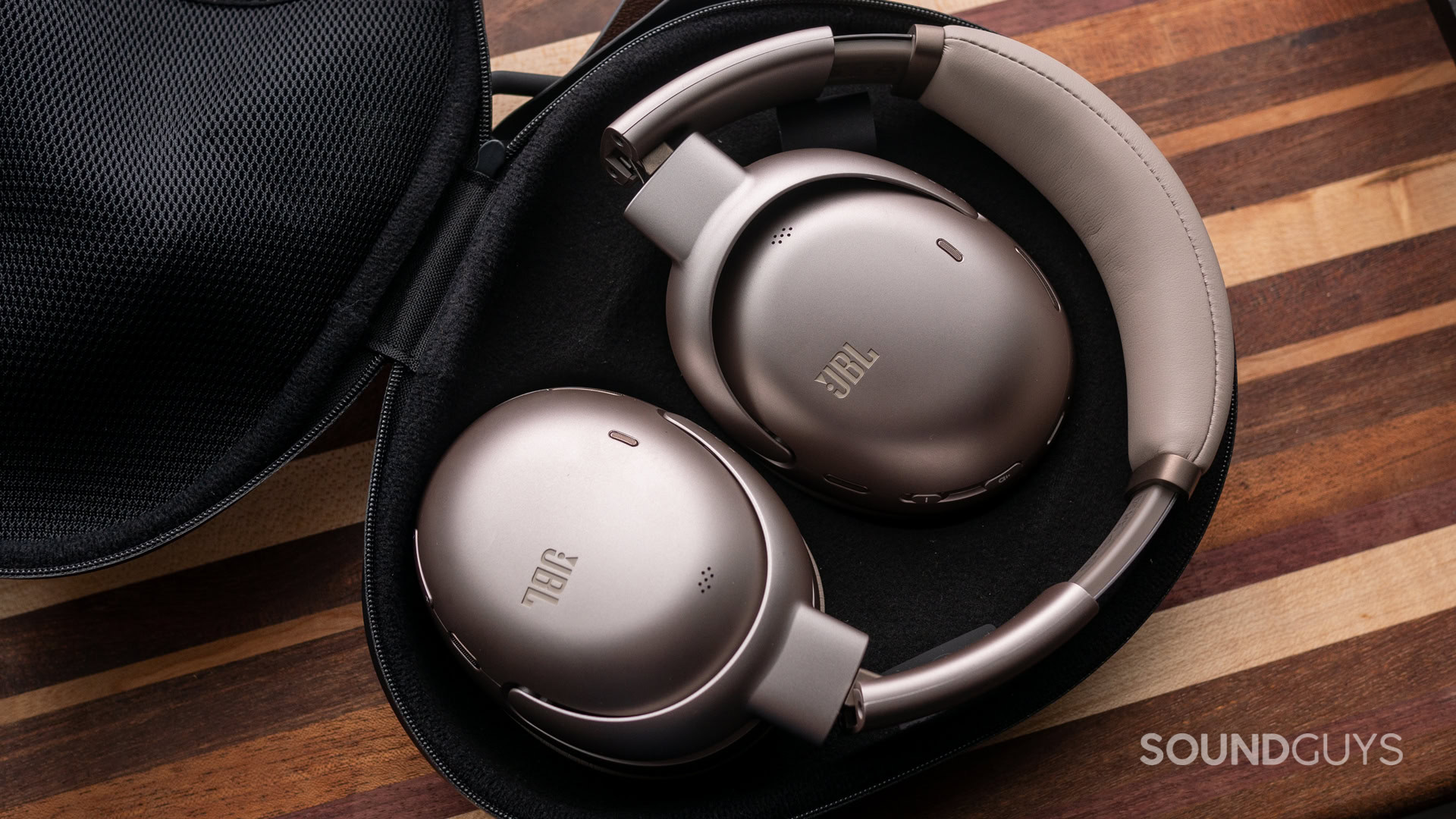

A USB C port does not guarantee that any wired headphones will work with it. Some devices route digital audio differently, some require a setting change, and the wrong fit can make even a clear-sounding pair unpleasant after a short commute. The right choice also depends on whether you want open earbuds, sealed in-ear tips, on-ear cups, or a full over-ear design.
Our Best usb c headphones picks cover all four styles, from the familiar Apple EarPods to JBL's on-ear Tune 520C, plus several in-ear models with microphones, controls, and USB C digital audio. Apple EarPods are the best all-around choice for shoppers who prefer a simple, comfortable open design. The list also includes the best options for isolation, bass, long cables, exercise, and laptop use.
Comparison table
| # | Product | Award | Fit | Controls | Standout feature | Best for |
|---|---|---|---|---|---|---|
| 1 | Apple EarPods | Best overall | Open earbud | Remote, volume, calls | Built-in microphone | Comfortable everyday listening |
| 2 | TECHAIRLINE USB C Earbuds | Best for broad compatibility | In-ear | Remote, volume, track control | Extra silicone tips | Phones and tablets |
| 3 | Sony IER-EX15C | Best balanced in-ear | In-ear | Multifunction button, volume | Serrated cable | Compact daily carry |
| 4 | JBL Tune 520C | Best on-ear | On-ear | Three-button remote | 32 mm drivers, EQ presets | Laptops and gaming devices |
| 5 | ADOOPE USB C Over-Ear | Best over-ear isolation | Over-ear | Not specified | USB C plug and ear cups | Private listening |
| 6 | MORMOQUE EP09 | Best for a long cable | In-ear | Multifunction button | 4.9-foot cord | Desks and commuters |
| 7 | JBL Tune 310C | Best for EQ control | In-ear | Three-button remote | Flat cable, three EQ modes | Bass and vocal adjustment |
| 8 | AFGHOA Magnetic Earbuds | Best magnetic design | In-ear | Remote, volume, calls | Magnetic earbuds and case | Keeping wired buds tidy |
| 9 | Skullcandy Set USB-C | Best for active use | In-ear | Call and track control | IPX4 resistance | Workouts and outdoor use |
1. Apple EarPods: Best Overall

Pros
- Comfortable open earbud shape
- Remote controls volume, playback, and calls
- Built-in microphone supports calls and Siri
- Works with USB C devices
Cons
- Open design lets outside sound through
- Ear fit is less adjustable than silicone-tip models
Best for: someone who wants uncomplicated wired listening with a familiar open fit.
The first thing to know about Apple EarPods is that they do not try to seal your ear. The smooth, shaped housings rest at the entrance rather than using silicone tips, so they feel less enclosed than the Sony IER-EX15C or Skullcandy Set USB-C. That makes them easy to wear while staying aware of conversation and nearby sounds, though it also means music leaks out and outside noise remains part of the experience.
Apple says the design is shaped around ear geometry rather than a traditional circular earbud shape. The practical benefit is a lightweight, low-pressure fit that many listeners can leave in for a long session. The listed weight is 0.07 pounds, and there is no battery to charge or Bluetooth pairing step to manage. Plug them into a compatible USB C device and the wired connection is ready to carry audio.
The built-in remote is the reason these remain such a useful everyday pair. A pinch of the cord lets you adjust volume, control music and video playback, and answer or end calls. The integrated microphone is intended to capture speech for phone calls, FaceTime, and Siri. That combination gives the EarPods a more complete control setup than the simpler Skullcandy Set USB-C, while avoiding the sealed sensation of most in-ear alternatives.
The weakness is fit flexibility. You get one size, not a selection of silicone tips, so people whose ears do not suit this open shape may find that the buds shift or sound less full. They also are not the right pick for a noisy train or gym where isolation matters. Choose them for a relaxed, familiar listening experience and straightforward controls. For a broader look at sealed options, the fit and isolation trade-offs of compact wired earbuds are useful to consider.
2. TECHAIRLINE USB C Earbuds: Best for Broad Compatibility

Pros
- Includes small, medium, and large silicone tips
- Remote handles calls, volume, and track changes
- Metal construction and composite rubber cable
- Lists compatibility with a wide range of USB C devices
Cons
- Some phones and computers may need audio settings changed
- Broad compatibility claims still require checking the individual device
Best for: a USB C device owner who needs adjustable in-ear fit and extensive device support.
TECHAIRLINE USB C Earbuds are aimed at the person who has several USB C devices and does not want to guess whether the headset will work with each one. The listing names iPhone, Samsung Galaxy, Google Pixel, iPad, MacBook, OnePlus, Motorola, and other USB C hardware. That does not replace checking your own device, but it makes this a more flexible candidate than a pair designed around one phone family.
The in-ear housings use an ergonomic shape and come with extra small and large silicone tips alongside the default fit. That matters more than decorative design: the right tip can keep the earbuds in place and reduce outside sound without forcing you to raise the volume as much. The cable is described as composite rubber and the construction includes a lot of metal material, which should appeal to people who are hard on small wired accessories.
A built-in microphone and remote provide the controls most phone users need. You can answer or end calls, play or pause, skip tracks, and adjust volume without reaching for the phone. The listing also identifies a DAC chip that accepts digital input and converts standard-resolution signals. This is a USB C digital connection, not a passive analog plug, so the earbuds need the device to support USB audio.
That last point is the main caveat. The listing specifically warns that some laptops and desktops may default to their speakers and input, requiring USB selection in sound settings. It also mentions disabling a particular Android setting if a phone produces no sound. Those instructions are useful, but they signal that this pair is not completely plug-and-forget on every device. Pick the TECHAIRLINE when tip choice, remote functions, and broad device coverage matter more than the simplest possible setup.
3. Sony IER-EX15C: Best Balanced In-Ear

Pros
- Compact in-ear design with silicone tips
- Balanced sound profile
- Serrated cable helps reduce tangles
- Multifunction remote includes volume controls and microphone
Cons
- In-ear seal will not suit listeners who prefer open earbuds
- No special protection rating is listed
Best for: listeners who want a small, tidy in-ear pair with restrained sound and useful controls.
Sony IER-EX15C is the least fussy choice among the sealed in-ear models here. Its compact housings use silicone ear tips to create a secure fit, while the cable has a serrated surface intended to resist tangling in a pocket or bag. At 0.1102 pounds, the listed weight is still light enough for regular carry, and the design avoids the bulk of an on-ear or over-ear headset.
Sony describes the sound as well balanced rather than leading with a strong bass claim. That makes the IER-EX15C a sensible match for podcasts, speech, acoustic music, and mixed playlists where a heavy low end can become tiring. The seal from the silicone tips also gives it a more focused presentation than Apple EarPods, though the final result depends on which included tip fits your ears.
The in-line remote combines a multifunction button, volume up and down controls, and a built-in microphone. It is a more direct control arrangement than the single remote functions on some basic earbuds. The USB C plug connects across a wide range of devices, and the cable design is genuinely relevant for daily use because a tangle-resistant cord saves more irritation than a small sound-format claim.
Sony does not list a water-resistance rating, and there is no mention of a carrying case or special sports construction. That makes it a less obvious workout pick than Skullcandy Set USB-C. It also does not offer the JBL Tune 310C's selectable EQ presets. Choose this one when you want a compact, balanced, sealed earbud that is easier to live with than a cable that knots itself every time it leaves your pocket.
4. JBL Tune 520C: Best On-Ear

Pros
- On-ear design avoids in-ear tips
- 32 mm dynamic drivers
- Three EQ presets
- Microphone and three-button remote
- Supports 96 kHz and 24-bit digital audio
Cons
- Larger and heavier than the in-ear picks
- On-ear cups provide less isolation than over-ear cups
Best for: anyone who prefers headband headphones and wants quick sound adjustments from a USB C connection.
The JBL Tune 520C changes the shape of the decision. Rather than placing a small driver in the ear canal, it uses on-ear cups and a headband. That is more comfortable for listeners who dislike silicone tips, and it gives the controls a natural home on the cable. The trade-off is size: the listed weight is 0.3307 pounds, considerably more than the in-ear choices, and the cups rest on the ears rather than surrounding them.
JBL specifies 32 mm dynamic drivers and support for 96 kHz, 24-bit digital audio through its DSP chipset. Those figures describe the signal path, not a guarantee that every recording will sound better, but they show that this headset is designed for digital USB C sources such as PCs, mobile phones, tablets, laptops, and gaming devices. The wired connection also avoids battery charging and wireless latency concerns.
The most useful feature is the EQ control. The default preset aims for a balanced presentation, Bass adds more energy at the low end, and Vocal brings the midrange forward. You can change the setting from the three-button remote, so speech-heavy video, music, and games do not all have to share one tuning. That is a stronger adjustment system than the fixed sound of Apple EarPods and the balanced approach of Sony IER-EX15C.
The Tune 520C is not an isolation specialist. On-ear cups leave more room for surrounding sound than ADOOPE's over-ear design, and the headband is less pocket-friendly than any earbud here. Still, it is the clearest pick for a desk, laptop, or gaming setup where you want physical buttons, a microphone, and a sound profile you can change without opening an app. If your computer is the main source, the features that matter when choosing headphones for a desktop setup provide helpful context.
5. ADOOPE USB C Over-Ear: Best Over-Ear Isolation

Pros
- Over-ear design with noise-isolating ear cups
- Plug-and-play USB C digital audio
- Designed for laptops, tablets, and phones
- No battery or Bluetooth pairing required
Cons
- Heaviest model in this roundup at 0.549 pounds
- Older or entry-level USB C ports may not support digital audio
- The provided data does not specify remote or microphone controls
Best for: listeners who want the physical coverage of over-ear cups from a USB C wired headset.
ADOOPE USB C Over-Ear is the pick for people who want headphones to cover the ear instead of sitting inside it. Its noise-isolating ear cups should provide more physical separation from surrounding sound than Apple EarPods or the JBL Tune 310C. That can be useful at a desk, in a shared room, or anywhere you want a more contained listening space without using wireless electronics.
The product is built around a USB C digital audio standard and is described as plug and play. A direct connection means there is no pairing menu and no battery to maintain. The listing names MacBook, iPad Pro, Galaxy, Google Pixel, and USB C laptops or tablets as compatible examples. It also makes clear that some older or entry-level USB C ports may not support digital audio, so port capability is part of the buying decision.
The listed weight is 0.549 pounds, making this the heaviest headset in the group. That is a meaningful difference from the in-ear designs, especially if you plan to carry it around all day. The over-ear shape may be more comfortable for people who dislike ear tips, but it can feel warmer and more conspicuous than Sony IER-EX15C or MORMOQUE EP09.
The available product information does not specify a microphone, in-line remote, driver size, EQ modes, or water resistance. That limits what we can recommend it for beyond its core form and connection. Choose ADOOPE for the cup coverage and straightforward USB C audio, not for call controls or a detailed feature set. It is the specialist option here, and its port compatibility should be checked before ordering.
6. MORMOQUE EP09: Best for a Long Cable

Pros
- 4.9-foot cable gives extra reach
- Includes multiple silicone ear tip sizes
- Noise-isolating in-ear fit
- Multifunction call and playback control
- Reinforced cable and stainless steel USB C connector
Cons
- Long cable can be cumbersome with a phone in a pocket
- No stated water-resistance rating
Best for: listeners who need more cable reach at a desk or while moving around a room.
The distinctive feature of MORMOQUE EP09 is its 4.9-foot cord. That is longer than the compact cable approach used by many in-ear headphones, and it makes sense when a laptop sits on a desk, a phone is in a bag, or you want more freedom to move without tugging the USB C connector. The same length can become excess cable during a short walk, so this is a practical advantage rather than an automatic improvement.
The earbuds use an ergonomic in-ear design with multiple silicone tips for a personalized seal. MORMOQUE describes the sound as balanced, with crisp highs, rich mids, and deep bass, and says the design is intended for music, podcasts, and calls. Its noise-isolating fit should block more outside sound than the open Apple EarPods, while keeping the headset lighter and less bulky than ADOOPE.
The company also highlights a high-purity oxygen-free copper cable, a reinforced cable construction, and a stainless steel USB C connector. Those details speak to the physical connection and signal path, though they do not by themselves guarantee a particular sound signature. The multi-function button handles calls, volume, playback, and track skipping, giving it a more complete control set than the information supplied for ADOOPE.
MORMOQUE lists broad compatibility across iPhone, iPad, Samsung Galaxy, Google Pixel, Sony Xperia, Motorola, and other USB C devices. As with the TECHAIRLINE earbuds, the actual device must support USB C audio. There is no water-resistance rating in the supplied information, so Skullcandy is the safer recommendation for sweat-prone use. Pick the EP09 when extra reach and a sealed fit matter more than the smallest possible cable bundle. For a narrower comparison of wired USB C designs, the differences between sealed earbuds and larger wired headsets can help clarify the choice.
7. JBL Tune 310C: Best for EQ Control

Pros
- Hi-Res audio support
- Three-button remote with microphone
- Default, Bass, and Vocal EQ presets
- Flat cable resists tangles
- JBL Pure Bass sound
Cons
- In-ear fit is not as open as Apple EarPods
- USB C compatibility still depends on the source device
- No water-resistance rating is listed
Best for: listeners who want to switch between bass, vocal, and default sound from the cable.
JBL Tune 310C is the more adjustable in-ear alternative to the Sony IER-EX15C. Its headline feature is not just the USB C plug or the microphone, but the ability to select Default, Bass, or Vocal from the three-button remote. That gives you a quick way to make music punchier or bring speech forward, without depending on a phone app.
JBL describes the earphones as Hi-Res certified and highlights its Pure Bass sound. Those claims point toward a lively presentation, while the three presets let you move away from that emphasis when listening to spoken content. The in-ear fit helps keep the sound focused, but listeners who prefer the relaxed awareness of Apple EarPods may find the seal less natural.
The flat cable is a small feature with a large daily benefit. It is designed to resist knots in a bag, and the flat shape is less prone to forming the tight loops that make ordinary round cables annoying. The three-button remote also controls music playback and volume, and the built-in microphone handles calls. At 0.0315 pounds, the listed weight is among the lightest in this group.
The Tune 310C is not the choice for a workout because no protection rating is listed. It also lacks the long 4.9-foot cable of MORMOQUE EP09 and the magnetic storage feature of AFGHOA. Choose it when sound adjustment matters and you want a compact pair for a phone, computer, or gaming device. Its three EQ settings make it the most flexible sounding in-ear option in this roundup.
8. AFGHOA Magnetic Earbuds: Best Magnetic Design

Pros
- Magnetic earbuds can rest around the neck
- Includes small, medium, and large tips
- Remote controls calls, volume, and tracks
- Carrying case included
- Lists a broad range of Samsung, iPhone, Pixel, and tablet compatibility
Cons
- Some devices may need USB audio settings changed
- No water-resistance rating is listed
- Magnetic storage does not remove cable clutter entirely
Best for: phone users who frequently remove their earbuds and want them to stay together.
AFGHOA Magnetic Earbuds solve a small but recurring wired-earbud problem: where to put the buds when you take them out. The housings connect magnetically so they can hang around your neck, and the included carrying case gives you a place to store the set and other small accessories. That is more practical for stop-and-start commuting than a pair that immediately falls into a pocket as a tangled knot.
The in-ear design comes with small, medium, and large silicone tips. Choosing the correct size affects both stability and outside-noise reduction, so the extra options are more important than the magnetic feature itself. AFGHOA says the earbuds use a DAC chip for digital USB C audio and supports a large list of Samsung, iPhone, Google Pixel, iPad, MacBook, OnePlus, and Motorola devices.
Its in-line remote handles answer and end calls, play and pause, next and previous tracks, and volume. That is a full control package for a phone, and the microphone makes the earbuds useful for hands-free calls. The listed weight is 0.011 pounds, the lightest figure in this roundup, although fit and cable handling will matter more than a small numerical difference once the earbuds are in use.
The familiar USB C caveat applies here. A phone may need USB audio routing enabled, and a computer may need its sound input and output manually selected. There is also no listed water-resistance rating, so Skullcandy Set USB-C remains the better active-use pick. AFGHOA makes the most sense for someone who removes wired earbuds often and wants the magnetic housings and case to keep the set manageable.
9. Skullcandy Set USB-C: Best for Active Use

Pros
- Three ear gel sizes
- IPX4 sweat and water resistance
- Noise-isolating in-ear fit
- In-line microphone and track control
- One-year USA limited warranty
Cons
- Remote functions are less detailed than some competitors
- No EQ presets are listed
- Older model without the newer compatibility claims found on some rivals
Best for: listeners who want wired earbuds with basic moisture resistance for workouts and outdoor use.
The Skullcandy Set USB-C is the clear specialist for active use. Its IPX4 rating means it is designed to resist sweat and water splashes, a useful distinction from the Sony, JBL, and AFGHOA models, which do not list a protection rating in the supplied data. The in-ear, noise-isolating fit also helps keep the earbuds secure while reducing some surrounding sound.
Three different ear gel sizes make it easier to tune the fit. That is important during movement because a loose earbud can become a constant adjustment, while an overly tight one can become uncomfortable. The USB C connection stays direct, so there is no battery or wireless pairing to interrupt a workout or walk.
The in-line microphone supports calls, and the controls cover play, pause, and skipping to the next track. The feature list does not specify volume buttons or multiple EQ modes, so JBL Tune 310C is the better pick for listeners who want to shape the sound from the cable. Skullcandy's controls are simpler, but they cover the basic playback tasks most people need.
This is not the most versatile pair for office calls, computer troubleshooting, or varied sound preferences. TECHAIRLINE and AFGHOA provide more detailed compatibility and control information, while Apple EarPods offer a more open fit. Choose Skullcandy when IPX4 resistance, ear-gel choice, and a direct connection matter most. It is the practical workout option in the Best usb c headphones lineup.

How to choose the Best usb c headphones
The right pair depends on the shape of your ears, the device at the other end of the cable, and how much control or isolation you need.
USB audio compatibility
USB C is a connector shape, not a promise that every port supports headphones. The models in this roundup use digital audio through USB C, and several listings warn that some phones, tablets, laptops, or desktops may need a sound setting changed. Check that your device supports USB audio and that it can route both output and microphone input through the port.
Earbud and cup fit
Open earbuds such as Apple EarPods let in surrounding sound and avoid the pressure of silicone tips. In-ear models use a seal for stronger isolation and a more secure hold, while on-ear and over-ear designs keep the ear canal clear. Good fit is the difference between a headset you forget about and one you keep adjusting.
Microphone and controls
A built-in microphone matters for calls, meetings, voice assistants, and gaming chat. Remote layouts vary widely: Apple EarPods control volume, playback, and calls; JBL Tune 310C adds EQ presets; Skullcandy lists call and track controls. If you will use the headset away from the phone, confirm that the functions you need are actually listed.
Cable design and length
A flat or serrated cable can reduce tangles, while a 4.9-foot cable gives more reach at a desk or in a room. Extra length is useful when the source sits far away, but it can be excess material when a phone is in a pocket. Magnetic housings and a carrying case help with storage, but neither replaces careful cable handling.
Isolation and durability
Silicone tips and covered ear cups block more surrounding sound than an open earbud. For exercise, a protection rating is more useful than a general claim about durability. Skullcandy's IPX4 rating is the only stated water-resistance rating in this group, while ADOOPE focuses on over-ear coverage and several other models focus on fit.
Choose the connection first, then the fit. A USB C headset that cannot route audio through your device is not saved by better controls or stronger bass.

Frequently asked questions
Do USB C headphones work with every USB C device?
No. The device must support digital USB audio through its USB C port. Some phones and computers may also need audio output or input selected manually in their settings.
Do wired USB C headphones need to be charged?
No. These headphones use a wired USB C connection and do not list a battery requirement. They draw the necessary connection power from the device rather than relying on Bluetooth pairing.
Are open earbuds or in-ear headphones better for calls?
Open earbuds are easier to wear while remaining aware of nearby sounds, while in-ear models can stay more secure and reduce outside noise. Apple EarPods include a microphone and call controls, as do several of the in-ear models. The better choice depends on fit and the environment where you take calls.
Which model has the strongest water protection?
Skullcandy Set USB-C is the only product here with a stated rating, IPX4. That indicates resistance to sweat and water splashes, but it is not a rating for submersion.
Can these headphones control volume and music?
Several can. Apple EarPods, TECHAIRLINE USB C Earbuds, Sony IER-EX15C, JBL Tune 520C, JBL Tune 310C, and AFGHOA list remote controls, though the exact functions differ. Skullcandy lists play, pause, and track control, while the supplied ADOOPE information does not specify a remote.
Which USB C headphones are easiest to keep untangled?
Sony IER-EX15C uses a serrated cable, JBL Tune 310C uses a flat cable, and AFGHOA's magnetic housings help keep the earbuds together when they are not in use. MORMOQUE EP09 has a longer cable, which provides reach but creates more cable to manage.

The bottom line
The Best usb c headphones choice for most listeners is Apple EarPods. They combine an open, lightweight fit with a built-in microphone and remote for calls, playback, and volume, making them the least complicated option for everyday use. Choose Sony IER-EX15C instead if you want silicone tips, a more sealed fit, and a cable designed to resist tangles.
For specific needs, JBL Tune 520C is the strongest headband option, JBL Tune 310C is the most flexible in-ear choice for sound adjustment, and Skullcandy Set USB-C is the one to choose for sweat and water resistance. ADOOPE suits listeners who want over-ear coverage, while MORMOQUE is the better fit for extra cable reach.
If you are undecided, choose Apple EarPods for an open fit or Sony IER-EX15C for a secure in-ear seal.
As an Amazon Associate we earn from qualifying purchases.