

A television can look perfectly proportioned in a product photo and completely wrong once it reaches your wall. A 24-inch screen may disappear across a living room, while an 85-inch model can dominate a smaller space. The Best best tv size picks below cover compact bedrooms, kitchens, ordinary living rooms, and large viewing areas.
The Roku 55-inch Select Series is our top pick because it combines a useful middle-ground screen size with 4K QLED color, HDR10, a clean interface, voice control, and a remote that is unusually easy to live with. The list also includes smaller Full HD and HD Roku models, Samsung 4K options, a feature-rich Hisense, and a huge 85-inch Samsung.
Quick comparison
| # | Product | Award | Screen size | Resolution and display | Smart platform | Best for |
|---|---|---|---|---|---|---|
| 1 | Roku 55-inch Select Series | Best overall | 55 inches | 4K QLED, HDR10 | Roku TV | Most living rooms |
| 2 | Roku 24-inch Select Series | Best compact TV | 24 inches | 720p HD | Roku TV | Bedrooms and kitchens |
| 3 | Roku 40-inch Select Series | Best mid-small TV | 40 inches | 1080p Full HD | Roku TV | Smaller living rooms |
| 4 | Samsung 65-inch U8000H | Best Samsung large TV | 65 inches | 4K Crystal UHD | Samsung TV Plus | Sports and shared rooms |
| 5 | Roku 65-inch Select Series | Best large QLED | 65 inches | 4K QLED, HDR10 | Roku TV | Big-screen streaming |
| 6 | Roku 50-inch Select Series | Best 50-inch TV | 50 inches | 4K QLED, HDR10 | Roku TV | Flexible living-room setups |
| 7 | Samsung 43-inch U8000H | Best compact 4K TV | 43 inches | 4K Crystal UHD | Samsung TV Plus | Smaller rooms |
| 8 | Roku 32-inch Select Series | Best small Full HD TV | 32 inches | 1080p Full HD | Roku TV | Bedrooms and offices |
| 9 | Hisense E6 Cinema | Best feature-rich 43-inch TV | 43 inches | 4K Hi-QLED, HDR formats | Fire TV | HDR and movie fans |
| 10 | Samsung 85-inch U8000H | Best extra-large TV | 85 inches | 4K Crystal UHD | Samsung TV Plus | Dedicated viewing rooms |
1. Roku 55-inch Select Series: Best Overall

Pros
- 4K QLED panel with HDR10
- Fast Roku interface and simple home screen
- Voice remote includes a lost remote finder
- Bluetooth Headphone Mode
- AirPlay and voice assistant support
Cons
- The large footprint needs a properly sized stand or wall
- Built-in sound is clear, but not a substitute for a sound system
- Roku's picture processing does not add detail that is absent from poor sources
Best for: someone who wants a versatile living-room TV without a complicated interface.
The Roku 55-inch Select Series is the easiest television here to recommend without knowing much about the room. Its 55-inch screen is large enough for films and sports to feel involving, but it does not carry the visual weight of the 65-inch and 85-inch models. The frameless design keeps attention on the picture, and Roku's setup is built around getting from the box to a working home screen with little fuss.
Picture quality is the main reason this model leads the list. The 4K resolution gives fine details more room to breathe, while the QLED display and HDR10 support are intended to produce brighter, more accurate colors. Roku Smart Picture cleans up incoming signals and selects a suitable picture mode, which is useful when a household jumps between streaming apps, live television, and older content. It cannot turn a low-quality source into native 4K, but its processing should make mixed viewing less tiresome.
The software is unusually approachable. A simple home screen, personalized picks, fast app launches, and voice search reduce the usual scrolling. The enhanced voice remote also has personal shortcuts and a lost remote finder. Roku Voice works alongside Siri, Alexa, and Google Assistant, and Apple AirPlay makes it straightforward to share videos, photos, and music from Apple devices. Bluetooth Headphone Mode is a particularly practical touch for late-night viewing. Those looking at a smaller room should compare it with the screen dimensions that work in a compact living space, but the 55-inch model is the more convincing all-purpose choice.
The weakness is physical rather than functional. At 48.3 inches wide, 30.5 inches high, and 12.7 inches deep, it needs a stable piece of furniture with genuine room to spare. Its 20.5-pound weight is manageable, yet the screen still requires careful handling during setup. Sound is designed to be clear and louder, but viewers who want deep film effects will want a separate audio solution. Choose the Roku 55-inch Select Series when the room can accommodate it and you want the least frustrating blend of size, picture quality, and software.
2. Roku 24-inch Select Series: Best Compact TV

Pros
- Compact 24-inch screen
- Roku interface is simple to navigate
- 720p HD picture suits close viewing
- Voice remote and Bluetooth headphone support
- AirPlay and smart assistant compatibility
Cons
- 720p has less fine detail than the larger models
- Small screen is not suitable for a main family room
- The built-in sound remains limited by the compact chassis
Best for: a bedroom, kitchen, office, or other space where a full-size television would be intrusive.
The Roku 24-inch Select Series solves a specific problem well: getting a real smart TV into a room with very little available space. Its 21.1-inch width and 14-inch height make it easier to place on a narrow counter, dresser, or compact desk than any other model here. It is also light at 4.9 pounds, so moving it between suitable locations is less awkward than handling a conventional living-room set.
The 720p HD resolution is appropriate for this screen size and for the shorter distances at which a compact TV is usually viewed. It will not show the fine texture of a 4K panel, and viewers sitting unusually close may notice the difference. Roku Smart Picture optimizes the incoming signal and chooses a picture mode automatically, helping casual television, news, and streaming content look consistent without a long settings session.
The Roku platform is the strongest reason to choose this over a small generic display. Its home screen is uncluttered, apps are designed to launch quickly, and voice search covers a broad range of entertainment. The included voice remote can control playback and search, while Bluetooth Headphone Mode lets one person watch without disturbing the room. Apple AirPlay and compatibility with Siri, Alexa, and Google Assistant give it more flexibility than its dimensions suggest. For a kitchen specifically, the features that make a small screen easier to use around cooking are worth considering before placing any television near a work surface.
There are clear limits. The 24-inch screen is excellent for individual viewing and poor for a group gathered several feet away. The HD picture is sensible here, but it makes this a weak choice for anyone who wants a small television to double as a detailed gaming or movie display. Roku's sound modes prioritize understandable speech, and the screen can keep audio playing with the display turned off, but it is still a compact set. Pick the Roku 24-inch Select Series when footprint matters more than cinematic scale.
3. Roku 40-inch Select Series: Best Mid-Small TV

Pros
- 1080p Full HD resolution
- More immersive than a 32-inch set without a huge footprint
- Quick Roku software and voice search
- Bluetooth headphone listening
- AirPlay and smart assistant support
Cons
- Does not have the 4K QLED display used by the larger Roku models
- Not as compact as the 32-inch or 24-inch versions
- Sound remains geared toward clear dialogue rather than room-filling impact
Best for: a bedroom or smaller living room that needs more screen area than a compact TV can provide.
The Roku 40-inch Select Series is a sensible middle ground for rooms where 55 inches would feel excessive. Its 35.1-inch width and 21.9-inch height are substantial enough for shared viewing, while its 10.6-pound weight keeps placement relatively straightforward. This is the kind of screen that can work above a dresser, on a modest media unit, or in a sitting room where the television should not dominate the furniture.
Its 1080p Full HD resolution is a meaningful step up from the 24-inch model's 720p picture. Text, faces, and interface elements look more defined at normal viewing distances, and the resolution is well matched to the 40-inch size. The tradeoff is that it lacks the 4K detail and QLED color emphasis found in the Roku 50-inch, 55-inch, and 65-inch models. The Roku Smart Picture system still cleans up incoming signals and selects picture modes, so the set should remain easy to live with across different types of content.
Software is consistent with the other Roku Select Series televisions. The home screen is uncomplicated, personalized recommendations reduce searching, and voice search makes it easier to reach a show without typing with the remote. Roku Voice works with Siri, Alexa, and Google Assistant, and AirPlay supports Apple devices. Bluetooth Headphone Mode is useful in a bedroom, particularly when someone else is sleeping nearby. Readers comparing this size with alternatives can start with how much room a 40-inch screen really occupies rather than judging by diagonal measurement alone.
The limitation is picture ambition. This is a capable everyday screen, but it is not the right pick for someone who specifically wants 4K streaming, HDR10 color, or a large-screen film experience. The 7.1-inch depth also requires more shelf space than the smaller Roku models. Clearer and louder sound helps dialogue, though it cannot create the fullness of a separate speaker system. Choose the Roku 40-inch Select Series when 1080p clarity and a manageable footprint matter more than premium display technology.
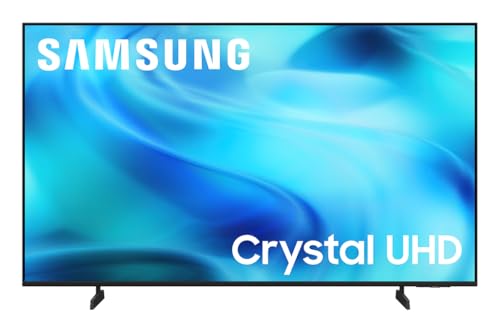
4. Samsung 65-inch U8000H: Best Samsung Large TV
Pros
- 4K Crystal UHD picture
- 4K upscaling for lower-resolution content
- Motion Xcelerator supports clear sports and game movement
- Color Booster and Samsung TV Plus
- Large screen for shared viewing
Cons
- The 65-inch chassis needs a broad, sturdy surface
- Motion performance is specified up to 4K 60Hz
- Samsung's interface may feel less minimal than Roku's
Best for: a large shared room where sports, television, and streaming are watched from several seats.
The Samsung 65-inch U8000H makes the case for choosing a large screen when several people need to see it clearly. At 56.9 inches wide and 34.7 inches high, it is a serious piece of furniture, not a casual bedroom set. Its 31.8-pound weight is reasonable for the size but reinforces the need for two-person handling and a stand that will not flex under the load.
This Samsung uses a 4K Crystal UHD display with a Crystal Processor that enhances colors, sharpens details, and upscales lower-resolution content. That processing matters when a household mixes older shows, broadcast material, streaming video, and native 4K films. Color Booster is intended to make colors more intense, while the 4K panel provides enough resolution for a large screen viewed from across a room. The result should be a more polished image than the Roku 40-inch or 32-inch, though the Roku QLED models make a stronger display-focused argument.
Motion Xcelerator estimates and adjusts frame transitions, with performance up to 4K 60Hz listed for games and sports. That makes this a practical choice for normal console play and televised action, but it is not presented as a high-refresh gaming display. Samsung TV Plus adds more than 2, 700 free streaming options, including more than 750 subscription-free channels, giving the television useful content before separate apps are installed. It is a more feature-dense approach than Roku's cleaner home screen, so the choice partly comes down to which interface feels more natural.
The main drawback is scale. The 8.7-inch depth and broad 65-inch frame make placement less forgiving than with the 55-inch Roku. This Samsung also does not include the Roku-specific Bluetooth Headphone Mode or lost remote finder described for the Roku models. The Samsung 65-inch U8000H is the better fit for viewers who want Samsung's processing, Color Booster, and free content ecosystem on a large screen, while the Roku 65-inch Select Series is more compelling for people who prioritize a simpler streaming experience and QLED presentation.
5. Roku 65-inch Select Series: Best Large QLED

Pros
- 4K QLED display with HDR10
- Large screen for films and sports
- Simple Roku home screen
- Enhanced voice remote with lost remote finder
- Bluetooth Headphone Mode and AirPlay
Cons
- Large 65-inch footprint requires careful placement
- Sound may still call for external speakers
- Less compact and forgiving than the 55-inch version
Best for: viewers who want a large, colorful streaming TV with straightforward software.
The Roku 65-inch Select Series is the choice for making television the visual center of a room. Its 56.9-inch width and 35.5-inch height give films, sports, and large group viewing the scale that a 50-inch or 55-inch model cannot quite match. The 30.9-pound weight is not extreme for this category, but the 13.9-inch depth and broad panel still demand a stable media console or careful wall-mount planning.
Like the 55-inch Roku, it combines 4K resolution with a QLED screen and HDR10. The higher resolution is useful at this size because it preserves detail across a broad image, while QLED and HDR10 support brighter, more accurate colors in compatible content. Roku Smart Picture adjusts the picture mode and optimizes incoming signals, which helps when a set is shared by people who do not want to manage picture settings. Its picture specification is more ambitious than the Roku 40-inch and 32-inch, but the larger frame means seating distance matters more.
The interface is the familiar Roku strength. Personalized picks appear on the home screen, apps are intended to launch quickly, and voice search avoids the slow process of entering show titles character by character. The enhanced remote adds personal shortcuts and a lost remote finder. AirPlay supports Apple devices, while Siri, Alexa, and Google Assistant can provide voice control. Bluetooth Headphone Mode is useful when a large screen occupies a shared room but one viewer needs quiet listening.
The weakness is that size magnifies every placement mistake. A 65-inch television can feel spectacular from the correct seat and awkward when viewed too close or positioned on a narrow stand. The speakers are designed for clear speech and louder sound, but large movies may still benefit from separate audio. Compared with the Samsung 65-inch U8000H, this Roku gives up Samsung's listed Color Booster and Motion Xcelerator features, but it offers a calmer interface and HDR10 QLED presentation. Choose the Roku 65-inch Select Series when screen presence and easy streaming are the priority.
6. Roku 50-inch Select Series: Best 50-inch TV

Pros
- 4K QLED picture with HDR10
- Flexible size for many living rooms
- Fast, uncluttered Roku interface
- Voice remote includes a finder function
- AirPlay, smart assistant support, and Bluetooth headphones
Cons
- Larger than a compact room may need
- Not as immersive as the 55-inch or 65-inch models
- No listed Samsung-style motion processing features
Best for: someone who wants 4K QLED capability without moving up to a particularly imposing screen.
The Roku 50-inch Select Series is a particularly adaptable size. It offers more presence than the 40-inch Roku without taking over a room in the way a 65-inch set can. Its 43.7-inch width and 27.9-inch height make it easier to pair with ordinary furniture, while the 16.8-pound weight is manageable for a television with a 50-inch screen.
This model keeps the 4K QLED and HDR10 combination used by the larger Roku Select Series televisions. That gives compatible HDR content a broader color presentation and gives standard 4K streams enough detail to look convincing at this screen size. Roku Smart Picture cleans up incoming signals and chooses an appropriate picture mode, a useful bit of automation for households that move between live television, films, sports, and free channels.
The Roku experience is the same reason to pick the 50-inch model over a less coherent smart TV. A simple home screen, personalized picks, quick access to popular apps, and voice search keep routine viewing uncomplicated. The enhanced remote can search across apps, set shortcuts, and help locate itself. Siri, Alexa, Google Assistant, and Apple AirPlay expand device compatibility, while Bluetooth Headphone Mode makes private listening possible. Before choosing it for a narrow room, consider the furniture and viewing tradeoffs of a 50-inch screen.
The main compromise is that this model sits between categories. It is not as easy to place as the 40-inch Roku, and it does not provide the same wall-filling effect as the 55-inch or 65-inch versions. Its 12.7-inch depth also matters on shallow furniture. The Samsung 43-inch U8000H is a better fit for a smaller room that needs 4K but not a 50-inch frame, while this Roku is the more appealing choice for viewers who want QLED color and a straightforward streaming interface. It is the right size when flexibility matters more than spectacle.
7. Samsung 43-inch U8000H: Best Compact 4K TV
Pros
- 4K Crystal UHD resolution
- Crystal Processor with 4K upscaling
- Color Booster for more vivid presentation
- Motion Xcelerator for sports and games
- Samsung TV Plus free content
Cons
- Less screen area than the 50-inch Roku
- Motion features top out at 4K 60Hz
- Samsung's software is less stripped back than Roku's
Best for: a smaller room where 4K detail and Samsung's processing matter more than maximum screen size.
The Samsung 43-inch U8000H is a useful alternative to the Roku 40-inch because it brings 4K resolution into a compact form. It measures 37.7 inches wide and 24 inches high, so it fits spaces where a 50-inch model would be too assertive. Its 14.8-pound weight is also relatively manageable, though the 6.2-inch depth still deserves attention on a shallow shelf.
Samsung's Crystal Processor is designed to sharpen details, enhance colors, and upscale lower-resolution content to 4K clarity. That is valuable on a set that may display everything from older broadcasts to current streaming releases. Color Booster adds more intensity to the image, while the 4K panel gives menus, text, and fine textures a level of definition that the Roku 32-inch and 40-inch cannot match. The Roku 50-inch has the more vivid QLED specification, but this Samsung takes up less room.
Motion Xcelerator estimates and adjusts frame transitions for clearer movement. Samsung lists up to 4K 60Hz performance, which suits everyday sports and ordinary console gaming. It is not a specialist display for high-refresh play, and shoppers expecting more than 60Hz should look elsewhere. Samsung TV Plus also provides more than 2, 700 free streaming options, including more than 750 subscription-free channels, giving the set a broad built-in content selection.
The biggest reason to skip it is not picture quality but interface preference. Roku's home screen and voice remote are more immediately simple, and the Roku 50-inch supplies a larger QLED image. The Samsung 43-inch U8000H instead makes sense for someone who wants a compact 4K television with Samsung's upscaling, Color Booster, and TV Plus ecosystem. If the room is small but the content is varied, it is a more capable choice than the HD Roku models.
8. Roku 32-inch Select Series: Best Small Full HD TV

Pros
- 1080p Full HD resolution
- Compact 32-inch footprint
- Roku interface is easy to learn
- Bluetooth Headphone Mode
- Voice search and AirPlay support
Cons
- Not a 4K television
- Smaller picture than the 40-inch and 43-inch models
- Compact speakers cannot replace a larger audio system
Best for: a bedroom, office, guest room, or small seating area that needs a clear Full HD picture.
The Roku 32-inch Select Series is the most balanced small-screen Roku in this group. Its 28.3-inch width and 18.4-inch height are compact enough for a dresser or desk, but the screen is meaningfully easier to share than the 24-inch model. At 7.7 pounds, it is also simple to position without making the installation feel like a furniture project.
The 1080p Full HD resolution is the important distinction. On a 32-inch panel, it creates a cleaner image for subtitles, menus, faces, and general streaming than 720p, without requiring a large viewing distance. It does not provide the fine 4K detail of the Samsung 43-inch or Roku 50-inch, yet the difference is less consequential in a bedroom or office than it would be on a large wall-mounted screen. Roku Smart Picture handles signal optimization and picture modes automatically.
The platform remains the main attraction. Roku's home screen is easy to understand, apps are designed to launch quickly, and voice search works across a wide range of services. The voice remote can play content and control streaming, while Bluetooth headphones let one person watch quietly. AirPlay works with Apple devices, and the TV can respond to Roku Voice, Siri, Alexa, or Google Assistant. Readers deciding between compact sizes may find how a 32-inch screen fits bedrooms and work areas more useful than comparing diagonal measurements in isolation.
The limitation is straightforward: this is a small Full HD television, not a miniature home theater. The picture has less resolution than the 4K models, and the smaller chassis limits the impact of sound. It also cannot create the same shared viewing experience as the Roku 40-inch. Pick the Roku 32-inch Select Series when the television must fit comfortably first, while still offering a sharper and more capable picture than a basic HD compact set.
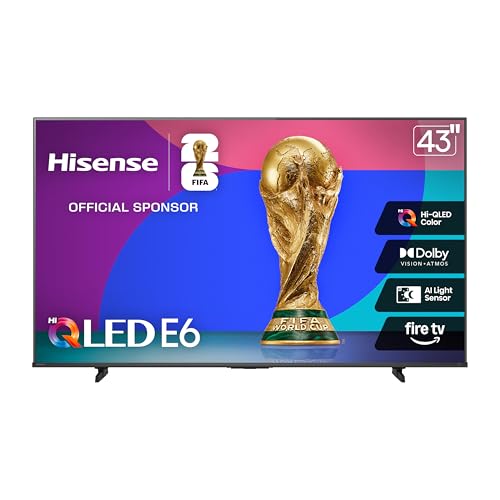
9. Hisense E6 Cinema: Best Feature-Rich 43-inch TV
Pros
- 4K Hi-QLED color
- Dolby Vision, HDR10+ Adaptive, HDR10, and HLG support
- Dolby Atmos sound support
- Fire TV with Alexa voice control
- AI light sensor and Wi-Fi 6
Cons
- Fire TV is busier than Roku's interface
- Feature list may be more than casual viewers need
- The 43-inch screen is less immersive than larger sets
Best for: film fans who want broad HDR support and a feature-rich smart platform in a smaller television.
The Hisense E6 Cinema is the most technically ambitious 43-inch option here. Its 37.9-inch width and 22-inch height keep it manageable in a smaller room, while its 14.9-pound weight is not difficult to accommodate. The 2.9-inch listed depth is notably slimmer than the Roku 43-inch-class alternatives, making it easier to consider for a shallow media unit.
Its Hi-QLED display is paired with a broad HDR feature set. The television supports Dolby Vision, HDR10+ Adaptive, HDR10, and HLG, so compatible films and shows have more ways to use expanded contrast and color. The AI 4K Upscaler uses machine learning to improve lower-resolution content, while Filmmaker Mode is designed to preserve the original aspect ratio, frame rate, color, and audio of supported material. Those features give movie-focused viewers more control than the simpler Roku screens, though the actual result will still depend on the source and room.
The feature set extends beyond picture quality. Dolby Atmos support is intended to add a more spacious sound presentation, and the AI light sensor adjusts brightness in response to ambient light. AI Smooth Motion uses MEMC and AI noise reduction to keep fast movement clearer, while Wi-Fi 6 is designed for faster speeds, greater stability, and more capacity when many devices share the network. Fire TV places live channels and apps on the home screen, and Alexa can find, launch, and control content by voice.
That sophistication is also the main weakness. Fire TV presents more options and content on screen than Roku, which can feel busy for someone who simply wants a short path to a few favorite apps. The 43-inch panel is still a compact television, so it cannot deliver the room-filling effect of the Roku 65-inch or Samsung 85-inch. The Samsung 43-inch is the cleaner choice for viewers already comfortable with that ecosystem, while the Hisense E6 Cinema suits movie fans who specifically want Dolby Vision, Dolby Atmos, multiple HDR formats, and automatic brightness adjustment.
10. Samsung 85-inch U8000H: Best Extra-Large TV
Pros
- Huge 85-inch 4K screen
- Crystal Processor with 4K upscaling
- Color Booster for more vivid color
- Motion Xcelerator for sports and games
- Samsung TV Plus content
Cons
- Requires a very large room and sturdy support
- 63.8-pound weight makes installation demanding
- 4K 60Hz performance is not aimed at high-refresh gaming
Best for: a dedicated viewing room or very large living room where maximum screen scale is the priority.
The Samsung 85-inch U8000H is not a casual upgrade. At 74.4 inches wide and 44.6 inches high, it needs a wall, console, and viewing distance that can handle its presence. Its 63.8-pound weight also makes installation a two-person task at minimum. The 12.8-inch depth should be measured against the furniture or wall arrangement before ordering.
The attraction is scale backed by 4K processing. The Crystal Processor enhances colors, sharpens details, and upscales lower-resolution material, helping older television and mixed streaming libraries look more coherent on a very large panel. Color Booster increases color intensity, while 4K resolution keeps the image from appearing needlessly coarse at this size. The Samsung 65-inch offers the same broad picture approach in a more manageable package, but the 85-inch creates a more theatrical field of view.
Motion Xcelerator estimates frame transitions for clearer sports and game movement, with up to 4K 60Hz performance listed. That should be enough for ordinary console gaming and televised sports, but it is not a high-refresh specialist display. Samsung TV Plus adds more than 2, 700 free streaming options and more than 750 subscription-free channels, giving the enormous screen something to show without immediately opening another service.
The weakness is obvious and important: large does not mean suitable for every room. A viewer sitting too close may find the screen overwhelming, while a narrow wall can make the television look disproportionate. The Samsung 85-inch U8000H also lacks the simpler Roku interface and the Roku remote's lost remote finder and Bluetooth Headphone Mode. Choose it for a dedicated movie, sports, or group-viewing space, not because the largest available screen is automatically the right one.

How to choose best tv size
The right television size depends on the room, viewing distance, content, and how much of the wall or furniture you want the screen to occupy.
Room dimensions
Start with the wall and furniture rather than the diagonal measurement alone. A 24-inch or 32-inch TV can sit comfortably on a dresser or kitchen counter, while a 50-inch or 55-inch set needs a wider, deeper support surface. The 65-inch and 85-inch models require careful planning because their width can exceed the useful surface area of ordinary furniture.
Measure the available width, height, and depth, then leave room for cables and ventilation. The product dimensions listed here include meaningful differences: the 24-inch Roku is only 21.1 inches wide, while the Samsung 85-inch reaches 74.4 inches.
Viewing distance
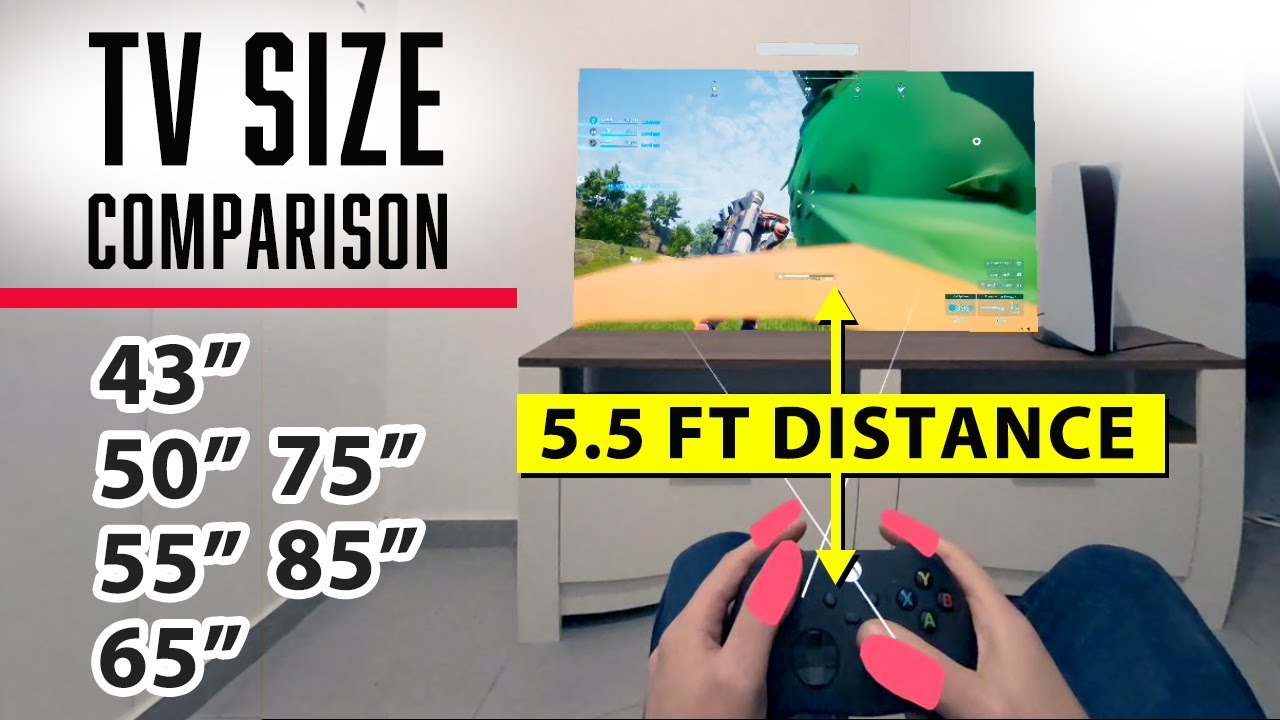
A screen should feel comfortably detailed, not like a display you have to scan from side to side. Smaller TVs work well at short distances in bedrooms, offices, and kitchens. Larger screens make more sense when seating is farther away and several people need a clear view.
There is no single size that works for every room. Use the intended seat as the starting point, then compare the screen's physical width with the wall and furniture behind it.
Choose the largest screen that fits the room naturally, not the largest screen that fits the wall on paper.
Resolution
Resolution matters more as a screen grows or as viewers sit closer. The Roku 24-inch uses 720p HD, while the Roku 32-inch and 40-inch use 1080p Full HD. Those resolutions are sensible for compact sets and ordinary viewing distances.
The larger Roku QLED and Samsung Crystal UHD televisions use 4K. A 4K panel is a better match for a 50-inch, 55-inch, 65-inch, or 85-inch screen, especially for detailed films, sports graphics, and modern streaming content. Upscaling can improve lower-resolution sources, but it cannot create the same detail as native 4K.
Display technology and HDR
Display features influence color and the handling of compatible content. Roku's 4K models pair QLED with HDR10, while Samsung uses Crystal UHD, Color Booster, and a Crystal Processor. The Hisense E6 Cinema goes further with Hi-QLED color and support for Dolby Vision, HDR10+ Adaptive, HDR10, and HLG.
HDR only helps when the content supports it and the room is suitable for the screen's brightness. A broad HDR specification is useful for movie libraries, but a simpler 4K display may be easier to live with if the household mostly watches standard television.
Smart platform and audio
Roku emphasizes a simple home screen, personalized picks, voice search, AirPlay, and Bluetooth Headphone Mode. Samsung adds Samsung TV Plus, with more than 2, 700 free streaming options and more than 750 subscription-free channels, along with its own processing features. Hisense uses Fire TV and Alexa, plus Dolby Atmos support.
Consider who will use the remote every day. A straightforward interface can matter more than another picture mode, especially in a household with several viewers. Also remember that clear built-in dialogue is not the same as deep, room-filling sound. The Roku models emphasize understandable speech, while the Hisense includes Dolby Atmos support, but a separate audio system remains the route to a larger soundstage.
Frequently asked questions
What is the best tv size for a living room?
The Roku 55-inch Select Series is the strongest general choice because it combines a substantial screen with 4K QLED picture quality and a simple smart platform. A 50-inch model suits a smaller room, while a 65-inch model makes more sense when seating is farther away or several people watch together.
Is a 43-inch TV large enough for a bedroom?
A 43-inch screen can work well in a bedroom if the viewing distance and furniture allow it. The Samsung 43-inch U8000H and Hisense E6 Cinema both provide 4K resolution in a compact footprint, while the Roku 32-inch is easier to place in a tighter room.
Is 720p enough for a 24-inch TV?
720p can be adequate on a 24-inch screen viewed from a short distance. The Roku 24-inch Select Series is aimed at compact spaces where convenience and footprint matter more than fine 4K detail. Choose a larger Full HD or 4K model if text clarity, detailed films, or shared viewing are priorities.
Should I choose 50 inches or 55 inches?
Choose 50 inches when the room or furniture is moderately compact and you want a flexible 4K screen. Choose 55 inches when you have more wall and stand space and want a more immersive picture. The Roku 50-inch and Roku 55-inch share the 4K QLED and HDR10 approach, so physical fit is a major deciding factor.
Is an 85-inch TV too big for most rooms?
An 85-inch TV is too large for many ordinary rooms, but it can be excellent in a dedicated viewing area or a very large living room. The Samsung 85-inch U8000H is nearly 6.2 feet wide, so measure the wall, furniture, and intended viewing position before choosing it.
Do I need 4K for a small television?
You do not need 4K for every small television. A 1080p Full HD Roku 32-inch or 40-inch can be a sensible choice for a bedroom or office, while the Samsung 43-inch and Hisense 43-inch make more sense when you want 4K detail in a compact room.

The bottom line
The Best best tv size for most people is the Roku 55-inch Select Series. Its 4K QLED display, HDR10 support, useful voice remote, AirPlay compatibility, and clear Roku interface make it the most versatile pick in this group. Choose the Roku 50-inch Select Series when the room is tighter, or the Roku 65-inch Select Series when a larger wall and more immersive viewing experience are available.
The Hisense E6 Cinema is the specialist choice for a 43-inch screen with Dolby Vision, Dolby Atmos, multiple HDR formats, an AI light sensor, and Fire TV. For a dedicated large-room setup, the Samsung 85-inch U8000H provides the most dramatic scale, while the Roku 24-inch and 32-inch models remain the sensible choices for compact spaces.
If you are undecided, measure the wall and the viewing distance first, then choose the largest screen that leaves the room comfortable.
As an Amazon Associate we earn from qualifying purchases.