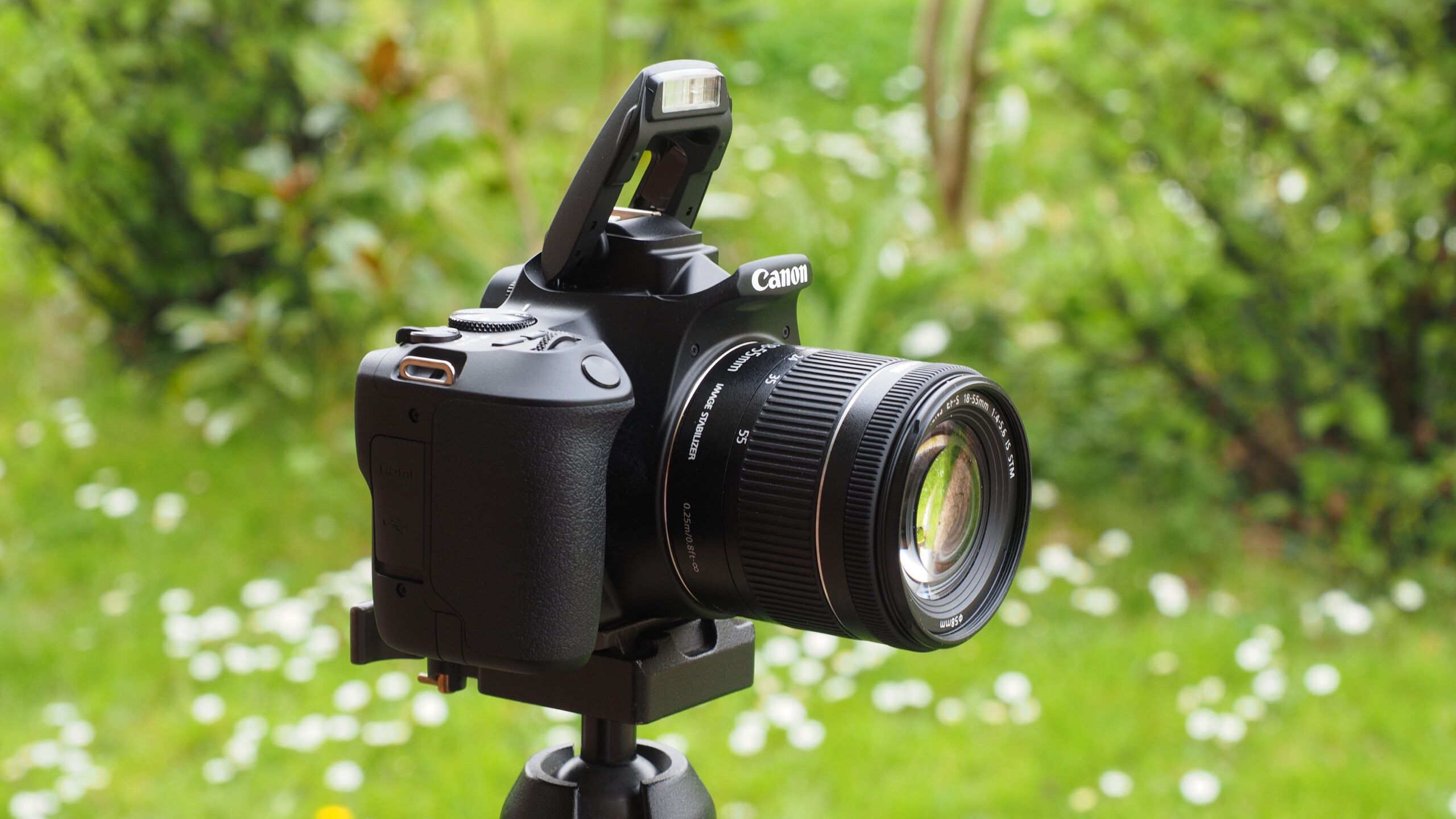

Learning photography gets harder when the camera hides the controls you need, or when a tiny point-and-shoot produces files that leave little room to improve. The best beginner camera should make automatic shooting easy while leaving a clear path into lenses, exposure, focus, and video.
This list covers two very different starting points. Canon's interchangeable-lens cameras offer a more serious photography foundation, while compact models focus on portability, flip screens, and quick sharing. The Canon EOS Rebel T7 with the EF-S 18-55mm lens is our top pick, with the Canon EOS R100 as the strongest step up for creators and the KODAK PIXPRO FZ45 as the simplest compact option.
Comparison table
| # | Product | Award | Lens | Sensor and video | Best for |
|---|---|---|---|---|---|
| 1 | Canon Rebel T7 18-55mm | Best overall | EF-S 18-55mm | 24.1MP APS-C, Full HD | Learning photography |
| 2 | Canon Rebel T7 Double Zoom | Best for distant subjects | EF-S 18-55mm and EF 75-300mm | 24.1MP APS-C, Full HD | Wildlife and sports practice |
| 3 | Notoldpine 5K Digital Camera | Best for creative effects | Fixed lens | 80MP, 5K | Casual vlogging |
| 4 | Canon Rebel T7 Bundle | Best ready-to-shoot kit | 18-55mm | 24.1MP APS-C, Full HD | New photographers who need accessories |
| 5 | Canon Rebel T7 Renewed | Best renewed DSLR | 18-55mm | 24.1MP APS-C, Full HD | First interchangeable-lens camera |
| 6 | Canon Rebel T7 3-Lens Kit | Best accessory bundle | 18-55mm, wide-angle, telephoto | 24.1MP APS-C, Full HD | Experimenting with focal lengths |
| 7 | Canon EOS R100 | Best for creators | RF-S 18-45mm | 24.1MP APS-C, 4K | Photography and video |
| 8 | Duluvulu 4K Digital Camera | Best for selfie video | Fixed lens, 16X digital zoom | 48MP, 4K | Teens and casual creators |
| 9 | KODAK PIXPRO FZ45 | Best simple compact | 27mm, 4X optical zoom | 16MP, Full HD | Family and travel snapshots |
| 10 | AUREAPIX 8K Digital Camera | Best flip-screen feature set | Fixed lens, 20X digital zoom | 96MP, 8K | Beginner video creators |
1. Canon Rebel T7 18-55mm: Best Overall

Pros
- 24.1MP APS-C sensor gives beginners room to crop
- Optical viewfinder encourages deliberate composition
- Built-in Wi-Fi and NFC simplify sharing
- Compatible with Canon EF and EF-S lenses
Cons
- Autofocus system has only nine points
- Full HD video rather than 4K
- DSLR body is less compact than the mirrorless option
Best for: someone who wants to learn real camera controls with a broad Canon lens path.
The Canon Rebel T7 18-55mm gets the important beginner decision right: it feels like a proper camera without making the first week intimidating. The familiar grip, physical controls, optical viewfinder, and Scene Intelligent Auto modes let a new photographer start shooting immediately, then gradually move into aperture, shutter speed, and ISO as confidence grows.
Its 24.1MP CMOS sensor uses the APS-C format, which gives photos considerably more room for cropping and editing than the small sensors in the compact cameras here. The listed ISO range runs from 100 to 6400, expandable to 12800. That does not make it a night specialist, but it gives you useful flexibility indoors and at dusk. The bundled EF-S 18-55mm lens covers everyday subjects, portraits, family scenes, and modest landscapes without asking a beginner to choose a focal length before understanding what one does.
The optical viewfinder covers approximately 95 percent of the eventual frame. That is a small limitation, but it also teaches a useful habit: compose carefully, then check the result on the 3-inch screen. The nine-point autofocus system includes AI Servo AF for subjects that move, and the camera can record Full HD video. Built-in Wi-Fi and NFC make transferring photos less cumbersome, while compatible Canon EF and EF-S lenses give this camera a much longer learning runway than the fixed-lens models.
The Canon EOS R100 is more modern, especially for video and autofocus, and its 4K recording is a clear advantage for creators. The T7 remains easier to recommend to someone whose main goal is still photography, partly because the controls feel straightforward and the optical finder makes the shooting process visible. Its real weakness is age: nine autofocus points and Full HD video are modest beside the R100. Skip it if smooth subject tracking or 4K is central to your plans. For everyone else, it is the clearest first step into interchangeable-lens photography.
2. Canon Rebel T7 Double Zoom: Best for Distant Subjects

Pros
- Includes both standard and telephoto lenses
- 24.1MP APS-C sensor supports detailed stills
- Optical viewfinder keeps composition intuitive
- Wi-Fi and NFC assist with transfers
Cons
- Telephoto lens adds bulk to the kit
- Nine-point AF is limited for fast action
- Full HD is the maximum listed video resolution
Best for: beginners who want to practice with both everyday and distant subjects.
The Canon Rebel T7 Double Zoom is the practical choice for a beginner who already knows that a single everyday lens will not cover every subject. Its EF-S 18-55mm lens handles the normal duties, while the EF 75-300mm lens brings distant subjects closer in the frame. That second lens changes the kind of photography you can attempt, from birds in a garden to players across a field.
The camera body shares the T7's core platform: a 24.1MP APS-C sensor, ISO 100 to 6400 with expansion to 12800, and Full HD video capture. Those specifications matter more for still photography than for headline chasing. The sensor provides enough detail for cropping, and the familiar optical viewfinder makes it easier to follow a subject without relying entirely on the rear screen.
Autofocus is the main constraint. The nine-point system and AI Servo AF can support moving subjects, but it is not as flexible as the wider-area Dual Pixel CMOS AF in the EOS R100. The longer lens also requires better technique. At 300mm, small hand movements become obvious, so beginners will need to pay attention to shutter speed, stance, and available light rather than simply turning the zoom ring.
Compared with the standard Canon Rebel T7 18-55mm, this kit opens more creative doors but is less convenient to carry. The R100 still wins for modern autofocus and 4K video, while the T7 Double Zoom wins when learning focal length and distance is the priority. The kit is not the one to choose for a small everyday camera bag. It suits a learner who wants to photograph subjects that stay out of reach.
3. Notoldpine 5K Digital Camera: Best for Creative Effects

Pros
- 180-degree flip and 270-degree rotation screen
- Built-in Wi-Fi and webcam functionality
- Includes 30 creative filters
- Rechargeable battery supports over 120 minutes of continuous recording
Cons
- Fixed-lens design does not grow with the photographer
- Claimed high-resolution output does not replace sensor size
- Autofocus range is specified only within 3.93 to 6.56 feet
Best for: a beginner who wants simple self-recording and playful image effects.
The Notoldpine 5K Digital Camera is aimed at a different beginner from the Canon models. It is a compact, fixed-lens camera built around easy video, casual photography, and instant experimentation. The 3-inch IPS display flips 180 degrees and rotates 270 degrees, so framing a selfie, desk video, or unusual low-angle shot is much easier than with a fixed rear screen.
The feature list claims 5K Ultra HD recording and 80MP still images. Those numbers sound dramatic, but they should be read as part of a small point-and-shoot feature set, not as a direct substitute for the 24.1MP APS-C sensor in the T7. The Canon captures more of the traditional photography experience, including interchangeable lenses and an optical viewfinder. Notoldpine's appeal is convenience: a beginner can turn on the screen, choose a filter, and start making content without learning a full camera system.
Autofocus is described as working with subjects from 3.93 to 6.56 feet, and the camera includes a fill light for dim environments. Its 30 creative filters cover effects such as vintage film, monochrome, sketch, and other artistic treatments. Built-in Wi-Fi supports remote control and transfers to a smartphone, while webcam functionality adds a practical role for calls and live streaming.
That convenience comes with a clear ceiling. There is no lens mount to support a change from wide scenes to portraits or distant subjects, and the supplied details do not establish the same photography controls as the Canon DSLRs. The Duluvulu 4K Digital Camera offers a similar flip-screen approach with two batteries, while this model counters with more stated filters and a longer continuous recording claim. Choose the Notoldpine if easy creative video matters more than building photography skills around lenses.
4. Canon Rebel T7 Bundle: Best Ready-to-Shoot Kit
Pros
- Canon 24.1MP APS-C sensor
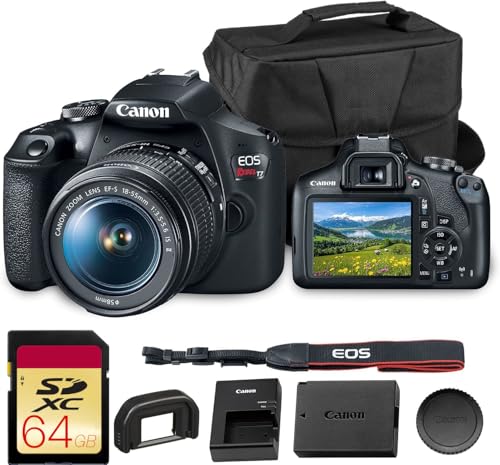
- Includes 18-55mm lens, shoulder bag, and 64GB memory card
- Wi-Fi and NFC support phone transfers
- Compatible with Canon EF and EF-S lenses
Cons
- Bundle size adds accessories a beginner may not need
- Full HD video only
- DSLR autofocus is less advanced than the R100's
Best for: someone buying a first DSLR who wants core accessories included.
The Canon Rebel T7 Bundle is the most immediately complete version of the standard T7 setup in this list. It includes the camera, 18-55mm lens, LP-E10 battery, charger, eyecup, body cap, neck strap, shoulder bag, and a 64GB memory card. A new photographer can get through the first outing without separately sorting out a way to carry the camera or store photos.
The camera itself uses a 24.1MP APS-C CMOS sensor and DIGIC 4+ image processor. Canon's automatic modes are the important part for a first-time owner, but the camera also leaves room to learn manual exposure. The 18-55mm lens is the right starting range for ordinary scenes. It is wide enough for groups and interiors, while the longer end works for portraits and details.
Built-in Wi-Fi and NFC allow transfers to compatible devices, with Canon's Camera Connect app described as supporting remote shooting and live view from a phone. The optical viewfinder and 3-inch LCD provide two distinct ways to compose. The body is listed at 3.81 pounds in this bundle's product information, which is a reminder that the package is aimed at a conventional DSLR experience rather than minimalist travel.
The Canon Rebel T7 18-55mm is the cleaner comparison if you already own a memory card and bag. The Canon Rebel T7 3-Lens Kit gives you more focal-length options, but also asks you to manage more equipment. This bundle's weakness is that its extras can create clutter before a beginner knows which accessories matter. It is the right pick for a first DSLR gift or a new photographer who wants the basic setup in one package.
5. Canon Rebel T7 Renewed: Best Renewed DSLR

Pros
- 24.1MP APS-C sensor
- ISO 100 to 6400, expandable to 12800
- Scene Intelligent Auto mode helps new users start quickly
- Built-in Wi-Fi and NFC
Cons
- Renewed condition requires careful inspection on arrival
- Nine-point AF is basic
- No 4K video
Best for: a first-time photographer who wants the T7 platform in a renewed listing.
The Canon Rebel T7 Renewed offers the same core camera experience as the standard T7, paired with the 18-55mm lens. That makes it an easy camera to understand: use Scene Intelligent Auto mode while learning the buttons, then move to exposure compensation and the creative modes as your photographs become more intentional.
Its 24.1MP CMOS sensor is the reason this camera belongs in a beginner photography discussion rather than a simple snapshot category. The APS-C format provides a useful balance of detail and manageable file sizes. The ISO range of 100 to 6400, expandable to 12800, gives learners a direct way to see how sensitivity affects brightness and image noise.
The 3-inch LCD is useful for reviewing shots, but the optical viewfinder is central to the experience. It covers approximately 95 percent of the frame, and the nine-point autofocus system includes AI Servo AF. Wi-Fi and NFC make sharing less dependent on removing the memory card. The supplied 18-55mm lens covers the most common early assignments, from family portraits to street scenes.
The main difference from the other T7 entries is the renewed condition, so the body, lens, battery, and screen deserve a careful check when the camera arrives. The Canon Rebel T7 Bundle is more convenient if you want a bag and memory card included, while the Canon EOS R100 offers stronger autofocus and 4K. A renewed T7 is still a sensible first camera for someone who wants to spend their learning time on composition and exposure rather than video production.
6. Canon Rebel T7 3-Lens Kit: Best Accessory Bundle

Pros
- 24.1MP APS-C sensor and DIGIC 4+ processor
- Includes 18-55mm, wide-angle, and telephoto equipment
- Full HD video at 30 frames per second
- Built-in Wi-Fi and NFC
Cons
- Many accessories can overwhelm a newcomer
- Included add-ons are not the same as native Canon lenses
- Three-frame-per-second continuous shooting is modest
Best for: beginners who want to try several types of photography from the start.
The Canon Rebel T7 3-Lens Kit is less about a single refined setup and more about giving a beginner several directions to explore. Alongside the camera and 18-55mm lens, the listing includes wide-angle and telephoto equipment, a 128GB memory card, case, filter kit, flash, tripod, and other accessories. That can make the first month more varied, though it also creates a larger learning curve.
The T7 body remains the familiar part. Its 24.1MP APS-C sensor, DIGIC 4+ processor, 3-inch 920k-dot LCD, and optical viewfinder create a clear foundation for still photography. The camera records Full HD 1080p video at 30 frames per second. Its 9-point autofocus system includes AI Servo AF, and the listed continuous shooting speed is 3 frames per second, which is suitable for casual action but not a specialist sports setup.
The appeal of several focal lengths is educational. A wide-angle accessory can make a room or landscape feel more expansive, while telephoto equipment shows how framing changes when the subject is distant. The 18-55mm lens remains the one to learn first because it is the most versatile and predictable. Built-in Wi-Fi and NFC are useful when you want to move images to a phone without making the memory card part of every transfer.
The Canon Rebel T7 Double Zoom is a more focused choice if the main need is a genuine longer lens, while the standard Canon Rebel T7 18-55mm is easier to carry and understand. This kit's weakness is not the T7 body, but the scattershot nature of the extras. Pick it if you enjoy experimenting and are willing to identify which accessories help your photography. Skip it if you want a clean, uncomplicated first setup.
7. Canon EOS R100: Best for Creators

Pros
- 24.1MP APS-C sensor
- 4K video at up to 24 frames per second
- Dual Pixel CMOS AF with face and eye detection
- Wi-Fi and Bluetooth connectivity
- Compact mirrorless body
Cons
- RF-S 18-45mm lens has a relatively narrow aperture range
- 4K frame rate is limited to 24 frames per second
- Smaller controls may take adjustment for DSLR users
Best for: beginners who want still photography and modern video features in one body.
The Canon EOS R100 is the most capable camera here for a beginner who expects to make both photos and video. Its mirrorless design is compact, and the RF-S 18-45mm STM lens gives a useful everyday range without the bulk of a longer DSLR zoom. It feels like a more current starting point than the Rebel T7, particularly when the subject moves or video is part of the plan.
The 24.1MP APS-C CMOS sensor matches the T7's headline resolution, but the DIGIC 8 processor supports newer shooting functions. The camera records 4K video at up to 24 frames per second, Full HD at up to 60 frames per second, and HD video at up to 120 frames per second. That range matters to creators who want a more cinematic 4K setting or slow-motion options, though the 24-frame limit in 4K is less flexible than the Full HD modes.
Autofocus is the R100's largest advantage over the T7 models. Dual Pixel CMOS AF covers up to 143 zones and includes human face and eye detection, plus animal and vehicle detection. Continuous capture reaches up to 6.5 shots per second when set to One-Shot AF. Those features reduce the amount of focus-point juggling a beginner has to do, especially for people and pets.
The Canon Rebel T7 18-55mm remains a fine teacher for traditional still photography, and its optical finder offers a direct, familiar way to compose. The R100 is the better fit for someone who wants autofocus assistance and video headroom. Its weakness is that the RF-S 18-45mm F4.5-6.3 lens is not especially bright, so indoor and low-light work may require more care. If your camera will serve as both a photo tool and a creator camera, this is the Canon to keep.
8. Duluvulu 4K Digital Camera: Best for Selfie Video

Pros
- 180-degree flip screen
- Autofocus and 16X digital zoom
- Includes two rechargeable batteries
- Webcam function and USB transfer
- Built-in creative modes and fill light
Cons
- Digital zoom cannot match an interchangeable telephoto lens
- Fixed-lens design limits photography growth
- Small compact body has fewer traditional camera controls
Best for: teens, casual vloggers, and beginners who prioritize ease of use.
The Duluvulu 4K Digital Camera is designed to remove friction. Its compact body has a 3-inch IPS screen that flips 180 degrees, making it simple to frame a selfie or vlog. The camera also includes two rechargeable batteries, a strap, and an SD card according to the listing, so it is prepared for casual recording rather than a lens-based learning path.
It claims 4K video and 48MP still images, with autofocus and 16X digital zoom. The zoom can help compose a distant subject, but digital zoom enlarges the image rather than giving you the optical reach of the Canon Rebel T7 Double Zoom. That distinction matters if photography is the goal. For quick clips, school projects, travel moments, and social posts, the compact design is more relevant than the number printed beside the zoom feature.
The camera adds exposure compensation from -3.0 to +3.0, time-lapse, slow motion, continuous shooting, smile and face detection, a fill light, anti-shake, and filters. It can also work as a webcam and connect to a computer through USB for file downloads. These features give a beginner several ways to experiment without learning a complex menu system.
The Notoldpine 5K Digital Camera offers a rotating screen and 30 filters, while the Duluvulu counters with two batteries and a more explicitly listed set of beginner modes. Neither replaces the EOS R100 for autofocus sophistication or lens flexibility. The Duluvulu is the one to choose when a light, self-facing camera matters more than controlling depth of field or building a system.
9. KODAK PIXPRO FZ45: Best Simple Compact

Pros
- Small, lightweight body
- 4X optical zoom
- 27mm wide-angle lens
- Full HD 1080p video
- Uses two AA alkaline batteries
Cons
- 16MP sensor offers less cropping room than the Canon cameras
- 2.7-inch screen is smaller than several competitors
- No interchangeable lens system
Best for: families and travelers who want a straightforward compact camera.
The KODAK PIXPRO FZ45 is the least complicated camera in this group. It has a small body, a fixed lens, a simple screen, and controls aimed at taking everyday pictures without committing to a larger camera system. Its listed weight is 0.25625 pounds, so it is notably easier to slip into a pocket or small travel bag than any of the Canon DSLRs.
Its 16MP CMOS sensor is enough for ordinary prints, family photographs, and online sharing. The 27mm wide-angle lens is useful indoors and for travel scenes, while the 4X optical zoom provides genuine framing flexibility without relying on digital enlargement. The FZ45 records Full HD video and uses a 2.7-inch LCD screen for composition and playback.
The camera accepts Class 10 SD, SDHC, or SDXC cards up to 512GB. It runs on two AA alkaline batteries, which makes replacing power on a trip straightforward. That battery approach is less elegant than the rechargeable systems in the Canon cameras and the Duluvulu, but it can be convenient when a charging cable is not nearby.
The trade-off is obvious beside the Duluvulu 4K Digital Camera. Duluvulu offers a flip screen, autofocus, 4K video, and two rechargeable batteries, while the KODAK keeps the controls and claims more modest. Readers looking for a camera that teaches lenses should choose the Canon Rebel T7 18-55mm instead. For someone who wants a small camera that can handle travel and family snapshots without a technical detour, the FZ45 is the calmer choice. Readers comparing small bodies can also consider the features that matter in a pocketable camera.
10. AUREAPIX 8K Digital Camera: Best Flip-Screen Feature Set

Pros
- 180-degree flip screen measures 3.5 inches
- Wi-Fi transfer and webcam mode
- Includes two batteries
- HDR, anti-shake, slow motion, and 60 filters
- Autofocus and built-in flash
Cons
- 20X zoom is digital
- Fixed-lens body cannot grow with new lenses
- High stated resolution does not explain low-light performance
Best for: beginner creators who want a large self-facing screen and many built-in modes.
The AUREAPIX 8K Digital Camera is built around creator-friendly hardware. Its 3.5-inch LCD flips 180 degrees, the largest listed screen among the compact models here, and the camera includes webcam functionality for streaming, online teaching, and video calls. Two batteries make longer recording sessions less dependent on a nearby outlet.
The listing claims 8K video, 96MP stills, autofocus, HDR imaging, and a built-in flash. It also lists a 20X digital zoom controlled by a W/T rocker. That zoom is useful for changing the composition on screen, but it does not provide the reach or image characteristics of the EF 75-300mm lens in the Canon Rebel T7 Double Zoom. The high resolution claims should likewise be treated as feature descriptions, not a replacement for the larger APS-C sensors in the Canon cameras.
Wi-Fi transfer uses the Viipulse app for iOS and Android, with sharing intended for platforms such as YouTube, TikTok, and Facebook. Anti-shake, slow motion, continuous shooting, self-timer, HDR, and 60 filters give beginners plenty of settings to explore. The interface is designed to be approachable, but a long feature list can also mean more time spent deciding which mode to use.
The Duluvulu 4K Digital Camera is a simpler rival with a smaller flip screen and similar webcam focus. The Notoldpine 5K Digital Camera offers 30 filters and a rotating display, but AUREAPIX adds a larger screen and more stated creative modes. The weakness is the same across this class: there is no interchangeable lens path and limited information about sensor behavior in difficult light. Choose it for self-facing content and easy experimentation, not as a substitute for a photography system.
How to choose best beginner camera
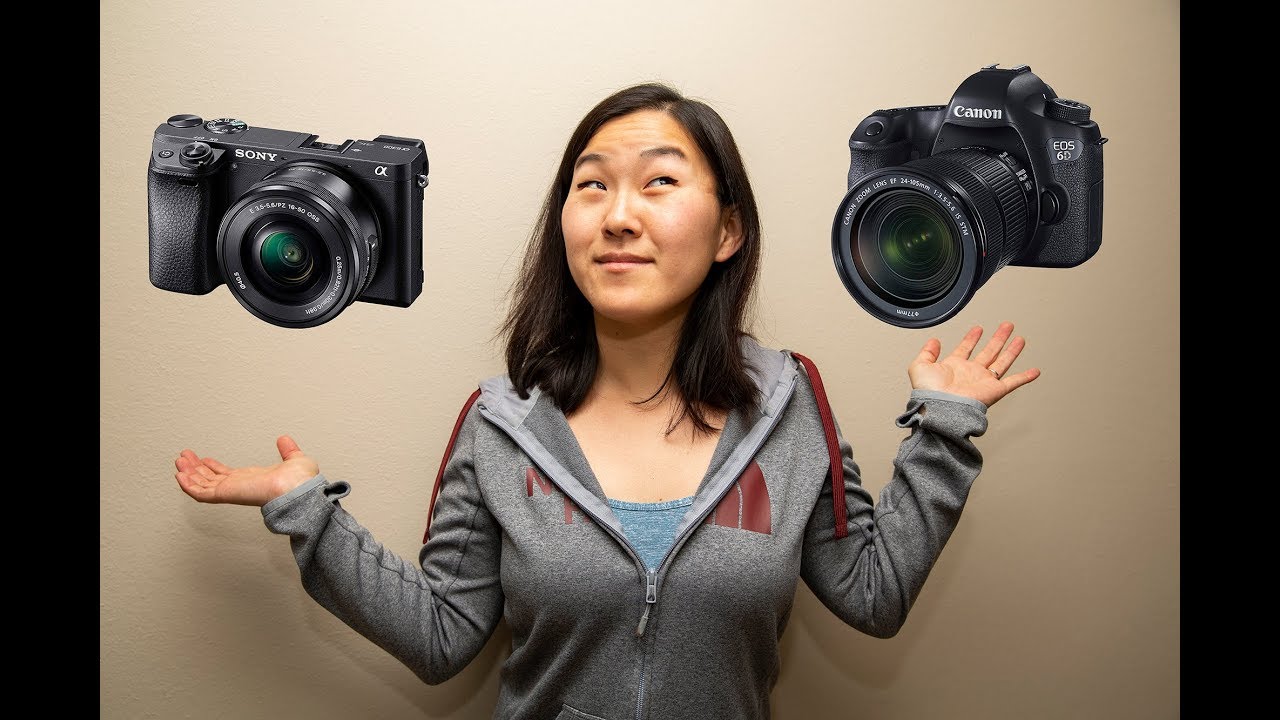
The right first camera depends on whether you want to learn interchangeable-lens photography, record yourself, or carry a simple snapshot camera everywhere.
Sensor size
Sensor size affects detail, cropping flexibility, and how easily a camera can create background separation. The Canon Rebel T7 and Canon EOS R100 use 24.1MP APS-C sensors, which are substantially more suitable for learning photography than the smaller, unspecified sensors in the compact models. A compact camera can still make pleasant daylight images, but it gives you less room to change the look of a photograph later.
A beginner camera should make the next skill easier, not just the first photograph.
Lens system
An interchangeable lens camera lets you learn how focal length changes a photograph. The 18-55mm lenses in the Canon kits are sensible starting points, while the Double Zoom kit adds an EF 75-300mm lens for distant subjects. Fixed-lens cameras such as the KODAK PIXPRO FZ45 and AUREAPIX are simpler to carry, but you cannot add a brighter portrait lens or a longer native telephoto later.
Autofocus
Autofocus determines how much attention you must spend keeping a subject sharp. The Rebel T7 models use a nine-point system with AI Servo AF, which is workable for deliberate shooting but basic for fast movement. The EOS R100's Dual Pixel CMOS AF covers up to 143 zones and adds human face, eye, animal, and vehicle detection, making it the stronger choice for people, pets, and creator video.
Video and screen design
A fixed rear screen suits ordinary photography, while a 180-degree flip screen is much more useful for self-recording. The R100 supports 4K at up to 24 frames per second, while the T7 models record Full HD. Compact cameras from Notoldpine, Duluvulu, and AUREAPIX emphasize flip screens, webcam modes, filters, and Wi-Fi, which matters more than lens flexibility if your main project is a vlog.
Portability and power
DSLRs provide a substantial grip and optical viewfinder, but they occupy more space than compact cameras. The KODAK PIXPRO FZ45 is exceptionally light and uses two AA batteries, while the Duluvulu and AUREAPIX include two rechargeable batteries. Decide honestly how often you will carry the camera. The camera left at home cannot help you practice.
For a broader comparison, the difference between learning photography and simply capturing snapshots is worth considering before choosing a body. If Canon's lens system appeals to you, how a beginner Canon setup can grow will help put the T7 and R100 choices in context.
Frequently asked questions
Is the Canon Rebel T7 easy for a complete beginner?
Yes. Its automatic modes, optical viewfinder, 3-inch LCD, and 18-55mm lens make the first steps approachable. It also exposes the user to manual controls and interchangeable lenses as skills improve.
Is the Canon EOS R100 better than the Rebel T7 for video?
The R100 is the stronger video camera of the two. It records 4K at up to 24 frames per second, Full HD at up to 60 frames per second, and HD at up to 120 frames per second, while the T7 models are listed for Full HD recording.
Should a beginner choose a DSLR or a compact camera?
Choose a DSLR if you want to learn lenses, viewfinder composition, and manual exposure. Choose a compact camera if portability, a flip screen, and simple recording matter more than building a camera system.
What does a 24.1MP APS-C sensor offer?
A 24.1MP APS-C sensor gives you detailed still images and more cropping flexibility than the smaller sensors typically used in simple compact cameras. It also gives a beginner a better foundation for learning how lenses and exposure affect an image.
Are digital zoom and optical zoom the same?
No. Optical zoom changes the lens's view of the subject before the image is recorded. Digital zoom enlarges part of the captured image, so a claimed 16X or 20X digital zoom should not be compared directly with the optical reach of a telephoto lens.
Is a flip screen useful for beginner photography?
It is especially useful for selfies, vlogging, overhead compositions, and low-angle shots. It is less important if you mainly photograph through an optical viewfinder and do not plan to record yourself.
Which camera is simplest for family photos?
The KODAK PIXPRO FZ45 is the simplest option here. Its 27mm wide-angle lens, 4X optical zoom, Full HD video, small body, and AA battery operation keep the experience straightforward.
The bottom line
The Canon Rebel T7 18-55mm is the Best beginner camera for someone who wants to learn photography rather than only record quick clips. Its 24.1MP APS-C sensor, optical viewfinder, automatic modes, Wi-Fi, and compatibility with Canon EF and EF-S lenses create a clear path from first shots to more deliberate work.
For creators, the Canon EOS R100 is the better choice. Its Dual Pixel CMOS AF, face and eye detection, compact mirrorless body, and 4K video make it more adaptable than the T7. If portability and simplicity matter most, the KODAK PIXPRO FZ45 is the least demanding compact option, while Duluvulu and AUREAPIX make more sense for flip-screen video.
If you are undecided, choose the Canon Rebel T7 for photography lessons and the EOS R100 for a mix of photography and video.
As an Amazon Associate we earn from qualifying purchases.