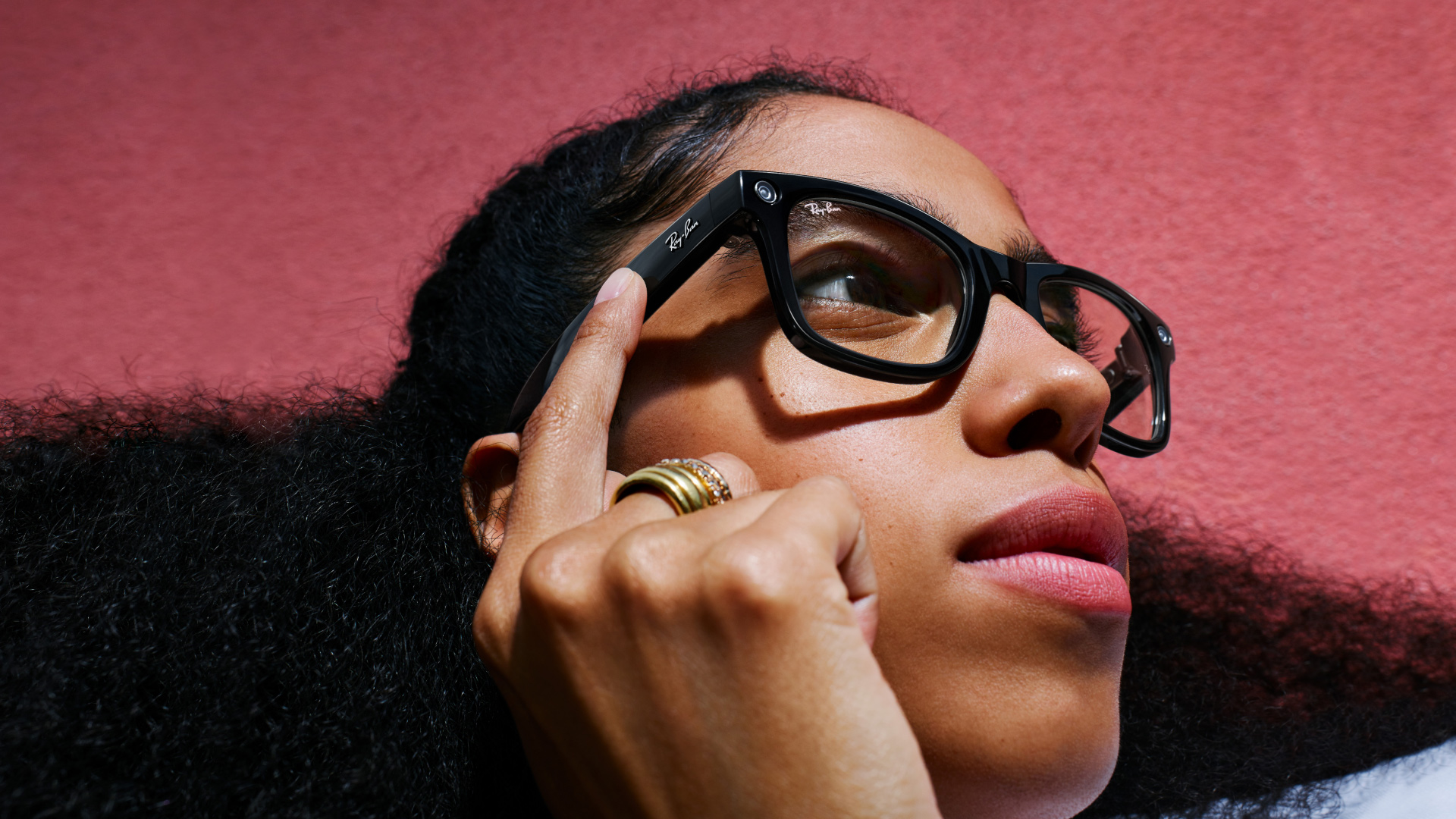

A phone gives you better control, but it also means missing the moment while you reach for it. Camera glasses solve that problem by putting the lens at eye level, although the differences between models are substantial. Some are simple video recorders, while others add translation, voice assistants, open-ear audio, and object recognition.
Our Best camera glasses picks range from the polished Meta Ray-Ban Gen 2 to lightweight sports glasses and AI-focused models with stabilization. Plunthorn AI Glasses are our top pick for the broadest mix of recording, AI tools, audio, and outdoor protection, while the other nine suit more specific needs.
Comparison table
| # | Product | Award | Camera | Recording or battery | Best for |
|---|---|---|---|---|---|
| 1 | Plunthorn AI Glasses | Best overall | 4K video | 290mAh battery | Travel and everyday AI |
| 2 | Ray-Ban Meta Gen 2 | Best premium smart glasses | 12MP, up to 3K | Up to 8 hours | Polished daily use |
| 3 | BQXX 1080P Camera Glasses | Best simple recorder | 1080P | Up to 90 minutes | Basic outdoor recording |
| 4 | JASPIN AI Glasses | Best for lens flexibility | 8MP, 4K listed | 12 hours playback | Vlogging and travel |
| 5 | SGUKZF Photochromic Glasses | Best for changing light | 4K with EIS | 290mAh battery | Outdoor all-day wear |
| 6 | Osawalla AI Glasses | Best for recording control | 8MP, 1080P | Up to 7 hours music | Travelers who want options |
| 7 | AMZISH AI Glasses | Best for language support | 8MP, 30fps | 60 minutes per session | Translation and calls |
| 8 | Coucur AI Glasses | Best for open-ear features | 8MP, 1080P | Up to 7 hours music | Commuting and navigation |
| 9 | HUCLTZV POV Glasses | Best for sports POV video | 4K video | Up to 2 hours | Running and cycling |
| 10 | Nllosa AI Glasses | Best for clear lens flexibility | 8MP, 4K | 7 hours music | Indoor and outdoor use |
1. Plunthorn AI Glasses: Best Overall

Pros
- 4K hands-free video and photo capture
- ChatGPT assistant, translation, and object recognition
- Open-ear audio with IP65 protection
- 290mAh battery
Cons
- No stated recording duration
- Transparent lens is less suited to bright outdoor conditions
- App is needed for setup and file management
Best for: travelers who want one pair for first-person video, calls, audio, and AI assistance.
Plunthorn AI Glasses are the easiest pair in this group to recommend as a general-purpose starting point. They are not just a camera hidden in a frame. The feature set combines hands-free 4K video, photo capture, open-ear Bluetooth audio, calls, object recognition, real-time translation, and an AI assistant. That makes them useful on a trip, during a walk, or whenever pulling out a phone would interrupt what is happening.
The built-in camera records from a first-person viewpoint, which is the main reason to buy camera glasses in the first place. The listing does not specify a frame rate or clip length, so we would not buy these expecting detailed action-camera controls. It does specify a 290mAh battery and IP65 protection, which should make the glasses better suited to sweat, dust, and light rain than a basic recorder such as the BQXX 1080P Camera Glasses.
The open-ear design is another practical advantage. You can listen to music or take hands-free calls without sealing off the surrounding sound. The companion app handles setup, file management, and feature control, while object recognition is intended to identify items in view. The translation and ChatGPT features are more ambitious than what you get from the sports-focused HUCLTZV POV Glasses, but they depend on the phone and software experience working smoothly.
The weakness is uncertainty around the details that serious video users care about. There is no stated maximum recording length, stabilization method, or video frame rate. The transparent lens also makes more sense for indoor and general daily use than for harsh sunlight. Choose the Plunthorn pair if you want the widest set of capabilities in one frame. Skip it if you need a clearly documented recording workflow for long sports sessions.
2. Ray-Ban Meta Gen 2: Best Premium Smart Glasses

Pros
- 12MP ultra-wide camera
- Records up to 3K resolution
- Up to 8 hours with moderate use
- Charging case provides up to 48 hours of charging
- Strong privacy controls and open-ear audio
Cons
- Requires a phone and Meta AI app for some features
- Video clips are limited to 3 minutes per session
- Clear lenses are not intended as sunglasses
Best for: buyers who want the most established combination of wearable camera, audio, calls, and AI.
The Ray-Ban Meta Gen 2 feels like a finished consumer product rather than a conventional recording device mounted in a glasses frame. Its Wayfarer shape is familiar, the controls are built around everyday use, and the camera, speakers, microphones, and AI features work together instead of competing for attention. It is the pair we would choose for someone who plans to wear camera glasses most days.
Its ultra-wide 12MP camera records video at up to 3K resolution and captures photos from the wearer's viewpoint. The three-minute clip limit matters. It is long enough for a street scene, a quick explanation, or a family moment, but not a substitute for a continuous sports camera. The up-to-8-hour battery claim applies to moderate use, and the charging case adds up to 48 hours of charging on the go, which is a much clearer power setup than most of the lesser-known options here.
Meta AI can answer questions, identify objects, and provide reminders. Live translation supports French, Italian, Spanish, English, German, and Portuguese, with more languages listed as forthcoming. Some AI functions require Bluetooth, the Meta AI app, and an internet-connected phone, so this is not a fully independent computer on your face. The open-ear speakers preserve awareness of conversations and ambient noise, while the microphones are designed to block 90% of wind and street noise during calls.
The Gen 2 is not perfect. The short recording sessions will frustrate anyone documenting a long ride, and the clear lenses do not provide the automatic light adjustment found on the SGUKZF Photochromic Glasses. It also weighs 0.7716 pounds according to the product information, so fit matters more than it does with the especially light BQXX model. Still, it is the most convincing daily wearable here. Choose it for reliable lifestyle integration, not for maximum recording duration or the most aggressive sports use.
3. BQXX 1080P Camera Glasses: Best Simple Recorder

Pros
- Straightforward one-touch recording
- Up to 90 minutes of continuous recording
- Lightweight 0.088-pound design
- Saves footage in 10-minute clips
Cons
- Video cannot be opened directly on a phone
- No audio recording
- Listed as 1080P rather than 4K
Best for: hikers, cyclists, and casual users who want basic hands-free video without AI features.
BQXX takes a different approach from nearly every other entry here. There is no translation, voice assistant, object recognition, or open-ear audio. Tap the side-mounted button and the glasses record. That simplicity can be a benefit when the only job is capturing a bike ride, hike, drive, or view without holding a phone.
The camera records at 1080P, and a full charge supports up to 90 minutes of uninterrupted recording. The footage is automatically divided into 10-minute files, which makes individual clips easier to manage but creates more files during a long outing. When storage fills, the glasses overwrite older video or pictures, so important footage should be copied promptly.
At 0.088 pounds, the frame is among the lightest in the group. That makes it a sensible choice for movement, especially when a heavier frame can bounce or become distracting. The basic operation also avoids the setup burden that comes with AI glasses. There is no stated stabilization system, so the result may be less controlled than the EIS-equipped AMZISH AI Glasses or JASPIN AI Glasses.
The biggest catch is file handling. The listing says the video cannot be opened on a phone and needs a desktop or laptop with a USB port. A Type-C laptop may require a card reader, and some computers may need a different video player. There is also no audio recording. Those limitations rule it out for social clips and spoken travel diaries, but not for a user who simply wants silent POV footage and values a light frame over smart features.
4. JASPIN AI Glasses: Best for Lens Flexibility

Pros
- EIS stabilization and 8MP camera
- Three lens sets included
- 12 hours of playback
- IP66 protection
- Voice AI and one-tap recording
Cons
- Video clips are limited to 10 minutes
- Listing uses both 8MP and 4K descriptions
- AI features add app and setup complexity
Best for: users who want one frame that can move between clear, tinted, and photochromic lenses.
JASPIN AI Glasses are unusually adaptable for a pair intended to be worn in different settings. The package includes blue-light, polarized gray, and photochromic lens sets, so the frame can shift from indoor use to brighter outdoor conditions without becoming a single-purpose gadget. That flexibility is more useful than it sounds for people who want camera glasses to look like ordinary eyewear.
The camera is described as 8MP with EIS stabilization and also as supporting 4K recording. The listing says one-tap video can run for up to 10 minutes, and it supports vertical shooting. EIS should help reduce the small movements that make first-person footage unpleasant to watch, although the product information does not state a frame rate or explain how the 4K mode differs from the HD recording claim.
JASPIN adds more than video. Its assistant can be activated by button or voice, and the camera can identify food, landmarks, plants, and menus. ChatGPT-powered translation is aimed at travel and conversations, while a dedicated physical button can start voice recording for meetings or interviews. Open-ear audio, noise-canceling microphones, and a 290mAh battery rated for 12 hours of playback round out the everyday feature set.
At 37g, these are light enough to wear for a full day, and IP66 protection gives them stronger stated resistance to rain and dust than Plunthorn. The limitation is that the smartest features come with a more involved software experience, and the 10-minute video cap is restrictive beside the AMZISH model's 60-minute session. Pick JASPIN when interchangeable lenses and stabilization matter more than uninterrupted recording.
5. SGUKZF Photochromic Glasses: Best for Changing Light

Pros
- 4K camera with EIS stabilization
- Photochromic lenses
- IP66 protection
- Open-ear audio and noise reduction microphones
- 35g frame
Cons
- No stated recording duration
- AI functions may require connected devices
- No clear lens alternatives are listed
Best for: outdoor users who move between indoor spaces and changing sunlight.
SGUKZF makes a strong case for photochromic lenses. They automatically adjust to sunlight, so the glasses are less awkward when a walk moves from a bright street into a shop or home. That is the kind of small convenience that can determine whether camera glasses stay on your face or end up in a pocket.
The camera combines a listed 4K mode with electronic image stabilization. EIS is valuable for cycling, walking, and other movement because it can smooth the constant shake created by a head-mounted camera. The listing does not provide a clip-length limit, frame rate, or storage detail, so the appeal is based on the broad recording feature rather than a fully specified video workflow.
The 35g frame is lighter than the 37g JASPIN and 40.8g Osawalla. It also uses a 290mAh battery and has IP66 protection against sweat, rain, and dust. Open-ear audio keeps outside sound available, while noise reduction microphones are intended to make calls clearer. Translation supports more than 139 languages, and the glasses include a ChatGPT assistant and object recognition.
The missing detail is recording endurance. A user planning a long hike cannot tell from the listing how long the camera runs on a charge or how footage is divided. The photochromic lens is also less flexible than JASPIN's three lens sets if you want a dedicated clear or polarized option. Still, SGUKZF is the most natural fit for people whose days alternate between indoor and outdoor light and who want stabilization without a heavy frame.
6. Osawalla AI Glasses: Best for Recording Control

Pros
- Selectable recording lengths from 15 seconds to 12 minutes
- 8MP photos and 1080P video
- Wi-Fi and Bluetooth 5.4 transfer
- Photochromic lenses
- 40.8g frame with IP65 protection
Cons
- Video resolution is lower than the listed 4K alternatives
- Photochromic lenses can darken slowly indoors or in winter
- Playback claim is for music, not video
Best for: travelers who want control over clip length and automatic file syncing.
Osawalla is the pick for people who dislike vague recording controls. Rather than starting every clip with the same fixed duration, the glasses offer choices from 15 seconds, 30 seconds, 1 minute, 3 minutes, 9 minutes, and 12 minutes. That makes them practical for everything from a quick visual note to a longer walk, although the maximum is still shorter than BQXX's stated 90-minute continuous recording.
The camera is an 8MP unit for photos and records video at 1080P. An anti-shake algorithm is intended to keep daily footage steady, but this is not the same as the EIS and 4K combination in SGUKZF or JASPIN. The more important advantage is file handling. Bluetooth 5.4 and Wi-Fi dual transmission support automatic syncing of photos and video, which should be less frustrating than the BQXX workflow that requires a computer.
Osawalla also brings a built-in ChatGPT-based assistant called “Hey Cyan, ” object recognition, and translation across more than 139 languages. Touch controls handle volume, calls, and assistant activation. The photochromic lenses automatically darken in sunlight, while the TR90 frame, ABS temples, and PMMA construction contribute to the stated 40.8g weight.
The lens behavior has a disclosed limitation: darkening can be slower indoors or during winter when UV light is weaker. IP65 protection is suitable for splashes and daily sweat, but not a reason to treat the glasses as waterproof equipment. Compared with AMZISH, Osawalla offers more explicit clip choices but less recording time per session. It is the better fit for travelers who want predictable short clips and easier transfers.
7. AMZISH AI Glasses: Best for Language Support

Pros
- Translation across 164 mainstream languages
- 8MP camera with EIS
- 30fps video
- Up to 60 minutes of video per session
- Interchangeable lenses
Cons
- IP65 protection is not suitable for submersion
- Video recording is limited to 60 minutes per session
- No stated 4K video mode
Best for: travelers and commuters who prioritize translation, calls, and a longer recording session.
AMZISH stands out because its AI functions are unusually central to the product rather than a side note. Built-in ChatGPT and DeepSeek models support translation across 164 mainstream languages, along with voice wake-up, object recognition, dialogue, and questions and answers. For a traveler, those tools may matter more than a headline camera resolution.
The 8MP camera records at 30fps, and electronic image stabilization is designed to make footage smoother during cycling, fishing, travel, and family activities. The glasses support up to 60 minutes of continuous video per session, giving them a more useful endurance profile than JASPIN's 10-minute limit. They do not list 4K recording, so users choosing between these and the 4K-capable Plunthorn or Nllosa should decide whether longer clips or higher stated resolution matters more.
Open-ear audio lets music and calls play without blocking ambient sound. Dual-microphone ENC is intended to improve calls in motion, and wireless syncing uses Wi-Fi and Bluetooth 5.4. The frame supports interchangeable lenses, allowing a clear business-glasses setup or a darker sunglasses configuration. That makes AMZISH more adaptable than a fixed-lens model.
The 60-minute figure is per session, not a promise of all-day video capture. IP65 protection covers sweat and splashes but specifically is not suitable for swimming or submersion. Compared with Osawalla, AMZISH gives you a longer single recording and more stated language coverage, while Osawalla offers more granular clip choices. Choose AMZISH when translation and sustained hands-free recording are the priority.
8. Coucur AI Glasses: Best for Open-Ear Features
Pros
- 8MP camera with EIS
- 1080P video and image recognition
- Open-ear audio with dual ENC microphones
- Up to 7 hours of music playback
- Supports iOS and Android
Cons
- No stated video recording duration
- Camera video is 1080P, not 4K
- 270mAh battery is smaller than several rivals
Best for: commuters, cyclists, and users who want navigation audio with occasional recording.
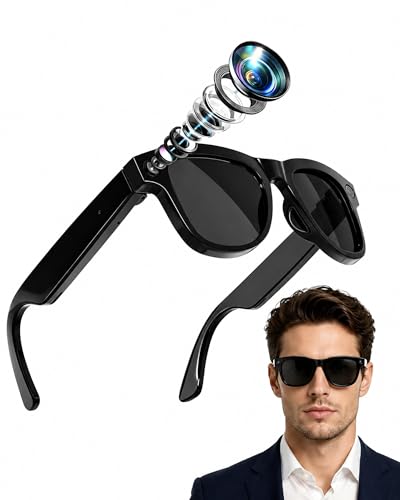
Coucur is built around the idea that camera glasses should also function as everyday audio glasses. The OWS open-ear system handles music, calls, and navigation while leaving the ears open to traffic and conversation. That makes the product more convincing for commuting than a camera-only frame, particularly for someone who expects to use audio more often than video.
Its 8MP camera uses image processing for photos described as reaching up to 32MP, while EIS supports smoother 1080P video. Those claims are not the same as a native 32MP still camera or 4K video, so expectations should stay realistic. The camera is better suited to travel snapshots, city walks, hiking, and casual vlogs than to demanding action footage.
The glasses add image recognition and voice help through the companion app. Translation supports more than 139 languages, and dual ENC microphones are designed to reduce background noise during calls. The 270mAh battery is rated for up to 7 hours of music playback and up to 7 days of standby, with a stated 1.5-hour fast charge. Compatibility with iOS and Android keeps setup relatively broad.
Coucur does not state how long the camera can record continuously, which makes it harder to recommend for planned video sessions. The smaller battery also gives it less margin than the 290mAh models, though battery capacity alone does not determine actual runtime. Pick Coucur over Nllosa when open-ear audio and navigation are central. Pick Nllosa when 4K video and a clear lens option matter more.
9. HUCLTZV POV Glasses: Best for Sports POV Video

Pros
- 4K first-person video
- Up to two hours of working time
- Anti-glare lens
- Designed for running, cycling, hiking, and baseball
- Records without audio
Cons
- No audio recording
- No AI, Bluetooth audio, or translation features
- Safety and heat instructions require attention
Best for: athletes who want silent first-person footage rather than a connected AI wearable.
HUCLTZV is the most specialized product in this roundup. It is a POV sports camera shaped like sunglasses, not an AI assistant with a camera attached. The focus is on capturing running, cycling, hiking, and baseball action from the wearer's perspective, with 4K video and a lens designed to reduce glare in bright conditions.
The glasses support continuous loop footage and still photos, with the listing describing picture output up to 300W and 1200W PX clarity. Those phrases are not presented in the same camera language used by the other products, so we would put more weight on the stated 4K video capability than on the unclear still-image descriptions. The product also claims up to two hours of battery life, which is useful for a longer outing.
There is no audio recording function. That can be a weakness for a travel diary or narrated vlog, but it may be exactly what an athlete wants when the footage should focus on movement without wind noise. Unlike Plunthorn, Coucur, or Meta Ray-Ban Gen 2, HUCLTZV does not offer open-ear audio, calls, translation, or object recognition.
The operating instructions deserve more attention than they would on a casual pair of smart glasses. The device can heat up during use, and the listing warns against extended operation while the app is running or while charging. It is also intended for adults and not children under 10. Choose HUCLTZV for silent sports footage and its stated two-hour working time. Skip it if you want a wearable assistant or audio device.
10. Nllosa AI Glasses: Best for Clear Lens Flexibility

Pros
- 8MP camera with listed 4K video
- Anti-shake recording
- Open-ear audio and ENC calls
- Includes an extra pair of clear lenses
- Translation across more than 139 languages
Cons
- No stated video session limit
- Battery claims focus on audio and talk time
- AI translation and recognition depend on software
Best for: users who want camera sunglasses that can switch to clear lenses indoors.
Nllosa is a flexible everyday pair with a particularly useful inclusion: an extra pair of clear lenses. The main frame uses sunglasses lenses, while the spare clear set is intended for indoor use or a less tinted look. That makes the glasses more practical than a permanently dark pair if you want to wear them through a full day.
The camera is listed as 8MP and supports 4K video with built-in anti-shake. It records a first-person view without requiring a phone in your hand, though the listing does not state the frame rate or maximum clip length. The 4K claim puts Nllosa alongside Plunthorn, SGUKZF, and HUCLTZV on headline resolution, while the inclusion of stabilization should help with ordinary walking and travel movement.
Open-ear speakers handle music and calls, and dual microphones use ENC for clearer conversations. The built-in assistant responds to “Hey Cyan, ” while object recognition can identify landmarks, menus, and other items. Translation supports more than 139 languages, with the listing claiming a response time of 0.5 seconds and 98% accuracy. Those are manufacturer claims, so they should be treated as capabilities to explore rather than guaranteed results in every setting.
The 290mAh battery is rated for 7 hours of music, 4 hours of talk, and 7 days of standby, but no continuous video figure is given. Lenses are also described as blocking 98% of UVA, UVB, and blue light, another claim that should not be confused with prescription eye protection. Compared with Coucur, Nllosa offers the stronger stated video mode and clear lens flexibility. Choose it for mixed indoor and outdoor wear, especially if you want AI features without committing to sunglasses all day.

How to choose best camera glasses
The right pair depends less on a single resolution claim than on how you plan to record, connect, and wear the glasses.
Camera resolution and stabilization
A higher stated resolution can preserve more detail, but a head-mounted camera also needs stabilization. EIS or an anti-shake algorithm can reduce the small movements caused by walking and cycling. The 1080P BQXX model is sufficient for basic documentation, while the 4K-capable Plunthorn, SGUKZF, JASPIN, HUCLTZV, and Nllosa models are better suited to users who want more detail.
Check whether the listing gives a frame rate, clip limit, and recording format. A product that says 4K but does not explain recording duration may be less useful for a long outing than a 1080P model with a clearly stated 90-minute session.
Recording duration and file transfer
Battery life for music is not the same as battery life for video. AMZISH states up to 60 minutes of video per session, BQXX states up to 90 minutes of continuous recording, and HUCLTZV states up to two hours of working time. Several AI models give audio runtimes but do not state how long video recording lasts.
File transfer is just as important. BQXX footage requires a computer and cannot be opened directly on a phone according to its listing. Osawalla, AMZISH, and several AI models describe Wi-Fi or Bluetooth transfer, which is more convenient for sharing clips quickly.
AI and phone dependence
Translation, object recognition, and voice assistants can be genuinely useful for travel, menus, landmarks, and quick questions. They also introduce software dependencies. Meta Ray-Ban Gen 2 requires Bluetooth, the Meta AI app, and an internet-connected phone for some AI functions, while other models rely on companion apps for setup and file management.
If your priority is reliable recording with minimal interaction, BQXX or HUCLTZV makes more sense. If you want a wearable that can answer questions and identify objects, Plunthorn, Meta Ray-Ban Gen 2, AMZISH, Osawalla, Coucur, and Nllosa offer more.
Buy around the recording workflow first. A sharp clip that is difficult to transfer is not useful footage.
Lens design and fit
Clear lenses suit indoor use, while photochromic lenses are more adaptable when light changes throughout the day. JASPIN includes blue-light, polarized gray, and photochromic options. Nllosa includes a spare clear lens set, and SGUKZF and Osawalla use photochromic lenses.
Weight also affects whether the glasses stay comfortable. SGUKZF lists a 35g frame, JASPIN lists 37g, and Osawalla lists 40.8g. BQXX's product information lists 0.088 pounds. These figures are not a substitute for knowing the bridge and temple fit, but they provide a useful comparison for long recording sessions.
Weather protection and outdoor use
IP ratings help distinguish light outdoor protection from equipment designed for immersion. IP65 models such as Plunthorn, Osawalla, and AMZISH are aimed at sweat, dust, and splashes. SGUKZF and JASPIN list IP66 protection, which offers a stronger stated level of resistance.
None of these claims makes the glasses suitable for swimming unless the product explicitly says so. HUCLTZV also includes heat-related operating warnings, so sports users should follow its instructions rather than leaving the device recording while charging.
For users comparing this category with a conventional camera, how a travel camera handles changing scenes and lighting is a useful distinction. A phone or dedicated camera remains easier to aim precisely, while glasses win on hands-free perspective.

Frequently asked questions
Do camera glasses record audio?
Some do, and some do not. HUCLTZV explicitly records video only and has no audio recording function. The other AI and smart glasses in this roundup describe microphones for calls, but buyers should check the product's recording details if synchronized video and sound are essential.
Are camera glasses good for cycling?
They can be useful for hands-free first-person footage, provided the frame fits securely and the camera has stabilization. JASPIN, SGUKZF, AMZISH, and Nllosa list anti-shake or EIS features, while HUCLTZV is designed specifically around sports and outdoor POV video. Follow local privacy and recording laws, and do not let the glasses distract you from traffic or trail conditions.
Do camera glasses need a phone?
Many features require a phone, a companion app, Bluetooth, or internet access. Meta Ray-Ban Gen 2 specifically requires a connected phone and Meta AI app for some AI functions. BQXX can record without a phone, but its files must be transferred through a computer according to the listing.
Can camera glasses translate languages?
Several models list real-time translation. Plunthorn, SGUKZF, JASPIN, Osawalla, AMZISH, Coucur, and Nllosa describe translation features, with language coverage claims ranging from more than 139 languages to 164 mainstream languages. Actual performance depends on the software, phone connection, audio conditions, and language pair.
Are camera glasses waterproof?
The products generally claim resistance to sweat, rain, dust, or splashes rather than full waterproofing. Plunthorn, Osawalla, and AMZISH list IP65, while JASPIN and SGUKZF list IP66. AMZISH specifically says its glasses are not suitable for swimming or submersion.
How long can camera glasses record?
It varies considerably. BQXX states up to 90 minutes of continuous recording, AMZISH states up to 60 minutes per session, and JASPIN lists clips of up to 10 minutes. Meta Ray-Ban Gen 2 records clips up to 3 minutes per session, while several others do not provide a clear video runtime.
Are camera glasses legal to use in public?
Recording laws differ by location, and privacy expectations vary between public and private spaces. Ask permission before recording people in sensitive situations, avoid recording where cameras are prohibited, and use visible privacy indicators when the product provides them. The glasses should never be used to invade someone's privacy.

The bottom line
The Best camera glasses choice for most people is Plunthorn AI Glasses. They combine 4K video, open-ear audio, translation, object recognition, an AI assistant, and IP65 protection without narrowing the use case to sports or silent recording. Ray-Ban Meta Gen 2 is the stronger premium option for buyers who want a more polished daily wearable, a 12MP camera, longer moderate-use battery life, and a charging case.
For specific needs, BQXX 1080P Camera Glasses are the straightforward sports recorder, JASPIN AI Glasses are the most flexible around lens options, and AMZISH AI Glasses make the strongest case for language support and longer single-session recording. The Best camera glasses are the ones whose recording limit, lens type, and transfer method match how you will actually use them.
If you are undecided, choose Plunthorn for broad everyday capability, or choose BQXX when you only need simple, lightweight video.
As an Amazon Associate we earn from qualifying purchases.