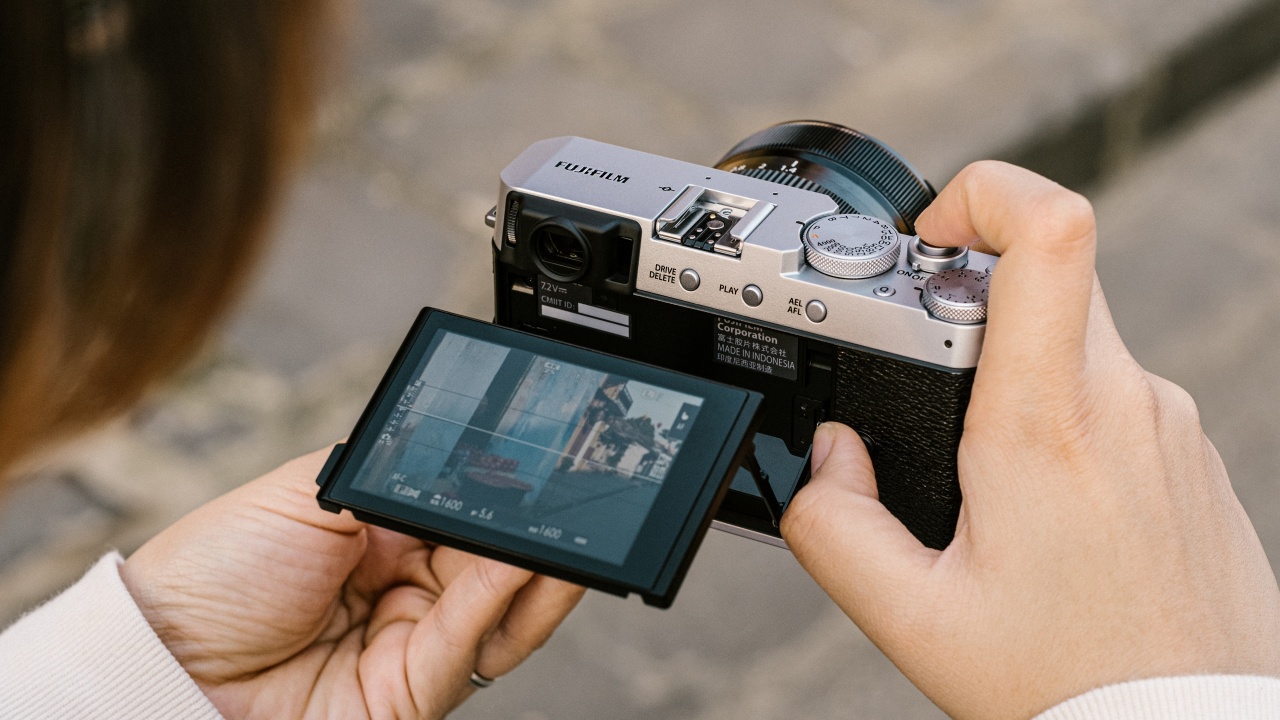

The right Fujifilm camera depends on what you want to keep after pressing the shutter. The X-E5 and X100VI are serious digital cameras, while Instax models turn moments into physical prints within seconds. One-time-use film cameras and instant film also belong in the conversation, but they solve a very different problem.
Our top pick is the Fujifilm X-E5, because its 40.2-megapixel sensor, in-body stabilization, interchangeable-lens system, and unusually thoughtful controls make it the most capable all-rounder here. The rest of the range includes a fixed-lens street camera, hybrid instant cameras, simple Instax models, a compact creative camera, and disposable film.
Comparison table
| # | Product | Award | Sensor or film | Stabilization or output | Best for |
|---|---|---|---|---|---|
| 1 | Fujifilm X-E5 | Best overall | 40.2MP X-Trans 5 HR | IBIS, up to 7 stops | Enthusiasts wanting one versatile camera |
| 2 | Fujifilm X100VI | Best fixed-lens camera | 40MP APS-C X-Trans CMOS 5 HR | IBIS, 6 stops | Street and everyday photography |
| 3 | Fujifilm Instax Mini EVO | Best hybrid instant camera | Digital hybrid | Mini prints, smartphone transfer | Editing before printing |
| 4 | Fujifilm Instax Mini 12 Bundle | Best ready-to-shoot bundle | Instax Mini film | Instant prints | Parties and gifts |
| 5 | Fujifilm X Half | Best creative compact | Digital compact | Instax printer or app sharing | Experimental shooting |
| 6 | Fujifilm Instax Mini 12 | Best simple instant camera | Instax Mini film | Automatic exposure and flash | Straightforward snapshots |
| 7 | Fujifilm Instax Mini 41 Bundle | Best instant camera kit | Instax Mini film | Automatic exposure and flash | Events with storage included |
| 8 | Fujifilm Instax Mini EVO Brown | Best stylish hybrid | Digital hybrid | Mini prints, microSD, Bluetooth | Connected instant photography |
| 9 | Fujifilm QuickSnap Flash 400 | Best disposable camera pack | ISO 400 film | Flash range to 10 feet | Weddings and casual film |
| 10 | Fujifilm Instax Mini Film | Best film refill | ISO 800 instant film | 20 exposures | Instax Mini owners |
1. Fujifilm X-E5: Best Overall

Pros
- 40.2-megapixel X-Trans 5 HR sensor
- Interchangeable-lens flexibility
- Up to seven stops of in-body stabilization
- Customizable Film Simulation dial
Cons
- The lens kit limits the initial focal-length choice
- More camera than casual snapshot shooters need
- Its compact body still requires a lens system for expansion
Best for: photographers who want Fujifilm character without giving up interchangeable lenses.
The Fujifilm X-E5 is the camera we'd keep when one body has to cover travel, family pictures, street work, and deliberate photography. Its appeal is not just the resolution. The machined aluminum top plate, analog-style controls, and film-inspired layout make it feel like a camera you will actually want to carry and use, rather than a small computer with a lens attached.
Its 40.2-megapixel X-Trans 5 HR sensor gives plenty of room to crop, while the X-Processor 5 imaging engine handles the camera's broader feature set. The lower base ISO of 125 can help when you want to preserve bright detail, and the two-step digital teleconverter offers 1.4x and 2x crops in the camera. Those crops are not a substitute for a longer lens, but they add useful flexibility when traveling light.
Stabilization is one of the X-E5's strongest practical advantages. The IBIS system is rated for up to seven stops at the center of the frame and six stops at the edges. That does not freeze a moving subject, but it can make handheld low-light photography more manageable. The camera also adds deep learning AI-powered subject detection autofocus, which broadens its usefulness beyond static scenes.
The customizable Film Simulation dial is a particularly good idea. Instead of digging through menus, you can reach Fujifilm's film looks directly and save three custom recipes for quick recall. That makes the X-E5 more tactile than the Fujifilm X100VI, while its X Mount compatibility opens a much wider path than that fixed-lens camera. Photographers comparing systems can also see how different sensor and lens combinations shape everyday shooting before committing to a particular setup.
The weakness is the same feature that makes it flexible. You need to choose and carry lenses, and the included XF23mmF2.8 R WR lens gives you one starting perspective rather than the built-in simplicity of the X100VI. Skip it if you want a camera that requires no lens decisions. For anyone who wants a compact Fujifilm body that can grow with their photography, the X-E5 is the most complete pick here.
2. Fujifilm X100VI: Best Fixed-Lens Camera

Pros
- 40MP APS-C X-Trans CMOS 5 HR sensor
- Six-stop, five-axis IBIS
- Hybrid optical and electronic viewfinder
- Intelligent subject recognition autofocus
Cons
- Fixed lens cannot cover every subject
- Less adaptable than the X-E5
- Japan version may require extra attention to regional details
Best for: street photographers who want a refined fixed-lens camera with strong digital performance.
The Fujifilm X100VI is the pick for someone who knows a fixed lens will suit their style. It is smaller and lighter than the X-E5 with a lens attached, weighing about 1.06 pounds, and its built-in lens keeps the experience focused. That restriction is not a flaw for street photography. It encourages you to move, notice perspective, and work with a familiar field of view.
Inside is a 40MP APS-C X-Trans CMOS 5 HR BSI sensor paired with the X-Processor 5. That is serious imaging hardware for a compact camera, with enough resolution for detailed files and considered crops. Five-axis IBIS provides up to six stops of stabilization, useful when the light fades and you want to keep the camera steady without immediately raising sensitivity.
The viewfinder gives the X100VI much of its character. Its 0.5-inch OLED color reverse Galilean viewfinder has approximately 3.69 million dots and an electronic bright frame display. You can work optically for a more direct connection to the scene or use the electronic view for exposure and focus information. The choice is meaningful, not decorative.
Autofocus is another reason it stands above simpler Fujifilm compacts. Face and eye detection are joined by recognition for animals, birds, cars, motorcycles, bicycles, planes, and trains. That range makes the X100VI more useful for travel than a camera designed only around portraits. It is also a more conventional photography tool than the Instax Mini EVO, which is built around printing and effects.
The fixed lens remains the central compromise. You cannot swap to a wider view for architecture or a longer lens for distant details, so this is not the right camera for someone who wants one body to cover every assignment. Readers weighing portability against lens flexibility may find the practical compromises of a small travel camera useful. Choose the X100VI when the pleasure of a consistent, ready-to-shoot setup matters more than expansion.
3. Fujifilm Instax Mini EVO: Best Hybrid Instant Camera

Pros
- Hybrid digital and instant design
- 100 lens and film-effect combinations
- Smartphone printing and remote shooting
- Built-in selfie mirror
Cons
- Instax Mini film is sold separately
- microSD card is not included
- More involved than a basic instant camera
Best for: people who want the fun of Instax prints with digital control beforehand.
The Fujifilm Instax Mini EVO is the most versatile instant camera in this group because it does not force every shot straight onto film. You can compose, apply an effect, save the image, and decide which moments deserve a physical print. That changes the rhythm of instant photography from one-shot spontaneity to something closer to a small creative studio.
Its signature feature is the combination of 10 lens effects and 10 film effects, creating 100 possible looks. The controls make those options feel like part of the camera rather than a phone filter menu. A built-in selfie mirror helps with self-portraits, and separate portrait and landscape shutter buttons suit the camera's different orientations.
The hybrid design also keeps digital copies in play. Images can be saved to a smartphone through the free INSTAX MINI EVO app, and the camera can be controlled remotely from a phone. It can also print images from a smartphone over Bluetooth. A microSD card can store images, but the card is not included, so buyers should plan their storage around the camera's own workflow.
Prints are the familiar 2 by 3 inch Instax Mini format. The camera is compact enough at about 0.63 pounds, but it is more substantial in operation than the Fujifilm Instax Mini 12, which is designed to make a picture and print it with minimal thought. The EVO is the better tool for deliberate images, while the Mini 12 is better for handing to guests at a party.
The main drawback is that the extra control can dilute the simple magic of instant film. You also need to supply film and possibly a microSD card. If you want a camera that saves digital files, accepts smartphone images, and gives you creative effects before printing, this is the strongest choice. For more traditional film options, the differences between modern film camera formats are a useful next step.
4. Fujifilm Instax Mini 12 Bundle: Best Ready-to-Shoot Bundle

Pros
- Includes the Instax Mini 12 camera
- Includes 60 Fujifilm Instax prints
- Camera case and photo album included
- Easy starting point for new users
Cons
- No digital file workflow
- Bundle accessories may matter less to experienced users
- Film must still be handled carefully
Best for: gifting, parties, and anyone who wants to start printing immediately.
The Fujifilm Instax Mini 12 Bundle is less about camera experimentation and more about removing the setup barrier. The package includes the Instax Mini 12, a matching protective case, 60 Fujifilm Instax prints, and a photo album sized for the resulting pictures. It is a sensible format for a first instant camera because the important consumable is already present.
The camera itself is deliberately uncomplicated. The lens twists to turn the camera on or off, and the built-in selfie mirror helps with quick self-portraits. Its automatic exposure and flash control are intended to produce bright images without washing them out, which is exactly the sort of assistance a casual shooter needs.
The 2 by 3 inch prints appear in about five seconds, with development taking approximately 90 seconds afterward. That distinction matters at gatherings. You can see the image emerge quickly, but it is not ready for immediate handling as soon as it leaves the camera.
Compared with the Fujifilm Instax Mini 12, this bundle is the same basic camera idea with a much more complete starting package. Compared with the Instax Mini EVO, it gives up smartphone transfer, digital storage, and effects in exchange for directness. The case and album are practical, though buyers who already own storage or prefer digital copies may not use every accessory.
There is no way to review an image before it prints, and the camera does not offer a digital backup. That is the point for some buyers and a limitation for others. Choose this bundle for a child, a wedding table, a birthday, or a first step into instant photography where the camera and the supplies should arrive together.
5. Fujifilm X Half: Best Creative Compact

Pros
- Compact, light design
- Dial-based film-camera controls
- 26 analog-inspired film and filter options
- Still and video two-in-one mode
- Instax printer and app sharing
Cons
- Camera-only package
- More specialized than the X-E5
- Creative format will not suit every photographer
Best for: photographers who want a compact camera built around experimentation and sharing.
The Fujifilm X Half is the most unusual digital camera here. Its compact, light body is built around a film-camera-style design with dial-based controls, but its purpose is distinctly modern. It is made for people who want their camera to impose a style on the shooting process rather than simply record the most technically neutral file.
The camera offers 26 analog-inspired film and filter options, giving you a broad set of looks before sharing. Its two-in-one mode combines stills and video, which adds a playful way to present a moment rather than treating every capture as a single photograph. That is a different proposition from the high-resolution seriousness of the Fujifilm X-E5.
Sharing is central to the X Half. It can print straight to a compatible Instax printer or share through its dedicated app. That keeps the physical and digital sides of Fujifilm's ecosystem connected, although the product is listed as camera only. Anyone expecting instant prints from the camera itself should understand that this model routes printing through a compatible printer.
At about 0.98 pounds, it remains reasonably carryable, but the dimensions and controls make it a specialized compact rather than a pocket snapshot tool. The dial-based interface should appeal to photographers who enjoy a slower, more deliberate interaction. Those who want a standard interchangeable-lens system or advanced stabilization should look at the X-E5 instead. For a broader look at the trade-offs involved in small bodies, the features that matter in a compact camera can help clarify the choice.
The X Half's weakness is its niche character. It is not the obvious answer for demanding low-light work, lens flexibility, or conventional digital photography. Pick it when the visual language, creative modes, and easy sharing matter more than having the broadest photographic toolkit.
6. Fujifilm Instax Mini 12: Best Simple Instant Camera

Pros
- Automatic exposure and flash control
- Selfie mirror and close-up mode
- Prints in the 2 by 3 inch Mini format
- Includes batteries and hand strap
Cons
- Film sold separately
- No digital copies
- Prints take time to finish developing
Best for: anyone who wants easy instant photos without menus or editing.
The Fujifilm Instax Mini 12 succeeds by staying out of the way. Twist the lens to turn it on, frame the subject, and press the shutter. That simplicity makes it a better party camera than a more feature-rich hybrid model when several people need to use it without an explanation.
Automatic exposure and flash control help keep indoor photos bright without making them look washed out. The built-in selfie mirror is useful for quick self-portraits, while close-up mode adds parallax correction so nearby subjects are easier to frame accurately. Those are small details, but they address the two situations where simple instant cameras often frustrate people.
The camera produces 2 by 3 inch Instax Mini prints in approximately five seconds. Development takes approximately 90 seconds afterward, so the picture is visible quickly but should be given time before being judged. It uses Instax Mini instant film, which is sold separately, and the included two AA batteries make the camera usable when it arrives.
At roughly one pound, it is not an ultra-light object, though its compact shape is easy to understand and hold. The Instax Mini 12 Bundle is the more convenient version for a new owner who also needs film and storage. The Instax Mini EVO is the better choice for anyone who wants to save images digitally or choose effects before printing.
The lack of digital storage is the important limitation. Every exposure is a physical commitment, and the camera cannot send a copy to a phone. That is precisely why it is enjoyable for group occasions, but it is not the right pick for a photographer who wants a safety net. Add film and choose the Mini 12 when uncomplicated, social photography is the goal.
7. Fujifilm Instax Mini 41 Bundle: Best Instant Camera Kit

Pros
- Includes 40 sheets of Instax Mini film
- Protective case with removable strap
- 64-pocket photo album included
- Selfie mirror and close-up mode
Cons
- Bundle is relatively heavy
- No digital image backup
- Film packaging can vary
Best for: events where the camera, film, case, and album should be handled as one kit.
The Fujifilm Instax Mini 41 Bundle is aimed at the person who wants a complete instant-photo setup rather than a camera alone. It includes the Mini 41 camera, 40 sheets of Fujifilm Instax Mini film, a protective case with a removable strap, and a 64-pocket album. That makes it particularly practical for an event where prints need somewhere to go after they develop.
The camera includes an optical image viewfinder, automatic exposure, and a built-in flash. Its smart exposure control adjusts shutter speed and flash settings for bright, clear pictures across changing light. The built-in selfie mirror and close-up mode cover the familiar instant-camera use cases without asking the photographer to manage technical settings.
The bundle's strongest advantage is continuity. Film is ready, the case makes carrying easier, and the album provides a direct way to preserve the prints. It is more prepared than the standalone Fujifilm Instax Mini 12, though the Mini 12 is the cleaner choice if the buyer wants the lightest, simplest package.
The listed bundle weight is about 2.49 pounds, which is considerably more than the camera alone. That figure includes the kit rather than just the camera, but it still makes this less attractive for a long day of walking. There is also no digital backup, so important moments exist only as physical prints.
Choose the Mini 41 bundle for gatherings, celebrations, and family occasions where an all-in-one box is more useful than a minimal camera. Skip it if you already have film and an album, or if carrying a lighter setup matters more than having supplies ready.
8. Fujifilm Instax Mini EVO Brown: Best Stylish Hybrid

Pros
- Hybrid digital and instant photography
- 100 lens and film-effect combinations
- Bluetooth smartphone printing
- microSD storage support
- Portrait and landscape shutter buttons
Cons
- Film sold separately
- microSD card not included
- App required for some connected features
Best for: photographers who want the EVO experience in a distinctive brown finish.
The Fujifilm Instax Mini EVO Brown is functionally the same kind of camera as the black Mini EVO, but it deserves a separate place for buyers who care about the camera's presentation as much as its workflow. Its compact body weighs about 0.62 pounds, and the hybrid design encourages both digital saving and selective printing.
The creative system combines 10 lens effects with 10 film effects for 100 combinations. A selfie mirror helps with framing, and dual shutter buttons support portrait and landscape shooting. These details make the camera more expressive than the basic Mini models, which are intentionally built around automatic exposure and immediate prints.
The connected features are useful but not invisible. You need the free INSTAX MINI EVO app for smartphone saving and remote shooting, while Bluetooth allows smartphone images to be printed through the camera. Images can also be saved to a microSD card, though the card is not included. Instax Mini film is sold separately, and the prints use the familiar 2 by 3 inch format.
Compared with the black Fujifilm Instax Mini EVO, this model's meaningful distinction is the brown finish. The underlying feature set does not make it a more capable camera. Buyers who want the most straightforward ownership experience should consider the Instax Mini 12, while those who want digital files and effects should choose an EVO model.
The connected workflow is the main weakness if you want a camera that works entirely on its own. App setup, storage planning, and film loading add steps. Select this version when the hybrid experience is what you want and the brown design is the finish that makes you more likely to carry it.
9. Fujifilm QuickSnap Flash 400: Best Disposable Camera Pack

Pros
- Two cameras in one pack
- ISO 400 film pre-loaded
- 27 exposures per camera
- Built-in flash with continuous switch
- Flash range to 10 feet
Cons
- One-time-use design
- No digital preview
- Limited exposure control
Best for: casual film photography at events, trips, and celebrations.
The Fujifilm QuickSnap Flash 400 is the uncomplicated choice for people who want film without carrying or protecting a reusable camera. Each camera arrives pre-loaded with ISO 400 film and 27 exposures, and the two-pack provides 54 total exposures. It is easy to hand one to a friend or place one at each end of an event.
The built-in flash has a range of 10 feet and a continuous flash switch. That makes the QuickSnap more useful indoors than a disposable camera that relies only on available light. ISO 400 film is a sensible middle ground for casual photography, though it cannot match the control or image quality potential of the X-E5 or X100VI.
There is no preview, focus adjustment, exposure compensation, or digital file. That removes technical decisions but also removes the ability to correct a bad frame. The result is part of the appeal: film becomes a record of what happened, including the occasional imperfect composition.
The QuickSnap is much lighter than the instant cameras in this guide, at about 0.2 pounds per listed package dimensions and weight. It also does not produce a print immediately. Film must be processed after use, so it suits people who enjoy delayed results rather than the instant feedback of Instax.
This is not the camera to choose for controlled portraits or repeatable results. It is a good fit for weddings, travel groups, and parties where durability and simplicity matter more than precision. If the charm of film is the anticipation, the QuickSnap makes that experience accessible with almost no setup.
10. Fujifilm Instax Mini Film: Best Film Refill

Pros
- Works with Instax Mini instant cameras
- ISO 800 sensitivity
- Vibrant color reproduction
- 20 total exposures
- 2.13 by 3.4 inch image size
Cons
- Film is not a camera
- Limited to compatible Instax Mini models
- Each pack supports only 20 exposures
Best for: Instax Mini owners who need dependable white-border film.
The Fujifilm Instax Mini Film is included because a camera without compatible film cannot do much. This twin pack contains 20 exposures for Instax Mini instant cameras, making it the natural refill for the Mini 12, Mini EVO, and related models. It is not a standalone camera, but it is an essential part of the shooting experience.
The film has an ISO 800 rating, which gives it useful sensitivity for indoor snapshots and everyday light. The image area measures 2.13 by 3.4 inches, a small format that is easy to pass around, store in an album, or attach to a display. Fujifilm also specifies sharpness and vibrant color reproduction, traits that suit the social nature of instant prints.
Compatibility is the key buying detail. This is Instax Mini film, not Instax Square or Instax Wide film, so it belongs in cameras designed for the Mini format. It works naturally with the Fujifilm Instax Mini 12, while the Instax Mini EVO adds the option to choose which images receive a print.
The limitation is obvious but important: this product provides film only. It does not add a camera, battery, storage, or digital copy. Buyers should check the camera format before loading it and keep unopened film protected according to the camera manufacturer's handling guidance.
Choose this twin pack when your Mini camera is ready for more exposures. If you are still deciding which body to buy, start with the camera's workflow first, then select film that matches its format.
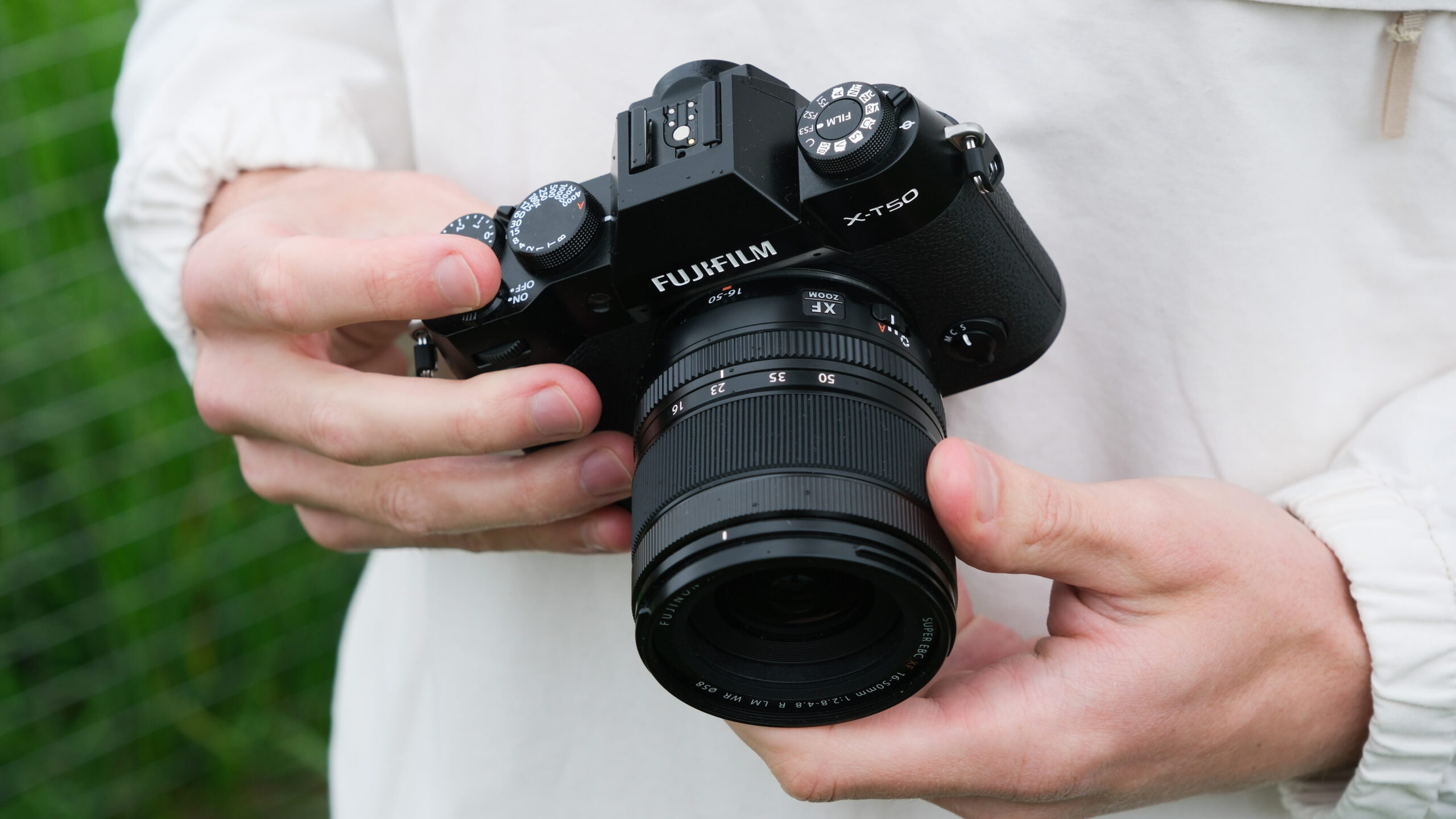
How to choose best fujifilm camera
The best fujifilm camera for you is determined by the kind of image you want at the end, not by the Fujifilm name alone.
Camera type
Start by separating interchangeable-lens digital cameras, fixed-lens digital cameras, hybrid instant cameras, and simple film cameras. The X-E5 can grow with an X Mount lens collection, while the X100VI keeps the experience focused around one built-in lens. Instax models prioritize physical prints, and the QuickSnap prioritizes the unpredictability of developed film.
Lens flexibility
An interchangeable-lens body gives you room to change perspective, but it also adds decisions and equipment. A fixed lens is faster to understand and easier to carry when its viewpoint suits your photography. For a broader look at choosing a body for still images, the camera features that matter most for photography are a useful reference.
Stabilization and autofocus
The X-E5 has IBIS rated up to seven stops at the center of the frame, while the X100VI offers five-axis stabilization rated at six stops. Stabilization helps reduce camera shake, but it does not freeze moving people or animals. Subject detection autofocus matters when your subjects move, while automatic exposure is more useful than advanced autofocus on a simple instant camera.
Print and file workflow
Decide whether you want a physical print immediately, a digital file, or both. Instax Mini cameras use 2 by 3 inch film, while the Mini EVO can save images, print smartphone photos, and apply effects before printing. The X Half can share through its app or print to a compatible Instax printer, but it does not print directly from the camera.
Creative controls
Dial-based controls and Film Simulation options make Fujifilm cameras feel more deliberate. The X-E5 adds a customizable Film Simulation dial with three saved settings, while the X Half provides 26 analog-inspired film and filter options. If you prefer pressing one button and letting the camera handle exposure and flash, the Mini 12 is the better fit.
Choose the camera whose limitations match how you want to shoot. A fixed lens can be liberating, while instant film can be more valuable than another digital setting.
Frequently asked questions
Which Fujifilm camera is best for most photographers?
The Fujifilm X-E5 is the strongest all-round choice in this selection. Its 40.2-megapixel sensor, X Mount compatibility, Film Simulation controls, and in-body stabilization give it more room to grow than the fixed-lens and instant models.
Is the Fujifilm X100VI better than the X-E5?
Neither is universally better. The X100VI is easier to carry and offers a fixed-lens shooting experience with a 40MP sensor and six-stop IBIS. The X-E5 is more flexible because you can change lenses and it offers up to seven stops of stabilization.
Which Fujifilm camera prints photos instantly?
The Instax Mini 12, Instax Mini EVO, and Instax Mini 41 are designed to print Instax Mini photos. The X Half can print through a compatible Instax printer, but it is not a direct instant-print camera.
Does the Instax Mini EVO save digital photos?
Yes. The Mini EVO can save images to a smartphone through the free INSTAX MINI EVO app and can store images on a microSD card. The microSD card is not included.
What film does the Instax Mini 12 use?
The Instax Mini 12 uses INSTAX MINI instant film. The Fujifilm Instax Mini Film twin pack in this guide provides 20 exposures and uses an ISO 800 film stock.
Is the QuickSnap reusable?
The Fujifilm QuickSnap Flash 400 is a one-time-use camera. Each camera comes pre-loaded with ISO 400 film and 27 exposures, and the built-in flash has a stated range of 10 feet.
Should I choose a hybrid or traditional instant camera?
Choose a hybrid model such as the Instax Mini EVO if you want digital copies, smartphone printing, and the ability to select images before printing. Choose the Mini 12 if you prefer a simpler camera that prints each picture directly and does not require an app.
The bottom line
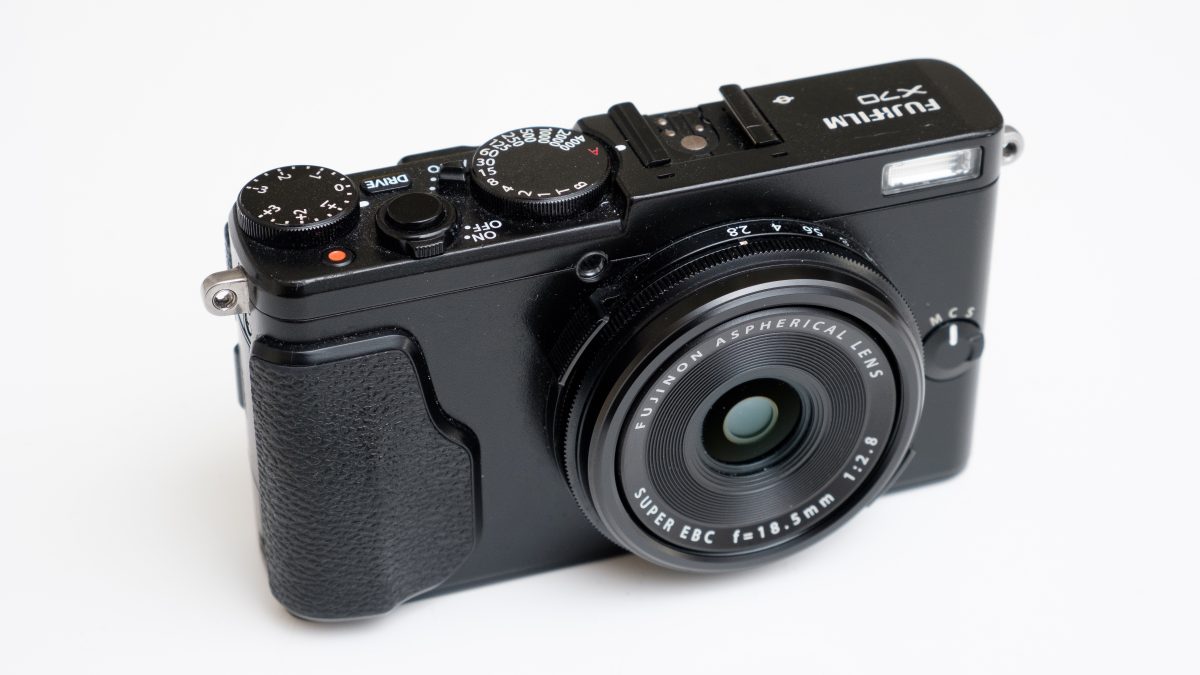
The Fujifilm X-E5 is the best fujifilm camera in this roundup for photographers who want a serious, adaptable digital body. Its 40.2-megapixel sensor, stabilization, autofocus, and interchangeable-lens system make it the pick for long-term use. The Fujifilm X100VI is the better choice for a fixed-lens street camera, while the Instax Mini EVO is the most capable option for digital and physical prints together.
For parties and gifts, the Fujifilm Instax Mini 12 keeps the process simple, and the bundle version adds film, a case, and an album. The QuickSnap is the easy film option, and the Instax Mini Film twin pack is the necessary refill for compatible instant cameras.
If you are undecided, choose the X-E5 for photography flexibility, the X100VI for fixed-lens simplicity, or the Mini EVO for instant prints with digital control.
As an Amazon Associate we earn from qualifying purchases.