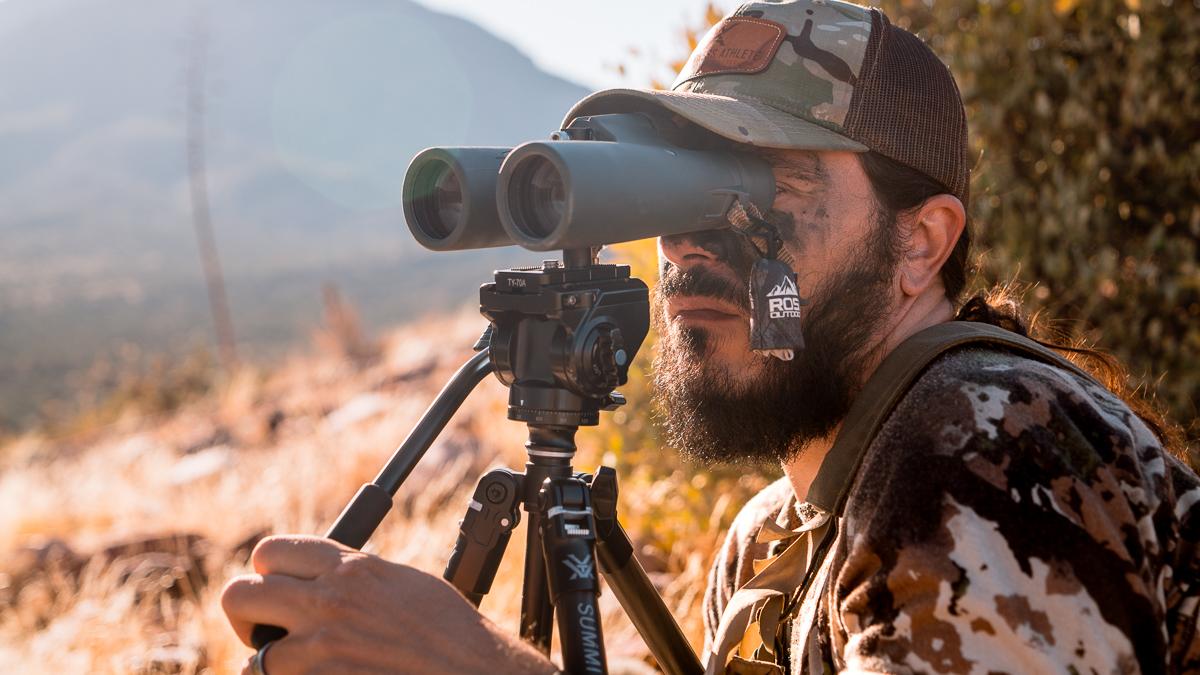

A deer can disappear into brush in the time it takes to raise a poorly balanced binocular. The right pair should bring out detail without making you fight shake, glare, fog, or a narrow view. For this guide to the Best hunting binoculars, we focused on magnification, objective lens size, weather protection, handling, and the optical features that matter in the field.
The Vortex Triumph HD 10x42 is our top pick because it combines useful all-purpose magnification, a manageable full-size design, HD optics, weather sealing, and a supplied GlassPak harness. The rest of the list covers steadier 8x models, higher-power 12x and 20x options, compact binoculars, and a traditional porro prism design.
Comparison table
| # | Product | Award | Magnification | Objective lens | Build | Best for |
|---|---|---|---|---|---|---|
| 1 | Vortex Triumph HD 10x42 | Best overall | 10x | 42mm | Waterproof, fog proof, rubber-armored polycarbonate | Most hunters |
| 2 | Vortex Crossfire HD 10x42 | Best rugged 10x | 10x | 42mm | Nitrogen purged, O-ring sealed, roof prism | General hunting use |
| 3 | Vortex Diamondback HD 8x42 | Best optical protection | 8x | 42mm | Argon purged, O-ring sealed, Armortek coating | Frequent field use |
| 4 | Vortex Triumph HD 12x50 | Best long-range Triumph | 12x | 50mm | Waterproof, fog proof, rubber armor | Distant glassing |
| 5 | Bushnell PowerView 10x50 | Best traditional design | 10x | 50mm | Porro prism, rubber armor, tripod compatible | Open-country scanning |
| 6 | Vortex Crossfire HD 8x42 | Best steady Crossfire | 8x | 42mm | Nitrogen purged, O-ring sealed, roof prism | Moving targets |
| 7 | Vortex Crossfire HD 12x50 | Best Crossfire reach | 12x | 50mm | Nitrogen purged, O-ring sealed, roof prism | Tripod-supported viewing |
| 8 | FLYANT 20x50 | Best high magnification | 20x | 50mm | Rubber-coated, water resistant body | Very distant subjects |
| 9 | Occer 12x25 Compact | Best pocket option | 12x | 25mm | ABS plastic, rubber armor, water resistant | Lightweight carry |
| 10 | Celestron Outland X 8x42 | Best wide-view option | 8x | 42mm | Waterproof, nitrogen purged, rubber-armored | Scanning broad terrain |
1. Vortex Triumph HD 10x42: Best Overall

Pros
- Balanced 10x magnification for general hunting
- HD optics with fully multi-coated lenses
- Waterproof and fog proof
- Supplied GlassPak harness
- Tripod adaptable
Cons
- Full-size design is less compact than pocket binoculars
- 10x magnification can still show hand shake at long distances
- No unusually wide field-of-view figure is provided
Best for: hunters who want one durable, versatile pair for most field conditions.
The Vortex Triumph HD 10x42 is the pair we would hand to someone who wants to stop second-guessing binocular specifications and get on with glassing. Its 10x magnification gives more reach than an 8x model without making the view as demanding as a 12x or 20x binocular. The 42mm objective lenses keep it in the familiar full-size hunting class, with a useful balance between light gathering and carryability.
Its HD optical system uses optimized glass elements and fully multi-coated lenses. Those details matter when a dark animal is partly hidden by branches, because better light transmission and reduced chromatic aberration help preserve edge detail and color fidelity. The stated edge-to-edge sharpness should also make scanning less tiring than a binocular that looks crisp only in the center.
The physical design is thoughtfully set up for field use. Nitrogen purging supports fog proof performance, while the waterproof construction and full rubber armor add protection against wet weather, bumps, and a less-than-gentle trip through the truck or pack. Adjustable rubber eyecups work with different viewing positions, and the diopter lets each eye be tuned separately. A center focus wheel is not specifically listed in the features, so this is not a place to assume more than the supplied information says.
Compared with the Vortex Crossfire HD 10x42, the Triumph HD 10x42 has the more appealing ownership package because it includes a GlassPak harness as well as a neck strap. The Vortex Diamondback HD 8x42 has extra lens protection through its Armortek coating, but its lower magnification is better for steadiness than for maximum reach. The Triumph sits in the middle with the broadest all-purpose appeal.
The weakness is inherent to the format. A 10x view is more sensitive to movement than 8x, and the full-size body will not disappear into a small jacket pocket. Hunters who spend most of their time at very long distances may prefer the Triumph HD 12x50, while those who track moving animals in thick cover should look closely at an 8x model. For most people searching for the Best hunting binoculars, this is the safest starting point.
2. Vortex Crossfire HD 10x42: Best Rugged 10x

Pros
- Useful 10x42 configuration
- Fully multi-coated optics
- Compact roof prism design
- Waterproof and fog proof
- Tripod adaptable
Cons
- Heavier than the Triumph HD 10x42
- No supplied harness is listed
- More magnification than some close-cover hunters need
Best for: hunters who prioritize a tough roof prism body and familiar 10x reach.
The Vortex Crossfire HD 10x42 has the straightforward, no-nonsense character that makes a hunting binocular easy to live with. It uses the classic 10x42 format, so distant antlers, landmarks, and movement are easier to inspect than they would be through a lower-power compact pair. The roof prism design also helps keep the body more compact than a traditional porro prism binocular.
Vortex uses select glass elements and fully multi-coated lenses here. The coatings are applied across air-to-glass surfaces to improve light transmission, while the optical design is intended to reduce chromatic aberration and preserve color fidelity. In practical terms, that gives the Crossfire HD 10x42 a sensible optical foundation for scanning fields and wooded edges rather than relying on magnification alone.
The controls are well suited to repeated use. Twist-up eyecups accommodate viewing with or without glasses, and the center focus wheel adjusts both barrels together. A right-eyepiece diopter compensates for differences between the user's eyes. That arrangement is more useful in a blind or at a glassing point than flashy magnification claims because it helps the viewer get a single sharp image quickly.
Nitrogen purging and O-ring seals provide water and fogproof performance, and the rubber armor gives the hands a secure grip. The binoculars are also designed to withstand recoil and impact, with a tripod adapter for steadier observation from a fixed position. At 1.4 pounds, it is not the lightest choice here. The Triumph HD 10x42 weighs less at 0.992 pounds and includes a GlassPak harness, which makes that model easier to recommend for long walks.
The Crossfire HD 10x42 makes more sense for someone who wants the Crossfire family's rugged roof prism construction and does not need the Triumph's lighter listed weight or included harness. Skip it if you need a truly relaxed view for tracking quick movement, where the Crossfire HD 8x42 is more forgiving. It remains a strong pick for hunters who want a conventional 10x field binocular with serious weather protection.
3. Vortex Diamondback HD 8x42: Best Optical Protection

Pros
- Steadier 8x magnification
- HD optics with dielectric prism coating
- Armortek exterior lens protection
- Argon purged and O-ring sealed
- GlassPak harness included
Cons
- Lower reach than 10x and 12x alternatives
- The listed dimensions are unusual and not useful for direct size comparison
- Best suited to users who accept a more moderate view
Best for: hunters who want a steady 8x image with extra protection for the objective lenses.
The Vortex Diamondback HD 8x42 is the sensible choice when steadiness and durability matter more than squeezing out every bit of reach. Eight times magnification is easier to hold on a moving animal, and the 42mm objective lenses keep the binocular in the versatile full-size format. That makes it comfortable for scanning cover, following wildlife, and examining a scene without the nervous movement that can accompany stronger magnification.
The HD optical system uses select glass elements, fully multi-coated lenses, and a dielectric coating on the prisms. The dielectric treatment is important because it supports bright, clear, color-accurate images, while the lens coatings help light reach the eye efficiently. Armortek coating on the exterior lenses is a particularly practical touch for hunting. It is designed to protect against scratches, oil, and dirt, which are exactly the kinds of contamination binoculars encounter in the field.
The Diamondback HD 8x42 also has the mechanical details we want in a serious outdoor optic. Twist-up eyecups suit glasses wearers and bare-eye viewing, the center focus wheel adjusts both barrels, and the right-side diopter accommodates unequal vision between the eyes. Argon purging and O-ring seals provide water and fogproof performance. Rubber armor adds grip, and the binocular is tripod adaptable for extended stationary viewing.
Its supplied GlassPak harness gives it an advantage over the Crossfire HD models, though the Triumph HD 10x42 is the stronger all-purpose pick if you want more reach. The Vortex Crossfire HD 8x42 offers the same basic magnification and objective size, but the Diamondback adds dielectric prism treatment, Armortek protection, argon purging, and a harness. Those are meaningful differences for hard field use.
The compromise is reach. If your hunting routinely involves judging distant subjects across open country, a 10x or 12x model will show more apparent detail. The Diamondback HD 8x42 is for the hunter who values a calmer image, protective coatings, and a comfortable all-day format. It is also a good fit for anyone whose use overlaps with watching wildlife across changing terrain, where steadiness can matter more than raw magnification.
4. Vortex Triumph HD 12x50: Best Long-Range Triumph

Pros
- High 12x magnification
- Large 50mm objective lenses
- HD optics and fully multi-coated lenses
- Waterproof and fog proof
- GlassPak harness included
Cons
- More difficult to hold steady than 8x models
- Larger optical format is less convenient for active walking
- Best results may require tripod support
Best for: hunters who glass distant terrain and can accept a more demanding high-power view.
The Vortex Triumph HD 12x50 is built for the moment when a 10x binocular leaves you wanting more detail. Twelve times magnification brings distant features closer, while the 50mm objective lenses give the optical system a larger front aperture than the 42mm models in this list. That combination is attractive for ridge lines, open meadows, and long glassing sessions from a stationary position.
The higher power has a cost in handling. Small hand movements become more obvious at 12x, so this binocular asks for a steady hold and rewards a tripod or stable rest. The Triumph is tripod adaptable, which gives the format a practical way to become more controlled. It is not the first choice for quickly following an animal through dense cover, where the Vortex Crossfire HD 8x42 or Diamondback HD 8x42 will feel easier to manage.
Optically, the Triumph HD 12x50 uses an HD optical system with optimized glass elements and fully multi-coated lenses. Vortex says those elements are intended to improve resolution, reduce chromatic aberration, preserve color fidelity, and maintain sharpness toward the edges. The 50mm objectives are not a guarantee of perfect low-light performance, but they provide the larger light-collecting format that makes this class appealing for early and late viewing.
The body is nitrogen purged for fog proof performance and waterproof, with a polycarbonate chassis wrapped in full rubber armor. Adjustable rubber eyecups and an adjustable diopter help tailor the viewing position, while the included neck strap and GlassPak harness make carrying a large binocular more manageable. The Triumph HD 10x42 remains the better balanced option for mixed walking and glassing, but this 12x50 is the more purposeful tool for distance.
Do not choose it simply because 12x sounds better on paper. The added reach cannot compensate for an unsteady image, and the larger format can become tiring when carried all day. Choose the Triumph HD 12x50 if your usual view is far away, your observation points are reasonably stable, and you want a high-power Vortex with the same weather-ready design language as the smaller Triumph.
5. Bushnell PowerView 10x50: Best Traditional Design

Pros
- 10x magnification with 50mm objectives
- Bright-view BK-7 prism optics
- Instafocus control
- Fold-down eyecups
- Tripod-compatible housing
Cons
- Heavier than the 42mm Vortex options
- Porro prism body is less streamlined
- The supplied information does not specify waterproof or fogproof sealing
Best for: open-country scanning from a fixed position with a traditional porro prism binocular.
The Bushnell PowerView 10x50 takes a different route from the roof prism Vortex models. Its 10x magnification is familiar for hunting, but the 50mm objectives give it a larger front lens than the 42mm alternatives. The traditional porro prism layout creates a wider-looking, more old-school binocular body, and the supplied weight of 1.6 pounds confirms that this is designed more for deliberate observation than constant movement.
Bushnell uses BK-7 prism multi-coated optics for bright, crisp viewing. The Instafocus system is aimed at quick focusing, which can be useful when a subject appears unexpectedly across an open area. The product also has fold-down eyecups for users with or without glasses. These are practical details, though the listed features do not provide the same specific HD, dielectric, or Armortek language found on the Vortex Diamondback HD 8x42.
The rugged housing has rubber grips that support a secure hold and help absorb shocks. It is tripod compatible, a useful feature for the 10x50 format because the larger objectives and magnification can be tiring to hold for long periods. The Realtree AP camouflage also makes the binocular visually suited to outdoor use, though appearance should not be confused with weather sealing.
Compared with the Vortex Triumph HD 10x42, the PowerView gives you larger 50mm objectives but is heavier and has a more traditional body. The Vortex Crossfire HD 10x42 is the better fit for wet conditions because its nitrogen purging and O-ring seals are explicitly listed. The Bushnell is more appealing when you want a straightforward 10x50 view and expect to spend much of the time scanning from a stable spot.
Its main weakness is the absence of a stated waterproof or fogproof rating in the supplied information. That makes it harder to recommend for harsh, rapidly changing weather than the sealed Vortex models. Hunters who want a familiar porro prism layout, quick focusing, fold-down eyecups, and a large objective lens should still consider it, especially for open terrain and general outdoor observation.
6. Vortex Crossfire HD 8x42: Best Steady Crossfire
Pros
- Stable 8x magnification
- Fully multi-coated HD optics
- Compact roof prism design
- Waterproof and fog proof
- Tripod adaptable
Cons
- Less reach than the 10x42 model
- Listed weight is 1.5 pounds
- No harness is listed
Best for: hunters who track movement and want a forgiving view in a rugged body.
The Vortex Crossfire HD 8x42 is the Crossfire to choose when the scene moves more than the hunter does. Eight times magnification is easier to hold steady, and the 42mm objectives preserve the familiar full-size balance used by many field binoculars. It is a particularly sensible configuration for wooded terrain, where finding an animal quickly matters more than extracting the last bit of detail from a distant ridge.
Vortex gives this model select glass elements and fully multi-coated lenses. The coatings are designed to improve light transmission, while the optical system targets resolution, color fidelity, edge sharpness, and reduced chromatic aberration. The product listing repeats the coating detail, but the important takeaway is clear: this is a conventional roof prism binocular built around efficient light transmission and a durable exterior.
Twist-up eyecups are useful for switching between glasses and bare-eye viewing. The binocular is tripod adaptable, while rubber armor gives the hands a non-slip grip and protects the exterior. Nitrogen purging and O-ring seals provide water and fogproof performance, and the construction is described as rugged enough to withstand recoil and impact.
The Vortex Diamondback HD 8x42 is the more advanced optical choice because it adds dielectric prism coating, Armortek lens protection, argon purging, and a supplied GlassPak harness. The Crossfire HD 8x42 counters with a simpler feature set and the same basic 8x42 viewing concept. If your priority is a steady, weather-ready binocular for active use, it has a clearer purpose than the Crossfire HD 10x42.
At 1.5 pounds, it is not a featherweight despite its manageable magnification. The lack of a listed harness also means you may need a separate carry solution for quick access. Still, hunters who lose targets while trying to control a high-power view should take this model seriously. Its calmer image can make a bigger practical difference than the extra reach of a 10x or 12x binocular.
7. Vortex Crossfire HD 12x50: Best Crossfire Reach

Pros
- Strong 12x magnification
- Large 50mm objectives
- Fully multi-coated optics
- Waterproof and fog proof
- Tripod adaptable
Cons
- Listed weight is 1.84375 pounds
- Hand shake is more apparent at 12x
- Less suited to fast scanning in dense cover
Best for: stationary glassing where extra reach matters more than low weight.
The Vortex Crossfire HD 12x50 is the reach-focused member of the Crossfire range. Twelve times magnification can reveal more apparent detail in distant terrain, and the 50mm objectives suit the same long-view role. This is the binocular for a glassing point, a vehicle window mount, or a tripod rather than a fast-moving stalk where the view needs to be acquired instantly.
Its select glass elements and fully multi-coated lenses are intended to improve resolution, color fidelity, edge-to-edge sharpness, and light transmission. Those properties matter at 12x because the extra magnification can expose optical weaknesses as readily as it exposes distant detail. The model uses a roof prism design, which keeps the construction more streamlined than the Bushnell PowerView 10x50's porro prism layout.
The handling controls are familiar and useful. Twist-up eyecups accommodate eyeglasses, the center focus wheel changes both barrels together, and a diopter on the right eyepiece helps match the binocular to the user's eyes. Rubber armor provides grip and external protection. Nitrogen purging and O-ring seals give it explicit water and fogproof protection, which is important when a long glassing session runs into damp conditions.
Compared with the Vortex Triumph HD 12x50, the Crossfire HD 12x50 shares the same magnification and objective size but uses a different product family and does not list a supplied GlassPak harness. The Triumph is the more attractive choice for buyers who want that included carry system and polycarbonate rubber-armored design. The Crossfire HD 8x42 is much easier to hold and scan with, but it cannot provide the same distant reach.
The weight is the clearest drawback at 1.84375 pounds. Even with a large objective lens, this is not a carefree neck-carry binocular, and the high magnification will punish an unstable hold. Choose it when you have a stable support plan and open terrain to inspect. For a more mobile hunt, the Crossfire HD 10x42 or 8x42 makes better sense.
8. FLYANT 20x50: Best High Magnification

Pros
- Very high 20x magnification
- 50mm objective lenses
- BAK4 porro prism
- Multilayer-coated aspherical lenses
- Textured rubber grip
Cons
- Nearly 1.96 pounds
- High magnification is difficult to steady by hand
- Water-resistant body should not be immersed
Best for: distant stationary viewing when maximum magnification is the main priority.
The FLYANT 20x50 is not a conventional all-day hunting binocular. Its purpose is obvious from the 20x magnification: bring faraway subjects closer when the viewing position is stable and the user can tolerate a narrower, more demanding experience. The 50mm objective lenses support that high-power format, while the stated 168-yard field of view at 1, 000 yards gives some context for how much terrain appears in the frame.
The optical specification is more detailed than the product's generic compact label suggests. FLYANT lists multilayer-coated aspherical lens elements, a BAK4 porro prism, and green full multi-coating on the objective lens. These features are intended to improve light transmission, contrast, brightness, sharpness, and color accuracy. The claimed 99.8 percent light transmission should be treated as a manufacturer specification, not a guarantee of what every viewer will see in every condition.
Focusing uses a rubber-covered center wheel, and the 26mm eyepiece is designed to provide a broad viewing position. The body has textured ergonomic handles and a rubber coating for grip and impact resistance. The binocular is described as suitable for outdoor conditions, but the listing specifically says not to immerse it in water. That distinction makes it less reassuring in sustained wet weather than the nitrogen-purged Vortex models or the Celestron Outland X.
At nearly 1.96 pounds, it is heavier than every other listed product with a clearly stated conventional weight except none, making it a poor match for casual neck carry. The 20x magnification also exaggerates hand movement. The Vortex Crossfire HD 12x50 gives up some reach but is easier to use as a field binocular, while the Celestron Outland X 8x42 is far better for sweeping a broad landscape.
This model is for a specific buyer, not someone seeking the most adaptable pair. If you want to inspect distant fixed subjects, use a stable rest, and understand that "low light vision" does not mean true night vision, it offers an unusually powerful view. Hunters who need fast target acquisition or long walking days should skip it in favor of an 8x or 10x model.
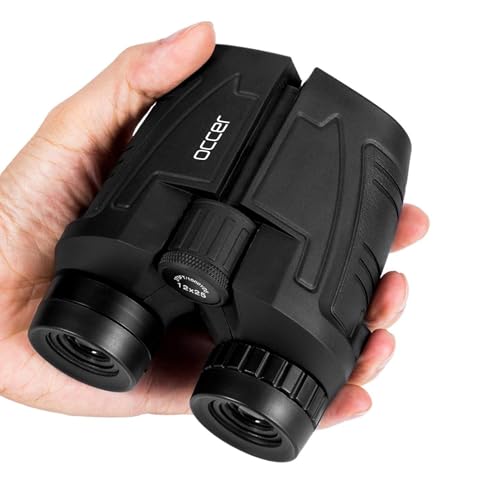
9. Occer 12x25 Compact: Best Pocket Option
Pros
- Small 12x25 format
- Lightweight 0.55-pound body
- Adjustable eyecups for glasses
- BAK4 prism and FMC coatings
- Rubber armor and strap included
Cons
- 25mm objectives gather less light than 42mm and 50mm models
- ABS plastic construction
- Not intended for completely dark conditions
Best for: occasional hunting, travel, and emergency carry where size matters most.
The Occer 12x25 Compact is the easiest binocular here to carry without planning around it. Its body weighs about 0.55 pounds, and its compact dimensions make it suitable for a pocket, small pack, or day bag. The trade-off is just as clear: 12x magnification is ambitious for such small objectives, and the 25mm front lenses cannot gather as much light as the 42mm and 50mm binoculars above.
Occer uses FMC broadband coatings and a BAK4 prism. The product says those treatments are intended to improve image quality, light transmission, and color. A 15mm eyepiece and long eye relief are also listed, with pull-down rubber eyecups for glasses wearers. Those details make the compact format more comfortable than a tiny binocular that forces the eyes into a narrow viewing position.
The product has a stated field of view of 273 feet at 1, 000 yards, which is useful when scanning rather than staring at one fixed point. A rubber-armored ABS plastic body adds grip, and the binocular is described as life waterproof. The low-light claim should be kept in perspective, since the listing explicitly says it is not for completely dark night conditions. It is a daylight carry binocular, not a replacement for a dedicated night-vision device.
The Vortex Diamondback HD 8x42 is dramatically more suitable for serious, extended glassing because its larger objective lenses, HD optical system, dielectric prism coating, and Armortek protection are built around field performance. The Occer wins only on portability. It is also less demanding to carry than the 1.4-pound Vortex Crossfire HD 10x42, though its smaller optics will be the limiting factor as daylight fades.
For a hunter who wants a primary optic, this is too compromised. For someone who wants a small backup, a lightweight pair for occasional use, or an optic that can move between hunting and travel, it has a clear role. If portability is the deciding factor, it is also worth considering how smaller binoculars handle travel and daily carry before choosing a full-size model.
10. Celestron Outland X 8x42: Best Wide-View Option

Pros
- Steady 8x magnification
- Bright 42mm objectives
- 7-degree angular field of view
- Waterproof and nitrogen purged
- Tripod adaptable
Cons
- Listed weight is 1.8 pounds
- Tripod adapter is not included
- Lower reach than 10x and 12x alternatives
Best for: scanning open landscapes and tracking moving wildlife across a broad view.
The Celestron Outland X 8x42 is the broad-view specialist in this group. Eight times magnification is naturally easier to hold than 10x or 12x, and Celestron gives this model a stated 7-degree angular field of view. That makes it well suited to sweeping open terrain, spotting movement, and keeping a bird or animal in view as it crosses the scene.
The 42mm objectives keep the body in a familiar full-size optical class. Multi-coated lenses and BaK-4 prisms are intended to provide bright, high-contrast, color-accurate images across changing outdoor conditions. The design is not pitched around extreme magnification, so its appeal comes from a more relaxed view and the ability to see more of the surrounding scene at once.
Its weather protection is strong on paper. The rubber-armored polycarbonate housing is designed to resist bumps and drops, while waterproofing and nitrogen purging help guard against rain, snow, humidity, and internal fogging. Built-in tripod adapter threads support shake-free extended viewing, but the adapter itself is not included. At 1.8 pounds, the Outland X is heavier than its 8x specification might lead you to expect.
The Vortex Crossfire HD 8x42 is the more obvious direct rival. Both use 8x magnification and 42mm objectives, but the Celestron offers the explicitly stated 7-degree field of view, while the Vortex emphasizes its compact roof prism construction, fully multi-coated optics, recoil resistance, and lifetime warranty. The Diamondback HD 8x42 adds stronger optical protection, but the Celestron remains compelling when broad scanning is the priority.
The limitation is reach and carry weight. Hunters focused on distant details may prefer a 10x or 12x binocular, and anyone walking steep ground may notice the 1.8-pound body. For tracking movement across wide terrain, though, the Outland X's 8x view and 7-degree field make it a practical alternative. It is a good choice for people whose hunting overlaps with finding a wider view for birds in flight.
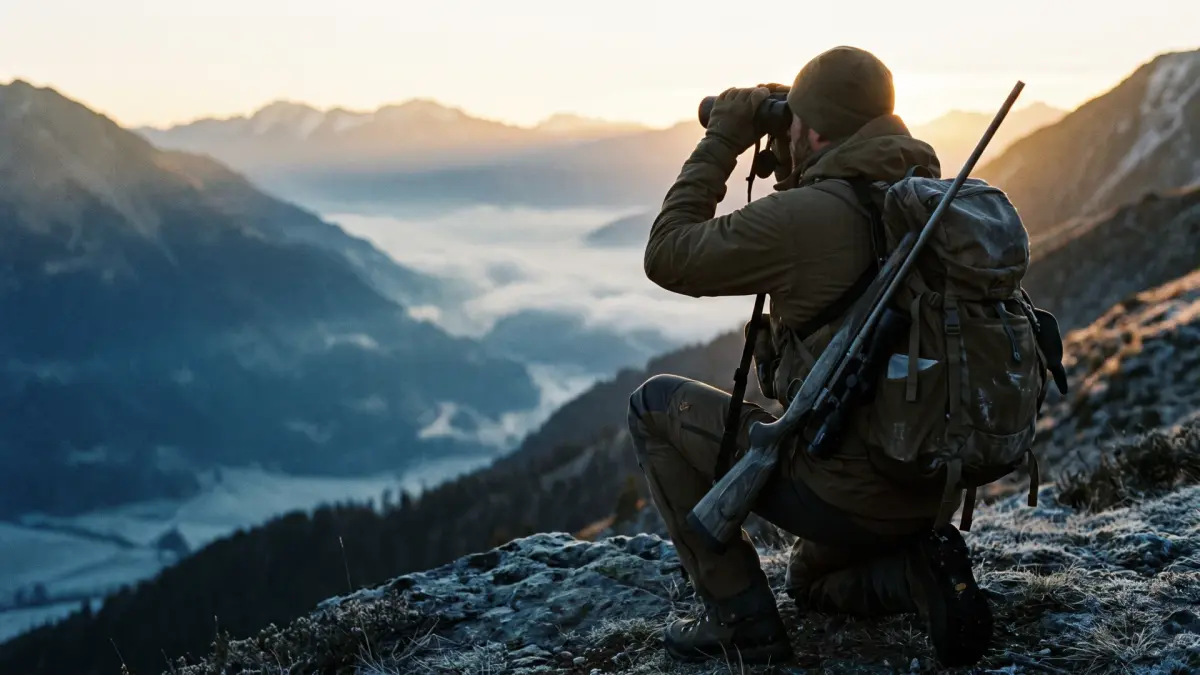
How to choose best hunting binoculars
The right hunting binocular depends less on the biggest number than on how steadily and comfortably you can use it in the terrain you actually cover.
Magnification
Magnification controls how large a distant subject appears. Eight times is easier to hold steady and gives a wider, calmer view for moving animals, while 10x is a useful middle ground for general hunting. Twelve times and 20x can reveal more distant detail, but they make hand shake more obvious and are better suited to a rest or tripod.
The strongest magnification is useless when the image will not stay still long enough to identify the animal.
Objective lens size
The second number in a binocular's name is the objective lens diameter in millimeters. A 42mm lens is the most balanced format in this group, while 50mm objectives can support more light gathering and pair naturally with higher magnification. Smaller 25mm objectives make a binocular easier to carry, but they give up low-light capability compared with full-size models.
Optical coatings and prisms
Fully multi-coated lenses are designed to improve light transmission across the binocular's air-to-glass surfaces. BAK4 prisms appear in the FLYANT and Celestron models, while the Bushnell uses BK-7 prisms. The Vortex Diamondback HD 8x42 adds dielectric prism coating and Armortek exterior lens protection, features worth prioritizing when clarity and field durability matter.
Weather sealing
Waterproofing, fog proofing, nitrogen purging, argon purging, and O-ring seals are not interchangeable marketing phrases. The Vortex models explicitly list these protections, and the Celestron Outland X lists waterproofing and nitrogen purging. The FLYANT is described as suitable for outdoor conditions but should not be immersed, while the Bushnell listing does not specify waterproof or fogproof performance.
Handling and support
A binocular should be easy to focus, comfortable with or without glasses, and secure in wet hands. Adjustable eyecups and a diopter help tailor the view, while rubber armor improves grip. Tripod adaptability matters most with 12x and 20x models, and a supplied harness, such as the GlassPak included with the Triumph and Diamondback, can make a full-size binocular easier to keep accessible.
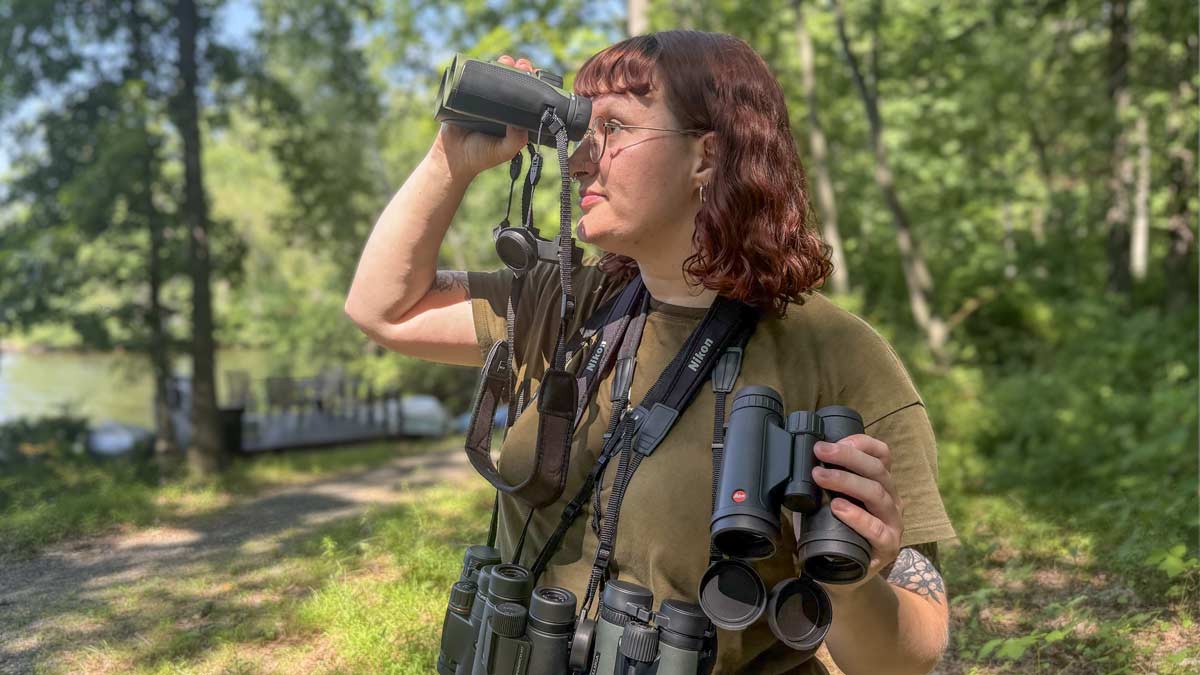
Frequently asked questions
Is 8x or 10x better for hunting?
Eight times magnification is easier to hold steady and gives a wider view, which helps when tracking movement or scanning thick cover. Ten times provides more apparent reach for open terrain while remaining manageable for many users. The better choice depends on whether you prioritize steadiness or distant detail.
Are 50mm binoculars better than 42mm binoculars?
A 50mm objective lens can gather more light than a 42mm lens, and it often pairs with higher magnification. It also tends to create a larger, heavier binocular. A 42mm model is usually easier to carry and handle, while a 50mm model makes more sense for stationary glassing in dimmer conditions.
Can 12x binoculars be used without a tripod?
They can, but hand shake is more visible at 12x than at 8x or 10x. A stable stance, pack, vehicle mount, or tripod can make the view much easier to use. The Vortex Triumph HD 12x50 and Crossfire HD 12x50 are tripod adaptable.
What does fogproof mean on hunting binoculars?
Fogproof construction helps prevent internal condensation from forming when temperature and humidity change. Nitrogen or argon purging is used in several models here, often alongside seals. It does not prevent water droplets from forming on the outside lenses, so lens care still matters.
Are compact binoculars suitable for serious hunting?
They can work for daylight scouting or as a backup, but compact models usually use smaller objective lenses. The Occer 12x25 is much lighter than the full-size options, but its 25mm objectives are less suited to fading light. Serious hunters who glass for long periods will generally be better served by a 42mm or 50mm model.
Do binoculars provide true night vision?
No product in this list should be treated as a true night-vision device. The Occer is described as offering low-light viewing but specifically not for completely dark conditions. Larger objectives and good coatings can help in dim light, but they do not create an image in total darkness.

The bottom line
For most readers searching for the Best hunting binoculars, the Vortex Triumph HD 10x42 is the pick to buy. It has the most balanced combination of 10x reach, 42mm objectives, HD optics, weather protection, rubber armor, tripod adaptability, and an included GlassPak harness. Its weakness is that 10x is not as steady as 8x and the body is still full size, but it avoids the sharper compromises of the higher-power models.
The Vortex Diamondback HD 8x42 is the stronger choice for moving subjects, frequent field use, and anyone who values Armortek lens protection and a calmer view. Choose the Vortex Triumph HD 12x50 or Crossfire HD 12x50 when distant glassing is the priority and you have a stable support. For occasional carry, the Occer 12x25 is the smallest practical option, while the Celestron Outland X 8x42 stands out for its broad field of view.
If you are undecided, choose 8x for steadiness, 10x for balance, and 12x or more only when your hunting regularly involves distant, supported glassing.
As an Amazon Associate we earn from qualifying purchases.