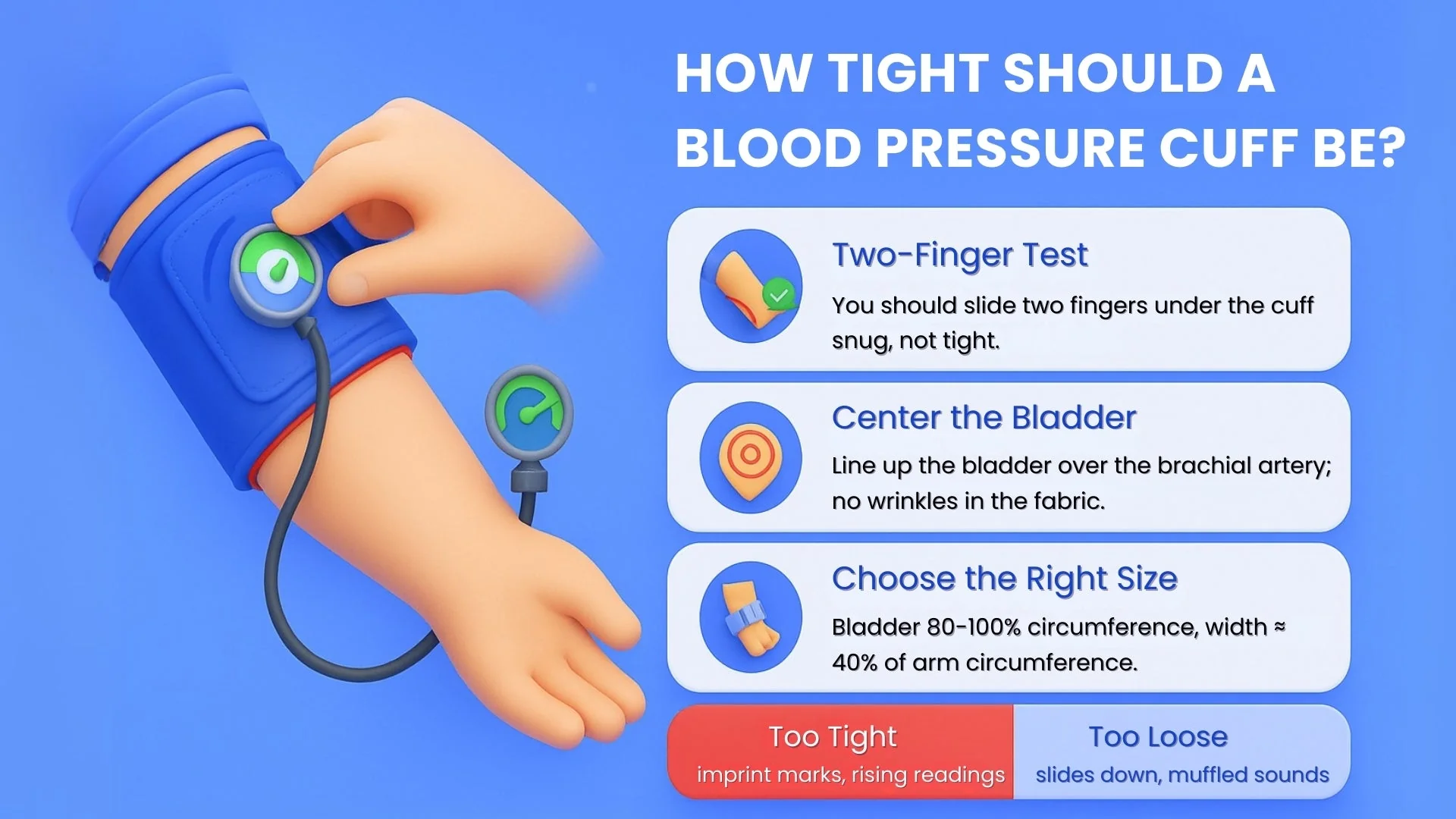

Checking blood pressure at home only works when the cuff fits, the display is readable, and the monitor does not make every reading a chore. A wrist model can be wonderfully portable, but an upper-arm monitor is usually the simpler place to start for routine checks.
Our Best blood pressure cuffs picks include straightforward one-button monitors, Bluetooth-connected models, dual-user devices, and a few wrist options for people who need something compact. The iHealth Track is our top pick, while OMRON's Platinum stands out for deeper heart-rhythm features and the Oklar wrist models make the most sense for portability.
Comparison table
| # | Product | Award | Cuff | Memory | Power | Best for |
|---|---|---|---|---|---|---|
| 1 | iHealth Track | Best overall | Upper arm, 8.7 to 16.5 inches | 99 readings, unlimited app storage | 4 AAA batteries | Easy tracking with a wide fit |
| 2 | OMRON Silver | Best connected monitor | Upper arm, 9 to 17 inches | 30 readings, unlimited app storage | 4 AA batteries | Bluetooth trend tracking |
| 3 | OMRON Iron | Best simple OMRON | Upper arm, 9 to 17 inches | Not specified | Not specified | One-button operation |
| 4 | OMRON Platinum | Best for detailed monitoring | Upper arm, 9 to 17 inches | 100 readings per user, two users | AC adapter or 4 AA batteries | AFib and morning readings |
| 5 | Oklar Wrist Black | Best wrist monitor | Wrist, 4.92 to 8.46 inches | 240 readings, two users | Built-in rechargeable battery | Portable voice-assisted checks |
| 6 | Oklar Upper Arm | Best compact upper-arm monitor | Upper arm, 8.7 to 15.7 inches | 240 readings, two users | 3 AA batteries or USB-C cable | Simple home monitoring |
| 7 | OMRON Bronze | Best compact OMRON setup | Upper arm, 9 to 17 inches | 14 readings | 4 AA batteries | App-connected essentials |
| 8 | Paramed Upper Arm | Best accessibility features | Upper arm, 8.7 to 16.5 inches | 120 readings, two users | 4 AA batteries | Voice prompts and easy buttons |
| 9 | YONLO Upper Arm | Best for three users | Two cuffs, 9 to 17 and 13 to 21 inches | 199 readings per user, three users | 4 AAA batteries or USB-C cable | Family tracking |
| 10 | Oklar Wrist Grey | Best grey wrist option | Wrist, 4.92 to 8.46 inches | 240 readings, two users | Built-in rechargeable battery | Compact shared use |
1. iHealth Track: Best Overall

Pros
- Wide upper-arm cuff fits 8.7 to 16.5 inches
- Large multicolor backlit display
- Bluetooth app tracking with unlimited smartphone storage
- Detects heart rhythm disturbances
- Two-button operation
Cons
- App features require a compatible phone
- Stores 99 readings on the device
- Uses four AAA batteries
Best for: someone who wants a readable upper-arm monitor with useful phone tracking.
The iHealth Track gets the important home-monitor details right without turning the process into a technology project. Its two-button operation is easy to understand, and the large backlit display uses oversized numbers that are comfortable to read. The green, yellow, and red color coding gives the result a quick visual context, although those colors should not replace advice from a healthcare professional.
The included cuff covers upper arms from 8.7 to 16.5 inches, which is a useful range for a household device. A poor cuff fit can undermine an otherwise careful measurement, so that wider coverage gives the iHealth Track an advantage over models with narrower ranges. It runs on four AAA batteries and weighs about 0.97 pounds, making the monitor manageable to move between rooms.
The built-in memory holds up to 99 readings. The bigger advantage is the iHealth app, which can store unlimited readings on a compatible smartphone. The app requires iOS 12 or later or Android 9 or later, plus Bluetooth 4.0 or later. That makes it a better long-term record keeper than the OMRON Bronze, whose device memory is limited to 14 readings, while the OMRON Silver offers a more polished connected alternative with Apple Health and Google Fit compatibility.
The iHealth Track also flags possible heart rhythm disturbances after a measurement. That is a useful prompt to discuss with a doctor, not a diagnosis. Its main weakness is that some of its best tracking features depend on a phone, and the monitor itself does not hold as much history as the two-user Oklar Upper Arm or YONLO Upper Arm.
For a first home monitor, the mix is unusually sensible: wide cuff coverage, clear numbers, app history, and uncomplicated controls. Readers comparing upper-arm designs can also consider how cuff fit affects the reliability of home readings before choosing a size.
2. OMRON Silver: Best Connected Monitor

Pros
- Bluetooth connection to the OMRON connect app
- Works with Apple Health and Google Fit
- Irregular heartbeat detection
- Hypertension indicator
- Includes storage case and four AA batteries
Cons
- On-device memory holds 30 readings
- Cuff starts at 9 inches
- More involved than a basic one-button monitor
Best for: households that want organized phone-based blood pressure history.
The OMRON Silver is the pick for people who want their readings to become a useful record rather than a collection of numbers forgotten on a screen. It pairs with the free OMRON connect app over Bluetooth, where it can store unlimited readings and help track trends. Compatibility with Apple Health and Google Fit makes it easier to keep blood pressure information alongside other health data.
Its ComFit cuff fits upper arms from 9 to 17 inches. That range covers many adults, though the iHealth Track and Paramed Upper Arm start slightly smaller. The Silver includes four AA batteries, a storage case, an instruction manual, and a quick start guide. At about 1.55 pounds, it is heavier than the OMRON Iron and the small Oklar units, but it still fits comfortably into a cabinet or bedside drawer.
The monitor stores 30 readings by itself, which is enough for short-term reference but not ideal if several people share one device. The app solves that limitation for one person who remembers to sync consistently. The hypertension indicator can call attention to an elevated result, while irregular heartbeat detection can flag an unusual rhythm during the measurement.
The OMRON Iron is easier if all you want is one-button operation and body-movement alerts. The Silver earns its higher position through connectivity and data organization, not because it makes the measurement process fundamentally different. Its weakness is that the app becomes part of the ownership experience, and users who do not want Bluetooth will gain less from this model.
Choose the Silver when a doctor, caregiver, or family member needs a clearer history over time. For a broader look at the brand's feature differences, the distinctions between connected and basic home monitors are more important than the names on the front.
3. OMRON Iron: Best Simple OMRON

Pros
- One-touch operation
- Body movement detection
- Irregular heartbeat detection
- Wide-range 9 to 17-inch cuff
- Lightweight monitor
Cons
- No app connectivity is listed
- On-device memory is not specified
- No batteries or storage case are listed in the included features
Best for: users who want a straightforward OMRON upper-arm monitor.
The OMRON Iron is the least fussy OMRON in this group. Press one button, let the monitor run, and read the result. That simplicity matters for someone who does not want to create an app account or sort through multiple settings before taking a routine measurement.
The wide-range D-ring cuff fits arms from 9 to 17 inches. It is the same stated arm range used by the OMRON Silver, Platinum, and Bronze, so fit is not the deciding difference among those four. The Iron is notably light at about 0.55 pounds, which makes it easier to handle than the Silver or Platinum.
OMRON lists Advanced Accuracy Technology, irregular heartbeat detection, and excessive body movement detection. The last feature is particularly practical because movement during inflation or measurement can make a reading less useful. The monitor also promises quick, one-touch operation, but the supplied information does not specify the measurement time or the memory capacity.
That missing memory detail is the Iron's clearest limitation. The Silver and Platinum offer defined storage and app support, while the Bronze at least states that it stores 14 readings. The Iron is therefore better suited to immediate readings than to building a detailed history on the device itself.
This is the OMRON to choose when ease matters more than connected features. Skip it if you need a digital log for two people or want to send reports through an app. For a single user who wants a recognized upper-arm format and a minimal control layout, the Iron keeps the decision pleasantly simple.
4. OMRON Platinum: Best for Detailed Monitoring

Pros
- AFib detection technology
- High Morning Average Indicator
- 100 readings for each of two users
- Bluetooth app support
- AC adapter and battery operation
Cons
- Largest and heaviest OMRON option here
- Feature set may be excessive for occasional checks
- Cuff range starts at 9 inches
Best for: people who need extensive history and more detailed heart-rhythm information.
The OMRON Platinum is built for a household that treats blood pressure monitoring as an ongoing routine. Its standout feature is AFib Detection Technology, which screens for unusual heart rhythms during measurements. It also has a High Morning Average Indicator, designed to highlight morning blood pressure patterns that can be clinically relevant.
The D-ring cuff fits upper arms from 9 to 17 inches. That is a common range, but it does not extend as far as the iHealth Track, Paramed Upper Arm, or YONLO's larger cuff. Getting the fit right remains essential. The monitor includes an AC adapter as well as four AA batteries, so it can stay in one place or operate without a nearby outlet.
Storage is generous. Each of two users gets space for 100 readings, and Bluetooth connectivity sends the information to the OMRON connect app for unlimited storage. The app also works with Apple Health and Google Fit. That combination is much more useful for shared, long-term monitoring than the OMRON Bronze's 14-reading memory or the Iron's unspecified storage.
The trade-off is size and complexity. The Platinum weighs about 1.37 pounds and measures 7.5 inches long by 4.6 inches wide and 3.3 inches high, making it the largest OMRON model in this group. Someone who only wants a quick reading may find the iHealth Track or Iron easier to live with.
The Platinum is the specialist pick, not the default pick. It makes sense when AFib screening, morning averages, dual-user storage, and app reports are meaningful parts of the routine. It should be skipped by anyone who will not use those features and simply wants one button and a clear result.
5. Oklar Wrist Black: Best Wrist Monitor

Pros
- Compact 0.22-pound design
- Rechargeable battery with USB-C cable
- Voice broadcast can assist users with poor eyesight
- 240 readings for two users
- Large backlit LED display
Cons
- Wrist positioning requires care
- Charging adapter is not included
- Wrist cuff fits only 4.92 to 8.46 inches
Best for: travel, portability, and users who need spoken reading prompts.
The Oklar Wrist Black is dramatically easier to carry than every upper-arm model here. It weighs about 0.22 pounds and measures roughly 3.03 by 2.55 by 2.63 inches. That makes it a practical option for a drawer, overnight bag, or anyone who finds an upper-arm cuff awkward to put on.
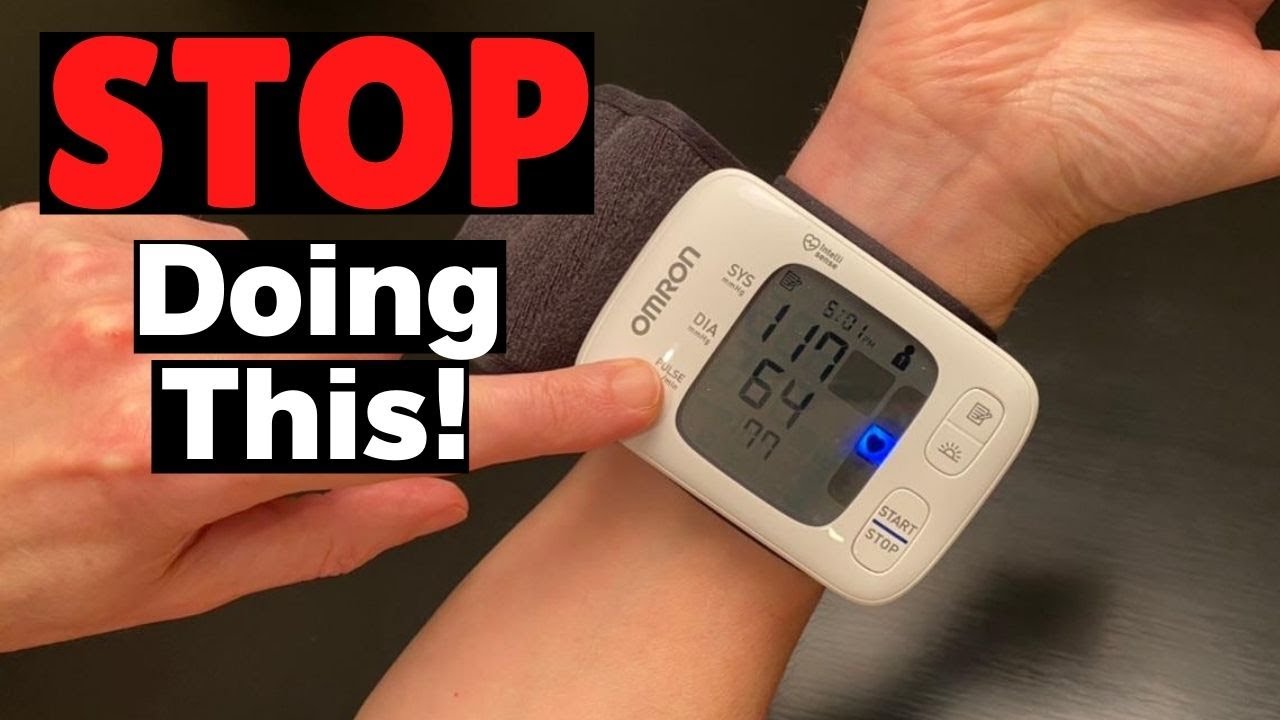
The adjustable wrist cuff fits 4.92 to 8.46 inches. The small footprint is the appeal, but wrist monitors require careful placement and positioning. A user who wants the least technique-sensitive setup should start with an upper-arm model such as the iHealth Track or OMRON Iron instead.
Oklar includes a built-in rechargeable battery and a Type-C cable. The charging adapter is not included, so the cable needs a compatible power source. A measurement takes about 35 seconds, and the unit switches off after 60 seconds of inactivity. Its large backlit LED screen is easy to see, while the voice broadcast can read results aloud or be silenced.
The dual-user memory holds up to 240 readings, giving each user a substantial history. That is more on-device storage than the OMRON Silver and considerably more than the OMRON Bronze. The catch is that portability does not remove the need for consistent posture and wrist placement, which can matter more than the convenience of the small enclosure.
Choose this Oklar when a full upper-arm setup is inconvenient and you can follow the positioning instructions carefully. It is also the most accessible option for someone who benefits from spoken feedback. Readers considering devices beyond cuffs may find how wearable health tools fit into a broader monitoring routine useful, but a wrist monitor should not be treated as interchangeable with every other health device.
6. Oklar Upper Arm: Best Compact Upper-Arm Monitor

Pros
- One-button operation
- Two-user memory with 240 readings
- Large backlit LED screen
- Upper-arm cuff fits 8.7 to 15.7 inches
- Battery or USB-C power
Cons
- USB-C operation is not rechargeable
- No app connectivity is listed
- Cuff does not reach the larger range of some rivals
Best for: home users who want an uncomplicated upper-arm monitor with substantial memory.
The Oklar Upper Arm is a good reminder that a monitor can be simple without having almost no useful features. Its one-button design keeps the process clear, and the large backlit LED display uses digits that should be easy to read quickly. Readings arrive within one minute according to the listed features.
Its cuff fits upper arms from 8.7 to 15.7 inches. That is a wider starting point than the OMRON models, though the iHealth Track and Paramed Upper Arm extend farther at the upper end. Measuring the arm before buying is still the right move, especially when more than one person will use the monitor.
Two users can save 120 readings each, for 240 readings total. That is a strong advantage over the OMRON Iron and Bronze, whose listed storage is either unspecified or limited to 14 readings. The Oklar also supports three AA batteries or a Type-C cable, giving it flexibility on a bedside table or while traveling.
The important power caveat is that it is not rechargeable. The cable can operate the monitor when batteries are not installed, but it does not charge an internal battery. There is no listed Bluetooth or smartphone app, so users who want automatic trend reports should move up to the iHealth Track, OMRON Silver, or OMRON Platinum.
For basic family use, this is one of the more practical layouts in the group. It is an upper-arm device with lots of local memory and few controls to confuse the process. Skip it if your arms exceed the cuff range or if sending readings to a phone is central to your routine.
7. OMRON Bronze: Best Compact OMRON Setup

Pros
- Bluetooth app support
- Irregular heartbeat detection
- Hypertension indicator
- 9 to 17-inch cuff
- Storage case and four AA batteries included
Cons
- Stores only 14 readings on the device
- Less extensive than OMRON Platinum
- No dual-user memory listed
Best for: a single user who wants OMRON app access without the Platinum's deeper feature set.
The OMRON Bronze is a compact way into OMRON's connected system. It has a familiar upper-arm format, a 9 to 17-inch D-ring cuff, and the same basic emphasis on irregular heartbeat detection and a hypertension indicator found on the Silver. The included case and four AA batteries make it easy to keep organized.
Its device memory is limited to 14 readings. That sounds restrictive beside the Oklar Upper Arm's 240-reading shared capacity, but Bluetooth changes the picture. The OMRON connect app can store unlimited readings and works with Apple Health and Google Fit. A single user who syncs regularly may never notice the small on-device history.
The Bronze weighs about 1.23 pounds and measures approximately 5.5 by 3.3 by 4.3 inches. It is smaller and lighter than the Platinum, though the difference is not enough to make it a travel monitor. This is still a home upper-arm device intended to sit on a nightstand or in a cabinet.
The Silver is the stronger choice for people who want more local memory, while the Platinum adds AFib Detection Technology, morning-average information, dual-user storage, and an AC adapter. The Bronze makes sense when those additions are unnecessary and app-based history is the main requirement.
Buy the Bronze for a straightforward single-user setup tied to the OMRON app. It is not the right fit for a family sharing one monitor or for someone who prefers to keep a long record without relying on a phone.
8. Paramed Upper Arm: Best Accessibility Features

Pros
- Large LCD and large buttons
- Voice broadcast with silent mode
- Self-checking cuff placement feature
- 120 readings for each of two users
- Carrying bag and four AA batteries included
Cons
- No app connectivity is listed
- Device is heavier than the smallest options
- Memory is less extensive than some two-user models
Best for: users who value large controls, spoken prompts, and a physical carrying case.
The Paramed Upper Arm focuses on the parts of a home monitor people interact with most: the buttons, the screen, and the cuff. Its large LCD and large controls should be approachable for users who dislike tiny text. Voice broadcast adds another way to hear the result, and it can be turned off for quiet operation.
The included adjustable cuff fits arms from 8.7 to 16.5 inches. That gives it the same broad range as the iHealth Track, and the self-check feature is intended to help confirm that the cuff is put on correctly. That guidance can be helpful for a new user, although it remains important to follow the manual and maintain proper posture.
Two user profiles can save 120 readings each. That is enough for regular household tracking, though the Oklar Upper Arm stores 240 total readings and the YONLO Upper Arm offers 199 readings for each of three users. Paramed does not list Bluetooth or app support, so its records stay on the monitor.
At about 1.21 pounds, it is not as light as the OMRON Iron or either Oklar wrist device. The included carrying bag helps, and four AA batteries are supplied. Still, this is better viewed as a portable home monitor than something designed for constant travel.
The Paramed earns its place through accessibility rather than advanced connectivity. It is a sensible choice for someone who wants spoken feedback and prominent physical controls. Skip it if app reports or a three-person memory system matter more than the interface.
9. YONLO Upper Arm: Best for Three Users

Pros
- Three independent user memory groups
- 199 readings per user
- Includes two cuff sizes
- Large multicolor backlit display
- Battery or USB-C power
Cons
- USB-C operation is not rechargeable
- Large listed dimensions
- No app connectivity is listed
Best for: families that need separate records and different cuff sizes.
The YONLO Upper Arm is the family specialist. It supports three users, with 199 readings for each person, so records are less likely to become mixed together. That is a more useful arrangement for a household than a single shared history, especially when people monitor at different times.
The dual-cuff setup is its other major distinction. One cuff covers 9 to 17 inches, while the larger one covers 13 to 21 inches. That is the broadest stated coverage in this group and makes the YONLO the most flexible option for households with substantially different arm sizes. The cuff still needs to be selected and positioned correctly for each person.
The large LED backlit display uses color coding: green for normal, orange for elevated, and red for high readings. The monitor is designed to produce a result in as little as 35 seconds. It can run from four AAA batteries or a Type-C cable, but the listed features specifically say it is not rechargeable.
Its size is the main practical concern. The listed dimensions are 12.98 inches long, 13 inches wide, and 8 inches high, far larger than the other monitors here. The product information may reflect packaging or a broad measurement convention, but it is still wise to allow more storage space than you would for the iHealth Track or Oklar Upper Arm.
The YONLO is the clear choice when three users and two cuff ranges solve a real household problem. It is less compelling for one person, especially without app support. Families that need separate local histories should put it ahead of smaller but less flexible monitors.
10. Oklar Wrist Grey: Best Grey Wrist Option

Pros
- Compact 0.22-pound design
- Rechargeable battery and USB-C cable
- Voice broadcast and large backlit display
- 240 readings for two users
- Adjustable wrist cuff
Cons
- Charging adapter is not included
- Wrist positioning needs care
- No upper-arm cuff
Best for: users who want the Oklar wrist design in a grey finish.
The Oklar Wrist Grey has the same core design as the black Oklar wrist monitor, with the product information identifying this version as grey. It is small, light, and much easier to pack than an upper-arm monitor. The device weighs about 0.22 pounds and has listed dimensions of roughly 3.03 by 2.55 by 2.63 inches.
Its wrist cuff adjusts from 4.92 to 8.46 inches. The display is a large backlit LED panel, and the voice broadcast can help users who have trouble reading the screen. A measurement takes about 35 seconds, and the automatic shutoff activates after 60 seconds without use.
The built-in battery recharges through the supplied Type-C cable. The charging adapter is not included, so users will need a compatible adapter or power source. Two users can share the device, with up to 240 readings stored in total.
The same wrist-monitor compromise applies here as with the Oklar Wrist Black. A small cuff is convenient, but wrist position and technique are especially important. The iHealth Track, OMRON Iron, and other upper-arm choices are better for people who want the more familiar arm-cuff format or who find wrist positioning difficult.
Choose the Grey model when portability and voice output matter, or when its finish is simply preferable. It is not a performance upgrade over the black version. The difference is the color, so the decision between the two should be based on availability and personal preference rather than features.
How to choose best blood pressure cuffs
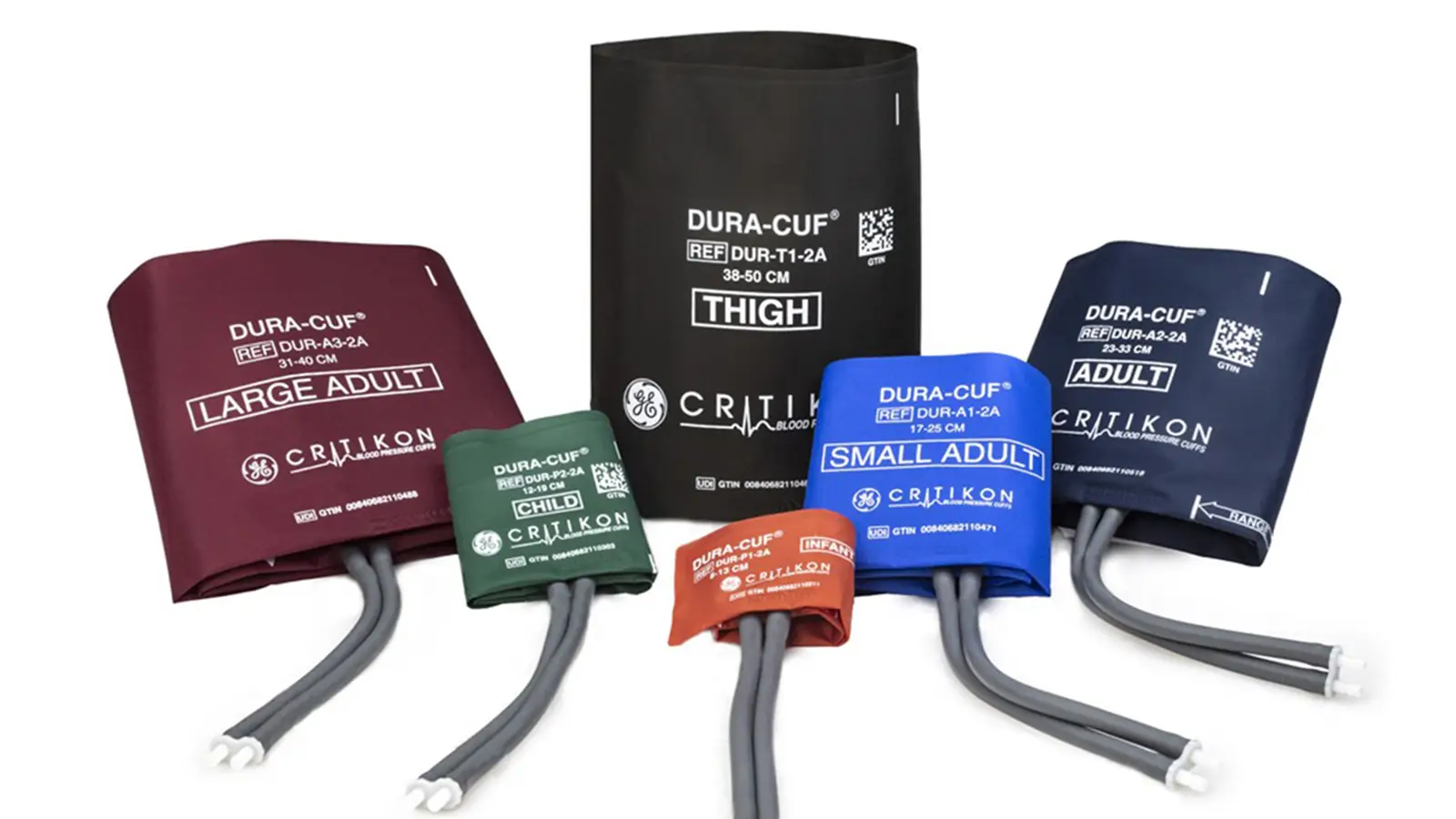
The right monitor starts with cuff fit and measurement style, then moves to memory, readability, power, and connected features. A well-matched simple monitor is more useful than an advanced one that nobody uses consistently.
Cuff placement
Upper-arm cuffs sit around the upper arm, while wrist cuffs sit closer to the hand. Upper-arm options in this list range from the iHealth Track's 8.7 to 16.5 inches to the YONLO's larger 13 to 21-inch cuff. Wrist designs are smaller, but they demand careful positioning and a steady arm.
Measure the arm where the cuff will sit and compare that measurement with the manufacturer's stated range. Do not assume that a cuff described as wide range will fit every adult.
The cuff is part of the measuring system, not an accessory to ignore after choosing the monitor.
Memory and user profiles
Memory matters when readings need to be compared over days or shared with a doctor. The OMRON Bronze stores 14 readings, while the iHealth Track stores 99 and the Oklar Upper Arm stores 240 across two users. YONLO goes further with three profiles and 199 readings per user.
A two-user mode is useful only when each person selects the correct profile every time. For a single user who wants automatic trend history, Bluetooth app storage may matter more than a large on-device number.
Display and audio
Large digits reduce mistakes when reading systolic and diastolic results. Backlighting helps in a dim bedroom, and color indicators can make an elevated result easier to notice at a glance. The iHealth Track, Oklar Upper Arm, and YONLO use prominent backlit displays.
Voice broadcast is available on the Oklar wrist models and Paramed Upper Arm. It can help users with poor eyesight, but the ability to turn it off is important when the monitor is used around other people.
Power and portability
Battery operation makes a monitor easy to move, while an AC adapter can reduce interruptions at a fixed station. The OMRON Platinum supports an AC adapter and four AA batteries. The iHealth Track uses four AAA batteries, and the Oklar Upper Arm can use three AA batteries or a Type-C cable.
Do not confuse USB-C operation with charging. The Oklar Upper Arm and YONLO can operate through a Type-C connection but are specifically described as not rechargeable. The Oklar wrist models have built-in rechargeable batteries, though their charging adapters are not included.
App and heart-rhythm features
Bluetooth is useful for storing trends, exporting reports, or keeping readings alongside other health information. The OMRON Silver, Bronze, and Platinum connect to the OMRON connect app, while the iHealth Track uses iHealth's app.
Irregular heartbeat detection and AFib Detection Technology are alerts that may warrant discussion with a healthcare professional. They are not diagnoses. The Platinum is the most feature-rich option here, with AFib detection and a High Morning Average Indicator.
Frequently asked questions
Are upper-arm monitors better than wrist monitors?
Upper-arm and wrist monitors use different placements, and the right choice depends on fit, comfort, and how carefully the device can be used. The upper-arm models in this roundup offer familiar cuff ranges and are the safer starting point for many home users. Wrist models are smaller, but positioning is especially important.
How do I know which cuff size I need?
Measure the circumference of the upper arm or wrist where the cuff will sit, then compare it with the stated range. The iHealth Track and Paramed Upper Arm cover 8.7 to 16.5-inch upper arms, while YONLO includes a second cuff reaching 13 to 21 inches. A cuff that is too small or too large can affect the usefulness of a reading.
Do these monitors store readings for two people?
Several do. Oklar Wrist Black, Oklar Wrist Grey, Oklar Upper Arm, and Paramed Upper Arm support two users, while the OMRON Platinum supports two users with 100 readings each. YONLO supports three users with 199 readings per profile.
Which monitors connect to a phone?
The iHealth Track connects to iHealth's iOS and Android applications through Bluetooth. OMRON Silver, OMRON Bronze, and OMRON Platinum connect to the OMRON connect app, with the Silver and Platinum also listed as compatible with Apple Health and Google Fit.
Are the rechargeable models powered by USB-C?
The Oklar Wrist Black and Oklar Wrist Grey have built-in rechargeable batteries and include a Type-C cable. The Oklar Upper Arm and YONLO can operate through a Type-C cable, but their features state that they are not rechargeable.
What does irregular heartbeat or AFib detection mean?
These features look for rhythm patterns during a blood pressure measurement and can display an alert. They do not confirm a medical condition. Repeated or concerning alerts should be discussed with a qualified healthcare professional.
The bottom line
The iHealth Track is the strongest all-around pick among the Best blood pressure cuffs because it combines a broad upper-arm range, an easy display, 99-reading memory, and app tracking without an intimidating control layout. Choose the OMRON Platinum instead when AFib detection, morning averages, dual-user history, and AC power are priorities.
For a family, the YONLO Upper Arm is the more practical specialist because it offers three profiles and two cuff sizes. If portability is the deciding factor, the Oklar Wrist Black and Oklar Wrist Grey are compact and rechargeable, but they require more careful wrist positioning.
If you are undecided, choose an upper-arm model that fits correctly before choosing extra features.
As an Amazon Associate we earn from qualifying purchases.