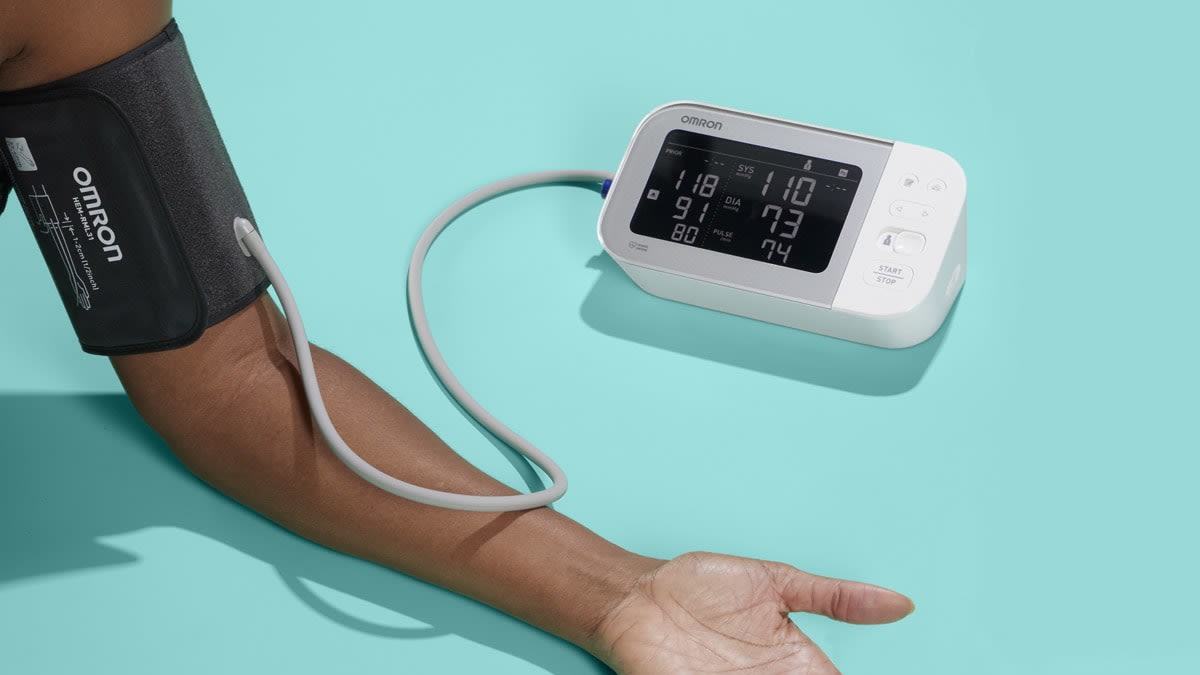

A blood pressure reading is only useful when the cuff fits, the screen is readable, and the monitor is simple enough to use correctly every time. Wrist models save space, but upper-arm monitors are generally easier to position consistently. Memory and app support matter too if you need to show a trend to a clinician rather than a single isolated number.
The Best blood pressure monitor for most homes is the iHealth Track, thanks to its wide cuff, clear color backlight, straightforward controls, and phone support. The list also includes OMRON models with increasingly sophisticated heart-rhythm tools, a compact wrist monitor, and several large-screen options for shared household use.
Comparison table
| # | Product | Award | Cuff and format | Memory | Best for |
|---|---|---|---|---|---|
| 1 | iHealth Track | Best overall | Upper arm, 8.7 to 16.5 inches | 99 readings, unlimited app storage | Most households |
| 2 | OMRON Platinum | Best advanced features | Upper arm, 9 to 17 inches | 100 readings per user | AFib screening and detailed tracking |
| 3 | Oklar Wrist | Best wrist model | Wrist, 4.92 to 8.46 inches | 240 readings for two users | Travel and limited arm access |
| 4 | Oklar Upper Arm | Best simple shared monitor | Upper arm, 8.7 to 15.7 inches | 120 readings per user | Basic two-user monitoring |
| 5 | OMRON Bronze | Best connected OMRON basic model | Upper arm, 9 to 17 inches | 14 device readings, unlimited app storage | App tracking with a simple interface |
| 6 | WAMELPRI One-Touch | Best large display | Upper arm | 199 readings for two users | Seniors and low-light rooms |
| 7 | Invaxe Large Screen | Best memory capacity | Upper arm, 9 to 17 inches | 199 readings per user | Reviewing long reading histories |
| 8 | OMRON Iron | Best one-button OMRON | Upper arm, 9 to 17 inches | Not specified | Straightforward daily checks |
| 9 | Dario Gen-2 | Best app-first design | Upper arm | 400 device readings, unlimited app storage | Portable connected tracking |
| 10 | OMRON Silver | Best easy-wrap cuff | Upper arm, 9 to 17 inches | 30 readings | Comfortable routine monitoring |
1. iHealth Track: Best Overall

Pros
- Two-button operation is easy to understand
- Wide cuff fits upper arms from 8.7 to 16.5 inches
- Large multi-color backlit display
- Bluetooth sends readings to iOS and Android apps
- Detects and flags heart-rhythm disturbances
Cons
- On-device memory stops at 99 readings
- Phone features require a compatible Bluetooth device
- The upper-arm format is less compact than a wrist unit
Best for: most people who want a clear upper-arm monitor with optional smartphone tracking.
The iHealth Track is the easiest monitor here to recommend without adding caveats. It keeps the physical controls to two buttons, uses a wide upper-arm cuff, and puts the result on a large display with green, yellow, and red color coding. That combination matters more than a crowded feature list. A monitor that can be positioned and read without fuss is more likely to become part of a daily routine.
Its cuff fits upper arms from 8.7 to 16.5 inches, giving it a broader range than several of the compact models in this group. The monitor includes four AAA batteries, and its dimensions are 3.9 by 3.9 by 1.6 inches, with a listed weight of about 0.97 pounds. That is small enough for a drawer or travel bag while still leaving room for a display that does not require close inspection.
The Track stores up to 99 readings on the device. Bluetooth adds unlimited reading storage through the iHealth applications for iOS 12 or later and Android 9 or later, with Bluetooth 4.0 required. That split works well for someone who wants a simple physical monitor but also wants to review trends later. The device can also identify heart-rhythm disturbances and show a warning symbol after the measurement.
The iHealth Track is less clinically feature-rich on paper than the OMRON Platinum, which adds AFib detection and a high morning average indicator. It also lacks the 400-reading device capacity of the Dario Gen-2. Its weakness is that app compatibility adds a setup step, and people who never use a phone app will not get much from the connected side. For everyone else, this is the balanced pick: broad cuff fit, readable results, useful memory, and no unnecessary operating complexity.
2. OMRON Platinum: Best Advanced Features

Pros
- AFib Detection Technology screens for unusual rhythms
- High Morning Average Indicator adds useful context
- Stores 100 readings for each of two users
- Bluetooth works with OMRON connect, Apple Health, and Google Fit
- Includes an AC adapter, batteries, case, and wide-range cuff
Cons
- The feature set is more than some users need
- The monitor is larger and heavier than compact alternatives
- The cuff starts at 9 inches
Best for: households that want the deepest tracking and heart-rhythm features in this group.
The OMRON Platinum is the model to choose when the measurement is only the beginning of what you want to do. It is built around an upper-arm cuff that fits 9 to 17 inch arms, but its real distinction is the amount of context it can add to a reading. AFib Detection Technology checks for unusual heart rhythms during measurements, while the High Morning Average Indicator is designed to highlight morning blood pressure patterns.
That does not turn the monitor into a diagnostic device, and the rhythm alert should be discussed with a clinician rather than treated as a diagnosis. It does make the Platinum more useful for someone already monitoring regularly and looking for patterns. The dual-user memory holds up to 100 readings for each person, enough to keep a useful on-device history without immediately needing a phone.
Bluetooth connects it to the OMRON connect app, where readings can be stored without the device's memory limit. The app also works with Apple Health and Google Fit, and the product includes a storage case, an AC adapter, four AA batteries, and the wide-range D-ring cuff. At 7.5 by 4.6 by 3.3 inches and about 1.37 pounds, it is a substantial home monitor rather than a pocket gadget.
Compared with the iHealth Track, the Platinum offers more specialized heart and morning-trend tools, but it is not as small or as uncomplicated. The Dario Gen-2 stores more readings on the device, yet its feature emphasis is app management rather than the Platinum's AFib and morning indicators. The weakness is clear: if you only need a quick daily reading, its extra controls and tracking options may feel excessive. For families or patients who want richer records to discuss with a doctor, it is the strongest advanced pick.
3. Oklar Wrist: Best Wrist Model

Pros
- Compact wrist design weighs about 0.22 pounds
- Rechargeable battery uses a Type-C cable
- Voice broadcast can help users with poor eyesight
- Stores 240 readings for two users
- Backlit display is readable in low light
Cons
- Wrist positioning demands careful, consistent use
- Charging adapter is not included
- Wrist cuff is not a substitute for an upper-arm fit
Best for: people who need a portable monitor or cannot comfortably use a standard upper-arm cuff.
The Oklar Wrist solves a different problem from the rest of this list. It is not trying to replace every upper-arm monitor. Instead, it makes blood pressure checks easier to carry out when a traditional cuff is inconvenient, awkward, or difficult to position. The body weighs about 0.22 pounds and measures roughly 3.03 by 2.55 by 2.63 inches, so it can disappear into a small bag.
The adjustable wrist cuff fits 4.92 to 8.46 inches. Pressing Start or Stop begins a measurement that the listing says takes about 35 seconds, and the monitor turns off after 60 seconds of inactivity. Its large LED display is backlit, and the voice broadcast function can read results aloud. Volume can be adjusted or the voice can be disabled using the Set and Mem buttons.
This is also the most convenient power arrangement in the roundup. The built-in rechargeable battery charges through Type-C, so there is no routine battery replacement. The package does not include a charging adapter, so the included cable needs a suitable power source. Two-user memory stores up to 240 readings, giving it more on-device capacity than the iHealth Track and the OMRON Platinum.
The catch is the wrist format itself. It requires careful placement and a consistent wrist position, while a properly fitted upper-arm monitor is usually the easier choice for repeatable home measurements. The Oklar Wrist is therefore a specialist pick, not the default winner. If portability, voice output, and charging convenience matter most, it beats the larger models. If you are choosing an at-home monitor for routine clinical tracking, the iHealth Track or OMRON Bronze is a safer starting point.
4. Oklar Upper Arm: Best Simple Shared Monitor

Pros
- One-button operation
- Stores 120 readings for each of two users
- Backlit LED display has large digits
- Battery and Type-C power options
- Cuff fits 8.7 to 15.7 inch upper arms
Cons
- Type-C power does not recharge the monitor
- No phone app is listed
- Cuff range is narrower than several OMRON models
Best for: two people who want a basic upper-arm monitor without app setup.
The Oklar Upper Arm keeps the operation as close to foolproof as this category gets. Wrap the cuff, press the single button, and wait for the result. The large backlit LED display is designed for quick reading, and the product says results arrive within a minute. That simplicity makes it a sensible option for a household where multiple people will use the same device.
Its cuff fits upper arms from 8.7 to 15.7 inches. That covers many adults, though it does not extend as far as the 9 to 17 inch cuffs on the OMRON Bronze, Iron, Silver, and Platinum models. The monitor stores 120 readings per user, with a two-user setup that keeps the histories separate. That is more practical for a couple than a monitor with only a single undivided memory.
Power is flexible but needs careful interpretation. The unit can run on three AA batteries or through its Type-C interface using the provided cable. The listing specifically says it is not rechargeable, so plugging it in is a power option rather than a way to fill an internal battery. At about 0.33 pounds and 4.96 by 3.34 by 1.1 inches, it is one of the lighter upper-arm devices here.
The absence of an app is both its limitation and its appeal. It cannot match the trend sharing of the iHealth Track or OMRON models, but there is less to configure and less to maintain. The Oklar Upper Arm is a better fit than the Oklar Wrist for someone who wants a traditional cuff, while the WAMELPRI offers a larger 4.5-inch display. Choose this one when separate memory and uncomplicated controls matter more than connected features.
5. OMRON Bronze: Best Connected OMRON Basic Model

Pros
- Bluetooth works with OMRON connect
- Wide-range 9 to 17 inch D-ring cuff
- Irregular heartbeat detection
- Hypertension Indicator alerts
- Includes a storage case and four AA batteries
Cons
- Device memory holds only 14 readings
- No AC adapter is listed
- Two-user storage is not specified
Best for: users who want OMRON app tracking without the Platinum's extra indicators.
The OMRON Bronze is a straightforward bridge between a basic monitor and a connected health record. Its physical controls are intended for routine use, while Bluetooth moves the history into the OMRON connect app. That is the important distinction from the OMRON Iron. The Iron is simpler at the device, but the Bronze is the better fit when reviewing readings on a phone is part of the plan.
The included D-ring cuff fits 9 to 17 inch arms, a useful range for many adults. The device also provides Irregular Heart Beat Detection during routine measurements and a Hypertension Indicator to flag elevated readings. Those alerts are prompts for attention, not diagnoses, but they can make a long sequence of home readings easier to review.
On-device storage is limited to 14 readings. That sounds restrictive beside the iHealth Track's 99 or the Dario Gen-2's 400, but Bluetooth changes the practical calculation if the app is used consistently. OMRON connect can store unlimited readings, track trends, and share reports with a doctor. It also works with Apple Health and Google Fit. The monitor includes a case, four AA batteries, an instruction manual, and a quick-start guide.
The Bronze is less ambitious than the OMRON Platinum, which adds AFib Detection Technology, a high morning average indicator, and separate 100-reading memories for two users. It is more connected than the OMRON Iron, however, and its cuff reaches the same 17-inch upper-arm circumference. Its weakness is the tiny local memory, so skip it if you do not want to use a phone. For app users who want a clear OMRON path without the Platinum's more involved feature set, it is the sensible middle choice. Readers comparing the brand's other models can also see how different OMRON features change the day-to-day experience.
6. WAMELPRI One-Touch: Best Large Display

Pros
- Bright 4.5-inch backlit LED screen
- One-touch start
- Stores 199 readings for two users
- Battery and USB power options
- Scratch-resistant acrylic panel
Cons
- Cuff dimensions are not specified in the listing
- No smartphone app is listed
- Larger display makes it less discreet to pack
Best for: anyone who prioritizes oversized numbers and simple operation.
The WAMELPRI's reason to exist is immediately visible: its 4.5-inch backlit LED screen uses oversized digits that are easy to read from a normal seated position. For older users or a dim bedroom, that can matter more than Bluetooth. The one-touch design also avoids a maze of menus, and the display includes blood pressure classification information to help users understand where a result sits within the monitor's categories.
Memory is generous for a device without a listed app. It stores up to 199 readings for two users, allowing each person to keep a separate history. The monitor also reports heart-rate irregularity alerts and uses an intelligent pressure algorithm. Its stated error margin is no more than plus or minus 3 mmHg, though a product listing claim should not replace proper cuff placement or clinical advice.
The hardware measures about 4.7 by 4.7 by 1.9 inches. The monitor supports both battery and USB power, and the listing describes its panel as scratch-resistant acrylic. That gives it a more substantial home-console feel than the tiny Oklar Upper Arm. The cuff dimensions are not provided, so buyers should confirm fit before relying on it for a particular arm size.
The WAMELPRI One-Touch is a stronger readability pick than the Invaxe Large Screen because its award rests on the clear 4.5-inch display and uncomplicated controls, while the Invaxe focuses more heavily on memory and three-reading averages. It cannot compete with the OMRON Platinum for app integration or specialized indicators. Its weakness is the missing cuff-range detail, which makes fit verification essential. For a shared household where screen visibility is the first concern, it remains an appealing choice.
7. Invaxe Large Screen: Best Memory Capacity

Pros
- Stores 199 readings for each of two users
- Averages the last three measurements
- 4.5-inch backlit display angled at 45 degrees
- Cuff fits 9 to 17 inch arms
- Includes batteries, USB cable, and carry bag
Cons
- AC adapter is not included
- Larger body is less compact than a wrist monitor
- No smartphone tracking is listed
Best for: families who want a substantial on-device reading history.
The Invaxe Large Screen is built for users who want to review readings directly on the machine. Each of two users gets storage for 199 sets of data, and the monitor calculates an average of the last three measurements. That feature is useful when a single reading feels unusually high or low and you want a more representative short sequence without writing anything down.
Its 4.5-inch backlit LCD is angled at 45 degrees, with large buttons and oversized numbers. That shape is more thoughtful than simply making the screen bigger. A slight angle can make the display easier to see while seated at a table, and the large controls reduce the need for fine finger movements. The cuff fits standard and large adult arms from 9 to 17 inches.
The device offers dual power through four AAA batteries or a USB cable. The package includes the cable, batteries, a velvet bag, and a user manual, but no AC adapter. It also provides position guidance through the cuff, detects irregular heartbeats, and uses six colors to indicate pressure levels. The body measures about 5.12 by 5.12 by 3.15 inches and weighs about 1.1 pounds, so it is designed more for a bedside table than a pocket.
The Invaxe Large Screen beats the WAMELPRI for clearly stated cuff range and on-device history, while the WAMELPRI has a similar display size and a somewhat more compact listed depth. Neither provides the app ecosystem of the OMRON Bronze or iHealth Track. The Invaxe's main weakness is its dependence on manual review. If you want to send trends to a clinician from a phone, choose a connected model. If you want two people to keep months of readings on the monitor itself, this is the better fit.
8. OMRON Iron: Best One-Button OMRON

Pros
- One-touch measurement
- 9 to 17 inch wide-range D-ring cuff
- Irregular heartbeat detection
- Body movement alerts
- Lightweight body
Cons
- No app connectivity is listed
- No on-device memory amount is specified
- No storage case or AC adapter is listed
Best for: people who want a familiar upper-arm routine with extra movement warnings.
The OMRON Iron is the no-nonsense member of the OMRON group. It asks the user to press one button and wait for the result, without adding app pairing or a complicated menu. That makes it a strong choice for routine checks, especially for someone who wants an upper-arm cuff but does not want a phone involved.
The wide-range D-ring cuff fits 9 to 17 inch arms. The monitor includes alerts for irregular heartbeats and excessive body movement, two details that address common sources of concern during a measurement. Movement detection is particularly useful because it can prompt the user to repeat a reading rather than quietly accepting a potentially compromised result.
The Iron is also the lightest OMRON unit in this roundup at a listed 0.55 pounds, though its dimensions are still about 5.5 by 3.3 by 4.3 inches. The package includes the monitor, cuff, instructions, and a quick-start guide. Four AA batteries are listed for the product family details in the features, so it can be used without a separate power adapter.
Compared with the OMRON Bronze, the Iron gives up Bluetooth and the ability to build an unlimited app history. Compared with the OMRON Silver, it gives up the Silver's ComFit cuff and 30-reading storage, but adds body movement alerts. Its missing memory specification is the biggest drawback. The OMRON Iron is for buyers who value a clean one-button experience over trend analysis, not for anyone who needs a detailed record without keeping notes.
9. Dario Gen-2: Best App-First Design

Pros
- Bluetooth connects to the Dario app
- Stores 400 readings on the device
- Unlimited app readings
- Dual-user mode
- Includes a carry bag and batteries
Cons
- No AC adapter is included
- App use is central to the experience
- Cuff dimensions are not specified
Best for: users who want a portable monitor built around app-based records.
The Dario Gen-2 is the most record-focused monitor here. Its device can save up to 400 readings with dates and times, while the Dario app provides unlimited storage through Bluetooth. That is a meaningful advantage for anyone who wants a long history available even when the monitor is not connected at the moment of measurement.
The monitor uses a backlit LCD with a color-coded blood pressure indicator and supports two-user mode on the device. It also detects irregular heartbeat and comes with a carry bag and batteries. The product is described as ergonomically shaped and portable, with listed dimensions of 7.63 by 5.13 by 3.13 inches and a weight of about 0.62 pounds.
The app is where this device becomes more useful than its physical controls alone. Readings can be tracked and shared with a doctor or loved one, which reduces the need to transcribe numbers manually. The monitor does not include an AC adapter, so it is battery-powered in the box. The listing does not specify the cuff range, so fit should be confirmed before ordering.
The Dario Gen-2 holds more local readings than every other model in this comparison, but it lacks the OMRON Platinum's AFib Detection Technology and high morning average indicator. The iHealth Track is easier to recommend for someone who wants a simpler app connection, while the Dario is better for a user who expects to keep a substantial digital history. Its weakness is that the app is not an optional extra in practical terms. If your priority is a big physical display, the Invaxe or WAMELPRI makes more sense. If you already organize health information on a phone, the Dario deserves serious consideration.
10. OMRON Silver: Best Easy-Wrap Cuff

Pros
- Easy-wrap ComFit cuff fits 9 to 17 inch arms
- Bluetooth app support
- Irregular heartbeat detection
- Hypertension Indicator
- Includes a storage case and four AA batteries
Cons
- Device stores only 30 readings
- The monitor is heavier than the OMRON Iron
- No advanced AFib or morning-average feature is listed
Best for: users who want a comfortable cuff and app tracking in a familiar format.
The OMRON Silver is the practical middle of the OMRON range. Its easy-wrap ComFit cuff fits 9 to 17 inch arms, and the physical monitor includes the basics needed for repeat checks: a storage case, four AA batteries, an instruction manual, and a quick-start guide. It is a good match for someone who wants a recognizable routine without moving all the way up to the Platinum's more specialized tools.
The Silver stores 30 readings on the monitor. That is twice the Bronze's local capacity, though still much less than the iHealth Track, Dario Gen-2, or two-user memory models. Bluetooth sends readings to the free OMRON connect app, where the history can be stored without the device's limit. The app also supports trend tracking, report sharing, Apple Health, and Google Fit.
During measurements, the Silver detects irregular heartbeats and provides a Hypertension Indicator. Those functions give a little more context than a bare numeric display, but the product does not list the Platinum's AFib Detection Technology or High Morning Average Indicator. The listed body weighs about 1.55 pounds and measures 5.3 by 3.3 by 4.3 inches, making it the heaviest OMRON option in this group.
The OMRON Silver is easier to position as a comfortable daily monitor than the OMRON Iron, while the Bronze is the better option if a small on-device memory is acceptable and app integration is the main goal. It is not the pick for advanced rhythm analysis, and the weight makes it less attractive for frequent travel. For a home user who wants a forgiving cuff, a case, and a straightforward app connection, it is a well-rounded final option. If cuff fit is your main concern, it is also worth checking what to look for in a properly sized blood pressure cuff.
How to choose best blood pressure monitor
The right monitor is the one that fits the user, supports the way readings will be recorded, and can be used in a repeatable position.
Upper-arm versus wrist placement
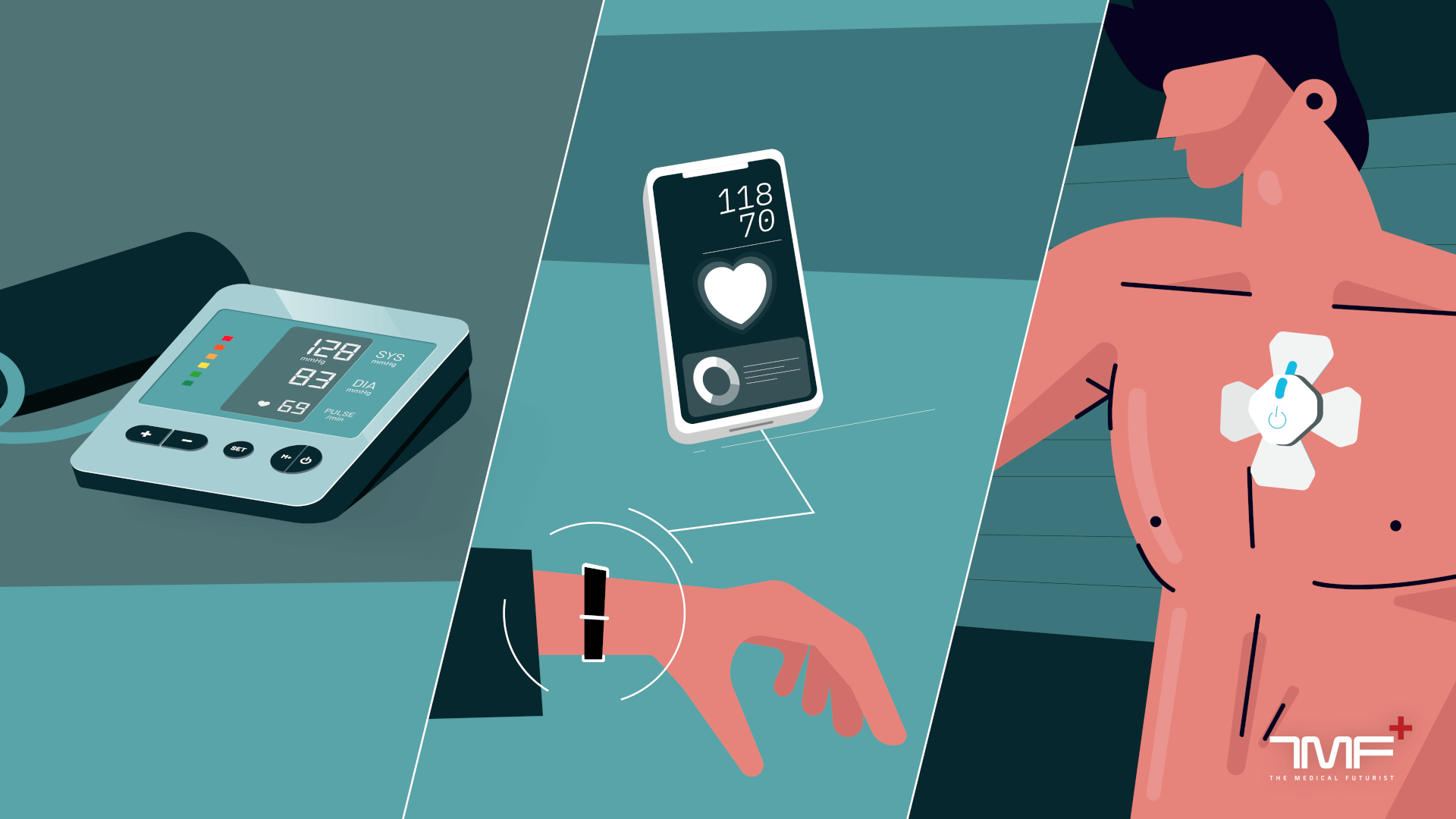
Upper-arm models dominate this list because they provide a larger cuff surface and a more familiar positioning routine. The iHealth Track, OMRON range, Oklar Upper Arm, WAMELPRI, Invaxe, and Dario all use an upper-arm format. The Oklar Wrist is smaller, but wrist positioning is less forgiving and requires close attention to posture and placement.
Choose a wrist model when portability or limited arm access is the deciding factor. For a regular home routine, an upper-arm cuff is usually easier to position consistently. A cuff that is too small or too large can make the result less useful, so measure the arm and compare it with the stated range before ordering.
A readable result from a correctly fitted cuff is more useful than a feature-packed monitor that is awkward to position.
Cuff fit
Cuff range is one of the most important specifications in this category. The iHealth Track covers 8.7 to 16.5 inches, the Oklar Upper Arm covers 8.7 to 15.7 inches, and the OMRON Platinum, Bronze, Iron, and Silver models cover 9 to 17 inches. The Invaxe also lists a 9 to 17 inch range. The Oklar Wrist covers 4.92 to 8.46 inches around the wrist.
The WAMELPRI and Dario listings do not specify cuff dimensions, so verify those details before buying. Do not assume that a wide display or a familiar brand guarantees a suitable fit. If your arm is outside the stated range, look for a compatible cuff rather than tightening the included one excessively.
Memory and user profiles
On-device memory matters when the monitor will be used away from a phone. The Dario Gen-2 stores 400 readings, while the Oklar Wrist stores 240 for two users, the Invaxe stores 199 per user, and the WAMELPRI stores 199 for two users. The Oklar Upper Arm stores 120 per user, and the iHealth Track stores 99.
The OMRON models vary considerably. Platinum holds 100 readings for each of two users, Silver stores 30, and Bronze stores 14. Bronze and Silver compensate with OMRON connect app storage, while the Iron's memory amount is not specified. Decide whether you need a long local history, app-based records, or simply the latest result.
App connectivity
Bluetooth is useful when readings need to be organized, shared, or viewed as a trend. iHealth Track connects to iOS and Android apps, OMRON Bronze, Platinum, and Silver connect to OMRON connect, and Dario Gen-2 uses the Dario app. The OMRON apps also integrate with Apple Health and Google Fit on the listed models that support them.
A connected monitor adds setup and a phone dependency. If you will not pair the device, choose a model with a strong local display and enough internal memory. The Invaxe, WAMELPRI, and Oklar Upper Arm make more sense for manual review than an app-first product whose main advantage is digital storage.
Display and controls
Large backlit screens are particularly helpful in bedrooms, dim rooms, and households where several people use the same device. WAMELPRI and Invaxe both use 4.5-inch backlit displays, while the Oklar models use backlit LED screens and the iHealth Track uses a large multi-color display.
One-button operation reduces the chance of getting lost in settings. The Oklar Upper Arm, WAMELPRI, and OMRON Iron emphasize that approach. The Oklar Wrist adds voice broadcast, which can help users with poor eyesight. More controls are justified when a device has multiple user profiles or advanced indicators, but a simple daily check rarely needs a complicated interface.
Frequently asked questions
Are upper-arm monitors better than wrist monitors?
Upper-arm monitors are usually easier to position consistently because the cuff sits around the upper arm. Wrist monitors can be useful for travel, limited arm access, or anyone who finds a standard cuff difficult to use. The Oklar Wrist is the portable option here, but careful positioning is especially important with that format.
How large should a blood pressure cuff be?
The cuff should match the circumference of the arm or wrist where it will be used. Several upper-arm models in this roundup fit 9 to 17 inch arms, while the iHealth Track reaches from 8.7 to 16.5 inches. Check the manufacturer's stated range rather than choosing by the monitor's body size.
Do I need Bluetooth in a blood pressure monitor?
No. Bluetooth is useful for storing unlimited readings, reviewing trends, and sharing reports, but it adds an app setup step. The iHealth Track, OMRON Bronze, OMRON Platinum, OMRON Silver, and Dario Gen-2 include connected features, while the WAMELPRI and Invaxe focus on their physical displays and internal memory.
What does an irregular heartbeat alert mean?
It means the monitor detected a pulse pattern it considers irregular during the measurement. It is not a diagnosis and does not replace a clinical evaluation. Models such as the iHealth Track, OMRON Platinum, OMRON Bronze, OMRON Iron, OMRON Silver, Invaxe, and Dario list irregular-rhythm detection.
Which monitor is easiest for two people to share?
Look for separate user profiles and enough memory. The Oklar Upper Arm stores 120 readings per user, the Oklar Wrist stores 240 readings for two users, and the Invaxe stores 199 readings per user. OMRON Platinum also has separate memory for two users, with 100 readings each.
Are the color indicators a medical diagnosis?
No. Color bands and hypertension indicators are quick reference tools built into the monitor. They can help users notice a result category, but they should not replace a clinician's interpretation or instructions about what to do with a reading.

The bottom line
The Best blood pressure monitor for most people is the iHealth Track. Its wide 8.7 to 16.5 inch cuff, large color display, two-button operation, 99-reading memory, and optional phone tracking give it the most balanced design in this group. Choose the OMRON Platinum instead when AFib Detection Technology, morning averages, dual-user records, and broader reporting matter more than a simpler setup.
The Oklar Wrist is the specialist choice for portability, while the Dario Gen-2 is the one to keep in mind when a long app-based history is central. For large numbers and manual review, the WAMELPRI and Invaxe make more sense than the smaller connected models.
If you are undecided, choose an upper-arm monitor with a cuff that fits first, then decide whether you need app storage or only a clear local display.
As an Amazon Associate we earn from qualifying purchases.