

A good acoustic amp has to do more than make a guitar louder. It needs to preserve the instrument's high-end detail, keep vocals separate from the guitar, and avoid turning a simple singer-songwriter setup into a tangle of pedals and cables. Battery operation matters too if your playing moves from the living room to a park or street corner.
The Best acoustic guitar amp for most players is the Fender Acoustasonic 40, thanks to its 40-watt output, microphone input, built-in reverb, and unusual whizzer cone speaker. The rest of this list covers portable battery amps, compact practice models, two-channel performers, and larger Fishman combos.
Comparison table
| # | Product | Award | Power and speaker | Channels | Best for |
|---|---|---|---|---|---|
| 1 | Fender Acoustasonic 40 | Best overall | 40 watts, 6-inch speaker with whizzer cone | Instrument and microphone | Singer-songwriters and small performances |
| 2 | Flatsons Crush20 | Best portable battery amp | 20 watts RMS, 5.5-inch speaker | Guitar and vocal | Outdoor playing and mobile practice |
| 3 | Fender Frontman 10G | Best for electric guitar crossover | 10 watts, 6-inch speaker | Single instrument | Electric guitar practice |
| 4 | Fender Acoustasonic 15 | Best simple Fender combo | 15 watts, 6-inch speaker | Instrument and microphone | Home use and intimate sets |
| 5 | COOLMUSIC 30W Bluetooth Amp | Best Bluetooth performer | 30 watts, 6.5-inch speaker | Two inputs | Backyards and casual performances |
| 6 | LEKATO JA-05G | Best ultra-compact practice amp | 5 watts | Single instrument | Travel and quiet practice |
| 7 | Fishman PRO-LBT-500 | Best full-featured performer | 60 watts | Two channels | Larger acoustic setups |
| 8 | Fishman Loudbox Micro | Best compact Fishman | 40 watts, 5.25-inch speaker | Instrument and microphone | Small venues and rehearsals |
| 9 | COOLMUSIC 20W Bluetooth Amp | Best tone-shaping controls | 20 watts, 8-inch woofer and 2-inch tweeter | Two inputs | Players who want three-band EQ |
| 10 | Flatsons FBA-10 | Best mini wireless amp | 10 watts | Single instrument | Portable electric guitar practice |
1. Fender Acoustasonic 40: Best Overall

Pros
- 40 watts gives it useful headroom for small performances
- Whizzer cone adds high-frequency detail
- Separate instrument and microphone inputs
- Built-in reverb on the instrument channel
Cons
- Larger and heavier than the battery-powered options
- No Bluetooth or rechargeable battery listed
Best for: singer-songwriters who need one dependable amp for guitar and vocals.
The Acoustasonic 40 is the amp we'd choose when the guitar needs to sound like a guitar rather than a generic amplified instrument. Its 40-watt output gives it more breathing room than the Acoustasonic 15, and the cabinet is still manageable at 10 pounds. It is a conventional plug-in combo, but that is part of its appeal: it is ready for rehearsals, home playing, and small acoustic sets without making battery management part of the routine.
Fender uses a 6-inch speaker with a supplementary whizzer cone attached to the voice coil. That unusual design is intended to extend the speaker's high-frequency response, which matters with the pick attack and string detail that can disappear through a less focused speaker. The result should suit acoustic-electric guitars that need some sparkle without relying on an elaborate effects setup. A built-in reverb on the instrument channel adds atmosphere without requiring a pedal.
The dual front-panel inputs are a major reason this model ranks first. One accepts an instrument through a standard quarter-inch jack, while the other accepts a microphone through XLR. That makes the Acoustasonic 40 a more practical solo-performer tool than the Frontman 10G or the smaller LEKATO models. The 9.8 by 17.6 by 15.5-inch cabinet is not tiny, but it gives the controls and speaker enough physical presence for a room rather than just a practice corner.
Its weakness is portability. The Flatsons Crush20 is much easier to carry outdoors, and the COOLMUSIC 30W adds Bluetooth and rechargeable operation. The Acoustasonic 40 also lacks the wireless playback features found elsewhere here, so it is not the obvious pick for practicing with backing tracks from a phone. Players who need battery power should skip it.
For a guitarist who wants clear amplification, a separate vocal channel, and enough output for modest performances, the Fender Acoustasonic 40 remains the most complete all-purpose choice. It is the one we'd keep for regular acoustic playing at home and outside the house.
2. Flatsons Crush20: Best Portable Battery Amp

Pros
- Independent guitar and vocal channels
- 20 watts RMS from a 5.5-inch full-range speaker
- Rechargeable battery rated for up to 8 hours
- Bluetooth 5.3 playback
- Lightweight 4.2-pound cabinet
Cons
- Two-band EQ is less precise than a three-band design
- Smaller speaker has less physical scale than larger combos
Best for: mobile singer-songwriters who need guitar, vocals, and backing tracks in one compact cabinet.
The Crush20 solves the most annoying part of outdoor acoustic playing: finding a power outlet. Its 4.2-pound cabinet has a carrying handle, a rechargeable 3000mAh battery, and a claimed playtime of up to 8 hours. That makes it far easier to move than the Fender Acoustasonic 40, while the 20-watt RMS rating gives it more presence than the tiny practice amps below.
This is a singer-songwriter amp first. The guitar and vocal channels are independent, so you can balance the instrument against a microphone instead of sending both through one shared control. Each channel has reverb, and the guitar and vocal tone can be shaped with a two-band bass and treble EQ. That is not as granular as the three-band controls on the COOLMUSIC 20W, but it is a sensible arrangement for quick adjustments during a performance.
The 5.5-inch full-range speaker is driven by a Class-D amplifier. Flatsons says the output can carry up to 200 feet in open-air conditions, though the practical result will depend on the environment, the guitar pickup, and how much competing sound is present. Wireless 5.3 connectivity supports phone playback with a stated 50-foot range, and play and pause controls sit on the amp itself. Those details make this more useful for backing tracks than the Fender Acoustasonic models.
The main compromise is speaker scale. A larger woofer and tweeter arrangement, such as the one in the COOLMUSIC 20W, can produce a more expansive sound, while the Fender Acoustasonic 40 has a more established acoustic-focused design. The Crush20's battery also introduces another thing to monitor before a set. Players who always perform near mains power and want the most polished acoustic response should look at Fender or Fishman instead.
For parks, patios, rehearsals, and small street performances, the Flatsons Crush20 has the right combination of portability and control. It is the strongest pick for someone who wants to sing and play without carrying a separate speaker, battery pack, and playback device.
3. Fender Frontman 10G: Best for Electric Guitar Crossover

Pros
- Familiar Fender control layout
- Gain, volume, treble, and bass controls
- Overdrive switch for electric guitar
- Closed-back cabinet emphasizes bass response
- Two-year limited warranty
Cons
- Designed for electric guitar, not acoustic performance
- No microphone input or battery operation
- 10-watt output limits larger-room use
Best for: players who own an electric guitar and only occasionally amplify an acoustic-electric instrument.
The Frontman 10G is the odd one out in this group, and it should be treated that way. It is an electric guitar combo with a 10-watt output and a 6-inch Fender Special Design speaker. If your main instrument is electric guitar and acoustic amplification is an occasional need, its straightforward controls and overdrive switch may make sense. It is not the amp we'd choose to preserve the natural character of an acoustic guitar.
The control set is aimed at shaping an electric rig. Gain and volume work with the overdrive select switch, while treble and bass let you adjust the overall voice. The closed-back cabinet is intended to produce a heavier bass response, which can be welcome for electric tones but is not automatically desirable for an acoustic-electric pickup. Acoustic guitars often need an amp that stays open and balanced through the upper midrange.
At 7.5 by 11.5 by 13.7 inches in the stated specifications, the Frontman 10G is compact enough for a bedroom. The product information also lists a weight of 11.7 pounds, while the dimensions shown elsewhere are more compact, so buyers should expect a small but not featherlight practice combo. Fender includes a two-year limited warranty, which adds some reassurance for a basic home amplifier.
Compared with the Fender Acoustasonic 15, the Frontman gives electric players more useful drive controls but loses the dedicated microphone channel, acoustic voicing, and chorus effect. The LEKATO JA-05G is much easier to carry and adds Bluetooth, while the Flatsons FBA-10 offers rechargeable operation. Anyone shopping specifically for an acoustic singer-songwriter setup should skip the Frontman.
This is a sensible crossover amp, not a specialist acoustic amp. Choose it when electric guitar is the priority and an acoustic-electric guitar only needs occasional volume during home practice.
4. Fender Acoustasonic 15: Best Simple Fender Combo

Pros
- Dedicated instrument and microphone channels
- Acoustic-focused 6-inch speaker
- Built-in chorus effect
- Headphone output for silent practice
- Two-year limited warranty
Cons
- 15 watts is less capable than the Acoustasonic 40
- No Bluetooth or rechargeable battery
- Weighs 13 pounds
Best for: acoustic players who want a simple plug-in combo for home use and small intimate sets.
The Acoustasonic 15 is the uncomplicated Fender option. It has enough control for a guitar and a microphone, but it does not ask the player to learn a complicated signal path. The 15-watt output suits home playing, songwriting sessions, and quieter gatherings. Its 13-pound weight means it is portable in the ordinary sense, though the battery-powered models are much easier to move frequently.
Its custom 6-inch Fender Special Design speaker is voiced for enhanced high-frequency response. That focus is useful for acoustic guitar because pick definition and the upper harmonics are central to the instrument's character. The instrument channel also includes chorus, giving the guitar a wider, more animated texture without an external pedal. A headphone output makes the amp more practical for late-night practice.
Two separate channels are the key feature. The instrument and microphone each have their own volume control, so a solo performer can establish a usable balance without an external mixer. It is less powerful than the Acoustasonic 40 and does not have that model's whizzer cone, but the basic arrangement is similar enough for players who do not need as much headroom.
The missing features are clear. There is no Bluetooth for backing tracks, no rechargeable battery, and no listed reverb. The Flatsons Crush20 is a better fit for wireless outdoor use, and the Fishman Loudbox Micro offers a more performance-oriented set of connections. The Acoustasonic 15 makes more sense when simplicity and a headphone output matter more than maximum flexibility.
For a first dedicated acoustic combo, this Fender is easy to understand and easy to live with. It is best suited to players who plug in, set two volumes, add a little chorus, and start playing.
5. COOLMUSIC 30W Bluetooth Amp: Best Bluetooth Performer

Pros
- 30-watt output with a 6.5-inch speaker
- Two instrument or microphone inputs
- Bluetooth playback
- Reverb and two-band microphone EQ
- Rechargeable battery with up to 5 to 8 hours of use
Cons
- Larger than the most portable battery amps
- Battery life varies with volume and charging takes 5 hours
- Controls are less focused than a dedicated acoustic performer amp
Best for: casual performers who want loud playback, two inputs, and wireless accompaniment.
The COOLMUSIC 30W is built around flexibility. Its 30-watt output and 6.5-inch speaker give it a bigger physical presentation than the Crush20, while the rechargeable design keeps it useful away from a wall outlet. A shoulder strap and compact wooden cabinet make it practical for travel, backyard sessions, and informal performances.
Two inputs can accept different sources such as a guitar and a microphone. The microphone channel has bass and treble adjustment plus reverb, which is enough to make a vocal sound less dry without adding a mixer. Bluetooth handles phone or tablet playback, so backing music can come through the same speaker as the live guitar and voice.
The battery is rated for 5 to 8 hours depending on volume after a listed 5-hour charge. That range is more realistic than treating battery duration as a fixed number, since louder playback will naturally reduce operating time. The amp can also run while connected directly to electricity, giving it a useful fallback for indoor sessions. A three-year replacement warranty is listed among the product features.
The compromise is refinement. The Fender Acoustasonic 40 has a more distinctive speaker design and a clearer acoustic-specific identity, while the Fishman PRO-LBT-500 offers more serious stage connectivity. The COOLMUSIC 30W is the more convenient choice for mixed use, but its broad feature set does not automatically make it the most controlled acoustic voice. Players who want precise tone shaping should consider the COOLMUSIC 20W instead.
This model fits the guitarist who wants one portable box for playing, singing, and listening. It is especially appealing when Bluetooth and battery power matter as much as the guitar channel itself.
6. LEKATO JA-05G: Best Ultra-Compact Practice Amp

Pros
- Extremely small 0.49-pound design
- Four built-in effects
- Bluetooth accompaniment
- Rechargeable battery rated for about 6 hours
- Simple plug-and-play operation
Cons
- Intended for electric guitar rather than acoustic amplification
- 5-watt speaker has limited room-filling ability
- Bluetooth does not support Bluetooth headphones or speakers
Best for: electric guitarists who need a tiny practice amp that can travel in a bag.
The JA-05G is almost the definition of a practice amp. Its listed dimensions are 4.7 by 2 by 4.7 inches, and the product information gives a weight of about 0.49 pounds. It can be carried in a backpack, attached to a guitar, or left on a desk without taking over the space. That convenience is its central advantage.
LEKATO includes four effects: clean, distortion, overdrive, and reverb. Those modes are designed for electric guitar, and they give a player more variety than a plain clean-only mini amp. Bluetooth audio can play accompaniment from a phone or another Bluetooth device, although the feature is for sending music to the amp, not for routing sound to Bluetooth headphones or another speaker.
The 5-watt speaker is described as adequate for practice, and the rechargeable battery is rated for about 6 hours after a full charge. A quarter-inch plug keeps the connection simple. The product recommends a 5V 2A charger and warns against chargers above 5V, a detail worth following because the charging requirement is more specific than the casual USB experience many players expect.
For acoustic guitar, this is a specialist compromise. It lacks the vocal channel and acoustic-focused speaker design of the Fender Acoustasonic 15, and the Flatsons Crush20 is a much better portable choice for acoustic-electric guitar and singing. Even the FBA-10 has more output and a more substantial control set. Acoustic players should skip the JA-05G unless they specifically want a tiny electric practice unit.
For electric guitarists who prioritize size above everything else, the LEKATO is a clever little companion. It belongs on this list as a portable crossover option, not as the main acoustic recommendation.
7. Fishman PRO-LBT-500: Best Full-Featured Performer

Pros
- 60 watts and two channels
- Reverb and chorus effects
- Bluetooth playback
- Microphone, instrument, and auxiliary inputs
- Balanced DI output and phase control
Cons
- Heaviest amp in this roundup
- Large cabinet is not suited to frequent carrying
- More controls than a casual home player may need
Best for: performers who need strong output, multiple connections, and direct integration with a larger sound system.
The PRO-LBT-500 is the serious stage-oriented option here. Its 60-watt output and two-channel layout give it more authority than the smaller Fender and portable Flatsons models. It is built for a player who may connect a guitar, microphone, playback device, and external sound system rather than someone who only needs a little volume in a bedroom.
Fishman lists reverb and chorus among the effects, with master volume and phase control included. Phase control can help manage the relationship between the amplified signal and the acoustic guitar's natural sound, particularly in situations where feedback becomes a concern. The two-channel design also lets a singer-songwriter keep guitar and vocal levels separate.
Connectivity is a major strength. There is a quarter-inch instrument input, a microphone input, quarter-inch and eighth-inch auxiliary inputs, Bluetooth, and a DI output. That combination gives it more routing flexibility than the Acoustasonic 40 and more stage utility than the COOLMUSIC 30W. A DI output is especially useful when the amp needs to feed a venue's larger sound system.
The cost of that capability is physical bulk. The product information lists dimensions of 16 by 26 by 16 inches and a weight of 24.26 pounds, while the feature list gives 21.2 pounds. Either figure places it well above the portable options. Players who want an amp for occasional home practice should choose the Fishman Loudbox Micro or Fender Acoustasonic 15 instead.
For an active performer, the PRO-LBT-500 offers the broadest control and connection set in the group. It is the pick for players who would rather have stage-ready inputs available than carry the lightest possible cabinet.
8. Fishman Loudbox Micro: Best Compact Fishman

Pros
- Two channels for instrument and microphone
- Digital reverb and chorus
- Balanced XLR DI output
- Auxiliary input for playback
- Compact Fishman design
Cons
- 5.25-inch speaker is smaller than the larger Fishman model
- No listed Bluetooth or rechargeable battery
- 12.33-pound weight is substantial for its size
Best for: acoustic players who need Fishman connectivity in a smaller rehearsal and performance combo.
The Loudbox Micro takes the useful parts of a performance amp and puts them in a smaller cabinet. It has two channels, one for an instrument and one for a microphone, along with a master volume. That arrangement makes it more useful for a singer-songwriter than a basic single-channel practice amp, without reaching the size of the PRO-LBT-500.
Fishman includes digital reverb and chorus, so the instrument can gain space and movement without extra pedals. An eighth-inch auxiliary input handles playback, which is useful for rehearsal tracks. The balanced XLR DI output is the feature that separates this from many compact combos. It allows the amplified setup to connect more cleanly to a larger sound system.
The listed speaker size is 5.25 inches, and the product title gives a 40-watt rating. The cabinet measures 8.1 by 10.4 by 9.5 inches, with a listed weight of 12.33 pounds. Those dimensions make it easier to place in a small room than the PRO-LBT-500, though the weight means it is not in the same grab-and-go class as the Crush20.
Bluetooth and battery operation are not listed, so the COOLMUSIC 30W and Flatsons Crush20 are more convenient for wireless outdoor use. The Fender Acoustasonic 40 is also a stronger choice if a whizzer cone and a more traditional Fender acoustic combo appeal to you. The Loudbox Micro earns its place through its DI output and two-channel design.
Choose this model when a compact cabinet still needs to behave like a proper performance tool. It is a particularly sensible fit for rehearsals, small acoustic sets, and players who expect to connect to a venue system.
9. COOLMUSIC 20W Bluetooth Amp: Best Tone-Shaping Controls

Pros
- Three-band bass, mid, and treble EQ
- Separate guitar and microphone inputs
- Reverb and chorus
- Bluetooth, auxiliary, USB, and headphone connections
- 8-inch woofer with 2-inch tweeter
Cons
- Large 16-pound cabinet
- No rechargeable battery listed
- More complicated than a basic home combo
Best for: players who want detailed EQ control and several ways to connect instruments and playback sources.
The COOLMUSIC 20W is the choice for players who listen closely to the tonal balance of an acoustic-electric guitar. Its 20-watt amplifier feeds an 8-inch woofer and a 2-inch tweeter, a speaker arrangement that should give the cabinet more low-end weight and high-frequency reach than the small single-speaker designs. That makes it a more substantial home or small-performance amp than its wattage alone suggests.
The three-band EQ is the main reason to choose it. Bass, mid, and treble controls allow more targeted corrections than the two-band systems on the Crush20 and the COOLMUSIC 30W. You can reduce boom, bring out vocal presence, or soften a bright pickup without changing every part of the sound at once. Reverb and chorus add the usual acoustic effects, and the two-channel layout accepts both guitar and microphone.
Its connection panel is unusually broad. Bluetooth, phone or CD/MP3 input, USB, headphone output, and DI output are all listed, giving it a place in practice, rehearsal, and performance setups. Those inputs are useful when a guitarist wants to use the amp as a small playback system as well as an instrument amp. The cabinet is listed at 15 by 14 by 13 inches and 16 pounds, so it is not a casual one-hand carry.
The Fender Acoustasonic 40 is more focused and lighter, while the Fishman Loudbox Micro has a more compact performance design and balanced DI output. The COOLMUSIC 20W wins on tone-shaping flexibility, but its extra controls and larger cabinet may be unnecessary for a player who simply wants to plug in and play. It is also not listed as rechargeable, unlike the two portable COOLMUSIC and Flatsons options.
This is the amp for a guitarist who wants to adjust the sound rather than accept a fixed voicing. Choose it when three-band EQ and connection variety matter more than a small footprint.
10. Flatsons FBA-10: Best Mini Wireless Amp

Pros
- 10-watt analog output
- Clean and drive tone modes
- Wireless audio and AUX input
- USB-C charging
- Compact 580-gram design
Cons
- Designed mainly for electric guitar
- Drive mode can produce background hiss
- Single-channel layout
Best for: electric guitarists who want rechargeable wireless practice in a very small cabinet.
The FBA-10 is a small wireless practice amp with a more substantial output rating than the LEKATO. Flatsons lists 10 watts, a compact 152 by 75 by 99mm body, and a weight of 580 grams. It is easy to carry, and USB-C charging makes it simpler to fit into a modern portable setup than an amp that relies on a proprietary power arrangement.
Its two tone modes are clean and drive. Gain and tone controls let an electric guitarist move from a plain practice sound toward a more aggressive voice, while the analog design is specified with a frequency response of 100Hz to 20kHz at plus or minus 3dB. Wireless audio can stream from a phone, tablet, or laptop, and an AUX input and headphone jack provide additional practice options.
The battery is rated for up to 6 hours of playtime. That is enough for several practice sessions, but the product notes that a battery can discharge during long storage, so a full charge before first use is sensible. Flatsons also advises avoiding low-battery or charging operation when using the drive channel because hiss can become more noticeable. That warning is useful and should shape expectations.
Compared with the LEKATO JA-05G, the FBA-10 has more output, USB-C charging, and a more detailed clean or drive setup, but the LEKATO offers four effects in a similarly compact format. The Flatsons Crush20 is the obvious step up for acoustic guitar because it has dedicated guitar and vocal channels and a full-range speaker. Acoustic players should skip the FBA-10 unless they mainly want a portable electric practice amp.
For electric guitar, this is a capable little travel companion. Its clean mode can be useful for basic acoustic pickup practice, but it is not a substitute for an acoustic-focused combo.
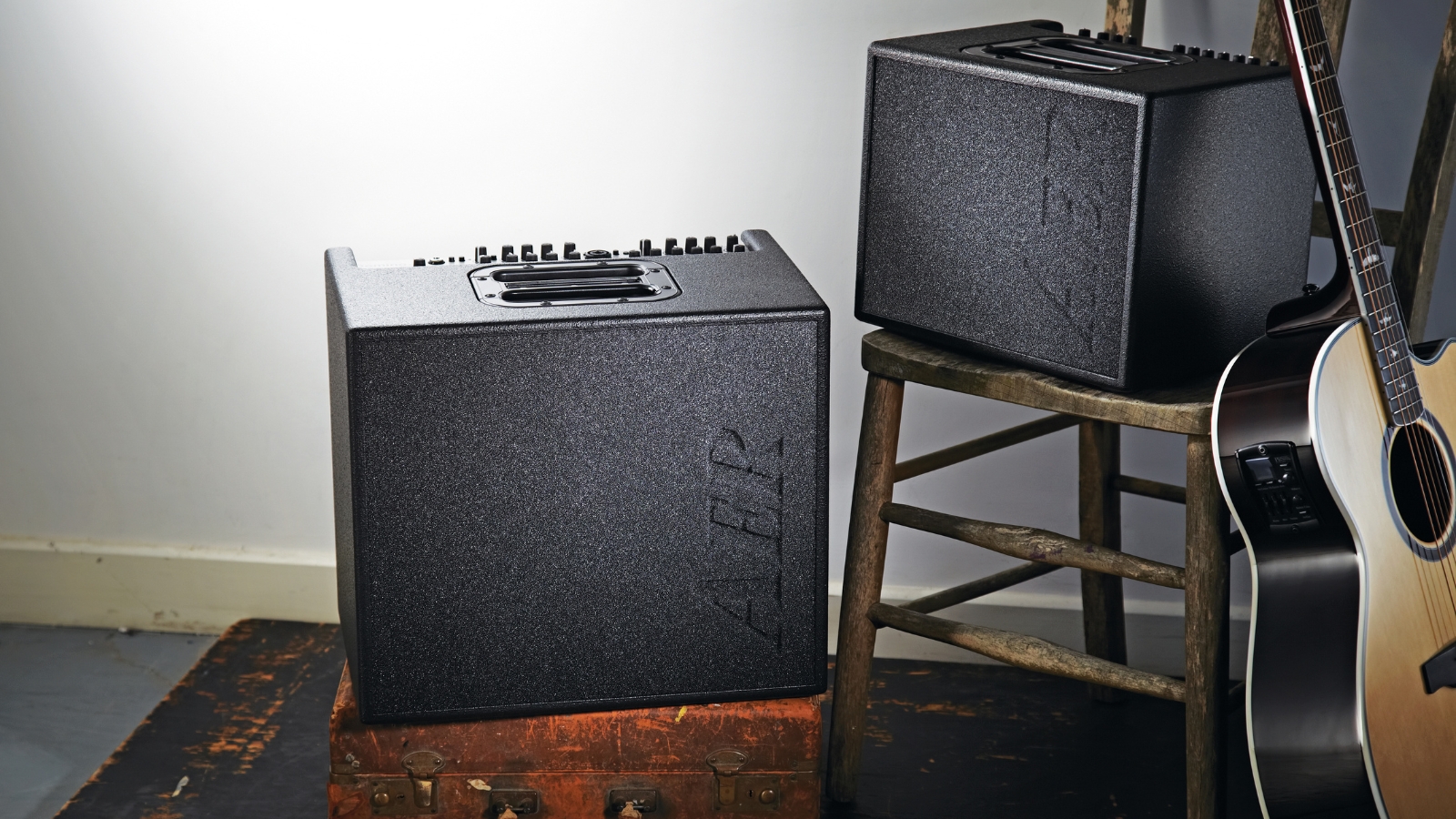
How to choose best acoustic guitar amp
The right amp depends on how many people need to hear you, how natural the guitar should sound, and whether you need a microphone or battery power.
Speaker design
Speaker size and design shape the amp's sense of fullness, detail, and projection. A 5.25-inch or 5.5-inch speaker keeps a cabinet compact, while an 8-inch woofer and 2-inch tweeter can create a broader sound. The Fender Acoustasonic 40 adds a whizzer cone to its 6-inch speaker for extra high-frequency response.
A small speaker is fine for close practice, but players performing with vocals or other instruments should look for more headroom and a speaker arrangement that does not become thin when turned up.
Power and headroom
Wattage is not a complete measure of loudness, but it indicates how much room an amp has before its output begins to feel strained. The 5-watt LEKATO is a practice unit, while the 40-watt Fender Acoustasonic 40 and Fishman Loudbox Micro have more room for rehearsals and small performances. The 60-watt Fishman PRO-LBT-500 is aimed at larger acoustic setups.
For acoustic guitar, clean headroom matters more than a headline wattage number.
Battery-powered amps can be excellent outdoors, but a plug-in combo may offer steadier performance for long rehearsals and stage use.
Channels and microphone inputs
A dedicated microphone channel is essential for a singer-songwriter who wants the amp to handle both voice and guitar. The Acoustasonic 15, Acoustasonic 40, Crush20, and Fishman models all separate those sources. Single-channel mini amps are better suited to guitar practice.
Separate controls let you balance the vocal and instrument without a mixer. Check for the input type too, since an XLR microphone connection is more suitable for a standard vocal microphone than relying on an adapter.
EQ and effects
Acoustic amps commonly include reverb and chorus, but the controls vary. A two-band bass and treble EQ is quick to adjust, while three-band EQ adds a mid control that can help manage nasal, boxy, or overly soft pickup tones. The COOLMUSIC 20W offers the most detailed EQ arrangement here.
Reverb can add depth to a dry pickup sound, while chorus creates a wider effect. Players who already own pedals may care less about built-in effects than someone assembling a minimal setup.
Portability and power
A rechargeable battery changes where an amp can be used. The Flatsons Crush20, COOLMUSIC 30W, LEKATO JA-05G, and Flatsons FBA-10 are designed for portable use, with battery durations ranging from about 6 hours to up to 8 hours depending on the model and conditions.
Cabinet weight matters just as much as battery capacity. A 4.2-pound amp is easier to carry to a park than a 24-pound stage combo. For a broader look at choosing an instrument before selecting amplification, the body size and pickup choices that shape an acoustic guitar are useful to understand.
Connections
Bluetooth is useful for backing tracks, but it does not replace every physical connection. Auxiliary inputs handle playback devices, headphone outputs support quiet practice, and DI outputs let the amp feed a venue system. The Fishman PRO-LBT-500 and Loudbox Micro are strongest for expanded setups.
If your playing includes vocals, looped accompaniment, or a larger PA, map out every source before buying. A basic guitar input may be enough for a bedroom, but it can become limiting quickly in a live arrangement.
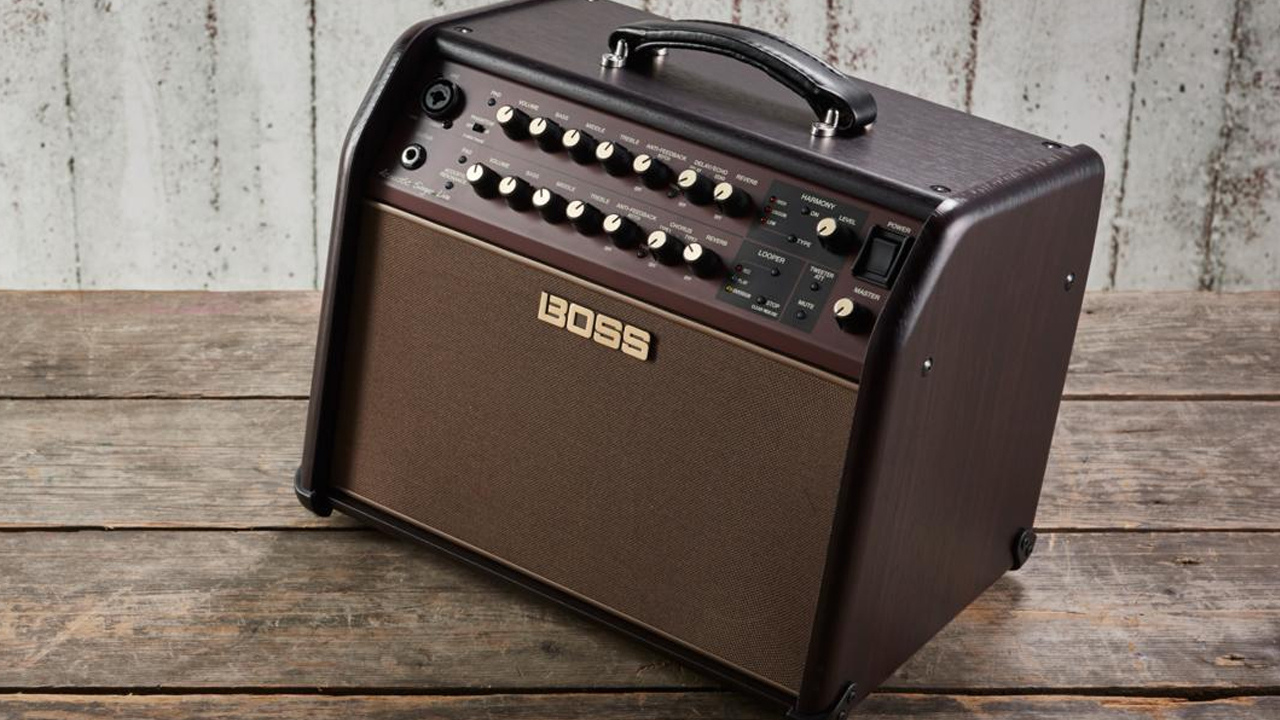
Frequently asked questions
Can an acoustic guitar use an electric guitar amp?
Yes, an acoustic-electric guitar can produce sound through an electric guitar amp, but the result may be colored or less natural. Electric amps often emphasize drive, gain, and a closed-back bass response rather than the open high-frequency detail associated with acoustic amplification. The Fender Frontman 10G is better treated as an electric guitar crossover option than a dedicated acoustic amp.
Do I need a microphone input?
You need one if you plan to sing through the amp. A dedicated microphone channel lets you control vocal and guitar levels separately, which is much more useful than running both through one input. The Fender Acoustasonic 40, Fender Acoustasonic 15, Flatsons Crush20, and Fishman models all support this kind of setup.
Is a battery-powered acoustic amp worth choosing?
Battery power is useful for outdoor practice, street performance, parks, and locations without convenient outlets. It adds another charging task, and the stated playtime can change with volume. If you mostly play at home or on a stage with power available, a plug-in combo may be simpler.
What wattage is enough for acoustic guitar?
A small 5-watt amp can be enough for personal practice, while 15 to 20 watts can suit home playing, rehearsals, and intimate sets. Larger spaces or performances with other musicians benefit from more clean headroom, such as the 40-watt and 60-watt models here. Room size, speaker design, and whether vocals are also amplified matter as much as the wattage number.
Does Bluetooth replace an auxiliary input?
No. Bluetooth is convenient for wireless playback, but an auxiliary input can be more predictable when connecting a particular device or avoiding wireless pairing. Some amps also include USB, headphone, or DI connections, so check the full panel rather than assuming Bluetooth covers every use.
Should an acoustic amp have chorus and reverb?
Neither effect is mandatory, but both can make a pickup sound more spacious. Reverb adds depth, while chorus creates a wider, more animated texture. If you already use pedals, prioritize clean headroom, speaker quality, channels, and the inputs you actually need.
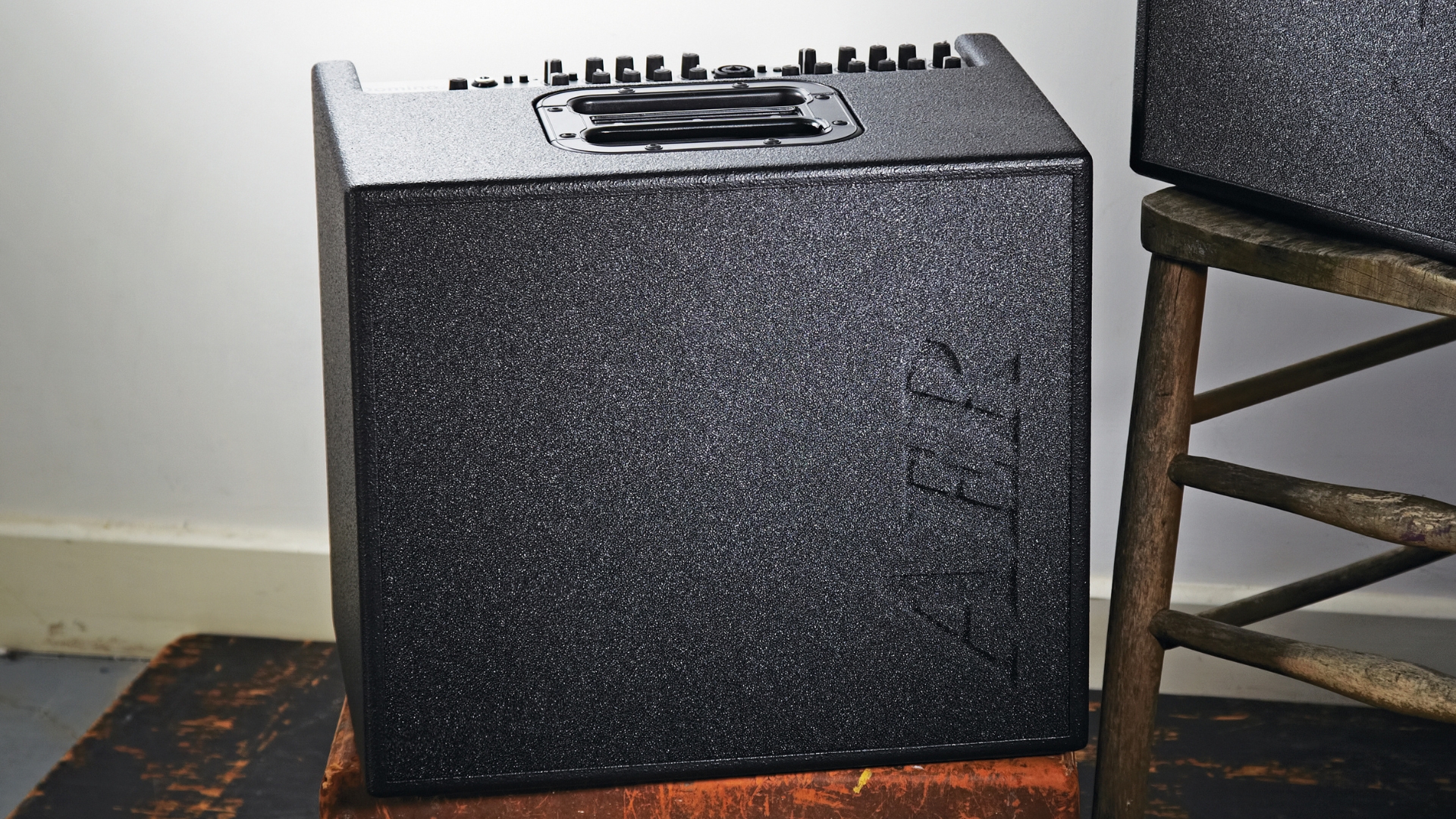
The bottom line
The Best acoustic guitar amp for most players is the Fender Acoustasonic 40. Its 40 watts, whizzer cone speaker, instrument reverb, and separate XLR microphone input make it the most balanced option for home playing, rehearsals, and small performances. The Flatsons Crush20 is the better pick for outdoor use because its 4.2-pound body, rechargeable battery, Bluetooth, and independent guitar and vocal channels are unusually practical.
Choose the Fishman PRO-LBT-500 when you need maximum connection flexibility and stronger stage output, or the Fishman Loudbox Micro when a smaller cabinet with DI output makes more sense. Players focused on electric guitar practice should choose the LEKATO JA-05G or Flatsons FBA-10 instead of forcing a mini electric amp into an acoustic role.
If you are undecided, buy the Fender Acoustasonic 40 for the broadest acoustic setup, or the Flatsons Crush20 when portability matters most.
As an Amazon Associate we earn from qualifying purchases.