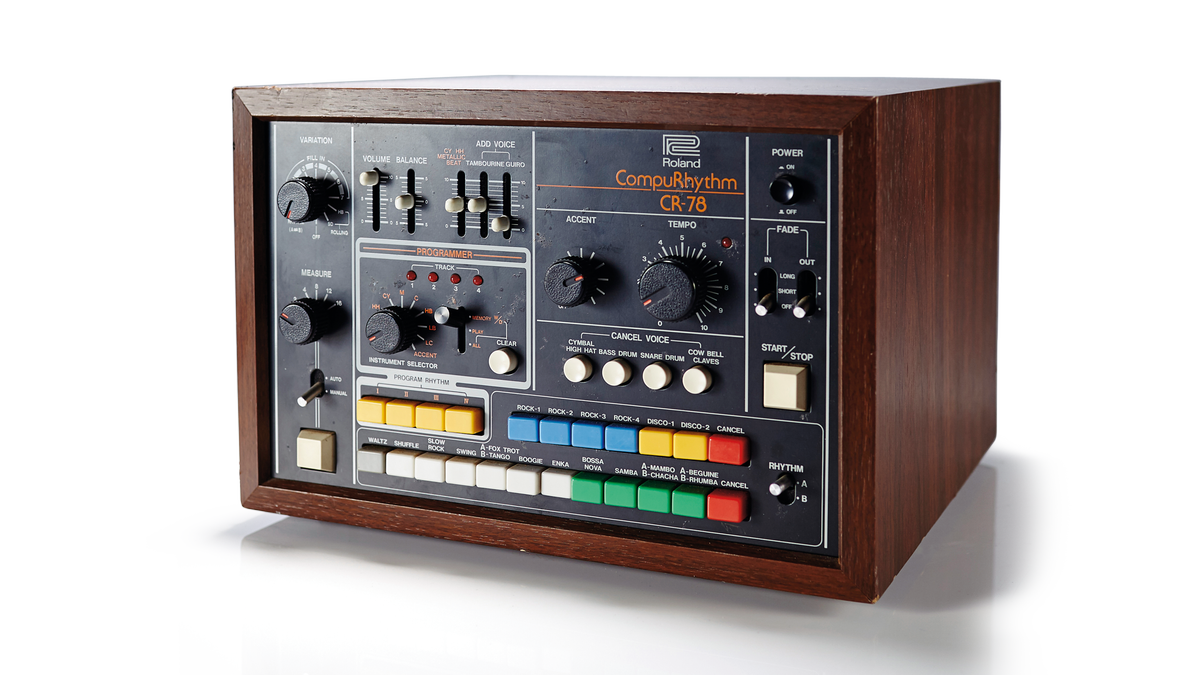

A drum machine should make the next beat obvious, not bury it under menus. The useful divide is between hands-on pattern boxes, sample-driven production tools, compact practice machines, and MIDI controllers that need a computer to make sound. The Best drum machine for one musician may be completely wrong for another.
We ranked these ten picks by the capabilities that matter when writing, performing, practicing, and shaping rhythm parts. The Roland TR-8S Rhythm Performer is our top pick, with the Roland AIRA Compact T-8, Arturia DrumBrute Impact, and the highly advanced Roland TR-1000 covering very different kinds of beat making.
Comparison table
| # | Product | Award | Sounds | Sequencing | Best for |
|---|---|---|---|---|---|
| 1 | Roland TR-8S Rhythm Performer | Best overall | TR models, samples, effects | 128 kits | Producers who want flexibility |
| 2 | Roland AIRA Compact T-8 | Best portable | TR-808, TR-909, TR-606, TB-303 bass | 64 patterns, up to 32 steps | Mobile beat making |
| 3 | Arturia DrumBrute Impact | Best hands-on analog | Analog drum sounds | Song mode, pattern chaining | Live performance |
| 4 | Behringer RD-78 Classic | Best simple classic-style machine | 15 analog drum sounds | 16-step sequencer | Straightforward production |
| 5 | Medeli MR101S | Best for practice | 48 drum kits | 100 preset patterns | Hands-free practice |
| 6 | Behringer LM Hybrid | Best sampling-focused pick | Hybrid sampling engine | Not specified | Sample-based setups |
| 7 | MOOER Drum Machine X2 | Best guitar pedal format | 121 grooves, 11 styles | 11 banks, 7 slots each | Guitarists and bassists |
| 8 | Stylophone Beat | Best compact toy-style machine | 4 drum kits, 4 bass sounds | Multiple pattern recording | Casual portable play |
| 9 | Donner Starrypad | Best MIDI pad controller | Depends on connected software | DAW-based | Computer music makers |
| 10 | Roland TR-1000 | Best for deep sound design | Analog, ACB, FM, VA, PCM, samples | Advanced TR-REC | Professional production rigs |
1. Roland TR-8S Rhythm Performer: Best Overall

Pros
- Authentic modeled TR-808, TR-909, TR-707, TR-727, TR-606, and CR-78 sounds
- Combines modeled drums, samples, and effects
- 128 kits keep projects organized
- Per-instrument effects are saved with each kit
Cons
- Its deep editing options take time to learn
- Larger than the compact T-8
- Sample management adds another layer to the workflow
Best for: producers who want classic Roland rhythm sounds without being limited to them.
The TR-8S is the machine we would put at the center of the widest range of setups. It feels focused enough for tapping out a pattern quickly, yet it has the sound design headroom to stay useful after the first few sessions. The appeal is not just its collection of classic sounds. It lets you combine those sounds with samples and effects, so a familiar kick pattern can become part of a much more personal kit.
Roland includes circuit-modeled versions of the TR-808, TR-909, TR-707, TR-727, TR-606, and CR-78, along with modified versions. That range covers plenty of vintage drum-machine territory before you even load a sample. The SD card slot accepts mono or stereo sounds, while controls for decay, tuning, sample start points, speed, and direction make imported material more than a static preset.
The 128 kits are useful because they turn a broad sound palette into something manageable. Effects can be assigned to individual instruments, such as delay on a rim shot, overdrive on a kick, or filtering on toms and cymbals. Instrument and master effects settings are saved with each kit, which makes the TR-8S much easier to take from writing to performance than a machine that requires rebuilding a sound every time. The free TR-EDITOR adds a graphical workflow for people who prefer arranging and organizing away from the front panel.
The Roland AIRA Compact T-8 is easier to carry and quicker for small sketches, while the Roland TR-1000 goes much deeper for large production systems. The TR-8S sits between them with a more approachable layout and a genuinely broad range of sounds. Its weakness is the learning curve created by all that flexibility. Skip it if you want only a few immediate analog controls. For a producer who wants one dependable rhythm hub, this remains the most convincing all-rounder.
2. Roland AIRA Compact T-8: Best Portable

Pros
- TR-808, TR-909, and TR-606 drum sounds
- Includes TB-303 bass sounds
- Six rhythm tracks and up to 32 steps
- USB-C audio and MIDI interface
- Probability, velocity, sub-step, and last-step control
Cons
- Smaller controls are less comfortable for extended sessions
- Less expansive than the TR-8S for sample-based work
- Compact format limits the amount of hands-on space
Best for: musicians who want recognizable Roland rhythm and bass sounds in a genuinely small setup.
The T-8 makes a strong case for leaving the studio desk behind. It is small enough to become a sketchbook for beats, but its sequencing tools are more serious than the size suggests. The combination of TR drums and TB-303 bass gives it a musical identity immediately, especially for acid lines, compact electronic arrangements, and quick rhythm ideas.
Its classic TR-REC sequencer supports 64 user patterns, with each pattern reaching up to 32 steps. That is enough room for moving beyond a one-bar loop without forcing you into a complicated arrangement system. Probability, sub-step, last-step, and velocity controls add variation to patterns that might otherwise become repetitive. Real-time recording, step loop, mute, fill, reload, and pattern shift make it suitable for performance as well as programming.
The built-in effects include delay, reverb, overdrive, and sidechain compression. The T-8 also provides audio, MIDI, and sync connections, while USB-C supplies a class-compliant audio and MIDI interface without drivers. Those details matter when the machine has to serve as both a standalone sketch tool and a small computer-based recording device.
The Roland TR-8S Rhythm Performer offers more room for samples and kit editing, but it is less pocketable. The Stylophone Beat is even smaller and more playful, though it does not approach the T-8's sequencing depth. The T-8's compromise is its cramped physical layout, particularly when you are trying to make detailed changes for a long session. It suits the musician who values portability, fast pattern creation, and classic Roland character above expansive sound-library management.
3. Arturia DrumBrute Impact: Best Hands-On Analog

Pros
- Immediate analog drum-machine workflow
- Separate accent for each drum
- Song mode chains patterns
- Color sound shaping works across the instruments except cowbell
- Large format encourages live interaction
Cons
- Less flexible than sample-based machines
- Cowbell is excluded from the Color control
- Heavier and larger than compact alternatives
Best for: performers who want to shape a physical groove in real time rather than browse through deep menus.
The DrumBrute Impact is the pick for people who believe a rhythm machine should invite both hands. Its layout gives the instrument a performance-first personality, with the important controls close enough to encourage muting, accenting, and reshaping a pattern while it runs. It is less of a general-purpose sample workstation than the TR-8S, but that narrower focus is part of its appeal.
Per-drum accent is a particularly useful feature. Rather than treating emphasis as a single global effect, it lets you give individual parts more presence within a groove. That can make a basic pattern feel less static without requiring a complicated arrangement. It is the kind of control that rewards small changes and makes live programming feel connected to the sound.
The Color control adds another layer of shaping across the instruments, with the stated exception of the cowbell. That gives the machine a way to move beyond its initial analog character while keeping the front-panel process direct. Song mode can chain patterns, so the DrumBrute Impact is not restricted to endlessly repeating one section.
The Behringer RD-78 Classic is smaller and more stripped back, while the Roland AIRA Compact T-8 brings more modern sequencing tricks into a smaller enclosure. The DrumBrute Impact wins when physical access and performance gestures matter more than sample imports. Its weakness is the limited information available here about its sound count and connectivity, so it is not the first recommendation for someone building a huge sample-driven palette. It is best for the player who wants to make arrangement decisions with fingers, not menus.
4. Behringer RD-78 Classic: Best Simple Classic-Style Machine

Pros
- 15 authentic analog drum sounds
- 34 rhythm presets
- Straightforward 16-step sequencer
- Compact 2.02-pound design
- Designed for studio and live use
Cons
- Smaller sound set than the Roland TR-8S
- Less sequencing detail than the AIRA Compact T-8
- The available information does not specify advanced connectivity
Best for: beginners and performers who want a compact, direct analog rhythm box.
The RD-78 Classic takes the uncomplicated route. It offers 15 drum sounds and 34 rhythm presets, then puts a 16-step sequencer at the center of the experience. That makes it easier to understand than a machine built around multiple engines, sample management, and several layers of effects. You can start with a preset, change the pattern, and concentrate on the groove rather than the architecture behind it.
The 16-step format is familiar for a reason. It gives each beat a clear place, makes rhythmic experimentation approachable, and works well for short loops that need to be edited quickly. The preset rhythms also provide a starting point for live playing or songwriting. They are not a replacement for a deep arrangement system, but they can remove the blank-page problem when you need an idea immediately.
Its physical design is compact at 15.5 inches long, 7.75 inches wide, and 3.62 inches high, with a listed weight of 2.02 pounds. Those dimensions make it easy to keep within reach without taking over a small desk. Behringer also describes it as suitable for studio and live use, which matches the appeal of a simple control surface that can be understood quickly.
The Arturia DrumBrute Impact offers more performance-oriented shaping, and the Roland TR-8S Rhythm Performer gives you a much larger sound and sample ecosystem. The RD-78 wins when those extra layers would distract from writing a beat. Its limitation is clear: musicians seeking detailed sound design or complex pattern variation should move up the list. For a newcomer who wants classic-style analog rhythm with little friction, it is the more sensible starting point.
5. Medeli MR101S: Best for Practice

Pros
- 16 touch-sensitive finger pads
- 48 drum kits
- 100 preset drum patterns
- Included foot pedal supports hands-free playing
- USB-C or battery power
Cons
- Preset-focused design offers less sound-design detail
- White finish may not suit every setup
- The supplied information does not specify pattern editing depth
Best for: drummers, songwriters, and casual players who need a broad set of ready-made rhythms.
The MR101S is built around access rather than synthesis. Its 16 touch-sensitive finger pads make it possible to trigger sounds directly, while 48 drum kits and 100 preset patterns provide plenty of material to play along with. That combination points toward practice, rehearsal, and casual beat making rather than detailed studio programming.
The included foot pedal is the feature that separates it from most of the other products here. Hands-free control is useful when both hands are occupied with an instrument, and it makes the MR101S a more practical companion for rehearsing parts. It also changes the feel of the unit from a small tabletop programmer into something that can participate in a playing routine.
Power flexibility helps with placement. The MR101S can run through USB-C or batteries, so it does not have to remain beside a fixed outlet. The feature set does not specify the exact battery type, battery life, audio connections, or editing system, so buyers should not assume it behaves like a full production sequencer.
The MOOER Drum Machine X2 is better suited to guitarists who want foot-controlled grooves and fills, while the Donner Starrypad is more useful when a computer and DAW are already part of the setup. The MR101S is the simpler choice for someone who wants patterns ready to play and a pedal included. Skip it if your main goal is sculpting individual drum voices or constructing elaborate song arrangements from scratch.
6. Behringer LM Hybrid: Best Sampling-Focused Pick

Pros
- Hybrid sampling design
- Broad desktop footprint for studio use
- Sturdy 7.14-pound form factor
- Distinct alternative to purely analog machines
Cons
- The listed feature information is unusually sparse
- Sequencer capabilities are not specified
- Larger and heavier than compact options
Best for: musicians who specifically want a hybrid sampling approach and are prepared to investigate the workflow before buying.
The LM Hybrid is the hardest product in this group to place because the available information gives us one defining fact: it is a hybrid sampling drum machine. That is still meaningful. Sampling opens a different creative path from the modeled TR sounds in the Roland units or the analog emphasis of the RD-78 Classic and DrumBrute Impact.
Its physical proportions suggest a permanent studio position more than a travel setup. It measures 18.86 inches long, 10.39 inches wide, and 2.87 inches high, and its listed weight is 7.14 pounds. That substantial footprint can be useful when a machine needs to stay stable among other gear, but it makes the LM Hybrid less appealing for musicians who regularly pack up their setup.
The limitation is the lack of published detail in the supplied listing. It does not specify the number of sounds, sample memory, sequencing modes, effects, connections, or pattern capacity. We cannot responsibly fill in those gaps. That makes this a product to research carefully rather than a blind recommendation based on the word “hybrid” alone.
The Roland TR-8S Rhythm Performer is easier to recommend for mixed modeled and sampled work because its sample import and effect features are clearly described. The Roland TR-1000 is the more ambitious choice for deep sample manipulation and multiple synthesis engines. The LM Hybrid belongs on this list for its sampling identity, but buyers who need known sequencing and connection details should choose one of those better-documented alternatives.
7. MOOER Drum Machine X2: Best Guitar Pedal Format

Pros
- 121 built-in grooves across 11 styles
- 11 customizable song banks
- Seven rhythm slots per bank
- Fill function and tap tempo
- Dual footswitch control
Cons
- Designed around groove playback rather than full drum synthesis
- Less suitable for detailed studio sound design
- Requires a 9V DC power connection
Best for: guitarists and bassists who want rhythm support without adding a tabletop machine.
The MOOER X2 makes the most sense when the drummer is supporting another instrument. It is shaped like a pedal, uses footswitches for control, and focuses on getting a groove running while you play guitar or bass. That is a very different job from the TR-8S, but for practice and live accompaniment it may be the more natural format.
The built-in library contains 121 grooves across 11 music styles, with 11 variations per genre. That gives the X2 a wider rhythmic vocabulary than a basic metronome or a handful of fixed loops. The seven rhythm slots in each of its 11 customizable song banks provide a way to organize favorite grooves and tempos for a set or practice routine.
Four dedicated knobs handle speed, genre, level, and pattern, while an EQ control helps adapt the output to different systems. The Fill function brings rhythmic variations into a performance, and tap tempo lets you set speed quickly. Dual footswitches handle on and off plus groove scrolling, with support for an external footswitch when you want more control without reaching down.
Stereo quarter-inch inputs and outputs make the pedal fit naturally into an instrument rig, and an external control output expands its operation. It uses the included 9V DC adapter, and editor software handles preset management, firmware updates, and deeper customization. The Medeli MR101S is better for pad playing and hands-free practice with its included pedal, but the X2 is more focused for guitar and bass. Skip it if you want to program individual hits from scratch. Choose it when keeping your hands on the instrument matters most.
8. Stylophone Beat: Best Compact Toy-Style Machine

Pros
- Four drum kits and four bass sounds
- Stylus-based compact format
- Records multiple layers and patterns
- Click track and tempo lock
- Built-in speaker and headphone connection
Cons
- Small sound selection
- Batteries are not included
- Less capable for serious multi-part production
Best for: beginners, children, and musicians who want a playful rhythm sketchpad.
The Stylophone Beat is the most approachable object here. It is small, uses a stylus interface, and is designed to make rhythm feel immediate rather than technical. Four drum kits and four bass sounds keep the palette limited, but that can be an advantage when a beginner needs to focus on timing and layering instead of comparing hundreds of sounds.
It can record multiple layers, mute sounds, and record multiple patterns. Those functions give it more musical range than a simple sound toy. The click track and tempo lock are especially useful for learning how parts fit together, while the built-in speaker lets you play without setting up an amplifier or audio interface.
Wired headphones can be connected for quieter use. Power comes from three AA batteries, which are not included. The unit measures 7.09 inches long, 4.8 inches wide, and 1.5 inches high, with a listed weight of 0.63 pounds. That makes it easy to carry, though the battery requirement is one more thing to remember.
The Roland AIRA Compact T-8 is the serious portable alternative, with deeper sequencing and more recognizable classic sounds. The Stylophone Beat is not meant to replace it. Its weakness is the narrow sound set and limited production depth, so experienced producers should look elsewhere. For someone learning rhythm, layering ideas on the sofa, or looking for a tactile introduction to drum machines, its simplicity is exactly the point.
9. Donner Starrypad: Best MIDI Pad Controller

Pros
- 16 velocity-sensitive pads
- Three banks provide 48 assignable pad locations
- Two faders, two knobs, and three buttons
- USB-C and MIDI input/output
- Compatible with Android, iOS, Mac, and Windows
Cons
- Does not produce sound by itself
- Requires DAW software
- Editor does not record or arrange music
Best for: computer-based producers who want hands-on triggering for drums, samples, and effects.
The Starrypad is not a standalone drum machine, and that distinction matters. It is a MIDI controller that needs a DAW or other sound-producing software. In the right setup, that makes it more flexible than a fixed-sound box because the pads can trigger drums, samples, effects, and virtual instruments. In the wrong setup, it will seem like a silent controller that is missing the central part of the job.
Its 16 soft silicone pads have customizable backlighting and adjustable velocity curves. Three pad banks expand the controller to 48 assignable pad positions, which is useful when a single row of sounds is not enough for a project. The lighting can group instruments visually, helping you remember which pads handle kicks, samples, or effects during a session.
Two faders, two knobs, and three buttons add control beyond pad triggering. The Shift key creates another layer of assignments, while tap tempo synchronizes with a DAW. Note Repeat is intended to connect sample segments without getting stuck or producing errors. The controller is class-compliant, uses USB-C for power and data, and includes MIDI input and output for external synthesizers or older MIDI equipment.
Donner lists compatibility with Android, iOS, Mac, and Windows, although an Apple Lightning to USB adapter is needed for an iPhone or iPad. Melodics courses and Cubase LE software are included according to the supplied features, with a code obtained through customer service. The Medeli MR101S is the better pick if you need built-in sounds, while the Starrypad wins for DAW control. Do not buy it expecting standalone audio. Choose it when your computer already supplies the sounds and you want more expressive fingers-on triggering.
10. Roland TR-1000: Best for Deep Sound Design

Pros
- Analog engine with TR-808 and TR-909 sounds
- ACB, FM, VA, and PCM engines
- Over 2, 000 onboard sounds
- Advanced sampler with 46 GB for user samples
- Extensive audio, MIDI, trigger, CV, and sync connections
- Rugged metal chassis
Cons
- 19.05-pound chassis is not portable
- Deep architecture will overwhelm beginners
- Its broad feature set demands a serious studio workflow
Best for: professional producers who want one centerpiece for synthesis, sampling, sequencing, and routing.
The TR-1000 is the opposite of a pocket beat box. It is a large, serious rhythm workstation designed to cover drum synthesis, melodic parts, sampling, effects, and detailed sequencing in one instrument. If the TR-8S is the most balanced choice, the TR-1000 is the specialist choice for someone who wants the deepest available sound-design path in this group.
Its newly developed analog engine includes TR-808 and TR-909 sounds with extended parameters beyond the originals. ACB modeling adds 21 circuit-bent 8X and 9X drum-machine models, along with 808 and 909 bass-line instruments. FM, VA, and PCM engines extend the machine beyond drum voices into bass parts, synthesizer tones, and digital textures.
The sampler supports more than 2, 000 onboard sounds, stereo sampling and resampling, BPM sync, time stretching, and non-destructive slice editing. The listed 46 GB of memory for user samples gives it room for a substantial personal library. Its next-generation TR-REC sequencer adds off-grid control, cycle, rotate, track and step start timing, direction, motion recording, and probability. Four dedicated layer tracks provide another route into detailed drum arrangements.
Connectivity is equally expansive. The TR-1000 has stereo mix outputs, individual instrument outputs, analog effects routing, dual mono or stereo inputs, MIDI, trigger I/O, DIN sync, clock out, filter CV, and control input for an expression pedal or footswitch. USB-C handles multichannel audio and MIDI, while a separate USB device port supports external Roland MIDI controllers, updates, backups, and sample transfer. The Roland TR-8S Rhythm Performer is easier to learn and far easier to carry. The TR-1000's 19.05-pound chassis and broad architecture are real barriers for casual users. It belongs with producers who will use its engines, routing, and sequencing depth rather than simply buying the largest feature list.
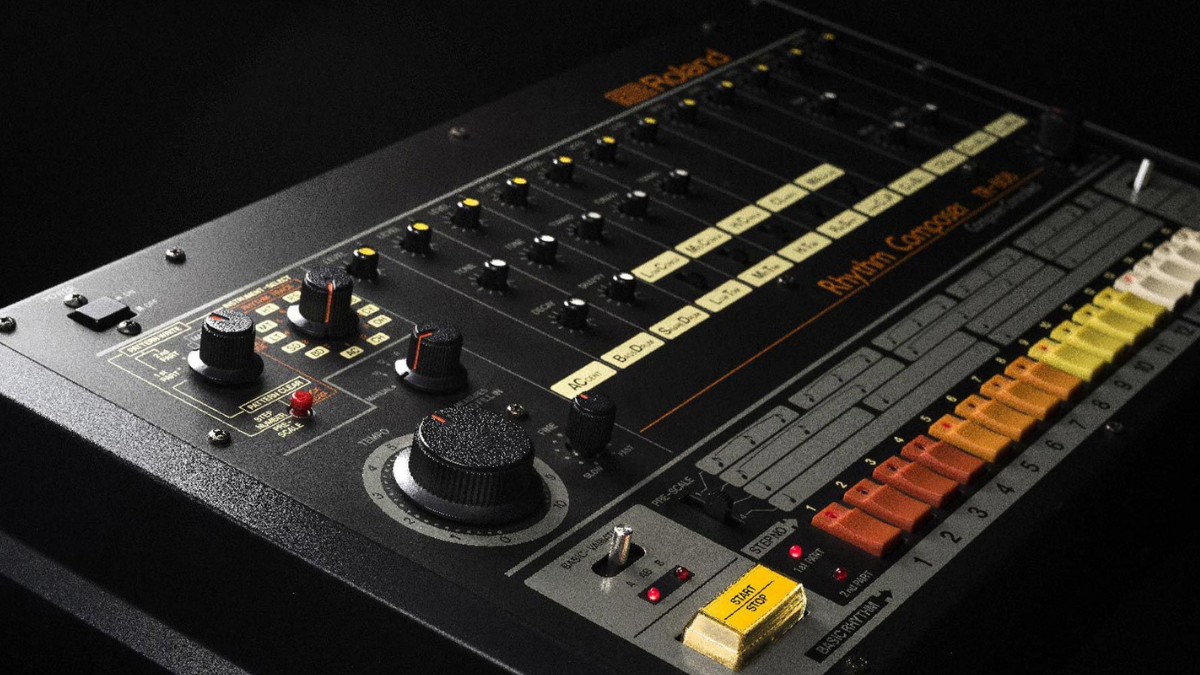
How to choose best drum machine
The right machine depends less on the number of sounds than on how you want to create and control a groove.
Sound engine
Analog circuits, modeled instruments, samples, and hybrid designs behave differently. Analog and modeled machines tend to encourage quick shaping from a fixed palette, while samplers and multi-engine instruments can cover more unusual textures. The Roland TR-8S combines modeled TR sounds with imported samples, while the TR-1000 adds analog, ACB, FM, VA, PCM, and sampling engines.
Sequencer depth
A 16-step sequencer is often enough for a strong loop, but longer patterns and probability controls help prevent repetition. Look for pattern chaining if you want complete song structures, and look for velocity, sub-step, last-step, or off-grid control if rhythmic variation is central to your music. The T-8 reaches 32 steps per pattern, while the RD-78 Classic keeps the workflow deliberately simple with 16 steps.
Hands-on control
Large dedicated controls are easier to perform than menu-heavy interfaces. Separate accents, fills, mutes, pattern changes, and sound-shaping controls matter when the machine will be used live. A foot-controlled unit such as the MOOER X2 makes sense for guitarists, while a pad controller such as the Donner Starrypad is better for triggering software instruments.
Choose the sequencer you will actually touch, not the sound library you expect to admire.
Connectivity
Standalone audio outputs, MIDI, sync, USB audio, and external control connections determine how easily a drum machine joins the rest of a setup. The T-8 has USB-C audio and MIDI, the Starrypad uses USB-C and MIDI but needs software, and the TR-1000 adds trigger I/O, DIN sync, CV, individual outputs, and multichannel USB audio.
Size and power
A compact machine is easier to keep beside a laptop or take to rehearsal. Larger units can provide more comfortable controls and sturdier construction, but they need a permanent place. Battery operation makes the Stylophone Beat and Medeli MR101S useful away from a desk, while the 19.05-pound TR-1000 clearly belongs in a fixed studio.
If your setup includes full electronic kits as well as a rhythm box, how a complete electronic kit handles practice and performance can help clarify whether you need a compact sequencer or a playable drum instrument. Players building a larger percussion rig may also want to compare the control and feel of different kick pedal designs before settling on a performance setup.
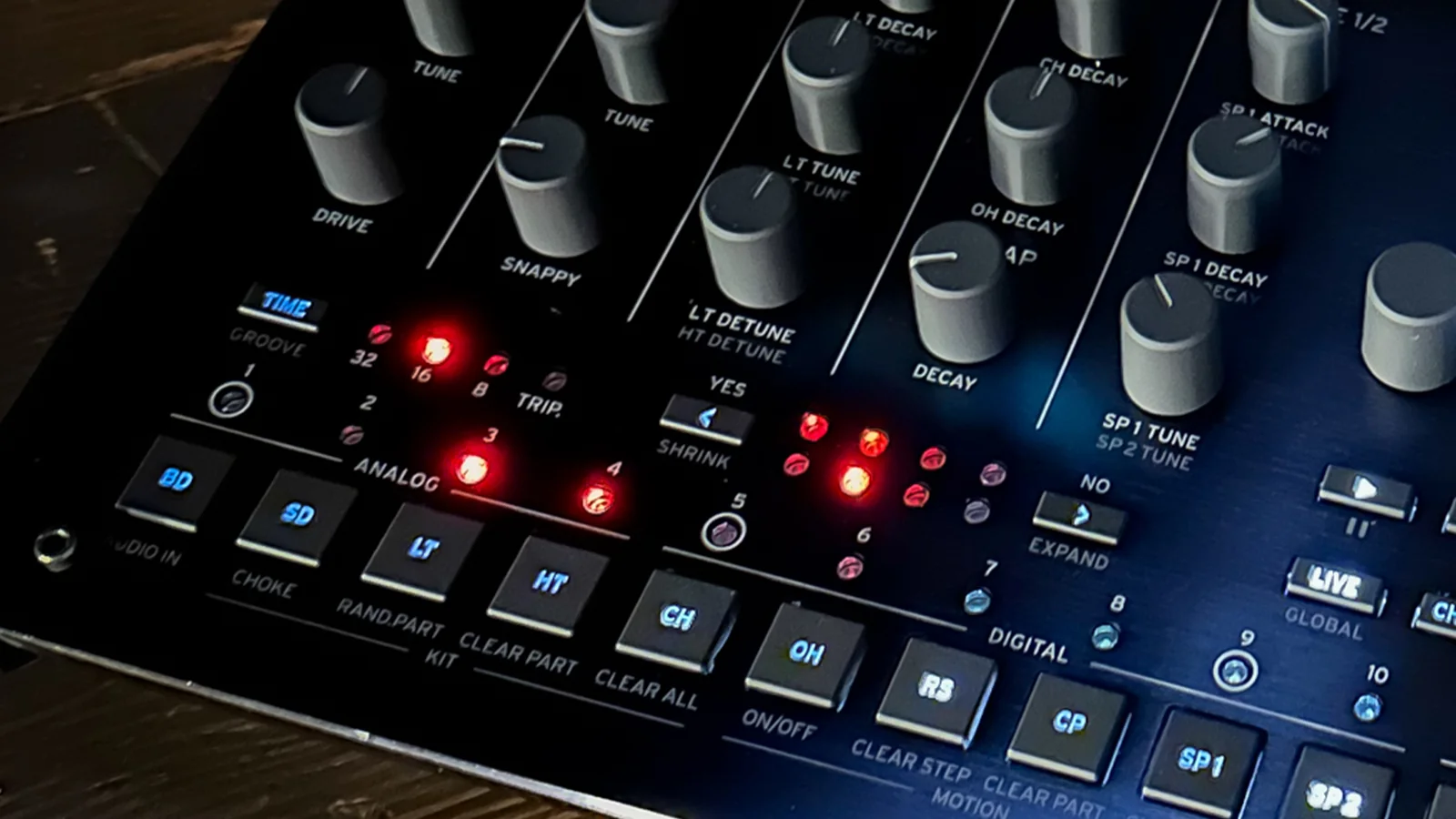
Frequently asked questions
Do drum machines make sound on their own?
Most standalone drum machines in this roundup produce their own sounds, including the Roland TR-8S, Arturia DrumBrute Impact, and Roland AIRA Compact T-8. The Donner Starrypad is different because it is a MIDI controller and needs a DAW or another sound source.
Is a 16-step sequencer enough?
A 16-step sequencer is enough for many repeating grooves and is easy to understand. Longer patterns, pattern chaining, probability, and last-step controls become more useful when you want evolving arrangements rather than short loops.
Which drum machine is easiest for a beginner?
The Behringer RD-78 Classic has a focused feature set with 15 sounds, 34 rhythm presets, and a 16-step sequencer. The Stylophone Beat is even simpler and more playful, while the Medeli MR101S is a practical option for playing preset patterns with pads and a foot pedal.
Can a drum machine replace a drummer for practice?
It can provide a consistent pulse, repeated grooves, and pattern variations, which makes it useful for practice. The MOOER X2 and Medeli MR101S are especially suited to playing along with an instrument, but neither replaces the expressive changes of a live drummer.
What is the difference between a drum machine and a MIDI pad controller?
A drum machine contains sounds and a system for sequencing them. A MIDI pad controller sends performance information to software or external hardware, so it does not make sound by itself. The Donner Starrypad is a controller rather than a standalone drum machine.
Do all drum machines use analog sounds?
No. Drum machines can use analog synthesis, digital modeling, samples, or several engines together. The Roland TR-8S uses modeled TR instruments and samples, the TR-1000 combines multiple synthesis methods with sampling, and the MOOER X2 focuses on built-in groove playback.
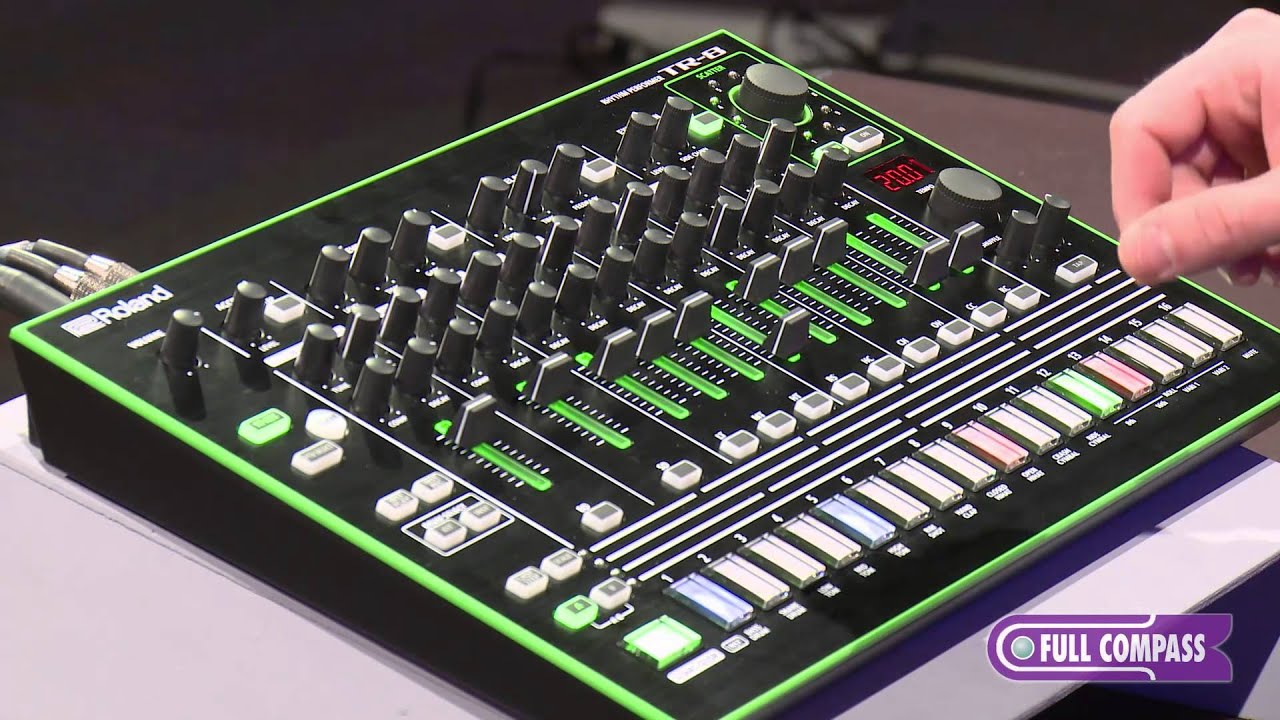
The bottom line
The Best drum machine for most producers is the Roland TR-8S Rhythm Performer. Its combination of classic TR models, sample import, 128 kits, and per-instrument effects gives it the broadest useful range without reaching the complexity of the TR-1000. For a smaller setup, the Roland AIRA Compact T-8 is the sharper choice, especially if portability and TR-808, TR-909, TR-606, and TB-303 sounds matter most.
Choose the Arturia DrumBrute Impact when live control and per-drum accents are more important than sample flexibility. Choose the MOOER Drum Machine X2 for guitar or bass accompaniment, and the Donner Starrypad only when a computer-based DAW is already part of your workflow.
If you are undecided, start with the Roland TR-8S unless your first priority is portability, foot control, or hands-on analog performance.
As an Amazon Associate we earn from qualifying purchases.