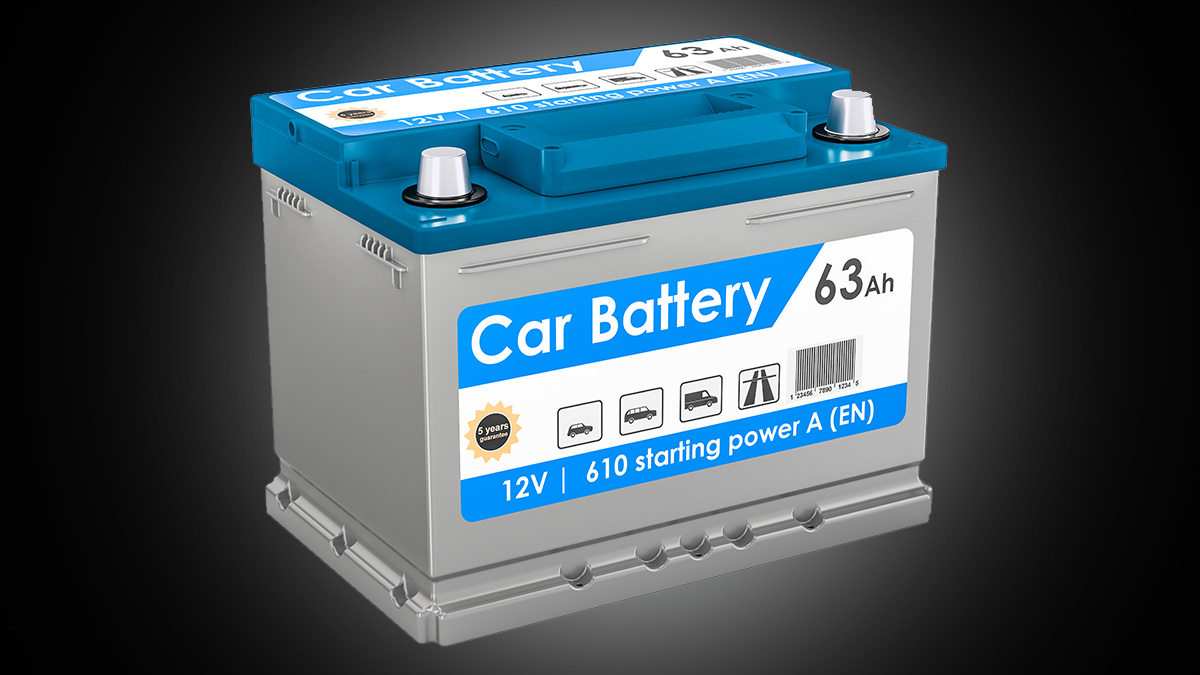

A battery can look like a simple box until the car refuses to start, the terminals do not line up, or the replacement is too tall for the hold-down bracket. Group size, terminal position, cold-cranking amps, and reserve capacity all matter more than a familiar logo.
Our Best automotive battery picks include six AGM starting batteries, two chargers, and a tester for diagnosing the battery already in the vehicle. The ACDelco Gold 48AGM is the best all-around replacement, while the other picks cover Group 35 and Group 47 fitments, high-output starting, long-term maintenance, and battery testing.
The ACDelco Gold 48AGM is the single best pick for a compatible Group 48 vehicle. The list ranges from compact maintenance tools to high-capacity AGM batteries for demanding start-stop systems.
Comparison table
| # | Product | Award | Group size or type | Starting or charging specification | Best for |
|---|---|---|---|---|---|
| 1 | ACDelco Gold 48AGM | Best overall | Group 48 AGM | 12V | Compatible Group 48 vehicles |
| 2 | Mighty Max MM-G35 | Best Group 35 | Group 35 AGM | 55Ah, 650 CCA | Group 35 replacements |
| 3 | Weize Platinum AGM 47 | Best Group 47 capacity | Group 47 AGM | 60Ah, 680 CCA | Start-stop Group 47 vehicles |
| 4 | Mighty Max MM-H6 | Best high-capacity Group 48 | Group 48 AGM | 70Ah, 760 CCA | Higher electrical demands |
| 5 | OPTIMA RedTop 34/78 | Best dual-terminal design | 34/78 AGM | 800 CCA | SAE or GM terminal setups |
| 6 | Mighty Max MM-H5 | Best straightforward Group 47 | Group 47 AGM | 60Ah, 680 CCA | Direct Group 47 swaps |
| 7 | OPTIMA RedTop 35 | Best lightweight AGM | Group 35 AGM | 44Ah, 720 CCA | Group 35 vehicles needing high cranking power |
| 8 | NOCO GENIUS1 Charger | Best compact maintainer | 6V and 12V | 1A charging | Long-term battery maintenance |
| 9 | TowerTop Smart Charger | Best charger for fast charging | 12V | 2A, 10A, 25A, and auto | Charging and engine-start assistance |
| 10 | ANCEL BA101 Tester | Best diagnostic tool | 12V batteries | 100 to 2, 000 CCA | Checking battery and charging health |
1. ACDelco Gold 48AGM: Best Overall

Pros
- AGM construction is sealed and resistant to acid leakage
- Group 48 dimensions are clearly defined
- Silver calcium alloy supports cycle life
- Envelope separator helps resist shorts and improve acid circulation
Cons
- Only fits vehicles designed for Group 48 dimensions and terminals
- At 45.5 pounds, it is not a light battery to install
- No published CCA or Ah figure in the supplied specifications
Best for: drivers who need a durable Group 48 AGM replacement with a strong construction focus.
The ACDelco Gold 48AGM is the pick we would start with when the vehicle calls for a Group 48 battery and the priority is a solid, conventional replacement rather than an unusual feature set. Its 11.9-inch length, 7.5-inch width, and 7.6-inch height give the buyer concrete fitment points to check before ordering. At 45.5 pounds, it has the substantial feel expected from a full-size automotive battery, but lifting it into a cramped engine bay will take care.
The construction details are more interesting than the black case suggests. A high-density negative paste is intended to improve performance and battery life, while the enhanced-life alloy uses silver calcium in the stamped alloy. A calcium lead positive grid supports conductivity and low resistance. Those details matter because a starter battery has to handle repeated high-current events without becoming a maintenance project.
Its robust envelope separator is designed with a puncture-resistant back. That helps increase acid circulation and reduce the chance of internal shorts, while the design also helps the battery remain cool. The vent cap is built to resist acid leakage. This is a sensible set of protections for a daily driver that sees vibration, temperature swings, and repeated short trips.
The main limitation is fitment information, not a glaring flaw in the battery itself. The supplied details do not specify cold-cranking amps or amp-hour capacity, so buyers looking for a precise output comparison should not assume that it beats the Mighty Max MM-H6 or the OPTIMA RedTop 34/78. It is also strictly a Group 48 choice. For the right vehicle, though, its construction is more reassuring than the simpler feature descriptions on the Mighty Max MM-G35 and MM-H5.
Choose the ACDelco Gold 48AGM when the existing battery is Group 48, the terminal arrangement matches, and you want a well-engineered AGM replacement without chasing the highest published output number.
2. Mighty Max MM-G35: Best Group 35

Pros
- 650 CCA starting output
- 55Ah capacity and 100-minute reserve capacity
- Sealed, spill-proof AGM design
- Flexible mounting except upside down
- Three-year warranty
Cons
- Mounting accessories and wire harness are not included
- Larger and heavier than the OPTIMA RedTop 35
- Terminal position must match the vehicle
Best for: a Group 35 vehicle that needs a sealed AGM battery with clearly stated starting and reserve figures.
The Mighty Max MM-G35 makes the most sense when the car uses Group 35 and the buyer wants specifications that are easy to compare. It provides 650 CCA, 55Ah of capacity, and a 100-minute reserve capacity. Those figures describe different jobs: CCA is about starting power, Ah indicates stored capacity, and reserve capacity gives a rough sense of how long the battery can support a load before the vehicle is left without enough reserve.
The case measures 9.06 by 6.89 by 8.82 inches. That height is important because a replacement can have the right footprint and still interfere with a hold-down bar or bonnet. The positive terminal is on the right and the negative terminal is on the left, so check the old battery rather than relying on the Group 35 label alone.
AGM construction gives this battery a sealed, spill-proof format, and the feature set emphasizes deep-discharge recovery and resistance to shock and vibration. It can be mounted in multiple positions, although upside-down installation is excluded. Mounting screws are included, but a wire harness and other mounting accessories are not, so a vehicle with an unusual tray may need parts from the original installation.
Compared with the OPTIMA RedTop 35, the MM-G35 offers more stated capacity and reserve capacity, but the OPTIMA lists 720 CCA and weighs 31.7 pounds compared with the Mighty Max's 45.5-pound weight. The OPTIMA is the more compelling choice for high cranking output in a lighter package. The MM-G35 is easier to evaluate for drivers who care about stored capacity and want the Group 35 dimensions stated plainly.
The weakness is the weight and the need to verify the terminal layout carefully. Skip it if your vehicle requires a lighter battery, uses a different hold-down system, or has a battery tray that cannot accept its 8.82-inch height. For a conventional Group 35 AGM swap, it is a clear, practical option.
3. Weize Platinum AGM 47: Best Group 47 Capacity

Pros
- 60Ah capacity and 680 CCA
- 100-minute reserve capacity
- Dimensions and terminal orientation are stated clearly
- Designed for stop-start vehicles and accessory loads
- Leak-proof, non-spillable AGM construction
Cons
- Not intended for deep-cycle marine or solar use
- Terminal placement must be checked before installation
- The dimensions are easy to misread because length and width labels differ across the listing
Best for: Group 47 or H5 vehicles that need a 60Ah AGM battery for stop-start use and accessory loads.
The Weize Platinum AGM 47 is a strong fit-specific choice rather than a universal recommendation. It is a 12V Group 47 battery with 60Ah capacity, 680 CCA, and a 100-minute reserve capacity. That combination places it in the same practical output class as the Mighty Max MM-H5, which uses the same group size and publishes the same headline electrical figures.
The listed dimensions are 9.52 inches long, 6.89 inches wide, and 7.48 inches high. The product information presents the measurements with length and width labels in a different order, so measure the existing battery in all three directions. Terminal orientation is left negative and right positive with tapered terminals. That is exactly the kind of detail that decides whether a battery installation is straightforward or impossible.
The AGM design is aimed at vehicles with stop-start systems or higher accessory loads. The feature list also cites a self-discharge figure of less than 8 percent after 90 days of storage, an operating range from -22°F to 158°F, and an acceptable charging current from 0 to 18A. Those are useful boundaries for owners who store a vehicle seasonally or operate it in difficult weather, but they do not make the battery suitable for every application.
The Weize and Mighty Max MM-H5 are close on paper. Both list 60Ah, 680 CCA, 100-minute reserve capacity, Group 47 sizing, and a three-year warranty. The Weize gives more explicit charging and storage information, while the MM-H5 presents a nearly identical fit with dimensions of 9.53 by 6.88 by 7.48 inches. A buyer should choose based on terminal position, tray fit, and the exact battery type specified by the vehicle.
Do not choose this model for a deep-cycle solar or marine setup. The supplied product information specifically limits it to automotive starting applications. It is best for a Group 47 vehicle that needs AGM cycling ability, dependable starting output, and a careful fit check before installation.
4. Mighty Max MM-H6: Best High-Capacity Group 48

Pros
- 70Ah capacity
- 760 CCA and 120-minute reserve capacity
- Sealed AGM design supports stop-start use
- Resists shock and vibration
- Three-year warranty
Cons
- Must fit a longer Group 48 tray
- Mounting accessories are not included
- The listed product weight should be verified before handling
Best for: a Group 48 vehicle with substantial electrical demands and room for a high-capacity AGM battery.
The Mighty Max MM-H6 is the output-focused alternative to the ACDelco Gold 48AGM. It lists 70Ah, 760 CCA, and 120 minutes of reserve capacity, giving it the strongest published capacity and reserve figures among the Group 48 batteries here. That makes it the obvious candidate for a vehicle that repeatedly starts in cold weather or supports a larger accessory load while parked.
Its dimensions are 10.94 by 6.88 by 7.48 inches, with the positive terminal on the right and the negative on the left. The extra length compared with a typical Group 48 replacement is the critical point. Group size names are useful, but they are not a substitute for measuring the tray and checking the hold-down arrangement. The battery is still a substantial object to handle, even though the supplied product information lists its weight as 12 pounds, which is notably different from the mass normally associated with a battery of these dimensions.
The sealed AGM format is spill-proof and designed for high discharge output and deep-discharge recovery. Its construction is described as resistant to shock, vibration, and harsh conditions, and it can be installed in multiple positions other than upside down. Mounting screws are included, but a wire harness and mounting accessories are not. The three-year warranty adds a useful ownership boundary, though warranty terms do not replace correct fitment.
The MM-H6 beats the MM-G35 and MM-H5 on published output, and it goes beyond the ACDelco Gold 48AGM because ACDelco's supplied details do not state CCA or Ah. The ACDelco has the more detailed internal construction story, including its alloy and separator design. Choose the Mighty Max when output figures matter more than those construction details and the longer case fits.
Its weakness is the fitment burden. A battery that is too long cannot be made correct by its higher CCA rating. Skip the MM-H6 if the old unit is shorter, if the terminals are arranged differently, or if the vehicle does not call for Group 48 AGM chemistry. For the right tray, it is the most capable Group 48 option in this roundup.
5. OPTIMA RedTop 34/78: Best Dual-Terminal Design

Pros
- 800 CCA starting output
- Dual SAE and GM terminals
- 100-minute reserve capacity
- SpiralCell construction
- Maintenance-free sealed design
Cons
- Heavier than the OPTIMA RedTop 35
- C20 capacity is 50Ah, below the largest batteries here
- Must be checked against the vehicle's tray and hold-down
Best for: vehicles that need a high-output starting battery with both SAE and GM terminal options.
The OPTIMA RedTop 34/78 stands apart because its terminal arrangement solves a real compatibility problem. It has dual SAE and GM posts, so it can suit vehicles or replacement situations that need one style rather than the other. It also lists 800 CCA, the highest starting figure among the dedicated starter batteries in this roundup.
The case measures 10.06 inches long, 6.94 inches wide, and 7.88 inches tall, with a listed weight of 38.8 pounds. Its 50Ah C20 capacity and 100-minute reserve capacity are more modest than the Mighty Max MM-H6's 70Ah and 120-minute figures. That distinction matters: the RedTop is built around starting performance rather than being the largest energy reservoir in the group.
OPTIMA uses SpiralCell technology with 99.99 percent pure lead, and the product description says the design is 15 times more resistant to vibration than standard flooded batteries. The battery is sealed and maintenance free. Those qualities suit a vehicle exposed to vibration or difficult mounting conditions, but the claims do not remove the need to confirm dimensions, terminal clearance, and the hold-down before ordering.
The dual posts are the reason to choose this over the ACDelco Gold 48AGM or the Mighty Max MM-H6, not simply the 800 CCA number. The Mighty Max has more stated capacity and reserve, while the ACDelco offers a detailed separator and grid design. The OPTIMA is the specialist option when terminal flexibility and strong starting output are central to the installation.
It is not the right pick for a vehicle that needs a smaller Group 35 case, and it may be unnecessary if the vehicle already has a straightforward SAE terminal layout. Owners who need a robust starter with dual terminal options should put it near the top of the list.
6. Mighty Max MM-H5: Best Straightforward Group 47

Pros
- 60Ah and 680 CCA
- 100-minute reserve capacity
- Group 47 fit with clear terminal orientation
- Spill-proof AGM construction
- Three-year warranty
Cons
- Similar specifications to the Weize Platinum AGM 47
- Mounting hardware beyond the included screws is not supplied
- Not intended as a deep-cycle marine or solar battery
Best for: a direct Group 47 AGM replacement with balanced capacity and starting output.
The Mighty Max MM-H5 is the uncomplicated Group 47 pick. It lists 12V operation, 60Ah capacity, 680 CCA, and 100 minutes of reserve capacity. Those figures match the Weize Platinum AGM 47 almost exactly, so this choice comes down to fit details and the installation environment rather than an obvious output advantage.
The dimensions are 9.53 inches long, 6.88 inches wide, and 7.48 inches high. The positive terminal is on the right and the negative terminal is on the left. That layout should be compared with the old battery before installation, especially in a vehicle where the cables are short or routed tightly around the tray.
This is a sealed, spill-proof AGM battery intended for high-discharge starting and stop-start duty. The design is described as resistant to vibration and harsh conditions, and it can be mounted in multiple positions except upside down. The included mounting screws are useful for some installations, but the feature list says that the wire harness and mounting accessories are not included.
The MM-H5 and Weize Platinum AGM 47 are the closest pair in the roundup. Weize provides more detail about self-discharge, temperature limits, and charging voltage, while the Mighty Max emphasizes rugged construction, deep-discharge recovery, and a three-year warranty. Neither should be selected by brand alone. Measure the old battery, confirm the tapered terminal positions, and use the vehicle's required battery type as the deciding information.
The limitation is duplication. If you need unusually detailed charging guidance, the Weize is the more informative listing. If you need a Group 47 replacement with familiar headline numbers and a simple AGM design, the MM-H5 is a sensible fit-specific choice.
7. OPTIMA RedTop 35: Best Lightweight AGM

Pros
- 720 CCA in a 31.7-pound case
- SpiralCell technology
- 90-minute reserve capacity
- Maintenance-free sealed AGM construction
- SAE post terminals
Cons
- Lower C20 capacity than the larger AGM batteries here
- Only SAE terminals are specified
- Not the highest-reserve choice for heavy accessory loads
Best for: Group 35 vehicles where high starting output and a lighter battery matter.
The OPTIMA RedTop 35 is the battery to consider when a Group 35 fit is confirmed and lifting weight matters. It weighs 31.7 pounds, considerably less than the Mighty Max MM-G35's listed 45.5 pounds, while publishing 720 CCA compared with the Mighty Max's 650 CCA. That is a meaningful combination for owners who want strong starting output without handling a heavier case.
Its listed dimensions are 9.38 inches long, 6.75 inches wide, and 7.69 inches tall. The battery uses SAE post terminals, so it does not have the dual SAE and GM arrangement found on the OPTIMA RedTop 34/78. The case is also a little different from the MM-G35, which means the Group 35 label still needs to be checked against the tray and hold-down.
The RedTop 35 lists 44Ah C20 capacity and 90 minutes of reserve capacity. Those figures trail the MM-G35's 55Ah and 100-minute reserve, even though the OPTIMA has the higher CCA rating. In practical terms, the OPTIMA is more focused on cranking performance and manageable weight, while the Mighty Max offers more stated stored capacity.
SpiralCell technology, 99.99 percent pure lead, and a claim of 15 times greater vibration resistance than standard flooded batteries give the OPTIMA a distinct construction story. The sealed, maintenance-free design is convenient for a daily driver. Still, the battery is intended for starting duties and should not be treated as a substitute for a dedicated deep-cycle battery.
Compared with the OPTIMA RedTop 34/78, this model is lighter and smaller, but it gives up the dual terminal arrangement and some reserve capacity. Skip it if your vehicle needs GM posts, more reserve for accessory loads, or a different group size. Choose it when a Group 35 tray accepts the case and high CCA with lower weight is the priority.
8. NOCO GENIUS1 Charger: Best Compact Maintainer

Pros
- Supports 6V and 12V batteries
- Works with lead-acid, AGM, Gel, SLA, VRLA, and LiFePO4 batteries
- Temperature compensation adjusts charging
- Can maintain a battery indefinitely
- Includes clamps and integrated eyelet terminals
Cons
- 1A output is slow for large batteries
- Force Mode requires extra care
- It is a maintainer and charger, not a replacement battery
Best for: keeping a stored vehicle battery charged without overcharging it.
The NOCO GENIUS1 is not an automotive battery, but it earns a place here because a good replacement battery still needs sensible maintenance. Its 1A output is designed for gradual charging and long-term topping up, not for quickly filling a deeply discharged large battery. At 3.5 by 2.3 by 1.3 inches and 0.95 pounds, it is small enough to leave with a vehicle stored for the season.
Compatibility is broad. The GENIUS1 supports 6V and 12V lead-acid batteries, including AGM, Gel, SLA, and VRLA types, along with LiFePO4 lithium batteries. It can also serve cars, motorcycles, lawn equipment, ATVs, tractors, trucks, RVs, boats, and other listed vehicle types. That flexibility makes it more useful than a charger locked to one battery chemistry.
The integrated thermal sensor adjusts charging for ambient temperature. In hot weather it helps prevent overcharging, while in cold weather it helps avoid undercharging. The charger can maintain a fully charged battery indefinitely, and its pulse-charging function is designed to detect and reverse sulfation and acid stratification. Those features are more relevant to a stored car than raw charging speed.
It can charge batteries from as low as 1V, and Force Mode can manually charge a battery down to zero volts. That is a useful recovery feature, but a completely discharged battery may also have suffered internal damage. If you need faster charging or engine-start assistance, the TowerTop Smart Charger is much better suited, while a dedicated replacement such as the ACDelco Gold 48AGM addresses the battery itself.
The weakness is the 1A ceiling. It is patient, not fast. For a second vehicle that sits for weeks, it is the kind of small tool that prevents avoidable battery failure. For a car that needs a quick charge before a trip, choose a higher-current charger and consider using a dedicated battery charger for different charging jobs.
9. TowerTop Smart Charger: Best Charger for Fast Charging

Pros
- Selectable 2A, 10A, 25A, and automatic charging
- 100A engine-start function
- Eight-stage charging process
- LCD displays charging stage and parameters
- Supports AGM, standard, Gel, wet, MF, EFB, calcium, and deep-cycle batteries
Cons
- Larger than the NOCO GENIUS1
- Repair mode cannot fix completely drained batteries
- It supports 12V batteries only
Best for: drivers who need adjustable charging current, repair functions, and engine-start assistance.
The TowerTop Smart Charger is the more capable charger for owners who do not want to wait on a 1A maintainer. It offers 2A, 10A, 25A, and automatic current settings, with a maximum charging current of 25A. The selectable output lets the user approach a small maintenance task differently from a larger, depleted automotive battery.
Its eight-stage charging process includes desulfurization, soft start, bulk charge, absorption, analysis, repair, float, and pulse maintenance. The LCD screen shows the charging stage and parameters instead of leaving the user to guess what the unit is doing. It also remembers the previous setting after a power outage, which is a small but useful detail for a charger used in a garage or workshop.
The charger supports 12V sealed lead-acid batteries in cars, boats, RVs, powersports vehicles, and deep-cycle applications. Listed chemistries include standard, AGM, Gel, wet, maintenance free, EFB, calcium, and deep cycle. Its winter mode adds 0.2V to the original charging voltage for cold conditions, while the engine-start function supplies 100A to help activate a car battery within 100 seconds.
Repair and desulfation controls give it more hands-on capability than the NOCO GENIUS1, but they should not be mistaken for a guarantee that an old battery can be restored. The feature list specifically says repair mode cannot fix completely drained batteries. Safety protections include reverse polarity, overcharge and discharge, overvoltage, overcurrent, overheating, current backflow, and short-circuit protection, and the charger is ETL certified.
The trade-off is size and complexity. Measuring about 10.04 by 7.68 by 4.92 inches, it occupies more garage space than the compact NOCO. Choose the TowerTop when charging speed, a visible readout, and engine-start assistance matter. For simple indefinite maintenance, the NOCO is easier to leave connected.
10. ANCEL BA101 Tester: Best Diagnostic Tool

Pros
- Tests 12V batteries from 100 to 2, 000 CCA
- Reports state of health, state of charge, voltage, current, CCA, cranking, and charging
- Works with flooded, AGM, Gel, and EFB batteries
- Does not need internal batteries
- Reverse-polarity and short-circuit protection
Cons
- Does not test lithium batteries
- Not suitable for 6V, 8V, or 24V systems
- Correct battery rating and temperature must be entered for accurate results
Best for: finding out whether a battery, starter, or charging system is causing a starting problem.
The ANCEL BA101 cannot replace a dead battery, but it can stop you from replacing the wrong part. It is a 12V tester with a 100 to 2, 000 CCA load capacity, and it checks state of health, state of charge, voltage, current, CCA, cranking, and charging systems. That makes it useful when a slow start could be caused by the battery, alternator, or connections.
The tester draws power directly from the vehicle battery, so it has no internal battery to charge. Its black-and-white display has adjustable contrast and a white backlight for bright or dim conditions. One-handed operation and multilingual support make the basic testing process approachable, though accurate results depend on entering the correct battery type, rating value, and temperature.
Compatibility covers flooded, AGM, Gel, and EFB batteries over 30Ah, with support for standards including JIS, EN, DIN, SAE, BCI, GB, CA, MCA, and IEC. It can be used on cars, trucks, boats, RVs, ATVs, lawnmowers, golf carts, and motorbikes that meet the 12V and capacity requirements. It is not for lithium batteries, non-12V systems, or motorcycles below 30Ah.
The copper crocodile clips and smart chip are intended to improve the quality of the reading, while four-in-one protection guards against reverse polarity, short circuits, overcurrent, and overvoltage. The reinforced ABS housing should help it survive ordinary workshop handling. It is more diagnostic than the TowerTop charger, which can charge and repair but does not replace a proper test when the cause of a fault is unclear.
The biggest limitation is its narrow voltage range. Do not buy it for a 6V, 8V, or 24V system, and do not use it on lithium batteries. For a standard 12V automotive battery, however, it is a sensible first step before choosing between a replacement, a charger, or an alternator repair. If you regularly work on several vehicle types, understanding how multimeters approach battery testing can add another useful diagnostic method.
How to choose best automotive battery
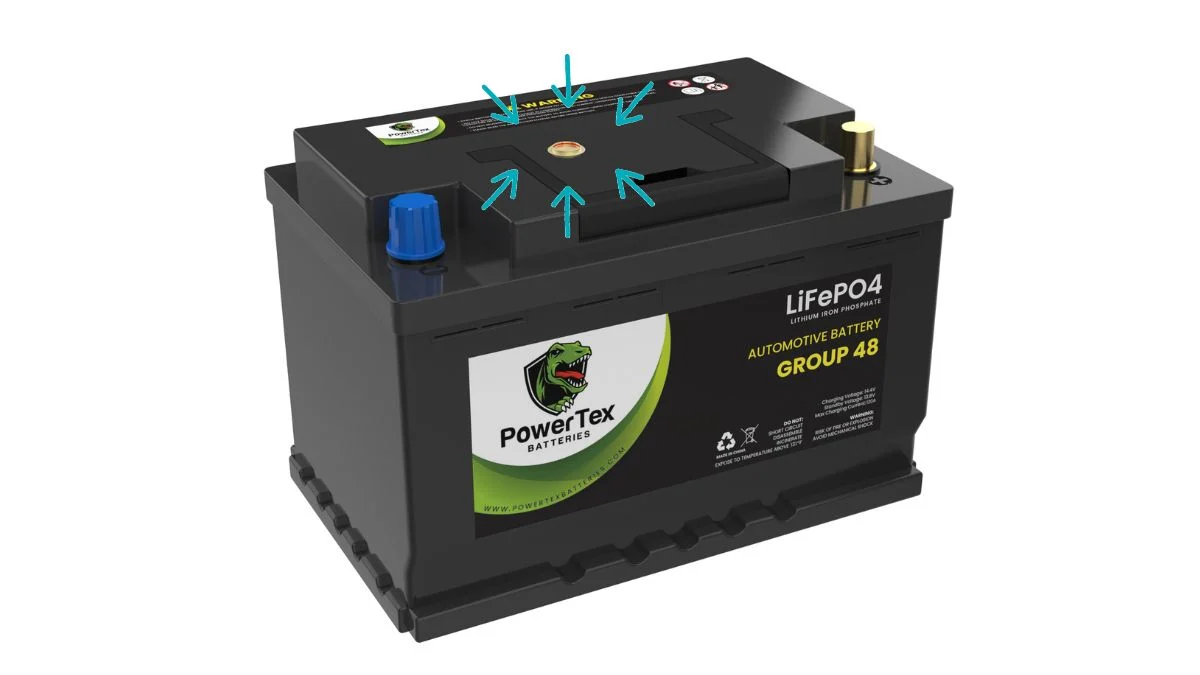
The right automotive battery is the one that matches the vehicle's physical fit and electrical requirements first, then adds the construction and maintenance features that suit how the vehicle is used.
Group size and dimensions
Group size describes a common case format, but it is not permission to skip measuring. Compare the replacement's length, width, height, terminal position, terminal type, and hold-down arrangement with the old battery. A battery that is too tall can interfere with the hood or hold-down, while a battery with reversed terminals may not reach the vehicle cables.
Group 35, Group 47, and Group 48 batteries in this roundup are not interchangeable just because their voltage is the same. The Weize Platinum AGM 47 and Mighty Max MM-H5 are close in size, while the Mighty Max MM-H6 is a longer Group 48 design. Confirm the vehicle's required group size before comparing output.
A higher CCA figure does not fix the wrong case size or reversed terminals.
Cold-cranking amps
Cold-cranking amps describe starting output in cold conditions. A higher figure can be useful for difficult winter starts, larger engines, or a vehicle with demanding starting requirements, but it must still be compatible with the vehicle's specification.
The OPTIMA RedTop 34/78 lists 800 CCA, the Mighty Max MM-H6 lists 760 CCA, and the OPTIMA RedTop 35 lists 720 CCA. Those numbers are useful comparisons within this list, but they do not automatically make one the correct replacement for every vehicle.
Capacity and reserve capacity
Amp-hour capacity describes stored electrical capacity, while reserve capacity indicates how long the battery can support a defined load under testing conditions. These figures matter more when a vehicle has start-stop operation, substantial accessories, or long periods of electrical use with the engine off.
The Mighty Max MM-H6 lists 70Ah and 120 minutes of reserve capacity. The Weize Platinum AGM 47 and Mighty Max MM-H5 each list 60Ah and 100 minutes. The OPTIMA RedTop 35 lists 44Ah and 90 minutes, while emphasizing starting output and lower weight instead.
AGM construction
AGM batteries use an absorbed glass mat design and are sealed compared with conventional flooded batteries. In this roundup, AGM models emphasize spill resistance, vibration resistance, high-discharge output, and improved recovery from deeper discharge. They are often a good match for stop-start vehicles and cars with heavier electrical loads.
AGM is not automatically suitable for every vehicle. The car's charging system and battery-management requirements should match the replacement type. Also, automotive starting AGM batteries are not automatically deep-cycle batteries for solar or marine use. If the battery is for a boat or RV, check the different demands of marine battery applications before choosing an automotive starter.
Charging and diagnosis
A charger maintains or replenishes a battery, while a tester helps determine whether the battery is actually failing. The NOCO GENIUS1 is suited to slow maintenance and supports 6V and 12V systems. The TowerTop adds higher current, an LCD, repair modes, and engine-start assistance for 12V batteries. The ANCEL BA101 measures battery and charging-system health but does not charge.
A charger cannot reliably repair a battery with internal damage, and a tester cannot restore one that has reached the end of its service life. Use the diagnostic result to decide whether maintenance makes sense or replacement is necessary.
Frequently asked questions
What is the best automotive battery for a Group 48 vehicle?
The ACDelco Gold 48AGM is the strongest all-around pick for a compatible Group 48 vehicle because its construction includes a high-density negative paste, silver calcium alloy, calcium lead grid, and a robust separator. The Mighty Max MM-H6 is the better choice when the vehicle can accept its longer case and needs the highest stated Group 48 capacity and reserve figures.
Are AGM batteries suitable for start-stop cars?
Several batteries here are specifically described for start-stop use, including the Weize Platinum AGM 47, Mighty Max MM-H5, and Mighty Max MM-H6. AGM construction is designed to support repeated cycling and high-discharge demands, but the replacement still needs to match the vehicle's specified battery type, size, terminals, and charging system.
How do I confirm that a battery will fit my car?
Read the group size on the existing battery, then measure its length, width, and height. Check terminal position, terminal style, cable reach, and the hold-down mechanism. The dimensions of the replacement should be compared directly with the old battery and the vehicle manufacturer's fitment information.
Is a higher CCA rating always better?
No. Higher CCA can provide more starting output, but the battery still needs to fit physically and meet the vehicle's electrical requirements. Capacity, reserve capacity, terminal configuration, battery chemistry, and charging compatibility can be just as important.
Can a battery charger replace an automotive battery?
No. A charger can replenish a battery, maintain it during storage, or sometimes help recover a deeply discharged unit. It cannot replace a battery with damaged plates, a shorted cell, or a case that no longer holds a charge.
What does reserve capacity mean?
Reserve capacity describes how long a battery can provide power under a specified test load before reaching a defined voltage threshold. It gives a useful comparison of stored electrical endurance, but actual vehicle performance also depends on temperature, accessory load, battery condition, and the charging system.
Can the ANCEL BA101 test every vehicle battery?
The ANCEL BA101 is for 12V batteries over 30Ah and supports flooded, AGM, Gel, and EFB batteries. It does not test lithium batteries or 6V, 8V, and 24V systems. Motorcycle batteries below 30Ah are also outside its stated support.
The bottom line
The ACDelco Gold 48AGM is the Best automotive battery pick for a compatible Group 48 vehicle when durable AGM construction matters more than chasing a published output figure. The Mighty Max MM-H6 is the alternative for a longer Group 48 tray and higher stated capacity, while the Mighty Max MM-G35, Weize Platinum AGM 47, and OPTIMA RedTop 35 serve their respective fitments well.
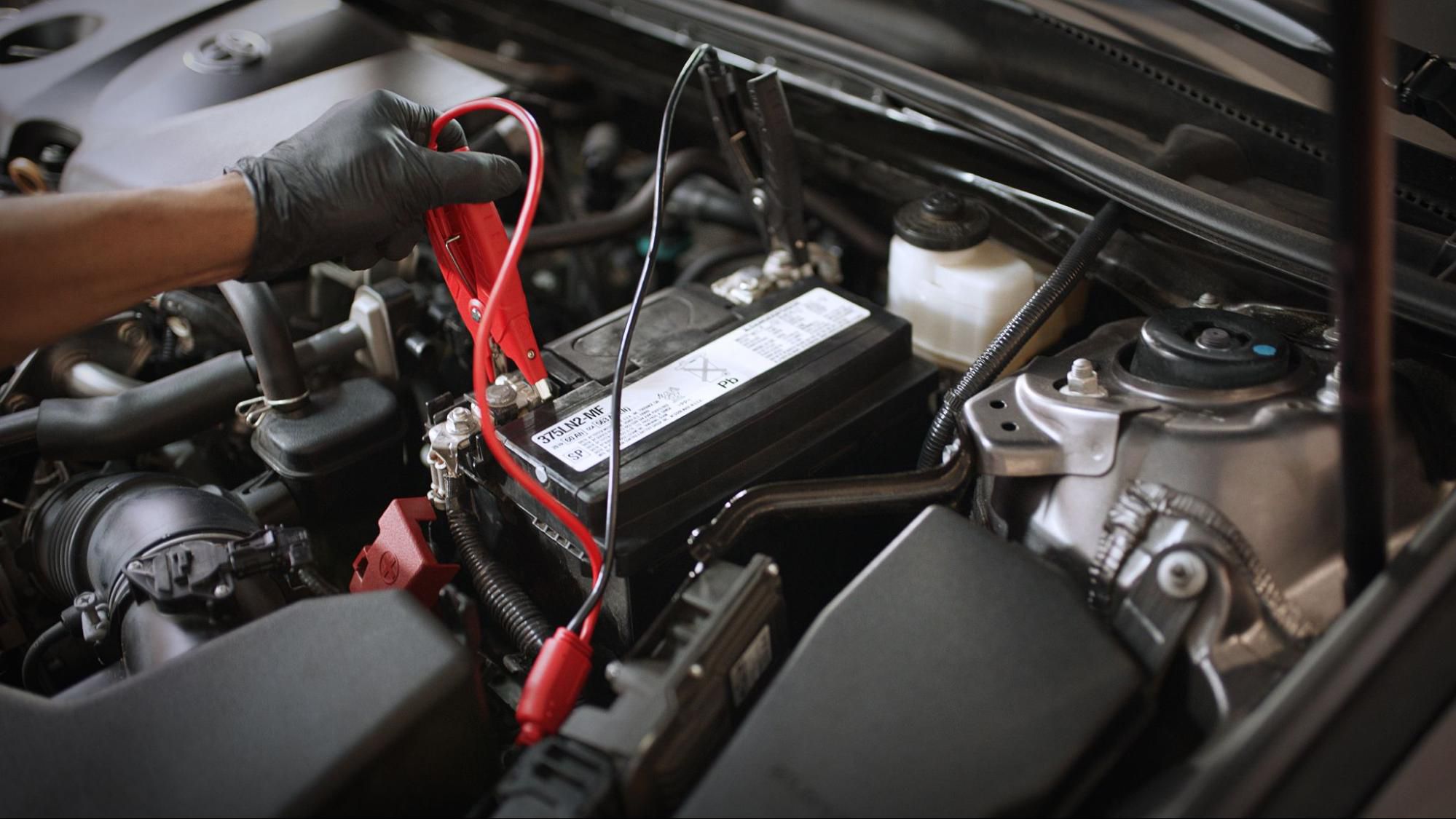
For owners who already have a battery and need to keep it healthy or diagnose a fault, the NOCO GENIUS1, TowerTop Smart Charger, and ANCEL BA101 are useful complements rather than substitutes. The NOCO suits long-term maintenance, the TowerTop handles faster charging and engine-start assistance, and the ANCEL helps separate a failing battery from a charging-system problem.
If you are undecided, match the old battery's group size, dimensions, terminals, and chemistry first, then choose the highest-capacity model that genuinely fits.
As an Amazon Associate we earn from qualifying purchases.