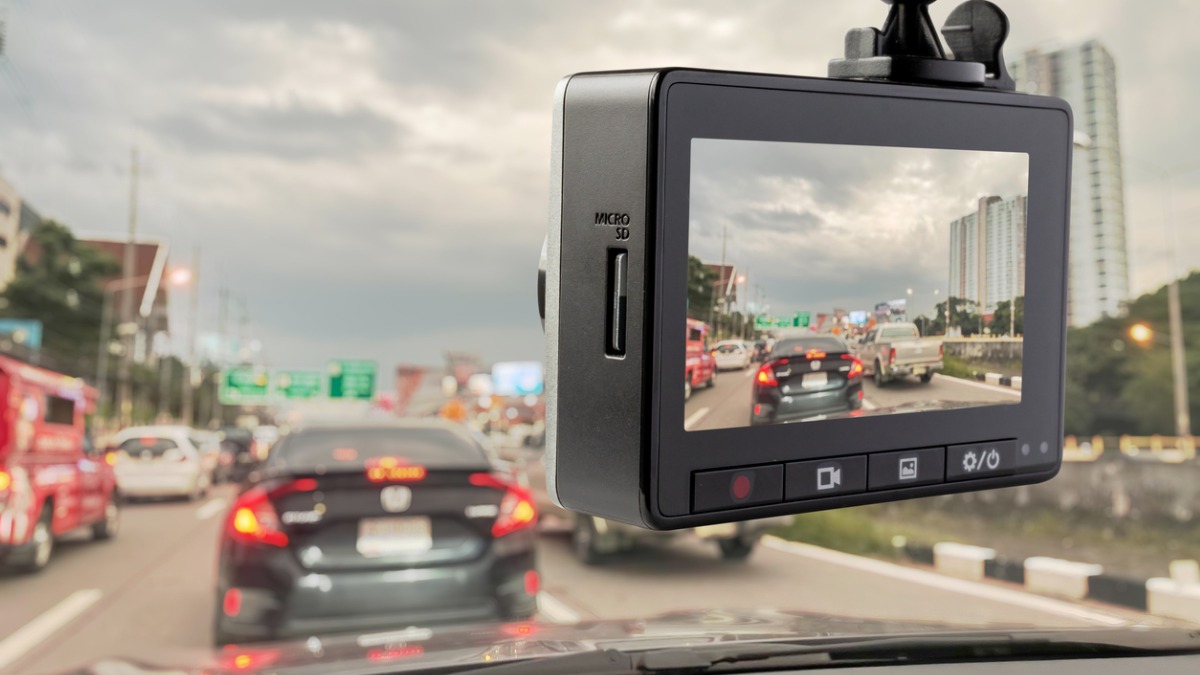

A dash cam earns its place when an ordinary drive turns into a disagreement about what happened. The useful one records a readable view ahead, preserves the clip after an impact, and does not make you wrestle with a memory card every time you need evidence. Our Best best car dash cam picks focus on those practical differences, from simple front cameras to four-channel systems that watch the cabin and both sides of the car.
The strongest options here combine 4K front recording with a rear camera, GPS, fast Wi-Fi, and a parking mode that requires a hardwire kit. The 70mai T800E adds an interior view, while the XYGCACO and Icesky S03 extend coverage to the sides. ROVE R2-4K Dual is our top pick, with the most balanced mix of image hardware, useful controls, GPS, and included storage.
Comparison table
| # | Product | Award | Video coverage | Connectivity | Best for |
|---|---|---|---|---|---|
| 1 | ROVE R2-4K Dual | Best overall | 4K front, 1080p rear | 5GHz Wi-Fi, GPS | Most drivers |
| 2 | REDTIGER F7NP | Best wide-angle dual cam | 4K front, 1080p rear | 5.8GHz Wi-Fi, GPS | Broad road coverage |
| 3 | REDTIGER F7N Touch | Best for hands-free control | 4K front, 1080p rear | 5.8GHz Wi-Fi, GPS | Drivers who want a screen |
| 4 | XYGCACO 360 View | Best four-channel layout | 4K front, three 1080p views | 5GHz Wi-Fi, GPS | Full side coverage |
| 5 | Icesky S03 | Best four-channel night coverage | 4K front, four 1080p views | Wi-Fi 6, GPS | Side and interior monitoring |
| 6 | ZMOPO 360 View | Best time-lapse coverage | Four 1080p views | 5GHz Wi-Fi, optional GPS | Parked-car surveillance |
| 7 | galphi Mini 4K | Best compact front cam | 4K front | 5GHz Wi-Fi | Discreet installations |
| 8 | TERUNSOUl 3-Channel | Best for rideshare drivers | 4K front, 1080p rear and cabin | 5.8GHz Wi-Fi, GPS | Cabin recording |
| 9 | 70mai A810 Lite | Best remote access | 4K front, 1080p rear | Wi-Fi 6, GPS, optional 4G LTE | Remote vehicle monitoring |
| 10 | 70mai T800E | Best three-channel 70mai | 4K front, 1080p rear and cabin | Wi-Fi 6, GPS | Family and rideshare cars |
1. ROVE R2-4K Dual: Best Overall
Pros
- 4K front and 1080p rear recording
- Sony STARVIS 2 front sensor
- Fast 5GHz Wi-Fi transfers
- GPS and three parking modes
- Supercapacitor and thermal protection
Cons
- Parking mode needs a separate hardwire kit
- No cabin or side cameras
- The included screen takes more space than a screen-free design
Best for: drivers who want a well-rounded front and rear system with strong image hardware and straightforward access to footage.
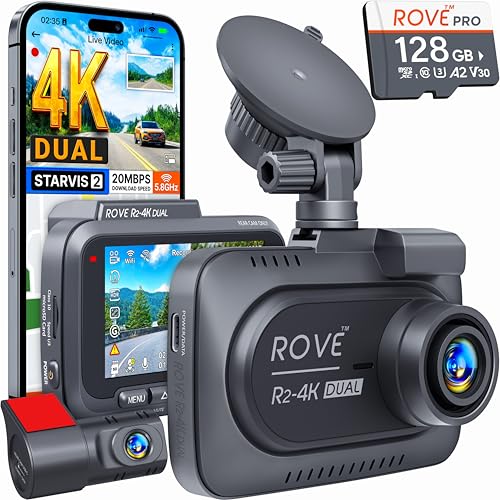
The ROVE R2-4K Dual is the dash cam we would install in the most cars. It has the right coverage for everyday driving without adding the wiring and camera placement decisions that come with a four-channel system. The 3-inch IPS screen makes initial alignment easy, and the front and rear cameras record at the same time so a collision behind you does not become a blind spot in the evidence.
The front camera records 3840 by 2160 at 30 frames per second, while the rear camera records 1920 by 1080 at 30 frames per second. That 4K front view gives small road details more room to remain legible, while the 150-degree front and 140-degree rear lenses cover a broad section of the road. Its Sony IMX675 STARVIS 2 sensor, F1.5 front aperture, and F1.8 rear aperture are the parts that matter after sunset. They allow the camera to gather more light before processing the image, which helps preserve detail in darker scenes.
The built-in 5GHz and 2.4GHz Wi-Fi connection can download clips at up to 20MB/s through the ROVE app. That is much more convenient than removing the card after every incident. GPS embeds route, speed, location, and compass information in the footage, and the desktop GPS Player gives you a way to review that information later. Loop recording handles routine storage, while the G-sensor locks footage after a sudden impact.
Parking protection is unusually flexible here. The camera supports 1fps time-lapse, motion detection, and collision detection, but a hardwire kit is required. The supercapacitor is a sensible choice for a device that may sit in a hot windshield area, and the listed thermal protection adds another layer of reassurance. The weakness is coverage: the REDTIGER F7N Touch and the 70mai T800E can add more useful views inside the car, while this ROVE concentrates on the road ahead and behind. For most private vehicles, that narrower brief is also what makes it easier to live with.
If you want more context on choosing among front and rear systems, the coverage differences that matter during a collision are a useful place to start. The ROVE R2-4K Dual is the right fit for a driver who wants strong front detail, dependable rear coverage, GPS, and quick phone transfers without turning the windshield into a camera array.
2. REDTIGER F7NP: Best Wide-Angle Dual Cam

Pros
- 4K front and 1080p rear video
- 170-degree front viewing angle
- STARVIS 2 sensor with WDR and HDR
- 5.8GHz Wi-Fi with downloads up to 20MB/s
- Supercapacitor design
Cons
- Parking modes require a hardwire kit
- No interior camera
- The broad lens can make distant details look smaller
Best for: drivers who want the widest forward view among the conventional dual-camera picks.
The REDTIGER F7NP has a clear priority: cover more of the road from a front-facing position. Its 170-degree front lens is wider than the ROVE R2-4K Dual, and the rear camera uses a 140-degree view. That extra width can help when traffic approaches from an adjacent lane or when a dispute involves more than the narrow strip directly ahead.
The front camera records in 4K and the rear camera in 1080p. A STARVIS 2 sensor, F1.5 aperture, six-layer optical lens, WDR, and HDR work together to manage the difficult mix of headlights, shadows, and reflective signs that a dash cam sees at night. The specifications do not change the fact that a very wide lens may make distant objects appear smaller, but they give the F7NP a solid basis for recording a broad scene with balanced exposure.
Its 5.8GHz Wi-Fi connection supports downloads up to 20MB/s through the REDTIGER Cam app. The app can preview, replay, download, and manage settings, while GPS data includes route, speed, and location. Loop recording automatically replaces older unlocked files, and the G-sensor protects clips associated with a sudden movement or impact.
The F7NP also supports time-lapse and G-sensor parking modes. That protection only works as intended when the camera has a suitable hardwire connection, so installation is not entirely plug and play for parked-car monitoring. Its supercapacitor is better suited to heat than a conventional lithium battery, which is reassuring for a windshield-mounted device. The REDTIGER F7N Touch adds a touchscreen and voice control, so choose that model if controls matter more than the F7NP's wider front view.
This is the pick for someone who values broad road coverage and clear app access over cabin recording. It is also a natural option for commuters, road-trip drivers, and rideshare drivers who need front and rear evidence but do not need to watch the passengers.
3. REDTIGER F7N Touch: Best for Hands-Free Control

Pros
- 4K front and 1080p rear recording
- Touchscreen and voice commands
- GPS route and speed data
- 5.8GHz Wi-Fi with 20MB/s transfers
- Included 128GB card
Cons
- Parking monitoring needs a hardwire kit
- No interior or side camera
- Touchscreen may be unnecessary for drivers who prefer a hidden camera
Best for: drivers who want several ways to control a dual-camera system without reaching for a phone.
The REDTIGER F7N Touch is the most interactive of the conventional front and rear cameras here. Its touchscreen can lock an emergency clip, enable Wi-Fi, or capture a still image, while voice commands handle some controls without taking your hands off the wheel. Physical buttons remain available, which matters because touch controls are not always pleasant when the car is moving.
The video arrangement is familiar but capable. The front camera records 4K through a STARVIS 2 sensor with a 170-degree view, and the rear camera records 1080p through a 140-degree lens. WDR and HDR help balance bright headlights against darker surroundings. The front camera's higher resolution is useful for road signs and plate detail, while the rear camera supplies context behind the vehicle rather than matching the front camera's fine detail.
GPS records location, speed, and route in the footage. The REDTIGER Cam app connects over 5.8GHz Wi-Fi and supports downloads up to 20MB/s, so a clip can move to a phone without taking the card out. Loop recording clears old unlocked files, and the G-sensor locks footage when it detects a sudden movement.
The 24-hour parking feature offers collision detection and time-lapse recording, but it requires a separate hardwire kit. That caveat is shared by most of the cameras in this roundup, and it should be part of the installation plan rather than an afterthought. Compared with the F7NP, this camera gives you more direct control but not a wider front lens. Compared with the ROVE R2-4K Dual, it is the better fit for hands-free operation and the less discreet fit for someone who wants the camera to disappear behind the mirror.
Pick the F7N Touch if you expect to adjust settings, protect clips, or use voice control regularly. If you want to install the camera once and rarely touch it, the simpler controls of the ROVE may make more sense.
4. XYGCACO 360 View: Best Four-Channel Layout

Pros
- Four simultaneous camera views
- 4K front camera
- Three adjustable 1080p cameras
- 3-inch IPS screen
- 5GHz Wi-Fi and GPS
Cons
- Four-camera installation takes more work
- Parking mode requires a separate hardwire kit
- More views mean more footage to manage
Best for: drivers who want front, rear, left, and right coverage from one system.
The XYGCACO 360 View solves a problem that ordinary dual dash cams cannot: a side impact can happen outside the front and rear lenses. This system records four channels at once, using a 4K front camera and three adjustable 1080p cameras aimed at the rear, left, and right sides. The 3-inch IPS screen shows the views together, which is useful when positioning the cameras during installation.
The side cameras are the main reason to choose this model. They can reduce the blind areas beside the car, and the adjustable design gives the installer some flexibility with different vehicle interiors and windows. The front camera's 4K resolution is responsible for the most detailed road view, while the three 1080p channels focus on coverage rather than maximum fine detail.
The system includes 5GHz Wi-Fi and GPS, with the Viidure app handling previews, downloads, and playback. GPS can document the route and location of an event. A G-sensor locks clips after a sudden impact, and loop recording keeps the camera running by replacing older unlocked footage. The included 64GB card is ready for setup, though four channels will consume storage faster than a standard dual system.
WDR, an F1.6 aperture, and eight infrared lights support recording in difficult light. The parking mode watches for approaching objects within a stated range of 3 to 4 meters and can record a one-minute clip after an event, but a hardwire kit is required. The trade-off is installation complexity. The ROVE R2-4K Dual is much easier for a normal front and rear setup, and the Icesky S03 offers a similar four-camera idea with its own side-focused night features.
This is a specialist pick for a driver who cares more about surrounding coverage than a minimal windshield installation. It makes the most sense for busy city driving, frequent roadside disputes, or vehicles where side visibility matters as much as the road ahead.
5. Icesky S03: Best Four-Channel Night Coverage

Pros
- 4K front and three 1080p views
- Front, rear, left, right, and interior coverage
- Wi-Fi 6 with downloads up to 20MB/s
- GPS route and speed tracking
- Independent infrared control for side views
Cons
- Hardwire kit is not included for parking mode
- Four camera feeds increase installation demands
- The product information gives limited physical detail about the unit
Best for: drivers who want four-way coverage with extra attention to dark side views.
The Icesky S03 is a broad-coverage camera system aimed at drivers who do not want to choose between exterior and interior views. It records 4K from the front and 1080p from the rear, inside, left, and right cameras at the same time. Its 3-inch display can show all four feeds, which makes camera alignment less mysterious than it would be with an app-only setup.
The side cameras are where the S03 distinguishes itself. Eight infrared lights support the left and right views in low light, and those infrared modes can be controlled independently. That matters when side footage needs help at night but the driver does not want the same treatment applied to every camera. The front camera's 4K resolution handles road detail, while the other channels provide context around the vehicle.
Wi-Fi 6 operates at 5.8GHz and supports downloads up to 20MB/s through the app. GPS records speed, route, location, and time, with the information available through the app or GPS player. The included 128GB card provides more room than the 64GB card supplied with the XYGCACO, although four simultaneous feeds still create a heavier storage load than a dual camera.
Loop recording overwrites older unlocked files, and the G-sensor locks footage after an impact. The 24-hour parking mode also requires a hardwire kit, which is not included. Compared with the XYGCACO 360 View, the S03 has a stronger stated focus on side-camera night visibility and a larger included card. The ROVE R2-4K Dual remains the easier choice for a conventional installation, since it has only front and rear cameras to route and position.
The S03 suits a rideshare driver, family driver, or security-minded owner who wants to see more than the road ahead. Skip it if you are unlikely to install four cameras carefully, because the extra coverage only helps when each lens has a useful angle.
6. ZMOPO 360 View: Best Time-Lapse Coverage

Pros
- Four simultaneous 1080p camera views
- Front, rear, left, and right coverage
- Time-lapse reduces storage use
- 5GHz Wi-Fi and loop recording
- Supercapacitor design
Cons
- No 4K channel
- GPS requires an optional logger
- Parking mode needs an optional hardwire kit
Best for: drivers who want broad coverage and efficient parking surveillance without prioritizing 4K resolution.
The ZMOPO 360 View takes a different approach from the XYGCACO and Icesky S03. All four cameras record in 1080p, covering the front, rear, left, and right sides at once. That gives it a clear advantage in surrounding awareness, but it does not have the sharper 4K front channel found on most of the dual-camera picks in this guide.
Its time-lapse mode is the most notable feature. The camera compresses 60 minutes of footage into one minute, which saves card space while still showing what happened during a long parked period. Parking mode requires an optional ACC hardwire kit, so the camera cannot provide this kind of continuous parked monitoring from a standard temporary setup. The supercapacitor is a sensible fit for a unit that may remain in a vehicle through temperature swings.
Night recording uses eight infrared lights and WDR to balance dark areas and bright sources. Loop recording replaces the oldest unlocked clips, while the incident lock protects footage after a collision. The camera also offers 5GHz Wi-Fi for moving files to an iOS or Android app. GPS is not built in as supplied. A separately purchased GPS logger is required for route, speed, and time data.
That optional GPS is the clearest disadvantage beside the Icesky S03 and ROVE R2-4K Dual, both of which include GPS functionality. The ZMOPO makes more sense when side coverage and time-lapse parking footage matter more than location stamps or fine front-camera detail. The four-channel layout also demands more care during installation than the compact galphi Mini 4K.
Choose this model for a vehicle that spends long stretches parked and needs a compressed record of activity around it. It is not the pick for someone whose first priority is reading distant plates at maximum front-camera detail.
7. galphi Mini 4K: Best Compact Front Cam

Pros
- Compact screen-free design
- 4K front recording
- 160-degree viewing angle
- 5GHz Wi-Fi and app control
- 32GB card included
Cons
- No rear camera
- Wi-Fi downloads are listed at up to 8MB/s
- Parking mode requires a Type C hardwire kit
Best for: drivers who want a discreet front camera with minimal windshield distraction.
The galphi Mini 4K is the simplest camera in this group to place out of the way. It has no screen, which keeps the unit compact and reduces the temptation to look at a display while driving. The trade-off is immediate: it records only the front view, so it cannot document a rear impact the way the ROVE R2-4K Dual or 70mai A810 Lite can.
The front camera records in 4K through a 160-degree lens. An F1.6 aperture and WDR are intended to help in low light, rain, snow, and at night by allowing more light in and balancing exposure. The wide lens covers a generous forward scene, though the lack of a rear camera matters more than any extra front width for drivers who want comprehensive incident evidence.
5GHz Wi-Fi connects the camera to its app, with listed download speeds up to 8MB/s. That is slower than the 20MB/s claims attached to the ROVE and REDTIGER models, but it still avoids removing the card for routine clip transfers. Loop recording handles full storage, and the G-sensor locks footage after a sudden shake or collision. A 32GB card is included, and the camera supports cards up to 256GB.
Its 24-hour parking mode records in time-lapse at a reduced frame rate, but a Type C hardwire kit is required. The screen-free design makes installation discreet, while the 3.07-inch width and 0.154-pound listed weight reinforce its small-camera character. Anyone who needs rear coverage, GPS, or a live screen should look to the ROVE or the 70mai A810 Lite instead.
The galphi is the right choice for a first-time owner who wants a front-facing record without a bulky display. It is also a reasonable fit for a second vehicle where the priority is simple installation and low visual clutter, not full coverage.
8. TERUNSOUl 3-Channel: Best for Rideshare Drivers

Pros
- 4K front, 1080p rear, and 1080p cabin recording
- Broad 170-degree front view
- GPS and 5.8GHz Wi-Fi
- 3.16-inch IPS screen
- 128GB card included
Cons
- Parking mode requires a separate hardwire kit
- Three cameras create more footage to organize
- Heavier listed weight than several dual-camera options
Best for: rideshare and family drivers who need the cabin recorded as well as the road.
The TERUNSOUl 3-Channel is built around a practical rideshare question: what happened inside the car as well as outside it? It records the front, rear, and cabin simultaneously, giving a driver a wider record than a standard dual system. The 3.16-inch IPS screen helps with setup and lets you see the arrangement of the three feeds.
The front camera records in 4K with a 170-degree view. The rear and cabin cameras record in 1080p, each with a 165-degree angle. That is a useful division of labor. The front gets the resolution needed for road details, while the rear and cabin lenses provide broad context. An F1.6 aperture, five-layer starlight lens, and HDR support low-light recording, though the cabin view still depends on sensible positioning and interior lighting.
GPS records route, speed, location, compass, and timestamp information directly in the videos. The TERUNSOUl app connects over 5.8GHz or 2.4GHz Wi-Fi and supports downloads up to 20MB/s. The included 128GB card gives the three-channel system more breathing room than the galphi's 32GB card. Loop recording replaces old footage, and the collision sensor locks important clips.
The main limitation is installation and storage management. A cabin camera needs to be aimed so it sees passengers without creating a distracting reflection or obstructing the driver. Parking mode requires a separate hardwire kit, and three active views will use storage faster than the ROVE R2-4K Dual. The 70mai T800E also offers 4K front, 1080p rear, and 1080p interior recording, with switchable infrared for the cabin, so it is the more refined alternative for drivers already invested in the 70mai app.
Choose the TERUNSOUl when cabin evidence is central to the job. It is particularly suited to rideshare drivers, family vehicles, and anyone who wants a wide interior view without adding a separate camera.
9. 70mai A810 Lite: Best Remote Access

Pros
- 4K front and 1080p rear recording
- Optional 4G LTE remote access
- Wi-Fi 6 with transfers up to 25MB/s
- GPS plus GLONASS and BDS
- Voice control and supercapacitor
Cons
- 4G features require an optional hardwire kit
- Parking modes also require hardwire installation
- Remote access adds setup and connectivity dependencies
Best for: owners who want to check on a parked vehicle from a distance.
The 70mai A810 Lite is the one to choose when a dash cam needs to do more than record and wait. With the optional UP05 4G hardwire kit, it can provide remote live view, vehicle location, and alerts through the app. That makes it more suitable for a car left at an airport, workplace, or on the street for long periods than a conventional camera that can only be checked after you return.
The core recording setup is familiar. The front camera captures 3840 by 2160 video, and the rear camera captures 1080p. An F1.55 aperture and HDR support low-light scenes, while the front and rear arrangement avoids the complexity of a cabin or side-camera installation. The camera uses a compact, credit card-sized design intended to fit discreetly behind the rearview mirror.
Wi-Fi 6 on the 5GHz band supports transfers up to 25MB/s. GPS uses GPS, GLONASS, and BDS for speed, route, and location information. Voice control can operate selected functions without reaching for the camera. Loop recording handles ordinary storage, and emergency locking preserves event clips. The supercapacitor is designed for better heat resistance and stable operation in demanding temperatures.
The remote features are also the reason to read the installation requirements carefully. The 4G access needs the UP05 kit, while parking modes require one of the listed hardwire kits. Without that setup, the A810 Lite is still a capable dual camera, but its defining advantage is unavailable. The ROVE R2-4K Dual is the more straightforward recommendation for ordinary driving, and the 70mai T800E is the better 70mai option if cabin footage matters more than remote access.
This is the right model for a car that is regularly parked away from its owner. Choose it for remote alerts and location access, not simply because it carries a 4K label.
10. 70mai T800E: Best Three-Channel 70mai

Pros
- 4K front, 1080p rear, and 1080p interior views
- Switchable infrared for the cabin camera
- Wi-Fi 6, GPS, and voice control
- Supports cards up to 512GB
- Supercapacitor rated for a broad temperature range
Cons
- No 4G remote access
- Parking monitoring requires a hardwire kit
- Interior camera adds installation decisions
Best for: 70mai users who want front, rear, and cabin recording in one system.
The 70mai T800E is a sensible choice for drivers who need an interior view but do not need remote 4G access. It records three channels at once: 4K in front, 1080p behind, and 1080p inside the car. That combination covers the road and passengers without adding the side-camera installation demanded by the XYGCACO or Icesky S03.
The front and rear cameras use wide-angle lenses and an F1.55 aperture. HDR and 3D noise reduction are intended to retain detail in low light, while the cabin camera has switchable infrared recording. Infrared can improve the interior view at night, and it can be turned off when normal color footage is preferable. This makes the T800E more flexible for rideshare work than a cabin camera with only one night mode.
The built-in five-mode GPS records location, speed, and route. Wi-Fi 6 connects to the 70mai app, with file transfers listed at up to 10MB/s. Voice control can take photos, start recording, or lock footage, reducing the need to handle the camera while driving. Loop recording keeps the system running, and the included 64GB card can be replaced with a card up to 512GB for longer coverage.
The T800E uses a supercapacitor and is specified for operation from 14 to 140 degrees Fahrenheit. That is helpful for a camera living in a vehicle through seasonal temperature changes. Parking surveillance and G-sensor emergency locking require a compatible hardwire kit, and the camera does not support 4G connectivity. The TERUNSOUl 3-Channel offers faster listed Wi-Fi downloads and a larger included card, while the 70mai A810 Lite is the better fit for remote vehicle access.
The T800E belongs in a family car, rideshare vehicle, or work vehicle where cabin footage is as important as front and rear evidence. It is the 70mai pick for three-channel coverage, provided you are comfortable with the extra camera placement and hardwire installation.
How to choose best car dash cam
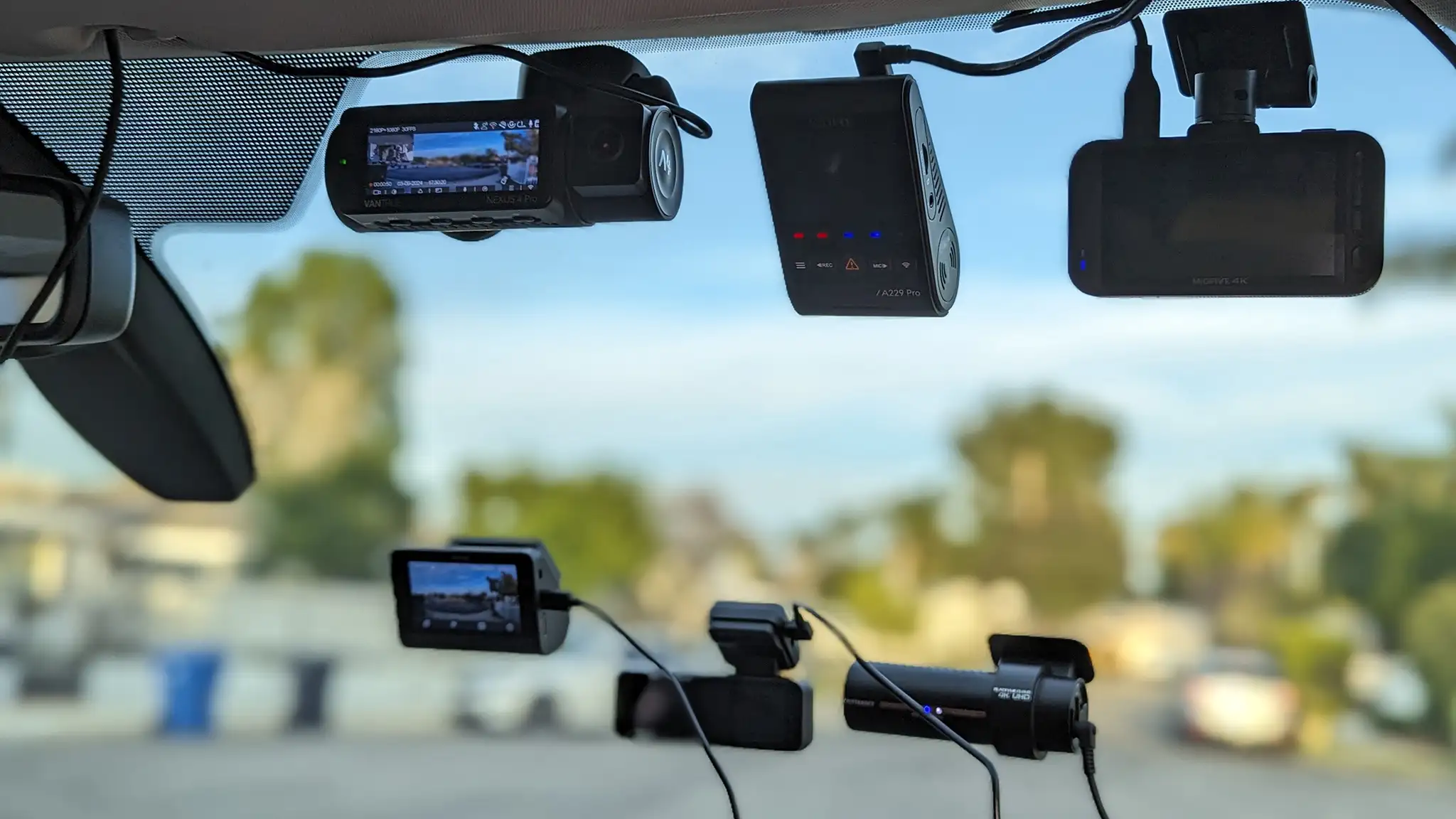
The Best best car dash cam for you depends less on a headline resolution than on coverage, storage, night performance, and how you plan to retrieve an important clip.
Camera coverage
A front-only camera is the simplest installation, but it cannot show what happened behind the vehicle. Front and rear systems cover the two directions most relevant to ordinary collisions. Three-channel models add the cabin, which is useful for rideshare drivers and families, while four-channel models add left and right views to reduce side blind spots.
Front resolution and lens width
A 4K front camera records more image detail than a 1080p front camera, especially when a plate or sign is some distance away. Lens width changes the balance: a wider view shows more surrounding traffic, but distant objects occupy fewer pixels. The ROVE R2-4K Dual offers a 150-degree front view, while the REDTIGER F7NP and F7N Touch list 170 degrees.
More cameras help only when each one is aimed at the part of the vehicle you actually need to document.
Low-light performance
Look for the combination of sensor, aperture, HDR, WDR, and infrared support rather than relying on one night-vision phrase. The ROVE and REDTIGER dual cameras use STARVIS 2 front sensors, while the galphi lists an F1.6 aperture and WDR. Interior and side cameras may need infrared assistance because those areas can be much darker than the road ahead.
GPS and evidence handling
GPS can embed speed, location, route, compass, and time data in a recording. That information can help establish where and when an event occurred, but it is only useful if the camera includes GPS or supports the correct accessory. The ZMOPO 360 View requires an optional GPS logger, while ROVE, REDTIGER, Icesky, TERUNSOUl, and 70mai models listed here include GPS functionality.
Wi-Fi and storage
Fast Wi-Fi saves time when you need to send a clip from the camera to a phone. The listed transfer claims range from up to 8MB/s on the galphi to up to 25MB/s on the 70mai A810 Lite. Storage needs rise sharply with 4K and multiple channels, so an included 128GB card gives a four-channel or three-channel camera more room than a smaller card.
Parking mode and power
Parking modes typically use motion detection, impact detection, or time-lapse recording. Nearly every model here requires a separate hardwire kit to remain active after the ignition is off. A supercapacitor can improve heat tolerance and shutdown behavior, but it does not replace the power connection needed for continuous parked monitoring.
For another angle on installation choices, the practical trade-offs between permanent and temporary power can help before you route cables through the vehicle.
Frequently asked questions
Do dash cams record when the car is parked?
Many of these cameras support a parking mode, but the feature generally requires a separate hardwire kit. Depending on the model, parking recording can use impact detection, motion detection, or time-lapse capture. A standard accessory power connection usually will not keep the camera monitoring the car after the ignition is off.
Is 4K necessary for a car dash cam?
4K is useful for preserving small details in the forward view, such as road signs and distant plates. It does not automatically make every night recording clear, since lens quality, sensor performance, aperture, and exposure also matter. A 1080p rear, cabin, or side camera can still provide important context even when the front camera records in 4K.
Should I choose a dual or three-channel dash cam?
Choose a dual camera if front and rear road coverage are your main concern. A three-channel model adds a cabin view, which is useful for rideshare work, family vehicles, or anyone who needs to document activity inside the car. The added view increases installation and storage demands.
What does GPS add to dash cam footage?
GPS can record information such as speed, location, route, compass direction, and time. Some cameras embed that information directly in the video, while others provide a separate player or app for reviewing it. GPS does not improve the image itself, and the ZMOPO 360 View requires an optional logger for this feature.
How do I move dash cam videos to my phone?
Most of the cameras here create a direct Wi-Fi connection to a companion app. You can preview or download clips without removing the memory card, though transfer speeds vary by model. The galphi lists downloads up to 8MB/s, while the 70mai A810 Lite lists up to 25MB/s.
Does a dash cam need a memory card?
Yes, the camera needs storage for loop recordings and locked incident clips. Several products include a card, with capacities ranging from 32GB to 128GB in this group. Multi-channel cameras and 4K recording use storage more quickly, so checking the supported capacity matters before replacing the included card.
Can a dash cam drain the car battery?
A parking mode that remains active after the engine is off can draw power from the vehicle. Hardwire kits for several models include low-voltage protection, but installation and vehicle compatibility still matter. If you do not need parked monitoring, disconnecting the camera when the car is off avoids that concern.
The bottom line
The Best best car dash cam for most drivers is the ROVE R2-4K Dual. Its 4K front and 1080p rear recording, STARVIS 2 sensor, GPS, fast Wi-Fi, flexible parking modes, and sensible controls cover the needs of a typical private vehicle without the complexity of four separate views.
Choose the 70mai T800E when a cabin camera is essential, especially for rideshare or family use. The 70mai A810 Lite is the more specialized option for owners who want remote access to a parked vehicle through an optional 4G setup.
If you are undecided, buy the ROVE for conventional front and rear coverage, or step up to a three-channel camera only when you have a clear reason to record inside the car.
As an Amazon Associate we earn from qualifying purchases.