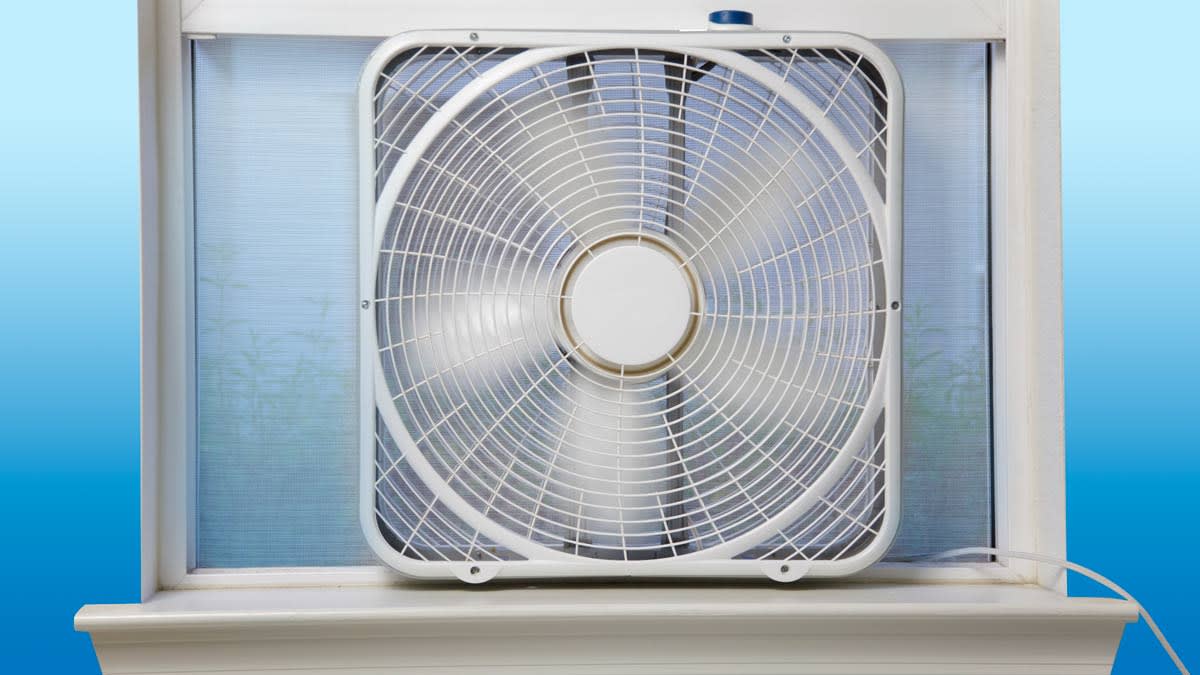

A window fan has one job that a pedestal fan cannot quite manage: move air through the room instead of merely stirring it. The right unit can pull in cooler outdoor air at night, push stale air and humidity outside, or do both at once.
The Best window fan for most homes is the Comfort Zone 3-Speed Twin, thanks to its auto-locking expanders, three speeds, tabletop feet, and removable bug screen. The rest of this list covers everything from thermostat-controlled models to low-profile whole-room fans and flexible vertical installations.
| # | Product | Award | Width | Speeds | Best for |
|---|---|---|---|---|---|
| 1 | Comfort Zone 3-Speed Twin | Best overall | 22.25 to 33 in. | 3 | Most bedrooms and living spaces |
| 2 | Bionaire Digital | Best thermostat control | 24 to 36 in. | 3 | Automatic temperature control |
| 3 | Genesis Twin Fan | Best high-velocity option | Expandable side panels | 3 | Strong airflow and broad adjustment |
| 4 | Vornado Transom White | Best low-profile fan | 26 to 40 in. | 4 | Whole-room ventilation |
| 5 | Comfort Zone Remote Twin | Best three-mode fan | 23.5 to 37 in. | 3 | Remote control and air exchange |
| 6 | Vornado Transom Black | Best dark-finish option | 26 to 40 in. | 4 | Low-profile horizontal windows |
| 7 | Amazon Basics Twin | Best simple controls | 25 to 32 in. | 2 | Straightforward cooling |
| 8 | Shinic Rotatable Twin | Best vertical installation | 21.65 to 33.27 in. | 3 | Sliding windows and flexible airflow |
| 9 | Shinic Quiet Twin | Best sealed setup | 23.5 to 37 in. | 3 | Bedrooms and covered windows |
| 10 | Comfort Zone 2-Speed Twin | Best basic exhaust fan | 22.25 to 33 in. | 2 | Simple intake or exhaust |
1. Comfort Zone 3-Speed Twin: Best Overall

Pros
- Three airflow speeds, including a quieter low setting
- Auto-locking expanders fit 22.25 to 33-inch windows
- Removable bug screen and fabric cover
- Detachable feet allow tabletop use
- Manual intake and exhaust control
Cons
- Airflow direction requires manual adjustment
- No remote or thermostat
- The 22-inch frame may be too wide for smaller windows
Best for: most bedrooms, kitchens, and living rooms that need flexible seasonal ventilation.
The Comfort Zone 3-Speed Twin gets the important window-fan decisions right without burying them in a complicated control panel. Turn the dial, choose low, medium, or high, and the two 7-inch blades start moving air. It is the kind of unit that works well in a bedroom at night and still has enough output for a medium-sized room when the temperature rises.
Its auto-locking accordion expanders adjust from 22.25 to 33 inches, which covers a useful range of standard double-hung windows. The fan itself is listed at 22 inches wide, 10.88 inches high, and 4.88 inches deep, so it has a relatively compact footprint once installed. At 4.6 pounds, it is also easier to move than the heavier Vornado Transom and Genesis models.
Airflow is manually reversible. Use intake mode to pull cooler outdoor air into the room, then turn the fan around when the room needs stale air or humidity pushed outside. The included bug screen and fabric cover make that arrangement more practical when the fan is sitting in an open window, while the two removable feet let it serve as a tabletop fan away from the window.
The weakness is the absence of a remote and automatic thermostat. The Bionaire Digital is better if you want the fan to respond to room temperature, and the Comfort Zone Remote Twin gives you more operating modes from across the room. Choose this model instead when simple controls, portable use, and a secure adjustable fit matter more than automation.
2. Bionaire Digital: Best Thermostat Control

Pros
- Programmable thermostat with digital temperature display
- Remote control included
- Three speeds and electronically reversible airflow
- Fits windows from 24 to 36 inches
- Three-year limited warranty
Cons
- Heavier than the simplest twin fans
- Digital controls add more setup than a manual dial
- No tabletop feet are listed
Best for: anyone who wants automatic temperature-based operation instead of constant manual adjustments.
The Bionaire Digital is the most useful pick for a room where the fan should manage itself. Its programmable thermostat can switch the unit on and off around a selected temperature, while the LED display shows the current room temperature. That makes it a better fit for overnight cooling than a fan that has to be reached and turned down by hand.
You get low, medium, and high settings, plus reversible airflow that can draw in outdoor air, exhaust warm indoor air, or exchange air in both directions. The dual 8.5-inch fans sit in a frame listed at 24 inches wide, 12.8 inches high, and 4 inches deep. Its 6.61-pound weight is manageable, though it is not as easy to carry from room to room as the Comfort Zone 3-Speed Twin.
The included remote is the feature that changes daily use most. You can adjust the fan from a bed or sofa, and the display has a dimmer function for darker rooms. The built-in accordion extender and additional extender panel cover windows from 24 to 36 inches, giving it more reach than several of the smaller twin fans here.
It is not the right choice if you want the least possible interaction. The Amazon Basics Twin has simpler manual controls, and the Vornado Transom White has a much lower profile for wide horizontal windows. The Bionaire makes sense for a bedroom, nursery, or living room where temperature automation and remote access are more important than a minimal control scheme.
3. Genesis Twin Fan: Best High-Velocity Option

Pros
- Two 9-inch fan heads with separate copper motors
- Three speeds
- Thermostat range from 60 to 80 degrees
- LED temperature indicators
- Expandable side panels
Cons
- One of the heaviest models here
- The listed dimensions are unusually tall and narrow
- No remote control is listed
Best for: larger openings and rooms where strong twin-fan airflow is the priority.
The Genesis Twin Fan feels purpose-built for moving a substantial amount of air through a window. Its two 9-inch fan heads are larger than the blades in the Comfort Zone 3-Speed Twin and Amazon Basics Twin, and each uses a copper motor. Three speed settings let you back the output down when a full blast is unnecessary.
Its thermostat spans 60 to 80 degrees, with LED indicators that make the selected setting visible. That is a useful middle ground between the fully manual fans and the more automated Bionaire Digital. The fan can be set up for intake or exhaust, and the reversible design supports changing the room's ventilation direction as conditions shift.
The expandable side panels add 6.5 inches on either side, while the listed body dimensions are 24 by 12 by 4 inches. At 8.4 pounds, the Genesis is significantly heavier than the lighter Comfort Zone units. That extra mass may help it feel substantial in a window, but it also makes carrying and repositioning less appealing.
The Genesis lacks a remote, so thermostat control is its main convenience feature. The Vornado Transom White is a better fit for a low-profile opening, and the Comfort Zone Remote Twin is easier to control from bed. Pick Genesis when the larger 9-inch fan heads and high-velocity design matter more than portability.
4. Vornado Transom White: Best Low-Profile Fan

Pros
- Four speed settings
- Electronic reversal at the touch of a button
- Low-profile 7.2-inch height
- Fits windows from 26 to 40 inches wide
- Remote and automatic temperature control
Cons
- Can only be installed horizontally
- Window screens may need to be removed
- Heavier than most compact twin fans
Best for: wide horizontal windows where a slim, integrated-looking installation matters.
The Vornado Transom White is the most distinctive design in this group. Instead of looking like a twin fan pressed into a window opening, it uses a low-profile frame that is only 7.2 inches high. That makes it especially attractive for windows where a taller fan would block more of the view or sit awkwardly beneath the sash.
Its four speeds give it finer control than the three-speed models, and electronic reversal changes between intake and exhaust with a button press. The automatic temperature control and remote add the same kind of convenience found on the Bionaire Digital, but the Transom places those features in a slimmer horizontal chassis.
The fit range is 26 to 40 inches wide, using a Soft-fit foam block system to seal the opening. The fan is intended for windows with an opening at least 8 inches tall. It measures 26 inches wide, 5.7 inches deep, and 7.2 inches high, and weighs 8.3 pounds. That depth and weight mean installation deserves more attention than it would with a lightweight portable twin fan.
This model is not suitable for vertical installation, and depending on the window depth, the screen may need to come out. The identical Vornado Transom Black has the same design and capabilities, with the finish being the practical distinction. Choose the white version for a lighter visual presence and wide horizontal windows.
If the window fan is only one part of a broader cooling plan, how much airflow a room really needs can help determine whether a window-mounted model is enough.
5. Comfort Zone Remote Twin: Best Three-Mode Fan

Pros
- Cool, circulate, and exhaust modes
- Remote control included
- Three speeds
- Expandable fit from 23.5 to 37 inches
- Fabric cover and bug screen
Cons
- Larger listed height than the basic Comfort Zone model
- Manual mode selection is more involved
- No thermostat is listed
Best for: bedrooms and living rooms that need remote access and several ventilation patterns.
The Comfort Zone Remote Twin is the most flexible of the standard twin-fan designs. Its three modes are clearly separated: Cool brings outdoor air inward with both fans, Exhaust pushes warm or stale air out, and Circulate runs the blades in opposing directions. That last mode is useful when the room needs air movement without committing both fans to the same direction.
Three speed settings cover gentle, moderate, and stronger airflow. The accordion expanders adjust from 23.5 to 37 inches, which gives this model the broadest fit range among the Comfort Zone fans in this roundup. The frame is listed at 25.7 inches long, 14.6 inches high, and 5.6 inches wide, with a weight of 5.6 pounds.
The remote is a practical advantage rather than a decorative extra. You can change the speed, mode, or power state without reaching into the window, which is useful when the fan is installed behind a bed or sofa. A fabric cover and bug screen help close the opening when the fan is not operating, and the unit's feet allow more flexible placement.
The Bionaire Digital is the stronger pick for thermostat automation, while the Comfort Zone 3-Speed Twin has a smaller, lighter frame and simpler operation. This model wins when the three distinct airflow modes and remote control are more useful than a digital temperature display.
6. Vornado Transom Black: Best Dark-Finish Option

Pros
- Four speeds
- Electronic exhaust reversal
- Soft-fit foam block system
- Automatic temperature control and remote
- Low-profile horizontal design
Cons
- Horizontal installation only
- May require screen removal
- Weighs 8.3 pounds
Best for: wide horizontal windows where a black low-profile frame suits the room.
The Vornado Transom Black offers the same core design as the white Transom, but the darker finish can blend more naturally with black trim, darker shades, or a room where a pale appliance would stand out. The important performance traits remain the same: four speeds, a remote, automatic temperature control, and electronic switching between intake and exhaust.
At 26 inches wide, 5.7 inches deep, and 7.2 inches high, it occupies less vertical window space than the Genesis Twin Fan or Bionaire Digital. The Soft-fit foam block system is designed for openings from 26 to 40 inches wide, and the unit needs at least an 8-inch-tall opening. Its whole-room positioning makes it more suitable for broad air exchange than for simply blowing directly at a nearby chair.
Installation is the point to think through first. The Transom can only be mounted horizontally, and the product information warns that removing the window screen may be necessary depending on the window depth. At 8.3 pounds, it is not the fan most people will want to remove and reinstall every day.
The white Transom is the obvious alternative if the finish is not important, while the Bionaire Digital is more adaptable to windows with a smaller width range. The Black Transom is for someone who wants the same slim, controlled design and prefers its appearance in the window.
7. Amazon Basics Twin: Best Simple Controls

Pros
- Straightforward manual operation
- Reversible airflow
- Expandable side panels
- Copper motor
- Fits windows from 25 to 32 inches
Cons
- Only two speeds
- No remote or thermostat
- No bug screen or tabletop feet listed
Best for: users who want a basic reversible window fan without extra controls.
The Amazon Basics Twin keeps the experience deliberately simple. It has two speeds, manual controls, and reversible airflow, so its job is easy to understand. Set it to move air inward for cooling or reverse it to exhaust warm air. There is no remote, display, thermostat, or operating mode menu to learn.
Its twin 9-inch fans sit in a frame measuring 23.43 inches long, 12.6 inches high, and 5.35 inches wide. The expandable side panels fit windows from 25 to 32 inches wide, which is a narrower range than the Bionaire Digital or Comfort Zone Remote Twin. At 5.72 pounds, it remains reasonably manageable for seasonal installation.
The copper motor is intended for consistent operation, and the two-speed arrangement gives you a low setting for quieter circulation and a higher setting for stronger movement. That is enough for a bedroom, office, or small living area where the window opening is already a good match.
The limitation is capability. The Comfort Zone 3-Speed Twin gives you an extra speed plus tabletop feet and a bug screen, while the Bionaire adds remote and thermostat control. The Amazon Basics Twin is a sensible choice only when those additions are unnecessary and manual operation is exactly what you want.
For a fan used beside a desk rather than in a window, the features that matter for close-range airflow are different from the fit and exhaust requirements considered here.
8. Shinic Rotatable Twin: Best Vertical Installation

Pros
- Fan heads rotate 180 and 90 degrees
- Can be installed horizontally or vertically
- Three speeds
- Rigid and accordion expanders
- Detachable feet and carrying handles
Cons
- Manual airflow adjustment
- No remote or thermostat
- More installation variables than a fixed horizontal fan
Best for: sliding windows, vertical mounting, garages, bathrooms, and unusual window layouts.
The Shinic Rotatable Twin is the problem-solver of this roundup. Its two fan heads can rotate 180 and 90 degrees, allowing the airflow to be directed without treating the fan as a fixed horizontal block. That makes it unusually useful for vertical windows and spaces where one side should intake while the other exhausts.
The three modes are created manually by changing the angle of the fan heads: dual cooling, dual exhaust, or simultaneous intake and exhaust. Three speeds provide a useful level of adjustment, and a simple control knob keeps operation uncomplicated. This is not a remote-controlled appliance, but it is a flexible mechanical design.
The auto-locking expander adjusts from 21.65 to 33.27 inches. Two additional rigid expanders add stability, especially when the fan is mounted vertically. Without its feet, the listed dimensions are 21.65 inches wide, 3.1 inches deep, and 10.8 inches high. The unit weighs 6 pounds and includes handles for carrying.
The trade-off is that flexibility requires more setup. The Vornado Transom models are cleaner installations for wide horizontal windows, and the Comfort Zone Remote Twin is easier when you want to change modes from bed. Choose Shinic when the window orientation or the ability to aim each fan head matters most.
9. Shinic Quiet Twin: Best Sealed Setup

Pros
- Three airflow modes
- Three speeds with a quieter operating design
- Expandable fit from 23.5 to 37 inches
- Foam sealing tape included
- Removable cover, bug cover, and standing feet
Cons
- No remote control
- No thermostat
- No listed weight
Best for: bedrooms, kitchens, and bathrooms where sealing the window gap matters.
The Shinic Quiet Twin focuses on the details that make a window fan easier to live with after installation. It has Cool, Exhaust, and Circulate modes, three speed settings, and a design described as reducing noise by approximately 15 percent. That combination makes it more appealing for bedrooms than a fan that offers only high and low.
Its panel expands from 23.5 to 37 inches and locks in place for a stable fit. The included foam sealing tape is particularly useful because small gaps around a window fan can undermine both cooling and exhaust performance. The fan measures 23.5 inches wide, 12.5 inches high, and 4 inches deep in its listed product dimensions.
The package includes two removable covers, a bug cover, two standing feet, and the foam seal strip. The feet give it a second life as a tabletop fan, while the covers help close off the opening when the unit is idle. Its 70-watt, 120-volt motor is ETL certified according to the product information.
There is no remote or thermostat, so the Bionaire Digital remains the better automated option. The Comfort Zone 3-Speed Twin is also simpler if you do not need the broader 37-inch fit. Shinic is the one to choose when noise reduction, sealing tape, and protective covers are more important than remote access.
10. Comfort Zone 2-Speed Twin: Best Basic Exhaust Fan

Pros
- Simple intake and exhaust reversal
- Auto-locking expanders
- Removable fabric cover
- Tabletop feet and carrying handle
- 9-inch twin-fan design
Cons
- Only two speeds
- No remote or thermostat
- The listed dimensions are inconsistent with the other Comfort Zone models
Best for: basic room ventilation where a manual reversible fan is all that is required.
The Comfort Zone 2-Speed Twin is the uncomplicated member of the Comfort Zone range. It has low and high settings, manual reversible airflow, and two 9-inch fans. Use intake to draw in cooler outdoor air or exhaust to remove warm, stale air. That is the full operating idea, and for a utility room or bedroom, that may be enough.
The auto-locking accordion expanders fit windows from 22.25 to 33 inches. A removable fabric cover helps keep bugs and debris out when the fan is not operating, and the two feet allow tabletop placement. The carrying handle also makes it easier to move between rooms than the heavier Vornado Transom models.
The main compromise is control resolution. There is no medium setting, so the jump between low and high is more noticeable than it is on the Comfort Zone 3-Speed Twin, Amazon Basics Twin, or Shinic models. The product information lists a 9-inch, two-speed size, while the listed dimensions are 22.5 inches high, 11.88 inches wide, and 5.5 inches deep, so measuring the intended window before ordering is sensible.
The Comfort Zone 3-Speed Twin is the better all-purpose pick, and the Comfort Zone Remote Twin is better when you want distinct cooling, circulating, and exhaust modes. This model is for the reader who wants a reversible fan with a cover and feet, and has no interest in remotes or automated temperature control.
How to choose best window fan
A window fan works well only when its fit, airflow direction, and controls match the room, so start with the window rather than the fan's headline feature.
Window fit
Measure the usable opening, not just the overall frame. Expanders need to reach both sides securely, and the window must have enough vertical clearance for the fan body. The Vornado Transom models need a horizontal opening at least 8 inches tall, while the Shinic Rotatable Twin can also be installed vertically.
A snug fit matters because gaps let air escape around the frame. Foam strips, rigid expanders, and auto-locking panels can all help, but they do not replace accurate measurements.
Airflow direction
Intake brings outdoor air into the room. Exhaust pushes warm, humid, or stale air out. Circulation modes use opposing airflow to exchange air continuously, which can be useful when the room needs ventilation rather than a direct blast.
Manual reversal is adequate when the direction changes only occasionally. Electronic reversal, as used by the Vornado Transom models, is more convenient when you switch between intake and exhaust often.
A reversible fan is most useful when you decide where the room's hot air should go before choosing the speed.
Speed control
Two speeds are enough for basic ventilation, but three speeds make it easier to find a tolerable setting for sleeping or working. Four speeds provide finer adjustment, particularly on the Vornado Transom models.
Look for a low setting if the fan will run in a bedroom. Strong airflow is useful for clearing heat, but a fan that has no comfortable lower setting may be harder to use for long periods.
Controls and automation
Manual dials are quick and dependable. Remotes help when the fan sits behind furniture or in a bedroom window. Thermostats can turn the fan on and off around a selected temperature, reducing the need for repeated adjustments.
The Bionaire Digital combines a thermostat, display, and remote. The Vornado Transom models add those conveniences while using a lower-profile frame. The Comfort Zone and Shinic models generally favor manual mode selection.
Covers and sealing
A bug screen or removable cover is useful whenever the fan remains installed while switched off. Sealing tape or foam can reduce drafts around the frame and help more of the fan's airflow move through the room.
The Shinic Quiet Twin includes foam sealing tape, while several Comfort Zone models include a fabric cover or bug screen. These details matter most in bedrooms, kitchens, and bathrooms where the fan may stay in place for days at a time.
Frequently asked questions
Can a window fan bring in cool air and exhaust hot air?
Yes. Models with reversible airflow can draw outdoor air inward or push indoor air outside. Some twin fans can run one side in intake and the other in exhaust at the same time, while others require the entire unit to be switched between directions.
Are window fans suitable for vertical sliding windows?
Some are, but not all. The Shinic Rotatable Twin is designed for horizontal or vertical installation and includes rigid expanders for added stability. The Vornado Transom models can only be installed horizontally.
Is a thermostat useful on a window fan?
A thermostat is useful when you want the fan to respond to room temperature without constant manual changes. The Bionaire Digital and Vornado Transom models include automatic temperature control, while the other fans here rely on manual operation.
Do window fans need a bug screen?
A bug screen is not essential for operation, but it is helpful when the fan remains in an open window. It can reduce the entry of insects and debris when the fan is running, while a fabric or removable cover can close the opening when the fan is off.
How should a window fan be sealed?
Use the fan's expanders to close the side gaps, then add foam or sealing tape where the window frame still leaves an opening. The Shinic Quiet Twin includes a foam seal strip. A secure fit also helps prevent movement when the fan is running.
Can a window fan be used on a tabletop?
Several models can. The Comfort Zone 3-Speed Twin, Comfort Zone 2-Speed Twin, Comfort Zone Remote Twin, and Shinic Quiet Twin include feet or standing feet for tabletop use. Check that the feet are installed securely before operating the fan away from the window.
Should a window fan face in or out at night?
If outdoor air is cooler than indoor air, intake can bring that cooler air inside. If the room has built-up heat or humidity, exhaust may work better. In a multi-window setup, one fan can bring air in while another pushes it out, creating a more deliberate path through the room.
The bottom line
The Best window fan for most people is the Comfort Zone 3-Speed Twin. Its three speeds, auto-locking 22.25 to 33-inch fit, removable bug screen, fabric cover, and tabletop feet cover the everyday requirements without making operation complicated.
Choose the Bionaire Digital if automatic temperature control and a remote matter more than a lighter frame. For a wide, low horizontal opening, the Vornado Transom White or Vornado Transom Black offers the cleanest installation and the most refined controls.
If you are undecided, measure the window first, then choose between simple manual airflow and automatic temperature control.
As an Amazon Associate we earn from qualifying purchases.