

A large television can make a living room feel like a cinema, but a bigger screen also exposes weak contrast, smeared motion, clumsy menus, and thin sound. The right choice depends on more than diagonal size.
Our Best 70 inch tv picks include straightforward Fire TV and Roku models, brighter Mini LED sets, gaming-ready screens, and several 75-inch alternatives that fit the same viewing role. The Insignia F50 is our top pick for its useful connections, approachable Fire TV interface, and true 70-inch size.
Comparison table
| # | Product | Award | Screen | Motion | Best for |
|---|---|---|---|---|---|
| 1 | Insignia F50 70-inch | Best overall | 70-inch 4K LED | HDR10 | A simple large-screen setup |
| 2 | Samsung M70H 75-inch | Best Mini LED picture | 75-inch 4K Mini LED | 120Hz | Sports and bright highlights |
| 3 | Samsung U8000H 65-inch | Best compact Samsung | 65-inch 4K LED | Up to 60Hz | Smaller rooms |
| 4 | LG Nano AI NU85 75-inch | Best for films | 75-inch 4K Nano | FreeSync Premium, ALLM | Movie watching and console play |
| 5 | Hisense U6 Pro 65-inch | Best for gaming | 65-inch 4K Mini LED | Native 144Hz | Fast games and sports |
| 6 | Roku Select 65-inch | Best simple interface | 65-inch 4K QLED | Not specified | Easy streaming |
| 7 | Hisense E6 75-inch | Best large Fire TV | 75-inch 4K Hi-QLED | Motion Rate 120 | Big-screen movie nights |
| 8 | TCL QM6K 75-inch | Best bright-screen gaming TV | 75-inch QD Mini LED 4K | Native 144Hz | Bright rooms and action |
| 9 | LG UP7070 70-inch | Best traditional 70-inch option | 70-inch 4K LED | TruMotion 120 | Existing LG households |
| 10 | Sony BRAVIA 3 75-inch | Best upscaling | 75-inch 4K LED | Motionflow XR | Broadcast TV and movies |
1. Insignia F50 70-inch: Best Overall

Pros
- True 70-inch screen size
- HDR10 and 4K upscaling
- Three HDMI ports plus eARC
- Fire TV and Alexa voice control
- VESA 300 × 300 wall-mount compatibility
Cons
- LED backlighting is less advanced than Mini LED
- Built-in speakers may not replace a soundbar
- No high-refresh gaming specification is listed
Best for: someone who wants a full-size screen with flexible connections and a familiar streaming platform.
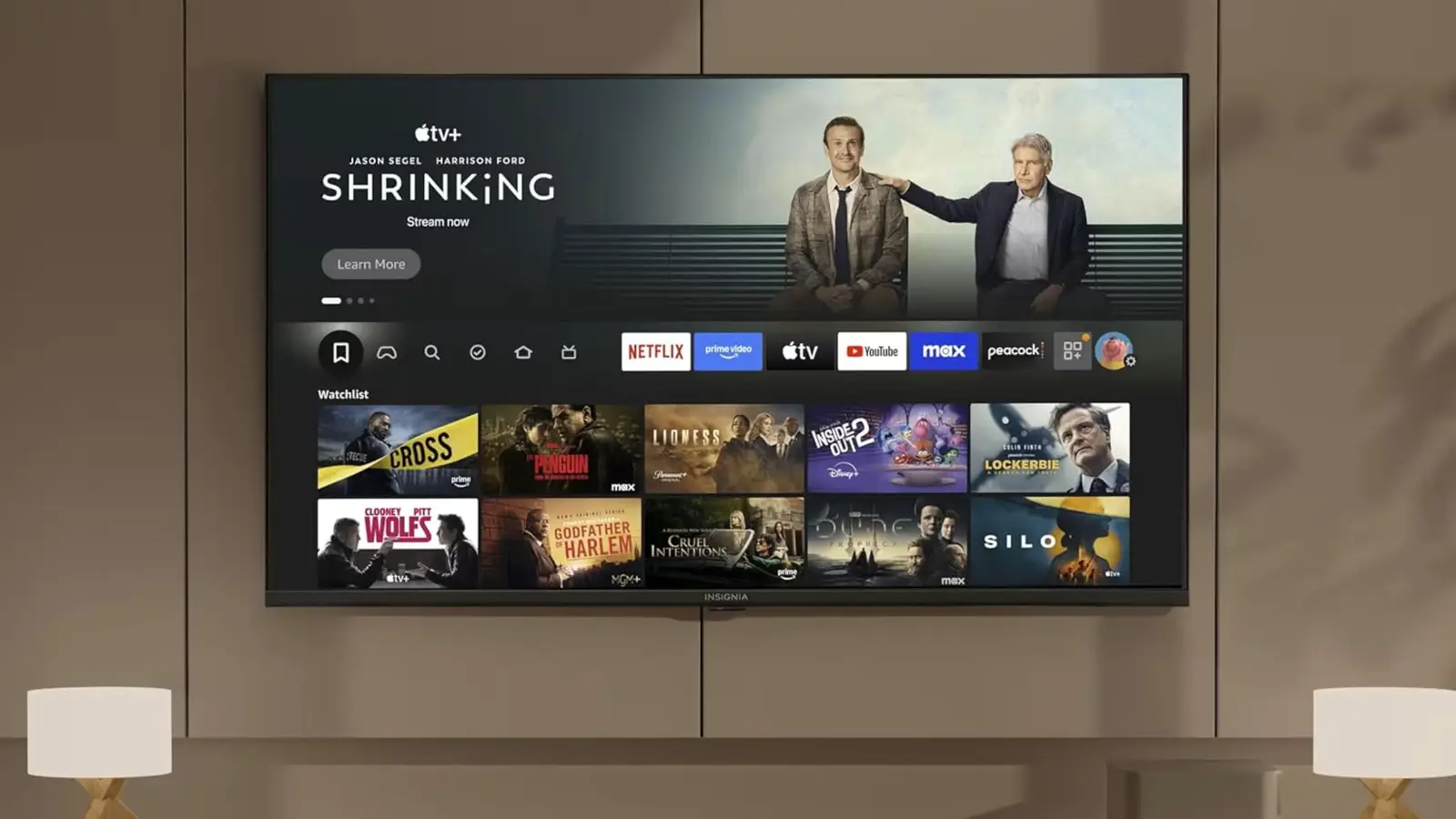
The Insignia F50 70-inch is the least complicated recommendation here. It gives you the exact 70-inch screen size many buyers search for, then adds Fire TV, Alexa voice control, and enough physical connectivity to avoid an immediate accessories shuffle. It is the TV we'd point toward when the goal is a large, competent centerpiece rather than a specialized display.
Its 4K Ultra HD resolution puts four times the pixels of Full HD on the screen, while HDR10 expands the range between bright highlights and dark areas. The set also upscales existing content to an Ultra HD level, which matters if the household still watches cable channels, older shows, or DVDs alongside native 4K streams. Those features do not turn ordinary footage into reference-quality cinema, but they make mixed sources easier to live with.
Connections are a real strength. The F50 has three HDMI ports, HDMI eARC, composite AV inputs, a digital optical output, USB, a headphone jack, coaxial, Ethernet, and Wi-Fi. HDMI eARC can pass an original full-resolution audio signal to compatible equipment, while DTS Virtual:X attempts to create a wider sound field from the television speakers. The VESA 300 × 300 mounting pattern also gives wall-mount buyers a clear installation route.
The weakness is the basic LED platform. The Samsung M70H, Hisense U6 Pro, and TCL QM6K have Mini LED systems designed for more controlled contrast, and their faster motion features are better suited to demanding games. The Insignia also should not be chosen by shoppers who expect built-in TV audio to create a convincing theater effect. For everyone else, its combination of size, ports, Fire TV access, and plain-spoken functionality makes it the strongest all-round fit.
2. Samsung M70H 75-inch: Best Mini LED Picture

Pros
- Mini LED backlighting with local dimming
- One billion color claim from Pure Color Spectrum
- 120Hz motion support with DLG
- Soccer Mode and Gaming Hub
- Large 75-inch screen
Cons
- Larger footprint than the 70-inch models
- Samsung TV platform may not suit every household
- No Dolby Vision feature is listed
Best for: sports viewers and gamers who want a large screen with brighter highlights and smoother motion.
The Samsung M70H 75-inch is the picture-first choice among the mainstream Samsung options here. Its Mini LED backlight is the important distinction, not the long model name. Mini LED allows more precise control of light behind the LCD panel than a conventional LED design, so bright objects can stand out while darker areas retain more depth.
Samsung pairs that backlight with a 4K Mini LED processor and Supreme Mini LED Dimming. The stated aim is brighter highlights and deeper blacks, and that combination should be more convincing in HDR films, stadium footage, and games than the conventional LED Samsung U8000H. Pure Color Spectrum and Color Booster are designed to produce a broader, more vivid palette, with Samsung describing the result as one billion colors.
Motion is another reason to choose this set. Motion Xcelerator+ and DLG 120Hz are aimed at sports and gaming, where quick pans and moving players can reveal blur on slower panels. Soccer Mode is unusually specific, with settings intended to make motion clearer and greens more vibrant. The Gaming Hub gathers console, cloud, and gaming apps in one place, which is useful if several game sources share the screen.
The M70H is not the obvious choice for every room. It is 65.7 inches wide and 39.7 inches high, so buyers replacing a 70-inch television should measure the furniture rather than assume the difference is negligible. The Insignia is easier to recommend for a simple Fire TV setup, while the TCL QM6K offers a more explicit native 144Hz specification. Pick the Samsung when sports, contrast, and the 75-inch canvas matter more than using the smallest possible footprint.
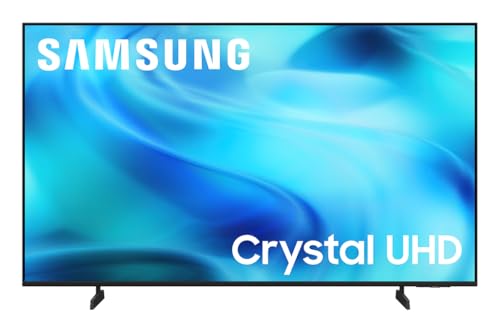
3. Samsung U8000H 65-inch: Best Compact Samsung
Pros
- 4K upscaling for lower-resolution sources
- Samsung TV Plus free content
- Motion handling designed for games and sports
- Smaller footprint than every 70-inch and 75-inch pick
- Color Booster processing
Cons
- Smaller 65-inch screen
- Conventional LED display
- Motion specification tops out at 4K 60Hz
Best for: a room where a large screen is wanted but a 70-inch or 75-inch television will not fit comfortably.
The Samsung U8000H 65-inch is a reminder that screen size should follow the room, not the search query. At 56.9 inches wide, it is substantially easier to place on a media console than the 70-inch and 75-inch models. It still gives you 4K resolution, Samsung's smart platform, and the processing tools that make ordinary television easier to watch.
The Crystal Processor is built to sharpen detail and improve color, while 4K Upscaling works on lower-resolution shows, movies, and games. Samsung's Color Booster is intended to intensify reds, blues, and other hues without requiring the viewer to adjust picture controls constantly. Motion Xcelerator estimates and adjusts frame transitions, but the listed performance is up to 4K 60Hz, so this is a living-room television rather than a high-refresh gaming specialist.
Samsung TV Plus adds more than 2, 700 streaming options, including more than 750 subscription-free channels according to the listing. That free channel layer is helpful for households that want live news, sports, or casual viewing without opening a separate app. The platform is also a natural fit for anyone already using Samsung devices, though the data here does not specify a complete port layout.
The trade-off is easy to name. The U8000H is smaller than the Insignia and every 75-inch choice, and it lacks the Mini LED contrast of the M70H, U6 Pro, and QM6K. The Roku Select is another simple 65-inch alternative, with a more deliberately uncluttered interface. Choose Samsung if its processing and TV Plus ecosystem appeal to you, and choose this model only when 65 inches genuinely fits the room.
4. LG Nano AI NU85 75-inch: Best for Films

Pros
- Alpha 7 AI Processor 4K Gen9
- AI Super Upscaling for lower-resolution content
- Filmmaker Mode
- HDR10 Pro
- FreeSync Premium and ALLM for gaming
Cons
- 75-inch size needs substantial wall or furniture space
- No refresh-rate figure is listed
- WebOS experience differs from Fire TV and Google TV
Best for: movie watchers who want filmmaker-focused picture modes and a capable console feature set.
The LG Nano AI NU85 75-inch has a more film-conscious personality than most of the large screens in this list. Filmmaker Mode preserves the director's original colors, settings, and frame rates rather than applying an aggressive showroom look. That makes it a good match for viewers who prefer a measured, cinematic presentation.
LG's Alpha 7 AI Processor 4K Gen9 analyzes scenes, adjusts textures, sharpens edges, and enhances contrast. Its AI Super Upscaling is aimed at lower-resolution material, an important feature for a 75-inch screen where soft source video can look especially obvious. HDR10 Pro dynamically adjusts brightness to reveal detail in both dark and bright parts of an image.
The webOS 2026 platform includes access to LG Channels, with more than 400 free channels and more than 10, 000 movies and shows listed as available. Google Gemini and Microsoft Copilot are also named as platform integrations. For gaming, AMD FreeSync Premium, ALLM, Game Dashboard, and Game Optimizer give this LG more control than a basic 60Hz television, though the listing does not provide a numeric refresh rate.
That missing number is the main reason this is not the top gaming pick. The Hisense U6 Pro and TCL QM6K state native 144Hz performance, giving competitive players a clearer basis for comparison. The LG also has a 65.7-inch width and 40.4-inch height, so it is a serious installation. It makes most sense for a movie-centered household that also wants modern console tools and a polished large-screen interface.
5. Hisense U6 Pro 65-inch: Best for Gaming

Pros
- Mini LED backlight with Hi-QLED color
- Native 144Hz refresh rate
- Dolby Vision IQ, HDR10+ Adaptive, HDR10, and HLG
- Glare-free anti-reflection screen
- Built-in subwoofer
Cons
- Smaller 65-inch screen
- Fire TV interface may not suit Roku or Google TV fans
- No detailed port layout is listed
Best for: gamers and sports viewers who prioritize fast motion, HDR format support, and a screen for bright rooms.
The Hisense U6 Pro 65-inch packs the most ambitious display specification into a smaller screen. Its Mini LED backlight uses hundreds of precise light zones, while Hi-QLED technology is intended to add richer color and stronger contrast. That combination is more meaningful for dark games and HDR movies than a generic 4K label alone.
The standout number is native 144Hz. A native refresh rate describes the panel's actual capability, not a motion-processing label, and it can make fast games, sports, and rapid camera movement look more fluid. Hisense also lists Motion Rate 480, but native 144Hz is the figure to pay attention to when comparing this television with the Samsung M70H's 120Hz and the TCL QM6K's native 144Hz.
HDR support is unusually broad. Dolby Vision IQ, HDR10+ Adaptive, HDR10, and HLG cover the major formats listed by the manufacturer, while the Hi-View AI Engine adjusts the picture for movies, sports, and games. The anti-reflection and glare-free treatment should help in a bright room, and the built-in subwoofer gives the chassis more low-end support than a typical television speaker setup.
The screen is 56.9 inches wide, so it is far less imposing than the 75-inch Hisense E6 or TCL QM6K. The Roku Select is simpler and more approachable for casual streaming, but it does not offer the U6 Pro's listed Mini LED and native 144Hz combination. Skip the Hisense if a 75-inch image is non-negotiable. Choose it when responsive motion, HDR flexibility, and glare control matter more than maximum diagonal size.
6. Roku Select 65-inch: Best Simple Interface

Pros
- Straightforward Roku Home Screen
- 4K, QLED, and HDR10 picture
- Fast Wi-Fi and quick app launching
- Voice control with Roku, Siri, Alexa, or Google Assistant
- Bluetooth Headphone Mode
Cons
- Smaller than the 70-inch and 75-inch models
- No numeric refresh-rate specification is listed
- Less display-focused than Mini LED alternatives
Best for: households that want easy streaming, simple search, and minimal menu friction.
The Roku Select 65-inch wins by refusing to make television software feel like a project. The Home Screen is intentionally uncluttered, the remote is designed around the main controls, and the listing emphasizes setup that takes only minutes. If several family members need to find their apps without learning a new interface, this is the most approachable pick.
Its 4K QLED panel uses HDR10, while Roku Smart Picture cleans up incoming signals and selects a suitable picture mode. That is a sensible combination for mixed streaming, live television, and older content. The screen is 56.9 inches wide and weighs 30.9 pounds, making it easier to position than the heavier large-screen sets in this roundup.
Roku adds practical quality-of-life features that are easy to overlook. Fast Wi-Fi is intended to launch apps quickly, voice search works across thousands of apps, and a lost remote finder can save a frustrating search. Bluetooth Headphone Mode is particularly useful for late-night viewing, while AirPlay and voice control through Siri, Alexa, or Google Assistant make it flexible in a mixed-device home.
The display hardware is less ambitious than the Hisense U6 Pro, Samsung M70H, or TCL QM6K. The listing does not give a numeric refresh rate, and it does not mention Mini LED local dimming. That makes the Roku a poor fit for a buyer focused on demanding games or the deepest HDR contrast. For streaming-first households, its interface is the reason to choose it over more technically elaborate televisions.
7. Hisense E6 75-inch: Best Large Fire TV

Pros
- 75-inch Hi-QLED display
- Dolby Vision and Dolby Atmos
- HDR10+ Adaptive, HDR10, and HLG
- AI light sensor
- Fire TV with Alexa voice control
Cons
- Not a Mini LED model
- Large 66-inch width
- Motion Rate 120 is less specific than native high-refresh gaming modes
Best for: viewers who want a very large Fire TV with broad HDR support and automatic brightness adjustment.
The Hisense E6 75-inch is the straightforward big-screen Fire TV alternative to the Insignia. Its Hi-QLED Color system is designed to keep colors vivid and lifelike, and the 75-inch panel makes films, sports, and family viewing feel more involving than a 65-inch screen. The Fire TV home screen brings live channels and apps together, with Alexa available for finding and controlling content.
This model has a broad HDR brief. Dolby Vision, HDR10+ Adaptive, HDR10, and HLG are all listed, and Dolby Atmos support extends to compatible sound systems. The AI 4K Upscaler works on low-resolution content, while Filmmaker Mode aims to preserve original aspect ratio, frame rate, color, and audio choices instead of applying a heavily processed look.
The AI light sensor is the most useful everyday feature. It detects ambient light and adjusts screen brightness as the room changes, which can reduce the need to reach for picture settings during daytime and evening viewing. Hisense also lists AI Smooth Motion with MEMC and AI noise reduction, along with Wi-Fi 6 for more stable performance when several connected devices share the network.
The E6 is not the same class of display as the Hisense U6 Pro. It uses Hi-QLED rather than the U6 Pro's Mini LED system, and Motion Rate 120 does not offer the same clear gaming reference as native 144Hz. The TCL QM6K is the stronger choice for fast action and local dimming, while the E6 is the better fit for a buyer who wants a 75-inch Fire TV, broad HDR compatibility, and automatic room-light response.
8. TCL QM6K 75-inch: Best Bright-Screen Gaming TV

Pros
- QD Mini LED backlight
- Native 144Hz refresh rate
- HDR10, HDR10+, Dolby Vision, and HLG
- Halo Control local dimming
- Onkyo audio and Dolby Atmos support
Cons
- 75-inch installation is demanding
- Heavier than the Roku Select
- Google TV may be less familiar to Fire TV users
Best for: gamers and sports fans who want high refresh, strong HDR coverage, and a bright 75-inch screen.
The TCL QM6K 75-inch is built around movement and brightness. QD Mini LED combines Mini LED backlighting with Quantum Dot color, while TCL's Halo Control system is intended to reduce blooming around bright objects and preserve shadow detail. Those are precisely the traits that help a big screen cope with dark games, bright sports broadcasts, and HDR movies.
The native 144Hz refresh rate is the headline gaming feature. TCL also lists Motion Rate 480, but the native panel figure is the more useful comparison point against the Hisense U6 Pro and Samsung M70H. Fast camera pans should look clearer, and compatible games can take advantage of the faster refresh capability. The model is also designed for high-brightness viewing, which is useful when daylight hits the room.
HDR support covers Dolby Vision, HDR10+, HDR10, and HLG. TCL pairs the picture system with Dolby Atmos and Onkyo audio, offering a more developed sound specification than many basic television speakers. The set is 65.8 inches wide, 37.8 inches high, and weighs 51.8 pounds, so wall mounting or a sturdy console deserves careful planning.
Its main limitation is not capability but complexity. The Roku Select is much simpler for app navigation, and the Insignia offers a broader listed connection set. The TCL is also a serious physical presence. Choose it when fast games, sports, HDR, and bright-room performance come before interface simplicity. If the priority is just a large screen for familiar streaming, the Hisense E6 is easier to justify.
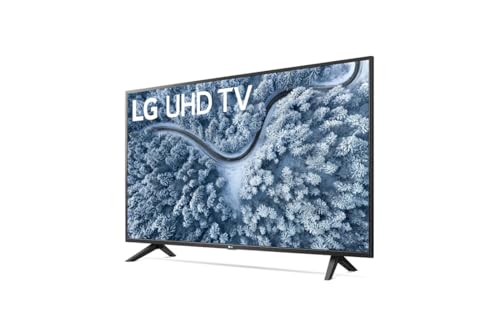
9. LG UP7070 70-inch: Best Traditional 70-inch Option
Pros
- Exact 70-inch screen size
- 4K display with Active HDR
- TruMotion 120 processing
- webOS 6.0 app access
- Alexa, Google Home, AirPlay 2, and HomeKit compatibility
Cons
- Older 2021 model
- Conventional LED display
- Limited motion specification compared with newer gaming models
Best for: an LG household that wants a direct 70-inch replacement with familiar smart features.
The LG UP7070 70-inch is the most traditional television in this group. It offers the exact size many buyers have in mind, along with 4K resolution, Active HDR, and LG's webOS 6.0 platform. The software includes familiar apps such as Netflix, YouTube, Apple TV+, Disney+, Prime Video, and LG Channels.
LG says its Quad-Core processing reduces blur and sharpens detail, while TruMotion 120 is intended to make movement appear smoother. Those labels describe processing rather than a stated native refresh rate, so buyers should not treat this as a rival to the Hisense U6 Pro or TCL QM6K for high-refresh gaming. It is better understood as a conventional living-room set for streaming and broadcast television.
Smart-home compatibility is broad. The listing names Google Home, Amazon Alexa, Apple AirPlay 2, and HomeKit, while Wi-Fi and Bluetooth provide wireless connectivity. The television measures 62 inches across and weighs 69 pounds, making it a substantial but manageable replacement for another 70-inch display.
The age of the model is the central weakness. The listing identifies it as a 2021 television, while several other picks bring Mini LED, newer image processing, broader HDR formats, or stronger gaming specifications. The Insignia F50 is the more sensible general recommendation, and the LG Nano AI NU85 is the more compelling LG for films and current gaming features. Consider the UP7070 only when its exact size and LG ecosystem are more important than newer panel technology.
10. Sony BRAVIA 3 75-inch: Best Upscaling

Pros
- 4K HDR Processor X1
- 4K X-Reality PRO upscaling
- Triluminos Pro color
- Google TV, Chromecast, and AirPlay 2
- Dolby Vision and Dolby Atmos support
Cons
- No numeric refresh-rate specification is listed
- Large 75-inch chassis
- Less gaming-focused than the native 144Hz models
Best for: households watching a mix of broadcast, older, and streaming content that want Sony processing and Google TV.
The Sony BRAVIA 3 75-inch makes its strongest case with processing rather than panel specifications. Its 4K HDR Processor X1 is designed to improve color, contrast, and clarity in real time, while 4K X-Reality PRO upscales lower-quality sources toward near-4K detail. That matters on a large screen where cable broadcasts and older movies can look rough beside modern streams.
Triluminos Pro is intended to produce more than one billion accurate colors, and Sony supports 4K HDR, Dolby Vision, and Dolby Atmos. The result should suit movie watchers who want a broad format list and a cinematic presentation. X-Balanced Speaker design aims for clear natural sound, and compatible Sony soundbars can be paired for a larger audio system.
Google TV brings common streaming apps into one place, with Google Assistant voice search, Chromecast built-in, and AirPlay 2. Sony also includes five movie credits and a 12-month subscription to hundreds of classics through the Sony Pictures Core app, according to the listing. Those extras are tied to the included television experience rather than a hardware specification, but they may appeal to movie-heavy households.
The BRAVIA 3 is less convincing for competitive gaming because no numeric refresh rate is provided. The Hisense U6 Pro and TCL QM6K are clearer choices when fast panel response is the priority, while the Samsung M70H brings a stated 120Hz feature for sports and games. Choose Sony for its processing, color tools, and Google TV ecosystem, especially if much of what you watch is not pristine native 4K.

How to choose best 70 inch tv
The right large television starts with the room, then moves to contrast, motion, smart software, and sound. These are the traits that separate the Best 70 inch tv options from screens that merely have a large diagonal measurement.
Screen size and room fit
A 70-inch television is not interchangeable with a 75-inch model. The Insignia F50 is 61.82 inches wide, while the Samsung M70H and TCL QM6K are 65.7 and 65.8 inches wide respectively. Measure the wall, console, viewing path, and stand position before choosing the larger size.
If the room cannot comfortably accommodate a 75-inch screen, a 65-inch model can still provide an immersive picture without crowding the furniture. For more help judging the difference, how a 75-inch screen changes room planning is a useful next step.
Backlight and contrast
Conventional LED televisions use a standard backlight, while Mini LED models divide that light into many smaller zones for more precise control. The Samsung M70H, Hisense U6 Pro, and TCL QM6K all use Mini LED designs. Their advantage should be most visible in HDR scenes with bright highlights beside deep shadows.
QLED and Hi-QLED describe color technologies, but they do not automatically mean the same thing as Mini LED. The Roku Select uses QLED and HDR10, while the Hisense E6 uses Hi-QLED without the U6 Pro's Mini LED system. Look for the backlight type and local-dimming claims separately.
For a large screen, controlled backlighting matters more than another layer of picture-processing jargon.
Motion and refresh rate
Refresh rate matters most for sports, racing games, competitive play, and quick camera movement. The Hisense U6 Pro and TCL QM6K list native 144Hz, while the Samsung M70H lists Motion Xcelerator+ with DLG 120Hz. These are more useful reference points than a generic motion label.
Terms such as TruMotion 120 and Motionflow XR can describe processing rather than a native panel rate. The LG UP7070 and Sony BRAVIA 3 use those kinds of labels, but their listings do not state native 120Hz or 144Hz performance. If gaming is central, choose a model with an explicit native refresh specification.
HDR formats
HDR can improve brightness, color, and shadow detail, but format support varies. Dolby Vision, HDR10+, HDR10, and HLG are the main formats represented in this group. The Hisense U6 Pro, Hisense E6, TCL QM6K, and Sony BRAVIA 3 list broad HDR support, while the Insignia F50 specifically lists HDR10.
A television with several HDR formats can handle more streaming and disc sources without falling back to a basic mode. It still needs good contrast and brightness to make HDR worthwhile, so format count should be considered alongside the backlight.
Smart TV platform and sound
Fire TV, Roku, Google TV, and webOS organize apps differently. Roku is the cleanest choice for simple navigation, Fire TV integrates naturally with Alexa, Google TV suits households using Chromecast and Google Assistant, and webOS offers LG's own channel and app ecosystem.
Sound features also vary. The Insignia includes DTS Virtual:X and HDMI eARC, the Hisense U6 Pro has a built-in subwoofer, and the TCL QM6K lists Onkyo audio with Dolby Atmos. A soundbar may still be preferable for films, but eARC is especially useful if you plan to connect one.
Frequently asked questions
Is a 75-inch TV close enough to a 70-inch TV?
A 75-inch television is wider and taller, not just slightly larger in diagonal measurement. The models in this roundup range from about 65.7 to 66 inches wide, while the Insignia F50 is 61.82 inches wide. Measure the installation area before moving from 70 inches to 75 inches.
Which television has the fastest listed refresh rate?
The Hisense U6 Pro and TCL QM6K both list native 144Hz refresh rates. The Samsung M70H lists DLG 120Hz, while the other televisions use different motion-processing labels or do not provide a numeric native refresh specification.
Is Mini LED useful for movies?
Mini LED can improve control over bright and dark areas by using many smaller backlight zones. That can make HDR films look more dimensional, especially in a dark room. The Samsung M70H, Hisense U6 Pro, and TCL QM6K are the Mini LED choices here.
Which model is easiest for streaming?
The Roku Select 65-inch has the simplest interface in this group, with a straightforward Home Screen, voice search, quick app access, and Bluetooth Headphone Mode. Fire TV models such as the Insignia F50 and Hisense E6 are also convenient, especially in Alexa-centered homes.
Do all of these televisions support Dolby Vision?
No. The Insignia F50 lists HDR10, while the Samsung M70H and Samsung U8000H do not list Dolby Vision in the supplied features. The Hisense U6 Pro, Hisense E6, TCL QM6K, and Sony BRAVIA 3 list Dolby Vision support.
Which pick is best for a bright room?
The Hisense U6 Pro specifically lists an anti-reflection and glare-free display. The TCL QM6K is also described as a high-brightness Mini LED television, while the Hisense E6 uses an AI light sensor to adjust brightness according to ambient light.
The bottom line
The Best 70 inch tv for most rooms is the Insignia F50 70-inch. It has the exact size, a useful three-HDMI connection set, eARC, HDR10, 4K upscaling, Fire TV, and Alexa control. It cannot match the contrast or gaming speed of the Mini LED models, but it avoids making a straightforward living-room upgrade unnecessarily complicated.
For a more advanced picture, choose the Samsung M70H 75-inch for Mini LED contrast and 120Hz motion, or the TCL QM6K 75-inch for native 144Hz gaming and broad HDR support. The Hisense U6 Pro 65-inch is the strongest smaller-screen alternative for fast games and bright rooms.
If you are undecided, choose the Insignia for simple full-size streaming, the Samsung for sports and contrast, or the Hisense U6 Pro for high-refresh gaming.
As an Amazon Associate we earn from qualifying purchases.