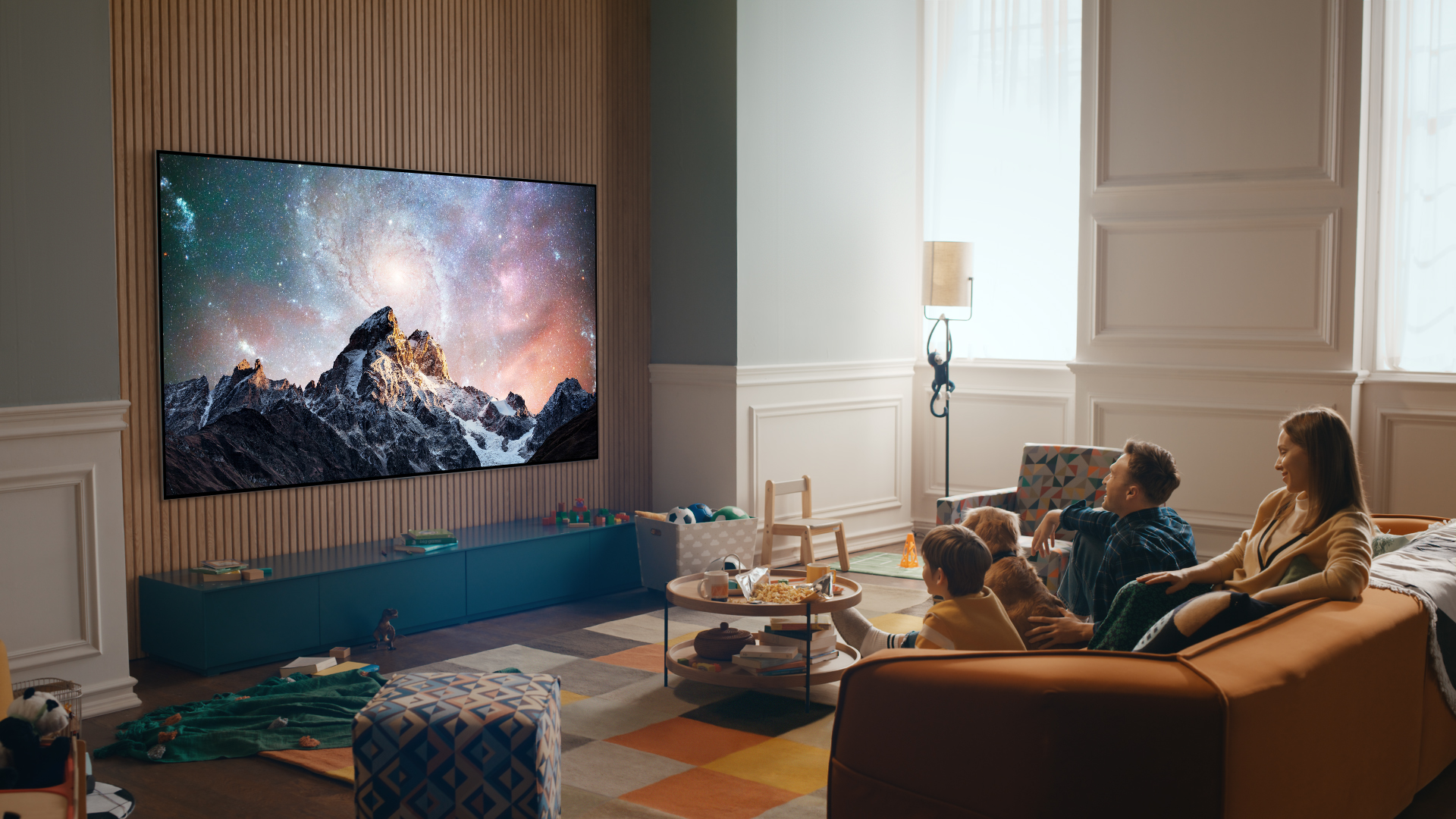

An 85-inch television can dominate a room in the right way, but a huge screen also exposes weak contrast, distracting reflections, and poor motion handling. The best 85 inch tv for a bright family room is not automatically the best model for late-night movies or console gaming.
We compared nine current large-screen televisions across Mini LED, QLED, NanoCell, and standard LED designs. The Hisense U7 is our top pick for its Mini LED picture, native 165Hz refresh rate, strong gaming features, anti-reflection treatment, and built-in 2.1.2-channel audio. The rest of the lineup ranges from straightforward streaming sets to brighter premium screens.
Comparison table
| # | Product | Award | Display | Refresh rate | Smart platform | Best for |
|---|---|---|---|---|---|---|
| 1 | Hisense U7 | Best overall | Mini LED Hi-QLED, 4K | Native 165Hz, VRR up to 330Hz | Google TV | Bright rooms, movies, and gaming |
| 2 | TCL QM6K | Best for sports | QD Mini LED, 4K HDR | 144Hz native | Google TV | Sports and high-motion viewing |
| 3 | Hisense E6 | Best Fire TV picture | Hi-QLED, 4K UHD | Motion Rate 120 | Fire TV | Streaming and cinematic content |
| 4 | TCL T7 | Best QLED gaming value | QLED, 4K | 144Hz | Google TV | Console and PC gaming |
| 5 | Samsung M80H | Best Samsung for gaming | Mini LED, 4K | 144Hz with VRR | Samsung Smart TV | Smooth gaming and sports |
| 6 | LG Nano AI NU85 | Best for upscaling | Nano AI, 4K | Not specified | webOS | Mixed-quality streaming libraries |
| 7 | Samsung U8000H | Best simple Samsung | Crystal UHD, 4K | Up to 60Hz | Samsung Smart TV | Everyday TV and free channels |
| 8 | Sony BRAVIA 3 | Best for Sony color | LED, 4K HDR | Not specified | Google TV | Movies and PlayStation 5 |
| 9 | Insignia F50 | Best straightforward Fire TV | LED-backlit LCD, 4K UHD | Not specified | Fire TV | Basic large-screen streaming |
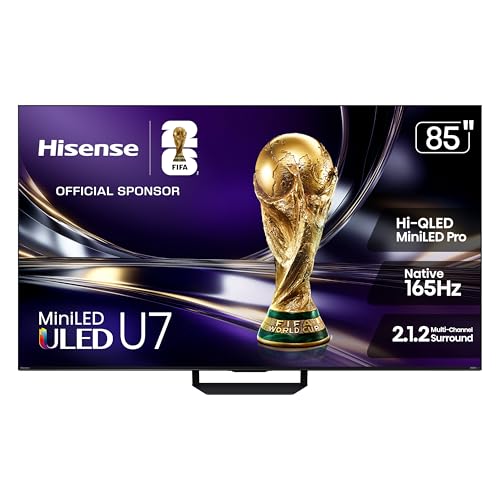
1. Hisense U7: Best Overall
Pros
- Mini LED backlighting with up to 3, 000 local dimming zones
- Native 165Hz refresh rate and VRR up to 330Hz
- Anti-reflection treatment for bright rooms
- Built-in 2.1.2-channel audio tuned by Devialet
- Dolby Vision IQ, HDR10+, and IMAX Enhanced support
Cons
- Heaviest television in this group at 89.2 pounds
- Its wide gaming feature set may be unnecessary for casual viewers
- Some headline performance figures are listed as maximums
Best for: viewers who want one 85-inch screen for gaming, sports, movies, and a bright living room.
The Hisense U7 is the one we would keep if the television has to handle everything. Its Mini LED backlight uses up to 3, 000 local dimming zones, giving the screen the lighting control that ordinary LED sets such as the Samsung U8000H and Insignia F50 cannot match. Bright highlights can stand apart from dark backgrounds, while the Hi-QLED layer is designed to keep color strong rather than washed out.
Motion is the other major reason this model leads the list. The native 165Hz refresh rate is useful for fast games and sports, and its Game Booster can reach up to 330Hz VRR when the source and settings support it. That gives gamers more headroom than the 144Hz TCL QM6K, TCL T7, and Samsung M80H. The feature list also includes an enhanced Game Bar that can show FPS, VRR, HDR, and other settings while playing.
This is also the most convincing pick for a room with difficult lighting. The dual-layer anti-reflection treatment is intended to reduce glare from windows and overhead lights, while the listed peak brightness can reach up to 3, 000 nits. Those figures are maximum claims rather than a guarantee for every scene, but the hardware is clearly aimed at keeping HDR visible in a bright space. Dolby Vision IQ, HDR10+, and IMAX Enhanced support give movie watchers broad format coverage.
Sound is less of an afterthought here than it is on many large televisions. The built-in 2.1.2-channel system is tuned by Devialet and is designed to create a more enveloping presentation than basic two-speaker playback. Google TV and Gemini interactive AI add voice-led discovery across more than 10, 000 apps, according to the listing. The trade-off is size and weight, since this is a 74.4-inch-wide, 89.2-pound television that needs careful installation.
The Hisense U7 is a poor fit for someone who wants the simplest possible set or has no interest in gaming and HDR. For those buyers, the Samsung U8000H is easier to justify, while the TCL QM6K offers a less aggressive but still capable bright-room design. Choose the U7 when picture control, motion, and glare resistance matter as much as screen size.
2. TCL QM6K: Best for Sports

Pros
- QD Mini LED design combines local lighting control and quantum-dot color
- Native 144Hz refresh rate
- Supports Dolby Vision, HDR10+, HDR10, and HLG
- Motion Rate 480 processing for fast action
- Google TV with Dolby Atmos and Onkyo audio
Cons
- No detailed port list is provided
- Less gaming headroom than the Hisense U7
- The thin chassis leaves installation planning important
Best for: sports fans who want smooth motion and vivid HDR on a very large screen.
The TCL QM6K makes a strong case for the living room where sports are the main event. Its QD Mini LED system pairs precise Mini LED backlighting with quantum-dot color, a combination that should produce stronger contrast and more saturated color than a conventional LED television. TCL also highlights a Halo Control system designed to reduce blooming and preserve shadow detail around bright objects.
Its native 144Hz refresh rate is a meaningful advantage when the screen has to follow a football pass, a hockey puck, or a quick camera pan. Motion Rate 480 and motion processing add another layer of smoothing, although the native panel figure is the more useful specification to remember. The TCL T7 also reaches 144Hz, but the QM6K adds Mini LED backlighting and TCL's more advanced contrast hardware.
HDR support is unusually broad in this group. Dolby Vision, HDR10+, HDR10, and HLG are all listed, so the television can accept the major HDR formats used by streaming services, discs, and broadcasts. TCL describes brightness and color as central strengths, and that makes the QM6K more suitable for daytime viewing than the Samsung U8000H or Sony BRAVIA 3.
The built-in Dolby Atmos processing and Onkyo audio give the set a stronger audio identity than a basic television, though a dedicated soundbar or receiver remains the better route for a serious home theater. Google TV keeps streaming services and recommendations in one interface. The set measures 74.4 inches wide and weighs 73.4 pounds, so it is substantial without being as demanding to move as the Hisense U7 or Sony BRAVIA 3.
The QM6K is not the top choice for a competitive gamer who wants the highest refresh ceiling. The Hisense U7 goes further with native 165Hz and VRR up to 330Hz. For everyone else, especially viewers who watch a lot of live action, the QM6K's blend of motion, HDR format support, and Mini LED contrast is more compelling than the simpler TCL T7.
3. Hisense E6: Best Fire TV Picture

Pros
- Hi-QLED color system
- Dolby Vision and HDR10+ Adaptive support
- AI light sensor adjusts brightness to the room
- Filmmaker Mode for movies
- Fire TV with Alexa voice control
Cons
- Motion specification is less specific than the leading gaming models
- No Mini LED backlight is listed
- Weighs 80.2 pounds
Best for: streaming households that prefer Fire TV and want broad HDR support for movies and shows.
The Hisense E6 is a sensible middle ground between basic LED models and the more technically ambitious Mini LED televisions above it. Its Hi-QLED color system is designed to make shades richer and more lifelike, while the 4K UHD panel gives the large screen enough resolution for detailed streaming and disc content. The picture package is more cinema-focused than the straightforward Samsung U8000H.
Hisense calls this a Total HDR Solution because the television supports Dolby Vision, HDR10+ Adaptive, HDR10, and HLG. That matters when a household watches content from several services, since the set can accept more of the formats used by current movies and shows. Dolby Vision and Dolby Atmos are included together, although the listing does not provide a channel count for the built-in speakers.
The AI light sensor is a practical feature for a room that changes throughout the day. It detects ambient light and adjusts screen brightness automatically, which can reduce the need to change picture settings manually. Filmmaker Mode is another useful touch for movie watchers because it is intended to preserve the original aspect ratio, frame rate, color, and audio presentation.
Motion Rate 120, AI Smooth Motion, MEMC, and AI noise reduction are listed for handling fast movement. That should help with sports and action scenes, but it is not the same gaming proposition as the 144Hz TCL QM6K or the native 165Hz Hisense U7. Wi-Fi 6 is a welcome connectivity feature for homes with many devices, and Fire TV puts live channels and streaming apps on the main screen with Alexa voice search.
At 74.5 inches wide and 80.2 pounds, the E6 needs a sturdy stand or wall mount. Its weakness is the lack of Mini LED contrast, so dark-room movie enthusiasts may prefer the TCL QM6K or Hisense U7. Choose this Hisense when Fire TV, adaptive brightness, and broad HDR compatibility matter more than advanced gaming refresh rates.
4. TCL T7: Best QLED Gaming Value

Pros
- Native 144Hz panel
- QLED color covers nearly the entire DCI-P3 color space
- Dolby Vision, HDR10+, HDR10, and HLG support
- Four HDMI inputs, including one with eARC
- Adjustable feet accommodate different furniture widths
Cons
- No Mini LED backlight is listed
- Less specialized bright-room control than the Hisense U7
- Motion processing can be more important than native refresh for some content
Best for: gamers who want high refresh motion, flexible connections, and a Google TV interface.
The TCL T7 is the practical gaming alternative to the more expensive-feeling Mini LED sets. Its QLED layer is specified to cover nearly the entire DCI-P3 color space, so games and HDR films can appear more saturated than they do on ordinary LED screens. The design is also slim and clean, with a FullView metal bezel-less frame.
The native 144Hz refresh rate is the headline feature. It gives compatible gaming hardware more room for fluid motion than 60Hz televisions such as the Samsung U8000H. TCL also lists Motion Rate 480 with MEMC frame insertion, which is intended to reduce blur in fast games, action films, and live sports. The Hisense U7 still wins for maximum gaming capability, but the T7 covers the needs of most console players.
Connectivity is one of this model's clearest advantages. Four high-speed HDMI inputs allow a television, sound system, receiver, and multiple consoles to remain connected, with one HDMI input supporting eARC. That is more flexible than making the user constantly swap cables. Dolby Atmos processing adds spatial audio support, though the listing does not give a speaker channel specification.
The AIPQ Pro processor is tasked with optimizing color, contrast, and clarity for 4K HDR content. Google TV brings together streaming services, and the set works with Alexa, Google Assistant, and Apple HomeKit. Fast Wi-Fi 5 is listed, which is adequate for streaming but less current than the Wi-Fi 6 connection on the Hisense E6.
The T7 gives up the QM6K's Mini LED backlight and the U7's anti-reflection treatment. That means it is not the first pick for a sunlit room or someone obsessed with deep HDR contrast. It makes more sense for a gamer who wants 144Hz, four HDMI inputs, and adjustable feet without moving into the larger feature set of the premium Hisense.
5. Samsung M80H: Best Samsung for Gaming

Pros
- Mini LED backlighting
- 144Hz Motion Xcelerator performance
- Variable Refresh Rate support
- AI-based picture processing
- Auto HDR Remastering for SDR content
Cons
- The listing does not specify HDR formats
- No detailed audio specification is provided
- Smart platform details are less complete than on the Google TV models
Best for: Samsung fans who want Mini LED contrast and high-refresh gaming features.
The Samsung M80H is the Samsung model to choose when gaming and backlight control matter more than keeping the feature set basic. It uses Mini LED lighting and Samsung's AI Mode to analyze each scene for clarity, color, and contrast. That gives it a more advanced picture foundation than the Crystal UHD Samsung U8000H.
Motion Xcelerator supports 144Hz performance, and Variable Refresh Rate technology is listed for reducing stutter and tearing in games. Those features put it in the same general gaming class as the TCL QM6K and T7, though the Hisense U7 still offers the most ambitious refresh-rate claims. The M80H also has a Supersize Picture Enhancer intended to improve clarity and reduce noise on very large screens.
Auto HDR Remastering attempts to give standard dynamic range content brighter highlights, stronger color, and clearer detail. That is useful for a mixed library containing older shows and regular broadcast material, although it is not a replacement for native HDR. Samsung's NQ4 AI Gen2 processor handles the picture and sound processing, with real-time enhancement for different types of content.
This television is 74.4 inches wide and 63.7 pounds, making it one of the lighter models in the roundup. The listing does not spell out the supported HDR formats, speaker layout, or input count, so buyers with a specific sound system or source setup should verify those details before installation. That lack of information is the main reason it sits behind the more fully specified TCL models.
The M80H is a better fit than the U8000H for someone who notices motion and wants Mini LED contrast. It is not as clearly equipped for film formats as the Hisense E6, nor as aggressively gaming-focused as the U7. Pick it for Samsung's processing and interface, especially if the set will spend as much time showing games and sports as it does movies.
6. LG Nano AI NU85: Best for Upscaling

Pros
- Alpha 7 AI Processor 4K Gen9
- AI Super Upscaling for lower-resolution sources
- Filmmaker Mode with Ambient Light Technology
- webOS with LG Channels
- AMD FreeSync Premium and ALLM for gaming
Cons
- No refresh rate is specified
- HDR support is listed as HDR10 Pro only
- No Mini LED backlight is listed
Best for: households that mix 4K streaming with older broadcasts, DVDs, and lower-resolution video.
The LG Nano AI NU85 stands apart by concentrating on processing rather than leading with a refresh-rate figure. Its Alpha 7 AI Processor 4K Gen9 analyzes scenes, sharpens edges, improves texture, and adjusts contrast. On an 85-inch screen, that work matters because soft source material can look uncomfortably soft when enlarged across so much surface area.
AI Super Upscaling is designed to bring lower-resolution video closer to 4K clarity. It cannot create detail that was never captured, but it can make older television broadcasts, home video, and compressed streams look cleaner. This is the better choice than the TCL T7 for a household with a large mixed library and no interest in tuning picture settings manually.
HDR10 Pro dynamically adjusts brightness to reveal detail in dark and bright areas. Filmmaker Mode preserves the director's intended colors, settings, and frame rates, and Ambient Light Technology is listed alongside it. The model does not advertise Dolby Vision in the supplied information, so film fans who prioritize that format should consider the Hisense E6, TCL QM6K, or Hisense U7 instead.
LG's webOS 2026 platform includes Google Gemini and Microsoft Copilot, while LG Channels provides access to more than 400 free channels and more than 10, 000 movies and shows on demand. Gamers get AMD FreeSync Premium, ALLM, Game Dashboard, and Game Optimizer. Those are useful features, but without a stated panel refresh rate, this is not the first recommendation for high-frame-rate gaming.
The NU85 measures 74.4 inches wide, 45.2 inches high with its stand, and 14.3 inches deep with the stand. That deeper footprint deserves attention on a media console. It is a good fit for viewers who want LG's interface and strong upscaling, but the Samsung M80H and TCL QM6K are stronger choices when Mini LED contrast and fast refresh are the priority.
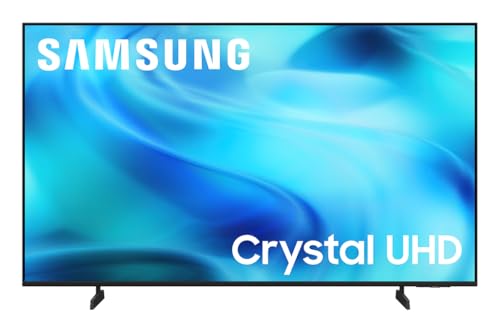
7. Samsung U8000H: Best Simple Samsung
Pros
- Crystal Processor with 4K upscaling
- Color Booster processing
- Motion handling up to 4K 60Hz
- Samsung TV Plus with more than 2, 700 free streaming options
- Lighter 63.8-pound design
Cons
- Standard LED design rather than Mini LED or QLED
- 60Hz ceiling is less suited to advanced gaming
- HDR format support is not specified
Best for: everyday viewing, broadcast television, and households that want Samsung's interface without advanced gaming hardware.
The Samsung U8000H is the uncomplicated choice in Samsung's 85-inch lineup. Its Crystal Processor works on color and detail, while 4K upscaling improves lower-resolution sources. That makes it suitable for regular television, familiar streaming shows, and sports watched from a sensible distance, without adding a long list of enthusiast controls.
Motion Xcelerator is specified for up to 4K 60Hz performance. That is enough for ordinary television and console gaming at 60 frames per second, but it falls behind the 144Hz Samsung M80H and the 165Hz Hisense U7 for fast competitive play. Anyone shopping specifically around VRR, high-frame-rate gaming, or PC connection should move up the list.
Color Booster is intended to make reds, blues, and other shades appear more vivid. The television also includes 4K upscaling for content from lower-quality sources. The supplied information does not identify the panel's HDR formats or a local dimming system, so it cannot compete with the TCL QM6K or Hisense U7 for controlled HDR contrast.
Samsung TV Plus provides more than 2, 700 free streaming options, including more than 750 subscription-free channels. That makes the set convenient for viewers who often browse free content instead of opening a particular paid app. Its 74.4-inch width is typical for this class, while the 63.8-pound weight is comparatively manageable for installation.
The U8000H is beaten clearly by the Samsung M80H for gaming and by the LG Nano AI NU85 for more advanced upscaling features. Its advantage is simplicity. If the television will mostly show broadcast channels, familiar streaming services, and occasional games, this Samsung avoids paying attention to features that may never be used.
8. Sony BRAVIA 3: Best for Sony Color

Pros
- Triluminos Pro color processing
- Google TV with voice control
- Sony Pictures Core app for high-bitrate 4K movies
- PlayStation 5 picture features
- Access to major streaming services
Cons
- No refresh-rate specification is provided
- No Mini LED backlight is listed
- Heaviest television here at 99.6 pounds
Best for: Sony fans who prioritize color processing, Google TV, and PlayStation 5 features.
The Sony BRAVIA 3 is aimed at viewers who care about Sony's picture ecosystem as much as raw panel specifications. Triluminos Pro is described as displaying more than one billion accurate colors, with the goal of producing a vivid and lifelike image. The supplied details focus on color and content access rather than local dimming or high-refresh gaming.
Sony Pictures Core is an appealing feature for movie households. The app provides access to high-bitrate 4K UHD movies, which gives the television a more direct connection to Sony's film catalog than the general-purpose streaming hubs on the other models. Google TV brings Netflix, Prime Video, Disney+, YouTube, and other services together with Google Assistant voice search.
PlayStation 5 owners get Auto HDR Tone Mapping and Auto Genre Picture Mode. These features can automatically adjust the picture for supported games and content types, reducing the need to switch settings by hand. The television is not presented as a high-refresh gaming display, however, so the TCL T7, Samsung M80H, and Hisense U7 are better matches for players who care about fast refresh and VRR.
Sony lists an ideal viewing distance of 15 feet or more, which is a useful reminder that an 85-inch panel needs room. The television is 74.8 inches wide and weighs 99.6 pounds, the heaviest figure in this group. Plan the installation with two people or professional help rather than treating it like a routine smaller-screen setup.
The BRAVIA 3 makes more sense for a Sony-centered home than for a buyer comparing feature counts alone. Its missing refresh-rate detail and lack of a listed Mini LED system limit it against the TCL QM6K and Hisense U7. Choose it when Sony's color processing, movie service, and PlayStation features carry more weight than peak gaming performance.
9. Insignia F50: Best Straightforward Fire TV

Pros
- 4K UHD resolution with HDR10
- Fire TV interface and Alexa voice remote
- DTS Studio Sound enhancement
- HDMI ARC and eARC support
- Three HDMI ports plus USB, optical, Ethernet, and headphone connections
Cons
- Standard LED-backlit LCD panel
- No high-refresh gaming specification is provided
- Contrast control is less advanced than Mini LED models
Best for: viewers who want a large Fire TV with familiar streaming access and a broad set of connections.
The Insignia F50 keeps the experience simple. It is an LED-backlit LCD television with 4K UHD resolution and HDR10 support, built around Fire TV and an Alexa voice remote. The appeal is not advanced picture hardware. It is the straightforward path to a very large screen, common streaming apps, and familiar voice control.
Fire TV brings Prime Video, Netflix, Disney+, Hulu, HBO Max, and free services such as Pluto TV and Tubi into one interface. The listing also cites more than 1.8 million movies and TV episodes across the platform, with subscriptions required for some content. Fire TV Channels and parental controls add useful household features, especially when different family members share the screen.
Connectivity is unusually clear for this model. It has three HDMI ports, composite AV jacks, digital optical output, USB, a headphone jack, coaxial input, Ethernet, and Wi-Fi. HDMI ARC and eARC allow audio to pass to a compatible soundbar or receiver. DTS Studio Sound attempts to widen the presentation from the built-in two-speaker system, though buyers planning a theater setup will still want external audio.
The weak point is picture control. The F50 does not list QLED color, Mini LED backlighting, local dimming, or a high-refresh panel. In a dark movie scene, the TCL QM6K, Hisense E6, and Hisense U7 should offer a more sophisticated HDR experience. Gamers should also look at the TCL T7 or Samsung M80H before choosing this Insignia.
At 74.41 inches wide and 42.61 inches high, the set has the usual footprint for an 85-inch television, while its listed 14.7-inch depth is important for furniture planning. It is the right choice for someone who values Fire TV, ports, and uncomplicated setup above premium contrast. For a more demanding picture, move up to the TCL QM6K or Hisense E6.
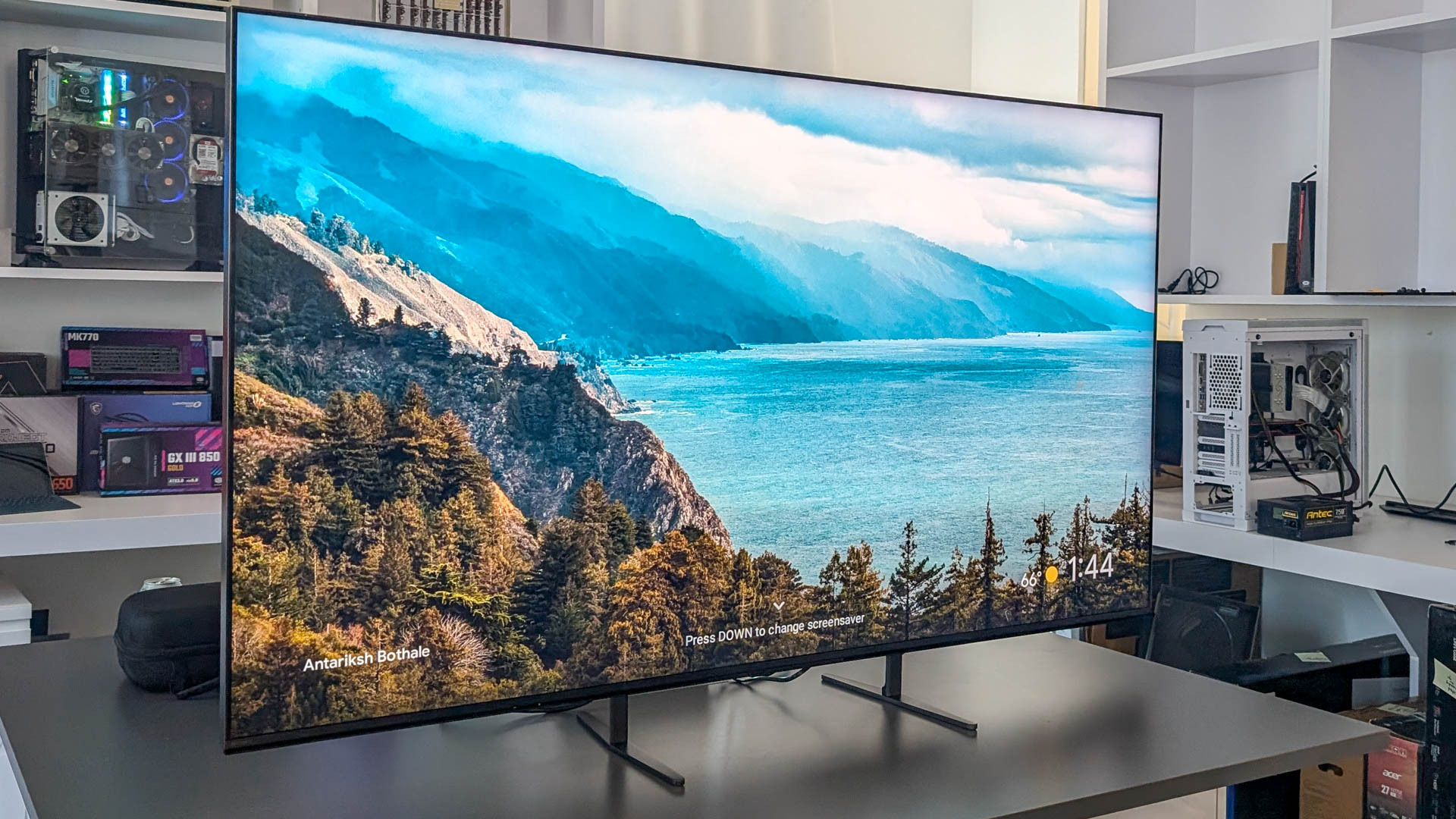
How to choose best 85 inch tv
The right large television depends on the room, the content, and how much control you want over motion and contrast. These are the specifications that separate the nine models.
Backlight and contrast
Mini LED televisions such as the Hisense U7, TCL QM6K, and Samsung M80H use many smaller backlights to control bright and dark areas more precisely. That can make stars, subtitles, and bright windows stand out against darker scenes with less gray haze. Standard LED sets such as the Insignia F50 and Samsung U8000H are simpler and can still look sharp, but they do not list the same level of local lighting control.
QLED or Hi-QLED describes a color layer, not the same thing as Mini LED. The Hisense E6 and TCL T7 can produce vivid color without using Mini LED, while the QM6K and U7 combine the two approaches.
For an 85-inch screen, contrast control matters as much as resolution because every weakness is magnified across the room.
Refresh rate and VRR
A 60Hz television is adequate for regular shows and many console games. A 144Hz or 165Hz panel is more useful for fast sports, compatible PC games, and players who want smoother camera movement. The TCL QM6K, TCL T7, and Samsung M80H list 144Hz performance, while the Hisense U7 lists native 165Hz and VRR up to 330Hz.
VRR helps the screen match changing game frame rates, reducing tearing and uneven motion. Do not confuse motion-processing labels such as Motion Rate 480 or Motion Rate 660 with the panel's native refresh rate. They describe different parts of the picture process.
HDR format support
HDR can improve bright highlights, shadow detail, and color, but format support varies. Dolby Vision appears on the TCL QM6K, TCL T7, Hisense E6, and Hisense U7. HDR10+ is listed on several of those models as well. The Insignia F50 lists HDR10, while the LG NU85 lists HDR10 Pro.
A television with several HDR formats is more flexible for a mixed streaming and disc library. Brightness and backlight control still matter, because format support alone does not guarantee convincing HDR.
Smart platform
Fire TV on the Insignia F50 and Hisense E6 is a good match for Alexa households and viewers who like live channels integrated with apps. Google TV on the Hisense U7, TCL QM6K, TCL T7, and Sony BRAVIA 3 emphasizes recommendations and voice-led discovery. LG's webOS and Samsung's smart platform offer their own app libraries and free channel services.
The platform should match the devices already in the room. Someone using Google Assistant may prefer Google TV, while an Alexa-heavy smart home may feel more natural with Fire TV. App availability can change, so check the services you actually use rather than choosing based only on the interface name.
Room brightness and viewing distance
A bright room benefits from high brightness and reflection control. The Hisense U7 specifically lists anti-reflection treatment, while the Hisense E6 has an AI light sensor that changes brightness based on ambient light. The TCL QM6K is also designed around high brightness and Mini LED contrast.
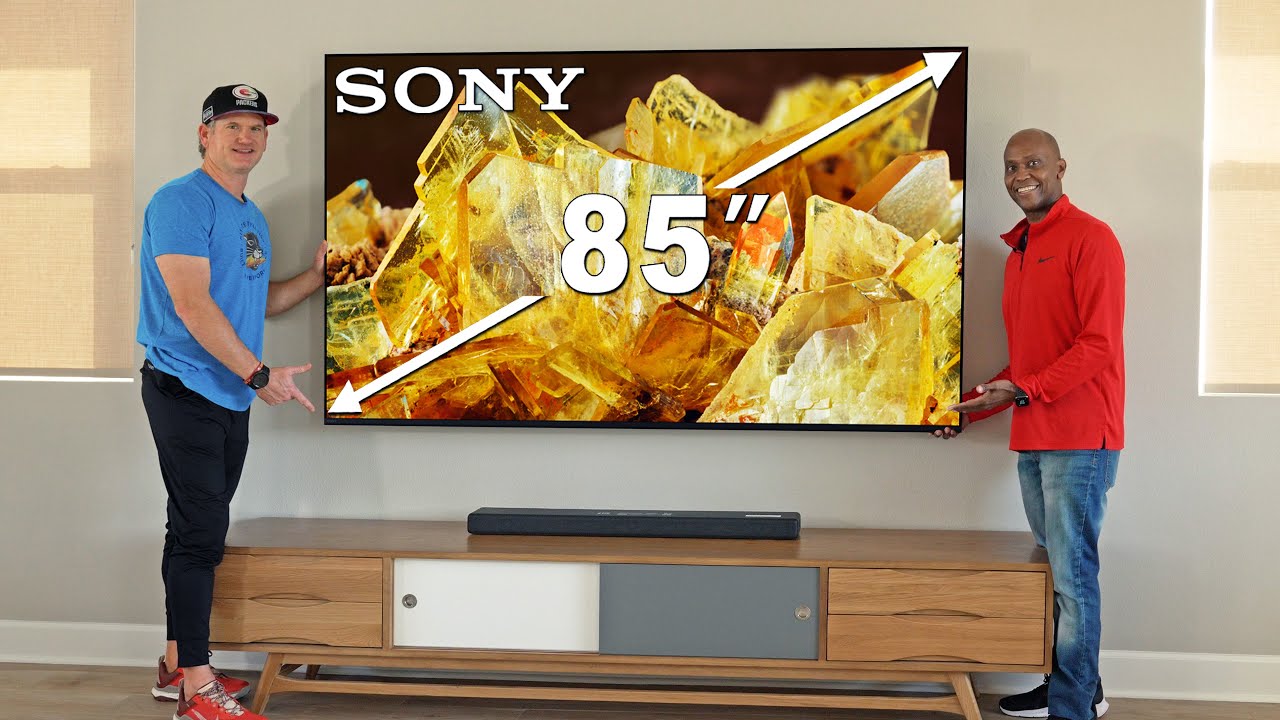
Distance matters just as much as brightness. Sony lists 15 feet or more as an ideal viewing distance for its BRAVIA 3. If the seating is much closer, an 85-inch panel can feel overwhelming, particularly with lower-resolution broadcasts. For a smaller room, how far back you should sit from a panel this size is worth settling before installation.
Ports and audio
Count HDMI inputs before buying if the television will connect to a console, receiver, soundbar, streaming box, and disc player. The TCL T7 lists four HDMI inputs with one eARC connection, while the Insignia F50 lists three HDMI ports plus optical, USB, Ethernet, coaxial, and headphone connections.
Built-in audio ranges from basic two-speaker playback to more elaborate systems. The Hisense U7 lists a 2.1.2-channel system tuned by Devialet, while the TCL QM6K lists Dolby Atmos and Onkyo audio. A dedicated soundbar or receiver can still provide a wider and clearer presentation.
Frequently asked questions
Is an 85-inch TV too large for most rooms?
It depends on seating distance and the room's layout. Sony lists 15 feet or more as an ideal viewing distance for the BRAVIA 3, but preferences vary and 4K content can be watched closer. Measure the wall, stand, viewing position, and walking space before ordering.
Which 85-inch TV is best for gaming?
The Hisense U7 is the strongest gaming pick in this group because it lists a native 165Hz refresh rate and VRR up to 330Hz. The TCL QM6K, TCL T7, and Samsung M80H also list 144Hz performance, which is plenty for many console and PC setups.
Are Mini LED TVs better for movies?
Mini LED can improve contrast by controlling the backlight more precisely, especially in dark scenes with bright highlights. The TCL QM6K, Hisense U7, and Samsung M80H use Mini LED designs. Movie quality also depends on HDR support, processing, viewing conditions, and audio.
Does a QLED TV have better color than a standard LED TV?
QLED models use a quantum-dot color layer that is designed to produce richer, wider color than conventional LED LCD televisions. The TCL T7 and Hisense E6 use QLED variations, while the Insignia F50 uses an LED-backlit LCD design. Backlight quality and processing still influence the final picture.
Do I need a soundbar with an 85-inch television?
Not necessarily, but a soundbar can make dialogue clearer and create a wider presentation. The Hisense U7 lists 2.1.2-channel audio, and the TCL QM6K lists Dolby Atmos and Onkyo audio, so they have more ambitious built-in sound than many basic sets. HDMI eARC is useful when connecting a compatible soundbar or receiver.
Which smart TV platform is easiest to use?
There is no universal winner. Fire TV is convenient for Alexa users, Google TV suits households built around Google Assistant, and Samsung and LG offer their own interfaces with free channel services. Choose the platform that supports the apps and voice assistant already used in the home.
How should I prepare a wall for an 85-inch TV?
Locate wall studs, confirm the mount's weight capacity, and leave room for HDMI, power, and audio cables. Large televisions are difficult to handle, so installation usually needs two people or professional assistance. The Sony BRAVIA 3 weighs 99.6 pounds, while the Hisense U7 weighs 89.2 pounds, which makes mounting preparation especially important.
The bottom line
The Hisense U7 is the top choice among the Best 85 inch tv picks for buyers who want one screen to cover gaming, sports, movies, and bright-room viewing. Its Mini LED backlight, native 165Hz panel, VRR support, anti-reflection treatment, and built-in 2.1.2-channel audio give it the broadest capability here.
The TCL QM6K is the better alternative for sports-first households that want 144Hz motion, QD Mini LED contrast, and broad HDR format support. For a simpler Fire TV experience, the Hisense E6 is more attractive than the basic Insignia F50 because it adds Hi-QLED color, adaptive brightness, and Dolby Vision.
If you are undecided, choose the Hisense U7 for the most demanding mix of content, or the TCL QM6K when smooth sports and HDR movies matter most.
As an Amazon Associate we earn from qualifying purchases.