
The right 90s collection can turn a quiet room into a dance floor, a long drive into a singalong, or a piano lesson into a run through songs everyone recognizes. The difficult part is deciding between focused genre sets, broad compilations, digital albums, and physical box sets.
We compared 10 ways to revisit the decade, including alternative rock, dance music, pop, R&B, funk, soul, rock, and a substantial piano, vocal, and guitar songbook. For most listeners, 90s Baby Ultimate Collection is the most satisfying starting point because its three-CD format and 60-plus-track scope cover several sides of the decade.
Comparison table
| # | Product | Award | Format | Focus | Best for |
|---|---|---|---|---|---|
| 1 | 90s Baby Ultimate Collection | Best overall | 3-CD set | Pop, R&B, hip-hop, and more | Broad decade coverage |
| 2 | On-The-Go Dance Party Hits | Best dance collection | Digital music | 90s dance music | Parties and energetic playlists |
| 3 | Gap Band Millennium Collection | Best funk and soul set | CD | Funk, soul, and Quiet Storm | Gap Band fans |
| 4 | Now That's What I Call Music Alternative Rock | Best alternative rock pick | CD | 90s alternative rock | Guitar-led nostalgia |
| 5 | Sony Pop Album Part One | Best pop time capsule | Import | Pop from the 90s, 00s, and 10s | Multi-decade pop fans |
| 6 | 100 Hits Best 90s Album | Best broad compilation | Import | Pop and rock | Listeners who want range |
| 7 | Omegala 90s Hits | Best digital throwback | Digital music | 90s hits and dance pop | Instant digital listening |
| 8 | Hal Leonard Great American Songbook | Best for musicians | Sheet music | 100 pop and rock songs | Piano, vocal, and guitar players |
| 9 | Generic Rock Classics Collection | Best rock anthology | 4-CD box set | Rock across four decades | Rock listeners beyond the 90s |
| 10 | 10187436 Records DK Throwback Hits | Best mixed digital playlist | Digital music | Pop, rock, and R&B | Mixed-genre discovery |
1. 90s Baby Ultimate Collection: Best Overall

Pros
- Three-CD format gives it real physical presence
- More than 60 tracks cover several major 90s styles
- Includes Destiny’s Child, Jennifer Lopez, TLC, The Notorious B.I.G., and Whitney Houston
- Strong choice for mixed-age listening
Cons
- The broad scope may leave genre specialists wanting more depth
- The listing does not provide a complete track list
Best for: listeners who want one physical collection that moves across pop, R&B, hip-hop, and mainstream 90s nostalgia.
90s Baby Ultimate Collection is the easiest set to recommend when the listener does not want to choose just one corner of the decade. Its three-CD design feels like a proper collection rather than a short sampler, and the stated 60-plus-track count gives it room to move from major pop voices to R&B and hip-hop.
The named lineup tells you what kind of listening experience to expect. Destiny’s Child, Jennifer Lopez, TLC, The Notorious B.I.G., and Whitney Houston point toward recognizable, mainstream material rather than a deep-cut alternative-rock archive. That makes it useful for a party, a family car, or a nostalgia session where everyone wants at least a few familiar moments.
It has a wider brief than On-The-Go Dance Party Hits, which concentrates on dance music, and it is much less guitar-focused than Now That's What I Call Music Alternative Rock. The tradeoff is focus. A listener searching only for club tracks or distorted guitars will find a more direct match elsewhere in this list.
The weakness is the incomplete track information in the supplied listing. More than 60 tracks sounds expansive, but without the full song sequence, it is harder to predict the balance between artists and styles before buying. Still, the named performers and three-CD structure make this the collection we'd keep for a broad 90s listening shelf.
2. On-The-Go Dance Party Hits: Best Dance Collection

Pros
- Dedicated entirely to 90s dance music
- Digital format starts quickly on compatible devices
- Clear party-oriented identity
- More focused than broad pop compilations
Cons
- Not suited to listeners seeking rock, soul, or quieter ballads
- The listing does not state a track count
Best for: parties, workouts, and listeners who want the most direct route to 90s dance energy.
On-The-Go Dance Party Hits understands that a dance compilation has one job: keep the momentum moving. Its title makes the focus unusually clear, and the digital format makes it a practical choice when the music needs to start on a phone, tablet, computer, or compatible home system rather than from a disc player.
That narrow focus is its main strength. While 90s Baby Ultimate Collection spreads its attention across pop, R&B, and hip-hop, this set is aimed at the beat-first side of the decade. It is the more coherent pick for a themed gathering because the collection should not require constant skipping between unrelated moods.
The listing does not provide a track count or detailed artist list, so this is not the best choice for someone building a carefully documented collection. It also cannot match the physical appeal of the three-CD set from 90s Baby Ultimate Collection. The appeal here is immediacy and genre direction, not collector detail.
Skip it if your idea of the decade is mostly alternative rock, vocal ballads, or funk. Choose it when the room needs movement and the listener would rather have a concentrated dance set than a survey of every major 90s style. For listeners assembling several playback options, how to keep music playing throughout several rooms is a useful question to settle before choosing a home setup.
3. Gap Band Millennium Collection: Best Funk and Soul Set

Pros
- Focused collection from The Gap Band
- Original recording remastered format
- Strong fit for funk, soul, and Quiet Storm listening
- Compact single-CD design
Cons
- Covers one artist rather than the full decade
- Not the right match for alternative rock or dance-pop variety
Best for: fans who want a dedicated Gap Band collection instead of a mixed 90s sampler.
The Gap Band Millennium Collection is the specialist pick in a field dominated by broad compilations. Rather than trying to summarize the entire decade, it gives one group the room to define the listening session. The result is a better fit for someone who already knows they want funk, soul, and smoother R&B textures.
The original recording remastered format matters because this kind of collection depends on groove, bass movement, and rhythmic detail. A remastered presentation cannot change the performances, but it signals that the set is built around prepared recordings rather than a loose playlist description. Its single-CD format also keeps the experience simple.
Compared with 90s Baby Ultimate Collection, this is far less expansive but more consistent. Compared with On-The-Go Dance Party Hits, it should appeal to listeners who want a pocket and vocal presence that can settle into a room instead of pushing every moment toward a club atmosphere. It is also a better match for a focused artist shelf than 100 Hits Best 90s Album.
The limitation is obvious and worth embracing: this is not a general 90s overview. It will not provide alternative rock, teen pop, or a parade of unrelated artists. If The Gap Band is not already part of the listener's taste, the broader collections are safer. For a dedicated fan, though, this is the most intentional pick in the lineup.
4. Now That's What I Call Music Alternative Rock: Best Alternative Rock Pick

Pros
- Dedicated alternative-rock theme
- Straightforward single-CD format
- Easier to browse than a large mixed compilation
- Good fit for guitar-centered listening
Cons
- The listing provides no artist or track details
- Limited appeal for listeners who want pop, R&B, or dance music
Best for: listeners who remember the 90s through alternative rock rather than chart pop.
Now That's What I Call Music Alternative Rock takes a useful editorial position: it does not pretend that one decade can be represented by one sound. Its entire identity is built around alternative rock, so it makes sense for a listener whose ideal nostalgia set includes guitars, band arrangements, and a less polished edge.
The product is a CD, which gives it a familiar physical format and a simple start-to-finish listening path. Beyond that, the supplied data is sparse. There is no track count, artist list, or format detail beyond the CD designation, so the title carries much of the burden when setting expectations.
That lack of information is the real weakness. Best of Rock Classics Collection provides a far more detailed account of its track count, themes, and artists, while 90s Baby Ultimate Collection gives a clearer sense of its breadth through its named performers and 60-plus-track description. This collection is more targeted, but it asks the buyer to accept uncertainty about the exact contents.
Skip it if you need a guaranteed mix of pop, R&B, and dance hits. Choose it if alternative rock is the point, not merely one part of a larger nostalgia playlist. It is a sensible companion to a broader compilation, particularly for listeners who want their 90s shelf organized by mood and genre.
5. Sony Pop Album Part One: Best Pop Time Capsule

Pros
- Pop-focused collection spanning the 90s, 00s, and 10s
- Import format gives it a distinct catalog identity
- Three-item collection
- Useful for listeners whose nostalgia crosses decades
Cons
- Only part one of a wider concept
- Not limited to the 90s
- The supplied listing does not identify the artists or track count
Best for: pop listeners who want the 90s connected to later decades rather than isolated as a single-era set.
Sony Pop Album Part One is not a pure 90s collection, and that is precisely why it earns a place here. Its title spans the 90s, 00s, and 10s, creating a pop timeline instead of a decade-only snapshot. For listeners whose memories of the 90s lead naturally into later radio eras, that broader frame may be more enjoyable than strict period accuracy.
The listing identifies it as an import and describes it as a three-item collection. Those details point to a packaged catalog release rather than a single digital playlist. The physical format suits anyone who likes the sense of progression that comes from moving through an organized set, although the provided information does not identify a full artist roster or song count.
It is a more pop-centered alternative to 100 Hits Best 90s Album, whose title promises a wider pop and rock blend. It also has less decade purity than 90s Baby Ultimate Collection. Choose Sony when the listener wants continuity across eras, not when every selection must come from the 1990s.
The missing track details make it difficult to judge how much space the 90s receives compared with the 00s and 10s. That is the reason to skip it if you want a tightly defined nostalgia set. For someone who wants the decade to sit inside a longer pop story, it offers the most distinctive concept among the compilation albums.
6. 100 Hits Best 90s Album: Best Broad Compilation

Pros
- Explicitly centered on the 90s
- Covers both pop and rock categories
- Import format
- Five-item collection
Cons
- No supplied track list or artist information
- Broad scope may feel less focused than genre-specific sets
- The physical dimensions are compact but do not explain the listening format
Best for: listeners who want a wide 90s overview and are comfortable exploring without a published track list.
100 Hits Best 90s Album has the broadest promise in its name. It is aimed squarely at the decade and identifies both pop and rock as its territory, which makes it a natural choice for a listener who does not want to commit to dance, alternative rock, or one artist.
The supplied product information calls it an import and lists five items. That gives the release a larger collection profile than a basic single-disc title, although the data does not explain exactly how those items are arranged or provide the track sequence. The result is a product that sounds expansive in concept but requires a little caution from anyone choosing by exact artist or song.
It sits between 90s Baby Ultimate Collection and Sony Pop Album Part One. The former has a clearly stated three-CD design and named performers, while the latter connects several decades through pop. 100 Hits Best 90s Album is more firmly anchored to the 90s than Sony, but less specifically described than the 90s Baby set.
The absence of a track list is the deciding weakness. A broad title can hide a heavy tilt toward one style, and the available information does not resolve that question. Choose it for an open-ended survey of 90s pop and rock. Skip it if you want dance music, one artist, or a fully documented set with a clearly stated selection.
7. Omegala 90s Hits: Best Digital Throwback

Pros
- Digital format suits immediate listening
- Directly focused on 90s hits
- Dance-pop category gives it an energetic angle
- Simple choice for listeners who do not need physical media
Cons
- The listing does not provide a track count
- Artist details are not supplied
- Less useful for collectors who want CDs or a booklet
Best for: listeners who want a digital 90s album with a dance-pop leaning.
Omegala 90s Hits is the uncomplicated digital option. Its title keeps the decade front and center, while the category description places it in dance pop. That combination makes it a good fit for quick listening when the user wants recognizable 90s energy without handling a physical collection.
The digital format is its practical advantage. There is no disc to store and no box set to organize, so it can sit alongside existing playlists and streamed music. For listeners who have already moved their everyday collection to digital playback, this is a more natural fit than Now That's What I Call Music Alternative Rock or Gap Band Millennium Collection.
The tradeoff is limited documentation. The available listing does not state the number of tracks or identify the artists, which makes it harder to compare the musical range with On-The-Go Dance Party Hits. Omegala appears to be the more general title, while On-The-Go makes the dance-party purpose even clearer.
Skip it if you want liner notes, a physical keepsake, or a carefully documented artist lineup. Choose it when convenience and a dance-pop direction matter more than collecting details. If your listening habits are already mostly digital, the difference between owning albums and accessing a larger catalog is the useful decision to make before adding another collection.
8. Hal Leonard Great American Songbook: Best for Musicians
Pros
- Music and lyrics for 100 classic pop and rock songs
- Piano, vocal, and guitar arrangement
- Substantial illustrated book format
- Useful for students, performers, and fans
Cons
- It is sheet music, not an audio collection
- The scope is pop and rock across an era, not strictly 90s music
- Its 3.45-pound format is less portable than a CD or digital album
Best for: musicians who want to play familiar pop and rock songs rather than simply listen to them.
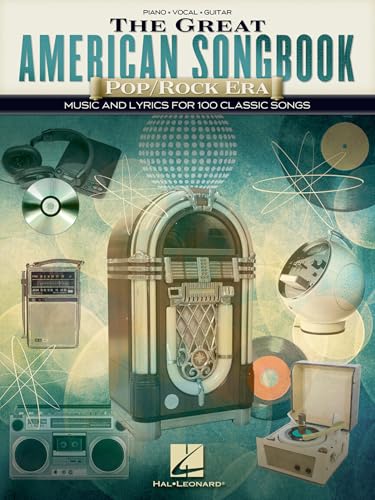
Hal Leonard Great American Songbook is the outlier, but it is a meaningful one. This is not an album or playlist. It is a substantial songbook containing music and lyrics for 100 classic songs, arranged for piano, vocal, and guitar. For a player, that changes the point of the purchase from remembering the decade to actively making music from it.
The 12-by-9-inch format gives the pages room for the arrangements, and the listed weight of about 3.45 pounds suggests a serious book rather than a thin practice pamphlet. The illustrated format adds to its appeal as a keepsake, although it also makes the book less convenient to carry around than a compact audio release.
The pop and rock era focus is broader than the 90s. That makes it less suitable than Now That's What I Call Music Alternative Rock for a listener who wants an audio-only alternative-rock set, but far more useful for a pianist, guitarist, singer, or student who wants repertoire. It also gives the buyer something the other nine products cannot: a way to reinterpret songs instead of replaying them.
The clear weakness is category mismatch for anyone searching only for recordings. You will not get a CD or digital album here, and the listing does not identify how many of the 100 songs come from the 1990s. Pick it for practice, performance, teaching, or a music-making gift. Skip it if your goal is a ready-made soundtrack.
9. Generic Rock Classics Collection: Best Rock Anthology

Pros
- 80-track, four-CD anthology
- Four thematic chapters organize the material
- Covers classic rock, hard rock, punk, new wave, and 2000s alternative
- Lists artists including Fleetwood Mac, The Smiths, Joy Division, Ramones, and Pantera
- Original high-fidelity studio masters are specified
Cons
- Only part of the collection is from the 90s
- Its wide time span may dilute decade-specific nostalgia
- The heavy rock and punk sections will not suit every listener
Best for: rock fans who want a large historical anthology rather than a strict 90s compilation.
Generic Rock Classics Collection is the most ambitious physical set here, but it is not a 90s-only purchase. The four-CD box contains 80 full-length tracks across four decades, allowing the listener to trace connections between classic rock, hard rock, punk, new wave, and 2000s alternative.
Its structure is unusually clear. The four thematic chapters cover Hard Rock and Heavy Metal, Classic and Folk Rock, Punk and Post-Punk pioneers, and modern 21st-century stadium rock. That organization gives the box more shape than a random anthology, and the named artists make the range tangible: Fleetwood Mac, Deep Purple, The Smiths, Joy Division, Ramones, ZZ Top, Alice Cooper, Nickelback, Royal Blood, and Pantera are all identified in the listing.
The four-CD design and 80-track count make it much larger than Now That's What I Call Music Alternative Rock. It also reaches further beyond the 90s than 100 Hits Best 90s Album. The high-fidelity studio-master description should appeal to physical-media listeners who care about the source material, though the supplied data does not provide a mastering engineer or detailed audio specification.
Its weakness is its lack of strict decade focus. Someone asking for a concentrated 90s set may spend much of the listening time in earlier or later eras. Choose it if rock history and variety matter more than a single decade. It is the right companion for a listener who wants 90s alternative to sit beside punk, classic rock, metal, and newer stadium sounds.
10. 10187436 Records DK Throwback Hits: Best Mixed Digital Playlist

Pros
- Digital format for immediate playback
- Pop, rock, and R&B are all named in the title
- Directly positioned as a 90s greatest-hits collection
- Broad genre concept suits casual listening
Cons
- The listing does not state a track count
- No artist list is supplied
- The digital music category description is limited
Best for: listeners who want a mixed digital album instead of a physical compilation.
10187436 Records DK Throwback Hits is designed around breadth in a small package. Its title names pop, rock, and R&B, so it aims to move between several of the decade's major sounds rather than settle into one lane. That makes it a natural fit for casual listening, especially when the audience has different ideas about what counts as essential 90s music.
The digital format keeps the experience straightforward. It is easier to add to an existing library than a box set, and it avoids the physical-storage commitment of Generic Rock Classics Collection or 90s Baby Ultimate Collection. The broad genre promise also gives it more variety than On-The-Go Dance Party Hits, though likely less of a consistent party mood.
The available information does not include a track count or artist list. That matters more here than it would for a single-artist release because the whole appeal rests on how well the collection balances pop, rock, and R&B. 90s Baby Ultimate Collection is easier to understand from its named performers and 60-plus-track description.
Skip it if you want a known sequence, a physical CD, or a specialist genre set. Choose it when the phrase “pop, rock, and R&B” describes the listening brief better than any single artist or scene. It is a flexible digital starting point, but not the most transparent selection in this roundup.

How to choose best 90s music
The right collection depends less on the decade label than on the listening experience you want: focused genre nostalgia, a broad party mix, a physical archive, or a way to perform the songs yourself.
Genre focus
Start by deciding which version of the decade you actually remember. Now That's What I Call Music Alternative Rock narrows the field to alternative rock, while On-The-Go Dance Party Hits is built around dance music. The Gap Band Millennium Collection goes narrower still by focusing on one artist and its funk, soul, and Quiet Storm territory.
Broad collections are more forgiving when several people are listening together. Specialist sets are better when you already know the mood you want and would rather skip fewer tracks.
Physical or digital format
CD collections make sense for listeners who enjoy a tangible library, want a defined album sequence, or use a disc player. The three-CD 90s Baby Ultimate Collection and four-CD Generic Rock Classics Collection provide a more substantial physical experience than a single digital album.
Digital releases are easier to start and integrate into an existing library. They also suit listeners who have already moved away from disc playback. The choice is not about sound quality alone. It is about how you want to find, store, and revisit the music.
Breadth and track count
A stated track count helps explain how much ground a collection can cover. 90s Baby Ultimate Collection specifies more than 60 tracks, while Generic Rock Classics Collection lists 80 tracks across four CDs. Those numbers suggest a longer listening arc, but quantity does not guarantee the right balance of genres.
When no track count or artist list is supplied, treat the title as a broad direction rather than a precise promise. That applies to several digital collections here. If you need particular songs, verify the complete track listing before choosing.
A decade collection should match the room's mood first, then the listener's nostalgia.
Decade accuracy
Not every product in this list is strictly confined to the 1990s. Sony Pop Album Part One spans the 90s, 00s, and 10s, while Generic Rock Classics Collection covers four decades and includes 2000s alternative. The Hal Leonard songbook is broader still, with 100 pop and rock songs from an extended era.
Choose a decade-pure title when you want a time capsule. Choose a wider anthology when you care more about musical connections across periods than strict chronology.
Listening versus playing
Most of these products are recordings, but Hal Leonard Great American Songbook is a sheet music collection. Its piano, vocal, and guitar arrangements turn familiar songs into material for practice or performance.
That distinction should guide the purchase. A player may get far more from 100 arrangements than from another compilation, while a listener who wants music immediately should stay with the CD or digital options. For a retro-themed room, how to build a soundtrack around older games and nostalgia can also help shape the atmosphere.
Frequently asked questions
Which 90s music collection is best for mixed genres?
90s Baby Ultimate Collection is the strongest mixed-genre choice. It is a three-CD set with more than 60 tracks and names artists from pop, R&B, and hip-hop, including Destiny’s Child, TLC, The Notorious B.I.G., and Whitney Houston.
Which collection is best for 90s dance music?
On-The-Go Dance Party Hits has the clearest dance focus. It is a digital music release built specifically around 90s dance music, making it more direct than the broader compilations.
Is there a 90s alternative-rock collection?
Yes. Now That's What I Call Music Alternative Rock is the dedicated alternative-rock option in this roundup. The listing does not provide its artist list or track count, so check the available song details if you need specific bands.
Which pick is best for funk and soul?
The Gap Band Millennium Collection is the focused choice. It is a single-CD collection from The Gap Band, and the listing identifies an original recording remastered format.
Are any of these products sheet music rather than recordings?
Yes. Hal Leonard Great American Songbook is a piano, vocal, and guitar sheet music collection with music and lyrics for 100 classic pop and rock songs. It is intended for musicians, students, performers, and fans who want to play the material.
Which collection covers more than the 1990s?
Sony Pop Album Part One spans the 90s, 00s, and 10s. Generic Rock Classics Collection covers four decades, with chapters devoted to hard rock and heavy metal, classic and folk rock, punk and post-punk, and modern stadium rock.
Should I choose a CD or digital collection?
Choose a CD when you want a physical library, a defined album sequence, or a box set experience. Choose digital when immediate access and easy integration with your existing devices matter more. The best format is the one that fits how you already listen.

The bottom line
The Best 90s Music pick for most listeners is 90s Baby Ultimate Collection. Its three CDs, 60-plus tracks, and named mix of pop, R&B, and hip-hop artists give it the broadest appeal without forcing the listener into one genre. On-The-Go Dance Party Hits is the better choice for a dance-focused room, while The Gap Band Millennium Collection is the sharper pick for a dedicated funk and soul fan.
Choose Now That's What I Call Music Alternative Rock for guitar-led nostalgia, Generic Rock Classics Collection for a much wider rock history, and Hal Leonard Great American Songbook if the goal is to play the songs rather than simply hear them. For an undecided listener, start with 90s Baby Ultimate Collection and choose a specialist set only when a particular genre is the point.
As an Amazon Associate we earn from qualifying purchases.