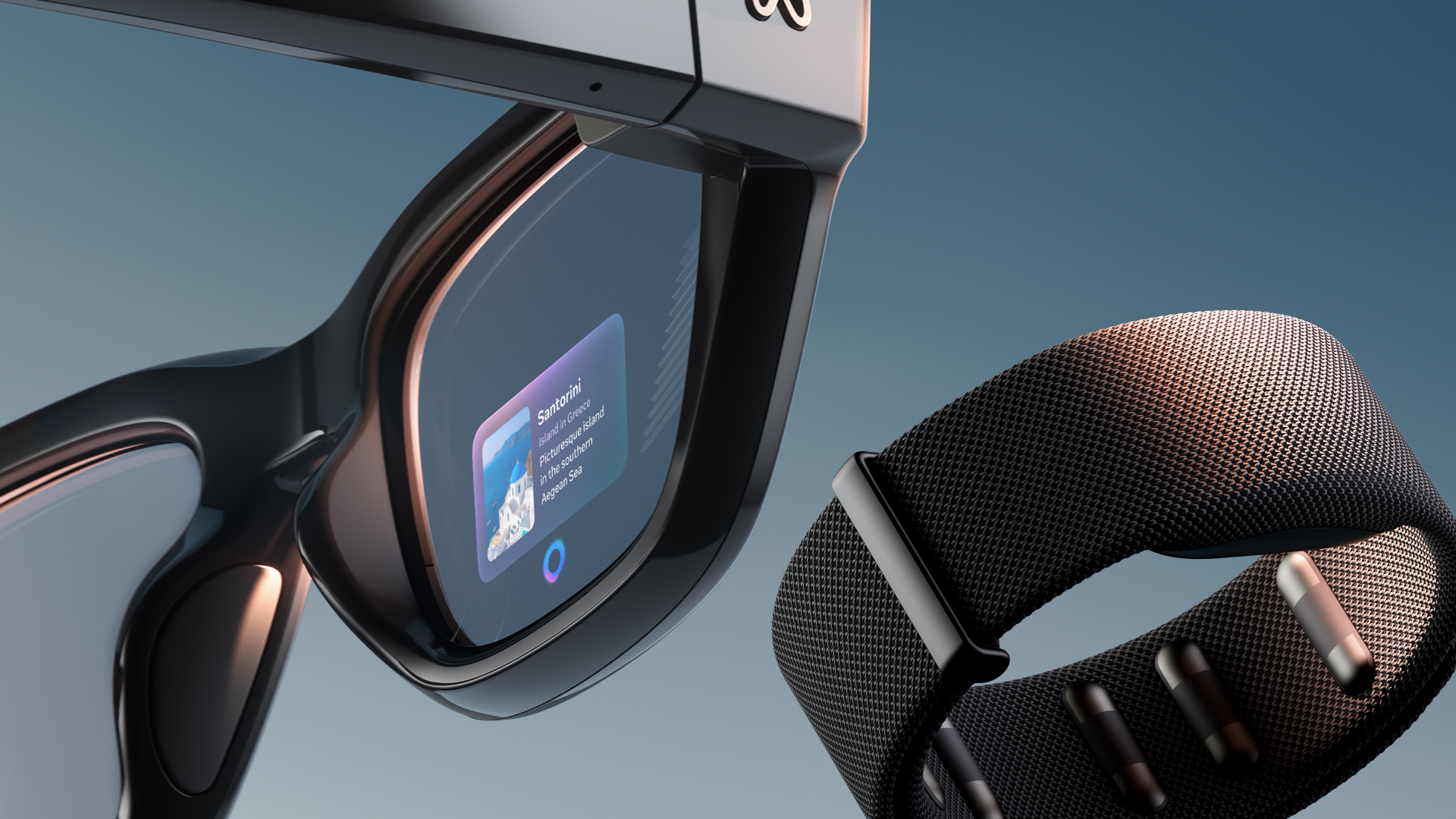

A camera, speakers, voice assistant, and translation tool sitting on your face sounds useful until you consider the details: how long the battery lasts, whether the camera is steady, and if the glasses still feel like something you would wear outside the house. The Best AI glasses make those trade-offs easier by combining genuinely useful hands-free features with frames that look reasonably normal.
Meta's Ray-Ban line leads this group for software, audio, calls, and camera quality. The lesser-known options compete with higher camera resolutions, photochromic lenses, longer recording modes, or lower complexity. Some are interesting travel tools, while others are better treated as wearable cameras with AI features attached.
Our top pick is the Meta Ray-Ban Wayfarer Gen 2, but the other nine cover useful alternatives, including large frames, adaptive lenses, steadier video, and simpler entry points.
Comparison of the best AI glasses
| # | Product | Award | Camera | Battery or playback | Lens or frame detail | Best for |
|---|---|---|---|---|---|---|
| 1 | Meta Ray-Ban Wayfarer Gen 2 | Best overall | 12MP, up to 3K | Up to 8 hours | Standard, clear lenses | The most polished everyday experience |
| 2 | Plunthorn Travel AI Glasses | Best travel features | 4K | 290mAh battery | Transparent lenses, IP65 | Translation and travel recording |
| 3 | Meta Ray-Ban Transitions | Best adaptive lenses | 12MP, up to 3K | Up to 8 hours | Transitions lenses | Moving between indoor and outdoor light |
| 4 | SGUKZF Photochromic AI Glasses | Best stabilized video | 4K with EIS | 290mAh battery | Photochromic lenses, 35g | Active outdoor recording |
| 5 | JASPIN AI Glasses | Best recording controls | 8MP with EIS | Up to 12 hours playback | Three lens sets, 37g | Longer clips and flexible lens use |
| 6 | Meta Ray-Ban Wayfarer Large | Best large fit | 12MP, up to 3K | Up to 8 hours | Large frame, clear lenses | Wearers who need more frame room |
| 7 | Meta Ray-Ban Green Lens | Best sunglass styling | 12MP, up to 3K | Up to 8 hours | Standard frame, green lenses | Outdoor use with classic sunglasses |
| 8 | Osawalla Photochromic AI Glasses | Best translation support | 8MP, 1080p | Up to 7 hours music | Photochromic lenses, 40.8g | Travelers needing language help |
| 9 | Meta Adventurer Glasses | Best hands-free calling | Not specified | Not specified | Standard, clear lenses | Calls, music, and Meta AI |
| 10 | AMZISH Camera Glasses | Best interchangeable lenses | 8MP, 30fps | Up to 8 hours music | Interchangeable lenses, IP65 | Casual recording and daily wear |
1. Meta Ray-Ban Wayfarer Gen 2: Best Overall

Pros
- Strongest combination of camera, audio, calls, and AI
- Up to 8 hours of battery life with moderate use
- Charging case provides up to 48 hours of charging
- Open-ear speakers preserve awareness of nearby sounds
Cons
- Requires a smartphone, Bluetooth, and the Meta AI app for key AI features
- Video clips are limited to 3 minutes per session
- Clear lenses are less useful in bright outdoor conditions
Best for: someone who wants AI features that feel integrated into a familiar pair of glasses.
The Meta Ray-Ban Wayfarer Gen 2 is the easiest pair here to imagine wearing every day. It looks like a conventional Wayfarer frame rather than a piece of experimental hardware, and its feature set is broad enough that you do not need to choose between camera glasses, headphones, and a voice assistant. Press the capture button or use a voice command, listen through the open-ear speakers, and leave your phone in your pocket.
The hardware is unusually well balanced. Its ultra-wide 12MP camera records at up to 3K, with clips lasting up to 3 minutes per session. That is enough for a quick point-of-view memory, a short demonstration, or a useful travel clip, though it is not a replacement for a dedicated camera. Open-ear audio lets conversations and ambient sounds remain audible, which matters when walking, commuting, or working around other people.
Battery life is listed at up to 8 hours with moderate use, and the charging case adds up to 48 hours of charging on the go. The AI functions need a Bluetooth connection to a smartphone, the Meta AI app, and internet access on the phone. That dependency is the main practical limitation, but it also helps explain why this model feels more cohesive than many generic alternatives. Live translation supports French, Italian, Spanish, English, German, and Portuguese, with more languages indicated by the listing.
The glasses can answer questions, identify objects, provide reminders, take calls, and handle messages. Meta also says the microphones block 90 percent of wind and street noise on calls. Privacy controls let you disable voice commands and manage related settings. The weakness is clear: if you want long uninterrupted recordings or a phone-independent camera, the JASPIN AI Glasses and AMZISH Camera Glasses offer more specific recording options. For most people, though, this is the most complete starting point.
2. Plunthorn Travel AI Glasses: Best Travel Features

Pros
- 4K camera for hands-free photos and video
- ChatGPT voice assistant and real-time translation
- IP65 protection against dust, sweat, and rain
- Open-ear audio keeps the surroundings audible
Cons
- The listing does not specify recording-session limits
- Requires a companion app for setup and file management
- Transparent lenses are not intended as sunglasses
Best for: travelers who want translation, object recognition, and first-person video in one frame.
The Plunthorn Travel AI Glasses are built around the travel use case more directly than the Meta models. Their transparent lenses suit indoor sightseeing, conferences, and daily wear, while the 4K camera gives you a higher stated recording resolution than the 3K camera in the Ray-Ban models. The appeal is not subtle styling. It is the concentration of travel tools in a single pair.
Its built-in ChatGPT voice assistant is intended to help with conversations, questions, and travel tasks. The listing also calls out real-time translation and object recognition, so the glasses can potentially help identify items or make sense of unfamiliar surroundings. Those features depend on the companion app and connected phone workflow, which means setup and network access remain part of the experience rather than an afterthought.
The 290mAh battery is designed for workdays and travel, though the listing does not provide a playback-hour figure. IP65 protection covers dust, sweat, and rain exposure, giving it more practical protection than an unprotected everyday frame. Open-ear speakers support music and hands-free calls without sealing off the ears. That is the right design for walking through a city, where awareness matters more than isolation.
The trade-off is that the Plunthorn does not provide the same detailed call, privacy, and ecosystem information as Meta's glasses. The Meta Ray-Ban Wayfarer Gen 2 is the safer choice for a polished daily companion, while the Plunthorn makes more sense for someone prioritizing 4K capture and travel assistance. Readers comparing first-person video options may also want to consider how hands-free cameras change the way you capture a trip. Skip this model if you want adaptive lenses or a clearly documented recording limit.
3. Meta Ray-Ban Transitions: Best Adaptive Lenses

Pros
- Transitions lenses darken in sunlight and fade indoors
- Same broad Meta AI feature set as the clear-lens version
- Up to 8 hours of moderate-use battery life
- Up to 3K video from a 12MP camera
Cons
- The adaptive lens option adds complexity for buyers who mostly stay indoors
- Video clips remain limited to 3 minutes per session
- Requires a connected smartphone for Meta AI features
Best for: people who move between indoor spaces and bright outdoor light throughout the day.
The Meta Ray-Ban Transitions pair solves the most obvious problem with clear smart glasses: stepping outside can make ordinary lenses feel inadequate. Its Transitions lenses darken in sunlight and fade back to clear indoors, so you can move from a shop to a sidewalk without changing glasses. That makes this version more practical for travel and errands than the otherwise similar clear-lens model.
The core electronics match the regular Wayfarer Gen 2. A 12MP ultra-wide camera records up to 3K, with each clip lasting up to 3 minutes. Open-ear speakers handle music and calls while preserving awareness, and Meta AI can answer questions, identify objects, set reminders, and support live translation. The translation feature lists French, Italian, Spanish, English, German, and Portuguese, with additional languages indicated in the product information.
Battery life reaches up to 8 hours with moderate use, while the charging case provides up to 48 hours of charging on the go. The glasses need Bluetooth, a smartphone, and the Meta AI app, and the phone needs internet access for the assistant. Meta also includes privacy controls that let you turn voice commands off. Calls benefit from the stated reduction of 90 percent of wind and street noise, a useful feature when wearing the glasses outside.
The weakness is not the technology but the narrower reason to choose it. If your day is mostly indoors, the clear Meta Ray-Ban Wayfarer Gen 2 gives you the same central functions without adaptive lenses. If outdoor light changes constantly, the Transitions model is the better fit. It is less compelling for someone seeking maximum recording length, where the JASPIN AI Glasses have a stronger stated recording focus.
4. SGUKZF Photochromic AI Glasses: Best Stabilized Video

Pros
- 4K video with electronic image stabilization
- Photochromic lenses adjust to changing light
- 35g frame is designed for extended wear
- IP66 protection and open-ear audio
Cons
- Battery capacity is listed, but playback time is not
- AI features depend on the advertised assistant and connected setup
- Less established software experience than Meta's glasses
Best for: cyclists, travelers, and active users who care more about steadier footage than ecosystem polish.
The SGUKZF Photochromic AI Glasses take a focused approach: put a stabilized 4K camera into a lightweight frame that can be worn outside. Electronic image stabilization is the important detail here. A camera mounted on your face naturally moves as you walk, cycle, or turn your head, and EIS is intended to reduce that distracting motion in the finished clip.
The photochromic lenses automatically adjust to sunlight, which makes the glasses more adaptable than a fixed clear or tinted frame. The stated 35g weight is also meaningful for active use. It is light enough to support longer wear without making the frame feel like a small camera rig, though comfort will still depend on the individual fit.
Open-ear audio handles music and calls while noise-reduction microphones aim to make conversations clearer. The glasses include AI translation in more than 139 languages and a ChatGPT voice assistant, along with object recognition. IP66 protection is a stronger stated water and dust rating than the IP65 models here, although it is still sensible to treat the glasses as weather-resistant equipment rather than something designed for immersion.
The 290mAh battery is specified, but the listing does not state a playback or recording duration. That makes it harder to plan a full day than with the Meta Ray-Ban Wayfarer Gen 2 or AMZISH Camera Glasses. The SGUKZF is the more interesting pick when stabilized 4K video and photochromic lenses matter most. It is not the one we'd choose for the most predictable assistant experience or the clearest long-term software support.
5. JASPIN AI Glasses: Best Recording Controls

Pros
- 8MP camera with EIS stabilization
- Records HD video clips up to 10 minutes
- Three lens sets and a 37g frame
- Up to 12 hours of playback and seven days of standby
Cons
- Camera resolution is lower than the 4K models on paper
- More recording and control features mean a busier setup
- The listing does not specify the exact HD recording resolution
Best for: people who want longer recording sessions, physical controls, and several lens choices.
The JASPIN AI Glasses are the most recording-oriented option in this list. Their 8MP camera uses EIS and can record HD video for up to 10 minutes with one tap. That session length is substantially more practical for a lecture, interview, family event, or longer walk than the 3-minute limit listed for the Meta models.
JASPIN also provides a more hands-on control scheme. The listing mentions a dedicated physical button for voice recording, physical buttons, and touch sensors. Voice activation can wake the assistant, while object recognition is intended to identify food, landmarks, plants, and menus. ChatGPT powers the advertised translation and question-answering functions, giving the glasses a broad set of travel and study uses.
The 290mAh battery is rated for up to 12 hours of playback and seven days of standby. A 37g frame keeps the weight moderate, and the included lens options are blue-light, polarized gray, and photochromic. That flexibility makes the JASPIN more adaptable than a fixed clear-lens frame, especially for someone who expects to switch between office use and outdoor recording.
The main compromise is camera resolution. The Plunthorn Travel AI Glasses and SGUKZF Photochromic AI Glasses advertise 4K capture, while JASPIN emphasizes recording duration and control instead. It also has more feature claims to sort through, and the listing does not give the exact HD resolution. Choose it for longer clips and lens flexibility, not because it is the simplest AI glasses experience.
6. Meta Ray-Ban Wayfarer Large: Best Large Fit

Pros
- Larger Wayfarer frame for wearers who need more room
- 12MP camera records up to 3K
- Up to 8 hours of moderate-use battery life
- Charging case provides up to 48 hours of charging
Cons
- The larger frame is not the right shape for every face
- Clear lenses are less versatile outdoors
- Requires a phone connection and Meta AI app
Best for: buyers who want Meta's features but find standard frames too narrow.
The Meta Ray-Ban Wayfarer Large is not a different platform from the standard Wayfarer Gen 2. Its reason to exist is fit. The large size gives wearers who find standard frames cramped another way to get the same camera, speakers, microphones, and Meta AI features without moving to a completely different design.
The camera is a 12MP ultra-wide unit that records up to 3K, and clips can run for up to 3 minutes per session. Open-ear speakers support music and calls without blocking surrounding audio. Meta's feature set includes object identification, reminders, hands-free messaging, and live translation. The listing names French, Italian, Spanish, English, German, and Portuguese among the supported languages.
Battery life reaches up to 8 hours under moderate use, and the charging case adds up to 48 hours of charging on the go. Calls are supported with a stated 90 percent reduction in wind and street noise. The glasses also include privacy controls for voice commands. These are the same practical strengths that make the standard model our top pick.
The large fit is both the selling point and the limitation. Buyers with average or smaller faces may find the frame too broad, while those who need more room may find it much more comfortable than the standard pair. The Meta Ray-Ban Transitions is a better choice when lens adaptability matters, and the Meta Ray-Ban Wayfarer Large is the better choice when frame fit is the first concern.
7. Meta Ray-Ban Green Lens: Best Sunglass Styling

Pros
- Classic Wayfarer design with green lenses
- 12MP camera and up to 3K recording
- Up to 8 hours of moderate-use battery life
- Open-ear sound and hands-free calling
Cons
- Fixed green lenses are less flexible indoors
- Video clips are limited to 3 minutes per session
- Smartphone and Meta AI app are required for key functions
Best for: buyers who want smart glasses that look and function like outdoor sunglasses.
The Meta Ray-Ban Green Lens is the style-led member of the Meta group. Green lenses give it a more recognizable sunglasses identity than the clear versions, and the Shiny Black frame keeps the design familiar. If you want smart glasses to look like something you deliberately chose rather than a visible gadget, this is the most natural outdoor option among the Meta entries.
The internal feature set remains strong. Its 12MP ultra-wide camera captures up to 3K video, with sessions lasting up to 3 minutes. Open-ear speakers play music without sealing off the ears, and hands-free calls and messages work through the connected phone. Meta AI can answer questions, identify objects, and set reminders, while live translation supports several named languages.
The battery is rated for up to 8 hours with moderate use, and the case provides up to 48 hours of charging on the go. Meta also highlights wind and street-noise reduction for calls, along with privacy settings that let you disable voice commands. Those details make this more than a camera hidden in sunglasses. It is a communication and audio device with a camera attached.
The fixed green lenses are the central compromise. They are a good fit for outdoor use but less convenient when your day moves between sunlight and dim interiors. The Meta Ray-Ban Transitions handles that shift better, while the SGUKZF Photochromic AI Glasses offer adaptive lenses with 4K EIS video. Choose the Green Lens model when the classic sunglass appearance matters more than lens flexibility.
8. Osawalla Photochromic AI Glasses: Best Translation Support

Pros
- Translation support for more than 139 languages
- 8MP camera with 1080p video
- Photochromic lenses and a 40.8g frame
- Up to 7 hours of music playback
Cons
- Video resolution is below the 3K and 4K alternatives
- Photochromic lenses may darken more slowly indoors or in winter
- IP65 protection is not intended for submersion
Best for: international travelers who prioritize language assistance and adaptable lenses.
The Osawalla Photochromic AI Glasses put translation at the center of their pitch. The built-in “Hey Cyan” assistant uses a ChatGPT model, and the glasses support object recognition for items, menus, landmarks, and plants. Translation is advertised across more than 139 languages, making this a particularly focused option for travel, study, and work conversations.
The camera is an 8MP unit that records 1080p video, with selectable recording durations from 15 seconds through 12 minutes. That gives the Osawalla more control over clip length than Meta, even though its stated video resolution is lower. Anti-shake processing is intended to keep everyday footage steadier, while Wi-Fi and Bluetooth dual transmission help sync files to a phone.
At 40.8g, the frame is not the lightest here, but it is designed for extended wear. A 290mAh battery supports up to 7 hours of music playback and up to seven days of standby. The glasses use Bluetooth 5.4, include dual microphones with environmental noise cancellation, and have IP65 protection against daily splashes. Photochromic lenses darken in sunlight, though the listing warns that this can happen more slowly indoors or during winter.
The JASPIN AI Glasses offer longer stated playback and several lens sets, while the SGUKZF Photochromic AI Glasses provide 4K EIS video. Osawalla's advantage is its clearly defined translation and recording controls. It is a reasonable choice for a traveler who values language assistance over maximum image resolution, but buyers should not expect dedicated-camera footage from the 1080p system.
9. Meta Adventurer Glasses: Best Hands-Free Calling

Pros
- Six microphones for calls and video calls
- Open-ear speakers preserve environmental awareness
- Meta AI supports questions and live translation
- Works with Spotify, Apple Music, Audible, WhatsApp, and messaging
Cons
- Camera resolution is not specified in the listing
- Battery life is not specified
- Fewer concrete hardware details than the Ray-Ban Gen 2 models
Best for: people who mainly want voice calls, music, and Meta AI in a wearable frame.
The Meta Adventurer Glasses are the least camera-specific option in this roundup and the most communication-focused. Their six built-in microphones are designed to reduce background noise during calls, while open-ear speakers keep music and conversation audible without shutting out the environment. That makes the glasses feel closer to a hands-free calling and audio accessory than a dedicated recording tool.
Meta AI responds to questions, and live translation is activated with the “Hey Meta” wake phrase. The glasses can record photos and video through a button or voice command, and they support WhatsApp video calls so another person can see the wearer's point of view. Spotify, Apple Music, and Audible support extends the audio side, although the listing notes that some services require an additional account.
The frame is available with clear lenses, and the product information emphasizes comfort, styling, and options including tinted, blue-light, and Transitions lenses across the range. The listing does not specify camera resolution, battery capacity, or playback time. That missing information matters when comparing it with the Meta Ray-Ban Wayfarer Gen 2, which gives specific camera and battery figures.
The Adventurer is therefore easiest to recommend to someone who values calls and audio more than recording specifications. It has a stronger communication story than the AMZISH Camera Glasses, but the AMZISH model gives much clearer camera, recording, and battery details. Choose Meta Adventurer for the software and calling ecosystem, and skip it if you need a documented camera resolution or a defined recording duration.
10. AMZISH Camera Glasses: Best Interchangeable Lenses

Pros
- 8MP camera with 30fps video
- EIS and noise reduction for steadier footage
- Up to 8 hours of music playback
- Interchangeable clear and sunglass lenses
Cons
- Continuous video recording is limited to 60 minutes per session
- IP65 protection is not suitable for swimming or submersion
- Camera resolution is below the 4K alternatives
Best for: casual users who want one frame for clear indoor wear and outdoor sunglasses use.
The AMZISH Camera Glasses make a practical case for interchangeable lenses. Swap between clear business glasses and sunglass lenses instead of committing to a permanently tinted frame. That flexibility is useful for someone who wants to record during a walk or bike ride but also wear the glasses in an office.
Its 8MP camera records smooth 30fps video and uses an upgraded stabilization algorithm. The listing allows up to 60 minutes of continuous video recording per session, which is far longer than the 3-minute clips listed for the Meta models. Dual microphones with environmental noise cancellation handle calls, and open acoustics keep the ears aware of nearby sounds.
The glasses support ChatGPT and DeepSeek models, object recognition, voice wake-up, translation across 164 mainstream languages, and question-answering. Bluetooth 5.4 and Wi-Fi support wireless transfer to a phone. The battery provides up to 8 hours of music playback, while the listing does not give a total number for continuous video recording. IP65 protection covers sweat and splashes, but the product specifically is not intended for swimming or submersion.
The compromise is image resolution. The Plunthorn Travel AI Glasses and SGUKZF Photochromic AI Glasses advertise 4K, while AMZISH is built around useful recording duration and lens versatility. It is a better fit for casual point-of-view clips than high-detail footage. If you want one adaptable frame and do not need Meta's software ecosystem, this is the most straightforward alternative at the bottom of the list.

How to choose best ai glasses
The right AI glasses depend less on the longest feature list than on how the camera, assistant, lenses, audio, and phone connection fit your routine.
Camera resolution and stabilization
A higher stated resolution can preserve more detail, but it does not automatically produce better footage when the camera moves with your head. The Meta models use a 12MP camera and record up to 3K, while Plunthorn and SGUKZF advertise 4K. JASPIN and AMZISH emphasize EIS, which may matter more for walking, cycling, and active recording.
Look for both a resolution and a stabilization claim. Also check the maximum clip length. Meta lists 3-minute sessions, JASPIN lists up to 10 minutes, Osawalla lists selectable durations through 12 minutes, and AMZISH lists up to 60 minutes of continuous recording.
AI assistant and translation
AI glasses are only as useful as the assistant you can access comfortably. Meta AI handles questions, reminders, object identification, and translation, while several other models advertise ChatGPT-based assistants. Translation language counts are not directly comparable because the products describe their capabilities differently, but Osawalla, SGUKZF, and AMZISH make particularly broad language claims.
Check whether the assistant requires a smartphone, an app, Bluetooth, or internet access. Meta explicitly requires a connected smartphone, the Meta AI app, and phone internet access for key AI functions. A phone-dependent design may be perfectly suitable for daily use, but it is important to know before buying.
The camera determines what you capture, but the phone and assistant determine whether the glasses feel intelligent.
Lens behavior and fit
Clear lenses suit indoor and mixed use, fixed green lenses are better for bright outdoor wear, and photochromic or Transitions lenses adapt as lighting changes. The Meta Ray-Ban Transitions is the polished adaptive-lens option, while SGUKZF and Osawalla offer photochromic alternatives. JASPIN and AMZISH go further by offering multiple or interchangeable lens sets.
Fit is just as important. The Meta Wayfarer Large is the only entry specifically marked as a large size, while several others are listed as standard, regular, or one size. A frame that feels too narrow or heavy will spend more time in its case, no matter how capable its assistant is.
Open-ear audio and microphones
Open-ear speakers let you hear music and calls without blocking conversations, traffic, or other surroundings. That is useful for commuting and outdoor activities, though open audio will not provide the isolation of earbuds. For calls, look for microphone details. Meta says its Ray-Ban models reduce wind and street noise, Meta Adventurer uses six microphones, and several generic models specify environmental or noise-reduction microphones.
If your main use is calls and music, the Meta Adventurer Glasses deserve more attention than their missing camera specifications suggest. If recording is the priority, audio quality should still matter because voice notes and live assistant responses are central to the experience.
Battery and durability
Battery claims vary widely. Meta lists up to 8 hours of moderate use and up to 48 hours from the charging case. JASPIN lists up to 12 hours of playback, while Osawalla and AMZISH list up to 7 and 8 hours of music playback respectively. Those figures are not directly equivalent to continuous camera recording, so treat playback and recording as separate workloads.
Water protection also varies. IP65 is intended for dust and splashes, while SGUKZF lists IP66 protection. Neither rating makes the glasses suitable for swimming or submersion. For more context on how assistant hardware fits into a larger setup, the role of voice-controlled devices in a connected home is a useful comparison.

Frequently asked questions
Do AI glasses need a phone?
Many do. Meta's listings specifically require Bluetooth, a smartphone, the Meta AI app, and internet access on the phone for key assistant features. Other models mention companion apps, Bluetooth, or wireless file transfer, so check the connection requirements before buying.
Can AI glasses translate conversations?
Several products in this roundup advertise real-time translation. Meta lists French, Italian, Spanish, English, German, and Portuguese, while SGUKZF, Osawalla, and AMZISH advertise support for more than 139 or 164 languages. Translation may depend on the connected phone, app, and available network access.
Which AI glasses record the longest videos?
AMZISH lists up to 60 minutes of continuous video recording per session. JASPIN lists up to 10 minutes, while Osawalla offers selectable recording durations through 12 minutes. Meta lists clips of up to 3 minutes per session.
Are AI glasses waterproof?
They are generally designed for everyday exposure rather than submersion. Plunthorn and Osawalla list IP65 protection, while SGUKZF lists IP66. AMZISH specifically says its IP65 design is not suitable for swimming or submersion.
Do AI glasses block your ears?
The products here use open-ear speakers rather than sealed earbuds. You can hear music, calls, and assistant responses while remaining aware of nearby sounds. This helps outdoors, but it also means more sound leakage and less isolation than traditional headphones.
Which AI glasses have photochromic or adaptive lenses?
The Meta Ray-Ban Transitions uses Transitions lenses that darken in sunlight and fade indoors. SGUKZF and Osawalla list photochromic lenses, and JASPIN includes a photochromic option among its three lens sets. AMZISH uses interchangeable lenses rather than a single adaptive lens system.
Are AI glasses useful without recording?
Yes. Calls, music, reminders, translation, object recognition, and voice questions can all be useful without taking photos or video. Meta Adventurer is especially focused on calls and audio, while the Ray-Ban Gen 2 models offer the broadest mix of hands-free functions.

The bottom line
The Best AI glasses for most people are the Meta Ray-Ban Wayfarer Gen 2 because it combines a strong 12MP camera, up to 3K recording, open-ear audio, hands-free calls, Meta AI, translation, privacy controls, and up to 8 hours of moderate-use battery life. Choose the Meta Ray-Ban Transitions instead when moving between indoor and outdoor light is part of every day.
For different priorities, the JASPIN AI Glasses stand out for longer recording sessions and multiple lens sets, while the SGUKZF Photochromic AI Glasses make a stronger case for stabilized outdoor footage. The AMZISH Camera Glasses are the more flexible choice for interchangeable lenses and extended continuous recording.
If you are undecided, buy the Meta Ray-Ban Wayfarer Gen 2 for the most complete experience, or choose the model whose camera, lens, or translation feature matches the task you will actually repeat.
As an Amazon Associate we earn from qualifying purchases.