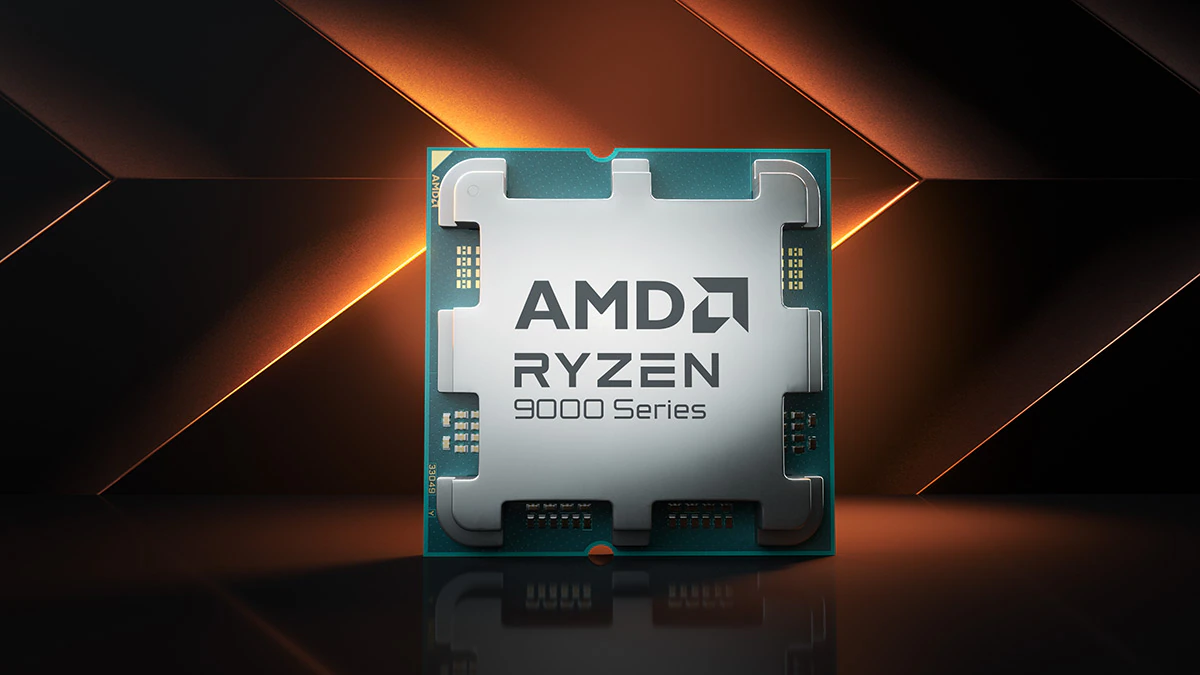

Choosing a gaming CPU is less straightforward than counting cores. A processor with 16 cores can be superb for streaming and creation work, while an eight-core chip with a large cache can be faster in the games that matter most. Platform compatibility complicates the decision too, since AM4 and AM5 require different motherboards and memory.
This guide to the Best amd processor for gaming covers AMD's current X3D gaming specialist, high-core Zen 5 processors, capable AM5 alternatives, and several AM4 options for existing systems. Our top pick is the AMD Ryzen 7 9800X3D, while the rest of the field ranges from high-end creator hardware to a practical entry point with a bundled cooler.
Comparison table
| # | Product | Award | Cores and threads | Platform | Max boost | Best for |
|---|---|---|---|---|---|---|
| 1 | AMD Ryzen 7 9800X3D | Best overall | 8 cores, 16 threads | AM5 | Up to 5.2 GHz | High-refresh gaming |
| 2 | AMD Ryzen 9 9950X3D | Best for gaming and creation | 16 cores, 32 threads | AM5 | Up to 5.7 GHz | Gaming and demanding workloads |
| 3 | AMD Ryzen 5 9600X | Best six-core AM5 pick | 6 cores, 12 threads | AM5 | Up to 5.4 GHz | New gaming builds |
| 4 | AMD Ryzen 9 9950X | Best for heavy multitasking | 16 cores, 32 threads | AM5 | Up to 5.7 GHz | Gaming and content creation |
| 5 | AMD Ryzen 7 7800X3D | Best previous-generation X3D | 8 cores, 16 threads | AM5 | 4.2 GHz clock listed | Gaming-focused AM5 systems |
| 6 | AMD Ryzen 7 5800X3D | Best AM4 gaming upgrade | 8 cores, 16 threads | AM4 | Up to 4.5 GHz | Existing AM4 PCs |
| 7 | AMD Ryzen 5 5500 | Best with a bundled cooler | 6 cores, 12 threads | AM4 | Up to 4.2 GHz | Basic discrete-GPU builds |
| 8 | AMD Ryzen 7 5800XT | Best AM4 all-rounder | 8 cores, 16 threads | AM4 | Up to 4.8 GHz | AM4 gaming and multitasking |
| 9 | AMD Ryzen 7 7700X | Best standard AM5 eight-core | 8 cores, 16 threads | AM5 | Up to 5.4 GHz | General-purpose AM5 builds |
1. AMD Ryzen 7 9800X3D: Best Overall
Pros
- Eight Zen 5 cores suit modern gaming well
- 96MB of L3 cache helps feed the processor in games
- AM5 support leaves room for a newer platform
- Improved thermal performance over the previous generation
Cons
- Cooler is not included
- Sixteen threads are less suited to extreme workstation workloads than Ryzen 9 models
Best for: gamers building a new AM5 system around high frame rates and smooth performance.
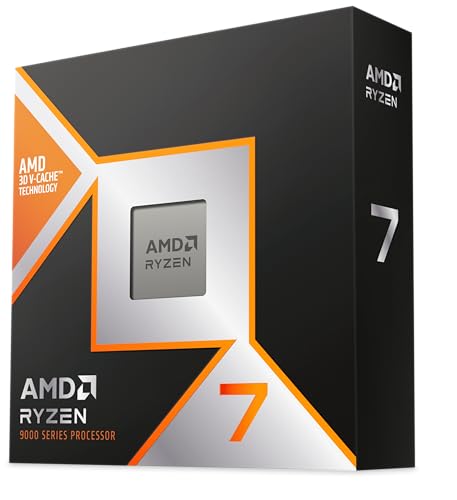
The AMD Ryzen 7 9800X3D is the processor we'd choose for a gaming-first desktop. It has the right shape for the job: eight cores, 16 threads, and a large 96MB L3 cache, without spending its design around workloads that most gaming PCs rarely run. The important part is not simply the core count. Extra cache can keep more game data close to the cores, which helps reduce the pauses and frame-time spikes that are especially visible on a high-refresh display.
This chip uses AMD's Zen 5 architecture and lists a boost speed of up to 5.2 GHz. AMD also describes an approximately 16% IPC uplift, meaning the cores can complete more work per clock than the preceding design. The combination of that architectural improvement, the 3D V-Cache, and improved thermal performance gives the 9800X3D a more convincing all-around position than the older AMD Ryzen 7 7800X3D. It is a drop-in choice for Socket AM5 infrastructure, so a new build can use current motherboards and DDR5 memory.
The AMD Ryzen 9 9950X3D is the faster fit for someone who games while rendering, encoding, or running other heavily threaded tasks. It has twice the cores and threads, along with a higher boost ceiling, but its extra capacity is not necessary for a gaming-only machine. The standard AMD Ryzen 9 9950X also makes more sense when productivity work dominates. For a system whose main job is playing games, the 9800X3D is the cleaner choice.
There is one practical catch: no cooler is included. That adds another component to the build and means the CPU should not be treated as a complete installation by itself. Buyers who spend most of their time in heavily threaded production software should also look at the Ryzen 9 choices. Everyone else gets the most focused blend here of gaming performance, modern platform support, and sensible core count.
For a new high-end gaming PC, this is the one we'd keep. It is also the natural starting point for readers comparing the core components that shape a gaming PC build, since the AM5 platform, memory, cooling, and graphics card all need to be selected around it.
2. AMD Ryzen 9 9950X3D: Best for Gaming and Creation

Pros
- 16 cores and 32 threads handle demanding parallel work
- Zen 5 architecture gives it a modern foundation
- Up to 5.7 GHz boost supports responsive game performance
- X3D design targets gaming as well as creation
Cons
- Extra cores are unnecessary for a gaming-only build
- Cooler is not included
Best for: players who also create, stream, encode, or run demanding applications.
The AMD Ryzen 9 9950X3D is the no-compromise option for a PC that has to be both a gaming machine and a serious work system. Its 16 cores and 32 threads give it a large amount of parallel capacity, while the X3D design keeps gaming in the brief rather than treating it as an afterthought. That matters for people who stream, compile, render, or edit video between gaming sessions.
The listed boost clock reaches up to 5.7 GHz and the base clock is 4.3 GHz. Those numbers describe useful headroom, but they do not tell the whole story. Games often respond more to latency, cache behavior, and a few fast active cores than to a large core count alone. The 9950X3D is compelling because it combines those gaming-oriented traits with the ability to keep many other threads moving at once.
Compared with the AMD Ryzen 7 9800X3D, this processor is more capable when the game is only one of several demanding tasks running on the PC. Compared with the standard AMD Ryzen 9 9950X, the X3D model is the more natural gaming pick because its design specifically includes gaming and content creation. The trade-off is that the 9950X3D is more processor than a typical gaming-only system needs.
The build requirements deserve attention. It is an AM5 desktop processor, listed under AMD's Zen 5 architecture and Granite Ridge codename, and it does not include a cooler. A high-end chip with this many cores should be paired with a cooling solution selected for sustained workloads, not just short bursts. The data supplied here does not specify a cooler model, so the rest of the system needs to be planned around the CPU's thermal demands.
Choose it when the computer is also a production tool. For a pure gaming machine, the 9800X3D is the more focused recommendation. For gaming plus serious creation work, the 9950X3D earns its place at the top of the list.
3. AMD Ryzen 5 9600X: Best Six-Core AM5 Pick

Pros
- Zen 5 architecture in a six-core design
- Up to 5.4 GHz boost
- Unlocked for overclocking
- Supports DDR5-5600
- AM5 platform and possible PCIe 5.0 support
Cons
- Cooler is not included
- Six cores leave less room for heavy simultaneous workloads than Ryzen 9 models
Best for: a new AM5 gaming PC that needs strong gaming capability without a high core count.
The AMD Ryzen 5 9600X makes a strong case for keeping a gaming build simple. Six cores and 12 threads are enough for a wide range of gaming systems, and the Zen 5 architecture gives those cores a current design rather than asking a new buyer to start with an older platform. It is the kind of CPU that makes sense when the graphics card should remain the main performance priority.
Its boost clock reaches up to 5.4 GHz, and AMD lists 38MB of cache. The chip supports DDR5-5600 and is unlocked for overclocking, giving experienced builders room to tune the system. Select motherboards can support PCIe 5.0, though that capability depends on the board rather than the processor alone. Those details make it a flexible foundation for a new AM5 system.
The AMD Ryzen 7 7700X gives you eight cores and 16 threads, so it is the stronger choice for heavy multitasking and longer-term thread headroom. The AMD Ryzen 7 9800X3D is the better gaming specialist when the goal is the highest possible gaming performance. The 9600X sits between those ideas: it brings the newer Zen 5 platform and a high boost ceiling without carrying the extra complexity of a Ryzen 9 system.
The limitations are straightforward. There is no included cooler, and six cores are not the right fit for someone who records, streams, edits, and games at the same time. It also relies on AM5, so anyone upgrading an older AM4 computer needs a new compatible motherboard and DDR5 memory rather than a simple CPU swap.
This is the pick for a clean, modern gaming build where the processor needs to be capable but not oversized. It is also a good place to start when choosing memory that matches an AM5 gaming platform, since the CPU supports DDR5-5600 and the board and memory choices will shape the rest of the system.
4. AMD Ryzen 9 9950X: Best for Heavy Multitasking
Pros
- 16 cores and 32 threads for demanding workloads
- Zen 5 architecture
- Up to 5.7 GHz boost
- 80MB of cache
- Unlocked for overclocking
Cons
- Liquid cooling is recommended
- Cooler is not included
- Less gaming-focused than the X3D alternatives
Best for: a workstation-class desktop that also plays demanding games.
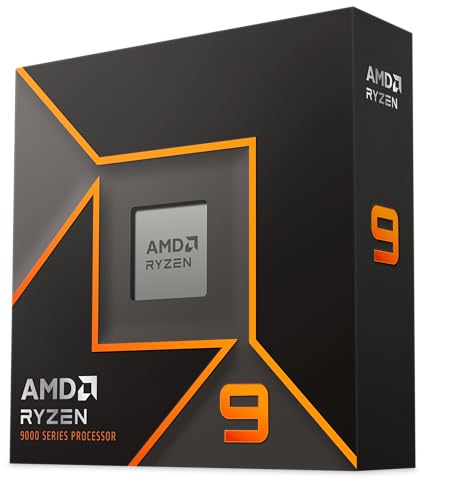
The AMD Ryzen 9 9950X is built for the person who wants the computer to work hard even when a game is not open. Its 16 cores and 32 threads can handle large parallel workloads, and that capacity is useful for video work, rendering, software development, and heavy multitasking. Gaming remains part of the brief, but it is not the sole reason to choose this processor.
AMD lists a 5.7 GHz max boost, 80MB of cache, and support for DDR5-5600. It is based on Zen 5, uses Socket AM5, and can support PCIe 5.0 on select motherboards. The unlocked design also allows overclocking for builders who are comfortable managing power and thermals. These are strong specifications for a system intended to stay useful across many kinds of work.
The AMD Ryzen 9 9950X3D is the better match when gaming performance and creation work carry equal weight, because its X3D design is specifically aimed at combining those roles. The AMD Ryzen 7 9800X3D is more sensible for a gaming-first build. The 9950X wins when rendering, compiling, or other heavily threaded jobs are frequent enough to justify its extra cores.
Cooling is the major ownership consideration. The listing says a liquid cooler is recommended, and no cooler is included. That is not a minor accessory decision for a CPU intended to sustain demanding loads. The motherboard, power delivery, cooling, and case airflow all need to be selected as part of the same build rather than added as an afterthought.
Buy this processor when gaming shares the desk with serious production work. If your PC spends nearly all of its time in games, choose one of the X3D models instead. If you need one AM5 chip to serve as both a gaming system and a compact workstation, the 9950X is the practical non-X3D choice.
5. AMD Ryzen 7 7800X3D: Best Previous-Generation X3D

Pros
- Eight cores and 16 threads remain a strong gaming layout
- 96MB of L3 cache
- AM5 support
- Integrated AMD Radeon graphics controller
- 5nm process technology
Cons
- Listed clock details are less complete than for newer models
- Cooler is not included
- Newer X3D processors offer a more current architecture
Best for: gamers who want an AM5 X3D processor without moving to a Ryzen 9 model.
The AMD Ryzen 7 7800X3D remains an easy processor to understand. It puts eight cores, 16 threads, and a substantial 96MB of L3 cache into an AM5 package built around gaming. That balance is why it has stayed relevant: the design is focused, and it avoids the complications of paying for a large number of cores that many games will not use.
The supplied information lists a 4.20 GHz clock speed, a 2200 MHz graphics frequency, and an 89°C maximum operating temperature. It also identifies a 5nm process and an AMD Radeon graphics controller. The large cache is the standout feature for gaming, helping the processor keep frequently accessed data close to the cores. In a CPU-limited game, that can matter more than simply adding cores.
The AMD Ryzen 7 9800X3D is the stronger pick for a new high-end system because it uses Zen 5 and has improved performance characteristics. The AMD Ryzen 5 9600X offers a newer architecture with fewer cores and no X3D cache design. That leaves the 7800X3D in a specific position: it is for builders who want the X3D gaming approach on AM5 and do not need the newest model's extra performance.
The product does not include a cooler, so the complete system still needs a suitable thermal solution. The supplied specifications also do not list a max boost clock, which makes direct clock-speed comparisons less useful than the architectural and cache differences. Buyers should focus on the platform, the graphics card, and the games they play rather than treating the clock figure as the whole story.
The 7800X3D is still a compelling gaming-focused AM5 option, but it should be chosen deliberately. It is a better fit than the 7700X when cache-sensitive gaming is the priority, while the 9800X3D is the one to choose when the rest of the build is aimed at the highest tier.
6. AMD Ryzen 7 5800X3D: Best AM4 Gaming Upgrade

Pros
- Eight cores and 16 threads
- 100MB of total listed cache
- 3D V-Cache technology
- Works with the AM4 platform
- Supports DDR4-3200
Cons
- Cooler is not included
- High-performance cooler is recommended
- AM4 and PCIe 4.0 limit the platform's upgrade path
Best for: an existing AM4 gaming PC that needs a major processor upgrade.
The AMD Ryzen 7 5800X3D is the specialist choice for people who already own an AM4 motherboard. It brings eight cores, 16 threads, and AMD 3D V-Cache technology to a platform that supports DDR4-3200. That means an older system can gain a gaming-focused processor without requiring the full platform change that comes with AM5.
Its listed max boost is 4.5 GHz, and the product details identify 100MB of cache. The clock is lower than the newer chips in this guide, but the X3D design is intended to offset that in games that benefit from additional cache. For an existing AM4 desktop, that can make the 5800X3D a more meaningful upgrade than a standard processor with a higher clock but a less gaming-specific cache layout.
The AMD Ryzen 7 7800X3D is the natural step up for a new AM5 build, while the AMD Ryzen 7 5800XT is the more general-purpose AM4 option. The 5800X3D wins the upgrade comparison when the motherboard, memory, and rest of the system are already in place. It does not make sense to start a brand-new build around AM4 solely to obtain this processor unless the platform constraints are well understood.
A high-performance cooler is recommended and none is included. The processor supports PCIe 4.0 on X570 and B550 motherboards, so the motherboard chipset matters when planning storage and graphics connectivity. Before buying, confirm that the existing board supports the chip and has the necessary firmware. Those checks are more important here than they would be in a completely new AM5 build.
For an AM4 owner who wants more gaming life from the current system, this is the clear choice in the list. Our broader discussion of the AM4 upgrade path for gaming PCs can help decide whether a processor swap is enough or whether the platform should be replaced altogether.
7. AMD Ryzen 5 5500: Best With a Bundled Cooler

Pros
- Six cores and 12 threads
- Wraith Stealth cooler included
- Unlocked for overclocking
- Supports DDR4-3200
- AM4 compatibility
Cons
- Older AM4 platform
- 19MB of listed cache is lower than the X3D models
- Requires a discrete graphics card for gaming
Best for: a straightforward AM4 desktop paired with a separate graphics card.
The AMD Ryzen 5 5500 is the plainspoken option here. It supplies six cores and 12 threads, runs on AM4, and includes AMD's Wraith Stealth cooler. That bundled cooler makes the installation less involved than the other processors in this guide, which are listed without one or recommend a higher-performance cooling solution.
The chip reaches up to 4.2 GHz and has 19MB of listed cache. It supports DDR4-3200 and is unlocked for overclocking, so it can serve as a flexible base for a basic desktop. AMD states that it can deliver fast 100-plus FPS performance in popular games, but the listing also makes clear that a discrete graphics card is required. The processor is not a substitute for a gaming GPU.
The AMD Ryzen 7 5800XT gives an AM4 system more cores, a higher boost ceiling, and a Wraith Prism cooler with RGB lighting. The AMD Ryzen 5 9600X is the more modern direction for a new build because it moves to AM5 and Zen 5. The 5500 is most appealing when the motherboard and DDR4 memory are already part of the plan, or when a simple six-core system is all that is needed.
Its main weakness is the platform and cache layout. The 19MB figure is far below the 96MB and 100MB listings on the X3D chips, and AM4 does not offer the same forward path as AM5. It also needs a discrete graphics card, so the complete gaming experience depends heavily on the GPU and the games being played.
Choose it for a basic, uncomplicated AM4 system where the included Wraith Stealth cooler matters. Skip it if you are building from scratch and want the longest modern platform runway, or if your workloads demand more than six cores.
8. AMD Ryzen 7 5800XT: Best AM4 All-Rounder

Pros
- Eight cores and 16 threads
- Up to 4.8 GHz boost
- Unlocked for overclocking
- Wraith Prism cooler included
- PCIe 4.0 support on AM4
Cons
- Zen 3 is older than the AM5 processors here
- DDR4-3200 limits the memory platform
- Not as gaming-focused as the 5800X3D
Best for: an AM4 desktop that needs balanced gaming and everyday multitasking.
The AMD Ryzen 7 5800XT is the balanced AM4 choice. Eight cores and 16 threads give it more breathing room than the Ryzen 5 5500, while the included Wraith Prism cooler makes it a more complete package than the coolerless processors above. It is not an X3D gaming specialist, but it is well suited to a desktop that mixes games with ordinary multitasking.
Its boost speed reaches 4.8 GHz, the chip is unlocked for overclocking, and the listed cache is 36MB. It supports DDR4-3200 and PCIe 4.0 on the AM4 platform. Those specifications make sense for a mature gaming PC that already has compatible memory and a motherboard, particularly when the owner wants eight cores without rebuilding around AM5.
The AMD Ryzen 7 5800X3D is the better AM4 gaming pick because its 3D V-Cache and 100MB of listed cache are aimed directly at game performance. The AMD Ryzen 7 7700X moves to AM5, Zen 4, and DDR5, so it is the more modern choice for a new system. The 5800XT wins when the existing AM4 platform and included cooler are central to the decision.
The weakness is that it cannot change the age of the platform. DDR4-3200 and PCIe 4.0 remain capable, but AM5 provides a clearer path for later CPU upgrades. Buyers who want the highest gaming performance from AM4 should look at the 5800X3D instead. Buyers who want a new system should compare the total platform, not just the processor.
For an existing AM4 PC that needs a general-purpose eight-core processor, the 5800XT is easy to live with. It is the better fit for mixed use than the Ryzen 5 5500, but it should not be mistaken for the gaming specialist that the X3D model is.
9. AMD Ryzen 7 7700X: Best Standard AM5 Eight-Core
Pros
- Eight cores and 16 threads
- Up to 5.4 GHz boost
- 80MB of listed cache
- AM5 and DDR5-5200 support
- Unlocked for overclocking
Cons
- Cooler is not included
- X3D processors are better suited to gaming-first builds
- PCIe 5.0 support depends on the motherboard
Best for: a versatile AM5 desktop that balances gaming and general computing.
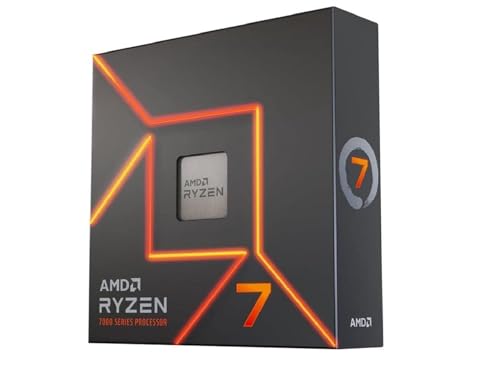
The AMD Ryzen 7 7700X is the conventional eight-core AM5 option. It does not use 3D V-Cache, but it gives a new build eight cores, 16 threads, a high boost ceiling, and a current platform. That makes it a useful choice for a PC that will play games while also handling applications that benefit from a broad, responsive CPU.
AMD lists a 5.4 GHz max boost, a 4.5 GHz base clock, and 80MB of cache. The processor uses Zen 4, supports DDR5-5200, and can support PCIe 5.0 on select 600 Series motherboards. It is unlocked for overclocking, so the surrounding board and cooling setup can be tuned by an experienced builder.
The AMD Ryzen 7 9800X3D is the clear upgrade for a gaming-first system because it combines eight cores with newer Zen 5 technology and 96MB of L3 cache. The AMD Ryzen 5 9600X is the leaner AM5 choice, while the 7700X adds two cores and four threads for heavier multitasking. That makes the 7700X more versatile than the six-core model, even though it lacks the X3D gaming focus.
No cooler is included, so the system needs a separate thermal solution. PCIe 5.0 is also not guaranteed by the processor alone, since the listing specifies support on select 600 Series motherboards. Builders should verify the exact board features before assuming every new interface will be available.
Pick the 7700X when you want a standard AM5 eight-core processor for gaming and everyday work. Skip it for a gaming-only build if an X3D model better matches the system's purpose, or choose the 9600X if six cores are sufficient.

How to choose best amd processor for gaming
The right gaming CPU depends on the game mix, the graphics card, the motherboard platform, and how much work the PC does outside games.
Gaming cache
Cache can be unusually important in a gaming processor because it keeps frequently used game data closer to the CPU cores. AMD's X3D models stand out here: the Ryzen 7 9800X3D lists 96MB of L3 cache, the Ryzen 7 7800X3D lists 96MB, and the Ryzen 7 5800X3D lists 100MB of total cache.
A large cache does not make every game faster, but it is a meaningful differentiator for a gaming-first build. Choose X3D when high frame rates and consistent frame delivery matter more than maximizing application throughput.
For a gaming-only PC, cache and latency can matter more than adding cores you will rarely use.
Cores and threads
Six cores and 12 threads, as found in the Ryzen 5 9600X and Ryzen 5 5500, can suit a focused gaming desktop. Eight cores and 16 threads provide more breathing room for background applications, streaming, and modern games. Sixteen cores and 32 threads are aimed at people who game alongside serious creation or workstation tasks.
More cores are not automatically a better gaming choice. The Ryzen 7 9800X3D is more focused than the Ryzen 9 9950X for a gaming-first system, while the 9950X3D earns its extra capacity when gaming and creation work share equal importance.
Platform and memory
AM4 and AM5 are not interchangeable. AM4 processors such as the Ryzen 7 5800X3D, Ryzen 5 5500, and Ryzen 7 5800XT use DDR4 support, while the AM5 processors in this guide use DDR5 support. A move from AM4 to AM5 generally means selecting a compatible motherboard and memory as part of the same upgrade.
AM5 is the more current platform in this group, with support for features such as PCIe 5.0 on select motherboards. AM4 remains useful for an existing PC, particularly when replacing only the processor can extend the system's life.
Clock speed and architecture
Boost clocks are useful context, not a complete ranking system. The Ryzen 9 9950X and 9950X3D list up to 5.7 GHz, the Ryzen 5 9600X and Ryzen 7 7700X list up to 5.4 GHz, and the Ryzen 7 9800X3D lists up to 5.2 GHz. Architecture, cache, core layout, and the game itself all affect the result.
Zen 5 processors such as the 9800X3D, 9950X3D, 9950X, and 9600X bring a newer design than the Zen 4 Ryzen 7 7700X and Zen 3 AM4 models. For more context on how the CPU fits into the full machine, compare it with the graphics card performance that sets the gaming ceiling.
Cooling requirements
Several processors in this guide do not include a cooler. The Ryzen 9 9950X specifically lists a liquid cooler as recommended, while the Ryzen 7 5800X3D recommends a high-performance cooler. The Ryzen 5 5500 includes a Wraith Stealth cooler, and the Ryzen 7 5800XT includes a Wraith Prism cooler with RGB LED lighting.
A bundled cooler simplifies installation, but it does not eliminate the need to consider case airflow and sustained workload behavior. High-core-count processors and unlocked chips deserve a cooling setup chosen for the work they will perform, not just for a short gaming session.

Frequently asked questions
Which processor is the Best amd processor for gaming?
The AMD Ryzen 7 9800X3D is the strongest overall pick in this group for a gaming-first AM5 desktop. Its eight cores, 16 threads, Zen 5 architecture, and 96MB of L3 cache form a focused gaming design. The Ryzen 9 9950X3D is better when serious creation work is just as important as gaming.
Is an X3D processor necessary for gaming?
No. The Ryzen 5 9600X and Ryzen 7 7700X can both serve as capable AM5 gaming processors, while the Ryzen 7 5800XT is a practical AM4 option. X3D models are attractive because their larger cache is specifically suited to games that benefit from it.
Should I choose AM4 or AM5?
Choose AM4 when you already have a compatible motherboard and DDR4 memory, particularly for an upgrade using the Ryzen 7 5800X3D. Choose AM5 for a new system if you want the newer platform, DDR5 memory, and access to select PCIe 5.0 motherboard features. The platform decision affects more than the CPU alone.
Does every processor include a cooler?
No. The Ryzen 5 5500 includes the Wraith Stealth cooler, and the Ryzen 7 5800XT includes a Wraith Prism cooler with RGB LED lighting. The other products listed here are supplied without a cooler or recommend a higher-performance cooling solution.
How many cores do I need for gaming?
Six cores and 12 threads can be enough for a focused gaming PC, especially with the Ryzen 5 9600X. Eight cores and 16 threads offer more room for streaming, background applications, and future games. Sixteen cores and 32 threads are most useful when gaming is combined with heavily threaded creation or workstation workloads.
Do these processors include integrated graphics?
The supplied product information specifically identifies an AMD Radeon graphics controller for the Ryzen 7 7800X3D. The Ryzen 5 5500 listing states that a discrete graphics card is required for gaming. For the other processors, the supplied data does not provide enough information to make a general integrated-graphics claim.

The bottom line
The AMD Ryzen 7 9800X3D is the Best amd processor for gaming in this roundup because it concentrates on the traits a gaming-first PC needs: eight Zen 5 cores, 16 threads, 96MB of L3 cache, and AM5 support. The AMD Ryzen 9 9950X3D is the better choice for anyone who also renders, streams, edits, or runs other demanding workloads.
Existing AM4 owners should look first at the AMD Ryzen 7 5800X3D, while new builders who want a simpler six-core AM5 system should consider the AMD Ryzen 5 9600X. The older AM4 processors still have clear uses, but their platform choice should be deliberate.
If you are undecided, choose the Ryzen 7 9800X3D for a gaming-first AM5 build, or the Ryzen 7 5800X3D only when keeping an AM4 system is the priority.
As an Amazon Associate we earn from qualifying purchases.