
Small earbuds can sound impressively close to a full-size system, but only when the fit, tuning, and connection work together. A loose seal can erase bass, aggressive noise cancellation can change the presentation, and a wireless model may prioritize convenience over the detail serious listeners want.
Our Best audiophile earbuds picks include refined wireless models, rugged stage monitors, and a surprisingly capable wired IEM. Bose QuietComfort Ultra 2nd Gen is the strongest all-around choice for listeners who want convincing sound and class-leading noise control, while the other six cover Android integration, long battery life, wired monitoring, and casual listening.
Comparison table
| # | Product | Award | Driver or design | Noise control | Battery | Best for |
|---|---|---|---|---|---|---|
| 1 | Bose QuietComfort Ultra 2nd Gen | Best overall | CustomTune adaptive sound | ActiveSense ANC, Aware, Immersive Audio | Up to 6 hours | Detailed wireless listening and travel |
| 2 | Samsung Galaxy Buds 4 Pro | Best for Galaxy phones | Two-way speaker, 24-bit hi-fi codec | Adaptive ANC 2.0 | Not specified | Samsung phone owners |
| 3 | Linsoul KZ ZS10 Pro | Best wired IEM | 4 balanced armatures plus 1 dynamic driver | Passive isolation up to 26 dB | Wired | Analytical listening and musicians |
| 4 | Bose QuietComfort Earbuds | Best battery life | Single wireless in-ear design | Active noise cancellation | Up to 8.5 hours | Long listening sessions |
| 5 | Beats Studio Buds Plus | Best Apple and Android balance | Custom acoustic platform | Personalized ANC and Transparency | Up to 36 hours total | Cross-platform households |
| 6 | Sennheiser IE 100 Pro | Best for stage monitoring | 10 mm dynamic broadband transducer | Passive shielding | Wired | Performers and monitoring |
| 7 | JBL Vibe Beam 2 | Best everyday listening | 8 mm dynamic drivers | ANC and Smart Ambient | Up to 40 hours total | Everyday wireless use |
1. Bose QuietComfort Ultra 2nd Gen: Best Overall

Pros
- CustomTune adapts the sound and noise control to the listener
- ActiveSense smooths sudden changes in surrounding noise
- Immersive Audio and Cinema Mode add spacious listening options
- Multipoint switches between a phone and computer
- Wireless charging is built into the case
Cons
- Immersive Audio reduces listening time to up to 4 hours
- The standard battery figure is up to 6 hours
- The feature set is more elaborate than some listeners need
Best for: listeners who want the most complete wireless combination of sound shaping, noise control, and device switching.
The Bose QuietComfort Ultra 2nd Gen is the pair we would choose when music, flights, office noise, and video all matter. Its appeal is not one isolated specification. CustomTune analyzes the shape of the listener's ears and adjusts the result, while the fit system combines umbrella-shaped tips with stability bands. That matters because a consistent seal is the foundation of convincing bass and a stable stereo image.
Noise control is the headline feature, and the supplied features point to a particularly flexible implementation. ActiveSense helps smooth sudden spikes in surrounding sound, while Aware Mode lets outside sound through without requiring the listener to remove the earbuds. Noise control can also be adjusted or switched off, which gives more control than a simple ANC toggle. For commuters and frequent travelers, that range is more useful than an aggressive cancellation mode that is always working at full strength.
Bose also gives the Ultra a broad set of listening modes. Immersive Audio places sound beyond the immediate in-ear presentation, and Cinema Mode spatializes video while balancing background sounds and effects. Those features will not appeal to purists who want every album played in the most direct possible way, but they make the Ultra more adaptable than the wired Linsoul KZ ZS10 Pro or Sennheiser IE 100 Pro. Bluetooth multipoint is another practical advantage, allowing a listener to move between a phone and laptop without manually repairing each time.
The limitation is battery life. Bose specifies up to 6 hours in Quiet or Aware Mode, dropping to up to 4 hours with Immersive Audio. That is a meaningful trade-off beside the Bose QuietComfort Earbuds, which run for up to 8.5 hours, and the JBL Vibe Beam 2, which can reach up to 10 hours with ANC off. The Ultra is also a feature-heavy choice, so someone who mainly wants a clean wired signal should look elsewhere. For everyone who wants wireless flexibility, powerful noise control, and a more personalized presentation, it is the most rounded pick here. Readers comparing different approaches to high-fidelity listening may also want to consider how wireless convenience changes the listening experience.
2. Samsung Galaxy Buds 4 Pro: Best for Galaxy Phones

Pros
- Two-way speakers use a tweeter and woofer in each earbud
- 24-bit hi-fi codec is designed to preserve detail over Bluetooth
- Adaptive ANC 2.0 responds to changing surroundings
- IP57 water and dust resistance
- Galaxy phone integration includes hands-free AI features and Live Translate
Cons
- The richest feature set depends on Samsung devices
- Battery life is not specified in the supplied product information
- The smart features may be unnecessary outside the Galaxy ecosystem
Best for: Galaxy phone owners who want high-resolution wireless audio with deep device integration.
The Samsung Galaxy Buds 4 Pro is the most system-dependent product in this group, and that is both its defining strength and its main caveat. With a Galaxy phone, the earbuds are designed to be more than a basic Bluetooth accessory. AI assistance, real-time translation, HD voice features with the Galaxy S26 Series, and touch controls all fit into a single Samsung-centered experience.
Its audio hardware is more ambitious than a conventional single-driver wireless earbud. Samsung lists a two-way speaker in each earbud, with a tweeter for high frequencies and a woofer for fuller lows. The supplied features also specify a 24-bit hi-fi codec intended to retain more of the source signal over Bluetooth. That combination should appeal to listeners who want a more separated presentation than a simple bass-forward everyday earbud, although the data does not specify a frequency response or battery figure.
Adaptive ANC 2.0 is designed to adjust in real time, which gives the Buds 4 Pro a different emphasis from the Bose QuietComfort Ultra 2nd Gen. Bose focuses on CustomTune and a wide set of manually selectable modes, while Samsung puts more of the experience inside automatic adjustment and Galaxy software. Samsung's improved ear-hugging design and changeable ear tips are important here. Even an advanced two-way speaker system will sound uneven if the tips do not seal properly.
The IP57 rating is a notable advantage for active use because it covers water and dust resistance, while the Beats Studio Buds Plus and both Bose models list IPX4 protection. The trade-off is compatibility. The Galaxy Buds 4 Pro makes the most sense for someone already using Samsung hardware, and its standout AI and translation functions have less relevance for users on other platforms. Choose it when a Galaxy phone is central to your listening, calls, and daily routines. For a wider look at how different earbuds handle detail and tuning, the relationship between fit and sound quality is worth understanding before buying.
3. Linsoul KZ ZS10 Pro: Best Wired IEM

Pros
- Four balanced armatures and one dynamic driver
- Detachable gold-plated ODC cable
- Stainless steel faceplate with resin cavity
- Passive noise isolation rated up to 26 dB
- Tuned for dynamic lows and bright resolution
Cons
- No microphone is included
- No wireless connection or charging case
- Cable versions may vary in appearance
Best for: listeners who want a wired IEM with a multi-driver design and musicians who need a secure monitor.
The Linsoul KZ ZS10 Pro is the most traditionally audiophile-minded product here. It does not try to solve calls, charging, multipoint, or spatial audio. Instead, it uses a 4BA plus 1DD hybrid arrangement, pairing four balanced armatures with one dynamic driver. That makes it a fundamentally different proposition from the wireless models, and it is the first model we would consider for a listener whose source already has a headphone output.
The driver allocation is unusually specific. Two 30095 balanced armatures handle highs and two 50060 units handle mids, while the second-generation Tesla double magnetic dynamic unit covers the low end. The supplied description characterizes the result as dynamic in the lows, bright in its resolution, and extended beyond 40 kHz. That last figure should not be treated as a guarantee of audible improvement, but the architecture does explain why the ZS10 Pro is aimed at separation and detail rather than convenience.
A PCB dividing board is included to help the drivers operate as a coordinated system. The stainless steel faceplate and imported resin cavity give the earphones a more substantial construction than their simple wired format might suggest. The detachable gold-plated ODC cable is especially useful because a damaged cable does not necessarily end the life of the earphones. Passive isolation is listed at up to 26 dB, provided the molded cavity and ear tips fit correctly.
The ZS10 Pro is more revealing than the Sennheiser IE 100 Pro on paper because it uses a five-driver hybrid layout, but the Sennheiser has a more purpose-built monitoring identity and a single dynamic transducer. Neither can match the Bose models for active noise control or the Samsung for wireless features. The KZ also lacks a microphone, and the supplied note warns that several cable appearances may be shipped at random. Choose it for focused music listening, gaming from a compatible wired source, or musician use where a cable and passive isolation are preferable. Those who specifically want a cable-first setup should also compare the practical differences between wired earbud designs.
4. Bose QuietComfort Earbuds: Best Battery Life

Pros
- Up to 8.5 hours of listening
- Wireless charging and USB-C charging
- Customizable EQ in the Bose QCE app
- Bluetooth multipoint with Bluetooth 5.3
- Three eartip and stability band sizes
Cons
- ANC performance is positioned below the Ultra model in this roundup
- IPX4 protection is limited to water resistance
- The case and earbuds are not the lightest design here
Best for: listeners who want dependable noise cancellation and long single-charge playback.
The Bose QuietComfort Earbuds are the practical Bose alternative to the Ultra. They keep the brand's focus on noise control, a secure fit, and rich sound, but present a simpler feature set. The most useful headline is the up to 8.5 hours of playtime, which gives them a clear advantage over the Ultra's up to 6 hours and makes them better suited to long workdays or extended travel.
Fit remains central to their sound. Bose includes three sizes of eartips and stability bands, so the listener can create a snug seal without relying on a one-size-fits-all shape. That seal helps passive isolation and gives the active noise cancellation a stronger starting point. The IPX4 rating also makes them suitable for ordinary workout sweat and light splashes, though it does not make them a pair for submersion or heavy exposure to water.
The QCE app adds control that serious listeners will appreciate. Bass, midrange, and treble can be adjusted, and connected devices and battery status can be managed from the same place. Bluetooth multipoint lets the earbuds connect to multiple devices, while Bluetooth 5.3 keeps the connection within up to 30 feet of the source according to the supplied information. Customizable tap controls cover common actions such as pausing, skipping, and changing volume.
The Bose QuietComfort Ultra 2nd Gen is the better choice for CustomTune, Immersive Audio, and Bose's more advanced ActiveSense processing. The QuietComfort Earbuds counter with longer playback and a less complicated daily routine. They are also a stronger battery pick than the Beats Studio Buds Plus, whose up to 36 hours refers to total listening with the case rather than a single continuous session. Skip these if you want a wired audiophile monitor or the highest level of environmental protection. Pick them when extended wireless listening and a secure, adjustable fit matter more than the Ultra's extra sound modes.
5. Beats Studio Buds Plus: Best Apple and Android Balance

Pros
- Native Apple and Android features
- Up to 36 hours of total listening time
- Personalized ANC and Transparency modes
- Four pairs of silicone tip sizes
- Spatial Audio support
Cons
- IPX4 protection is less comprehensive than Samsung's IP57 rating
- No battery figure is specified for one continuous session
- The sound platform is less specialized than the wired IEMs
Best for: households that switch between Apple and Android devices and want simple wireless listening.
The Beats Studio Buds Plus is the least fussy cross-platform pick in this roundup. Its main advantage is not an exotic driver arrangement. It is the way the earbuds cover the basic wireless experience across Apple and Android, with one-touch pairing and native features for both ecosystems. That makes them easier to recommend to a household where one person uses an iPhone and another uses an Android phone.
Beats describes the sound system as a custom acoustic platform designed for rich, immersive playback. The model supports both personalized Active Noise Cancelling and Transparency mode, so the listener can block outside sound or hear the environment without taking the earbuds out. Four silicone tip sizes are included, which is more choice than the three sizes supplied with the standard Bose model. That matters for bass consistency because a poor seal can make any in-ear sound thin.
Battery life is specified as up to 36 hours of listening time, including the pocket-sized charging case. The product also includes a USB-C to USB-C charging cable. Wireless Class 1 Bluetooth is intended to provide extended range and fewer dropouts, while three times larger voice-targeting microphones are designed to filter background sound during calls. Spatial Audio adds a wider presentation for supported content, though listeners focused on unprocessed stereo music may use it less often.
The JBL Vibe Beam 2 offers more total playback at up to 40 hours with ANC off, while the Bose QuietComfort Earbuds offer a longer single-session figure. The Beats answer with broader Apple and Android compatibility and a compact set of modes that does not feel tied to one phone brand. Its IPX4 rating is enough for sweat and water resistance but falls short of the Samsung Galaxy Buds 4 Pro's IP57 rating. Choose the Beats when device flexibility, reliable calls, and straightforward noise control matter more than a wired multi-driver design.
6. Sennheiser IE 100 Pro: Best for Stage Monitoring

Pros
- 10 mm dynamic broadband transducer
- Designed for precise monitoring
- Slim ergonomic single-driver construction
- Flexible silicone and foam tips
- Stage-proof cable with internal cable duct
Cons
- Wired design has no active noise cancellation
- No microphone is listed
- The monitoring focus may not suit listeners seeking wireless features
Best for: performers and audio users who need a secure wired monitor with a single dynamic driver.
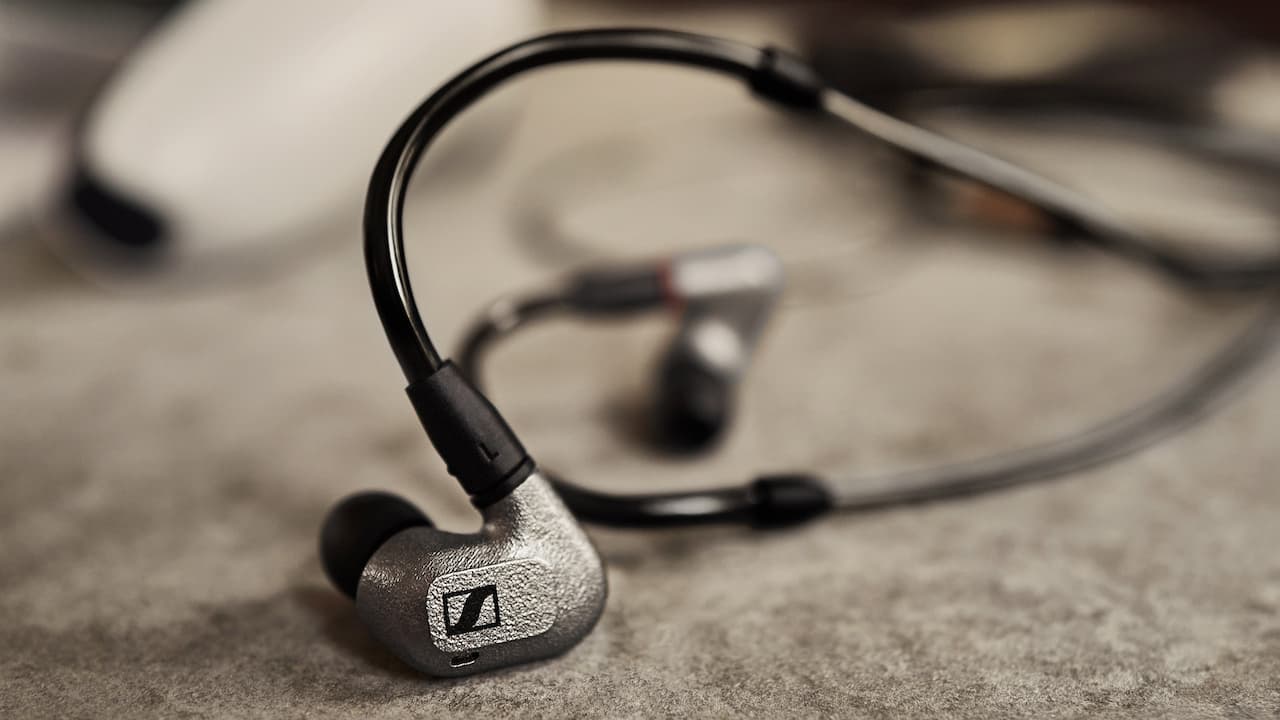
The Sennheiser IE 100 Pro takes a different route from the KZ ZS10 Pro. It uses one dynamic driver rather than a hybrid array, and its purpose is clear from the start: monitoring. The 10 mm broadband transducer is designed for powerful, precise reproduction, while the single-driver layout keeps the construction slim and ergonomic. That can make the IE 100 Pro a more coherent fit for musicians who need to hear a dependable monitor mix.
Sennheiser says the dynamic system reduces acoustic stress factors through homogenous, distortion-free reproduction. That language is more relevant to sustained monitoring than to casual listening. The optimized earpiece, along with flexible silicone and foam tips, provides passive shielding from outside sound. As with every in-ear monitor, the tip size is critical. The supplied guidance specifically warns that a poor canal fit can affect both sound quality and call performance.
The cable is built for stage use, with an internal cable duct and a design intended to withstand the movement associated with performance. There is no wireless connection, charging case, ANC, or microphone listed in the product information. Those omissions are not flaws for a stage monitor, but they make the IE 100 Pro less convenient than the Beats Studio Buds Plus or JBL Vibe Beam 2 for commuting and calls.
The KZ model gives you more driver hardware and a brighter, more explicitly detailed presentation on its stated specification sheet. The Sennheiser is the more focused choice for someone who values a single dynamic transducer, a slim fit, and stage-oriented construction. It is not the right pick for a listener who expects touch controls or Bluetooth multipoint. Choose it when your priority is stable wired monitoring, especially for rehearsals, recording, or live performance.
7. JBL Vibe Beam 2: Best Everyday Listening

Pros
- 8 mm dynamic drivers with JBL Pure Bass sound
- ANC and Smart Ambient modes
- Four microphones for calls
- Up to 40 hours of total playback with ANC off
- EQ controls in the JBL Headphones app
Cons
- Battery figure drops when ANC is active
- The supplied information does not list an IP rating
- Less specialized for critical monitoring than the wired picks
Best for: everyday listeners who want bass-focused wireless sound, calls, and long case-assisted playback.
The JBL Vibe Beam 2 is built around the routines that dominate casual listening: music during a commute, calls while walking, and enough battery to avoid constant charging. Its 8 mm dynamic drivers are tuned for JBL Pure Bass sound, so it is aimed at an energetic presentation rather than the more monitor-oriented approach of the KZ or Sennheiser. Listeners who enjoy a strong low end will find the intent easy to understand.
ANC handles distracting environmental noise, while Smart Ambient lets the listener decide how much of the outside world to hear. The four-microphone setup uses two microphones on each earbud to pick up the voice and cancel ambient noise during calls. That makes the JBL more practical for spontaneous conversations than the wired IEMs, which do not list microphones.
The battery claim is up to 10 hours of playtime, with another three full charges in the case for up to 40 hours total when ANC is off. A 10-minute USB-C charge is listed as providing another 3 hours of playback. The JBL Headphones app adds selectable EQ, custom EQ, multilingual voice prompts, and a Relax Mode with five peaceful sounds. Those controls let the listener move the tuning closer to personal taste rather than accepting the default bass emphasis.
The Beats Studio Buds Plus is the better cross-platform recommendation when Apple and Android features are equally important, and the Bose QuietComfort Earbuds offer a more established fit system with longer single-charge playback. JBL is the more straightforward everyday option, but the supplied information does not state an IP rating, so active users should be more cautious around water than they would be with the IPX4-rated Beats and Bose models. Choose the Vibe Beam 2 when battery endurance, calls, app EQ, and an energetic sound matter more than critical monitoring.
How to choose best audiophile earbuds
The right pair depends on whether you care most about a clean wired signal, a strong wireless codec and speaker design, effective noise control, or a fit that stays consistent for hours.
Driver architecture
Driver design shapes how an earbud handles bass, vocals, treble, and separation. The KZ ZS10 Pro uses four balanced armatures plus one dynamic driver, Samsung uses a two-way speaker in each earbud, and the JBL and Sennheiser models use single dynamic drivers with different stated sizes.
A multi-driver design can separate frequency duties, but it does not automatically guarantee a more natural sound. A well-integrated single dynamic driver can be coherent and easy to listen to, while a hybrid design may suit someone who wants more explicit separation. Look for a driver arrangement that matches your music and source rather than treating the driver count as a scorecard.
Wired and wireless connection
Wired IEMs avoid charging and do not add Bluetooth processing between the source and the earphones. The KZ ZS10 Pro has a detachable cable, and the Sennheiser IE 100 Pro has a stage-oriented cable. Both are better suited to a compatible headphone output than a phone that lacks a wired connection.
Wireless models are much easier for movement, calls, and switching between devices. Bose offers Bluetooth multipoint on both models in this list, while Beats emphasizes Apple and Android compatibility and Samsung builds its deepest features around Galaxy hardware.
Choose wired earbuds for a direct monitoring setup, and wireless earbuds when the connection and fit need to disappear into daily life.
Noise control
Active noise cancellation uses microphones and processing to reduce outside sound, while passive isolation comes from the ear tip and housing. Bose's Ultra model adds CustomTune and ActiveSense, Samsung lists Adaptive ANC 2.0, and JBL and Beats provide ANC with ambient listening modes.
For aircraft cabins and loud commutes, active control matters most. For music detail, a reliable seal can be just as important because it prevents outside sound from masking quiet passages. The KZ model lists passive isolation up to 26 dB, while the Sennheiser IE 100 Pro uses its earpiece and silicone or foam tips for shielding.
Fit and sealing
An earbud cannot sound consistent if it shifts in the ear. The Bose Ultra includes nine combinations of eartips and stability bands, the standard Bose model includes three combinations, and Beats supplies four silicone tip sizes. Samsung uses changeable tips with an ear-hugging design.
Fit also affects comfort, bass response, and the usefulness of ANC. A tight stage monitor fit may be ideal for a performer but feel intrusive to a casual listener. Try the supplied tip sizes methodically, and do not judge the sound before the earbud has formed a stable seal.
Battery and protection
Battery figures need careful reading. JBL lists up to 10 hours with ANC off and up to 40 total with the case, Beats lists up to 36 hours total, Bose QuietComfort Earbuds list up to 8.5 hours, and the Ultra lists up to 6 hours in Quiet or Aware Mode. Samsung's supplied data does not state a battery figure.
Protection ratings also differ. Samsung's IP57 rating covers water and dust resistance, while Beats and both Bose models list IPX4. JBL's supplied information does not include an IP rating. If the earbuds will be used during workouts or outdoors, treat these differences as practical limits, not decorative specifications.
Frequently asked questions
Are wired earbuds better for audiophile listening?
Wired earbuds avoid battery management and Bluetooth transmission, which makes them a natural fit for dedicated listening and monitoring. The KZ ZS10 Pro and Sennheiser IE 100 Pro both use a wired connection, but their tuning and driver designs differ. A wireless model can still be the better personal choice if convenience and noise control matter more.
Which earbuds have the strongest noise cancellation?
The Bose QuietComfort Ultra 2nd Gen has the most advanced noise-control feature set in this group, with CustomTune, ActiveSense, Quiet Mode, Aware Mode, and adjustable noise control. Samsung's Galaxy Buds 4 Pro uses Adaptive ANC 2.0, while the other wireless models also provide ANC. The final result still depends on ear-tip fit and the shape of the listener's ear.
Can the Linsoul KZ ZS10 Pro make phone calls?
The supplied product information identifies the listed version as being without a microphone. It is better treated as a music and monitoring IEM than as a hands-free calling headset. A separate microphone-equipped cable may be possible, but that is not included in the provided product details.
Which earbuds are best for Samsung phone owners?
The Samsung Galaxy Buds 4 Pro is the obvious match because its AI assistant, Live Translate, and HD voice features are designed to work with Galaxy hardware. It also combines a two-way speaker with a 24-bit hi-fi codec and Adaptive ANC 2.0. Users on other phone platforms may not get the full benefit of its feature set.
Do all of these earbuds have water resistance?
No. Beats Studio Buds Plus, Bose QuietComfort Ultra 2nd Gen, and Bose QuietComfort Earbuds list IPX4 ratings. Samsung lists IP57, which also includes dust resistance, while the supplied JBL information does not state an IP rating. The wired KZ and Sennheiser listings do not provide an IP rating either.
Which model lasts longest between charges?
The Bose QuietComfort Earbuds list up to 8.5 hours of playtime, while the JBL Vibe Beam 2 lists up to 10 hours with ANC off. Those figures describe a single listening period. Beats lists up to 36 hours and JBL up to 40 hours when the charging case is included.

The bottom line
The Bose QuietComfort Ultra 2nd Gen is the strongest choice among the Best audiophile earbuds here for listeners who want detailed wireless playback, adaptable noise cancellation, a personalized fit, and multipoint device switching. Its weakness is the shorter up to 4-hour figure when Immersive Audio is active, so the Bose QuietComfort Earbuds are a better fit for long uninterrupted sessions.
Choose the Linsoul KZ ZS10 Pro if wired listening and a multi-driver IEM design matter more than wireless convenience. Samsung's Galaxy Buds 4 Pro is the right specialist pick for Galaxy owners, while the Beats and JBL models make more sense for flexible everyday listening, calls, and casual music.
If you are undecided, start with the connection you will use every day, then choose the earbud whose fit and noise-control approach supports it.
As an Amazon Associate we earn from qualifying purchases.