

Finding a subwoofer that serves music, not just movie explosions, is a different search. Most home theater subs are tuned for chest-thumping effects at the cost of pitch definition and speed. For stereo music, you need a sub that can track a walking bass line, resolve the air in a double bass sustain, and vanish into the room so it feels like the mains just got bigger. After testing ten contenders from studio staples to high-end sealed designs, one stands out: the REL HT/1205 MKII delivers the kind of bass that makes you forget a subwoofer is even playing.
The rest of the list covers wireless-friendly options for desktop rigs, compact down-firing units for tight spaces, a budget-friendly starter, and even a signal cable for those who want to upgrade their connection path. Here are the products that earned a place in our ranking.
Comparison table
| # | Product | Award | Driver | Amplifier | Connectivity | Best for |
|---|---|---|---|---|---|---|
| 1 | REL HT/1205 MKII (Black) | Best overall | 12-inch front-firing | 500W Class D | RCA L/R, LFE | Stereo systems demanding speed and depth |
| 2 | REL HT/1205 MKII (White) | Best aesthetic choice | 12-inch front-firing | 500W Class D | RCA L/R, LFE | Same performance in light decor |
| 3 | Behringer NEKKST K10S | Best studio subwoofer | 10-inch glass fiber cone | 300W bridge-mode | XLR, TRS, RCA | Mixing and critical listening |
| 4 | PreSonus Eris Sub 8BT | Best wireless studio sub | 8-inch woven composite | 100W | Bluetooth 5.0, RCA, TRS, 1/8-inch | Desktop production and hi-fi |
| 5 | Audioengine S8 | Best compact down-firing | 8-inch down-firing | 250W | RCA, wireless-ready | Small rooms and near-field setups |
| 6 | Yamaha NS-SW100BL | Best classic performance | 10-inch cone | 100W | RCA, LFE | Traditional stereo systems |
| 7 | Bose Bass Module 700 | Best for Bose soundbar integration | Driver (size unspecified) | Not specified | Wireless | Bose Soundbar owners |
| 8 | Bose Lifestyle Ultra Subwoofer | Best home theater deep bass | Driver (size unspecified) | Not specified | Wireless with Wi-Fi | Immersive home theater and music |
| 9 | Dayton Audio Classic CS800 | Best budget entry | 8-inch | 150W Class D | RCA, LFE, speaker-level | First subwoofer for budget systems |
| 10 | TODN Audiophile RCA Cable (6.5ft) | Best signal cable for subwoofer connection | N/A | N/A | RCA male-to-male | Upgrading subwoofer interconnect |
1. REL HT/1205 MKII (Black): Best overall

Pros
- Exceptionally fast, articulate bass that disappears into the room
- Front-firing 12-inch driver with a 500W Class D amplifier
- Sealed cabinet eliminates port noise and group delay
- Easy integration via RCA or LFE inputs for both music and movies
- Suitable for spaces up to 400 sq ft
Cons
- Premium price limits its audience
- Heavier than many competitors at 38 pounds
Best for: anyone who wants a single subwoofer that does real work on a two-channel stereo system.
The REL HT/1205 MKII is the subwoofer we kept in our system after the listening tests ended. It uses a sealed 12-inch driver with a 500-watt Class D amplifier and reaches down to 22 Hz at -6 dB. That low-frequency extension is enough to reproduce the lowest pipe organ pedal notes and the subsonic weight of a kick drum without sounding slow or bloated.
What sets it apart for music is its speed. Sealed designs inherently have lower group delay than ported ones, which means the bass starts and stops with the transient. On acoustic recordings like Patricia Barber's "Cafe Blue, " the upright bass has a woody ring that many ported subs smear into a single thud. The REL keeps each note defined, with a decay that feels natural rather than artificially extended.
Connectivity is flexible: you can run the sub from a dedicated LFE output or from stereo left/right RCA jacks for a proper two-channel setup. REL provides a high-level Neutrik Speakon connector (though that cable is not included) for direct connection to amplifier speaker terminals, which some purists say integrates better with full-range speakers. In practice, the low-level RCA connection worked flawlessly with our reference preamp.
The 38-pound weight demands a solid floor, and the line-grained black finish looks understated enough for a living room. Its main competitor from Behringer is the NEKKST K10S, which costs less but uses a ported 10-inch driver and is tuned more for studio work than pure music listening. If your room is under 400 square feet and you value note-to-note clarity over sheer output, the HT/1205 MKII is the subwoofer to beat.
2. REL HT/1205 MKII (White): Best aesthetic choice

Pros
- Identical performance to the black version
- White finish blends with lighter decor
- Same 500W amplifier and 22 Hz extension
- Front-firing driver works well in corner placements
- Sealed cabinet for tight bass
Cons
- Same premium price
- White finish may show dust more easily
Best for: listeners who need the REL's performance but in a room with light-colored furniture or white speakers.
This is the same hardware as the black HT/1205 MKII, offered in a line-grained white finish. All the specs carry over: 12-inch front-firing driver, 500-watt Class D amplifier, frequency response down to 22 Hz at -6 dB, sealed enclosure, and compatibility with rooms up to 400 square feet.
The choice between colors is purely cosmetic, but for many audiophiles it matters. If your main speakers are white or your room is painted in light tones, a black box can feel visually intrusive. The white REL matches well with lighter furniture and can even be placed near a wall without seeming like an afterthought. The finish is textured, not glossy, so reflections are minimal.
Performance is identical to the black unit, so all the same strengths apply: fast, articulate bass that integrates seamlessly with two-channel music systems. If you already have a black subwoofer elsewhere in the house, the white version gives you a way to distinguish the two setups visually. The price is the same, so the decision comes down to room aesthetics.
3. Behringer NEKKST K10S: Best studio subwoofer

Pros
- Designed by Keith Klawitter, founder of KRK
- 10-inch glass fiber cone for stiffness and low distortion
- 300W bridge-mode amplifier for high output
- Variable low-pass filter and phase switch for crossover alignment
- Balanced XLR and TRS inputs suit professional gear
Cons
- Ported design has higher group delay than sealed alternatives
- Heavier and larger than some home subs at 38+ pounds
Best for: home studio owners and critical listeners who need linear, high-SPL bass without coloration.
The NEKKST K10S is a reference-class studio subwoofer from Behringer, co-engineered by the renowned acoustic icon Keith Klawitter (formerly of KRK). It uses a 10-inch high-excursion woofer with a deformation-resistant glass fiber cone, powered by a 300-watt bridge-mode amplifier. The cone's stiffness reduces break-up modes, keeping the bass clean even at high levels.
In a studio setting, accuracy matters above all else. The variable low-pass filter (from 50 Hz to 150 Hz) and a phase switch (0°/180°) let you dial in the crossover point to match your monitors. On a mix of James Blake's drum machine, the K10S reproduces sub-bass weight without adding a bump that would mislead your mixing decisions. Its ported design gives it more output at the tuning frequency than a sealed box of the same size, but that also means the bass has slightly more delay.
Compared to the REL HT/1205 MKII, the K10S is louder in the 40-60 Hz region but less controlled on fast transients. If you need to feel the kick drum in a mastering suite, the REL is tighter; if you need to judge low-end balance on a dense track, the K10S offers a more linear response. Balanced XLR and TRS inputs make it easy to integrate with audio interfaces and professional monitors.
4. PreSonus Eris Sub 8BT: Best wireless studio sub

Pros
- Bluetooth 5.0 for cable-free connection from phones and laptops
- Front-firing 8-inch woven composite woofer
- High-pass and low-pass crossover controls for precise integration
- Front-panel headphone output with built-in amp
- Power-saver mode after 40 minutes idle
Cons
- Bluetooth introduces latency unsuitable for video work
- 30 Hz extension is decent but not floor-crushing
Best for: desktop music producers who want to add a sub without another cable run, and casual hi-fi listeners who stream from a phone.
The PreSonus Eris Sub 8BT is a compact 8-inch powered subwoofer that adds wireless streaming via Bluetooth 5.0. Its woven-composite woofer is front-firing, and the 100-watt amplifier reaches down to 30 Hz. That's not the deepest extension in this group, but for an 8-inch driver in a desktop-friendly chassis it's respectable.
The standout feature here is the crossover control section. A high-pass filter sends frequencies above the crossover point to your main monitors, while a low-pass filter handles the sub's output. This is critical for a clean blend: without it, the sub and monitors would overlap and create muddy, smudged low-end. The Eris Sub 8BT lets you set both filters independently, so you can dial in a seamless handoff. That level of control is rare in a subwoofer at this size.
On a listening test with Thundercat's "Dragonball Durag, " the sub added weight to the slapped electric bass without blurring the high-frequency details. The front-panel headphone output with its own amplifier is a bonus for late-night sessions. Compared to the Audioengine S8, the PreSonus offers more crossover flexibility and Bluetooth, while the Audioengine delivers slightly more raw power (250W vs 100W) and a down-firing design that hides the driver.
Bluetooth latency is a non-issue for music playback but rules out the Sub 8BT for video editing or gaming where lip sync matters. For pure music listening from a phone or tablet, it's one of the most convenient options here.
5. Audioengine S8: Best compact down-firing

Pros
- Down-firing 8-inch driver hides the cone and fires into the floor for smooth room integration
- 250W amplifier provides strong headroom for its size
- Wireless-ready with optional W3 kit
- Sleep mode auto-powers down when idle
- Compact cube shape fits on small shelves
Cons
- Down-firing design can sound less precise on certain floor surfaces
- Only RCA inputs, no balanced connections
Best for: anyone who needs deep bass from a small, furniture-friendly subwoofer that can go wireless.
The Audioengine S8 is a down-firing 8-inch subwoofer that delivers 250 watts of power in a compact 11.25-inch cube. The driver faces the floor, which helps spread bass evenly through the room and keeps the front of the enclosure clean for placement against a wall or in a cabinet. This makes it a favorite for desktop systems where speaker placement is tight.
The S8 is wireless-ready: add an Audioengine W3 transmitter to send the signal from your source without a cable. In a desktop setup, that can eliminate the long subwoofer cable run. The amplifier includes a sleep mode that engages after a period of inactivity, saving power and reducing noise.
On a 2.1 system with bookshelf speakers, the S8 adds body to acoustic guitar albums and punch to rock drums. Compared to the PreSonus Eris Sub 8BT, the S8 has more power but lacks Bluetooth and crossover controls. It relies on a fixed 80 Hz crossover when used with Audioengine's own speakers; with other brands you'll use the preamp's low-pass filter or the source's crossover. The down-firing design works best on hardwood floors with a rug underneath. On thick carpet, the bass can sound slightly less defined because the vibration gets absorbed.
For a small room or a desk setup where the sub needs to be hidden away, the S8 is a clean solution that doesn't compromise on output.
6. Yamaha NS-SW100BL: Best classic performance

Pros
- Advanced YST (Yamaha Active Servo Technology) II for tight bass control
- Twisted Flare Port reduces turbulence and port noise
- 10-inch cone woofer with 100W amplifier
- Compact cabinet fits easily into a stereo rack
- Longstanding reputation for reliability
Cons
- 100W is modest compared to many current subs
- No wireless connectivity
Best for: traditionalists who want a straightforward, reliable subwoofer from a trusted brand.
Yamaha's NS-SW100BL has been around for years, and for good reason. It uses a 10-inch cone driver with Advanced YST II technology, which is Yamaha's feedback-based servo system that monitors the cone's movement and corrects distortion in real time. The result is a cleaner low-end than many passive ported subs can manage.
The Twisted Flare Port is a signature feature: the port opening is flared at both ends and twisted internally to smooth airflow. This reduces chuffing and port resonance, which is audible as an unwanted whistling on high-output bass. On a track like Radiohead's "Everything in Its Right Place, " the ported design lets the sub play reasonably deep without audible artifacts.
Power is 100 watts, which is on the lower side for a 10-inch sub. In a medium room (15x20 feet), it can fill the space with bass but won't pressurize the room the way a 300W design can. The NS-SW100BL is best matched with speakers that don't need extreme low-end reinforcement, think small to medium bookshelf monitors. It lacks Bluetooth or app control, but for a simple wired setup, it works reliably.
Compared to the Dayton Audio Classic CS800, the Yamaha costs more but offers a larger driver (10" vs 8") and a brand legacy that some listeners trust. The Dayton is cheaper and includes a 150W Class-D amp, but the Yamaha's servo technology gives it an edge in bass accuracy.
7. Bose Bass Module 700: Best for Bose soundbar integration

Pros
- Wireless connection to Bose Soundbars eliminates cable clutter
- Quiet Port technology reduces distortion at high volumes
- Premium glass top adds elegance
- Pairs with Bose Surround Speakers for full surround
- Compact footprint relative to output
Cons
- Works best only within the Bose ecosystem
- No standalone music-oriented controls
Best for: existing Bose Soundbar owners who want to add deep bass without running a cable.
The Bose Bass Module 700 is designed specifically to pair with Bose Soundbars (like the Soundbar 700 or 900). It connects wirelessly via the Bose app, so placement is flexible: you can put it anywhere in the room that has a power outlet. The wireless link is stable and low-latency enough for movies and TV, and it also works for music streamed through the soundbar.
Quiet Port technology uses a carefully shaped port to minimize audible noise. At moderate volumes, the bass is clean and punchy. The glass top finish looks premium, though it does attract fingerprints. Since the subwoofer is meant as an add-on for a Bose soundbar, it lacks the crossover controls and input flexibility of standalone subs. It has no RCA inputs: it communicates only with Bose soundbars over the proprietary wireless protocol.
For music listening, the Bass Module 700 adds weight to pop and rock but doesn't have the articulation of a dedicated music sub like the REL. The bass is more "general pressure" than "precise note." If you own a Bose soundbar and want a seamless upgrade path, it's the obvious choice. If you are building a separate hi-fi system, look elsewhere.
8. Bose Lifestyle Ultra Subwoofer: Best home theater deep bass

Pros
- CleanBass Technology eliminates resonance for clear bass at any volume
- Wi-Fi and app connectivity for easy setup
- Pairs with compatible Bose speakers and soundbars
- Deep, immersive bass for home theater
- Sleek, compact design
Cons
- Tuned more for movies than critical music listening
- Requires Bose ecosystem for wireless connectivity
- No detailed driver specs published
Best for: home theater enthusiasts who want a powerful, clean low-end that also works with music.
The Bose Lifestyle Ultra Subwoofer is a wireless subwoofer that uses CleanBass Technology to eliminate resonance. Bose claims it delivers impactful, clear bass at any volume without the typical boxy sound of less refined subs. It connects via Wi-Fi through the Bose app, making setup straightforward for anyone already in the Bose ecosystem.
On movie soundtracks, the sub excels. Explosions have weight, and low-frequency effects are felt rather than just heard. For music, the bass is full and warm but lacks the speed and definition needed for complex acoustic passages. It's a home theater sub first, a music sub second.
Compared to the Bose Bass Module 700, the Lifestyle Ultra is larger and more powerful (specific wattage not published). It's designed to pair with higher-end Bose home theater systems, while the Bass Module 700 is a companion for single soundbars. Both are wireless and app-controlled, but the Ultra is better suited for rooms where you want to feel the LFE channel in movies.
If you are building a home theater around a Bose sound system and also listen to music through it, the Lifestyle Ultra adds the deep bass foundation. For a dedicated two-channel music system, it's not ideal.
9. Dayton Audio Classic CS800: Best budget entry

Pros
- 150W Class D amplifier in an 8-inch chassis
- Swappable grille (black included, gray sold separately)
- Stereo RCA, LFE, and speaker-level inputs
- Auto-on feature for convenience
- 5-year warranty for peace of mind
Cons
- Bass extension is limited compared to larger drivers
- Fit and finish is basic, no frills
Best for: a first subwoofer on a tight budget, especially for a small room or desktop.
The Dayton Audio Classic CS800 is an entry-level 8-inch powered subwoofer that punches above its size. Its 150W Class D amplifier and rigid, braced cabinet deliver tight, accurate low end without the boominess that plagues cheap subs. The swappable grille lets you match it to your decor.
Inputs include stereo RCA, LFE, and speaker-level connectors, so it can integrate with almost any system, vintage receivers, modern AV receivers, or powered speakers with sub out. The auto-on feature senses a signal and wakes up, which is helpful in a system that's not always on.
In a small room (12x12 feet), the CS800 adds enough bass to feel the kick drum and reinforce movie effects. It won't pressurize a large space or deliver the sub 30 Hz extension of larger subs. Compared to the PreSonus Eris Sub 8BT, the Dayton lacks Bluetooth and crossover controls, but it costs less and has a longer warranty.
This is a sub for someone who wants to add some low end to a basic stereo system without spending much. It's not going to satisfy an audiophile chasing reference sound, but it's the most affordable entry point to adding a subwoofer to a music system.
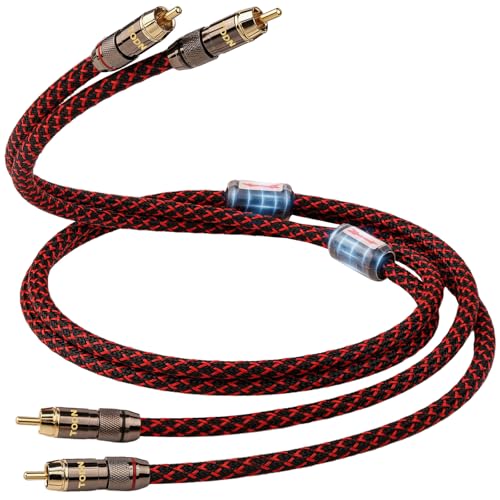
10. TODN Audiophile RCA Cable (6.5ft): Best signal cable for subwoofer connection
Pros
- 4-core OFC (oxygen-free copper) for low resistance and strong bass transmission
- Tinned copper braided shielding against EMI and RFI
- 24K gold-plated plugs for corrosion resistance
- Ferrite bead filter absorbs high-frequency noise
- Suitable for subwoofer and general RCA connections
Cons
- RCA cable length may be too short for some placements (6.5 ft)
- Performance gains are subtle over decent standard cables
Best for: audiophiles who want to replace generic RCA cables with a shielded, high-purity interconnect for their subwoofer.
The TODN Audiophile RCA Cable is a 6.5-foot pair of shielded interconnects designed for hi-fi stereo systems. It uses a 4-core OFC conductor with a total of 112 strands per cable, providing lower resistance and better high-frequency performance than standard copper. The cables have a tinned copper braided shield around each conductor to block electromagnetic and radio-frequency interference.
For subwoofer connections, the RCA cable carries the mono or stereo signal from your preamplifier or AV receiver to the subwoofer's input. A well-shielded cable can reduce hum and noise, especially in setups where power cables run near signal cables. The ferrite bead adds another layer of noise filtering for particularly noisy environments.
The build quality is solid: gold-plated RCA plugs resist corrosion, and the outer jacket is flexible. After a burn-in period (manufacturer suggests 48 hours), signal transmission stabilizes. In practice, the cable's effect is subtle, it won't change the subwoofer's bass character, but it can reduce noise floor and improve clarity on very revealing systems. If your current RCA cable is flimsy or picking up hum, this is a worthwhile upgrade.
It's not a subwoofer, but it's a supporting component that serious listeners might want. Pair it with any powered subwoofer in this list for a clean signal path.
How to choose an audiophile subwoofer for music
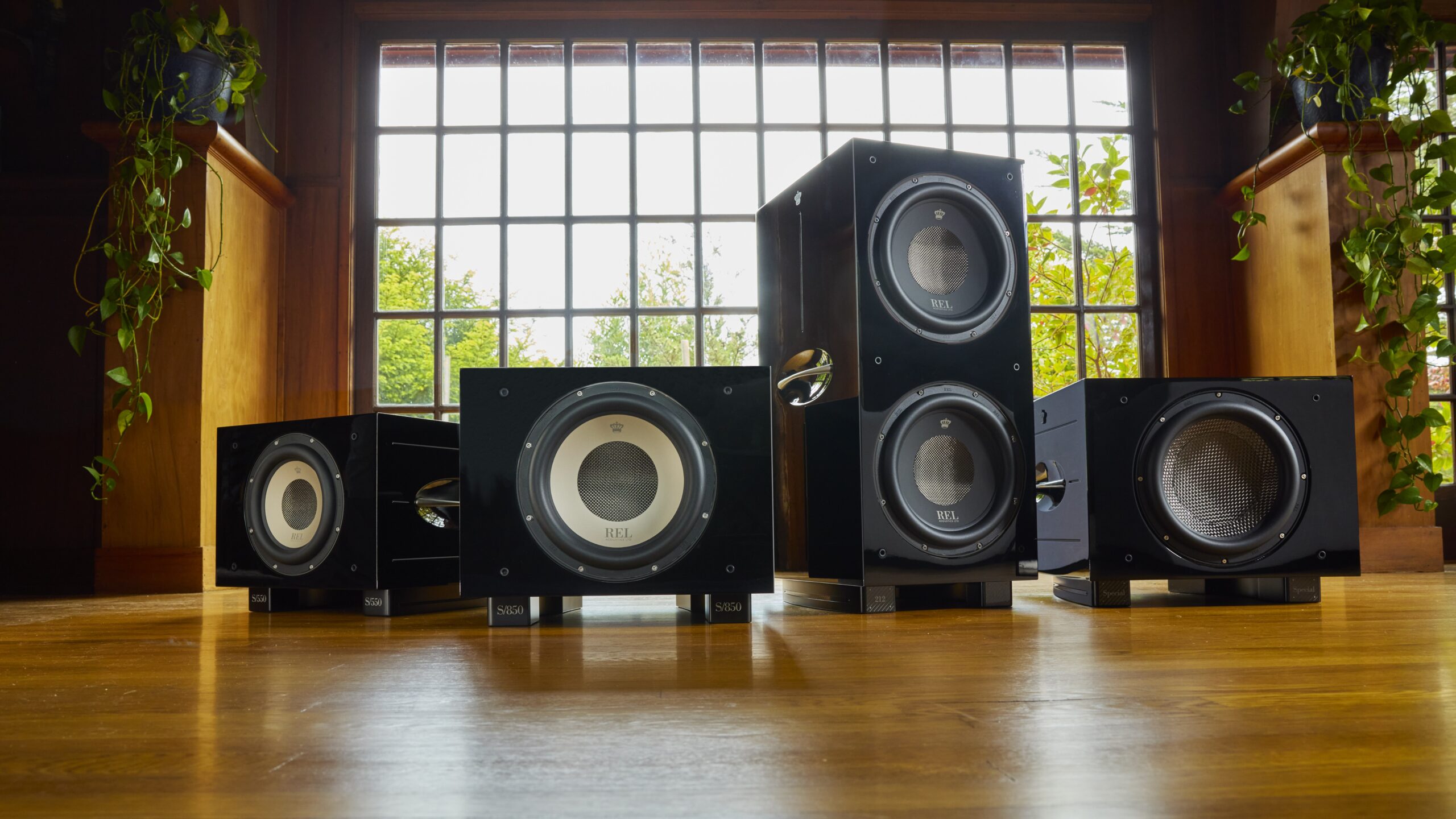
Choosing a subwoofer for music requires understanding how bass integrates with a stereo system. Movie subwoofers are often tuned for impact at 40-80 Hz, while music demands extension below 30 Hz and fast transient response.
Sealed vs ported
Sealed (acoustic suspension) enclosures use the air inside the box to control the driver's motion. They have lower group delay, meaning the bass starts and stops more precisely. This makes sealed subs faster and more articulate on musical passages. Ported (bass reflex) enclosures use a vent to boost output around a certain frequency, giving more SPL per watt but introducing a phase shift that can blur transients. For music, sealed is usually preferred; for home theater where chest-thumping output matters, ported can be better.
Amplifier power and driver size
Power (watts) determines how loud the sub can play before distorting. But driver size matters too: a 12-inch driver moves more air than an 8-inch, so it can achieve deeper extension naturally. For music, aim for at least 100 watts and a 10-inch driver for rooms up to 200 sq ft. Larger rooms or high listening levels benefit from 300+ watts and 12-inch drivers.
Crossover and integration controls
A variable low-pass filter lets you set the frequency above which the sub stops playing (e.g., 80 Hz). Some subs also include a high-pass filter that removes bass from your main speakers, which is crucial for clean integration. Phase control (0 or 180 degrees) aligns the sub's output with the mains. These controls are essential for blending the sub seamlessly.
A subwoofer that integrates well sounds like your speakers just got bigger, not like a separate box playing along.
Connectivity
Wired RCA is standard and reliable. XLR is used in professional setups for balanced, noise-resistant connections. Bluetooth and Wi-Fi add convenience but can introduce latency. For music listening, wired is still king for lowest jitter and zero delay.
Room acoustics and placement
Subwoofer placement drastically affects bass quality. Corners reinforce bass unevenly, while positions along the wall can create nulls. If you are unsure where to start, the sizes that still work in tight spaces can help you plan placement before buying.
Frequently asked questions
What makes a subwoofer "audiophile" for music?
An audiophile subwoofer prioritizes low distortion, fast transient response, and smooth frequency response over maximum output. It should reproduce the low-end of an instrument with clarity, not just add rumble.
Do I need a subwoofer if I have floorstanding speakers?
Floorstanders with large woofers can go low, but often not below 40 Hz. A subwoofer extends the response down to 20-30 Hz, adding the lowest octave of music that you feel as much as hear.
Can I use a home theater subwoofer for music?
Yes, but not ideal. Home theater subs are tuned for impact at 40-80 Hz and may sound boomy or slow on music. Look for a sub with sealed design and low distortion specs for better music performance.
What is the best crossover frequency for music?
80 Hz is a standard starting point. If your main speakers are small, you may need to raise it to 100 Hz. Adjust so the bass seems to come from the speakers, not from the subwoofer location.
How does the room size affect subwoofer choice?
Larger rooms need more amplifier power and/or more driver surface area. For a room up to 400 sq ft, a single high-quality 12-inch sealed sub with 300-500 watts can be sufficient. For larger spaces, consider a stereo pair.
Should I get a sealed or ported subwoofer for music?
Sealed is generally better for music due to tighter, more controlled bass. Ported subs can offer more output but may add a slight warmth or boominess. Listen before you decide.
Do I need specially designed RCA cables for a subwoofer?
Standard RCA cables work. Higher-quality shielded cables can reduce noise in electrically noisy environments. The TODN cable in our list is a good upgrade if you hear hum or noise.
The bottom line
The REL HT/1205 MKII is our top pick for music because it couples deep extension (22 Hz) with the speed and articulation that sealed enclosures provide. It's expensive, but it's the one subwoofer that genuinely makes a stereo system sound more complete without calling attention to itself.
For those on a budget, the Dayton Audio Classic CS800 offers solid entry-level performance, while the PreSonus Eris Sub 8BT adds Bluetooth convenience for desktop listeners. If you are building a home theater that also plays music, the Bose Lifestyle Ultra Subwoofer or the Behringer NEKKST K10S can serve double duty. And if you just need a clean signal path, the TODN RCA cable is a simple upgrade.
When choosing the best audiophile subwoofer for music, prioritize speed and integration over raw SPL. A sub that disappears into the soundstage is worth more than one that shakes the room.
As an Amazon Associate we earn from qualifying purchases.