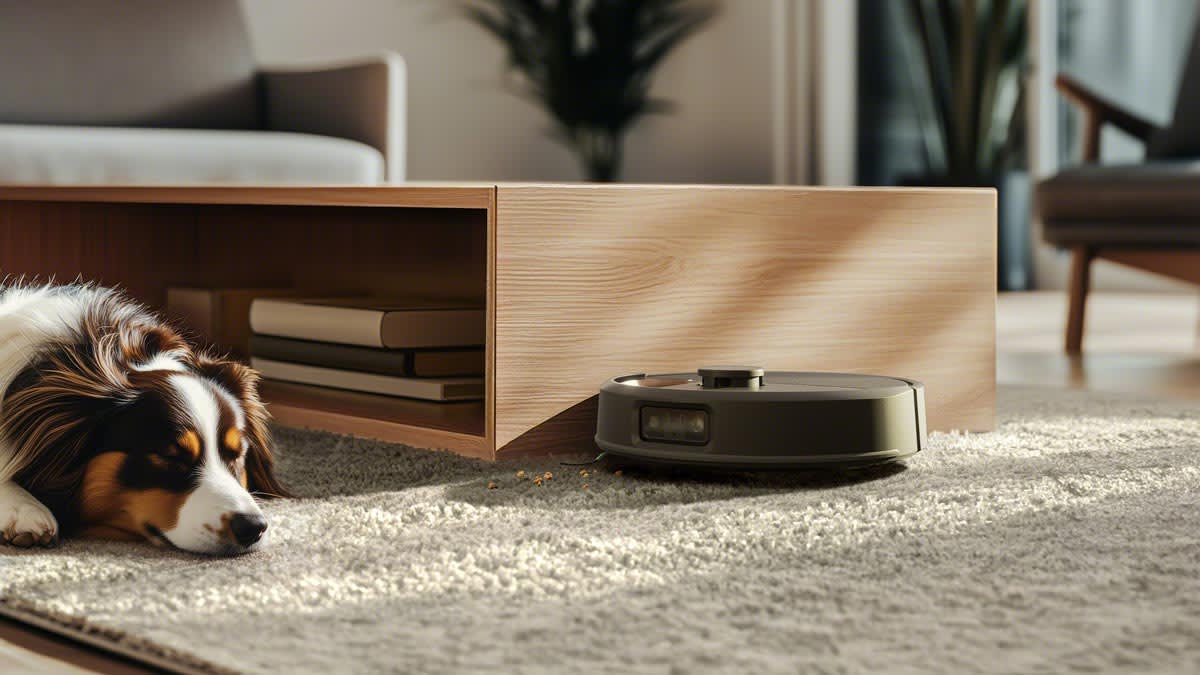

A robot vacuum is only useful when it can find its way around the home, handle the debris your floors actually collect, and return to its dock without becoming another appliance to supervise. The wrong model gets trapped under furniture, tangles around pet hair, or leaves you emptying a small bin every day.
We compared the Best automatic vacuum robot options in this group across suction, navigation, floor coverage, hands-free maintenance, and mopping features. The range runs from compact, remote-controlled cleaners to mapped models with self-emptying docks and more advanced carpet handling.
The Roborock Q10 S5+ is our top pick, while the other nine cover slim designs, pet-hair cleaning, extended dock capacity, and straightforward everyday floor care.
Comparison table
| # | Product | Award | Suction | Navigation | Self-emptying | Best for |
|---|---|---|---|---|---|---|
| 1 | Roborock Q10 S5+ | Best overall | 10, 000Pa | LiDAR and structured light | 2.7L, up to 70 days | Homes with pets and mixed floors |
| 2 | WSUANE D15S MAX | Best long-run autonomy | 10, 000Pa | dToF LiDAR | 3.5L, up to 90 days | Large homes and pet hair |
| 3 | Roborock Q7 M5+ | Best for low maintenance | 10, 000Pa | PreciSense LiDAR | 2.7L, up to 7 to 9 weeks | Frequent automated cleaning |
| 4 | Tikom L8000 Plus | Best multi-floor mapping | 6, 000Pa | LiDAR | 3L, up to 90 days | Homes with several levels |
| 5 | Roborock Q7 L5 | Best mapped mop combo | 8, 000Pa | LiDAR | Not listed | Controlled room cleaning |
| 6 | Shark AI Ultra AV2501S | Best for allergen control | Not listed | LiDAR and Matrix Clean | Bagless, up to 30 days | Pet homes and dust sensitivity |
| 7 | Tikom G8000 Max | Best slim combo | 5, 000Pa | Anti-collision and anti-fall sensors | Not listed | Low furniture clearance |
| 8 | ROPVACNIC S1 | Best compact pet-hair pick | 5, 200Pa | Coverage sensors | Not listed | Hard floors and low-pile carpet |
| 9 | Lefant M210 | Best small-space cleaner | Not listed | Infrared sensors | Not listed | Tight spaces and daily dust |
| 10 | ILIFE V2 | Best simple operation | Not listed | Infrared sensors | Not listed | Remote-controlled cleaning |
1. Roborock Q10 S5+: Best Overall

Pros
- Strong 10, 000Pa suction
- Sonic mopping scrubs up to 3, 000 times per minute
- Lifts the mop by 8mm on carpet
- LiDAR mapping and structured-light obstacle avoidance
- Dual anti-tangle brush system
Cons
- App supports 2.4GHz Wi-Fi only
- Dock uses a 2.7L dust bag rather than a bagless design
- Larger dock footprint than a compact charging station
Best for: households that want strong vacuuming, active mopping, and dependable mapping in one system.
The Roborock Q10 S5+ is the easiest model here to recommend when a home has a mix of hard flooring, rugs, carpets, and everyday pet debris. It combines a 10, 000Pa HyperForce suction system with a self-emptying station, so the robot is not merely covering floors on a schedule. It is built around reducing the small maintenance tasks that usually undermine robot vacuum ownership.
Its VibraRise 2.0 system is a meaningful step up from a basic damp cloth. Dual-zone sonic vibration scrubs at up to 3, 000 times per minute, and the mop lifts by 8mm when the robot detects carpet. That gives it a better chance of handling kitchen marks while avoiding a wet pass across a rug. The app lets you choose mopping modes, suction levels, no-go zones, and emptying settings, which makes it more adaptable than the simpler Tikom G8000 Max.
Navigation is another reason this model leads the group. PreciSense LiDAR creates detailed maps and supports multiple levels, while ReactiveTech structured-light obstacle avoidance helps it work around objects in cluttered rooms. The JawScrapers main brush and anti-tangle side brush should also reduce the amount of hair that needs to be cut away by hand. It supports Alexa and Google Home voice commands, though the app requires a 2.4GHz network.
The Q10 S5+ is not the smallest robot here, and its dock needs room for the 2.7L dust bag. The mop system also adds parts to fill, wash, and maintain. Buyers who only need light cleaning on a small hard-floor area can choose the ILIFE V2 or Lefant M210 instead. For everyone else, the Q10 S5+ offers the most complete mix of suction, mapping, carpet awareness, and mopping.
2. WSUANE D15S MAX: Best Long-Run Autonomy

Pros
- 10, 000Pa maximum suction
- 3.5L self-emptying dustbin
- dToF LiDAR mapping
- Hair-cutting anti-tangle roller brush
- Up to 160 minutes in silent mode
Cons
- Mopping details are limited
- Maximum suction reduces the stated runtime
- No app or voice-control details are listed
Best for: large homes and pet owners who want long cleaning intervals between dock maintenance.
The WSUANE D15S MAX stands out for the amount of dirt its dock is designed to hold. Its 3.5L self-emptying dustbin is rated for up to 90 days of hands-free cleaning, which is a useful distinction for homes where pet hair and litter quickly fill a small robot bin. The machine itself measures 3.94 inches high, so it can reach under some furniture, though the Tikom G8000 Max and Lefant M210 are slimmer.
Suction is adjustable across four levels. Quiet mode is listed at 800Pa, standard at 2, 000Pa, power mode at 6, 000Pa, and maximum mode at 10, 000Pa. That spread matters because a user can preserve battery for routine dust while reserving the highest setting for carpet and heavier debris. The stated runtime reaches 160 minutes in silent mode, then drops to 120 minutes at standard, 80 minutes at powerful, and 70 minutes at maximum.
Its dToF LiDAR system maps larger spaces and supports custom no-go zones. Three ground detection sensors provide 8cm anti-drop protection, while six anti-collision sensors help it navigate around furniture. The brush is particularly interesting for homes with shedding pets because its blade-equipped roller is designed to cut through pet and human hair after the cleaning task, rather than leaving a long bundle wrapped around the brush.
The D15S MAX is less transparent than the Roborock Q10 S5+ about app features, detailed mopping controls, and obstacle recognition. That makes the Roborock the stronger choice for buyers who want the most polished control over rooms and carpets. Choose WSUANE when dock capacity, long low-power runs, and a hair-cutting brush matter more than advanced mopping options.
3. Roborock Q7 M5+: Best for Low Maintenance
Pros
- 10, 000Pa suction
- Up to 7 to 9 weeks of self-emptying
- Dual anti-tangle design
- LiDAR mapping
- Adjustable water flow
Cons
- App supports 2.4GHz Wi-Fi only
- No obstacle avoidance system beyond the listed LiDAR navigation
- Dock adds considerable width and depth
Best for: users who want a mapped vacuum and mop that can run frequently with little bin maintenance.
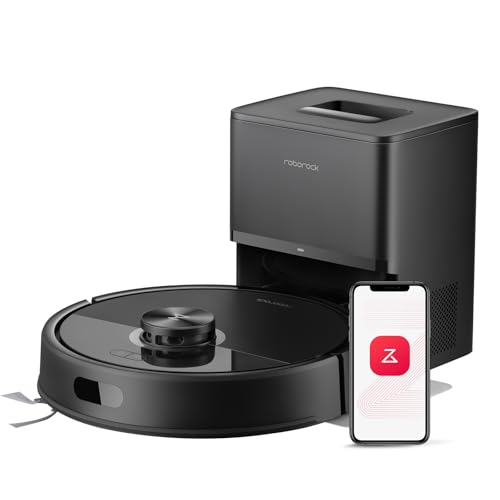
The Roborock Q7 M5+ is a strong alternative to the Q10 S5+ for buyers who care most about long intervals between emptying. Its RockDock Plus uses a sealed 2.7L dust bag rated for up to 7 to 9 weeks of hands-free cleaning. That is especially useful when the robot runs often to manage crumbs, tracked-in dirt, and pet hair.
The 10, 000Pa suction rating puts it near the top of this list, but the more important feature is how the brush system supports regular use. A JawScrapers main brush and a side brush designed to resist hair tangling can reduce interruptions between cleaning cycles. It vacuums and mops in one pass, with three water-flow settings for adjusting how much moisture reaches the floor.
PreciSense LiDAR maps the home in real time and plans cleaning routes by room. The Roborock app supports schedules, spot cleaning, no-go zones, progress monitoring, and battery checks. It is a capable system for homes with several rooms, although the 2.4GHz Wi-Fi limitation is worth checking before setup. Alexa and Google Home control are not listed for this model, so the app is the main control center.
Compared with the Q10 S5+, the Q7 M5+ has the same headline suction figure and a similar hands-free focus, but the Q10 adds sonic vibrating mopping, carpet mop lift, and structured-light obstacle avoidance. The Q7 M5+ is the better fit for buyers who want a simpler mapped routine and long dock intervals. It is less appealing for homes where the mop must handle stubborn marks or frequent clutter.
4. Tikom L8000 Plus: Best Multi-Floor Mapping

Pros
- Self-emptying base with 3L dust bag
- LiDAR mapping for up to five floors
- Three suction and three water-flow levels
- Auto-recharge and resume
- Supports 2.4GHz and 5GHz Wi-Fi
Cons
- Maximum suction is 6, 000Pa
- Mop holder must be removed or carpet zones must be created
- Listed dimensions are unusual for a compact robot
Best for: homes where saved maps and room controls matter more than maximum suction power.
The Tikom L8000 Plus makes a compelling case for multi-level homes. Its LiDAR navigation can save up to five floor maps, so moving between levels does not mean starting from scratch each time. The app can select rooms, schedule runs, set no-go and no-mop zones, and create virtual walls. It also supports both 2.4GHz and 5GHz Wi-Fi, giving it an advantage over the Roborock models for households with a network configured around the newer band.
The 6, 000Pa maximum suction is below the Q10 S5+, Q7 M5+, and WSUANE D15S MAX, but it is still paired with automatic carpet boost. Three suction levels and three water-flow settings let the user tune the cleaner for hard floors, rugs, and different mopping needs. Its 150-minute runtime in gentle suction mode gives it enough endurance for many homes, and it returns to recharge before resuming where it stopped.
The 3L self-emptying dust bag is rated for up to 90 days. That reduces daily interaction, while the vacuum and mop functions share one automated routine. The main caveat is carpet management. Tikom says to remove the mop holder or establish a no-go zone to prevent the robot from dirtying carpet, so it does not offer the Q10 S5+ style of automatic mop lifting.
The L8000 Plus is a more natural choice than the Tikom G8000 Max when a home has multiple levels or needs room-by-room scheduling. The G8000 Max is slimmer and easier to place under low furniture, but it lacks the L8000 Plus's self-emptying station and multi-floor mapping. Choose this model for map management and dock convenience, not for the highest available suction figure.
5. Roborock Q7 L5: Best Mapped Mop Combo

Pros
- 8, 000Pa suction
- LiDAR route planning
- Multiple saved floor maps
- Three water levels
- Dual anti-tangle brushes
Cons
- No self-emptying dock is listed
- Integrated dustbin and water tank require combined handling
- App supports 2.4GHz Wi-Fi only
Best for: buyers who want precise room mapping and simultaneous vacuuming and mopping without a self-emptying base.
The Roborock Q7 L5 is the straightforward mapped combo in this lineup. Its 8, 000Pa HyperForce suction gives it more cleaning headroom than the compact entry-level models, while LiDAR scans the home in 360 degrees and plans efficient routes. It can save multiple floor maps, which makes it more suitable for a multilevel home than a random-navigation cleaner.
Vacuuming and mopping happen in one pass through a combined dustbin and 270ml water tank. Three water levels let the user limit moisture on finished flooring or increase it for more persistent marks. The mop pad is removable, and Roborock includes no-go zone controls in the app. The integrated tank and dustbin simplify the robot's internal layout, but they also mean the whole combined part must be handled when emptying or refilling.
The brush setup is one of the Q7 L5's stronger details. A main brush and zero-tangle side brush are designed to reduce hair wrap, a useful trait for homes with pets. The robot can also identify potential trouble spots such as cables and table legs and suggest no-go zones before a cleaning run. Voice control through Alexa or Google Home is supported.
The absence of a self-emptying dock is the main difference between the Q7 L5 and the Q7 M5+. The M5+ is better for unattended cleaning over many weeks, while the Q7 L5 is a sensible choice when manual bin emptying is acceptable and mapped mopping matters. As with other Roborock models here, the app requires 2.4GHz Wi-Fi.
6. ROPVACNIC S1: Best Compact Pet-Hair Pick

Pros
- 5, 200Pa suction
- Four-stage water adjustment
- Brushless no-entanglement design
- App and voice control
- 2.99-inch height
Cons
- No LiDAR mapping is listed
- No self-emptying station
- Intended for low-pile carpet rather than deep carpet
Best for: smaller homes with hard floors, low-pile carpet, and recurring pet hair.
The ROPVACNIC S1 takes a compact approach to routine cleaning. At 2.99 inches high, it can reach beneath furniture that blocks taller mapped robots. Its 5, 200Pa suction is paired with a three-point cleaning system and dual rotating side brushes, giving it a sensible layout for crumbs, dust, and hair along edges.
The brushless suction port is the main reason pet owners may prefer it over a conventional roller design. ROPVACNIC says the port avoids the hair tangles that often require scissors or a cleaning tool. That does not make the robot maintenance-free, but it removes one common source of interruption. The stated floor coverage includes wood and hard flooring plus low-pile carpets, so it is not the pick for thick carpet.
Mopping is electronically controlled, with four water adjustment levels. The app supports multiple cleaning modes and personalized settings, while Alexa and Google Assistant can start a run by voice. Its sensors detect obstacles and help the robot change direction, and the cleaner returns to its dock automatically when the battery is low.
The trade-off is navigation sophistication. The S1 does not list LiDAR or saved room maps, so it cannot match the Q7 L5 or Q10 S5+ for targeted room cleaning. It also lacks a self-emptying dock. Buyers who want a small, uncomplicated cleaner for daily hard-floor debris should consider it, while large homes and cluttered layouts are better served by a mapped model. Readers comparing pet-focused options can also weigh how different brush designs handle recurring pet hair before choosing.
7. Shark AI Ultra AV2501S: Best for Allergen Control

Pros
- Matrix Clean makes multiple passes over debris
- Bagless self-emptying base
- True HEPA filtration captures 99.97 percent of dust and allergens down to 0.3 microns
- LiDAR home mapping
- Self-cleaning brushroll
Cons
- No mopping function is listed
- Runtime is up to 120 minutes
- Larger and heavier than compact models
Best for: pet households that prioritize filtration, mapped vacuuming, and a bagless dock.
The Shark AI Ultra AV2501S is the only model here that puts a bagless self-emptying base and true HEPA filtration at the center of its design. The base holds up to 30 days of dirt and debris, while the filtration system is rated to capture 99.97 percent of dust and allergens down to 0.3 microns. That combination is a strong fit for homes dealing with pet dander or users who would rather not handle disposable dust bags.
Its Matrix Clean navigation takes multiple passes over dirt instead of relying on a single straight route. The robot uses 360-degree LiDAR to map the home, detect objects, and adapt to changes in the environment day or night. That gives it a more deliberate cleaning pattern than the random and edge modes found on the Lefant M210 and ILIFE V2.
Shark lists up to 120 minutes of runtime, followed by recharge and resume. The self-cleaning brushroll is designed to collect pet hair while limiting hair buildup, and Alexa or Google Assistant can start scheduled or on-demand cleaning. The robot vacuums all floor types, but no mopping feature is listed, so it cannot replace the Q10 S5+ or Q7 L5 for hard-floor washing.
The bagless dock is convenient but still requires the dirt container and filters to be maintained. The Shark is also taller and heavier than the ROPVACNIC S1, so it needs more clearance beneath furniture. Choose it over the Roborock Q10 S5+ when filtration and bagless disposal matter more than mopping. If you want a broader comparison of the maintenance trade-offs between robot vacuum systems, dock design deserves as much attention as suction.
8. Tikom G8000 Max: Best Slim Combo

Pros
- 5, 000Pa suction
- 2.99-inch height
- 450ml dustbin and 300ml water tank
- App, remote, voice, and button controls
- Up to 150 minutes in quiet mode
Cons
- No self-emptying base
- Navigation uses basic sensors rather than LiDAR
- Mopping control is less advanced than the mapped Roborock models
Best for: apartments and rooms with low furniture where slim clearance matters.
The Tikom G8000 Max is the practical slim option. Its 2.99-inch height lets it reach under beds, sofas, and cabinets, and its 12.6-inch square footprint is smaller than several of the mapped robots here. That physical design can matter more than extra navigation features when the main source of missed dirt is furniture the robot cannot enter.
It vacuums and mops at the same time, with a 450ml dustbin and 300ml water tank. The 5, 000Pa suction is intended for hard floors, tiles, carpets, and rugs, while large wheels help it cross thresholds between surfaces. Tikom lists up to 150 minutes in quiet mode, and the robot automatically recharges when its battery is low.
Control is unusually flexible for this class. The G8000 Max supports an app, remote, voice commands, and physical buttons, with spot, edge, zig-zag, and manual cleaning modes. Anti-collision and anti-fall sensors help it avoid walls, obstacles, and stairs. Those sensors are useful, but they do not create the detailed room maps offered by the Roborock Q7 L5 or Tikom L8000 Plus.
The absence of a self-emptying base means the larger onboard dustbin still needs regular attention. Navigation may also require more preparation in a cluttered home. The G8000 Max is the better choice than the Lefant M210 when mopping and a larger debris container matter, while the Lefant is slimmer and simpler for dry daily cleaning.
9. Lefant M210: Best Small-Space Cleaner

Pros
- 2.99-inch height
- Brushless suction port resists hair tangles
- Six cleaning modes
- App, Alexa, and Google Assistant control
- Up to 120 minutes in low suction mode
Cons
- Zig-zag mode is not recommended on carpet
- No mopping or self-emptying dock is listed
- Navigation relies on infrared sensors rather than mapped routes
Best for: small homes that need frequent dry cleaning under low furniture.
The Lefant M210 is built around a small body and a brushless suction port. Its 11-inch diameter and 2.99-inch height make it easy to position in compact rooms and useful beneath sofas or beds. The brushless design also avoids the roller-brush hair wrap that can be frustrating in homes with pets.
Its six cleaning modes include zig-zag, random, spot, edge, scheduled, and manual control. The app can adjust suction and direction, set a schedule, and show the cleaning area. Alexa and Google Assistant support add voice control, so this is more connected than the remote-only ILIFE V2.
The stated runtime reaches 120 minutes in low suction mode. FreeMove Technology 3.0 uses six-dimensional infrared anti-collision sensors to detect likely stuck areas and alter the route. That helps the M210 avoid some obstacles, but it does not offer the room maps, no-go zones, or targeted cleaning of the Roborock Q7 L5.
Lefant specifically says not to use zig-zag mode on carpet, which limits how freely it can be deployed across mixed flooring. There is also no mopping or self-emptying feature listed. Pick it for a small, mostly dry-floor home where low clearance and scheduled cleaning are more important than deep mapping. For a similar compact format with mopping, the Tikom G8000 Max is the stronger alternative.
10. ILIFE V2: Best Simple Operation

Pros
- Tangle-free suction port
- 2.99-inch slim design
- Remote and one-button control
- Auto, spot, and edge cleaning modes
- Up to 120 minutes of cleaning
Cons
- No app or voice control is listed
- No mopping or self-emptying dock is listed
- Navigation uses infrared sensors rather than LiDAR
Best for: users who want basic scheduled vacuuming without app setup.
The ILIFE V2 is the least complicated robot in this group. It starts with a remote or one-button touch, runs an automatic cleaning cycle, and returns to its dock when the battery is low. For someone who does not want to connect another appliance to a phone or smart speaker, that simplicity is the point.
Its tangle-free suction port is designed for hair, crumbs, dirt, and debris on hardwood, tile, laminate, stone, and low-pile carpet. The 2.99-inch height allows it to pass beneath low furniture, while infrared sensors help it avoid collisions and drop-offs. Those basics cover the daily mess in a smaller home, but they do not provide the route precision of a LiDAR robot.
The V2 offers auto, spot, and edge modes and can clean for up to 120 minutes on one charge. It automatically returns to the charging dock, and the product includes a stated 12-month warranty with US local customer service. There is no listed mopping system, app, voice control, or self-emptying base.
Compared with the Lefant M210, the ILIFE V2 gives up connected controls but keeps operation simple. Compared with the ROPVACNIC S1, it gives up stronger listed suction and app-based mopping. Choose it when dry-floor cleaning, low clearance, and physical controls are the priorities, and skip it if you need room mapping or hands-free dock maintenance.
How to choose best automatic vacuum robot
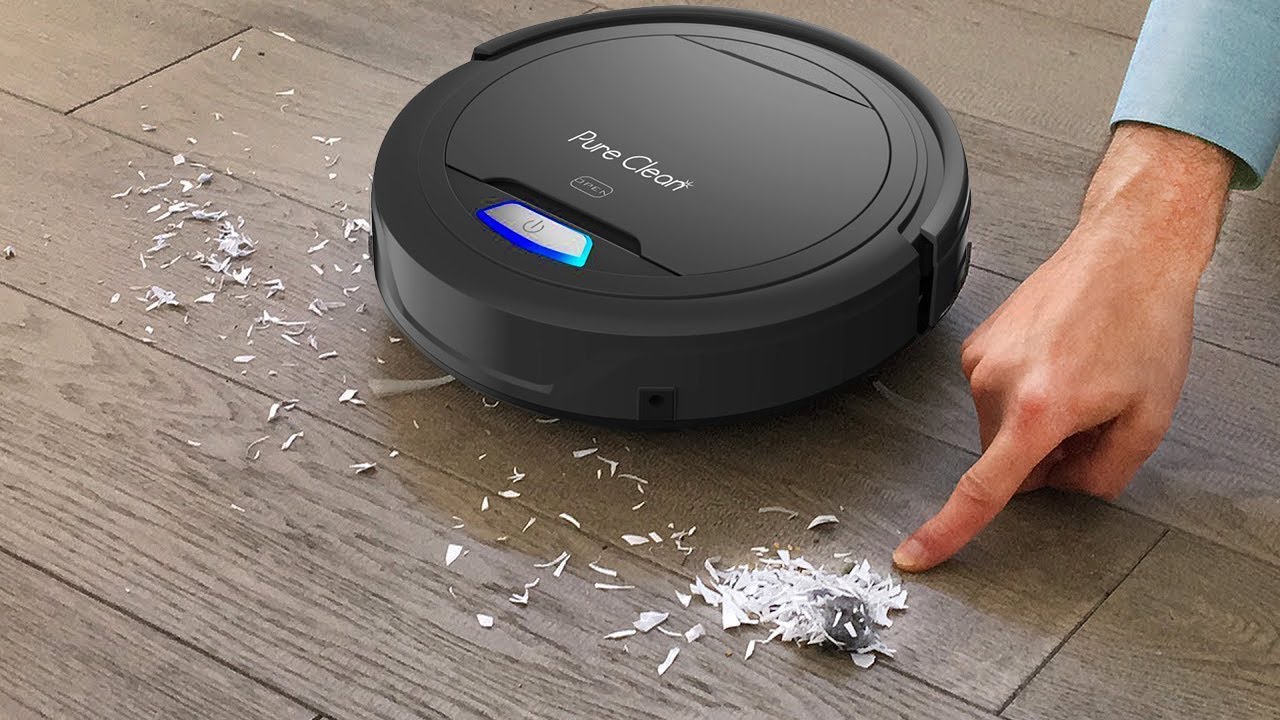
The right robot depends less on one headline number than on how well its navigation, brush design, dock, and floor controls fit the home.
Suction and brush design
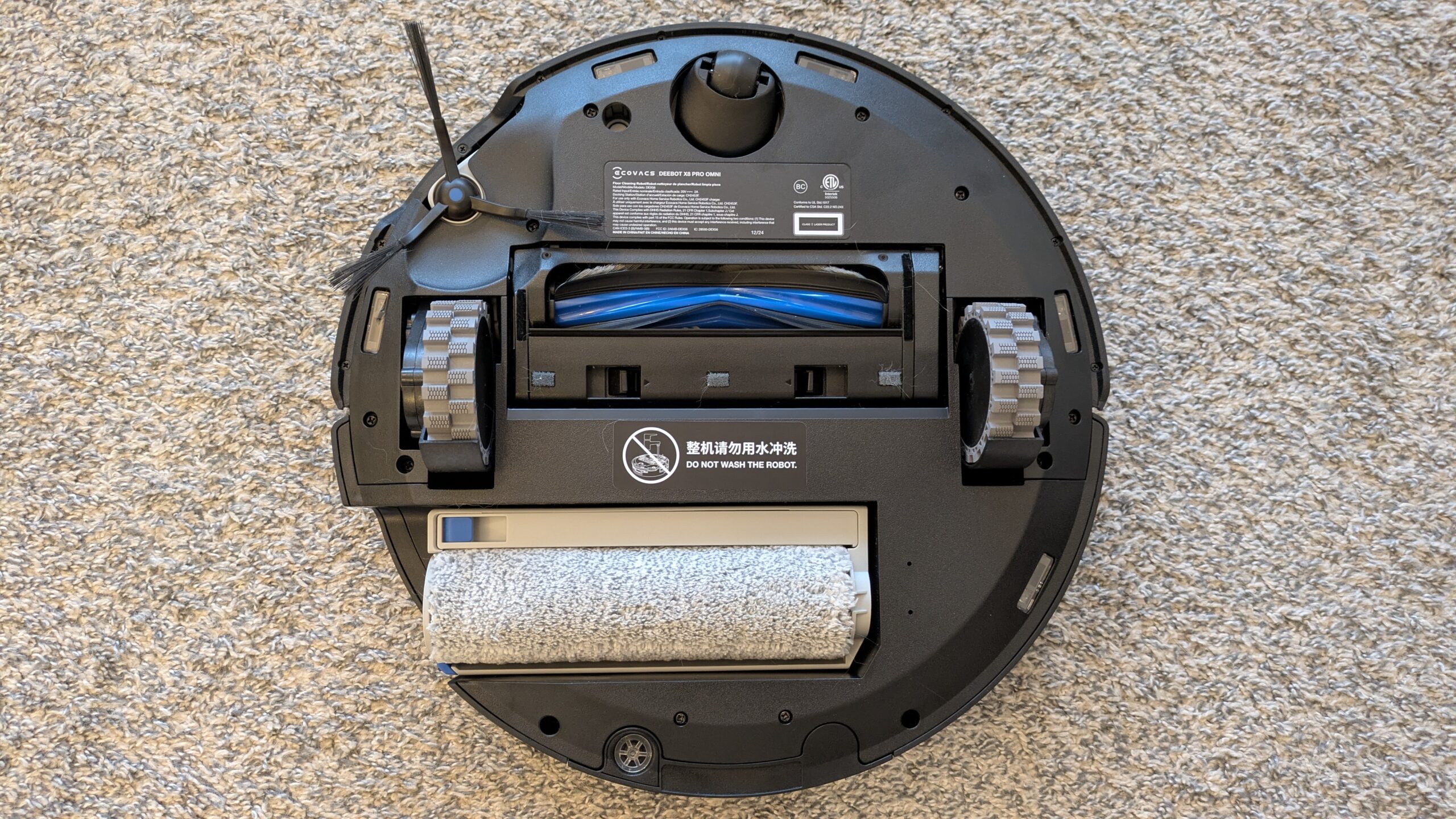
Suction helps lift debris from hard floors and carpets, but the brush and intake determine how consistently that debris reaches the bin. Higher listed suction figures give models such as the Roborock Q10 S5+ and WSUANE D15S MAX more headroom for carpet and pet hair. Brushless ports and anti-tangle systems, used by the ROPVACNIC S1, Lefant M210, ILIFE V2, and Roborock models, can reduce hair wrapped around moving parts.
Navigation and mapping
LiDAR creates a map and gives the robot a planned route through rooms. It also supports useful controls such as no-go zones, room selection, and multiple floor maps. Basic infrared or anti-collision sensors can protect the robot from stairs and furniture, but they do not offer the same targeted control.
A robot that knows which room it is cleaning is easier to live with than one that merely moves until its battery runs low.
Mopping control
A combination robot needs more than a water tank to mop well. Look for adjustable water flow, removable mop pads, carpet detection, and a way to keep wet cleaning away from rugs. The Q10 S5+ stands apart with sonic scrubbing and an 8mm mop lift, while the Q7 L5 and Tikom L8000 Plus offer more basic controls.
Dock and dust capacity
Self-emptying docks reduce how often the onboard bin needs attention. The WSUANE D15S MAX lists a 3.5L dustbin, the Tikom L8000 Plus has a 3L dust bag, and the Roborock Q10 S5+ and Q7 M5+ use 2.7L bags. Shark takes a different approach with a bagless base rated for up to 30 days and HEPA filtration.
Clearance and floor coverage
Measure the gap beneath beds, sofas, and cabinets before choosing a robot. The 2.99-inch Tikom G8000 Max, ROPVACNIC S1, Lefant M210, and ILIFE V2 can reach spaces that taller machines may miss. For a wider look at how navigation and cleaning patterns affect floor coverage, the differences between mapped and basic robot cleaners are useful to consider.

Frequently asked questions
Do all of these automatic vacuum robots mop?
No. The Roborock Q10 S5+, Roborock Q7 M5+, Roborock Q7 L5, Tikom L8000 Plus, Tikom G8000 Max, and ROPVACNIC S1 list vacuuming and mopping functions. The Shark AI Ultra AV2501S, Lefant M210, and ILIFE V2 are listed as vacuum cleaners without a mopping system.
Which model is best for pet hair?
The Roborock Q10 S5+ is the strongest all-round pet-hair pick because it combines 10, 000Pa suction, dual anti-tangle brushes, carpet boost, and a self-emptying dock. The WSUANE D15S MAX adds a hair-cutting roller brush, while the Shark AI Ultra AV2501S pairs a self-cleaning brushroll with HEPA filtration.
Which robots have LiDAR mapping?
The Roborock Q10 S5+, WSUANE D15S MAX, Tikom L8000 Plus, Roborock Q7 L5, Shark AI Ultra AV2501S, and Roborock Q7 M5+ list LiDAR or dToF LiDAR navigation. The Tikom G8000 Max, ROPVACNIC S1, Lefant M210, and ILIFE V2 use sensor-based navigation without listed LiDAR mapping.
Can these robots clean multiple floors?
Several can support multi-floor cleaning. The Roborock Q10 S5+, Roborock Q7 L5, and Tikom L8000 Plus list multi-level mapping, with the L8000 Plus supporting up to five saved floor maps. A robot may still need to be carried between floors unless a separate dock is available on each level.
Which model reaches under low furniture most easily?
The Tikom G8000 Max, ROPVACNIC S1, Lefant M210, and ILIFE V2 each list a height of 2.99 inches. The WSUANE D15S MAX is 3.94 inches high, while the Shark AI Ultra AV2501S is 4.1 inches high, so those models need more clearance.
Do Roborock models work on 5GHz Wi-Fi?
The Roborock Q10 S5+, Q7 L5, and Q7 M5+ specify 2.4GHz Wi-Fi support. The Tikom L8000 Plus lists support for both 2.4GHz and 5GHz Wi-Fi. Check the router settings before setup if the home uses a 5GHz-only network.
How long can these robots run?
The WSUANE D15S MAX lists up to 160 minutes in silent mode, the Tikom G8000 Max and Tikom L8000 Plus list up to 150 minutes in their lower-power modes, and the Shark AI Ultra AV2501S lists up to 120 minutes. Actual runtime changes with suction level, floor type, and cleaning mode.
The bottom line
The Roborock Q10 S5+ is the Best automatic vacuum robot for most homes because it combines 10, 000Pa suction, effective LiDAR mapping, obstacle avoidance, sonic mopping, carpet mop lift, and a self-emptying dock. It is the most complete choice for mixed floors, pets, and people who want detailed control from an app.
The WSUANE D15S MAX is a better fit when long dock intervals and a hair-cutting brush matter most, while the Roborock Q7 M5+ is a strong low-maintenance alternative with similar suction and long self-emptying intervals. Smaller homes should look at the Tikom G8000 Max, ROPVACNIC S1, Lefant M210, or ILIFE V2 for low-clearance cleaning.
If you are undecided, choose the Q10 S5+ unless your first priority is a slimmer body, a bagless dock, or the simplest possible controls.
As an Amazon Associate we earn from qualifying purchases.