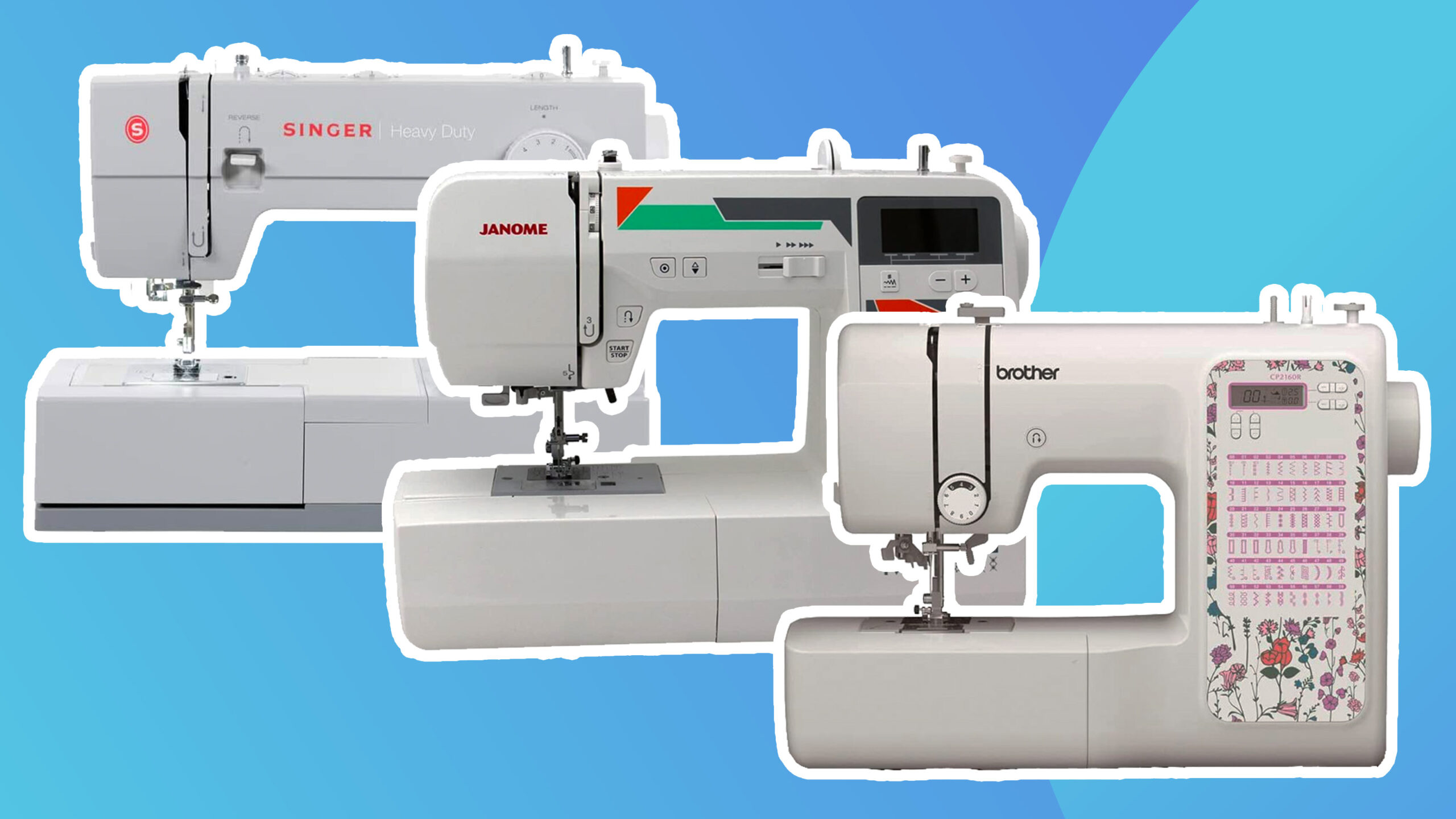

Learning to sew gets frustrating quickly when threading is fiddly, the machine shifts around, or the controls make a simple hem feel like a technical project. The Best beginner sewing machines make those first sessions calmer by combining useful stitch choices with straightforward controls and practical threading aids.
Our top pick is the Brother XM2701, but the right machine depends on the kind of work you want to do. The list ranges from tiny two-speed machines for occasional crafts to full-size Brother models with automatic needle threaders, free arms, and stitch selections that leave room to grow.
Comparison of the Best Beginner Sewing Machines
| # | Product | Award | Stitches | Threading and workspace | Best for |
|---|---|---|---|---|---|
| 1 | Brother XM2701 | Best overall | 27 | Automatic needle threader, drop-in bobbin, free arm | Most first-time sewists |
| 2 | Chunara Mini Sewing Machine | Best two-speed mini machine | 12 | Thread cutter, sewing light, free arm | Small home DIY projects |
| 3 | Brother FB1757X | Best simple mechanical pick | 17 | LED work light, free arm | Straightforward everyday sewing |
| 4 | Brother XR3774 | Best for quilting beginners | 37 | Automatic needle threader, wide table | Quilting and larger projects |
| 5 | KPCB Tech Mini Sewing Machine | Best lightweight starter | Double thread design | Two speeds, finger guard | Craft practice and small projects |
| 6 | Rxmeili Portable Sewing Machine | Best battery-powered option | 12 | Threading marks, foot and button switches | Portable household repairs |
| 7 | Ninonly Mini Sewing Machine | Best compact craft kit | 12 | Two speeds, built-in light, two power modes | Dorms, crafts, and quick jobs |
| 8 | Brother XM3700 | Best stitch variety | 37 | Automatic needle threader, free arm | Beginners who want room to grow |
| 9 | Brother GX37 | Best everyday Brother alternative | 37 | Automatic needle threader, free arm | General sewing and quilting |
1. Brother XM2701: Best Overall

Pros
- Useful mix of 27 built-in stitches
- Automatic needle threader and drop-in bobbin
- Free arm for sleeves and cuffs
- Six included sewing feet
- Lifetime technical support from Brother
Cons
- Less suitable for people who need a wide quilting workspace
- Intended for use in the US at 120 volts
Best for: first-time sewists who want a conventional machine that can handle more than basic straight seams.
The Brother XM2701 is the machine we'd hand to a beginner who has not yet decided how far sewing will take them. It is not reduced to one narrow task, and it avoids the toy-like limitations of the smallest machines here. The useful difference is how many ordinary jobs it covers without asking you to learn a complicated control system first.
Its 27 built-in stitches include straight, zigzag, decorative, blind hem, and stretch options. That mix matters more than the headline number. Straight stitches cover seams, zigzag helps finish fabric edges, stretch stitches are useful on fabrics that need some give, and blind hem stitches open up clothing repairs. The auto-size buttonhole is another practical step up from the mini machines, where buttonhole work is less clearly supported.
Threading is friendlier than on the compact alternatives. The automatic needle threader pushes thread through the needle, while the drop-in top bobbin is designed to resist jamming and is easy to monitor. The free arm narrows the sewing surface around sleeves, cuffs, and other cylindrical pieces. Six sewing feet, four bobbins, a three-piece needle set, and a twin needle give a new owner useful starting equipment rather than a bare machine.
The Brother XM3700 offers more stitches, and the Brother XR3774 is the stronger choice for quilting because of its wide table and extra quilting-focused equipment. The XM2701 is easier to recommend than either when everyday clothing repairs and small projects are the priority. It also has Brother's At Your Side technical support through online, live chat, or phone channels.
The weakness is its conventional full-size shape and 12.6-pound weight. It is portable in the sense that it can be moved between storage and a table, but it is not the machine to carry from room to room as casually as the KPCB Tech model. Skip it if you only want occasional tiny craft jobs. For someone building a dependable sewing habit, this is the most balanced starting point.
2. Chunara Mini Sewing Machine: Best Two-Speed Mini Machine

Pros
- Two-speed control helps new users start slowly
- Free arm for sleeves and pant legs
- Thread cutter and sewing light
- 12 built-in stitch patterns
- Foot pedal allows both hands to guide fabric
Cons
- Fewer stitches than the full-size Brother machines
- Compact format is aimed at lighter home projects
Best for: a beginner who wants a small machine with speed control and a simple setup for DIY sewing.
The Chunara Mini Sewing Machine makes a persuasive case for keeping the first machine small. Its most useful feature is not simply its compact size. The two-speed selection lets a new sewist slow the machine down while learning to steer fabric, then move faster once straight seams feel natural.
The 12 built-in stitches cover the basics, including straight and zigzag patterns. That is enough for common repairs, simple home projects, and decorative experiments, though it does not offer the breadth of the XM2701 or the 37-stitch Brother models. The machine also includes a thread cutter and sewing light, two details that reduce interruptions during a project.
A free arm is built into the design, so sleeves, pant legs, and other cylindrical pieces can be positioned around the narrower section. The foot pedal leaves both hands available to guide fabric, which is preferable to relying only on a button for longer seams. At 12 inches long, 11 inches wide, and 6 inches high, it should fit more easily on a crowded desk than the full-size machines.
The trade-off is capability. The KPCB Tech Mini Sewing Machine is lighter and adds a finger guard and practice fabric, while the Ninonly Mini Sewing Machine also offers two power modes and an included kit. The Chunara is the more appealing option when two-speed control and a free arm matter more than an unusually small footprint.
There is no automatic needle threader listed for this model, so beginners who find threading difficult may be happier with the Brother XM2701. This machine suits someone who wants to learn basic control without giving up a foot pedal, not someone planning frequent quilting or a large wardrobe of structured garments.
3. Brother FB1757X: Best Simple Mechanical Pick

Pros
- Clear mechanical stitch selection
- 17 built-in stitches
- Four-step buttonhole
- Free arm
- LED work-area lighting
Cons
- Fewer stitch choices than several Brother alternatives
- Four-step buttonhole takes more manual work
Best for: beginners who prefer a straightforward mechanical machine for routine sewing.
The Brother FB1757X is refreshingly focused. It gives a beginner the core controls without surrounding them with an oversized stitch menu. That makes it a sensible choice for people who expect to sew seams, hems, repairs, and basic projects rather than immediately explore decorative techniques.
Its 17 built-in stitches include enough range for everyday work, and the free arm helps with cuffs and sleeves. The four-step buttonhole is more manual than the one-step auto-size buttonholes on the XM2701, XM3700, GX37, and XR3774. That is a real distinction, but it can also be useful for a learner who wants to understand how the machine builds a buttonhole instead of pressing one button and moving on.
The LED light illuminates the work area, which helps when dark fabric or small details make the needle difficult to see. The machine measures 17.3 inches long, 9.4 inches wide, and 14.2 inches high. It has the footprint of a conventional machine, so it needs a dedicated table or a reliable storage routine rather than being treated like a tiny portable craft device.
The Brother XM2701 is the stronger all-rounder because it adds 10 stitches, an automatic needle threader, and a drop-in top bobbin. The FB1757X makes more sense when a smaller stitch selection is enough and the appeal of a mechanical layout outweighs those conveniences. It is also a more capable long-term starting point than the mini machines, whose compact bodies are better suited to limited projects.
The four-step buttonhole is the clearest reason to skip it if clothing construction is your main goal. Beginners who want fewer decisions and a conventional format will find the FB1757X easy to understand. It is a tidy choice for learning the fundamentals without immediately buying into a feature-heavy machine.
4. Brother XR3774: Best for Quilting Beginners

Pros
- 37 built-in stitches
- One-step buttonhole
- Wide table for larger fabric pieces
- Automatic needle threader and drop-in bobbin
- Eight sewing feet and instructional DVD
Cons
- Heavier than the smaller Brother machines
- Needs more table space
- US 120-volt use only
Best for: beginners who already know that quilting and larger fabric projects are part of the plan.
The Brother XR3774 is the clear specialist in this group. A beginner can use it for ordinary sewing, but its wide table and quilting equipment give it a different feel from the more compact Brother models. Large pieces of fabric are easier to support when they are not constantly hanging off a narrow sewing surface.
There are 37 built-in stitches, including blind hem, decorative, and quilting stitches. The one-step buttonhole is simpler than the FB1757X's four-step process, and the automatic needle threader removes one of the most annoying setup tasks for a new sewist. Its drop-in top bobbin is designed to resist jams and lets the user see the bobbin area more readily.
The included equipment is unusually relevant to the machine's intended use. Eight sewing feet provide more options than the XM3700's five, and the wide table supports quilts and other broad pieces. A machine cover and instructional DVD are also included. At 15 pounds, it is not the easiest machine here to relocate, but that extra bulk is less troublesome when the machine lives on a sewing table.
The Brother GX37 and Brother XM3700 also provide 37 stitches, free arms, automatic needle threaders, and one-step buttonholes. They are better fits for a smaller general-purpose workspace. The XR3774 earns its place when the fabric itself is the problem, because the wide table changes how manageable a larger project feels.
It is overqualified for someone who only wants to shorten trousers or mend a seam now and then. The unusual product dimensions listed for the machine also suggest checking the available workspace carefully before setting it up. Choose it for quilting intent, broad fabric support, and the included feet, not simply because 37 is a larger number.
5. KPCB Tech Mini Sewing Machine: Best Lightweight Starter

Pros
- Very light at 2.97 pounds
- Slow and standard stitching speeds
- Finger guard for beginner use
- Includes practice fabric squares
- Double-thread design
Cons
- Mini format limits the scale of projects
- Stitch details are less extensive than on the Brother machines
Best for: a new sewist learning basic control through small crafts and practice pieces.
The KPCB Tech Mini Sewing Machine is the easiest model here to pick up and move. At 2.97 pounds, it is dramatically lighter than the conventional Brother machines, and its 9.84-inch length and 8.66-inch width make it suitable for a small craft table. That portability is the main reason to choose it.
The beginner-focused details are thoughtfully assembled. A finger guard helps keep hands farther from the needle, while the slow and standard speed settings give new users a gentler entry point. The machine uses a double-thread design and is described as capable of sewing up to five fabric layers without manually knotting the thread at the end. That claim is useful context, but the compact format still makes it a practice and craft machine rather than a substitute for a full-size model in every project.
The included 20 cotton fabric squares, each measuring 8 by 8 inches, give a new user something to practice on immediately. The bundle also includes bobbins, scissors, measuring tape, a thimble, a needle threader, and needles. Tutorial videos accompany the fabric pieces, and language options for the manual are available through the maker. Those learning aids are more relevant to a true beginner than a pile of random accessories.
The Chunara Mini Sewing Machine offers 12 stitch patterns and a foot pedal, while the KPCB Tech model puts more emphasis on safety, practice, and portability. The Rxmeili Portable Sewing Machine is the more flexible travel option because it supports batteries, but it is heavier. A user who expects to work on garments should step up to the Brother XM2701 instead.
The KPCB Tech's limitation is the same thing that makes it appealing: its small body. Large pieces can be awkward, and the available stitch information is not as detailed as it is for the full-size Brother models. It is a good first machine for supervised learning, patchwork practice, and small creative tasks, especially when storage space matters.
6. Rxmeili Portable Sewing Machine: Best Battery-Powered Option

Pros
- AC adapter and four-AA-battery operation
- Foot switch and button switch
- Threading marks printed on the body
- 12 stitches with reverse stitching
- Includes a 42-piece sewing kit
Cons
- AC power and batteries must not be used together
- Instructions caution that incorrect operation can cause jams or broken needles
Best for: beginners who need a portable machine for small household repairs and craft work.
The Rxmeili Portable Sewing Machine stands apart because it can run from an AC adapter or four AA batteries. Battery operation makes sense for a sewing station that moves around the home, a craft session away from an outlet, or a user who wants a backup option. The machine measures 12.2 by 5.9 by 11.8 inches and weighs 5.29 pounds, so it remains portable without being as tiny as the KPCB Tech model.
Control is flexible. The user can operate it with a foot switch or a button switch, and threading marks printed on the body make the path easier to follow. There are 12 stitch choices, with stitch-length adjustment from 1 to 4 and separate numbered patterns for decorative, lock, and curve stitches. Reverse sewing works by holding the reverse switch, which is less convenient than a dedicated automatic function but still useful for securing a seam.
The bundled 42-piece sewing kit means a beginner has basic tools and supplies available at the start. The machine is intended for household tasks such as clothing alterations, handmade projects, and home decoration. That description fits its capabilities better than treating it as a miniature replacement for a full-size machine.
The Ninonly Mini Sewing Machine also offers two power modes and a foot pedal, but the Rxmeili provides clearer physical threading marks and two ways to control sewing. The Chunara Mini Sewing Machine has a thread cutter and two-speed control, making it more appealing for someone learning speed management. The Rxmeili wins when portability away from a wall outlet is the central requirement.
This model needs more careful setup than the Brother picks. Its instructions specifically warn against using the battery and AC modes at the same time, and they caution that incorrect operation can cause jams or broken needles. Read the guide and watch the use video before sewing. For a careful beginner who values portability, that preparation is a fair trade.
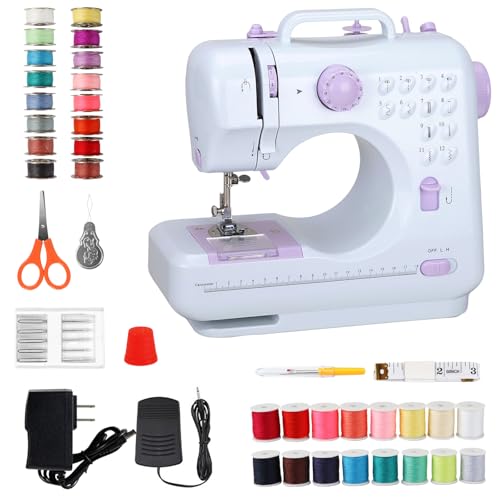
7. Ninonly Mini Sewing Machine: Best Compact Craft Kit
Pros
- Compact 4.4-pound design
- AC adapter and battery operation
- Two speeds and foot pedal control
- Built-in work light
- Includes threads, needles, scissors, and measuring tape
Cons
- Included cloth is intended for testing
- Compact format is not ideal for large projects
- Users must avoid running batteries and adapter together
Best for: craft beginners who need a small machine for scrunchies, pouches, repairs, and similar projects.
The Ninonly Mini Sewing Machine is built around convenience. Its 11-inch length, 9.44-inch width, 4.72-inch height, and 4.4-pound weight make it easy to keep on a desk or carry to a different room. A built-in handle adds to that practical portability, especially for people who do not have a permanent sewing table.
Two speeds help separate learning from rushing. A beginner can use the slower setting while learning to guide fabric, then switch to the faster setting for longer seams. The foot pedal provides hands-free control, and the built-in light helps illuminate the needle area in dim conditions. Threading arrows printed on the machine are another small but useful aid.
The 12 stitches include straight, zigzag, and decorative options. The included kit has bobbins, needles, colorful threads, measuring tape, scissors, and the foot pedal. The maker suggests projects such as scrunchies, pouches, coin purses, pet clothes, shopping bags, dolls, and coasters. Those examples accurately signal the scale at which this machine is most comfortable.
The Rxmeili Portable Sewing Machine is the better match for someone who specifically wants battery flexibility and printed threading marks, while the Chunara Mini Sewing Machine offers similar two-speed control with a thread cutter and free arm. The Ninonly model's advantage is the tidy all-in-one craft setup and light weight.
It is not the right choice for someone planning quilts or substantial garment construction. The included cloth is for testing, and the product guidance says to lower the needle with the hand wheel before starting. Follow those setup steps and keep the machine to suitable projects. For a dorm room, small apartment, or portable craft station, it is a sensible compact introduction.
8. Brother XM3700: Best Stitch Variety

Pros
- 37 built-in stitches
- One-step auto-size buttonhole
- Automatic needle threader
- Drop-in top bobbin
- Free arm and five useful sewing feet
Cons
- Larger than the mini sewing machines
- No wide table listed for quilting support
- US 120-volt use only
Best for: beginners who want a full-size machine with broad stitch options for future projects.
The Brother XM3700 is for the beginner who would rather have extra capability ready than replace a machine after learning the basics. Its 37 stitches cover a broad range of sewing tasks, while the controls remain based around familiar mechanical selection rather than a complex digital interface.
The one-step auto-size buttonhole is a meaningful convenience for clothing projects. The automatic needle threader pushes thread through the needle, and the jam-resistant drop-in top bobbin makes setup and monitoring less stressful. Those features are more likely to improve a beginner's experience day to day than decorative stitches alone.
Its free arm is designed for cuffs, sleeves, baby clothes, and other smaller cylindrical projects. The machine includes five feet for zigzag, zipper, blind stitch, buttonhole, and button sewing, along with a three-piece needle set, twin needle, four bobbins, and an accessory pouch. Measuring 17.5 inches long, 7.6 inches wide, and 14.25 inches high, it needs a proper work surface, but its 12.5-pound weight is still manageable for occasional storage.
The Brother GX37 has the same 37-stitch headline and similar automatic threading, free-arm, and buttonhole features. The Brother XM3700 is the more directly beginner-oriented package because its included feet are clearly assigned to common tasks and its accessory pouch keeps small items together. The Brother XR3774 remains better for quilting because it includes a wide table and eight feet.
The missing wide table is the main reason to look elsewhere for large quilting projects. The XM3700 is also too substantial for someone who only wants a machine for occasional portable crafts. Choose it when you want a broad stitch palette, dependable setup aids, and enough room to move from repairs into more ambitious sewing.
9. Brother GX37: Best Everyday Brother Alternative

Pros
- 37 built-in stitches
- Automatic needle threader
- Drop-in top bobbin
- One-step auto-size buttonhole
- Free arm and six sewing feet
Cons
- Conventional machine needs a dedicated work surface
- Not as quilting-focused as the XR3774
- US 120-volt use only
Best for: beginners who want a general-purpose Brother machine for everyday sewing and light quilting.
The Brother GX37 is a capable general-purpose machine that sits close to the XM3700 in this list. It has the features most beginners actually notice after several projects: easy needle threading, a visible top bobbin, a free arm, and enough stitches to avoid feeling boxed in.
Its 37 built-in stitches include the decorative and utility choices needed for everyday sewing, and the auto-size buttonhole removes several manual steps. The automatic needle threader is especially useful for users who struggle to see the needle eye. A free arm helps when a flat sewing surface is awkward around sleeves, cuffs, and other narrow pieces.
Six sewing feet, a needle set, bobbins, and a manual are included. The machine measures 16.26 inches long, 12.48 inches wide, and 7.01 inches high, with a listed weight of 10.14 pounds. That makes it lighter than the XR3774 and somewhat easier to move, though it still belongs on a stable table rather than a tiny desk.
The Brother XM3700 is the closest comparison. Both provide 37 stitches, automatic needle threading, a drop-in bobbin, a free arm, and a one-step buttonhole. The XM3700 lists five task-specific feet, while the GX37 lists six sewing feet, so the choice comes down to the included setup and the style of work you expect. The XR3774 is a better quilting pick because its wide table is explicitly part of the package.
The GX37 is not the smallest machine and does not offer the two-speed, battery-powered simplicity of the mini models. It is best for a beginner who wants a conventional machine with a substantial set of functions and who expects to sew clothing repairs, household projects, and occasional quilting without needing a specialist setup.
How to choose best beginner sewing machines
The right first machine should make setup understandable while leaving enough capability for the projects you are likely to attempt after the first few seams.
Stitch selection
A straight stitch handles basic seams, while zigzag stitches help finish edges and decorative stitches add creative options. Stretch, blind hem, and buttonhole stitches become more useful when you move from practice squares to clothing. Twelve stitches can be enough for simple crafts, while 27 or 37 stitches give a beginner more room to explore without changing machines.
Do not choose solely by the largest stitch count. Look for the specific functions you need, especially a practical buttonhole option, zigzag, stretch stitching, and blind hem capability.
Threading and bobbin design
Threading is one of the earliest sources of frustration. An automatic needle threader reduces the small alignment task of getting thread through the needle, while a drop-in top bobbin is easier to inspect and is designed to reduce jams on several Brother models.
The mini machines use printed threading paths or marks rather than automatic needle threaders. That can still work well, but it rewards a careful setup routine. Read the guide and confirm the thread path before blaming the machine for a loose or tangled seam.
Speed control
Slow and standard speed settings are especially useful when learning to guide fabric. A foot pedal gives more nuanced control than a simple start button because both hands can remain on the material. Mini machines such as the Chunara, KPCB Tech, and Ninonly are appealing for this reason.
A beginner who tends to rush should prioritize adjustable speed. Someone already comfortable with hand coordination may care more about a full-size workspace and a wider selection of feet.
The most beginner-friendly machine is the one that makes correct setup repeatable, not the one with the longest feature list.
Free arm and workspace
A free arm helps you sew around sleeves, cuffs, pant legs, and other cylindrical pieces. It is a meaningful feature for clothing repairs and small garments, even when the machine is otherwise compact.
Workspace matters more as fabric gets larger. The XR3774's wide table makes it the strongest quilting pick here, while the XM2701, XM3700, and GX37 offer more conventional work areas for everyday sewing. If your table is small, measure it before choosing a full-size machine. For more general comparisons, the features that matter in a full-size sewing setup are useful to consider alongside portability.
Portability and power
Mini models are easier to store and move, but their compact work areas are less comfortable for large projects. The KPCB Tech weighs 2.97 pounds, the Ninonly weighs 4.4 pounds, and the Rxmeili weighs 5.29 pounds. Full-size Brother machines are heavier, but they provide a more stable platform for longer seams.
Battery operation is available on the Rxmeili and Ninonly models. Never use batteries and an AC adapter at the same time. If you are choosing a machine for a fixed sewing table, conventional AC operation and a larger workspace may matter more than mobility.

Frequently asked questions
What is the easiest sewing machine for a complete beginner?
The Brother XM2701 is the easiest all-round starting point in this group. Its automatic needle threader, drop-in bobbin, free arm, 27 stitches, and one-step buttonhole cover common beginner tasks without requiring a large machine setup.
Are mini sewing machines suitable for clothing repairs?
Mini machines can handle small repairs and simple hems, but they are more limited when fabric becomes bulky or the project gets large. The Chunara, KPCB Tech, Rxmeili, and Ninonly models are better suited to light household work and crafts than extensive garment construction.
How many stitches does a beginner need?
A beginner can start with 12 stitches if the machine includes straight and zigzag options. More stitches become useful when you want blind hems, stretch stitching, decorative work, or more flexible buttonhole options. Stitch quality and easy setup matter more than the total number alone.
Is an automatic needle threader important?
It is not essential, but it removes one of the most irritating setup steps for many new sewists. The Brother XM2701, XM3700, GX37, and XR3774 include one, while the mini machines rely on printed paths or manual threading.
Which machine is best for beginner quilting?
The Brother XR3774 is the strongest choice here because it combines 37 stitches, quilting stitches, eight feet, and a wide table. That larger support area is more useful for quilts than simply having a high stitch count.
Can a beginner sewing machine sew thick fabric?
The products in this roundup are intended for ordinary household sewing, crafts, repairs, and quilting tasks described in their listings. The KPCB Tech model states that its double-thread design can sew up to five fabric layers, but beginners should still use suitable needles, thread, and gradual speed rather than forcing thick material.
Should a beginner choose a foot pedal or a button switch?
A foot pedal usually gives better control because both hands can guide the fabric while your foot manages speed. A button switch can be convenient for short tasks, and models such as the Rxmeili offer both methods. The best choice depends on which control feels easier to manage consistently.

The bottom line
The Brother XM2701 is our top recommendation among the Best beginner sewing machines because it balances easy setup, useful stitch coverage, a free arm, and an automatic buttonhole without becoming a quilting specialist. The Brother XR3774 is the better pick for anyone who already expects to work with quilts or broad fabric pieces, while the Brother XM3700 and Brother GX37 give general-purpose users 37 stitches and familiar Brother conveniences.
Choose the KPCB Tech Mini Sewing Machine, Rxmeili Portable Sewing Machine, Ninonly Mini Sewing Machine, or Chunara Mini Sewing Machine when compact storage, two-speed control, or battery operation matters more than full-size workspace. The Brother FB1757X remains the sensible mechanical option for a beginner who wants a simpler stitch selection and conventional controls.
If you are undecided, start with the Brother XM2701 unless your projects clearly point to quilting or portable mini-machine work.
As an Amazon Associate we earn from qualifying purchases.