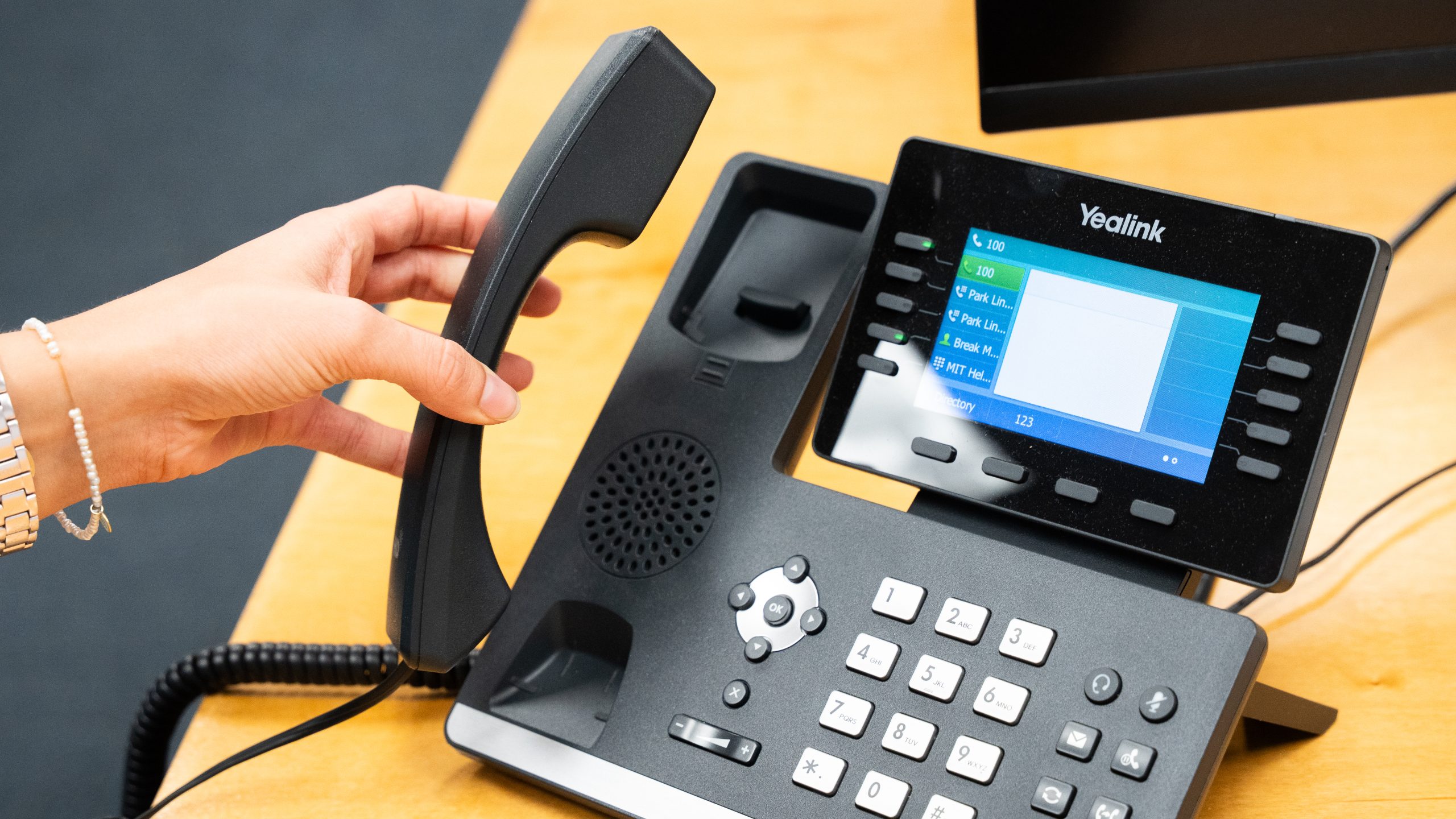

A small office can outgrow a single desk phone quickly. Calls need to reach different rooms, staff members need to transfer conversations, and nuisance callers should not interrupt the workday. The right system also has to match the kind of service you already use, since a four-line analog console and a cloud VoIP bundle are very different purchases.
Our picks for the Best business phone systems cover both sides of that divide. The AT&T DLP73590 is the strongest all-around choice for a conventional landline setup, while the Mission Machines G400C is the clear option for teams ready for hosted VoIP features. The rest range from compact two-line systems to expandable four-line office hardware.
Comparison of the 10 Best Business Phone Systems
| # | Product | Award | Lines | Handsets or stations | Standout features | Best for |
|---|---|---|---|---|---|---|
| 1 | AT&T DLP73590 5-Handset | Best overall | Not specified | 5 handsets | 5-inch color display, call blocking, Bluetooth | Offices needing broad room-to-room coverage |
| 2 | VTech AM18447 4-Line Console | Best for growing offices | 4 | Up to 10 stations | Auto attendant, 180-minute answering system, music on hold | Small businesses adding extensions |
| 3 | Panasonic KX-TG9582B 2-Line | Best for smartphone integration | 2 | 2 handsets | Link2Cell, USB Outlook calling, three-way conference | Offices blending mobile and landline calls |
| 4 | VTech DS6151-2 | Best expandable two-line system | 2 | 2 handsets, up to 12 total | Separate mailboxes, conference calling, fax support | Small offices that need more handsets later |
| 5 | Mission Machines G400C | Best VoIP bundle | 3 service lines included | 4 phones | Auto attendant, call routing, recording capable | Teams moving to cloud phone service |
| 6 | Panasonic KX-TGF882B | Best corded and cordless mix | Not specified | 2 cordless handsets plus base | Link2Cell, call recording, 3.4-inch display | Offices wanting a dependable base station |
| 7 | VTech 80-0328-00 4-Line | Best conference-focused system | Up to 4 | Not specified | Conference calling, DECT 6.0, monochrome LCD | Teams that regularly conference at the desk |
| 8 | AT&T TL88102BK 2-Line | Best for multilingual offices | 2 | 3 handsets, up to 12 total | Four-way conferencing, adjustable display, trilingual menus | Offices sharing lines across many rooms |
| 9 | AT&T DLP73490 4-Handset | Best compact AT&T setup | Not specified | 4 handsets | 5-inch color display, Bluetooth, smart call blocking | Smaller teams wanting the DLP interface |
| 10 | Panasonic KX-TGD832M | Best simple cordless system | Not specified | 2 handsets | Call recording, scam alert, high-contrast controls | Basic reception and back-office calling |
1. AT&T DLP73590 5-Handset: Best Overall

Pros
- Five handsets cover several rooms
- Large color display makes setup less frustrating
- Smart call blocking and one-touch blocking
- Bluetooth connects compatible smartphones
- Conference and intercom support are useful for teams
Cons
- The product information does not specify line capacity
- The base takes up more room than a basic cordless phone
- It is designed for conventional phone service, not hosted VoIP
Best for: offices that want extensive cordless coverage and a friendly central control screen.
The AT&T DLP73590 is the easiest system here to recommend when the main problem is getting reliable phone access around an office. Five cordless handsets are included, so a reception desk, private office, stockroom, and additional work areas can share the same base without requiring a phone at every location. The 5-inch color display is the feature you notice first. It gives the base a more approachable control surface than the small monochrome screens used by many conventional cordless systems.
The display is not just decorative. Soft keys along the screen let staff reach messages, call history, contacts, and other functions without digging through a dense menu. Personalized shortcuts make frequently used actions available with one touch. That matters in a busy office where answering a call, checking a message, or reaching a directory should not feel like operating an old piece of office equipment.
AT&T also gives this model the practical call handling tools a small team usually needs. The base can conference with an outside line and up to four cordless handsets, while intercom calling works between the handsets and base. DECT 6.0 is intended to provide long-range coverage and filter interference, and Bluetooth Connect to Cell lets the system handle calls from compatible smartphones. The smart call blocker can stop robocalls before they ring, with one-touch blocking for numbers that get through and storage for up to 1, 000 names and numbers.
The weakness is that the supplied information does not identify the line count, so this is not the right pick for a company that must actively manage several separate business lines. The base is also larger than a minimalist home-office phone. For offices that need formal four-line auto attendant functions, the VTech AM18447 is more capable. For most teams with one conventional service line and several rooms to cover, though, the DLP73590 has the best blend of usability and reach.
2. VTech AM18447 4-Line Console: Best for Growing Offices

Pros
- Handles four analog lines
- Expandable to 10 stations
- Auto attendant routes callers to extensions
- 180 minutes of shared answering capacity
- Custom music on hold
Cons
- The listed configuration is a main console
- It needs analog RJ11 lines
- The display is less modern than AT&T's color screen
Best for: a small company that expects to add extensions and wants structured call routing.
The VTech AM18447 is a proper small-business console rather than a home cordless phone adapted for office use. Its defining feature is four-line operation, which gives a team room to separate customer calls, internal business lines, or different departments. The main console connects to analog lines through RJ11, while compatible cordless handsets and desksets pair wirelessly using DECT 6.0.
Expansion is the reason to choose this model over a simpler two-line system. VTech says the console can grow to 10 stations by adding up to nine cordless handsets or desksets. That lets a new office start with a central point of control and add rooms as staffing changes, instead of replacing the phone system when the first few extensions become crowded.
The auto attendant is more significant than the extra line count. It can answer each of the four lines, offer a directory, route callers to extensions, and record voicemail. The digital answering system provides up to 180 shared minutes for messages, announcements, and memos. Full-duplex speakerphone support, a 100-name phonebook, 32 speed dials, intercom, and a 2.5mm jack for custom music on hold fill out the feature set in ways that matter at a reception desk.
The setup requirement is also the main limitation. This is built around analog phone service, not a cloud account or a network-based VoIP platform. The main console is supplied as the core unit, so buyers should plan the station layout before ordering accessories. The AT&T DLP73590 is simpler for a cordless-first office, but the AM18447 is the better fit when four lines, extension routing, and future growth are central to the job.
3. Panasonic KX-TG9582B 2-Line: Best for Smartphone Integration

Pros
- Supports two lines
- Link2Cell pairs up to four smartphones
- Corded base and two cordless handsets
- Three-way conferencing
- USB support for Outlook calling
Cons
- The 1.8-inch handset display is small
- This is an older design than several newer picks
- Expansion is less clearly defined than on VTech systems
Best for: a home office or small business that needs mobile calls available from landline-style handsets.
The Panasonic KX-TG9582B makes the most sense for a business where the phone service is split between conventional lines and smartphones. It includes a corded base and two cordless handsets, so there is a stable desk location as well as mobility around the office. The two-line design suits a small reception area or home office that needs to keep separate calls active.
Its Link2Cell feature is the standout. Up to four smartphones can connect by Bluetooth, allowing calls from those phones to be answered through the Panasonic handsets. That can spare staff from passing a mobile around the room or keeping a personal phone beside every desk. It is a different approach from the cloud-service features of the Mission Machines G400C, but it can be more straightforward for a small team that already relies on mobile numbers.
The system supports three-way conferencing between the corded phone and two cordless phones. Panasonic also lists noise reduction to suppress background interference and enhance voice tones. Talk time is specified at up to 15 hours, with standby time up to seven days. The 1.8-inch full-dot monochrome LCD has a 103 by 65 pixel resolution, and USB connectivity supports making calls to Outlook contacts from a business or home-office PC.
This model has a more dated interface than the AT&T DLP73590, whose 5-inch color base display is easier to navigate. It also lacks the VTech AM18447's four-line auto attendant and ten-station expansion path. Choose the KX-TG9582B when smartphone integration and a corded base matter more than a large extension system. It is especially well suited to a small office where several people need access to the same mobile contacts.
4. VTech DS6151-2: Best Expandable Two-Line System

Pros
- Separate answering mailboxes for two lines
- Expandable to 12 handsets
- Conference calling on both lines
- Base and handsets have speakerphones
- Wall-mountable design and fax support
Cons
- The answering system records only 13 minutes
- It has a smaller directory than the AM18447
- It lacks smartphone integration
Best for: offices that need two lines now and many cordless locations later.
The VTech DS6151-2 is a sensible middle ground for a two-line office. It starts with two handsets and a base, but its real appeal is the ability to add DS6101 accessory handsets until the system reaches 12 total. That makes it useful for a small workspace with several rooms, particularly when running new wiring is impractical.
Separate mailboxes for the two lines keep messages from getting mixed together. The digital answering system records up to 13 minutes, which is adequate for ordinary office messages but far less than the 180 shared minutes available from the VTech AM18447. Caller ID, call waiting, a 50-name and number directory, and remote answering-system access cover the everyday essentials.
DECT 6.0 communication is intended to reduce interference and provide a wider cordless range without relying on Wi-Fi. Both the base and handsets include speakerphones, and conference calling is supported on both lines. The system can also work with one or two lines and supports fax use, a useful detail for offices that still receive documents over a phone line.
The DS6151-2 does not offer Link2Cell, Bluetooth, or the business auto attendant found on the AM18447. Its menus and displays also feel more utilitarian than those on the newer AT&T DLP73590. Those trade-offs are acceptable when the priority is adding handsets around an office without moving to a more elaborate system. It is the pick for a two-line layout that may eventually need coverage in nearly every room.
5. Mission Machines G400C: Best VoIP Bundle

Pros
- Four Grandstream GXP2615 phones are included
- Cloud service supports office, mobile, and PC access
- Automated attendant and flexible call routing
- Call recording and contact-center capabilities
- Wi-Fi support and US-based technical support
Cons
- Ongoing service is required after the included period
- It depends on network connectivity
- It is more involved than a conventional cordless system
Best for: offices that want hosted VoIP features instead of analog lines and cordless handsets.
The Mission Machines G400C is the only genuinely cloud-oriented system in this group, and it should be considered on a different track from the other nine. It combines a G400C business phone server with four Grandstream GXP2615 phones and a Z-Cloud phone service plan. The service supports office, mobile, and PC use, giving a distributed team more flexibility than a handset system tied to one base.
The feature list is much closer to a traditional PBX. Automated attendant menus, flexible call routing, forwarding, conferencing, call logs, internal paging, intercom, hold, call park, and music on hold are included in the stated service package. The system is also described as contact-center capable and call-recording capable. For a business that needs callers routed by department or staff working from multiple places, those controls are more useful than a large cordless display.
Installation is described as plug and play after connecting the system to a network by wired or Wi-Fi connection. A business can port an existing number or receive an assigned number. The bundle includes service for three lines during its initial included period, with unlimited calling to the US and Canada stated as part of the service. The listing also describes smartphone access controls and live answer options, along with US-based technical support during weekday hours.
The catch is fundamental: this is not a one-time phone purchase. Continued use depends on the cloud subscription, and the office needs a reliable network connection. That makes it a poor match for a shop that simply needs two analog lines and a few handsets. Readers comparing cloud options should also consider how hosted calling changes the way a small office handles extensions. Pick the G400C when call routing, remote access, and PBX-style controls justify moving away from conventional phone hardware.
6. Panasonic KX-TGF882B: Best Corded and Cordless Mix

Pros
- Corded base plus two cordless handsets
- Link2Cell supports two smartphones
- Automated and one-touch call blocking
- Two-way call recording
- Large 3.4-inch tilting base display
Cons
- Line capacity is not specified
- The base is fairly large
- It is not an auto attendant system
Best for: small offices that want a dependable corded anchor with mobile access and cordless reach.
The Panasonic KX-TGF882B is built around a useful office compromise. The corded base remains available during a power interruption affecting the cordless handsets, while two cordless units let staff answer from another room. That combination works well at a reception desk, in a home office, or anywhere a fixed primary station is desirable.
Link2Cell pairs up to two smartphones with the system. Calls from those phones can be handled from either the cordless handsets or the corded base, which is convenient when a business number lives on a mobile device. The base has a 3.4-inch tilting LCD, one-touch dialing buttons, and a large red call-block button. Those physical controls are easier to find than a tiny menu option when a nuisance call arrives.
Panasonic includes a layered call-blocking system. Automated Call Block can pre-block robocalls, Telemarketing Call Block can challenge announced callers, and the one-touch button can add as many as 1, 000 additional blocked numbers. Two-way recording is another office-friendly feature, with a dedicated recording start button that can help preserve important conversations and discourage nuisance callers. The full-duplex speakerphone and caller announcements in English or Spanish add to its accessibility.
The specifications do not identify the number of phone lines, so this should not be treated as a replacement for the four-line VTech AM18447. The AT&T DLP73590 has a more polished color interface and more handsets in its package. Panasonic's KX-TGF882B is the better choice when the corded base, smartphone pairing, and call recording matter more than extension management.
7. VTech 80-0328-00 4-Line: Best Conference-Focused System

Pros
- Supports up to four lines
- Conference phone functionality
- DECT 6.0 audio technology
- Monochrome LCD is easy to read
- Designed for expanded office calling
Cons
- The listing gives few setup details
- The display is monochrome
- Station and handset capacity are not specified
Best for: businesses that put group calls and multiple line access ahead of advanced routing.
The VTech 80-0328-00 is the least fully documented system in this roundup, but its core purpose is clear. It is a four-line business phone with conference functionality, aimed at offices where several participants need to speak at once. That makes it more relevant to a meeting-heavy workplace than a basic two-handset cordless package.
Its support for up to four lines gives a team more room to separate incoming calls. DECT 6.0 is intended to provide clear, buzz-free digital communication, while the monochrome LCD keeps caller and system information visible without adding a complicated interface. The silver and black hardware has a conventional office appearance rather than the look of a consumer cordless phone.
The product data does not specify how many handsets or stations are included, nor does it describe an expansion limit. That matters because the VTech AM18447 offers a clear ten-station path and explains its auto attendant in detail. This model is easier to consider as a conference and line-management appliance than as a fully documented multiroom platform.
That lack of detail is the reason it ranks below the more versatile VTech system. It also does not list Bluetooth, smartphone integration, call blocking, or cloud access. Buyers should choose it when four-line handling and conference calls are the defining needs, and should verify the intended station configuration before committing to a larger office rollout.
8. AT&T TL88102BK 2-Line: Best for Multilingual Offices

Pros
- Two-line operation
- Three handsets included
- Expandable to 12 handsets
- Up to four-way conferencing
- English, Spanish, and French menus
Cons
- No Bluetooth smartphone connection is listed
- The system has an older interface
- It offers fewer line-management tools than the AM18447
Best for: offices that need many cordless locations and trilingual menu support.
The AT&T TL88102BK focuses on the practical needs of a two-line office with several rooms. Three handsets are included, and the system can expand to 12 handsets. That gives it a useful path for a business that wants to place phones throughout a workspace without immediately adopting a full PBX.
Four-way conferencing is supported, and dual caller ID and call waiting help staff distinguish activity on the two lines. The extra-large LCD has an adjustable tilt, which is helpful when the base sits on a reception counter rather than a standard desk. DECT 6.0 is intended to provide interference-free communication, enhanced security, and broader cordless coverage.
The trilingual menu support is the feature that separates this AT&T from the other two-line options. English, Spanish, and French menus can make a shared phone system less confusing for a multilingual staff. It also supports the ordinary office essentials, including an answering system and expandable cordless operation.
This system is less sophisticated than the AT&T DLP73590, whose large color display, Bluetooth connection, and smart call blocker are more current. The VTech DS6151-2 also offers a larger expansion ceiling and separate mailboxes. Still, the TL88102BK remains a good fit when four-way conferencing and language support are more important than mobile integration.
9. AT&T DLP73490 4-Handset: Best Compact AT&T Setup

Pros
- Four cordless handsets included
- Large 5-inch color base display
- One-touch feature shortcuts
- Conference and intercom calling
- Smart call blocker and Bluetooth
Cons
- It has one fewer handset than the DLP73590
- Line capacity is not specified
- It lacks the formal auto attendant of the VTech AM18447
Best for: smaller offices that want AT&T's large-screen cordless experience.
The AT&T DLP73490 is nearly the same idea as our top pick, but it includes four handsets instead of five. That makes it a natural choice for a smaller team that wants the same central control experience without needing coverage in quite as many locations. The 5-inch color display remains the main attraction, with soft keys at the sides and bottom for quick access to phone functions.
One-touch shortcuts can be assigned to contacts, messages, call history, timers, and other frequently used functions. The system also supports conference calling between an outside line and up to four cordless handsets, as well as intercom calling between the base and handsets. DECT 6.0 and the stated antenna and noise-filtering design are intended to improve range and voice clarity.
Smart Call Blocker is useful for an office number that attracts robocalls. The system can block robocalls automatically, add numbers with one touch, and store up to 1, 000 names and numbers on the block list. Bluetooth Connect to Cell adds a way to bring compatible smartphone calls through the cordless system, which separates this model from the older AT&T TL88102BK.
The trade-off against the DLP73590 is simple: one fewer handset. The difference may be unimportant in a compact office, but the five-handset model is the stronger choice for a larger floor plan. Neither model specifies line capacity, so businesses with multiple analog lines should look toward the VTech AM18447 instead. The DLP73490 suits teams that want a clean, accessible cordless setup with four handsets and modern call control.
10. Panasonic KX-TGD832M: Best Simple Cordless System

Pros
- Two cordless handsets
- Advanced robocall and telemarketing blocking
- Two-way call recording
- One-ring scam alert
- Illuminated keypad and speed dial
Cons
- It is not a multi-line business console
- The display and controls are more basic
- Smartphone integration is not listed
Best for: a reception area, home office, or back office that needs straightforward cordless calling.
The Panasonic KX-TGD832M is the simplest product here, and that is exactly why it can work well in a small office. It includes two cordless handsets and focuses on answering calls, blocking unwanted callers, and making common contacts easy to reach. It is better suited to a reception room or home workspace than to a company that needs several managed lines.
Its call-blocking features are unusually complete for a compact cordless system. Automated Call Block can pre-block robocalls, Telemarketing Call Block can block announced callers, and a one-touch button can add up to 1, 000 more blocked numbers. A one-ring scam alert displays a confirmation screen before a suspicious callback, a useful safeguard on a shared office phone.
Panasonic also includes two-way recording. The phone announces “Start Recording” when recording begins, which can preserve a conversation and deter suspicious callers. Illuminated keys with large characters help in dim rooms, while speed dial gives quick access to frequently called contacts. The wall-mountable design can keep a handset in a convenient fixed location.
This is not a competitor to the VTech AM18447 or Mission Machines G400C for line routing and extensions. It also does not list Link2Cell, unlike the Panasonic KX-TGF882B. For a basic two-handset setup, though, the KX-TGD832M keeps the controls understandable and puts more attention on nuisance-call protection than many office phones do.
How to choose best business phone systems
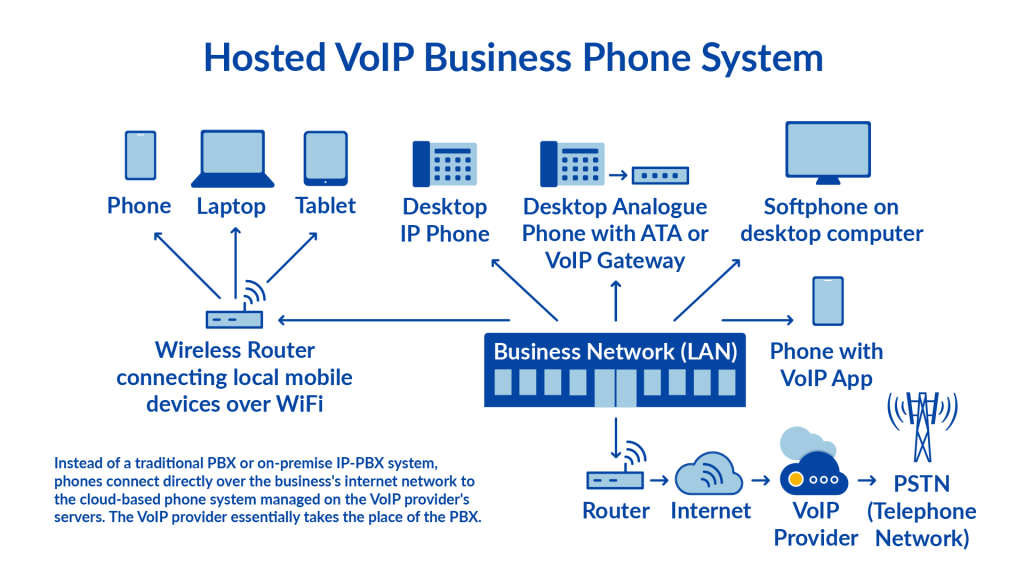
Start by deciding whether your office needs analog line management, cordless room coverage, or cloud-based calling. The right Best business phone systems shortlist depends on that infrastructure choice before handset count or display design enters the discussion.
Line capacity and service type
A two-line phone system is enough for a small office with separate business and fax lines, but it cannot replace a four-line console when several departments need dedicated access. The VTech AM18447 and VTech 80-0328-00 are the clearest four-line options here. The Mission Machines G400C is different because it uses network-connected VoIP service rather than conventional analog lines.
Check what service reaches the office before ordering. Analog systems use phone-line connections such as RJ11. A cloud system needs network connectivity and an active service account. Mixing those assumptions is the fastest way to choose the wrong hardware.
Handset and station expansion
Count the rooms that need a phone today, then consider how many may need one later. The AT&T DLP73590 includes five handsets, the DLP73490 includes four, and the VTech DS6151-2 can expand to 12 handsets. The AM18447 can grow to 10 stations with compatible handsets or desksets.
Expansion is not just a number. Confirm that the additional units match the base system and that cordless coverage will reach the rooms where staff actually work. If most calls stay at reception, a corded base with two cordless handsets may be more practical than a large expansion plan.
Call routing and conferencing
Basic conference calling lets several people join one conversation. Auto attendant and flexible routing go further by answering callers, presenting extension choices, and directing calls without a receptionist handling every transfer. The AM18447 and G400C are the strongest choices for structured routing.
For a team that mostly needs occasional group calls, the AT&T and Panasonic systems may be sufficient. The VTech DS6151-2 supports conferencing on both lines, while the AT&T TL88102BK supports up to four-way conferencing. Choose based on the way calls flow through the office, not simply on the presence of a speakerphone.
A four-line system is not automatically a better office system if your business has no reason to separate four conversations.
Call blocking and recording
Robocall protection matters when a public office number attracts frequent interruptions. AT&T's Smart Call Blocker and Panasonic's automated blocking tools can reduce unwanted ringing. Panasonic also adds one-touch blocking and, on several models, two-way recording.
Recording features should be reviewed against your workplace policies and local requirements. They are useful for preserving instructions or confirming details, but a phone that records calls is not a substitute for a formal compliance process.
Mobile and remote access
Link2Cell lets compatible smartphones use a Panasonic base and handsets for calls. That is useful when a small business's important numbers live on mobile devices. Bluetooth and Connect to Cell give the AT&T DLP73590 and DLP73490 a similar advantage.
VoIP takes remote access further. The G400C supports office, mobile, and PC use through its cloud service, with call forwarding, logs, automated attendant features, and flexible routing. Readers weighing that shift should first consider which calling features a small remote team actually needs.
Frequently asked questions
Are these systems compatible with VoIP service?
Most of the cordless and multi-line products listed here are designed around conventional phone service, and their supplied information does not promise compatibility with every VoIP adapter. The Mission Machines G400C is the dedicated cloud VoIP option. Check your provider's supported hardware list before connecting an analog system to an adapter.
Which system is best for several office rooms?
The AT&T DLP73590 includes five handsets, making it the strongest ready-to-use choice for broad room coverage. The VTech DS6151-2 is more attractive if you want to start with two handsets and expand toward 12. The VTech AM18447 is better when desksets, extension routing, and four separate lines matter.
Do any of these phones connect to smartphones?
Yes. The AT&T DLP73590 and DLP73490 offer Bluetooth Connect to Cell. The Panasonic KX-TG9582B supports Link2Cell for up to four smartphones, while the KX-TGF882B supports up to two.
Which phone system has an auto attendant?
The VTech AM18447 includes a professional auto attendant for each of its four lines. The Mission Machines G400C also includes automated attendant and flexible call-routing features through its cloud phone service. The other systems focus on handset calling, conferencing, answering, and call blocking.
Can these systems block robocalls?
Several can. The AT&T DLP73590 and DLP73490 list Smart Call Blocker, while the Panasonic KX-TGF882B and KX-TGD832M list automated blocking, telemarketing blocking, and one-touch number blocking. Blocking behavior varies, so important callers should be added to contacts or allowed lists where the system supports them.
Which models include call recording?
The Panasonic KX-TGF882B and KX-TGD832M include two-way recording. The Mission Machines G400C is described as call-recording capable. Recording laws vary by location, so confirm the applicable consent requirements before using the feature for business calls.
Is a cordless phone system enough for a growing company?
It can be if the company has a small number of conventional lines and mainly needs phones in different rooms. A growing team that needs extension directories, automated routing, call parking, or remote staff access will usually be better served by a PBX-style or cloud VoIP system. A guide to the practical differences between home and office landline setups can help clarify that boundary.
The bottom line
The Best business phone systems pick for most conventional small offices is the AT&T DLP73590 5-Handset. Its 5-inch color base display, five included handsets, intercom, conferencing, Bluetooth, and call blocking make it unusually easy to manage without giving up useful office features. Choose the VTech AM18447 instead when four analog lines, auto attendant routing, and expansion to 10 stations are more important.
The Mission Machines G400C is the specialist choice for a business ready to use cloud VoIP. It brings automated attendant menus, flexible routing, mobile and PC access, and PBX-style controls that the cordless systems cannot match. It also requires an ongoing service plan and a reliable network connection.
If you are undecided, choose the AT&T DLP73590 for a conventional multiroom office, or the Mission Machines G400C only when you specifically want cloud-based calling.
As an Amazon Associate we earn from qualifying purchases.