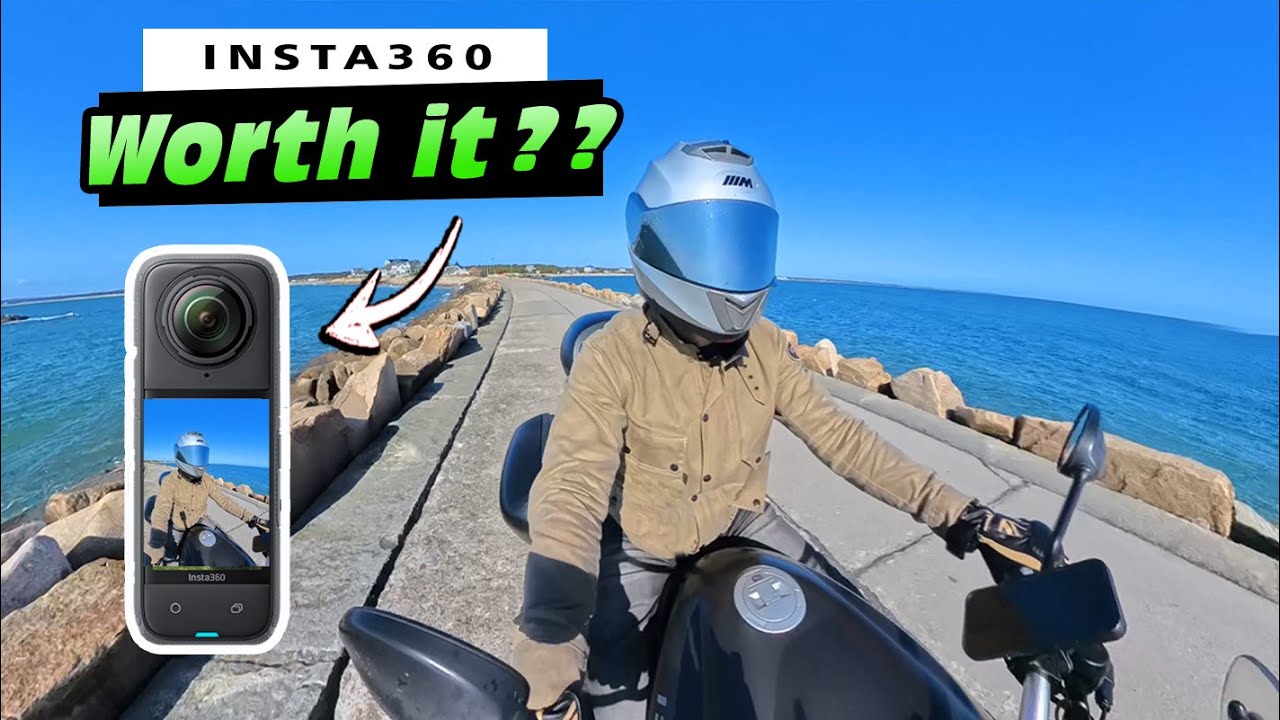

You strap a camera to your helmet to capture the lean, the horizon, the road unfurling. But the wrong one delivers shaky files, a dead battery halfway through the twisties, or a mount that catches the wind like a sail. The best camera for motorcycle riding needs to survive vibration, weather, and your own impatience with fiddling.
We sorted through the current crop of action cameras, mini body cams, and dedicated motorcycle POV kits to find the ones that actually earn a spot on your helmet. The AKASO 360, with its 5.7K 360 video and invisible selfie-stick trick, is the most creative tool here. But the MUFU V40S, with a dual-camera setup and an eight-hour battery, is the one we would trust for a full day of touring. Nine cameras, nine different trade-offs.
| # | Product | Award | Resolution | Stabilization | Battery Life | Best for |
|---|---|---|---|---|---|---|
| 1 | AKASO 360 | Best overall | 5.7K 360 | 360-SuperSmooth, 360 Horizon Lock | ~1.5 hours | Creative 360 shots and third-person POV |
| 2 | AKASO 360 (256GB) | Best for long shoots | 5.7K 360 | 360-SuperSmooth, 360 Horizon Lock | ~1.5 hours | Same camera with extra storage included |
| 3 | MUFU V40S | Best for all-day rides | 2K dual front/rear | EIS | Up to 8 hours | Long-distance touring and dual-angle recording |
| 4 | CAMWORLD 4K Mini | Best for social sharing | 4K | 6-axis EIS | ~150 minutes | YouTube and TikTok creators who want vertical mode |
| 5 | acgiewo 4K Mini | Best lightweight | 4K | 6-axis EIS | ~150 minutes | Riders who want the smallest, lightest wearable |
| 6 | JETO 4K Mini (64GB) | Best compact 4K | 4K | EIS | ~2 hours | Budget-conscious 4K without sacrificing quality |
| 7 | JETO 4K Mini 128GB | Best 4K with extra storage | 4K | EIS | ~2 hours | Riders who want more onboard recording space |
| 8 | JETO 1080P Mini 128GB | Best for clear 1080P | 1080P | EIS | ~2 hours | Simple, reliable POV recording without the 4K file size |
| 9 | zakotu 1080P Thumb | Best ultra-compact | 1080P | None | ~120 minutes | Riders who want the smallest, simplest camera possible |
1. AKASO 360: Best overall

Pros
- Stunning 5.7K 360 video that you can reframe later
- Horizon Lock keeps the horizon level even when you flip the camera
- Invisible selfie-stick effect creates third-person shots without a second person
- AI subject tracking for keeping the rider centered
Cons
- Battery life is short for a full day of riding (around 90 minutes)
- The 360 footage requires editing in the AKASO 360 Studio app
Best for: riders who want to shoot first and choose the angle later, especially for creative Instagram or YouTube content.
The AKASO 360 is the most unusual camera in this roundup, and it is also the most fun. Instead of a fixed lens, it uses two 1/2-inch 48MP sensors facing opposite directions to capture a full 360-degree sphere of video. You mount it on top of your helmet, press record, and later you can pan and zoom inside the footage as if you had a camera operator following you. The effect is especially dramatic on a motorcycle: you can reframe from a front view to a rear view of the road behind you, or swing the camera around to show the tachometer and your own face.
The 360-SuperSmooth stabilization is impressive. It flattens the head bob and wind vibration that normally ruin helmet-mounted footage, and the 360 Horizon Lock means the horizon stays level even when you lean the bike into a corner. For a rider who wants to capture the full experience of a canyon road, this is the camera that does it best. The invisible selfie-stick effect works exactly as advertised: the thin stick that holds the camera above your helmet disappears from the final video, giving you a clean third-person shot without needing a separate camera or a second person.
But the battery life is a real limitation. About 90 minutes of continuous recording means you will need to swap batteries on a long ride, and the camera does not record while charging. The AKASO 360 Studio software is required to reframe and export the 360 footage, and the learning curve is steeper than a simple flat video editor. If you just want to record the road ahead without editing, the MUFU V40S is a better fit. But if you enjoy the creative process and want footage that looks like a video game cutscene, the AKASO 360 is the one to get.
2. AKASO 360 (256GB): Best for long shoots

Pros
- Same excellent 360 camera as the standard version
- Comes with a 256GB microSD card so you can record immediately
- No need to buy a separate card
Cons
- Same short battery life
- Same need for the AKASO 360 Studio app
Best for: riders who want the AKASO 360 and a large storage card included in one box.
This is the same AKASO 360 camera as the standard version, bundled with a 256GB microSD card. The hardware is identical: dual 48MP sensors, 5.7K 360 video, 360 Horizon Lock, and the invisible selfie-stick effect. The 256GB card gives you about 6 hours of 5.7K footage, which is far more than the camera's battery can handle in one go, but it means you can swap batteries without worrying about storage. For a multi-day trip where you plan to edit later, the convenience of a card already in the slot is worth the bundle.
The weaknesses remain: the battery is the same 90-minute runtime, and the footage still needs desktop software to reframe. If you already own fast microSD cards, the standard version might be enough. If you are starting from scratch, this bundle saves you a separate purchase. In terms of image quality and creative flexibility, it is the same league as the standard version, and it remains the best camera for motorcycle riding for anyone who wants to shoot 360.
3. MUFU V40S: Best for all-day rides

Pros
- Dual 2K cameras capture front and rear simultaneously
- 4000mAh battery lasts up to 8 hours
- IP66 waterproof rating, no housing needed
- Loop recording with emergency lock on tilt detection
Cons
- Larger and heavier than mini body cameras
- 2K resolution is below the 4K offered by some competitors
Best for: riders who want a dedicated motorcycle dash cam with long battery life and dual-angle coverage.
The MUFU V40S is the closest thing to a car dash cam engineered for a motorcycle helmet. It uses two separate camera modules: one points forward, one points rearward, each recording in 2K at 30 fps. The large F1.7 aperture and low-light sensor mean you get usable footage even at dusk or in tunnels, which is where many action cameras turn to noise. The main unit clips to the side of your helmet, and the rear camera module rides on the back of the helmet or on the tail of the bike. The result is a complete record of your ride, front and back, without having to manually rotate a single camera.
The 4000mAh battery is the standout feature. At 8 hours of continuous recording, this camera can outlast a full day of riding, even if you stop for lunch. It also supports loop recording, so it automatically overwrites the oldest footage, and the tilt detection locks the current clip if it senses a potential crash. That is a genuine safety feature. The IP66 rating means it resists rain and dust without a waterproof case, which is a convenience over the JETO and CAMWORLD cameras that need a case for wet weather.
The trade-off is size. The V40S is not a thumbnail camera. It is a rectangular block that sits on the side of your helmet, and it adds noticeable weight. If you prefer a tiny, unobtrusive camera, the acgiewo or CAMWORLD mini options are better. Also, the resolution is 2K, not 4K. For most riding, 2K is plenty sharp, but if you want to crop into the footage later, 4K gives you more flexibility. The MUFU V40S is the best camera for motorcycle riding for anyone who prioritizes battery life and dual-angle coverage over raw resolution.
4. CAMWORLD 4K Mini: Best for social sharing

Pros
- 1.47-inch screen for real-time framing and playback
- 4K video with 6-axis EIS for smooth footage
- 150-degree wide-angle lens
- Lightweight at 44 grams
- Built-in WiFi and 64GB storage included
Cons
- Screen is small but usable
- Battery life is around 150 minutes, not enough for all-day rides
Best for: riders who want to frame shots and review footage on the go, especially for social media content.
The CAMWORLD 4K Mini is the most creator-friendly mini body camera in this list. The 1.47-inch screen lets you see exactly what the lens is capturing before you hit record, which sounds basic but is a feature missing from most thumb-sized cameras. You can also play back clips immediately to check focus and exposure. The 4K video is sharp, and the 6-axis electronic image stabilization does a good job taming the shake from a helmet mount. The 150-degree wide-angle lens captures a broad view of the road, and you can switch between 16:9 landscape and 9:16 portrait modes, which is crucial for TikTok and Instagram Reels.
The magnetic mount is strong enough to hold the camera to a helmet, but the included clip and adhesive mounts give you options for handlebars, chest straps, or a backpack. The built-in WiFi connects to the CAMWORLD app for remote control and file transfer. At 44 grams, you barely notice it on a helmet. The 64GB card is pre-installed, so you can start recording out of the box.
The battery life is about 150 minutes, which is average for this class. That is fine for a morning ride, but you will need to recharge or carry a power bank for a full day. The screen is small, and the touch response is not as snappy as a phone. Still, for a rider who wants to create polished social media content without carrying a full-size action camera, the CAMWORLD 4K Mini is a strong choice. It is a better option for vlogging than the acgiewo because of the screen, and it is lighter than the MUFU if you do not need dual cameras.
5. acgiewo 4K Mini: Best lightweight

Pros
- Extremely light at 35 grams
- 4K recording with 6-axis EIS
- Built-in 1.5-inch screen
- WiFi and Bluetooth for fast pairing and transfer
- Magnetic back plate for quick attachment
Cons
- Battery life is 150 minutes, which is modest
- The 4K EIS can crop the image slightly
Best for: riders who want the lightest possible camera that still records 4K and has a screen.
The acgiewo 4K Mini is nearly identical in size and weight to the CAMWORLD, but it is a few grams lighter. At 35 grams, it is one of the lightest cameras that still offers a 1.5-inch screen and 4K recording. The 6-axis EIS 3.0 stabilization is smooth, and the 150-degree lens captures a wide field of view. The WiFi and Bluetooth combination makes pairing with your phone faster than the WiFi-only cameras, and the app lets you preview and download clips without removing the camera from the helmet.
The magnetic back plate is a neat touch. You can stick the camera to any metal surface on your bike or helmet, and the included mounts give you a 360-degree rotating clip, helmet mount, and waterproof case. The case is needed for wet conditions, which adds bulk. The build quality feels solid, but the buttons are small and can be hard to press with thick gloves.
The acgiewo is a good choice for riders who want the smallest, lightest package that still records 4K. The screen is a bonus over the even smaller zakotu, which has no screen. If you prioritize weight above all else, this is the camera to get. But if you value battery life or dual cameras, the MUFU or CAMWORLD are better bets.
6. JETO 4K Mini (64GB): Best compact 4K

Pros
- 4K video in a compact, clip-on body
- 64GB built-in storage
- 150-degree wide-angle lens
- WiFi app for live view and file transfer
- Waterproof case included
Cons
- No built-in screen; framing is blind or via app
- Stabilization is basic EIS, not as smooth as the CAMWORLD or acgiewo
Best for: riders who want 4K recording in a small package with plenty of onboard storage and don't mind using the app for framing.
The JETO 4K Mini (64GB) is a straightforward POV camera that does not waste space on a screen. The 4K video is clean and sharp, and the 150-degree lens covers a wide swath of the road. The built-in 64GB storage is enough for about 2 hours of 4K footage, which matches the battery life. The magnetic clip-on design attaches to clothing, helmet straps, or the included mounts, and the waterproof case lets you ride in rain without worry.
The stabilization is basic electronic image stabilization. It smooths out the worst of the vibration, but it is not as refined as the 6-axis EIS in the CAMWORLD or acgiewo. If you are mounting the camera directly to a helmet with no vibration dampening, you will see some jitter. The lack of a screen means you have to connect to the WiFi app to frame the shot, which is a minor inconvenience if you set the angle once and leave it.
The JETO 4K Mini is a good entry point for 4K POV recording. It is simpler and cheaper than the AKASO 360, and it records in a standard 16:9 format that does not need special editing. If you are on a budget and want 4K, this is the one to consider. But the lack of a screen and the weaker stabilization are the trade-offs.
7. JETO 4K Mini 128GB: Best 4K with extra storage

Pros
- Same 4K quality as the 64GB version
- 128GB storage for longer recording sessions
- WiFi app control
- Waterproof case and full mounting kit
Cons
- No screen
- Same basic stabilization
Best for: riders who want the JETO 4K experience with more onboard storage to avoid swapping cards.
This is the same JETO 4K Mini camera as the 64GB version, but with double the storage. The 128GB card gives you about 4 hours of 4K footage, which is more than the battery can handle in one go, but it means you can record multiple shorter rides without managing files. The camera is small, clip-on, and includes a waterproof case, magnetic lanyard, helmet mount, and chest strap. The 150-degree wide-angle lens and WiFi app are identical.
The same weaknesses apply: no screen, basic stabilization, and the need to use the app for framing. If you already own the 64GB version, there is no reason to upgrade. If you are buying new and want to minimize the number of times you have to offload footage, the 128GB version is the better choice. It is the best camera for motorcycle riding for budget-minded riders who want 4K resolution and ample storage.
8. JETO 1080P Mini 128GB: Best for clear 1080P

Pros
- 1080P video with good clarity
- 128GB storage included
- WiFi app for live view
- Waterproof case and full mounting kit
- Extremely easy to use
Cons
- Only 1080P, not 4K
- No screen
- Basic stabilization
Best for: riders who want a simple, reliable POV camera without the file size of 4K, and who prefer a large storage card.
The JETO 1080P Mini 128GB is the most straightforward camera in the lineup. It records 1080P video at a steady 30 fps, with a 150-degree wide-angle lens that captures the full width of the road. The 128GB storage is generous for 1080P, giving you roughly 10 hours of footage. The magnetic clip-on design and included mounts make it easy to attach to a helmet, handlebar, or chest strap. The WiFi app provides a live view and remote control, which is useful for framing.
The 1080P resolution is perfectly adequate for ride documentation and social media. It is not as sharp as 4K, but the files are smaller and easier to edit. The stabilization is basic, but at 1080P the camera is less prone to aliasing artifacts. The lack of a screen is the main inconvenience, but the app fills that gap.
If you do not need 4K, the JETO 1080P Mini is a solid choice. It is simpler than the 4K versions and costs less. It is a good camera for a rider who wants to document rides without worrying about storage or editing.
9. zakotu 1080P Thumb: Best ultra-compact

Pros
- Tiny size, easy to hide or mount anywhere
- 120-degree wide-angle lens
- 360-degree rotatable mount
- Can record while charging via USB-C
- Supports up to 512GB microSD cards (not included)
Cons
- No stabilization; footage is shaky on a helmet
- No screen, no WiFi (must use the camera alone)
- Only 1080P, basic quality
Best for: riders who want the smallest possible camera for discreet recording or who plan to mount it on a bike frame where vibration is less of an issue.
The zakotu 1080P Thumb camera is the smallest and cheapest camera in the roundup. It is about the size of a thumb drive, weighing 26 grams, and it clips onto a helmet, collar, or handlebar with a magnetic lanyard or a rotating clip. The 1080P video is acceptable in good light, but it lacks any stabilization. On a helmet, the footage is shaky and can be disorienting. On a handlebar or a bike frame, where the camera is not moving with your head, the image is steadier.
The camera has no screen, no WiFi, no Bluetooth. You set it to record and hope for the best. The 120-degree lens is narrower than the 150-degree lenses on the other cameras, so you get a tighter view. It supports microSD cards up to 512GB, but the card is not included. The USB-C port allows recording while charging, which is a unique feature: you can plug it into a power bank on the bike and record all day.
The zakotu is for the rider who wants the absolute minimum camera. It is not for polished video. It is for evidence, for a quick clip, for a rider who does not want to spend much. If you are serious about image quality, skip it. But if you want a camera that disappears on your helmet and just works, the zakotu is the smallest you can get.
How to choose a camera for motorcycle riding
One framing sentence: The right camera for your bike depends on how you ride, how you edit, and how much bulk you are willing to wear.
Video resolution: 4K vs 1080P vs 360
The resolution determines how much detail you can crop into later. 4K cameras like the CAMWORLD and JETO 4K give you room to reframe in post, which is useful if you want to pull a still frame or zoom in on a sign. 1080P is fine for social media and basic documentation, but you cannot crop without losing quality. The AKASO 360 goes a different route: it captures a full sphere, so you can choose any angle after the fact, but the final exported video is typically 1080P or 4K depending on the reframe. If you are a rider who wants to produce polished videos, 4K or 360 is the way to go. If you just want to record for insurance or memories, 1080P is enough.
Stabilization: why it matters
Motorcycle handlebars and helmets transmit vibration. A camera without stabilization produces footage that is unwatchable. The AKASO 360 has the best stabilization in this test, with 360-SuperSmooth that keeps the horizon level. The CAMWORLD and acgiewo use 6-axis EIS, which is very good. The JETO cameras have basic EIS, which helps but does not eliminate all shake. The zakotu has no stabilization at all. If you mount the camera on your helmet, you need good stabilization. If you mount it on a vibration-dampened handlebar, you can get away with less.
Battery life: matching your ride
The MUFU V40S is the only camera that can last an entire day of riding on a single charge. The others last between 90 minutes and 150 minutes, which is fine for a morning ride but not for a full day. If you do long tours, the MUFU is the best camera for motorcycle riding. If you do short commutes or weekend rides, the smaller cameras are fine. Some cameras can record while charging, which lets you use a power bank. The zakotu and the JETO cameras support this, but the AKASO 360 does not.
The right battery choice is plain: match the runtime to the longest ride you plan to do without a charging stop. If that is four hours, the MUFU is your only option out of the box.
Mounting and form factor
Helmet-mounted cameras catch the wind and add weight. Mini body cameras like the CAMWORLD and acgiewo are light enough to go unnoticed. The AKASO 360 needs a top-of-helmet mount, which is more aerodynamic than a side mount but still protrudes. The MUFU V40S mounts on the side of the helmet with a separate rear camera module. The JETO cameras clip to clothing or straps. The zakotu is the only one that can be completely hidden. Consider whether you want the camera to be visible as a deterrent or invisible for discretion.
Water resistance
If you ride in the rain, you need a camera that can handle it. The MUFU V40S is IP66 rated, so it is fine without a case. The JETO cameras come with a waterproof case that must be used. The acgiewo and CAMWORLD also include a waterproof case. The AKASO 360 is not waterproof, so you must avoid rain or use a separate housing (not included). The zakotu is not waterproof. If you live in a wet climate, the MUFU or a camera with a good waterproof case is essential.

Frequently asked questions
Can I mount a camera on my motorcycle helmet?
Yes, but check local laws. Some states require cameras to be mounted in a specific way that does not obstruct the helmet's integrity. Use adhesive mounts or strap mounts. Avoid drilling into the helmet. The cameras in this roundup come with adhesive mounts and clips that attach without drilling.
What is the best resolution for helmet camera footage?
4K is ideal for cropping and clarity. 1080P is fine for social media and basic use. 360 video is the best for creative flexibility but requires more editing. For most riders, 4K is the sweet spot.
How long does the battery last on these cameras?
Battery life ranges from 90 minutes on the AKASO 360 to 8 hours on the MUFU V40S. Most mini body cameras last about 2 to 2.5 hours. Check the specifications before you ride.
Do I need a waterproof camera?
If you ride in any weather, yes. The MUFU V40S is IP66 rated. The JETO and CAMWORLD cameras include a waterproof case. The AKASO 360 is not waterproof. Consider your local climate.
Can I record while charging?
The JETO cameras, the zakotu, and some others support recording while charging via USB-C. The AKASO 360 does not. This is useful for long rides with a power bank.
Which camera is best for YouTube vlogging?
The CAMWORLD 4K Mini is the best for vlogging because of its screen, vertical mode, and WiFi transfer. The AKASO 360 is also strong if you want creative 360 shots. The MUFU V40S is good for ride documentation but not for on-camera vlogging.
Do I need a microSD card?
Most cameras come with storage: the CAMWORLD has 64GB, the JETO cameras have 64GB or 128GB, the MUFU has 64GB. The AKASO 360 standard does not include a card, but the 256GB bundle does. The zakotu does not include a card. Check the product description.
How do I transfer footage to my phone?
Most cameras have WiFi. The acgiewo also has Bluetooth for faster pairing. Connect to the camera's WiFi network, open the app, and download clips. The AKASO 360 uses the AKASO 360 Studio app for reframing and export.
The bottom line
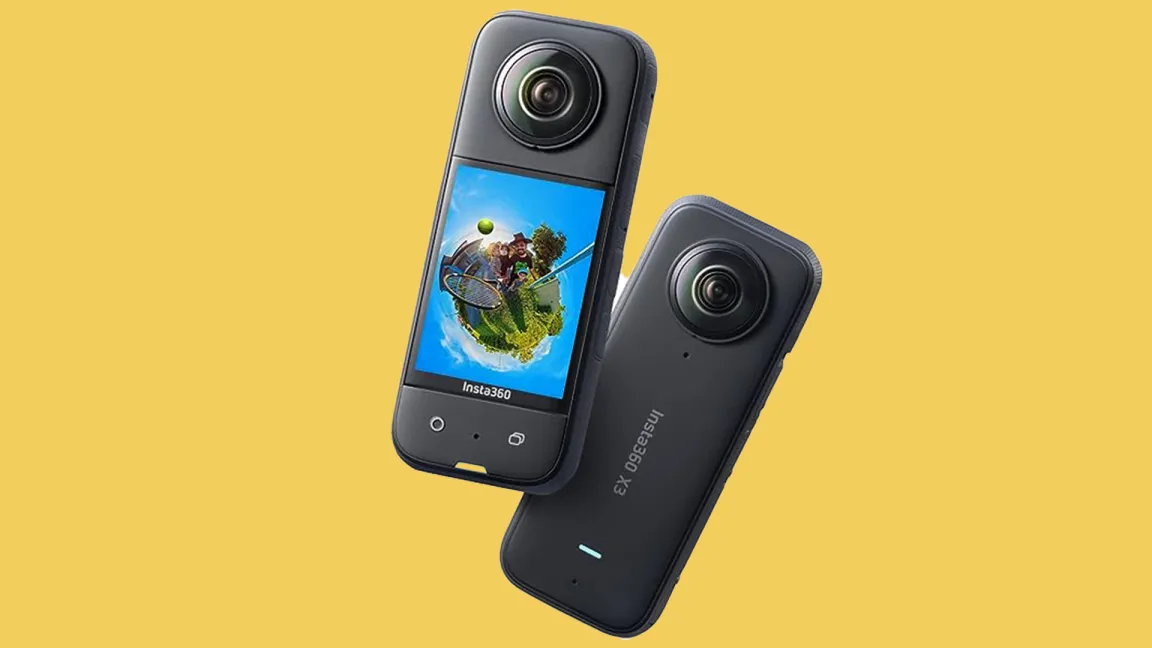
The AKASO 360 is the most creative and impressive camera for motorcycle riding, but it requires editing and has a short battery. The MUFU V40S is the most practical for long rides and safety, with its dual cameras and 8-hour battery. The CAMWORLD 4K Mini is the best balance of size, features, and ease of use for a rider who wants to share footage on social media. If you are looking for the best camera for motorcycle riding and you want a single recommendation, the CAMWORLD 4K Mini is the one that does the most without demanding much in return. For the rider who wants to go all out on a 360 adventure, the AKASO 360 is the one to pick.
As an Amazon Associate we earn from qualifying purchases.