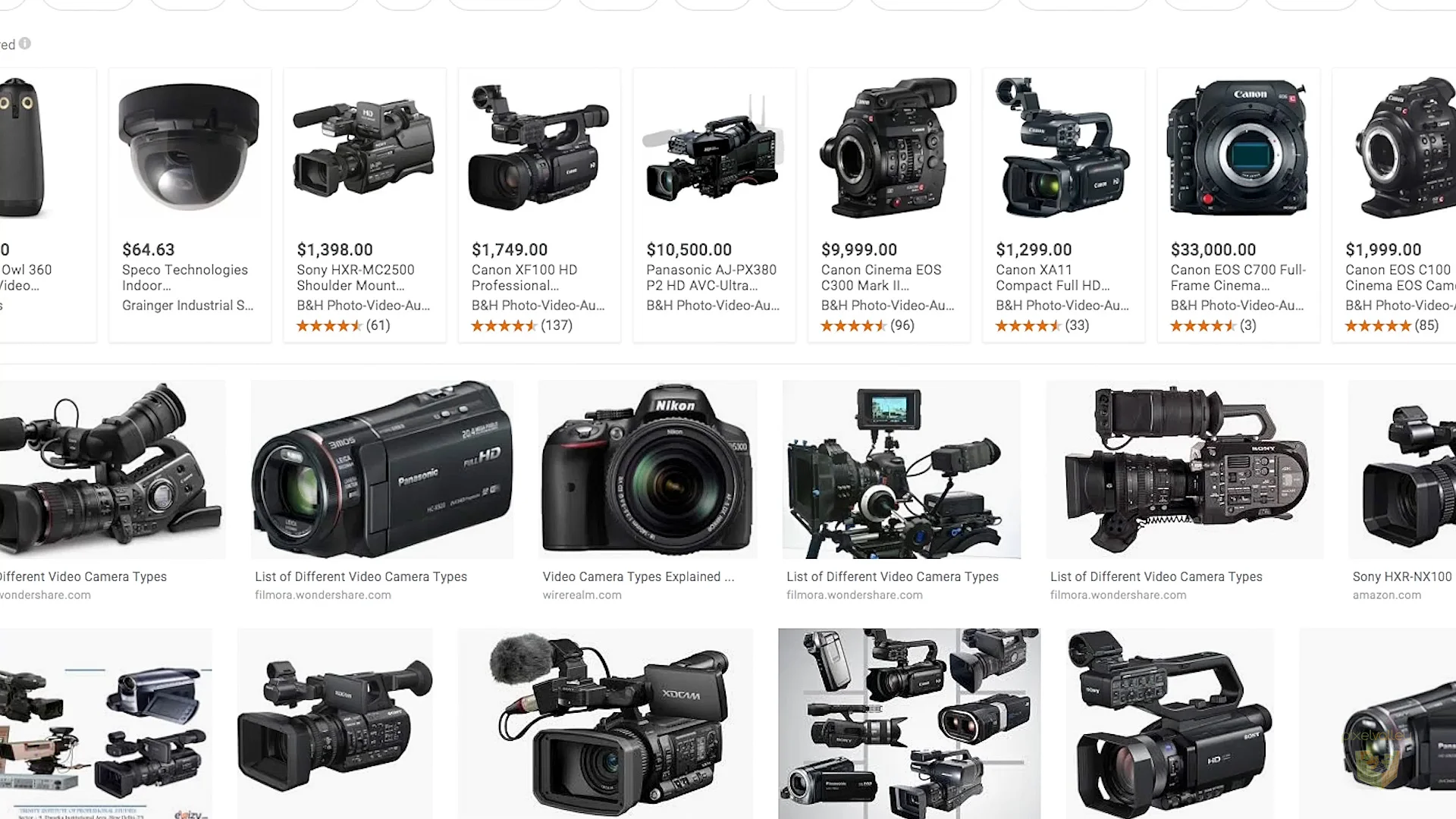

A camera can have impressive resolution and still make videography harder than it needs to be. Shaky handheld footage, unreliable focus, poor low-light performance, and an awkward screen are the problems that show up after the unboxing. The Best camera for videography depends on which of those problems matters most to you.
This list ranges from tiny stabilized cameras that can follow a moving presenter to interchangeable-lens bodies built for controlled productions. The strongest all-rounder is the DJI Osmo Pocket 3 Creator, while the Sony FX30 Cinema Line is the serious filmmaker's pick.
Comparison table
| # | Product | Award | Sensor | Video | Best for |
|---|---|---|---|---|---|
| 1 | DJI Osmo Pocket 3 Creator | Best overall | 1-inch CMOS | 4K at 120fps, 10-bit D-Log M | Vlogging and travel |
| 2 | Sony FX30 Cinema Line | Best for filmmakers | 20.1MP Super 35 | Dual base ISO, 14+ stop range | Narrative and commercial work |
| 3 | Sony ZV-E10 | Best interchangeable-lens starter | 24.2MP APS-C | Oversampled 4K | Creators building a lens system |
| 4 | Sony Alpha a7 IV | Best full-frame hybrid | 33MP full-frame | 4K 60p, 10-bit 4:2:2 | Video and stills |
| 5 | Xtra Muse | Best pocket alternative | 1-inch CMOS | 4K at 120fps, 10-bit X-Log | Solo creators |
| 6 | DJI Osmo Pocket 3 | Best compact kit | 1-inch CMOS | 4K at 120fps, D-Log M | Everyday handheld video |
| 7 | Canon EOS R100 | Best entry mirrorless | 24.1MP APS-C | 4K at 24fps, Full HD at 60fps | New camera owners |
| 8 | Canon EOS Rebel T7 18-55mm | Best simple DSLR kit | 24.1MP APS-C | Full HD | Basic home video |
| 9 | Canon EOS Rebel T7 Double Zoom | Best long-reach kit | 24.1MP APS-C | Full HD 1080p | Distant subjects |
| 10 | FlyFrost 8K Camcorder | Best feature-packed camcorder | Not specified | 8K at 15fps, IR night vision | Casual family recording |
1. DJI Osmo Pocket 3 Creator: Best Overall

Pros
- Three-axis mechanical stabilization smooths walking footage
- 1-inch sensor supports cleaner detail in dim scenes
- Rotating 2-inch screen works for horizontal and vertical video
- ActiveTrack 6.0 keeps a moving subject centered
- Creator Combo includes a DJI Mic 2 transmitter and battery handle
Cons
- Fixed camera limits lens choice and perspective
- Small body offers less physical control than a mirrorless camera
- The most advanced color modes need editing work
Best for: creators who want polished handheld video without assembling a camera rig.
The DJI Osmo Pocket 3 Creator is the camera we would hand to someone who wants to start recording immediately. Its gimbal does the stabilizing mechanically, rather than asking software to crop and correct every step. That makes walking pieces, travel diaries, and moving introductions look composed with very little setup.
Its 1-inch CMOS sensor gives it a meaningful advantage over small-sensor camcorders such as the FlyFrost 8K Camcorder. The headline video mode reaches 4K at 120fps, which is useful for smooth slow motion, while the 10-bit D-Log M mode preserves more color information for grading. The 2-inch screen rotates for horizontal or vertical shooting, so it is practical for both conventional videos and phone-first social clips.
Autofocus is another reason this Pocket 3 ranks so highly. ActiveTrack 6.0 can keep a person centered while the camera is on a tripod, and the fast focusing is less distracting than manually managing a lens. It can also connect directly with two DJI Mic 2 or Mic Mini transmitters. The Creator Combo adds a DJI Mic 2 transmitter, a battery handle, and a small tripod, giving a solo presenter a coherent setup instead of a collection of mismatched accessories.
The limitation is the fixed perspective. The Pocket 3 cannot give you the shallow-focus look or ultra-wide lens options available on the Sony ZV-E10, and its controls are not as production-oriented as those on the Sony FX30 Cinema Line. It is also small enough that extended handling can feel less secure than a conventional grip. Choose it for portability, tracking, stabilization, and speed, not for building a large lens-based system.
For travel, interviews, cooking demonstrations, and daily vlogs, this is the most complete package here. Readers focused specifically on presenter-led work can also consider how a compact setup handles walking and talking footage, since stabilization and subject tracking often matter more than interchangeable lenses.
2. Sony FX30 Cinema Line: Best for Filmmakers

Pros
- Super 35 sensor is designed around serious video production
- Dual base ISO helps maintain low-noise footage
- 14+ stops of latitude supports difficult lighting
- S-Cinetone produces a polished look without immediate grading
- User LUTs can appear on the LCD and HDMI output
Cons
- Lens is not included
- More demanding workflow than a pocket camera
- Heavier and less discreet than the compact picks
Best for: filmmakers who want a dedicated cinema body and room to grow.
The Sony FX30 Cinema Line is the most purpose-built video camera in this group. It does not try to be a tiny vlogging tool or a general-purpose beginner camera. The body is a foundation for a rig, a lens collection, and a repeatable production workflow.
Its 20.1MP Exmor R APS-C sensor uses the Super 35 format familiar from cinema production. The important figure is not the pixel count but the claimed 14-plus stops of dynamic range, which gives bright windows and dark interiors more room to coexist in a shot. Dual base ISO and low-noise performance are useful when lighting cannot be perfectly controlled. Cine EI Quick and Cine EI Log modes also give experienced shooters a more deliberate way to manage exposure and post-production.
Sony includes S-Cinetone for footage that can look refined straight out of the camera, while user LUTs can be applied to the LCD and HDMI output and embedded in clips. That makes the camera flexible for both quick-turnaround work and projects that will spend time in a color-grading application. It is a much deeper video tool than the Canon EOS R100, whose 4K mode tops out at 24fps.
The trade-off is commitment. There is no lens in this listing, and the FX30 makes more sense when the operator understands exposure, lens selection, audio, and editing. It is not the easy choice for a first vlog, where the DJI Osmo Pocket 3 Creator is faster and steadier without extra equipment. The compact body also weighs 1.43 pounds, so a support setup becomes more relevant during long shoots.
Buy the FX30 when image latitude, cinematic color, and a serious production path matter more than pocketability. It is the right foundation for short films, branded work, interviews, and controlled documentary shooting.
3. Sony ZV-E10: Best Interchangeable-Lens Starter
Pros
- 24.2MP APS-C sensor gives footage a flexible starting point
- 4K is oversampled from 6K with full pixel readout
- Product Showcase mode shifts focus from face to object
- Background Defocus button simplifies creator-friendly setup
- USB streaming works without extra hardware or software
Cons
- Mechanical stabilization is not built into the listed features
- The kit lens is less versatile than a broad professional zoom
- Older body than the newest options here
Best for: creators who want an approachable camera with interchangeable lenses.
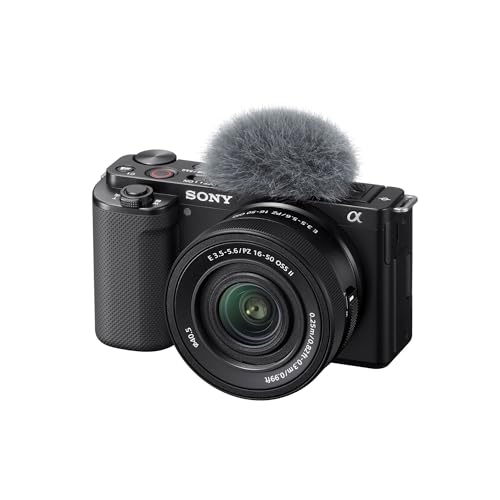
The Sony ZV-E10 gets the basics right for a creator who has outgrown a phone but is not ready for a cinema workflow. It is compact at about one pound, includes a 16-50mm lens, and puts the emphasis on getting a face, product, or talking-head shot recorded without a long setup process.
The 24.2MP APS-C Exmor CMOS sensor and BIONZ X processor support 4K movie recording oversampled from 6K with full pixel readout. That approach matters because the camera starts with more image information before producing the 4K file. The result should retain more fine detail than a basic Full HD camera such as the Canon EOS Rebel T7 18-55mm, while still leaving the owner free to change lenses later.
Sony's creator-focused controls are genuinely useful. Product Showcase Setting shifts focus from the presenter to an object held near the camera, and the Background Defocus button toggles the defocused look without making the user search through menus. USB streaming with one cable also makes the ZV-E10 a practical desk camera for live sessions and video calls.
There are limits. The listed features do not include mechanical image stabilization, so walking footage will not be as naturally smooth as footage from the DJI Osmo Pocket 3. The 16-50mm kit lens is convenient but not a substitute for a fast prime or a specialized wide lens. Its strength is the balance between a familiar mirrorless form and creator-friendly operation.
The ZV-E10 is the sensible first step for YouTube presenters, product reviewers, and small businesses that expect their visual needs to expand. For more control over still images alongside video, the trade-off between a video-first camera and a stills-focused body is worth considering before choosing a lens system.
4. Sony Alpha a7 IV: Best Full-Frame Hybrid

Pros
- 33MP full-frame sensor supports detailed stills and video
- 4K 60p recording uses 10-bit 4:2:2 color
- Real-time Eye AF covers people, animals, and birds
- S-Cinetone and S-Log3 support different production styles
- Included 28-70mm lens handles many everyday perspectives
Cons
- Heavier than the APS-C and pocket cameras
- Full-frame workflow can demand more storage and editing time
- Not as specialized for video as the FX30
Best for: hybrid shooters who need one camera for serious video and photography.
The Sony Alpha a7 IV is the strongest option for someone whose camera has to cover more than videography. Its full-frame body and included 28-70mm lens make it a substantial hybrid kit, and the 33MP Exmor R back-illuminated CMOS sensor gives still photographers plenty of resolution alongside the video features.
For video, the important upgrade is 4K 60p with 10-bit 4:2:2 recording and full pixel readout in all recording formats. Ten-bit color provides more gradation for a demanding grade than the simpler options in the Canon DSLR kits. Sony also includes Focus Map, breathing compensation, S-Cinetone, S-Log3, and HLG, giving the operator choices from quick delivery to a more controlled post-production pipeline.
Real-time Eye AF recognizes humans, animals, and birds for photos and movies. That is helpful for a hybrid user who moves between portraits, events, interviews, and documentary scenes. The 28-70mm lens is a useful general-purpose range, though the kit is less compact than the Sony ZV-E10 and far less effortless than the fixed-lens DJI Osmo Pocket 3 Creator.
The weakness is specialization. The a7 IV is heavier at a listed 3.328 pounds, and its full-frame feature set can make a small casual shoot feel unnecessarily involved. The Sony FX30 Cinema Line is a better fit for a video-only operator who wants cinema-oriented controls and a Super 35 workflow. The a7 IV makes the most sense when stills and video genuinely share the assignment.
Choose this camera for weddings, documentaries, commercial shoots, and creators who photograph as much as they film. It is a long-term hybrid platform rather than the quickest route to a stabilized handheld vlog.
5. Xtra Muse: Best Pocket Alternative

Pros
- 1-inch CMOS sensor supports detailed 4K footage
- Three-axis gimbal stabilizer handles movement
- 2-inch screen switches between horizontal and vertical shooting
- 10-bit X-Log offers room for color grading
- Master Follow keeps a moving subject centered
Cons
- Fixed camera gives less perspective control than a mirrorless body
- Smaller ecosystem than the established interchangeable-lens picks
- Advanced log footage needs a more careful editing workflow
Best for: solo creators who want a pocket gimbal with serious color options.
The Xtra Muse takes the same broad idea as a pocket gimbal camera and adds a surprisingly video-focused feature set. It has a 1-inch CMOS sensor, a three-axis gimbal, and a 2-inch touch screen that can move between horizontal and vertical framing. At about 0.62 pounds, it is easy to keep close during a day of filming.
The listed video mode reaches 4K at 120fps, giving creators a way to slow action smoothly in editing. The 10-bit X-Log mode is the more interesting feature for experienced users because it can preserve up to one billion colors for grading. That puts it closer in spirit to the DJI Osmo Pocket 3 Creator than to the point-and-shoot-like FlyFrost 8K Camcorder.
Master Follow handles subject tracking when the camera is mounted on a tripod or carried while moving. The combination of tracking and mechanical stabilization is particularly useful for a solo presenter who cannot operate focus and framing at the same time. The standard bundle includes a carrying bag, wrist strap, and a handle with a 1/4-inch thread, so the basic setup is ready for handheld or supported use.
The Xtra Muse is not a replacement for the Sony ZV-E10 if you want to collect lenses or create strongly different perspectives. Its fixed camera also means the user is accepting the built-in field of view. The less established accessory and software ecosystem may matter to creators who need a large support network.
For a compact creator camera, though, the feature mix is persuasive. Pick it for walking videos, travel, short-form clips, and solo shoots where smooth motion and automatic tracking matter more than lens choice.
6. DJI Osmo Pocket 3: Best Compact Kit

Pros
- 1-inch sensor and 4K at 120fps recording
- Three-axis mechanical stabilization
- Rotating 2-inch screen supports vertical and horizontal video
- ActiveTrack 6.0 follows a presenter
- Direct connection to DJI wireless transmitters
Cons
- This listing is the camera-only package
- Fixed lens limits creative framing
- Small controls are less comfortable for complex productions
Best for: first-time vloggers who want the Pocket 3 experience in a smaller package.
The DJI Osmo Pocket 3 is the straightforward version of the camera that takes the top spot. The body weighs about 0.39 pounds and fits into a pocket, but the 1-inch CMOS sensor, three-axis mechanical stabilization, and 2-inch rotating display make it far more capable than a typical miniature camcorder.
Its 4K at 120fps mode is useful for action and slow motion, while D-Log M and 10-bit color provide greater flexibility when the footage will be graded. ActiveTrack 6.0 can keep the subject centered during a movement-heavy take. The camera also supports direct connections to two DJI Mic 2 or Mic Mini transmitters, which simplifies audio for interviews and live presentations.
The camera-only package is the key difference from the DJI Osmo Pocket 3 Creator. The Creator version includes a DJI Mic 2 transmitter, battery handle, and mini tripod, while this listing includes the Pocket 3, protective cover, wrist strap, and a handle with a 1/4-inch thread. The core camera performance is similar, but the included accessories change how quickly a new creator can start recording.
A fixed lens remains the central compromise. You cannot switch to a fast prime for a shallow background or use a long lens for distant subjects. The screen and controls are also better suited to quick operation than a multi-camera production. If you want to understand how different compact setups handle audio, framing, and movement, the gear choices that shape a small creator workflow provide useful context.
Choose this version when portability and the core stabilized camera matter most. It is a particularly clean fit for travel, family videos, and first-time vloggers who already have a tripod or wireless audio solution.
7. Canon EOS R100: Best Entry Mirrorless

Pros
- 24.1MP APS-C sensor supports detailed stills
- Interchangeable RF-S lens system
- 4K recording and Full HD at 60fps
- Face, eye, animal, and vehicle detection autofocus
- Small body is easy to carry
Cons
- 4K is limited to 24fps
- The included RF-S18-45mm lens has a slow f/4.5-6.3 aperture range
- Less video-oriented than the Sony and DJI choices
Best for: beginners who want an interchangeable-lens Canon camera for mixed use.
The Canon EOS R100 is a sensible entry point for someone who wants a conventional camera body and the ability to change lenses. Its 24.1MP APS-C CMOS sensor is aimed at clear still images, while the DIGIC 8 processor enables 4K video. The body is compact and designed for mobility, which helps beginners carry it often enough to learn.
The video modes need careful reading. The R100 records 4K at up to 24fps, Full HD at 60fps, and HD at up to 120fps. That makes it suitable for standard cinematic-looking clips and smooth Full HD motion, but it does not compete with the 4K 120fps modes on the DJI Osmo Pocket 3 or Xtra Muse. Its included RF-S18-45mm f/4.5-6.3 STM lens is compact, though its limited aperture can make dim interiors more challenging.
Canon gives the R100 modern autofocus features, including face and eye detection plus animal and vehicle detection. The system covers up to 143 zones for Dual Pixel CMOS AF, and continuous capture can reach 6.5 shots per second with One-Shot AF. Those stills-focused capabilities make the camera more versatile for a family photographer who also records video.
The main weakness is that it feels like a stills-first camera placed into a video shortlist. It lacks the Pocket 3's built-in gimbal and the ZV-E10's creator-specific Product Showcase and Background Defocus controls. Choose the R100 if the Canon lens system and mixed photo-video use matter more than advanced video frame rates.
It is a good starting body for learning interchangeable-lens photography and basic video. Someone whose work is mostly talking-head content should skip it in favor of the Sony ZV-E10, while someone recording moving footage should look first at a stabilized pocket camera.
8. Canon EOS Rebel T7 18-55mm: Best Simple DSLR Kit

Pros
- 24.1MP APS-C sensor
- Familiar optical viewfinder
- Included 18-55mm lens covers everyday scenes
- Built-in Wi-Fi and NFC
- Can work as a webcam with EOS Utility software
Cons
- Video recording is limited to Full HD
- Nine-point autofocus is basic for moving video subjects
- DSLR body is less convenient for live framing than mirrorless options
Best for: beginners who want a traditional Canon camera for occasional video.
The Canon EOS Rebel T7 18-55mm is an uncomplicated DSLR that makes more sense for a photography beginner who occasionally records video than for a dedicated videographer. Its 24.1MP APS-C CMOS sensor and included 18-55mm lens cover familiar subjects, from family events to basic interviews and classroom projects.
For video, the important ceiling is Full HD. That is adequate for many online clips, but it leaves the T7 behind the 4K-capable Canon EOS R100 and the oversampled 4K output of the Sony ZV-E10. The nine-point AF system with AI Servo AF can track a subject, but it is a much simpler arrangement than the broad face and eye detection offered by newer mirrorless bodies.
The optical viewfinder covers approximately 95 percent of the frame and remains useful for still photography in bright conditions. Built-in Wi-Fi and NFC make transferring images more convenient, and compatible Canon cameras can be used as a webcam with EOS Utility Webcam Beta Software on Mac and Windows. Those features give the T7 some practical utility beyond recording files to a card.
The DSLR design is the issue for video. The optical viewfinder does not provide the same live video framing experience as a rotating screen, and the camera lacks the integrated stabilization and subject-tracking polish found on the DJI models. The body is also about 1.04 pounds before considering other accessories. This is not the camera to choose for walking footage or fast-moving solo presentations.
Choose it when the goal is to learn Canon controls, use the included zoom lens, and record straightforward Full HD clips. For anyone searching specifically for the Best camera for videography, its age and video limitations make it a lower-ranked option than the mirrorless and gimbal cameras above.
9. Canon EOS Rebel T7 Double Zoom: Best Long-Reach Kit

Pros
- 24.1MP APS-C sensor
- Includes 18-55mm and 75-300mm lenses
- Built-in Wi-Fi and NFC
- Optical viewfinder covers approximately 95 percent
- Webcam support through EOS Utility software
Cons
- Full HD is the maximum listed video resolution
- Nine-point AF is dated for moving video
- Long zoom lens adds weight and is not stabilized by the listed features
Best for: beginners who need reach for distant outdoor subjects.
The Canon EOS Rebel T7 Double Zoom is the reach-oriented version of the T7 concept. It pairs the familiar 18-55mm lens with an EF 75-300mm lens, giving a beginner two very different framing options. That combination is useful for outdoor subjects, school events, and distant details that the standard kit cannot fill in the frame.
The 24.1MP APS-C sensor records Full HD video, and the camera includes improved Dual Pixel CMOS AF and eye detection AF in the listed features. It also has a nine-point AF system with AI Servo AF, so users should not expect the continuous subject handling of the Canon EOS R100 or the tracking behavior of the DJI Osmo Pocket 3. The long lens can create a tighter composition, but it does not turn the T7 into a modern video camera.
Wi-Fi and NFC simplify sharing, while EOS Utility Webcam Beta Software can turn a compatible Canon camera into a webcam. The optical viewfinder covers approximately 95 percent of the image, which is useful for stills but less relevant when composing video through the display. The camera's 1080p ceiling is also a clear limitation for creators who want to crop or reframe 4K footage later.
The double zoom bundle's weakness is that the extra reach does not solve the camera's video fundamentals. A 75-300mm lens can make handheld footage difficult to keep steady, and the listed features do not provide the gimbal stabilization that makes the DJI cameras so easy to move with. The kit is also listed at about three pounds, making it the least appealing choice for extended handheld shooting.
Pick it for distant still subjects and occasional Full HD clips, not for polished walking videos or modern creator workflows. If the work is mainly video, the Sony ZV-E10 offers a more useful starting point even though it includes only one lens.
10. FlyFrost 8K Camcorder: Best Feature-Packed Camcorder

Pros
- Records up to 8K at 15fps
- 18X digital zoom and 270-degree rotating screen
- IR night vision for dark scenes
- External microphone, remote, lens hood, and stabilizer included
- Webcam mode and recording while charging
Cons
- 8K mode is limited to 15fps
- Digital zoom cannot match optical lens flexibility
- Small-sensor performance is less predictable in difficult light
Best for: casual recording where built-in accessories and night vision matter.
The FlyFrost 8K Camcorder is built around a long feature list rather than a traditional camera system. It records video up to 8K at 15fps, captures still images at 88MP according to its listed features, and includes an external microphone, lens hood, handheld stabilizer, remote, and two batteries. For family recording or casual YouTube use, having those pieces together can be convenient.
The 8K label needs context. At 15fps, that mode is not the natural fit for fluid action, and it is less versatile than the 4K 60p and 4K 120fps options on the stronger picks. The 18X digital zoom can frame distant subjects, but digital enlargement is not the same as changing to a genuine telephoto lens. Its 3-inch touch screen rotates 270 degrees, which helps with self-recording and unusual angles.
There are several useful extras. IR night vision can record black-and-white footage in dark environments, while Wi-Fi supports wireless transfer and app-based control through iSmart DV2. The camera can operate as a webcam over USB, supports recording while charging, and accepts SD cards up to 256GB according to the listing. An external microphone and wind-noise reduction can also improve spoken audio compared with a bare internal microphone.
The FlyFrost is not the right choice for someone judging cameras by sensor quality, cinematic latitude, or reliable autofocus. The listing does not specify the sensor size, and its feature set does not offer the interchangeable-lens control of the Canon EOS Rebel T7 18-55mm or the color workflow of the Sony FX30 Cinema Line. The stabilizer may help handling, but it is not the same as a three-axis mechanical gimbal.
Choose it for straightforward family videos, night recording, webcam use, and buyers who value an included microphone and remote. Skip it for professional-looking movement, difficult lighting, or footage intended for serious post-production.
How to choose best camera for videography
Start with the kind of footage you actually make. A camera for walking vlogs has different priorities from a camera for a short film, so weigh stabilization, autofocus, sensor size, recording modes, and lens control together.
Sensor size
Sensor size affects low-light behavior, background separation, and the range of lenses available. A 1-inch sensor, as found in the DJI and Xtra Muse pocket cameras, is a strong compromise for compact video. APS-C sensors in the Sony and Canon mirrorless cameras provide more lens flexibility, while the full-frame sensor in the Sony Alpha a7 IV is the largest format here.
A larger sensor is not automatically better for every shoot. Pocket cameras are easier to stabilize and carry, while larger bodies need more support and deliberate handling.
Stabilization
Mechanical stabilization is especially important for handheld and walking footage. The DJI Osmo Pocket 3 and Xtra Muse use three-axis gimbals, which physically smooth camera movement. Mirrorless cameras can produce excellent results, but the listed features for the Sony ZV-E10 and Canon bodies do not promise the same built-in gimbal effect.
For moving shots, a smaller stabilized camera can produce better footage than a larger camera that stays at home.
Autofocus and tracking
Face, eye, and object tracking reduce the need to pull focus manually. The DJI Pocket 3 uses ActiveTrack 6.0, the Xtra Muse has Master Follow, and the Canon EOS R100 detects people, animals, and vehicles. The Sony ZV-E10's Product Showcase mode is particularly useful when a presenter holds products close to the lens.
Basic nine-point autofocus, as found on the Rebel T7 kits, is less flexible for a subject moving across the frame. It can work for controlled scenes, but it demands more attention from the operator.
Recording formats
Look beyond the biggest resolution number. The FlyFrost's 8K mode records at 15fps, while the Canon R100 records 4K at 24fps. The DJI Pocket 3 and Xtra Muse reach 4K at 120fps, and the Sony a7 IV records 4K 60p with 10-bit 4:2:2 color.
Frame rate affects motion and slow motion. Ten-bit recording and log profiles affect how much latitude you have when correcting color. For quick social videos, a ready-to-use profile may matter more than a demanding log workflow.
Lenses and handling
Interchangeable lenses let you change perspective, aperture, and reach. The Sony ZV-E10, Canon EOS R100, Sony Alpha a7 IV, and Rebel T7 cameras all provide a path beyond their included lenses. Pocket cameras trade that flexibility for smaller bodies, gimbals, and faster setup.
Also consider the supplied lens. An 18-55mm or 28-70mm zoom is useful for general scenes, while the T7 Double Zoom adds a 75-300mm lens for distant subjects. A fixed-lens camera is often the better fit when portability matters more than optical variety.
Frequently asked questions
What is the best camera for videography for beginners?
The DJI Osmo Pocket 3 Creator is the easiest starting point for most beginners because its gimbal, tracking, rotating screen, and compact design reduce setup work. The Sony ZV-E10 is a better beginner choice if interchangeable lenses are part of the plan.
Is a 1-inch sensor good for video?
Yes. A 1-inch sensor is larger than the sensors commonly used in simple camcorders and can provide better detail and low-light performance in a compact body. The DJI Osmo Pocket 3 and Xtra Muse show why this format works well for travel and handheld video.
Is 4K at 24fps enough for videography?
4K at 24fps is suitable for standard cinematic-looking footage and many online videos. It is less useful when you want very smooth motion or substantial slow motion, where 60fps or 120fps gives you more flexibility.
Should I buy a mirrorless camera or a pocket gimbal camera?
Choose mirrorless when you need interchangeable lenses, a larger camera system, and more control over perspective. Choose a pocket gimbal camera when you prioritize stabilization, portability, automatic tracking, and fast setup.
Does a higher megapixel count improve video?
Not by itself. Video uses a smaller portion of the sensor's resolution, so processing, readout, dynamic range, focus, and recording format often matter more. The Sony FX30's 20.1MP sensor is designed around video needs, while the Canon and Sony hybrid bodies use higher pixel counts for stills as well.
Is the Canon Rebel T7 suitable for YouTube?
It can record Full HD video and can work as a webcam with EOS Utility software, so it can handle basic YouTube projects. Its older autofocus and Full HD ceiling make it less convenient than the Sony ZV-E10 or DJI Osmo Pocket 3 for moving or presenter-led content.
The bottom line
The DJI Osmo Pocket 3 Creator is the Best camera for videography for most people because it combines a 1-inch sensor, 4K 120fps recording, three-axis stabilization, subject tracking, and a rotating screen in a tiny body. The included audio and support accessories make it especially strong for solo creators.
For controlled productions, the Sony FX30 Cinema Line is the more capable tool. Its Super 35 sensor, dual base ISO, 14-plus stops of latitude, log modes, and LUT support give filmmakers room to build a serious workflow. The Sony ZV-E10 is the better middle ground for creators who want interchangeable lenses without the complexity of a dedicated cinema body.
If you are undecided, choose the DJI for movement and convenience, or the Sony ZV-E10 for a camera system you can expand.
As an Amazon Associate we earn from qualifying purchases.