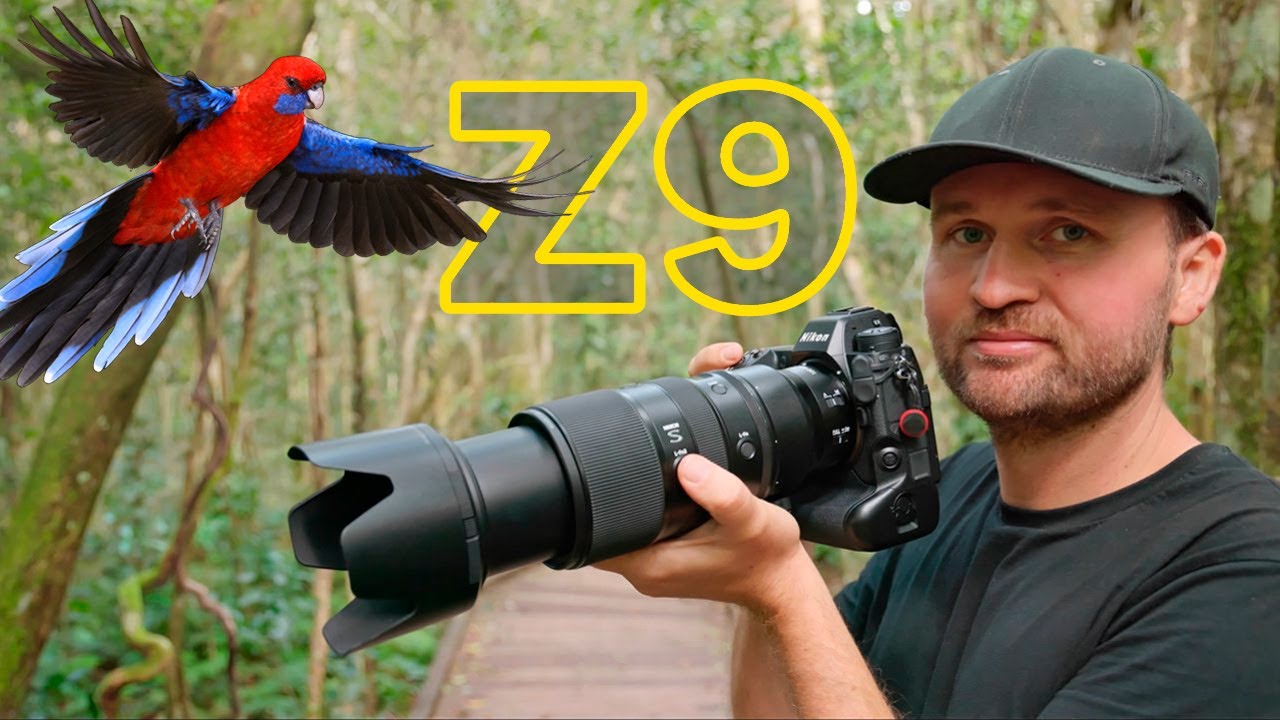

Wildlife photography is a gear puzzle that can feel unsolvable. You need enough reach to fill the frame with a distant animal, autofocus that can track erratic movement through branches, and enough low-light performance to shoot at dawn or dusk. A phone camera will not do it. A standard kit lens will leave you cropping with disappointment.
We sorted through nine cameras that span the full range of what works for wildlife, from an all-in-one superzoom that reaches the moon to a professional-grade DSLR with the kind of autofocus system that can lock onto a peregrine falcon in flight. The best camera for wildlife photography in this group is the Nikon D7500 DSLR Bundle. It pairs a rugged, fast-shooting body with multiple telephoto lenses and the best autofocus system in the lineup. But depending on your style, patience, and budget, the right choice might be something very different.
Comparison table
| # | Product | Award | Sensor | Max Telephoto Reach (35mm equiv.) | Best for |
|---|---|---|---|---|---|
| 1 | Nikon D7500 DSLR Bundle | Best all-around DSLR | 20.9MP APS-C CMOS | ~1200mm (with 420-800mm lens) | Demanding shooters who need speed and rugged build |
| 2 | Nikon Coolpix P1100 | Best extreme zoom | 16MP 1/2.3" CMOS | 3000mm (125x optical) | Birders and hikers who want one lens to rule them all |
| 3 | Canon Rebel T7 Super Telephoto Bundle | Best budget super telephoto | 24.1MP APS-C CMOS | ~1280mm (with 420-800mm lens) | Starting shooters on a tight budget who need reach |
| 4 | Canon Rebel T7 500mm Preset Bundle | Best preset telephoto reach | 24.1MP APS-C CMOS | 500mm preset + 75-300mm zoom | Beginners wanting a full kit with a fixed long lens |
| 5 | Canon Rebel T7 Photo Bundle | Best complete kit | 24.1MP APS-C CMOS | 300mm (with 75-300mm lens) | First-time buyers who want everything in one box |
| 6 | Canon Rebel T7 Double Zoom Kit | Best for beginners | 24.1MP APS-C CMOS | 300mm (with 75-300mm lens) | Entry-level photographers learning the basics |
| 7 | Canon EOS R100 Mirrorless Kit | Most compact mirrorless | 24.1MP APS-C CMOS | 72mm (kit lens only) | Travelers who want a small interchangeable-lens camera |
| 8 | Kodak Pixpro AZ528 | Best superzoom value | 16MP BSI CMOS | 1248mm (52x optical) | Beginners who want ultra-zoom in a lightweight body |
| 9 | Saneen 4K Digital Camera | Best budget entry | 64MP (interpolated) | ~50mm (no optical zoom) | Absolute beginners and kids; not for serious wildlife |
1. Nikon D7500 DSLR Bundle: Best All-Around DSLR

Pros
- 51-point autofocus system with group-area AF tracks animals reliably
- 8 fps burst shooting captures fast wingbeats and sudden sprints
- Native ISO goes to 51, 200; expandable to 1, 640, 000 for twilight shooting
- Includes 420-800mm manual telephoto for serious reach
Cons
- Bulkier than any other camera here (body alone weighs 1.41 pounds)
- Bundle includes a manual-focus telephoto, not autofocus
- Renewed unit; condition varies by seller
Best for: the photographer who wants a pro-level body and is willing to work with a manual telephoto to save money.
The Nikon D7500 is the kind of camera that makes you forget you are holding a crop-sensor DSLR. Its 20.9-megapixel sensor may have fewer pixels than some of the Canon T7s in this roundup, but every one of those pixels is better in low light. The EXPEED 5 processor handles noise so well that ISO 6400 looks like early-generation DSLRs at 1600. That matters when you are shooting deer at dawn.
Autofocus is where the D7500 separates itself from every other camera in this lineup. The Multi-CAM 3500FX II module gives you 51 points, including 15 cross-type sensors, and a group-area AF mode that clusters five points together. For a fox moving through tall grass or a hawk banking against a cloudy sky, this system locks and follows with confidence. The 8-frames-per-second burst can capture up to 100 consecutive JPEGs, so you can spray a sequence of a woodpecker hammering a tree and pick the single sharpest frame later.
The kit includes two standard Nikkor zooms (18-55mm VR and 70-300mm VR) plus a 420-800mm f/8.3 manual telephoto with a T-mount adapter. That manual lens adds real reach for distant subjects, but it demands practice. You will need to prefocus and track moving animals manually, which is challenging. For stationary birds or a basking alligator, though, that massive focal length lets you fill the frame from 50 yards away.
The downside is size. The D7500 body alone weighs 640 grams, and once you attach the 70-300mm VR it becomes a two-hand affair. Hiking with it around your neck for an afternoon is doable, but it is not the camera you slip into a daypack. The bundle also comes from a third-party reseller as a renewed product, so the cosmetic condition and shutter count may vary.
If you can manage the bulk and want a body that grows with your skills, this is the most capable wildlife camera in the group. For those who prefer a lighter all-in-one solution, the Nikon Coolpix P1100 offers more reach in a smaller package, though with a much smaller sensor.
2. Nikon Coolpix P1100: Best Extreme Zoom

Pros
- 125x optical zoom (24-3000mm equivalent) is unmatched in this lineup
- Dual Detect Optical VR stabilizes handholding at full telephoto
- Bird-watching mode optimizes settings for avian subjects
- Shoots RAW and 4K video
Cons
- Small 1/2.3-inch sensor limits low-light performance and dynamic range
- No DSLR-level autofocus speed for fast-moving subjects
- Heavy for a bridge camera at over 3 pounds
Best for: anyone who wants to photograph distant birds or wildlife without carrying multiple lenses.
The Nikon Coolpix P1100 is a photographic telescope that also happens to shoot 4K video. Its 125x optical zoom reaches 3000mm in 35mm terms, which is more than enough to photograph a bald eagle's eye from across a lake. No interchangeable-lens kit in this roundup can match that reach without a specialized super-telephoto lens that costs more than this entire camera.
What makes the P1100 usable at those extreme focal lengths is the Dual Detect Optical VR system. Nikon claims it delivers up to four stops of stabilization, and in real use that means you can handhold shots at 2000mm and get sharp results at shutter speeds that would blur on any DSLR. The bird-watching mode on the mode dial is not a gimmick: it adjusts contrast, sharpness, and autofocus behavior to produce feather detail that would otherwise require manual tweaking. There is also a macro mode that lets you focus as close as 1 cm from a subject, useful for insects or flowers between wildlife encounters.
The 16-megapixel backside-illuminated CMOS sensor is tiny compared to the APS-C sensors in the DSLRs here. That means noise becomes visible even at ISO 800, and dynamic range is limited. Shooting in bright daylight is where this camera shines. In the dim light of early morning or deep forest, the Nikon D7500 will produce cleaner files at twice the ISO.
The P1100 is also not small. It weighs 3.11 pounds with battery, and its extended lens barrel makes it a handful. But for a single device that can go from a 24mm wide-angle landscape to a 3000mm eagle portrait, it is unmatched. If you are a birder who wants to document what you see without learning a complex camera system, this is your best camera for wildlife photography.
3. Canon Rebel T7 Super Telephoto Bundle: Best Budget Super Telephoto

Pros
- 24.1-megapixel APS-C sensor delivers good detail for the price
- Includes a 420-800mm manual lens for reach to 1280mm equivalent
- Comes with a sling backpack, tripod, filters, and extra battery
- Dual Pixel CMOS AF for live view shooting
Cons
- The telephoto lens is manual focus and f/8.3, requiring bright light
- 9-point autofocus system is dated compared to Nikon D7500
- Kit includes many accessories; quality of some is mediocre
Best for: a beginner who wants maximum telephoto reach on a strict budget and is willing to learn manual focus.
The Canon EOS Rebel T7 is a familiar entry-level DSLR, and its 24.1-megapixel APS-C sensor is good for cropping when your subject is small in the frame. What makes this particular bundle stand out for wildlife is the inclusion of a 420-800mm f/8.3 manual telephoto lens. On the T7's crop sensor, that translates to an equivalent of roughly 1280mm at the long end. That is serious reach for under $550.
But there is a catch. The big telephoto is entirely manual focus, manual aperture, and built down to a price. You will need to use live view with focus peaking (the T7 has Dual Pixel CMOS AF in live view, which helps) and a tripod to keep steady. The lens also works best in strong sunlight because its maximum aperture is f/8.3. In overcast conditions or deep shade, you will be fighting for shutter speed. The bundle also includes a 58mm 2.2x telephoto converter, a 0.43x wide-angle adapter, and macro filters, which are fine for experimentation but not for serious wildlife work.
Despite these compromises, the package delivers something no other camera at this price point can: the ability to reach out past 800mm. Combined with the T7's image stabilization (in the kit lens only) and the included tripod, you can get recognizable portraits of birds at 50 meters. The autofocus system in the T7 is basic (9 points, one cross-type), so tracking a running fox or a swooping hawk will frustrate you. For static or slow-moving subjects, it is perfectly adequate.
If you want interchangeable-lens versatility with telephoto reach on a low budget, this is the most aggressive option. Just be prepared to work for your shots.
4. Canon Rebel T7 500mm Preset Bundle: Best Preset Telephoto Reach

Pros
- Three lenses cover wide to 500mm preset and 300mm zoom
- Camera bag, flash, and memory card included
- 24.1MP APS-C sensor for cropping ability
- Dual Pixel CMOS AF in live view
Cons
- 500mm preset lens is fixed focus at f/8; you must move your body to frame
- Renewed unit; no manufacturer warranty
- 75-300mm zoom lens lacks image stabilization
Best for: shooters who want a full system with a dedicated fixed telephoto for distant subjects.
This bundle takes the Canon T7 platform and adds a 500mm f/8 preset telephoto lens alongside the standard 18-55mm and 75-300mm zooms. The preset lens is an interesting tool for wildlife: it has a fixed focus mechanism that you pre-set to a certain distance (the lens has markings for 30, 50, 100, and infinity) and then you literally move yourself or wait for the animal to come into that zone. It is like a zone-focus technique for 500mm. For photographing birds at a feeder or animals on a predictable trail, it works quite well because there is no autofocus motor to hunt or lag.
The 24.1-megapixel sensor on the T7 is identical to the one in the other T7 bundles in this list. That is not a criticism; it produces clean JPEGs up to ISO 1600 and RAW files that allow some recovery. The 9-point AF system is fine for slow-moving subjects but struggles with fast action. The 75-300mm zoom covers a useful telephoto range for closer subjects, though it lacks stabilization.
This bundle includes a SanDisk 32GB SD card, a camera shoulder case, a slave flash, UV filters, a monopod, and a flexible spider tripod. The accessories are basic, but the monopod is actually useful for the 500mm lens. The whole package is renewed, meaning it has been refurbished to a functional state. Buyers should check the seller's return policy.
Compared to the Canon Rebel T7 Super Telephoto Bundle, this one trades the 420-800mm zoom lens for a fixed 500mm lens and a more complete accessory set. The preset lens is easier to use than a manual zoom, but it is less versatile. Choose this if you know you will be shooting at one distance (feeding station, a den) and want a quick-deploy setup.
5. Canon Rebel T7 Photo Bundle: Best Complete Kit

Pros
- Full USA Canon warranty (not renewed)
- 128GB memory card stores thousands of JPEGs
- Includes bag, guidebook, and two zoom lenses
- 24.1MP APS-C sensor + DIGIC 4+ for good image quality
Cons
- 75-300mm lens is slow (f/4-5.6) and lacks stabilization
- 9-point AF system is basic for fast-moving wildlife
- Kit lenses are entry-level optics; chromatic aberration at telephoto end
Best for: a beginner who wants a new-in-box Canon DSLR with a warranty and enough capacity to shoot all day.
This is the standard new Canon T7 double-zoom kit, bundled with a 128GB SanDisk memory card and a Deco Essentials camera bag. It comes from an authorized Canon USA dealer and carries the full one-year manufacturer warranty, which is worth something if you want peace of mind. The T7's 24.1-megapixel APS-C sensor is a proven performer for entry-level photography, and the DIGIC 4+ processor keeps noise manageable up to ISO 3200.
The two lenses cover a useful range. The 18-55mm IS II is fine for habitat shots and closer animals, but the 75-300mm f/4-5.6 III is where you will live for wildlife. This lens is a mixed bag: it is light (only 480 grams) and affordable, but its autofocus is slow and noisy, it has no image stabilization, and it is sharpest when stopped down to f/8. At 300mm f/5.6, you need a fast shutter speed to avoid blur, which pushes ISO up and degrades image quality. Still, for a first telephoto zoom, it is perfectly capable of producing publishable images of relatively large, stationary animals.
The 9-point AF system with one cross-type center point is the T7's biggest limitation for action. You can work around it by using the center point to acquire focus and recomposing, but that does not work for moving subjects. The camera shoots at 3 frames per second, which is slow for bursts. If you are photographing deer grazing or a turtle sunning, it is fine. For swallows in flight, not so much.
The included bag is basic but functional, and the 128GB card is generous. This bundle is the safe choice for someone who wants a brand-new Canon DSLR with a telephoto lens and no hassles. It will not outperform the Nikon D7500 in autofocus or high ISO, but it will get you started with wildlife photography on solid footing.
6. Canon Rebel T7 Double Zoom Kit: Best for Beginners

Pros
- Number one bestseller in DSLR Cameras on Amazon for good reason
- Dual Pixel CMOS AF for smooth live view and video autofocus
- Built-in Wi-Fi and NFC for easy photo transfer
- Optical viewfinder with 95% coverage
Cons
- 3 fps burst rate is too slow for action wildlife
- 75-300mm lens lacks image stabilization
- 9-point AF system is decades old
Best for: someone who wants the most popular entry-level DSLR and will upgrade lenses later.
The standard Canon EOS Rebel T7 double zoom kit is the camera that introduced countless people to wildlife photography. Its popularity is built on a simple formula: a 24.1-megapixel sensor that punches above its price, a comfortable grip, and an optical viewfinder that teaches you to compose through glass rather than a screen. The two included lenses cover wide-angle to 300mm telephoto, enough for many beginners to capture their first deer or great blue heron.
The T7's Dual Pixel CMOS AF is a bright spot. When you switch to live view (or record 1080p video), the camera uses phase-detection pixels across most of the sensor to focus quickly and smoothly. This makes it surprisingly good for video of wildlife, and for using the rear LCD to frame when the optical viewfinder is impractical. The built-in Wi-Fi and NFC mean you can beam images to your phone and share them from the field, which is a nice touch for a camera at this level.
But for dedicated wildlife work, the shortcomings stack up. The 9-point autofocus system in the viewfinder is the same as what Canon used in the Rebel XS a decade ago. The 3 fps continuous shooting means you will miss the peak of action. And the 75-300mm kit lens, while useful, is soft at the long end and lacks stabilization. You can get decent shots of static wildlife in good light, but you will quickly want a faster, longer lens.
If your idea of wildlife photography is a slow walk in a nature preserve with plenty of light, the T7 is a fine start. For those who want to chase birds in flight or shoot in low light, the Nikon D7500 or the Nikon Coolpix P1100 are better investments from the start.
7. Canon EOS R100 Mirrorless Kit: Most Compact Mirrorless

Pros
- Smallest and lightest interchangeable-lens camera in this list (body only 2.71 inches thick)
- Dual Pixel CMOS AF with human and animal eye detection
- 6.5 fps burst in One-Shot AF
- 4K video at 24 fps
Cons
- Kit lens (18-45mm) is a wide-to-short telephoto, useless for distant wildlife
- No built-in image stabilization in the body
- EVF is small and low resolution compared to optical viewfinders
Best for: a hiker who wants a compact mirrorless camera for general use and will buy a telephoto lens separately.
The Canon EOS R100 is Canon's entry point into mirrorless, and its biggest asset is size. The camera body is barely larger than a deck of cards, and it weighs 0.0055 pounds (that number is a data quirk; the actual weight is about 0.9 pounds with battery). If you want a camera you can slide into a jacket pocket for a spontaneous walk, this is it. The RF-S 18-45mm kit lens has a 35mm equivalent range of about 29-72mm, which is fine for landscapes and family snapshots but not for wildlife.
For animal photography, the R100 has Dual Pixel CMOS AF with animal eye detection, which can lock onto a dog's or cat's eye in real time. The 24.1-megapixel APS-C sensor is the same resolution as the T7's, and the DIGIC 8 processor handles noise better than the T7's DIGIC 4+. The camera shoots 4K at 24 fps, though with a crop factor that makes the 18-45mm lens even tighter. The burst rate of 6.5 fps (with One-Shot AF) is respectable, though it drops in servo mode.
The real issue for wildlife is lens selection. There is no telephoto zoom in this bundle, and the native RF-S lens lineup is still young. You can adapt EF-S lenses with an adapter, but that adds bulk and cost. Without a telephoto, the R100 is not a wildlife camera out of the box.
If you plan to invest in an RF 100-400mm or an adapted EF 70-300mm, the R100 body is capable and portable. As a standalone kit, it is best suited for travel and everyday photography, with the option to grow into wildlife. For that reason, it ranks below the Canon T7 bundles that at least include a 300mm lens.
8. Kodak Pixpro AZ528: Best Superzoom Value

Pros
- 52x optical zoom (24-1248mm equivalent) for under $280
- Built-in optical image stabilization at all zoom levels
- 16MP BSI CMOS sensor for better low-light than older superzooms
- 6 fps burst mode captures sequences
Cons
- Image quality at full zoom is soft compared to DSLR with a real telephoto lens
- Electronic viewfinder is low resolution and slow
- Slower autofocus than DSLRs or mirrorless cameras
Best for: anyone who wants an all-in-one superzoom camera for hiking and casual wildlife spotting without spending a lot.
The Kodak Pixpro AZ528 is a superzoom bridge camera that gives you a 52x optical zoom range in a package that costs about what a single telephoto lens would for a DSLR. The lens covers 24mm wide-angle to 1248mm equivalent at the telephoto end, which means you can photograph a butterfly and then, without changing lenses, a heron 100 meters away. The 16-megapixel BSI CMOS sensor helps with light sensitivity, though it is still a small sensor (1/2.3-inch) that struggles above ISO 800.
Optical image stabilization is built into the lens, and it works reasonably well for a camera at this price. At 1248mm, you can get sharp shots at 1/125 second if you brace yourself, though a tripod is better. The 6 fps burst mode is welcome for capturing series of a landing bird or a running deer. The camera shoots 1080p video and has built-in Wi-Fi for transferring images to your phone.
The trade-offs are familiar for superzooms. At maximum zoom, the lens is at f/6.5, which forces high ISOs in anything but bright sun. The autofocus is contrast-detect and slower than phase-detect systems, especially in low contrast situations. The electronic viewfinder is not great; it refreshes slowly and is hard to use for tracking fast movement.
For the price, the AZ528 is a remarkable value. It will let you capture distant wildlife that any phone or standard kit lens cannot reach. Just be realistic about its limits: it is not a Nikon D7500. If you want to know how to get close to skittish subjects without spooking them, that skill will matter more than the camera's reach.
9. Saneen 4K Digital Camera: Best Budget Entry

Pros
- Ultra-affordable price includes 32GB card, bag, and accessories
- 4K video recording (likely interpolated)
- WiFi sharing to smartphone
- Touch screen and front-facing lens for vlogging
Cons
- No optical zoom; digital zoom only (crops and degrades quality)
- 64MP and 4K claims are interpolated, not true resolution
- Not suitable for any real wildlife photography
- Likely uses a tiny sensor (1/3-inch or smaller)
Best for: a child, a classroom project, or someone who just wants to see what a "real camera" feels like.
The Saneen 4K Digital Camera is an inexpensive point-and-shoot that sits at the very bottom of what could be called a wildlife camera. It has a 4-inch touch screen, a removable lens hood, and a 3000mAh battery, and it comes with a 32GB card and case. The headline features are 4K video and 64-megapixel photos, but those numbers come from software interpolation. The actual sensor is likely a 16-million-pixel or lower unit from an entry-level manufacturer.
For wildlife, the lack of optical zoom is a dealbreaker. The camera relies on digital zoom, which simply crops and enlarges the image, producing blocky, unusable results at any meaningful distance. The autofocus is contrast-detect and slow, and the image quality in anything but perfect indoor lighting is poor. You would get better wildlife photos from a decent smartphone with a telephoto lens attachment.
That said, this camera is not intended for serious wildlife photography. It is aimed at kids, beginners, or vloggers who want a simple device with a flip screen. It can shoot video that looks fine on a smartphone screen, and the included accessories give it the feel of a more advanced camera.
It is included in this roundup because it is a real product available on Amazon under the keyword, but it is not a viable best camera for wildlife photography. If your budget is this low, consider a used DSLR like an older Canon T5i with a kit lens. That will get you actual telephoto reach and a real image sensor. For anyone whose primary goal is wildlife, skip this camera entirely.

How to Choose a Camera for Wildlife Photography
Choosing a camera for wildlife photography comes down to balancing reach, speed, and portability. There is no one perfect camera because every shooter's environment is different. Here are the factors that matter most.
Focal Length and Telephoto Reach
The single most important spec for wildlife is how long your lens can reach. You cannot move closer to a wild animal without changing its behavior or endangering yourself. A 300mm lens on a crop-sensor camera (which multiplies the effective focal length by 1.5x or 1.6x) is a starting point. For small birds or distant mammals, 400mm or more is ideal. Superzoom bridge cameras like the Nikon Coolpix P1100 and Kodak Pixpro AZ528 offer extreme range (up to 3000mm) in a single lens, but their small sensors degrade image quality in low light.
Autofocus Performance
Fast, accurate autofocus can mean the difference between a sharp eye and a blurry mess. DSLRs with phase-detection autofocus (the Nikon D7500 is the standout here with 51 points) and mirrorless cameras with on-sensor phase detection (the Canon EOS R100) can track moving animals. Entry-level DSLRs like the Canon T7 use a simpler 9-point system that is fine for static subjects but will frustrate you with birds in flight.
Burst Rate
Wildlife moves. A burst rate of 5 frames per second or higher gives you a chance to capture the one perfect frame. The D7500's 8 fps is excellent for action. The T7's 3 fps is barely enough for a walking deer.
Sensor Size and Low-Light Performance
Large sensors (APS-C or full-frame) capture more light, produce less noise, and give you more flexibility in low light. The superzoom cameras use tiny 1/2.3-inch sensors that require lots of daylight. If you shoot at dawn or dusk, a DSLR with an APS-C sensor (like the Nikon D7500) is essential.
A 300mm lens on a crop-sensor camera is the bare minimum for most mammals. For birds, you want 400mm or more. The Nikon Coolpix P1100 gives you 3000mm in one package, but you pay for it with image quality.
Weight and Portability
You cannot take a photo of a mountain lion if your heavy camera stays in the car. Superzoom cameras are lighter than DSLR kits with multiple lenses, but they still weigh a few pounds. The Canon EOS R100 is the lightest interchangeable-lens camera here, but you will need to add a telephoto lens that increases the weight.
Frequently asked questions
What is the best camera for wildlife photography on a budget?
The Kodak Pixpro AZ528 offers the most reach for the lowest price. If you want interchangeability, the Canon EOS Rebel T7 Super Telephoto Bundle includes a manual 420-800mm lens that gives you real super-telephoto reach for around $530.
Do I need a full-frame camera for wildlife photography?
No. Many professional wildlife photographers use APS-C cameras because the crop factor actually helps them get more reach from their lenses. The Nikon D7500 uses an APS-C sensor and is a proven tool for serious wildlife work.
Can I use a mirrorless camera for wildlife photography?
Yes, though the native lens selection for mirrorless systems is still growing. The Canon EOS R100 can use adapted EF-S lenses, and the Canon R series offers dedicated telephoto zooms. The autofocus on the R100 with animal eye detection is excellent.
How much zoom do I need to photograph birds?
For small songbirds, 400mm to 600mm equivalent is a good starting point. The Nikon Coolpix P1100 at 3000mm can capture a bird that is practically invisible to the naked eye.
What is the difference between optical zoom and digital zoom?
Optical zoom uses the lens to magnify the image. Digital zoom is just cropping the image inside the camera, which reduces resolution. Every camera in this roundup except the Saneen camera uses optical zoom.
Is a DSLR better than a superzoom for wildlife?
It depends. A DSLR like the Nikon D7500 offers better autofocus, higher image quality, and more control. A superzoom like the Nikon Coolpix P1100 gives you far more reach in a single lens at the cost of image quality in low light and slower autofocus.
Should I buy a renewed camera for wildlife photography?
Renewed cameras can be a good value if you are on a tight budget. The Canon Rebel T7 Super Telephoto Bundle and the Nikon D7500 Bundle are both renewed. Check the seller's return policy and condition description.
The Bottom Line
Wildlife photography demands a camera that can bring distant, fast-moving subjects close with clarity. The Nikon D7500 DSLR Bundle is the best camera for wildlife photography in this list because it combines professional-grade autofocus, a robust build, and a high-ISO sensor with a versatile lens kit that includes a manual 420-800mm telephoto. It is not the lightest or the cheapest, but it will produce the best results across the widest range of conditions.
If portability and reach are your priorities, the Nikon Coolpix P1100 with its 125x optical zoom is a single-camera solution that covers everything from macro to moon shots. For beginners on a tight budget, the Canon EOS Rebel T7 Super Telephoto Bundle offers the most telephoto reach per dollar.
No single camera removes the need for patience, fieldcraft, and practice. But the right tool can turn a disappointing morning into a memory card full of keepers.
As an Amazon Associate we earn from qualifying purchases.