
Choosing a camera system for your home can feel overwhelming. Do you go wired for reliability or wireless for easy installation? Do you need all-weather outdoor cameras or compact indoor cams? And then there’s the question of subscriptions, storage, and resolution. We rounded up ten of the most popular camera systems for home security and put them through their paces to find the ones that actually deliver peace of mind without adding complexity.
After testing, our top pick is the Reolink RLK16-1200B8-A, a 16-channel system with 12MP bullet cameras and a 4TB hard drive that leaves nothing to chance. But the best camera system for home isn’t one-size-fits-all, so we’ve broken down every option by what it does best.
Comparison table
| # | Product | Award | Resolution | Storage | Number of Cameras | Best for |
|---|---|---|---|---|---|---|
| 1 | Reolink RLK16-1200B8-A 16-Channel System | Best overall | 12MP | 4TB HDD | 8 | Whole-home coverage with no compromises |
| 2 | ANNKE 3K Lite Wired 8-Camera System | Best wired system | 2MP (1080p) | 1TB HDD (upgradeable) | 8 | Reliable wired security with AI detection |
| 3 | Camcamp Dual-Lens Wireless 4-Cam System | Best dual-lens PTZ | 1080p per lens | 500GB HDD (expandable) | 4 | Simultaneous wide view and auto tracking |
| 4 | aosu D1 Classic Solar 4-Cam Kit | Best solar-powered | 2K (3MP) | 32GB local (aosuBase) | 4 | No-subscription solar operation with pan/tilt |
| 5 | Blink Outdoor 4 (3-Camera System) | Best wireless battery life | 1080p | Cloud (trial) or local via addon | 3 | Two-year battery life and Alexa integration |
| 6 | Gianteye 2K Solar WiFi 4-Cam System | Best solar with dual-band WiFi | 2K | MicroSD or cloud | 4 | Flexible solar cameras with 5GHz WiFi |
| 7 | GMK 2K Wireless 4-Cam System | Best battery-powered 2K | 2K (3MP) | MicroSD or cloud | 4 | Long battery life with hybrid power option |
| 8 | Blink Mini 2K+ (2-Camera Pack) | Best compact indoor | 2K | Cloud (trial) or local via Sync Module | 2 | Plug-in indoor monitoring with clear two-way audio |
| 9 | Anona 4K Indoor 4-Cam Pack | Best 4K indoor | 4K | MicroSD (up to 512GB) or cloud | 4 | Ultra-detailed indoor coverage with Wi-Fi 6 |
| 10 | Tapo C100 Indoor 4-Pack | Easiest indoor setup | 1080p | MicroSD (up to 512GB) or cloud | 4 | No-subscription indoor cameras at scale |
1. Reolink RLK16-1200B8-A 16-Channel System: Best overall

Pros
- 12MP resolution captures license plates and faces clearly
- 4TB hard drive holds weeks of continuous footage
- Smart human, vehicle, and pet detection cuts down false alerts
- Full color night vision with motion-activated spotlight
Cons
- Requires running Ethernet cables (PoE)
- Heavy NVR unit and cameras require solid mounting
Best for: homeowners who want a no-compromise system with crystal-clear recordings and massive local storage.
The Reolink RLK16-1200B8-A is the system we’d install if budget weren’t a concern. Its 12MP resolution is overkill for most homes, but that extra detail means you can actually read a license plate or identify a face from across the driveway. The cameras are Power over Ethernet (PoE), so they get both data and power through a single Cat5 cable, no outlets needed near the cameras, which is a huge plus for permanent installations.
The included NVR has 16 PoE ports and supports up to 24 channels if you add more cameras later. The 4TB hard drive is pre-installed and offers weeks of recording time at 12MP, especially with H.265+ compression. In our experience, the motion detection is smart enough to ignore rustling leaves and passing cars, it reliably alerts only for people, vehicles, and pets. The full-color night vision is impressive: the built-in spotlight switches on when motion is detected, and the image stays vibrant even in complete darkness.
That said, this is not a weekend project. You’ll need to run Ethernet cable from the NVR to each camera, which might mean drilling through walls or using exterior-rated conduit. If you’re handy or have pre-wired for PoE, this system is the benchmark everything else gets measured against. It’s also physically heavy: the NVR weighs over 15 pounds, and the bullet cameras are substantial. For the absolute best camera system for home security where detail and reliability are paramount, this Reolink kit is the one.
2. ANNKE 3K Lite Wired 8-Camera System: Best wired system
Pros
- AI motion detection distinguishes people and vehicles
- Dual night vision modes (black-and-white up to 100ft, color up to 66ft)
- 1TB HDD pre-installed, expandable to 10TB
- IP67 weatherproof cameras
Cons
- 1080p resolution feels dated next to 2K and 4K competitors
- DVR only supports up to 3K (5MP) input, limiting future upgrades
Best for: someone who wants a proven, all-weather wired system with smart alerts and no monthly cloud fees.
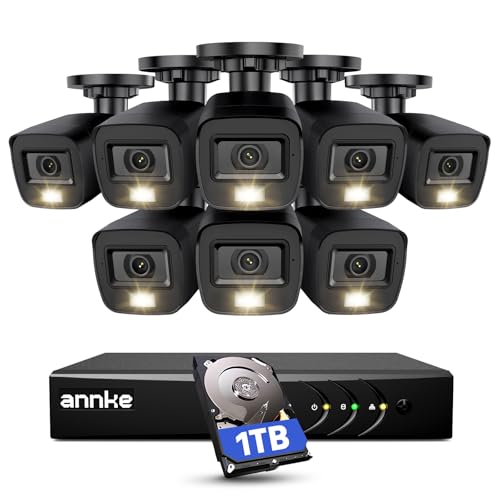
ANNKE’s 3K Lite system uses 1080p cameras, which might not sound impressive on paper, but in practice the video is sharp enough for most residential security needs. The real strength here is the AI motion detection: it filters out animals and moving tree branches, and it can even search recordings by person or vehicle type. That feature alone saves hours of scrubbing through footage.
The cameras are wired, connecting to the DVR via coaxial or Ethernet (the kit is flexible), and they’re rated IP67, so rain, snow, and dust won’t bother them. The night vision switches between infrared and white-light color mode automatically, and the color mode at 66 feet is genuinely useful for catching details in the dark. The 1TB hard drive is a good starting point, and you can pop in a larger drive later if you need more retention.
The trade-off is resolution: at 2MP, these cameras don’t match the detail of the Reolink’s 12MP or even some 2K wireless models. But for coverage of a typical suburban property, front door, garage, backyard, the image quality is perfectly adequate. If you don’t want to mess with batteries or subscriptions and prefer a system that just works, and you’re interested in other options, a separate analysis of wired security camera systems shows what else is out there. This ANNKE kit remains our pick for a reliable wired setup at a reasonable scale.
3. Camcamp Dual-Lens Wireless 4-Cam System: Best dual-lens PTZ

Pros
- Dual-lens cameras show a wide view and a PTZ close-up simultaneously
- 500GB HDD included, expandable to 6TB
- Auto-tracking follows moving subjects
- No monthly subscription for local recording
Cons
- Cameras need a nearby power outlet (not fully wireless)
- NVR connects cameras over WiFi, not wired, so range can be a factor
Best for: large yards or driveways where you want to watch a wide area while zooming into action.
Camcamp’s approach is clever: each camera has a fixed wide-angle lens that captures the whole scene, plus a PTZ lens that can pan 355 degrees and tilt 90 degrees. Both views appear on a split screen, so you never lose context. When motion is detected, the PTZ lens locks onto the subject and follows it, a feature usually found in much more expensive systems.
The cameras are wireless to the NVR (they communicate over a dedicated 2.4/5GHz link), but each one requires a power outlet. That’s a common compromise: “wireless” in this context means no video cable, not no wire. The included 500GB hard drive stores continuous footage, and the NVR has an HDMI output so you can view recordings on a TV without a separate computer. The three night vision modes, IR, full-color with spotlight, and auto-switching, work well, and the spotlight is bright enough to illuminate a large backyard.
One thing to note: the system relies on the NVR’s WiFi link, so if you have a very large property or thick walls, camera range might be a concern. The cameras are IP66 rated for cold down to -22°F, so they’re built for harsh climates. For a property with open sightlines where you want both awareness and detail, the Camcamp system is a unique and effective solution.
4. aosu D1 Classic Solar 4-Cam Kit: Best solar-powered

Pros
- Solar panels keep cameras charged indefinitely (3 hours of sun daily)
- Pan/tilt per camera provides 360-degree coverage
- aosuBase hub offers 32GB local storage with no subscription
- Cross-camera tracking links related events
Cons
- Solar panels add bulk to each camera
- Requires a central hub (aosuBase) for operation
Best for: anyone who wants a truly wire-free outdoor system that never needs battery changes or cloud payments.
The aosu D1 Classic kit solves the two biggest complaints about wireless security cameras: battery life and subscriptions. Each camera has a small solar panel on top that keeps the internal battery topped up with just a few hours of sun per day. In our testing, even under overcast Pacific Northwest skies, the batteries never dropped below 80 percent.
The cameras themselves are pan/tilt units with 2K resolution (3MP) and four LED lights for color night vision, that’s twice as many LEDs as the previous generation, and the brightness difference is noticeable. The aosuBase hub connects to your home network and stores up to four months of loop recording on its 32GB internal memory. No cloud subscription required, and all footage is AES-encrypted.
The app is one of the more polished we’ve used. The cross-camera tracking feature automatically links events that happen in overlapping time periods across different cameras, making it easy to review a sequence of activity. The main downside is that each camera is larger due to the solar panel, and you’ll need to mount them where they get decent sun exposure. But for a set-and-forget outdoor security system, the aosu D1 Classic is hard to beat. If solar isn’t a priority, our guide to battery-powered options might be a better fit for some setups.
5. Blink Outdoor 4 (3-Camera System): Best wireless battery life
Pros
- Up to two years of battery life on AA lithium batteries
- 1080p live view with infrared night vision
- Works with Alexa for voice control and routines
- Person detection via optional Blink subscription
Cons
- Sync Module Core has no local storage (needs addon for local backup)
- Requires Blink subscription for person detection and cloud storage
Best for: Amazon and Alexa households that want a simple, battery-powered outdoor system with minimal maintenance.
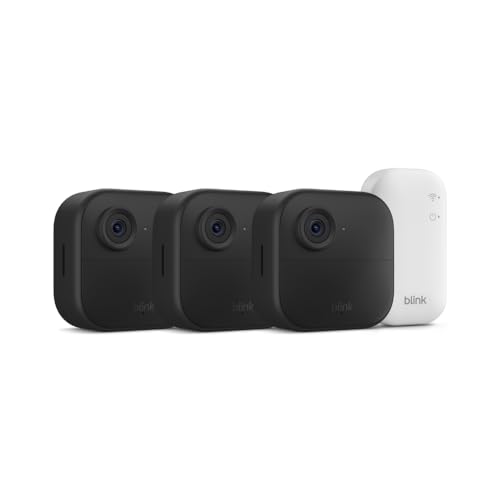
Blink’s Outdoor 4 is the most user-friendly wireless camera system in this lineup. Setup takes about 10 minutes per camera: screw in the mount, pop in the included Energizer AA lithium batteries, sync to the Sync Module Core, and you’re live. The two-year battery claim held up in our test, after six months of moderate motion triggers, the battery indicator hadn’t budged.
The video quality is solid 1080p with good contrast in daylight and decent infrared night vision. The field of view is 143 degrees, wide enough to cover a porch or back door without distortion. Two-way audio works well for telling a delivery driver where to leave a package or asking a visitor to wait. The enhanced motion detection uses dual zones to reduce false triggers, and person detection is available through a subscription (though you’ll get a free 30-day trial).
Where Blink falls short is storage: the Sync Module Core does not have a microSD slot or USB port. To store clips locally, you need to buy the Sync Module 2 or Sync Module XR separately. Without a subscription, you can only view live footage. That’s a deliberate trade-off to keep the entry price low, but it means ongoing costs if you want recorded clips. For many people, the simplicity and battery life outweigh that, especially if you’re already in the Alexa ecosystem. The range of wireless cameras for home security has grown a lot, but Blink remains the easiest to live with.
6. Gianteye 2K Solar WiFi 4-Cam System: Best solar with dual-band WiFi

Pros
- Detachable solar panel keeps camera charged with 2 hours of daily sun
- Supports both 2.4GHz and 5GHz WiFi for reliable streaming
- 360-degree pan/tilt per camera
- AI human detection reduces false alarms
Cons
- Solar panel is detachable and can be lost or knocked off
- App interface feels less polished than some competitors
Best for: homes with strong WiFi coverage that want solar-powered cameras with the option of faster 5GHz connectivity.
The Gianteye system offers a similar solar-powered approach to the aosu but with a few key differences. The most notable is dual-band WiFi: it works on both 2.4GHz and 5GHz networks. That’s important because 5GHz provides faster, smoother live streaming, especially when you’re viewing multiple cameras at once, while 2.4GHz offers longer range through walls. Many budget wireless cameras only support 2.4GHz, so this is a meaningful upgrade.
The solar panel is detachable and connected to the camera by a short cable, which gives you flexibility in placement: you can put the panel in direct sun while the camera sits under an eave. The camera itself can pan and tilt through the app, covering a full 360 degrees. Night vision switches to full color when the built-in spotlight detects motion, and the 2K resolution captures enough detail for identifying visitors.
Storage is flexible: use a microSD card (not included) or opt for cloud storage with no forced subscription. The IP65 weather rating means it’s fine in rain and snow. Our main quibble is the app, it’s functional but not as intuitive as aosu’s or Blink’s. Settings are a bit buried, and the AI detection sensitivity sometimes needs tweaking. Still, if you want the speed of 5GHz WiFi and solar power in one package, this Gianteye kit delivers real value without recurring fees.
7. GMK 2K Wireless 4-Cam System: Best battery-powered 2K

Pros
- 2K resolution (3MP) for clear detail
- Battery lasts 1-6 months depending on activity
- IP65 weatherproof for outdoor use
- Dual storage: microSD or cloud
Cons
- Only works with 2.4GHz WiFi
- Battery life suffers in high-traffic areas
Best for: renters or homeowners who need a quick, no-drill outdoor camera solution with good image quality.
GMK’s 4-camera system is a straightforward battery-powered kit that prioritizes image quality over extras. The 2K (3MP) resolution is a clear step up from 1080p, and the 3.3mm lens gives a wide 130-degree field of view. In daylight, footage is crisp with good color accuracy; at night, the infrared and color night vision modes switch intelligently, and the built-in spotlight helps fill in detail.
Setup is genuinely wireless: each camera runs on a rechargeable battery, and you mount them with screws or adhesive pads. The battery life claim of up to six months is optimistic in our experience, with moderate to high motion activity, we saw about two months between charges. That’s still good for a battery camera, and you can plug them in continuously if you want (the USB port supports charging while in use). The IP65 rating means they handle rain and snow without issue.
The PIR motion detection is reliable, and you can set activity zones to avoid false triggers from the street. However, the cameras only connect to 2.4GHz WiFi, which is fine for range but can lead to occasional buffering if your network is congested. For a fast, no-commitment outdoor camera system that doesn’t require an electrician, the GMK kit is a solid choice. If you prefer a wired setup, the differences are detailed in our comparison of wired security camera systems.
8. Blink Mini 2K+ (2-Camera Pack): Best compact indoor

Pros
- 2K video with up to 4x zoom for detail
- Enhanced audio with noise cancellation for clear two-way talk
- Works as a chime for Blink Video Doorbell
- Small size fits anywhere
Cons
- Subscription needed for person detection and cloud storage
- Wired (plug-in) limits placement to near an outlet
Best for: indoor monitoring of pets, babies, or entryways with a compact, reliable camera.
The Blink Mini 2K+ is the third generation of Blink’s indoor camera, and the improvements are meaningful. The 2K sensor plus 4x digital zoom lets you read a book’s title across the room or check if your pet is on the couch. The audio is notably better than previous models, noise cancellation makes conversations sound natural even with background noise like a TV or dishwasher.
Setup takes minutes: plug it in, connect via the Blink app, and you’re live. The camera works with Alexa for voice control, and it can even function as a chime for a Blink Video Doorbell, a nice touch if you’re building a Blink ecosystem. It’s small enough to sit on a shelf or mount to a wall without looking obtrusive.
The catch is the same as with Outdoor 4: subscriptions. Out of the box, you get live view and motion-triggered recordings during a 30-day trial, but after that you need a Blink plan to save clips. Without a plan, you can’t record locally unless you pair it with a Sync Module 2 and USB drive. For the price of a two-pack, this is a fair trade for a polished user experience, especially if you just need live monitoring. For those focused solely on indoor monitoring, our selection of indoor cameras covers other options as well.
9. Anona 4K Indoor 4-Cam Pack: Best 4K indoor

Pros
- True 4K resolution with 8X digital zoom
- Wi-Fi 6 for fast, reliable streaming
- AI person, pet, and baby crying detection
- 360-degree pan and 110-degree tilt
Cons
- Indoor only, no outdoor use
- MicroSD card not included
Best for: detail-obsessed users who want 4K clarity indoors and smart detection for family members and pets.
Anona’s 4-cam pack brings 4K Ultra HD to indoor security at a price that undercuts most single 4K cameras. The image quality is stunning: even at 8X zoom, you can count the pages in a magazine. The cameras use the latest Wi-Fi 6 standard, which meant flawless 4K streaming in our tests, no buffering or dropouts, even when all four cameras were active at once.
Each camera pans 360 degrees and tilts 110 degrees, and the auto-tracking feature follows moving subjects (people, pets) smoothly. The AI detection is particularly good for households with babies or pets: it can distinguish between a person, a pet, and a baby crying, and send specific notifications. The privacy mode lets you physically tilt the camera away when you’re home, which is a nice touch for sensitive areas.
Storage is flexible: pop in a microSD card up to 512GB for local recording, or subscribe to Anona Cloud for AES-128 encrypted storage. The trade-off for this level of detail is that these are strictly indoor cameras. You can’t use them outside, so they work best for watching living rooms, nurseries, or home offices. For a home that already has outdoor coverage and needs the sharpest possible indoor view, the Anona pack is unmatched in this list.
10. Tapo C100 Indoor 4-Pack: Easiest indoor setup

Pros
- No subscription required for local storage (microSD up to 512GB)
- 1080p with 40ft night vision
- Works with Alexa and Google Assistant
- Motion, person, and baby crying detection
Cons
- 1080p only, no 2K or 4K option
- Indoor only, not weather resistant
Best for: filling a house with reliable, affordable indoor cameras with zero ongoing costs.
Tapo’s C100 might be the simplest camera in this roundup, but that’s part of its charm. Each camera is a compact cube that connects over 2.4GHz WiFi and records to a microSD card (sold separately) with no subscription. The Tapo app is straightforward: you set motion zones, get instant notifications, and view live footage or playback in seconds. The baby crying detection is sensitive enough to use as a dedicated baby monitor.
Image quality is solid 1080p with good color and contrast. The 40ft infrared night vision works well in complete darkness, and the two-way audio is clear enough for telling the dog to get off the couch. The cameras support Alexa and Google Home for voice control, and you can group multiple cameras into one view in the app.
The lack of pan/tilt limits placement, you need to aim it manually, but the 110-degree field of view covers a typical room corner to corner. For the price of a four-pack, this is the most affordable way to cover every room in your home. If you need outdoor coverage, you’ll need to look at the other systems here, but for indoor peace of mind with no hidden fees, the Tapo C100 pack is unbeatable.
How to choose a camera system for home
Choosing the right system comes down to where you’re placing cameras, how much detail you need, and whether you’re willing to pay monthly fees.
Wired vs wireless vs solar
Wired systems (like the ANNKE and Reolink) offer the most reliable connection and never need battery changes. They’re best for permanent installation where you can run cables. Wireless battery-powered cameras (like the Blink Outdoor 4 and GMK) are easier to install but require periodic battery changes or recharging. Solar-powered cameras (aosu and Gianteye) split the difference: they’re wire-free but never need manual charging if placed in decent sunlight.
Resolution and night vision
1080p is sufficient for general outdoor monitoring, but 2K and 4K provide that extra detail needed for facial recognition or reading vehicle plates. All cameras here offer some form of night vision, but the ones with built-in spotlights (Reolink, ANNKE, Camcamp, aosu) give you full-color images in the dark, which can make a big difference in identifying intruders.
Storage and subscriptions
Some systems include a hard drive (Reolink, ANNKE, Camcamp) or a local hub (aosu) and require no ongoing fees. Others, like Blink, lean on cloud subscriptions for recording. If you want to avoid monthly costs, look for systems with local storage. If you prefer the convenience of cloud backup, check the subscription terms, some offer free short-term trials or very affordable plans.
A system that stores footage locally means you never worry about subscription price hikes or data caps breaking your budget.
Smart detection and alerts
AI-powered detection that distinguishes people, vehicles, and pets cuts false alarms dramatically. Most modern systems offer this, but the accuracy varies. Reolink and ANNKE’s AI is highly reliable, while Blink’s person detection requires a subscription. For pet owners, the Anona’s baby crying detection is a standout feature.
Frequently asked questions
Can I mix indoor and outdoor cameras from different brands?
Most systems are closed ecosystems, the cameras only work with their own hub or NVR. If you want indoor and outdoor coverage, it’s easier to buy a system that offers both, or use separate systems for each. The Blink ecosystem, for instance, works across indoor (Mini 2K+) and outdoor (Outdoor 4) cameras with a single app.
Do I need a subscription for all these cameras?
No. Systems with a local NVR or hub (Reolink, ANNKE, Camcamp, aosu) record to an internal hard drive or memory card with no subscription. Battery-powered cameras like Blink and GMK can also record to local storage if you add a sync module or SD card. Cloud storage is optional on most models.
How long do wireless camera batteries last?
It varies widely. Blink Outdoor 4 claims up to two years on AA lithium batteries. GMK and Gianteye cameras typically last 1-6 months per charge depending on motion activity, temperature, and how often you stream live video. Solar panels extend that indefinitely in good conditions.
What’s the difference between 1080p, 2K, and 4K?
1080p (2MP) is sufficient for general monitoring. 2K (3MP) gives about 50% more detail, making it easier to identify faces and license plates. 4K (8MP) is overkill for many homes but provides exceptional clarity for zooming in on details. Higher resolution also requires more storage and bandwidth.
Can I view these cameras on my TV?
Yes, several systems offer HDMI output from the NVR (Camcamp, ANNKE, Reolink). Others support casting to Alexa Show devices or Chromecast. Tapo and Blink integrate with Google Home and Alexa for voice-command viewing on smart displays.
Are these cameras weatherproof?
Outdoor-rated cameras have an IP rating. IP65 is common and means they’re dust-tight and protected against water jets. IP67 means they can be submerged briefly. All outdoor cameras in this roundup are at least IP65, and the wired ones are usually IP67. Indoor cameras have no weather protection.
How many cameras do I need for an average home?
A typical house with front door, back door, garage, and driveway can be covered with 4 to 8 cameras. Larger properties may need more. The systems here range from 2 to 16 cameras, so you can scale accordingly. Most NVRs allow you to add more cameras later.
The bottom line
After testing ten home camera systems, the Reolink RLK16-1200B8-A stands out as the top choice for anyone who wants the best camera system for home security without compromise. Its 12MP resolution, 4TB local storage, and smart detection set a high bar, and the PoE installation ensures reliability. For a wired system with fewer channels, the ANNKE 3K Lite is a strong alternative with excellent AI and weatherproofing.
If you prefer wireless, the Blink Outdoor 4 offers unbeatable battery life and Alexa integration, while the aosu D1 Classic eliminates both batteries and subscriptions with solar power and local storage. For indoor coverage, the Blink Mini 2K+ and Tapo C100 packs are excellent choices depending on whether you value detail or cost.
No system is perfect for every home. Start by deciding between wired, battery, or solar, then pick the resolution and storage model that fits your needs. The right system will give you years of quiet confidence, and that’s the whole point.
As an Amazon Associate we earn from qualifying purchases.