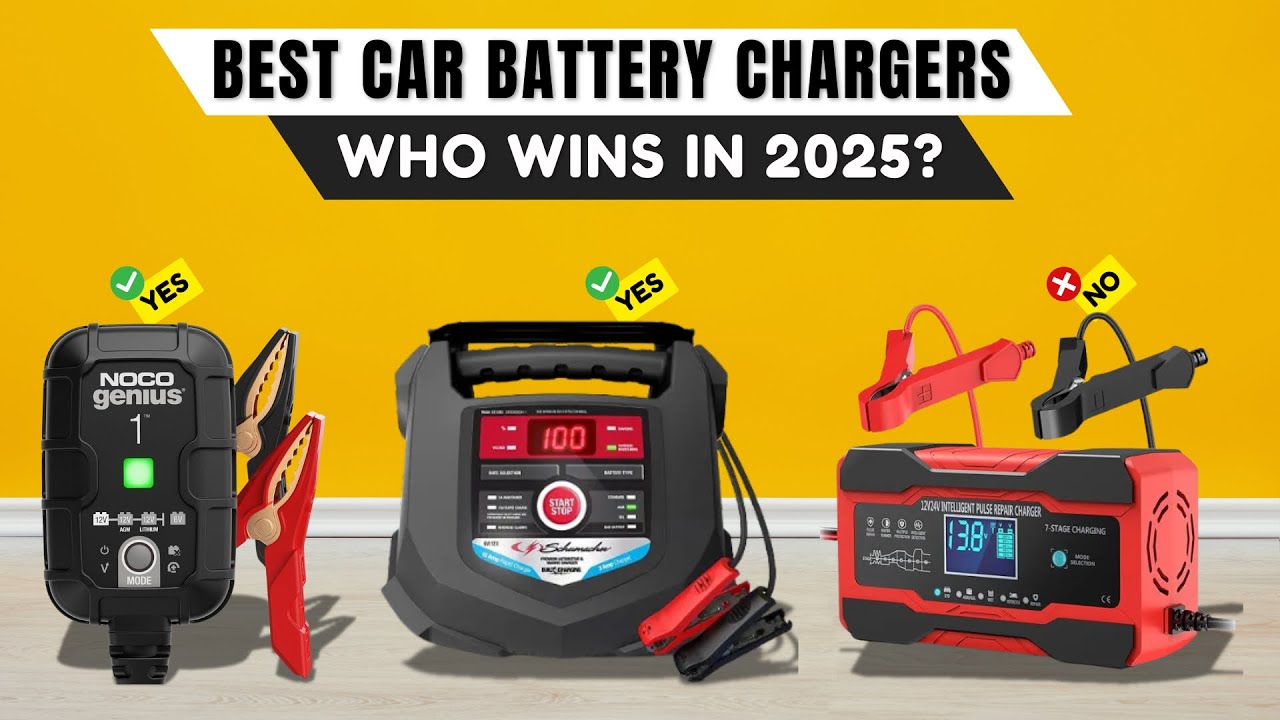

A dead battery is rarely convenient. The frustrating part is not just getting the engine running again. It is choosing between a slow maintainer, a high-output charger, or a bulky starter that may spend most of its life in the garage. The Best car battery chargers make that decision clearer by matching charge rate, battery chemistry, voltage, and recovery features to the job.
Our top pick is the TowerTop 25A Charger, thanks to its unusually broad feature set, clear display, adjustable output, and 100A engine-start mode. The rest of the lineup ranges from compact NOCO maintainers to heavy-duty wheeled equipment and 12V/24V chargers for larger vehicles.
| # | Product | Award | Voltage | Charge rate | Best for |
|---|---|---|---|---|---|
| 1 | TowerTop 25A Charger | Best overall | 12V | 2A, 10A, 25A, auto | One charger for most garage tasks |
| 2 | NOCO GENIUS10 | Best premium smart charger | 6V, 12V | 10A | Cars, trucks, marine and lithium batteries |
| 3 | NOCO GENIUS1 | Best compact maintainer | 6V, 12V | 1A | Stored cars, motorcycles and small batteries |
| 4 | NOCO GENIUS5 | Best midrange NOCO | 6V, 12V | 5A | Everyday cars and deep-cycle batteries |
| 5 | PCHH 15A 12/24V Charger | Best heavy-duty automatic charger | 12V, 24V | 0 to 15A | Larger lead-acid batteries |
| 6 | Schumacher SC1280 | Best simple high-output charger | 6V, 12V | 15A | Straightforward vehicle charging |
| 7 | Schumacher SC1445 | Best wheeled starter | 6V, 12V | 10A, 25A, 50A boost | Workshops and multiple vehicles |
| 8 | YDBAO 10A Charger | Best compact 10A charger | 12V | 10A | Drivers who want a readable display |
| 9 | PLXX 15A 12/24V Charger | Best for large lead-acid batteries | 12V, 24V | 0 to 15A | Trucks, boats and RVs |
| 10 | E-FAST 25A Charger | Best adjustable high-output charger | 12V, 24V | 2A, 8A, 20A, 25A, auto | Fast charging and emergency boost |
1. TowerTop 25A Charger: Best Overall

Pros
- Four selectable charging settings
- 100A engine-start mode
- Clear LCD with charging-stage information
- Supports several 12V lead-acid battery types
- Automatic maintenance after charging
Cons
- Does not support 6V batteries
- Repair mode cannot fix a completely drained battery
- Larger than a basic maintainer
Best for: drivers who want one charger for routine maintenance, faster charging, and occasional starting help.
The TowerTop 25A Charger is the one we'd keep for a mixed garage. It is not limited to nursing a battery along at a low trickle. You can select 2A, 10A, 25A, or an automatic setting, so the same unit can handle a small maintenance job or a larger battery that needs more current. The LCD is useful here because it shows the charging stage and parameters instead of leaving you to guess what the charger is doing.
Its 12V compatibility covers standard, AGM, gel, wet, maintenance-free, EFB, calcium, and deep-cycle batteries. The listed eight-stage program moves through desulfation, soft start, bulk charging, absorption, analysis, repair, float, and pulse maintenance. That matters for a vehicle that sits for long periods, since the charger can shift from charging to maintaining rather than continuing to push full current.
The 100A engine-start feature is the unusual part. TowerTop says it can help activate a car battery in 100 seconds, which makes this more versatile than the NOCO GENIUS10 and NOCO GENIUS5 when an immediate starting assist matters. It also includes a winter mode that adds 0.2V to the original charging voltage, plus reverse-polarity, spark, overcurrent, overheating, and short-circuit protection.
The weakness is its narrower battery-voltage range. Unlike several NOCO and heavy-duty options here, it is a 12V-only charger, so it cannot serve 6V equipment or a 24V system. Repair mode also is not a magic fix for a battery that is completely drained. Choose it if your garage centers on 12V vehicles and you want more control than a small maintainer offers.
2. NOCO GENIUS10: Best Premium Smart Charger

Pros
- Charges 6V and 12V batteries
- Supports lead-acid and LiFePO4 batteries
- Thermal sensor adjusts charging
- Force Mode can work with batteries at zero volts
- Includes clamps and eyelet terminals
Cons
- No engine-start mode
- More output than small batteries need
- Larger than the GENIUS1 and GENIUS5
Best for: owners who need a refined charger for multiple battery chemistries and vehicle types.
The NOCO GENIUS10 is the most polished all-purpose charger in this group. Its 10A output is enough for normal car batteries without crossing into the heavier, workshop-oriented design of the Schumacher SC1445. It handles both 6V and 12V systems and is rated for flooded, maintenance-free, AGM, gel, SLA, VRLA, deep-cycle, marine, powersport, and LiFePO4 batteries.
NOCO's integrated thermal sensor is the feature that separates it from many simpler automatic chargers. It adjusts the charge for ambient temperature, reducing the risk of overcharging in heat and undercharging in cold. For a vehicle that remains connected in a garage through changing seasons, that is more meaningful than simply having a long list of charging modes.
The GENIUS10 can charge batteries from as low as 1V, and its Force Mode allows manual charging down to zero volts. That does require more care than leaving the automatic program alone, but it gives the charger a better chance with a neglected battery than the TowerTop's stated limitation on completely drained batteries. Pulse charging also targets sulfation and acid stratification, while the unit can remain connected indefinitely for maintenance.
It is not the pick for emergency engine starting because no starting-assist output is listed. The 10A rate is also unnecessary for someone maintaining a motorcycle or a stored classic car. For those jobs, the NOCO GENIUS1 is smaller and gentler. The GENIUS10 earns its place when one charger needs to cover cars, trucks, boats, powersports equipment, and lithium batteries.
3. NOCO GENIUS1: Best Compact Maintainer

Pros
- Very small and light
- Supports 6V and 12V batteries
- Works with lead-acid and LiFePO4 batteries
- Long 110-inch DC cable
- Includes clamps and eyelet terminals
Cons
- 1A output is slow for a car battery
- No engine-start function
- Direct wall-plug design limits placement
Best for: long-term maintenance of motorcycles, lawn equipment, stored cars, and other small batteries.
The NOCO GENIUS1 is the least intimidating charger here. It weighs 0.95 pounds and measures 3.5 by 2.3 by 1.3 inches, so it can stay with a stored vehicle without taking over the shelf. The 110-inch DC cable is also generous for a compact unit, especially when the wall outlet is not directly beside the battery.
Its 1A output is designed for patience, not quick recovery. That makes sense for a motorcycle, lawn mower, powersports battery, or car that sits between occasional drives. It supports 6V and 12V lead-acid batteries, including AGM, gel, SLA, VRLA, flooded, maintenance-free, and deep-cycle types, along with LiFePO4 batteries.
The GENIUS1 includes temperature compensation, automatic monitoring, pulse charging for sulfation and acid stratification, and a Force Mode for batteries that read down to zero volts. That gives it more recovery capability than its small size suggests. It can be connected indefinitely for maintenance, provided the charger is used according to its instructions.
The clear trade-off is speed. A 1A charger is not the right tool when a large car battery needs to be brought back quickly, and it cannot help start an engine. The GENIUS5 is a better middle ground for a daily driver. Pick the GENIUS1 when the main job is keeping a battery healthy during storage, not rescuing a vehicle in a hurry.
4. NOCO GENIUS5: Best Midrange NOCO

Pros
- 5A output suits ordinary vehicle batteries
- Supports 6V, 12V, lead-acid and LiFePO4
- Temperature-compensated charging
- Force Mode supports deeply discharged batteries
- Compact body with mounting hardware
Cons
- No engine-start mode
- Slower than 10A and 25A chargers
- Not a 24V charger
Best for: everyday car owners who want a capable smart maintainer without a large workshop unit.
The NOCO GENIUS5 hits the useful middle of the NOCO range. It is more practical for a regular car than the GENIUS1, but it remains compact enough to mount or store easily. At 1.59 pounds and 7.95 by 3.43 by 4.61 inches, it is still a small piece of garage equipment rather than a floor-standing charger.
Five amps gives it a more sensible pace for a typical car battery while preserving the careful behavior expected from a maintainer. It automatically monitors the battery, adjusts for temperature, and can stay connected indefinitely. The supported list is broad, covering 6V and 12V lead-acid batteries as well as AGM, gel, SLA, VRLA, flooded, maintenance-free, deep-cycle, marine, and LiFePO4 batteries.
Like the other GENIUS models, the GENIUS5 can charge from 1V and has Force Mode for batteries down to zero volts. Its pulse charging targets sulfation and acid stratification. That combination makes it more useful after a battery has been neglected than a basic trickle charger. The included 72-inch AC cable, 80-inch DC cable, clamps, and eyelet terminals also make permanent connection straightforward.
The GENIUS10 is the better choice for larger batteries or faster routine charging, while the GENIUS1 makes more sense for small batteries and storage. The GENIUS5 is limited to 6V and 12V, so it does not cover 24V equipment. For a household with ordinary cars, motorcycles, and a boat battery, it is the balanced NOCO option.
5. PCHH 15A 12/24V Charger: Best Heavy-Duty Automatic Charger

Pros
- Automatic 12V and 24V detection
- 0 to 15A charging range
- Repair and winter modes
- LCD shows voltage, current, and charge percentage
- Metal and ABS construction
Cons
- Weighs 12.4 pounds
- Repair mode is limited to batteries above 3V
- No lithium battery support listed
Best for: owners of trucks, boats, RVs, and other equipment using larger lead-acid batteries.
The PCHH 15A 12/24V Charger feels built for a garage that does more than maintain one passenger car. Its metal and ABS casing and 12.4-pound weight suggest a sturdier, less portable design than the NOCO units. That heft is not an advantage for a shelf-mounted maintainer, but it makes more sense when the charger is intended for larger lead-acid batteries and repeated vehicle work.
Automatic detection of 12V and 24V batteries is the key capability. The charger has fast and trickle modes, and its output can range from 0 to 15A. It supports AGM, gel, wet or flooded, EFB, calcium, maintenance-free, and deep-cycle batteries. The LCD reports voltage, current, and charging percentage, giving more useful information than a simple status light.
The automatic program shuts off when the battery is full, then maintain mode uses pulse current. Winter mode is intended to provide a fuller charge in cold conditions. Repair mode can revive batteries above 3V, but the threshold matters: it is not intended for a battery that has fallen completely flat. The listed safety features include reverse polarity, short circuit, overcharge, overheating, overvoltage, and overcurrent protection.
The PCHH is much less attractive for someone who only wants a small device beside a motorcycle. The NOCO GENIUS5 is easier to store and covers lithium batteries, while the PCHH brings 24V capability and a heavier-duty build. Choose it for larger lead-acid systems and garage projects, including the listed electrolysis use, rather than casual seasonal maintenance.
6. Schumacher SC1280: Best Simple High-Output Charger

Pros
- Supports 6V and 12V batteries
- Automatic voltage detection
- 15A rapid charging
- Float maintenance mode
- Shows voltage and charge percentage
Cons
- Battery chemistry support is narrower than NOCO
- No lithium support listed
- Fewer recovery controls than the top picks
Best for: drivers who want an uncomplicated charger with a useful fast-charge setting.
The Schumacher SC1280 takes a straightforward approach. It automatically detects 6V or 12V operation, uses microprocessor control, and provides a display for battery voltage and charge percentage. There is less emphasis on a large menu of specialized programs than with the TowerTop or E-FAST, which may appeal to owners who want to connect the charger and see clear progress.
Its 15A rapid-charge setting is the headline feature. That gives it more recovery speed than the NOCO GENIUS5, while the maintain or float function makes it suitable for a battery that will remain connected during storage. It supports standard, AGM, gel, and deep-cycle batteries for automotive and marine use.
The SC1280 is also physically manageable. Its listed weight is 2.7 pounds, and the body measures roughly 10 by 4.3 by 10 inches. Reverse hook-up protection and automatic operation address the most common connection mistake. The display is basic, but the voltage and percentage readouts are the information most drivers actually need.
It does not match the NOCO GENIUS10's listed LiFePO4 support or its Force Mode for a zero-volt battery. It also lacks the TowerTop's engine-start feature. The SC1280 is a sensible pick for standard lead-acid vehicle batteries when the priority is 6V/12V flexibility and 15A charging without a more complicated interface.
7. Schumacher SC1445: Best Wheeled Starter

Pros
- 250A engine-start output
- 25A and 50A boost settings
- 135-minute manual timer
- Supports 6V and 12V batteries
- Suitable for automotive and marine batteries
Cons
- Very heavy at 28.8 pounds
- Manual timer requires more attention
- Bulky for a home garage shelf
Best for: workshops, fleets, and owners who need a substantial engine-start unit rather than a compact maintainer.
The Schumacher SC1445 is a different kind of tool from the compact smart chargers above. Its wheeled format and 28.8-pound weight make it a piece of workshop equipment. That is inconvenient if the charger needs to move between a tight parking space and a storage shelf, but useful when it has to serve multiple vehicles or stay near a work bay.
The output range is substantial. It provides a 10A charging function, 25A and 50A boost settings, and a listed 250A engine-start capability. It supports 6V and 12V standard, AGM, gel, and deep-cycle batteries. For a car, truck, SUV, RV, classic car, ATV, or marine battery, this is the model in the group designed most clearly around getting a disabled vehicle operational.
Control is more manual than with the TowerTop, NOCO, or PCHH. The 135-minute timer lets the user set a specific charging period, which can be useful when a battery requires a controlled session. It also means this is not the obvious choice for unattended, indefinite maintenance. The product is a charger and engine starter, not a small always-connected smart maintainer.
The SC1445 is overkill for a motorcycle or a car that only needs seasonal battery care. The GENIUS10 is far easier to leave connected, and the TowerTop offers a more flexible automatic design in a smaller format. Pick the Schumacher when starting power, boost charging, and wheeled mobility matter more than compact storage.
8. YDBAO 10A Charger: Best Compact 10A Charger

Pros
- 10A output in a compact body
- LCD shows voltage, current, temperature, and charge level
- Five selectable modes
- Supports 12V lead-acid and LiFePO4 batteries
- Temperature compensation
Cons
- 12V only
- Instructions caution against unattended use beyond 12 hours
- No engine-start function
Best for: owners who want fast 12V charging and more live information than a basic maintainer provides.
The YDBAO 10A Charger is compact but not simplistic. Its LCD displays voltage, current, battery level, ambient temperature, and seasonal information. That is a useful arrangement for someone who wants to understand what is happening during a charging session rather than rely on one indicator light.
It supports 12V lead-acid batteries, including AGM, gel, SLA, and VRLA types, along with LiFePO4 batteries. Five modes cover car, AGM/gel/LiFePO4, wet, motorcycle, and pulse repair use. The charger automatically detects the battery after the AC cord is connected, though the listed instructions also emphasize choosing the correct battery type before use.
The 10A output puts it near the NOCO GENIUS10 in ordinary charging capability, but the overall operating approach differs. YDBAO lists eight protection layers, including reverse polarity, short circuit, overheating, and overcurrent protection, plus temperature compensation for summer and winter conditions. Pulse repair is intended to address sulfation and acid stratification in lead-acid batteries.
The important limitation is in the usage guidance. The listing says not to let the charger operate unattended for more than 12 hours, so this is not the same kind of indefinite maintainer as the NOCO models. It also cannot handle 6V or 24V batteries. For a 12V car owner who values a detailed display and short, supervised charging sessions, it is a capable alternative.
9. PLXX 15A 12/24V Charger: Best for Large Lead-Acid Batteries

Pros
- Automatic 12V and 24V detection
- Fast and slow charging modes
- Supports 4Ah to 300Ah lead-acid batteries
- LCD shows voltage, current, and percentage
- Includes repair and winter modes
Cons
- Weighs 12.8 pounds
- No lithium support listed
- Repair mode requires more than 3V
Best for: owners of large lead-acid batteries in trucks, boats, RVs, and utility equipment.
The PLXX 15A 12/24V Charger is closely aligned with the PCHH, but it specifies support for 4Ah to 300Ah lead-acid batteries. That range makes its intended audience clear. This is equipment for vehicles and systems larger than the typical compact car battery, not a pocket-size maintainer for occasional use.
It uses automatic voltage detection and offers fast and slow charging modes. The seven-stage program is designed to charge and maintain standard lead-acid, AGM, gel, wet or flooded, EFB, calcium, maintenance-free, and deep-cycle batteries. An LCD reports voltage, current, and charging percentage, while automatic shutoff is intended to stop charging after the battery is full.
Repair and desulfation modes target old, idle, sulfated, or stratified batteries above 3V. Winter mode raises charging activity in cold weather. The charger also lists electrolysis and 12V DC power-supply uses, plus protection against reverse polarity, short circuits, overcharging, overheating, overvoltage, and overcurrent.
The PLXX is not a better fit than the NOCO GENIUS10 for a lithium-equipped vehicle, because lithium support is not listed. It is also physically substantial at 12.8 pounds. Between this and the PCHH, the decision comes down to the stated battery range and the kind of equipment in the garage. For anyone trying to understand whether a battery is failing before buying a replacement, a separate battery health check before charging can prevent wasted recovery attempts.
10. E-FAST 25A Charger: Best Adjustable High-Output Charger

Pros
- 25A output for 12V batteries
- Supports 12V and 24V systems
- Five current selections
- 200-second 12V booster mode
- Aluminum housing and cooling fan
Cons
- Booster mode is limited to 12V
- Repair mode runs for 16 hours
- High-output operation is more than small batteries need
Best for: garages that need fast charging, adjustable current, and occasional emergency starting assistance.
The E-FAST 25A Charger is aimed at drivers who want a high-output tool without moving up to the size of the wheeled Schumacher SC1445. Its aluminum alloy housing and built-in cooling fan are intended to manage heat during high-current charging. At 3.7 pounds, it remains portable, though it is larger than a small maintainer.
The five current selections are 2A, 8A, 20A, 25A, and automatic. That range is useful because a motorcycle or lawn mower battery should not be treated like a large truck or RV battery. The charger provides 25A for 12V batteries and 15A for 24V batteries, with automatic detection of the connected voltage. It supports lead-acid, AGM, gel, SLA, flooded, and EFB batteries, as well as LiFePO4.
Its dedicated booster mode supplies a maximum current surge for 200 seconds and is limited to 12V batteries. That makes it closer to the TowerTop in emergency usefulness than the NOCO GENIUS10, although the TowerTop lists a 100A engine-start mode while E-FAST emphasizes a timed booster. The E-FAST also includes an eight-stage charging process and a 16-hour repair mode.
Automatic temperature behavior is another strong point. The charger activates winter mode below 10°C and summer mode above 28°C, adjusting its behavior for cold and heat. Still, the high output can be excessive for small batteries, and the repair cycle requires patience. Choose it when adjustable current, 24V support, and a 12V booster are central requirements.
How to choose best car battery chargers
The right charger depends on the battery voltage, chemistry, size, and whether the main task is recovery, routine charging, or long-term maintenance.
Voltage support
A charger marked 12V is designed for standard passenger vehicles and many motorcycles, boats, and lawn equipment. Models with 6V support can also serve older or specialized batteries, while 24V support matters for certain trucks, RV setups, and larger equipment. Automatic voltage detection reduces setup decisions, but it is still important to confirm the battery voltage before connecting the clamps.
Charging current
Amperage controls how quickly a charger can replenish a battery. A 1A unit such as the NOCO GENIUS1 is suited to long maintenance sessions, while 5A to 10A is a practical range for many cars. Chargers offering 15A or 25A can reduce waiting time, but they need selectable lower settings for small batteries.
The fastest charger is not automatically the safest match. Choose the current range that includes your smallest battery, not just the largest one.
Battery chemistry
Lead-acid is not one single category. AGM, gel, flooded, EFB, SLA, VRLA, and deep-cycle batteries can require different charging behavior. Lithium support is separate, and only use it when the charger explicitly lists LiFePO4 or the exact lithium chemistry in your battery. The NOCO GENIUS models, YDBAO, and E-FAST list LiFePO4 support, while the PCHH and PLXX listings focus on lead-acid types.
Maintenance and repair modes
A maintainer switches to a lower-current state after charging so a vehicle can remain connected during storage. Repair and desulfation modes use pulses or a dedicated program to address sulfation and acid stratification. They may help an aging battery, but they cannot guarantee recovery of a failed battery, and the PCHH and PLXX specify minimum voltage requirements for repair.
Displays and controls
A display showing voltage, current, and charge percentage is useful when diagnosing a slow or uncertain charging session. The TowerTop adds charging-stage information, while YDBAO shows ambient temperature and mode details. Simpler controls can be preferable when the charger is used by several people, but a manual timer or booster mode requires more attention than a fully automatic maintainer.
Engine-start output
Some chargers are designed only to recharge a battery. Others add a starting or booster function, such as the TowerTop's 100A engine-start mode, the E-FAST's 200-second booster, or the Schumacher SC1445's 250A engine-start capability. These features can be useful in an emergency, but they do not turn a charger into a portable battery pack. The unit still needs AC power.
For readers comparing chargers with the battery itself, the signs that a car battery needs replacing are worth checking before relying on repair mode. If the battery repeatedly loses charge after a full session, the underlying problem may not be the charger.
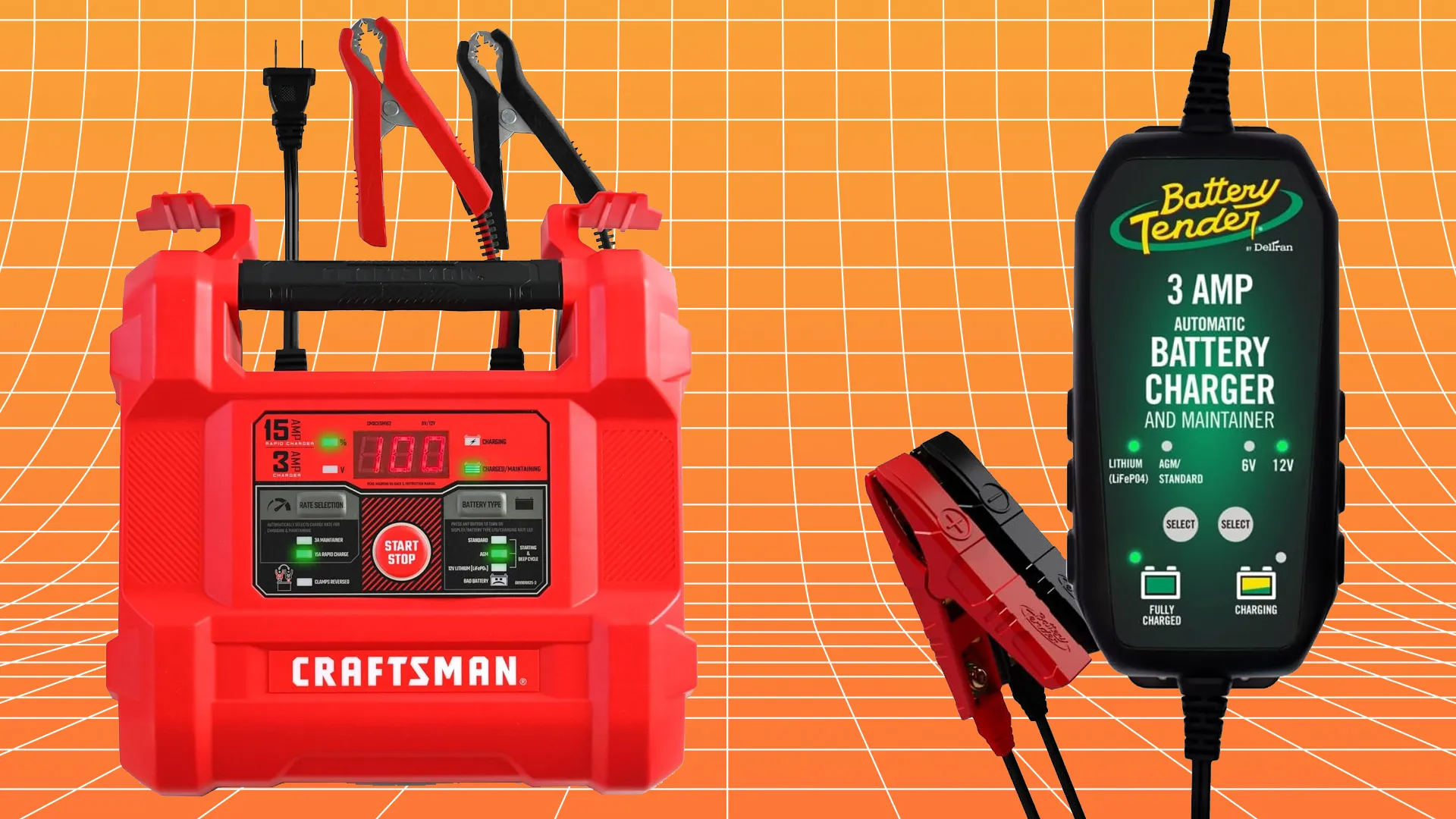
Frequently asked questions
Can a car battery charger stay connected overnight?
Some smart maintainers are designed for indefinite connection and automatically move into a maintenance state. The NOCO GENIUS1, GENIUS5, and GENIUS10 specifically list this capability. Follow the instructions for any charger that does not state that unattended or indefinite maintenance is supported.
Should I choose a 1A, 5A, or 10A charger?
A 1A charger is mainly for storage and small batteries. Five amps is a useful general-purpose level for many car batteries, while 10A shortens charging time for larger automotive batteries. Selectable-current models offer more flexibility when the same charger will serve motorcycles, cars, and larger equipment.
Can these chargers revive a completely dead battery?
Some models have recovery features, but success depends on the battery's condition. The NOCO GENIUS models list Force Mode down to zero volts, while the PCHH and PLXX specify repair operation above 3V. A battery that will not accept or retain a charge may need replacement.
Do I need a charger that supports lithium batteries?
Only if you own a LiFePO4 battery or expect to charge one. Lead-acid modes are not a substitute for a lithium-compatible program. The chemistry listed on the charger should match the chemistry printed on the battery.
What is winter mode?
Winter mode adjusts charging behavior for cold conditions, when batteries can charge less readily. TowerTop lists a 0.2V increase, while E-FAST uses temperature thresholds for winter and summer modes. This feature is useful in cold garages, but it does not repair a battery that has failed mechanically.
Can a 12V charger charge a 24V battery?
No. A 12V-only charger should not be used on a 24V system. Choose a charger that explicitly supports 24V, such as the PCHH 15A 12/24V Charger, PLXX 15A 12/24V Charger, or E-FAST 25A Charger.
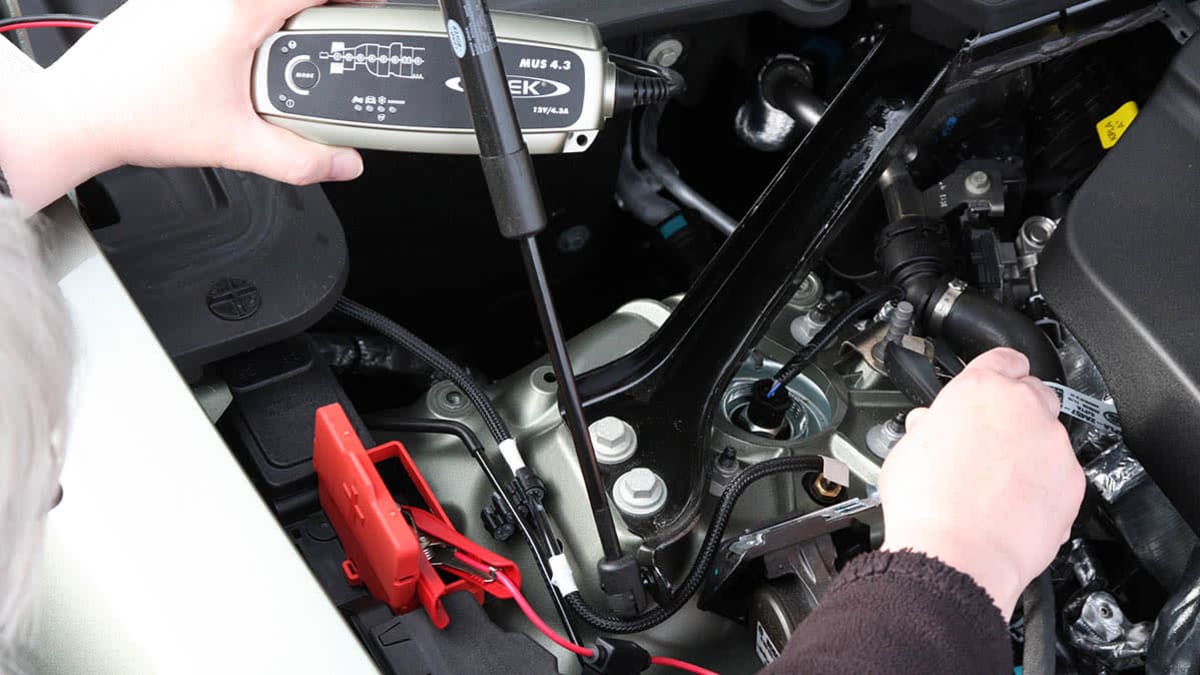
The bottom line
The TowerTop 25A Charger is the strongest all-around pick because it combines adjustable 2A, 10A, and 25A charging with automatic maintenance, a useful display, repair functions, and a 100A engine-start mode. It is limited to 12V, but that covers the majority of car-battery use.
For a more refined smart charger, the NOCO GENIUS10 is the better choice, especially if 6V support, LiFePO4 compatibility, temperature compensation, and indefinite maintenance matter more than engine starting. The GENIUS1 remains the compact storage specialist, while the GENIUS5 is the sensible middle option.
The Best car battery chargers are the ones matched to your battery's voltage and chemistry. If you are undecided, choose the TowerTop for broad 12V garage duties, or the GENIUS10 for careful multi-chemistry maintenance.
As an Amazon Associate we earn from qualifying purchases.