
A CB antenna can make the difference between a useful conversation and a radio that seems silent. The trouble is that the right choice depends on more than length. Mount type, usable frequency range, power handling, cable length, and the way the antenna flexes all matter once it is on a moving vehicle.
We compared ten antennas ranging from compact magnetic mounts to tall stainless steel and fiberglass designs. The Best CB Antennas list starts with the Wilson T2000 5-Inch Shaft for its capable center-loaded design, but the other picks make more sense for removable setups, mirror mounting, spring protection, or unusually high power handling.
Our top pick is the Wilson T2000 5-Inch Shaft, with options below for nearly every common CB installation.
Comparison table
| # | Product | Award | Frequency | Length or power handling | Mount or connector | Best for |
|---|---|---|---|---|---|---|
| 1 | Wilson T2000 5-Inch Shaft | Best overall | 26 to 30 MHz | 49-inch whip, 3, 500 watts | 3/8-inch x 24 ferrule | Truckers wanting a serious center-loaded antenna |
| 2 | Nagoya CB-72 | Best magnetic kit | 26 to 28 MHz | 28 inches | 3.5-inch magnetic mount, PL-259 | Simple temporary installations |
| 3 | Prostick 3-Foot Fiberglass | Best compact fiberglass | 26 to 29.5 MHz | 3 feet | Nickel-plated brass ferrule | Drivers needing a shorter mast |
| 4 | Cobra HGA 1500 | Best removable long mount | 26 to 30 MHz | 36 inches, 100 watts | 4-inch magnetic mount, PL-259 | SUVs and recreational vehicles |
| 5 | Browning BR-78 | Best high-power whip | 25 to 30 MHz | 63 inches, 15, 000 watts | 3/8-inch x 24 thread | Tall fixed-mount installations |
| 6 | Stryker SRA10 | Best mirror mount | 10-meter coverage | 10, 000 watts | Mirror mount | Heavy-duty commercial vehicle setups |
| 7 | Bingfu 27MHz Magnetic Antenna | Best compact portable option | 26 to 28 MHz | 13 inches, 30 watts | Magnetic base, PL-259 and BNC adapter | Handheld and mobile CB flexibility |
| 8 | Prostick 4-Foot Fiberglass | Best fiberglass reach | 26 to 29.5 MHz | 4 feet, 1, 000 watts | Nickel-plated brass ferrule | A durable general-purpose mast |
| 9 | Wilson T2000 10-Inch Shaft | Best extended shaft | Not specified | 49-inch whip, 3, 500 watts | Center-loaded coil | Mounts that need extra shaft height |
| 10 | Prostick 4-Foot with Spring | Best spring-equipped fiberglass | 26 to 29.5 MHz | 4 feet, 1, 000 watts | Heavy-duty stainless steel spring | Rough roads and flexible mounting |
1. Wilson T2000 5-Inch Shaft: Best Overall

Pros
- Center-loaded stainless steel coil
- 49-inch stainless steel whip
- 26 to 30 MHz frequency range
- 3, 500-watt rating
- AM and FM ready
Cons
- Requires a compatible 3/8-inch x 24 mount
- Tall whip needs clearance
- Does not include a magnetic base or coaxial cable
Best for: truck and mobile-radio owners building a permanent, high-capability installation.
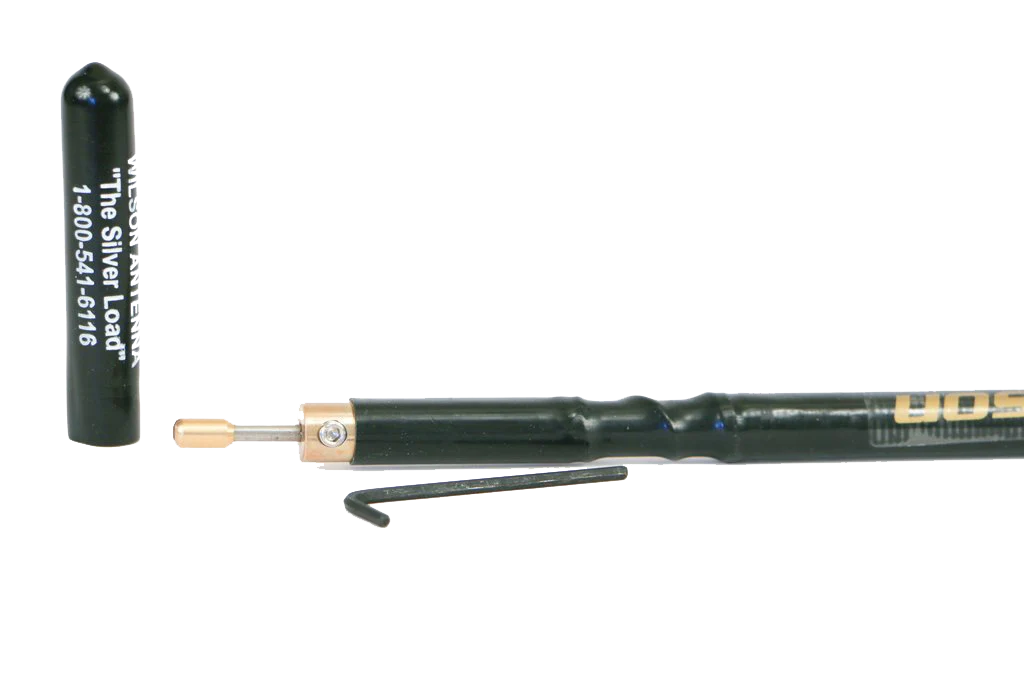
The Wilson T2000 5-Inch Shaft is the antenna we would start with for a serious mobile CB setup. Its 5-inch shaft and 49-inch stainless steel whip create a substantial assembly without the extra height of the 10-inch Wilson version. The center-loaded coil is the important part here. It keeps the antenna practical for a vehicle while still giving the design a broad operating range.
The stated frequency range runs from 26 to 30 MHz, which covers the CB band and leaves room across the upper portion of that range. Its 3, 500-watt rating is far beyond what a standard CB radio normally needs, but it signals a design intended to tolerate demanding installations. The larger coil housing is also meant to handle more power, while the 3/8-inch x 24 chromed brass ferrule fits a common mobile antenna mounting arrangement.
This Wilson is more adaptable than the Prostick fiberglass antennas because it covers a wider stated range and uses a center-loaded steel design. The Nagoya CB-72 is easier to install because it arrives as a magnetic kit with cable, but the Wilson is the stronger choice when the mount is already in place and the antenna will stay there. The 10-inch Wilson T2000 gives a taller shaft, but that extra height is not automatically useful on every vehicle.
The missing pieces are important. There is no magnetic base or coaxial cable in the listed features, so buyers need to match it with the correct mount and feed line. The 49-inch whip also needs attention around garages, branches, and low structures. Choose it when you want a durable, capable center-loaded antenna and already understand the installation it requires.
2. Nagoya CB-72: Best Magnetic Kit

Pros
- Includes an 18-foot RG-58A/U cable
- Heavy-duty 3.5-inch magnetic mount
- Covers 26 to 28 MHz
- Includes a PL-259 connector
- Brass NMO mount and gold contact pin
Cons
- Shorter than the main whip antennas
- Magnetic mounting is less permanent than a bolted mount
- Frequency range is narrower than some alternatives
Best for: drivers who want a removable antenna kit with the cable and connector included.
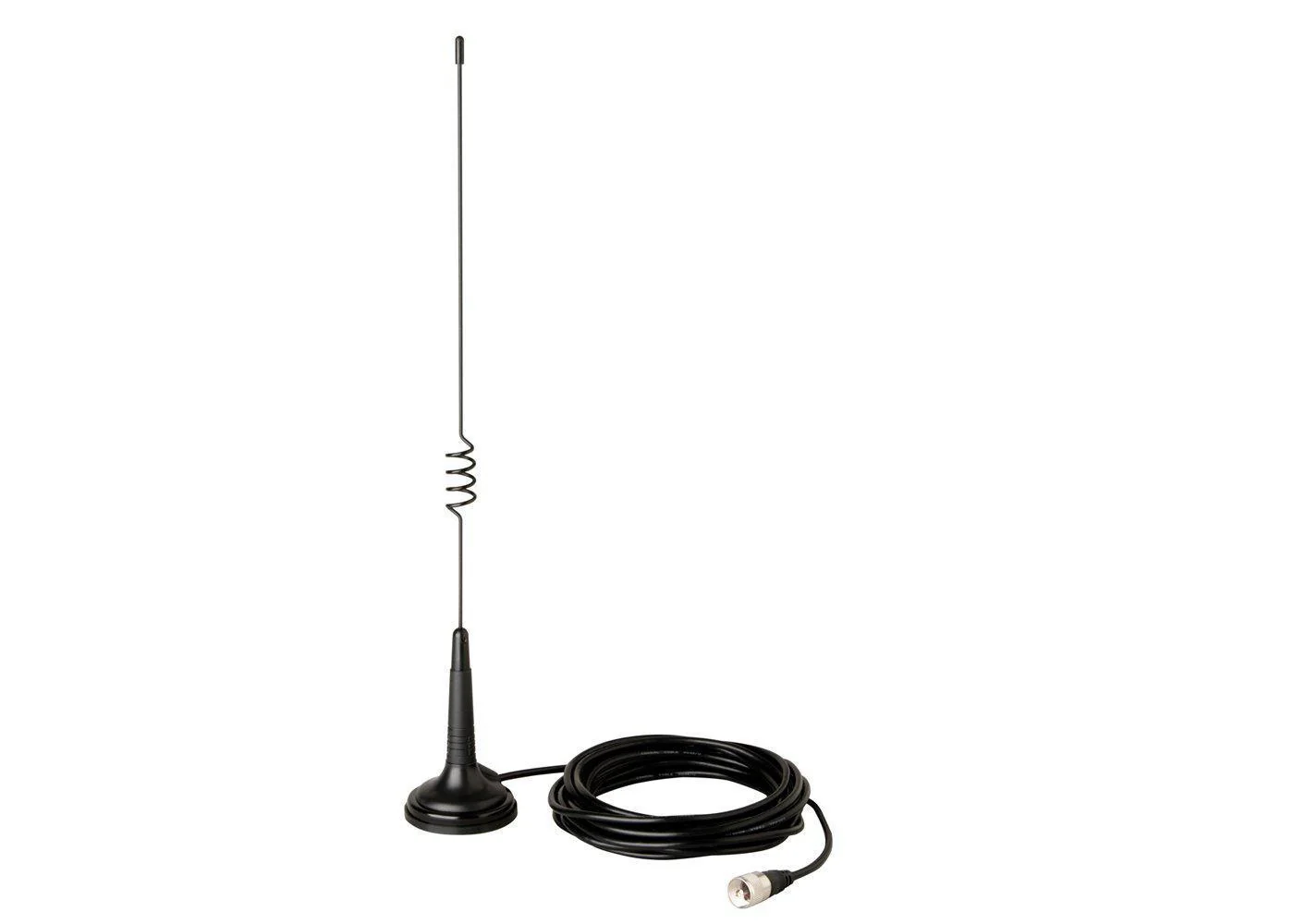
The Nagoya CB-72 is the easiest pick here for someone who does not want to assemble an antenna system piece by piece. The 28-inch antenna arrives with a heavy-duty magnetic mount and an 18-foot RG-58A/U cable, so the basic installation path is clear. Put the mount on a suitable metal surface, route the coax, and connect the included PL-259 connector to the radio.
Its 26 to 28 MHz coverage is focused on the CB range rather than attempting to stretch far beyond it. The listing says no tuning is required, which suits drivers who want a ready-to-use setup instead of a project involving antenna adjustments. The 3.5-inch magnet is larger than the Bingfu's compact magnetic arrangement, and the solid brass NMO mount with a gold plunger-type contact pin gives the assembly a more substantial feel.
The CB-72 is a better temporary choice than the Cobra HGA 1500 when cable length and an included connector matter. The Cobra is longer at 36 inches and uses a 4-inch magnet, but its cable is 15 feet and its listed power rating is 100 watts. The Nagoya does not promise the same broad 26 to 30 MHz range as the Cobra, so radio users who need wider coverage should look elsewhere.
Magnetic mounting always brings a trade-off. It is convenient and removable, but the antenna still depends on a clean, suitable vehicle surface and careful coax routing. It is also not the pick for someone seeking the tallest whip or the highest power handling in this group. For a straightforward mobile setup, though, the CB-72 removes much of the installation uncertainty.
If the antenna is going on a pickup or work vehicle, the mounting choices that suit truck cabs and larger vehicles deserve attention before ordering. The mount can matter just as much as the whip.
3. Prostick 3-Foot Fiberglass: Best Compact Fiberglass

Pros
- Pre-tuned for the CB frequency range
- Compact 3-foot fiberglass mast
- VibraSorb anti-breakage design
- Nickel-plated brass ferrule
- Made in the USA
Cons
- No power-handling rating is listed
- Requires a separate mount and coax
- Shorter reach than the 4-foot Prostick models
Best for: vehicle owners who need a shorter fiberglass antenna for clearance-sensitive installations.
The Prostick 3-Foot Fiberglass is a sensible answer to the common problem of an antenna that is simply too tall for the vehicle or the route it travels. A 3-foot mast is easier to live with than a 4-foot or 63-inch design, especially when overhead clearance is a daily concern. It still uses a fiberglass element rather than a thin exposed steel whip, which gives it a different sort of durability.
This antenna is pre-tuned for 26 to 29.5 MHz. That range spans the CB frequency area listed for the product, and the pre-tuned design is intended to avoid a complicated setup. The fiberglass mast joins to a nickel-plated brass ferrule, while the VibraSorb anti-breakage design is meant to improve service life when the antenna encounters vibration and movement.
Compared with the Prostick 4-Foot Fiberglass, this model sacrifices a foot of mast length and does not list the 1, 000-watt handling figure shown by the longer model. That makes the 4-foot version the more capable choice on a suitable mount. The 3-foot antenna is easier to place where height is limited, and it has the same stated frequency range and fiberglass construction.
The listing does not include a mount or coaxial cable, and it does not provide a power-handling rating. That means it is not a complete kit for a first-time installation. Skip it if you need everything in one box or if maximum reach is the priority. Pick it when a compact, pre-tuned fiberglass element is more useful than extra height.
4. Cobra HGA 1500: Best Removable Long Mount

Pros
- 36-inch antenna
- Heavy-duty 4-inch magnet
- 15 feet of matched-braided coaxial cable
- 26 to 30 MHz broad-band coverage
- Weather channel ready
Cons
- Listed for 100 watts
- Magnetic base needs a suitable mounting surface
- Heavier than the compact magnetic alternatives
Best for: SUV, truck, and recreational vehicle owners who want a removable antenna with a larger magnetic base.
The Cobra HGA 1500 occupies a useful middle ground. It is longer than the Nagoya CB-72 and Bingfu, yet it remains removable because the base uses a heavy-duty magnet. That combination makes sense for an SUV or recreational vehicle that needs a capable antenna on the road but should not carry one permanently.
The antenna measures 36 inches, and the 4-inch magnet is designed to stay in place once positioned. Cobra includes 15 feet of matched-braided coaxial cable with a PL-259 connector, enough for many vehicle layouts without immediately reaching for an extension. Its broad-band frequency coverage extends from 26 to 30 MHz, and the listing also calls it weather channel ready.
The Cobra has a wider stated range than the Nagoya CB-72, while the Nagoya counters with a longer 18-foot cable and a claim of no tuning required. The Cobra is also a more substantial removable option than the 13-inch Bingfu, but it does not match the high power figures of the Wilson or Browning antennas. Its listed 100-watt rating puts its intended use in a different class from those heavy high-power designs.
A magnetic base is convenient, but it is not the same as a fixed mount. The vehicle surface must be suitable, the coax should be routed without sharp damage points, and the antenna needs clearance. Choose the HGA 1500 if removable installation matters and you want more antenna length than the compact kits provide.
5. Browning BR-78: Best High-Power Whip

Pros
- 63-inch total height
- 25 to 30 MHz frequency range
- Stainless steel 17-7 PH tapered whip and shaft
- 15, 000-watt handling claim
- Standard 3/8-inch x 24 mounting thread
Cons
- Tallest antenna in this roundup
- Heavy at 3.18 pounds
- Mount and cable are not listed as included
Best for: fixed installations where maximum antenna height and high power handling take priority.
The Browning BR-78 is the unapologetically tall option. Its total height is 63 inches, built from a 6-inch stainless steel shaft and a 47-1/4-inch whip. That extra length can be useful when a fixed vehicle mount has the clearance and structural support to handle it, but it is not a casual choice for a low-roof vehicle.
Browning specifies a 25 to 30 MHz range, broader at the lower end than most of the other picks here. The antenna uses a 17-7 PH tempered stainless steel tapered whip and shaft, with a standard 3/8-inch x 24 thread for mounting compatibility. Its listed power handling reaches 15, 000 watts, a figure aimed at demanding radio installations rather than ordinary stock CB use.
The BR-78 goes much further than the Prostick fiberglass antennas in height and stated power handling. The Wilson T2000 5-Inch Shaft is easier to manage on a typical truck because it is shorter and lighter, while the Browning offers a longer element and a broader stated frequency range. The Wilson is the more balanced recommendation, but the Browning is the specialist pick for an installation designed around a tall stainless whip.
The weakness is not subtle. At 3.18 pounds and 63 inches, this antenna places more demands on the mount and has more exposure to branches, structures, and wind. Buyers must also provide the mounting hardware and cable. It makes sense only when the vehicle and installation can support its physical size.
6. Stryker SRA10: Best Mirror Mount

Pros
- Designed for mirror mounting
- 10, 000-watt handling claim
- Floating waterproof IPX8 and JIS8 design
- Lightweight 1.08-pound package weight
- Paper white backlight for daytime use
Cons
- Product details do not state antenna length
- A compatible mirror mount is required
- The listed features emphasize 10-meter use rather than a specific CB range
Best for: commercial vehicle owners who need a rugged mirror-mount antenna for a demanding exterior installation.
The Stryker SRA10 is aimed at a different installation than the magnetic and standard ferrule models. It is a 10-meter mirror-mount antenna, making it a natural fit for trucks and other vehicles with suitable mirror hardware. The mirror position can keep the antenna clear of roof-mounted equipment, but it also means the mounting bracket needs to be selected carefully.
Its strongest listed feature is high power handling up to 10, 000 watts. The antenna is also described as floating waterproof with IPX8 and JIS8 protection, which matters for a component exposed to rain, spray, and road grime. The package weight is 1.08 pounds, lighter than the Browning BR-78 and less demanding for a properly installed mirror bracket.
The Stryker is more weather-focused than the Wilson T2000 designs, and its mounting concept is more specialized than the Cobra HGA 1500's removable magnet. The Browning offers a clearly stated 25 to 30 MHz range and 63-inch height, while the SRA10's provided details do not state an antenna length or a specific CB frequency range. That missing information should guide the buying decision.
This is not the antenna to choose simply because its power figure is large. The mirror mount must fit the vehicle, and the radio system needs to be appropriate for the antenna's intended 10-meter role. Pick it when weather protection and mirror mounting are central requirements, not when you want the simplest universal CB kit.
For a complete truck setup, it helps to think about the antenna and radio together. The radio features that matter in a working truck installation can prevent a mismatch between the antenna and the equipment at the other end of the coax.
7. Bingfu 27MHz Magnetic Antenna: Best Compact Portable Option

Pros
- Compact 13-inch antenna
- Magnetic base for roof, hood, or trunk mounting
- Includes PL-259 connector
- Includes BNC male to SO-239 female adapter
- Works with mobile and handheld CB radios
Cons
- Limited 30-watt input rating
- Shorter than the other mobile antennas
- Only 10 feet of RG58/U coaxial cable
Best for: users who need a small, portable antenna that can connect to both mobile and handheld CB equipment.
The Bingfu 27MHz Magnetic Antenna is the smallest and most flexible kit in this group. Its 13-inch antenna is much easier to store and move than the 36-inch Cobra or the long Wilson and Browning whips. The magnetic base can sit on a roof, hood, or trunk, so it works for temporary vehicle use where a permanent mount is not wanted.
The antenna is designed around 27 MHz and covers 26 to 28 MHz across the listed CB frequency range. Bingfu specifies a maximum input power of 30 watts, which is a clear boundary for users with higher-output radio equipment. The included 10-foot RG58/U cable is shorter than the Nagoya's 18-foot lead, but it keeps the kit compact.
The connector selection is the real differentiator. It includes a PL-259 male connector plus a BNC male to SO-239 female adapter, allowing the antenna to work with mobile CB radios and handheld CB radios that use different connection arrangements. The Cobra HGA 1500 is more suitable when reach and a larger magnetic base matter, while the Bingfu wins when portability and connector flexibility matter more.
Its short length and modest power rating limit expectations. It is not the antenna for maximum range from a fixed truck installation, and the 10-foot cable may be restrictive in a large vehicle. Choose it for temporary use, a spare radio kit, or a handheld setup where a compact magnetic antenna is more practical than a tall whip.
8. Prostick 4-Foot Fiberglass: Best Fiberglass Reach
Pros
- 4-foot fiberglass element
- Rated for up to 1, 000 watts
- Pre-tuned for 26 to 29.5 MHz
- VibraSorb anti-breakage design
- Made in the USA
Cons
- Mount and coax are separate
- Taller than the compact Prostick
- No spring is included
Best for: drivers who want a durable fiberglass mast with more reach than a 3-foot antenna.
The Prostick 4-Foot Fiberglass is the straightforward reach upgrade in the Prostick family. It gives the installation an extra foot over the 3-foot version without switching to a long exposed steel whip. The fiberglass construction and VibraSorb anti-breakage design suit vehicles that see regular vibration and movement.
Prostick specifies a 26 to 29.5 MHz pre-tuned range and a 1, 000-watt input rating. The first figure keeps the antenna within the stated CB frequency area, while the second gives it a defined power-handling advantage over the Bingfu and Cobra magnetic models. A nickel-plated brass ferrule joins the mast to the mounting hardware, supporting a durable connection.
The standard 4-foot model is more capable than the 3-foot Prostick when clearance allows the extra length. The spring-equipped Prostick 4-Foot adds better protection for rough routes, but this version has the simpler structure and remains a sound choice for a stable mount. Wilson's T2000 5-Inch Shaft provides a different center-loaded design with a wider stated range, so the choice comes down to fiberglass durability versus steel coil construction.
There is no mount, spring, or coax listed with this antenna. It is therefore better suited to a buyer who already has the installation hardware than someone shopping for a complete kit. Choose it when you want fiberglass construction, a 4-foot element, and a clearly stated 1, 000-watt rating.
9. Wilson T2000 10-Inch Shaft: Best Extended Shaft

Pros
- 10-inch shaft
- 49-inch stainless steel whip
- Center-loaded stainless steel coil
- 3, 500-watt rating
- Patented low-loss air-wound coil design
Cons
- Taller than the 5-inch Wilson version
- Requires a separate mount and coax
- Extra shaft length is not needed for every vehicle
Best for: truck installations that specifically benefit from a longer shaft above the mounting point.
The Wilson T2000 10-Inch Shaft shares the core design of the top Wilson pick but changes the installation geometry. Its 10-inch shaft sits below a 49-inch stainless steel whip, giving the assembly more height than the 5-inch version. That can be useful when the mount position or vehicle body leaves the antenna lower than desired.
The T2000 series uses a stainless steel center-loaded coil, a larger coil housing, and a low-loss air-wound coil design. Wilson rates this version at 3, 500 watts and describes it as AM and FM ready. Those details make it a serious mobile antenna, but they do not eliminate the need for a solid mount and appropriate coax.
The 10-inch model is not automatically better than the 5-inch model. The Wilson T2000 5-Inch Shaft is the more balanced choice for most installations because it reduces the total shaft length while retaining the 49-inch whip and the same listed power rating. The longer shaft earns its place when the vehicle's mounting position specifically calls for it.
Height is the main drawback. A longer assembly can create more clearance issues and more leverage on the mount, and the product does not include a magnetic base or cable in the listed features. Choose it when you have measured the vehicle and know the extra shaft length solves a real mounting problem.
10. Prostick 4-Foot with Spring: Best Spring-Equipped Fiberglass

Pros
- 4-foot fiberglass mast
- Includes a heavy-duty stainless steel spring
- 26 to 29.5 MHz tuning range
- 1, 000-watt rating
- Nickel-plated brass ferrule
Cons
- Mount and coax are separate
- Spring adds height and moving parts
- Listing condition may vary
Best for: drivers who want fiberglass reach with extra flex for rough roads and trail use.
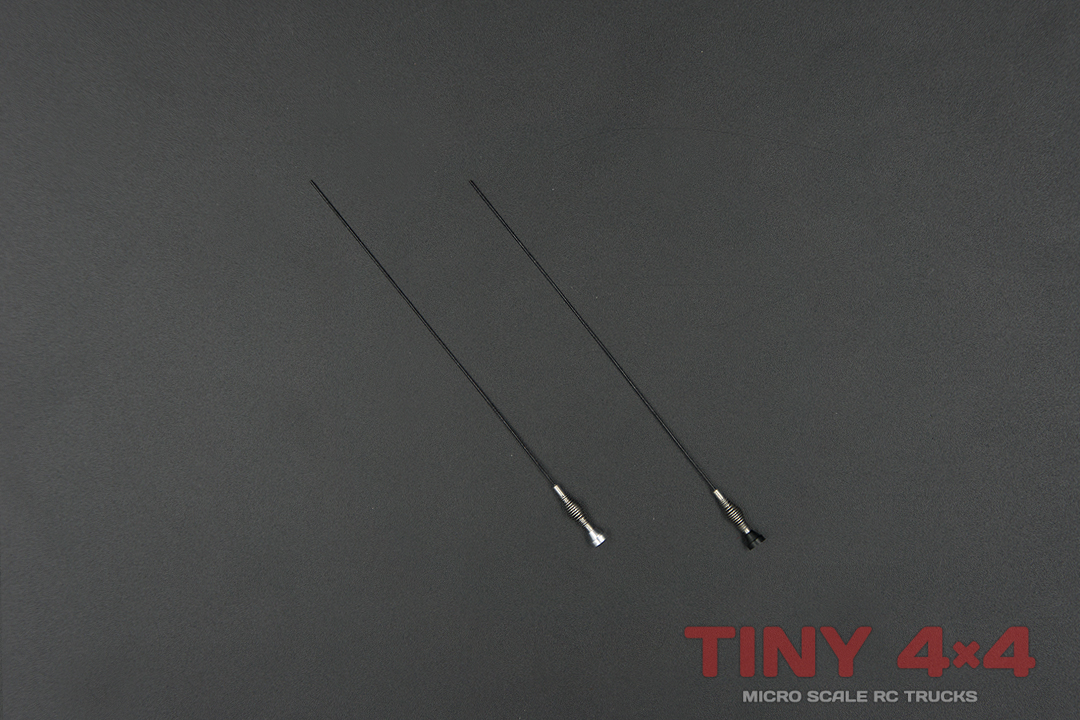
The spring-equipped Prostick is the practical version for vehicles that put more stress on an antenna. It keeps the 4-foot fiberglass format but adds a heavy-duty black stainless steel spring between the antenna and mount. That spring gives the assembly more room to flex when the whip encounters vibration or an obstruction.
Its stated tuning range is 26.000 to 29.500 MHz, and the antenna is rated for 1, 000 watts. The VibraSorb anti-breakage design works alongside the spring rather than replacing it, while the fiberglass mast and nickel-plated brass ferrule provide the basic structure. This is a more forgiving physical design than the standard Prostick 4-Foot Fiberglass.
The standard 4-foot Prostick is cleaner and simpler when the mount is stable and the route is free of low branches. The spring-equipped model is preferable when the antenna will see more movement, though it is not as compact as the 3-foot version and does not offer the Wilson T2000's center-loaded steel construction. It is also a more focused choice than the Cobra or Nagoya kits, since those include magnetic mounting and coax.
The product does not list a mount or cable, so buyers still need to complete the installation. A spring can also change the way the antenna moves and adds another connection to inspect. Pick this Prostick when physical flexibility matters more than a one-box installation.
How to choose best cb antenna
The right CB antenna is a matching exercise between the radio, vehicle, mount, and environment. Start with the installation you can support, then compare the antenna's length, frequency coverage, power handling, and included hardware.
Mount type
Magnetic mounts are convenient for temporary installations and vehicles that cannot be drilled. The Nagoya CB-72 and Cobra HGA 1500 include magnetic bases, while the Bingfu uses a smaller portable magnetic design. A fixed or mirror mount is more appropriate when the antenna will remain on the vehicle and the structure can support it.
Antenna length
A longer antenna can provide more physical reach, but it also needs more clearance and places greater leverage on the mount. The Bingfu is only 13 inches, the Prostick models measure 3 or 4 feet, and the Browning BR-78 reaches 63 inches. Pick the longest antenna your vehicle can safely and conveniently accommodate, not simply the longest one listed.
Frequency range
A stated range tells you where the antenna is designed to operate. The Prostick models cover 26 to 29.5 MHz, the Wilson and Cobra models extend to 30 MHz, and the Browning starts at 25 MHz. A pre-tuned model can simplify setup, but the radio and mounting system still need to be compatible.
A tall antenna is only an advantage when the vehicle, mount, and route can safely live with it.
Power handling
Power ratings are useful only when compared with the radio and installation. The Bingfu is listed for 30 watts, the Cobra for 100 watts, the Prostick 4-Foot for 1, 000 watts, and several Wilson, Browning, and Stryker models list much higher figures. Do not treat a large rating as a guarantee of better communication from a standard radio.
Cable and connectors
A complete kit saves installation work. The Nagoya includes 18 feet of RG-58A/U and a PL-259 connector, the Cobra includes 15 feet of matched-braided coax, and the Bingfu includes 10 feet of RG58/U plus a BNC adapter. The standalone fiberglass and Wilson antennas require more planning because a cable and mount are not listed as included.
Frequently asked questions
Does a longer CB antenna always work better?
Not always. Length can help, but the antenna must be mounted securely and kept clear of obstructions. A shorter antenna that is correctly installed can be more useful than a tall antenna mounted in a poor location.
Which antenna is easiest to install?
The Nagoya CB-72 is the simplest complete kit in this roundup because it includes a magnetic mount, 18-foot coaxial cable, and PL-259 connector. The Cobra HGA 1500 is also convenient, with a magnetic base and 15 feet of coax.
Are magnetic CB antennas reliable?
They can be reliable for temporary mobile use when placed on a suitable clean metal surface. They are easier to remove than fixed mounts, but the coax and base should be checked regularly, especially after rough travel or exposure to weather.
What is the difference between fiberglass and steel CB antennas?
Fiberglass antennas use a rigid mast and can be built with features intended to resist breakage and vibration. Steel center-loaded antennas such as the Wilson T2000 use a coil and whip design, which gives them a different balance of flexibility, height, and power handling.
Do these antennas include a CB radio?
No. These are antenna products. Several include a cable, connector, or magnetic base, but the radio itself and any unlisted mounting hardware must be supplied separately.
Can a CB antenna work with a handheld radio?
Some can, provided the connector and radio are compatible. The Bingfu is the clearest fit because it includes a BNC male to SO-239 female adapter and is described as compatible with mobile and handheld CB radios.
The bottom line
The Best CB Antennas choice for most serious mobile installations is the Wilson T2000 5-Inch Shaft. It combines a 49-inch stainless steel whip, a 26 to 30 MHz range, a 3, 500-watt rating, and a center-loaded coil without adding the extra shaft length of the larger Wilson version.
For a removable setup, the Nagoya CB-72 is the more convenient buy because it includes the magnetic mount, long cable, and connector. Drivers who need fiberglass durability should choose the Prostick 4-Foot Fiberglass, while rough-road users have a good reason to select the spring-equipped version.
If you are undecided, choose the Wilson for a planned fixed installation and the Nagoya for a quick removable setup.
As an Amazon Associate we earn from qualifying purchases.