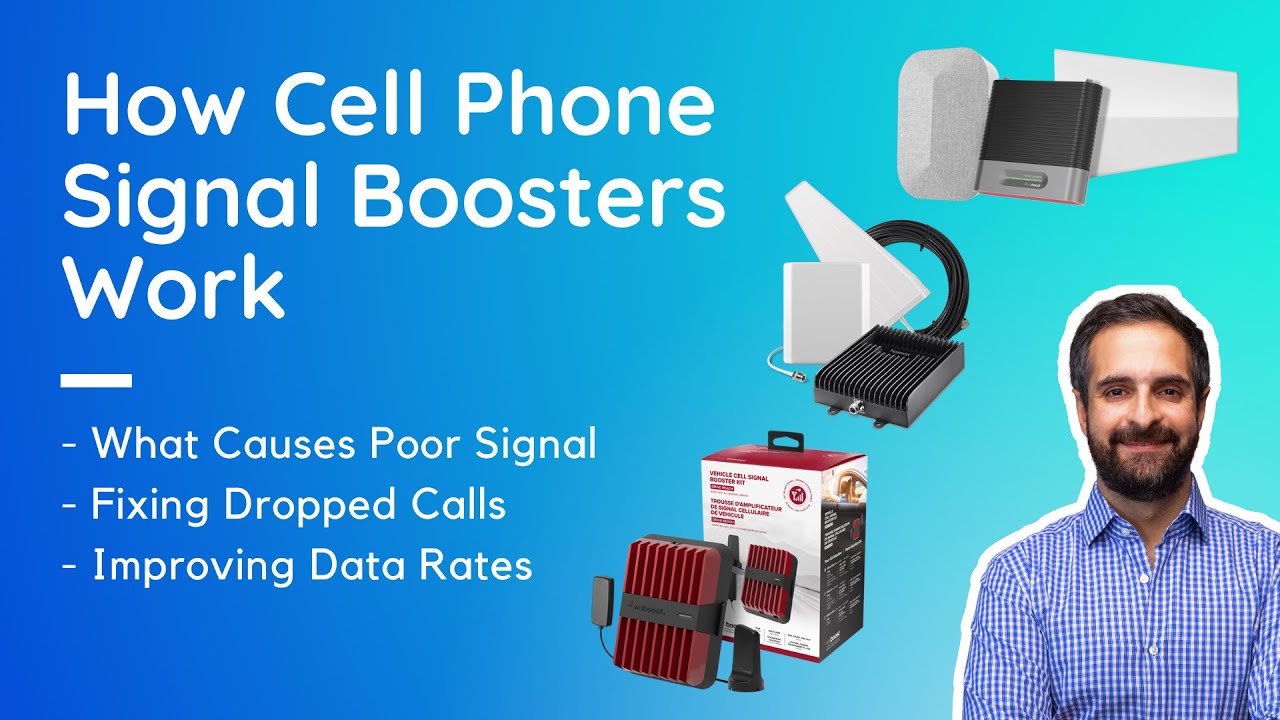

A weak outdoor signal can turn a home office into a dead zone, especially when a call drops the moment you walk into a basement, back room, or metal-sided building. The right amplifier can make that existing signal usable indoors, but it cannot create service where the outdoor antenna receives nothing.
Our Best cell phone signal booster picks range from compact single-room units to multi-antenna systems rated for several thousand square feet. The important differences are coverage claims, supported bands, gain control, antenna layout, and how much help you get during installation.
HiBoost Home Office 2000 is the best overall pick here. The list also includes a compact small-home option, narrow-band hardware, large multi-room systems, and a well-supported established alternative.
Comparison table
| # | Product | Award | Coverage | Supported bands | Standout feature | Best for |
|---|---|---|---|---|---|---|
| 1 | HiBoost Home Office 2000 | Best overall | Up to 2, 000 sq. ft. | 12, 13, 17, 5, 2/25, 4 | LCD and app monitoring | Home offices and small homes |
| 2 | Phonetone Band 12/13/17 | Best for rural cabins | Up to 4, 500 sq. ft. | 12, 13, 17 | Directional outdoor antenna | Verizon and AT&T users on supported bands |
| 3 | Nstcell Multi-Room 7000 | Best for broad coverage | Up to 7, 000 sq. ft. | 5G and 4G LTE | Two indoor panel antennas | Large homes with several rooms |
| 4 | SNDcell Home 5500 | Best for band coverage | Up to 5, 500 sq. ft. | 2/25, 4/66, 5/12, 17/13 | 70 dB maximum gain | Homes needing broad U.S. band support |
| 5 | HiBoost Multi-Room 8000 | Best for large buildings | Up to 8, 000 sq. ft. | 2, 4, 5, 12, 13, 17, 25 | Two indoor antennas and app | Large homes, offices, and basements |
| 6 | Bamwirz Home 2500 | Best compact option | Up to 2, 500 sq. ft. | 5, 12, 13, 17 | LCD and automatic gain control | Small homes and single offices |
| 7 | ZORIDA ACE 5S | Best for small spaces | Up to 2, 000 sq. ft. | 12/17, 13, 5, 4, 2/25 | 72 dB maximum gain and app | Studios, cabins, and one-room setups |
| 8 | HiBoost Hero 3000 | Best antenna flexibility | Up to 3, 000 sq. ft. | 12, 13, 17, 5, 2/25, 4 | Panel and whip antenna options | Homes that need flexible placement |
| 9 | HiBoost Home Office 2500 | Best app-guided setup | Up to 2, 500 sq. ft. | 12, 13, 17, 5, 2/25, 4 | Display and SignalSupervisor app | DIY installers who want guidance |
| 10 | weBoost Home MultiRoom | Best established option | Up to 5, 000 sq. ft. | 4G LTE and 5G | App tower and signal guidance | Multi-room homes and familiar support |
1. HiBoost Home Office 2000: Best Overall

Pros
- Covers up to 2, 000 square feet
- Supports the major U.S. bands in this group
- LCD and app help locate the outdoor antenna
- Directional antenna can reach a farther signal source
- Automatic gain control manages performance
Cons
- Requires at least one bar of outdoor signal
- Coverage is smaller than the multi-room systems
- The directional antenna needs careful positioning
Best for: home-office users who want broad carrier support and useful installation feedback.
The HiBoost Home Office 2000 is the easiest recommendation for a typical home office because it focuses on the parts that make a booster less frustrating to install. Its LCD shows real-time signal strength, while the HiBoost Signal Supervisor app can help find a better outdoor antenna position. That means you have more information than simply plugging in the amplifier and hoping the bars improve.
Its rated indoor coverage is up to 2, 000 square feet, and the system supports bands 12, 13, and 17 in the 700 to 750 MHz range, band 5 at 800 to 850 MHz, bands 2 and 25 at 1900 MHz, and band 4 from 1700 to 2100 MHz. That spread covers the major bands listed for Verizon, AT&T, T-Mobile, and other U.S. carriers. The 5G support is tied to 5G deployed through compatible existing 4G bands, not every form of 5G service.
The directional outdoor antenna is a meaningful advantage in a rural setting. Pointing it toward a stronger signal source can be more effective than relying on an omnidirectional design, though it adds a positioning step. Automatic gain control adjusts the amplifier as conditions change, and the unit is designed to support multiple devices at once. HiBoost also lists a three-year warranty and U.S. customer support.
Compared with the HiBoost Home Office 2500, this model covers less space but offers the same useful combination of app guidance, display feedback, and broad band support. The weBoost Home MultiRoom reaches farther and has a lighter main unit, but the HiBoost has a more explicit band breakdown and a directional antenna emphasis. The main weakness is its 2, 000-square-foot ceiling, and that figure depends heavily on the signal available outside. Skip it if your building needs several indoor antennas or the outdoor signal is absent.
For a small house, apartment, workshop, or home office with a measurable outdoor signal, this is the balanced pick. It gives the installer feedback, supports the bands most shoppers need, and avoids narrowing the recommendation to one carrier.
2. Phonetone Band 12/13/17: Best for Rural Cabins

Pros
- Directional antenna helps target a distant tower
- Rated for up to 4, 500 square feet
- Supports multiple users simultaneously
- Automatic gain control and LED status indicator
- Includes long-term repair and technical support terms
Cons
- Band support is limited to 12, 13, and 17
- The listed 5G support depends on carrier DSS deployment
- Not suitable for shoppers needing bands 2, 4, or 5
Best for: cabins and rural homes where Verizon or AT&T service arrives through bands 12, 13, or 17.
The Phonetone Band 12/13/17 is a specialist rather than an all-carrier answer in the broadest sense. Its strength is a focused setup for the lower bands commonly used by Verizon and AT&T, paired with a high-gain directional outdoor antenna. In a cabin or rural home, the ability to aim toward the strongest available tower can matter more than a long list of features.
Phonetone rates the indoor coverage at up to 4, 500 square feet, though the actual result changes with the signal at the outdoor antenna. The booster supports 4G LTE and the 5G service that carriers deploy through bands 12, 13, and 17 using Dynamic Spectrum Sharing. That qualification matters. A phone having a 5G label does not guarantee that this booster supports the particular 5G band used in your area.
Automatic gain control detects the incoming signal and adjusts the unit for its operating conditions. An LED indicator reports its status, and the system supports multiple devices at the same time. The directional antenna is intended for DIY installation, so this is not a hidden indoor repeater that works without an exterior antenna and cable routing.
The narrow band selection is the real compromise. HiBoost Home Office 2000 supports bands 2, 4, 5, 12, 13, 17, and 25, making it safer for mixed-carrier households. Nstcell Multi-Room 7000 is a better physical fit for a large home with multiple interior rooms. Choose Phonetone instead when you know the carrier and bands match, and when the outdoor signal is weak but still present.
It is also backed by a 30-day return period, a three-month replacement policy, up to three years of manufacturer repair, and lifetime professional technical support according to the listing. Those support terms are useful when the antenna has to be aimed carefully. Anyone unsure of their carrier bands should skip this model and choose one of the broader-band options.
3. Nstcell Multi-Room 7000: Best for Broad Coverage

Pros
- Rated for up to 7, 000 square feet
- Two indoor panel antennas serve multiple rooms
- Supports 5G and 4G LTE signals for U.S. carriers
- 70 dB maximum gain
- Automatic gain control helps regulate the signal
Cons
- Coverage varies sharply with outdoor signal strength
- Requires about 32 feet between outdoor and indoor antennas
- Installation is more involved than a single-room setup
Best for: larger homes where two indoor panel antennas can spread coverage across three to five rooms.
The Nstcell Multi-Room 7000 makes sense when the dead zones are spread throughout a house rather than confined to one desk or bedroom. It uses two indoor panel antennas, and the listing describes coverage across three to five rooms. That layout is more useful than a single indoor antenna when walls, floors, or a metal structure block the signal from reaching the far side of the building.
The headline coverage is up to 7, 000 square feet, but Nstcell gives unusually specific conditions for that number. With one to two outdoor bars, the listed coverage is about 800 square feet. Three to four bars raises the estimate to about 3, 000 square feet, while five bars is associated with the full 7, 000-square-foot claim. The booster cannot amplify a signal that the outdoor antenna cannot receive.
The unit lists a maximum gain of 70 dB and maximum output power of 17 dBm. It supports 5G and 4G LTE through carrier-deployed compatible bands, along with voice, text, and data. Installation requires the power to remain off while the antennas are adjusted, and the outdoor and indoor antennas should be separated by about 32 feet. Those requirements are not minor details because poor antenna separation can limit performance.
The SNDcell Home 5500 has a similar 70 dB maximum gain but is aimed at one or two rooms and uses a smaller coverage claim. HiBoost Multi-Room 8000 reaches farther on paper and also uses two indoor antennas, while offering app and LCD monitoring. Nstcell is the more direct choice when two panel antennas are the deciding feature and the home has a solid exterior signal.
Its weakness is the gap between the best-case coverage and the more modest result with only one or two outdoor bars. This is not the right pick for a remote property with almost no signal outside, nor for a small office where a simpler antenna arrangement would be easier. For a large home with usable outdoor service, the two-panel design is the reason to choose it.
4. SNDcell Home 5500: Best for Band Coverage

Pros
- Supports bands 2/25, 4/66, 5/12, 17, and 13
- Rated for up to 5, 500 square feet
- 70 dB maximum gain and 17 dBm maximum output
- Automatic gain control
- Works with all U.S. carriers listed
Cons
- Actual coverage depends on outdoor signal bars
- Intended for one to two rooms despite the large maximum figure
- Antenna separation and cable routing take planning
Best for: households that need broad band support and coverage beyond a single room.
The SNDcell Home 5500 stands out because its band list is unusually clear. It supports bands 2 and 25, band 4 and 66, band 5, bands 12 and 17, and band 13. That makes it a sensible candidate for a mixed-carrier household where the exact network band is not obvious, and it avoids the narrow compatibility question that comes with the Phonetone model.
The product claims up to 5, 500 square feet, with more realistic steps depending on the outside signal. Its listing associates one to two bars with about 300 square feet, three to four bars with about 2, 500 square feet, and five bars with the full 5, 500-square-foot estimate. That makes the coverage number useful only after you check the signal outside the building.
Inside, the unit uses automatic gain control to respond to the available signal. The listed maximum gain is 70 dB, with maximum output power of 17 dBm. It supports 5G through the existing 4G bands permitted for this type of booster, so users should confirm that their carrier has deployed the relevant 5G service rather than treating the 5G label as universal.
Compared with Bamwirz Home 2500, SNDcell covers more space and supports a wider set of bands. Nstcell Multi-Room 7000 is a better fit when two indoor panel antennas are necessary across several rooms, while SNDcell is more attractive for one or two rooms with a strong exterior signal. The installation instructions call for roughly 32 feet between the outdoor and indoor antennas, which can be difficult in a compact building.
SNDcell lists FCC and IC certification and describes a straightforward outdoor log-periodic antenna setup. The weakness is that its room guidance is less ambitious than its maximum area figure suggests. Buy it for band flexibility and a moderately large coverage target, not because every home will receive 5, 500 square feet of amplified service.
5. HiBoost Multi-Room 8000: Best for Large Buildings

Pros
- Rated for up to 8, 000 square feet
- Two indoor antennas support five to six rooms
- Covers bands 2, 4, 5, 12, 13, 17, and 25
- LCD and app show signal and installation information
- Automatic gain control and multi-user support
Cons
- Large physical installation footprint
- Maximum coverage depends on strong exterior signal
- More system than a small office needs
Best for: large homes, offices, basements, and metal buildings needing several indoor coverage zones.
The HiBoost Multi-Room 8000 is the heavy-duty choice in this group. It is designed for homes, offices, cabins, rural cottages, basements, and metal buildings, with two indoor antennas intended to cover five to six rooms. That makes it fundamentally different from a single whip antenna system meant to improve one desk or one central room.
Its listed coverage is up to 8, 000 square feet, and its maximum gain is 70 dB. The supported bands include 2, 4, 5, 12, 13, 17, and 25, covering the same broad spread that makes the smaller HiBoost units flexible across U.S. carriers. The listing also describes support for 2G, 3G, 4G, and 5G, with the current 5G limitation applying to compatible carrier deployments.
The built-in LCD and HiBoost app can show real-time signal strength, gain settings, and installation progress. Automatic gain control reduces the need for manual adjustment, which is helpful when the outdoor antenna and indoor antennas are separated by a long cable run. The system supports multiple users and devices at the same time, so it is better suited to a busy household than a narrowly focused booster.
Nstcell Multi-Room 7000 is a close alternative with two indoor panel antennas and a slightly smaller coverage claim. HiBoost offers broader published band coverage and more explicit monitoring tools. weBoost Home MultiRoom has a smaller and lighter main unit and app-based tower guidance, but it does not present the same seven-band list in the product information.
The downside is scale. The main unit dimensions listed are 7.6 by 17.8 by 11.9 inches and its listed weight is about 4.4 pounds, so this is not something to hide casually behind a monitor. Its 8, 000-square-foot figure also assumes favorable signal conditions. Choose it when several rooms genuinely need help, and skip it for a compact apartment or single-room office.
6. Bamwirz Home 2500: Best Compact Option

Pros
- Supports bands 5, 12, 13, and 17
- Automatic gain control
- LCD screen provides operating feedback
- Supports multiple devices
- FCC and IC certification listed
Cons
- Band selection is narrower than most options here
- Coverage claims vary from 3, 000 to 7, 000 square feet in the listing
- Needs at least one to two outdoor bars
Best for: a small home, office, garage, or farm building using the supported lower bands.
The Bamwirz Home 2500 is a straightforward system for shoppers who do not need the broadest possible band list. It supports bands 5, 12, 13, and 17, works with U.S. carriers, and is designed to improve 5G and 4G LTE signal for multiple devices. Its LCD and automatic gain control give it a little more feedback than the most basic amplifiers.
The listing describes coverage ranging from 3, 000 to 7, 000 square feet and separately presents this model as a 2, 500-square-foot home and multi-room booster. That inconsistency is important. Coverage depends on outside signal strength, and the safer way to read the specifications is as a variable range rather than a guarantee for a particular floor plan.
The unit lists up to 65 dB of maximum gain. The feature description connects that gain with fewer dropped calls, better voice quality, and faster internet in homes, offices, garages, farms, remote areas, warehouses, and metal buildings. Automatic gain control detects the existing signal and adjusts the booster, while the FCC and IC certification claims address interference with carrier networks.
ZORIDA ACE 5S supports more bands and offers 72 dB maximum gain, but its indoor coverage is aimed at a smaller 2, 000-square-foot space. SNDcell Home 5500 is the better choice for wider band compatibility and a larger documented coverage target. Bamwirz is the simpler middle ground when bands 5, 12, 13, and 17 match the local carrier.
The biggest limitation is compatibility, not the LCD. A phone or carrier relying on bands outside this set may not receive the expected improvement. Check the bands and the outdoor signal before choosing it. For a small building with a compatible carrier and a measurable signal outside, it keeps the setup relatively focused.
7. ZORIDA ACE 5S: Best for Small Spaces

Pros
- 72 dB maximum gain
- Supports bands 12/17, 13, 5, 4, and 2/25
- Compact indoor whip antenna
- App offers installation support and signal data
- Rated for multiple devices up to 2, 000 square feet
Cons
- Not intended for very large homes
- Requires one to two outdoor bars
- App registration is part of the support process
Best for: studios, cabins, garages, and small homes with one main dead zone.
The ZORIDA ACE 5S has the smallest, most contained feel of the systems here. Its indoor whip antenna attaches to the booster, and the company describes the unit as suitable for small homes, studios, or a single room. That is a better match than installing a multi-antenna system when the problem is concentrated in one part of the building.
It supports bands 12 and 17, band 13, band 5, band 4, and bands 2 and 25. The listed maximum gain is 72 dB, and the booster supports 3G, 4G LTE, and 5G through compatible existing frequency bands. The combination gives it broader carrier flexibility than Bamwirz, although the 2, 000-square-foot coverage target is more modest.
ZORIDA’s app can guide outdoor antenna placement, show signal data before and after installation, and provide step-by-step videos and instructions. The app also offers one-on-one technical support. Automatic gain control is not called out in the feature list, so shoppers who specifically want that named function may prefer HiBoost or Bamwirz.
The compact design is the reason to choose it over HiBoost Home Office 2000, not the coverage. HiBoost has a display, a directional antenna emphasis, and similar broad band support, while ZORIDA is easier to justify in a studio or one-room cabin. Phonetone Band 12/13/17 is a more specialized rural option if those three bands are all you need and a directional antenna is the priority.
The weakness is its scale. A 72 dB maximum gain does not turn a small indoor system into a whole-building installation, and the outdoor antenna still needs usable signal. Skip it when rooms are spread across multiple floors or when two indoor panels are necessary. It is a sensible choice for a contained problem and a buyer who wants app-based setup help.
8. HiBoost Hero 3000: Best Antenna Flexibility

Pros
- Rated for up to 3, 000 square feet
- Includes panel and whip indoor antenna options
- Supports bands 2/25, 4, 5, 12, 13, and 17
- App offers installation guidance and live technical support
- 65 dB maximum gain
Cons
- Outdoor antenna and cabling are required
- Does not boost hotspot devices
- Coverage depends on the exterior signal
Best for: households that want to choose between broad indoor coverage and a more mobile antenna arrangement.
The HiBoost Hero 3000 is the flexible system in this roundup because it includes two indoor antenna choices. The panel antenna is intended to cover up to 3, 000 square feet, while the compact whip antenna is described for mobile applications and on-the-go use. That gives the installer more control over how the signal is distributed inside the building.
The booster supports bands 12, 13, and 17, band 5, bands 2 and 25, and band 4. It is compatible with 5G through DSS in permitted 4G bands, rather than with every 5G frequency. Its maximum gain is 65 dB, and the product asks buyers to confirm that the outdoor signal is between -100 dBm and -120 dBm, described as approximately one to two bars.
The HiBoost app is a strong part of the package. It can help monitor installation, locate the best signal for the high-gain directional outdoor antenna, and provide one-on-one live technical support. The listing says most users complete installation with the guided process in about two hours, though that will depend on the building and antenna mounting route.
Compared with HiBoost Home Office 2000, the Hero 3000 offers more coverage and an extra indoor antenna choice, while the Home Office model emphasizes its LCD and directional antenna. Bamwirz Home 2500 is simpler but has fewer supported bands. The Hero is the better fit for someone who does not yet know whether a panel or whip antenna will work best in the space.
There are two important limitations. The listing says hotspot devices cannot be boosted, and installation requires an outdoor antenna plus cable routing. This is not a plug-in fix for a phone with no outdoor service. Choose it when antenna flexibility matters, particularly in a home office, garage, farm building, or remote property with a known usable signal.
9. HiBoost Home Office 2500: Best App-Guided Setup

Pros
- Covers up to 2, 500 square feet
- LCD and SignalSupervisor app assist installation
- 62 dB maximum gain
- Supports bands 2/25, 4, 5, 12, 13, and 17
- Automatic gain adjustment
Cons
- Smaller coverage target than the multi-room systems
- Requires a usable outdoor signal
- The main unit is heavier than the compact ZORIDA
Best for: DIY installers who want app videos, signal detection, and online guidance.
The HiBoost Home Office 2500 is built around installation feedback. Its SignalSupervisor app includes installation guide videos, outdoor signal strength detection, and online customer support, while the main unit has a display for checking signal information. That combination should appeal to someone who is willing to mount an antenna but does not want to diagnose every adjustment alone.
The system is rated for up to 2, 500 square feet and two to three rooms. Its maximum gain is 62 dB, and the feature list says it can raise a weak signal from one bar to three or four bars. Those are conditions-based claims, not a guarantee, but the coverage target is a reasonable fit for a small house, office, or basement rather than a sprawling multi-room building.
Band support includes 12, 13, and 17 from the 700 to 750 MHz range, band 5 from 800 to 850 MHz, bands 2 and 25 at 1900 MHz, and band 4 from 1700 to 2100 MHz. It supports multiple users and the listing says it works with all U.S. carriers. Its 5G support still depends on the carrier using a compatible existing 4G band.
The HiBoost Home Office 2000 is a close sibling with a 2, 000-square-foot rating and a higher listed maximum gain of 70 dB. The 2500 gives up some gain on paper while extending the coverage target and retaining the display and app. HiBoost Hero 3000 offers panel and whip antenna options, making it more adaptable when indoor placement is uncertain.
The weakness is that the 62 dB figure and two-to-three-room design do not suit a large home with severe exterior signal loss. Its listed dimensions are not especially helpful because the product information repeats one-inch measurements, but its listed weight is about 4.4 pounds, so plan a stable location. Choose this model when guided installation matters more than maximum area.
10. weBoost Home MultiRoom: Best Established Option

Pros
- Covers up to 5, 000 square feet
- Supports all U.S. carriers and cellular devices
- App helps locate a nearby tower
- App shows signal strength before and after installation
- Main unit weighs about 1.9 pounds
Cons
- Older model with a listed 2019 release date
- Coverage is limited to up to three or four rooms
- The product information does not provide the same detailed band list as HiBoost
Best for: multi-room homes where a lighter main unit and guided installation are priorities.
The weBoost Home MultiRoom remains a straightforward option for a home with dead zones across three or four rooms. It is rated for up to 5, 000 square feet and is designed to work with every cellular device in the home regardless of carrier. The listing also emphasizes fewer dropped calls, better voice quality, and improved data performance in rural areas, basements, and metal buildings.
Its app is the most useful differentiator. It provides step-by-step installation instructions, helps find the nearest tower, and shows signal strength before and after installation. That is practical information during setup, especially when the outdoor antenna must be moved to find a stronger source. The amplifier uses 110 to 240 volts AC, 50 to 60 Hz, and 8 watts of power, with 75-ohm impedance listed.
The main unit is relatively light at about 1.9 pounds, with listed dimensions of 2.63 by 6.5 by 6 inches. The product is FCC approved and supports 4G LTE and 5G, though the listing does not spell out the same detailed bands provided by the HiBoost models. Buyers who need to verify a specific carrier band should treat that missing detail as a reason to check compatibility before ordering.
HiBoost Multi-Room 8000 offers a larger coverage claim, two indoor antennas, and a much broader published band list. The weBoost is easier to position as a moderate multi-room system, and its lighter main unit may be more convenient than the larger HiBoost hardware. Nstcell Multi-Room 7000 is another two-panel alternative for homes where room-by-room distribution is the priority.
The model is not new, with a listed release date of August 29, 2019. That does not make it unsuitable, but it does mean shoppers seeking the most recent app or hardware design should consider the newer HiBoost options. Pick weBoost when its app guidance, carrier-wide positioning, and established multi-room format matter more than detailed band documentation.
How to choose the best cell phone signal booster
A signal booster is only as effective as the outdoor signal it receives, so start with the building, carrier, and antenna route before comparing amplifier features.
Outdoor signal strength
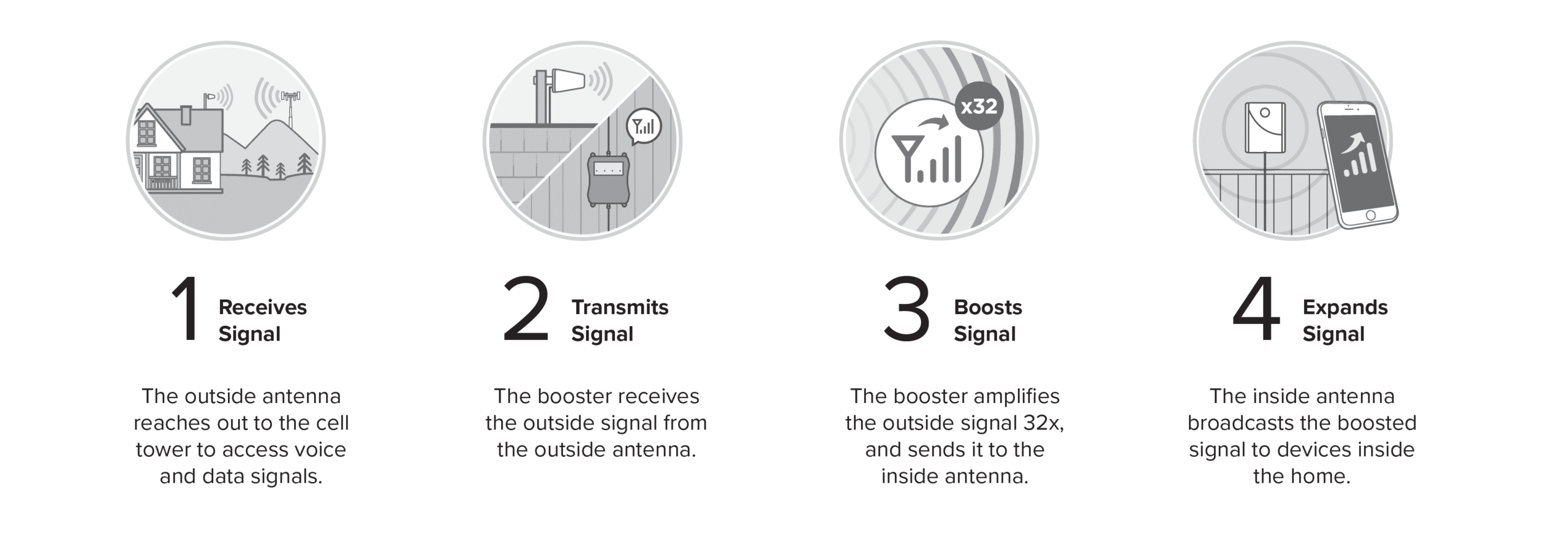
A booster amplifies an existing cellular signal. It will not create service in a location where the outdoor antenna receives nothing, and a weak outdoor signal limits the indoor area it can cover.
Stand outside near the proposed antenna location and check each carrier you expect to use. The listings in this roundup generally require at least one bar, while several give much smaller coverage estimates with one to two bars than with a stronger signal. If you are uncertain where an exterior antenna can work, finding the strongest antenna position around your property can help you think through tower direction and placement.
A large coverage number is meaningless if the outdoor antenna is pointed at a dead signal.
Carrier bands
Cellular bands determine which carrier signals a booster can repeat. The broadest systems here support bands 2, 4, 5, 12, 13, 17, and 25, while Phonetone and Bamwirz focus on narrower groups.
Check the bands used by your carrier in your area, not only the carrier name printed on the product page. A household with several networks should favor a model with broad support. A cabin using a known band 12, 13, or 17 signal can use a narrower product without giving up anything it needs.
Coverage area and room layout
Coverage depends on outdoor signal strength, building materials, antenna placement, and the number of indoor antennas. A single whip antenna is often suited to a central room, while two panel antennas can distribute service across separated rooms.
For a large home, compare the antenna layout rather than reading only the maximum square-foot figure. Nstcell and the larger HiBoost system use two indoor antennas, while ZORIDA is aimed at a compact area. Homes with basements, metal siding, thick masonry, or multiple floors need more careful placement.
Gain control
Gain describes how strongly the booster can amplify the received signal. The products here list maximum gains from 62 dB to 72 dB, but the largest number does not automatically produce the best result.
Automatic gain control is useful because it adjusts the amplifier as signal conditions change and can help prevent over-amplification. HiBoost, Bamwirz, Phonetone, and other models in this list describe AGC or similar automatic adjustment. Look for an operating display or app if you want to see whether antenna placement is improving the connection.
Antenna installation
The outdoor antenna needs a clear enough signal path, and the indoor antenna needs separation from it to avoid feedback. That often means mounting hardware outdoors, routing cable, and keeping the two antennas apart.
Directional antennas can be aimed at a stronger tower and are particularly useful in rural areas, but they require more adjustment. Panel antennas spread coverage into rooms, while a whip antenna is easier to place near a desk or central living area. Pick the arrangement that matches the building rather than the product with the largest headline.
Frequently asked questions
Will a cell phone signal booster work without outdoor signal?
No. A booster needs an existing cellular signal at the outdoor antenna. The products in this roundup generally call for at least one bar, and several state that they will not work when no signal is available to boost.
Do these boosters support every kind of 5G?
No. The listings describe 5G support through compatible bands that carriers deploy using existing 4G spectrum or Dynamic Spectrum Sharing. They do not guarantee support for every 5G frequency, so check the bands used by your carrier in your location.
Can one booster support several phones?
Yes. The products are described as supporting multiple users or devices simultaneously. The indoor coverage still depends on the outdoor signal, antenna layout, building materials, and the distance between the antennas.
Is a directional outdoor antenna better than an omnidirectional antenna?
A directional antenna can be better when the strongest tower is in a known direction, especially in a rural area. It requires aiming and adjustment. An omnidirectional arrangement can be simpler when signals arrive from several directions, but the product data here emphasizes directional antennas for several models.
How much indoor area will a booster cover?
The advertised figures range from 2, 000 to 8, 000 square feet, but those are maximum claims under favorable conditions. Nstcell and SNDcell provide examples showing that coverage can be much smaller with only one or two outdoor bars. Treat the outside signal and room layout as more important than the maximum number.
Can these boosters improve hotspot service?
Not every model does. The HiBoost Hero 3000 listing specifically says hotspot devices cannot be boosted. If hotspot performance is the main goal, verify that the exact booster supports the device before buying.
Do signal boosters require a monthly subscription?
The products listed here do not describe a monthly subscription as required. They are hardware systems that use an outdoor antenna, an amplifier, and one or more indoor antennas. App-based installation help may require registration, but that is separate from cellular service.
The bottom line
The HiBoost Home Office 2000 is our top choice for most small homes and offices because it combines broad band support, an LCD, app guidance, automatic gain control, and a directional outdoor antenna. For a larger building, the HiBoost Multi-Room 8000 is the stronger fit because its two indoor antennas and up to 8, 000-square-foot rating are designed around several rooms.
If you need a compact system, choose ZORIDA ACE 5S for a small space or Bamwirz Home 2500 when its narrower band list matches your carrier. The weBoost Home MultiRoom remains appealing for its lighter main unit and clear app-based installation guidance.
For anyone still undecided, choose the best cell phone signal booster whose bands match your carrier and whose antenna layout fits the building, then verify that a usable signal exists outside before ordering.
As an Amazon Associate we earn from qualifying purchases.